×

Norway🇳🇴 | townsHamarViking ship hall, lake Mjøsa, cathedral ruins | things to do and best time to go

Explore LillehammerExplore Skudeneshavn

Backpacking in Hamar
👀 For curious travelerstown ranked #23
By Johan Kruseman 🇳🇱 | Updated June 18, 2026

Your first real choice in Hamar is whether to treat it as a quick train stop or to actually stay a night; that decision changes your whole rhythm through inland Norway. Hamar sits on the eastern shore of Lake Mjøsa, north of Oslo, on the main rail line toward Lillehammer and Trondheim. For backpackers, it’s a calm, slightly workaday town with a lakeside glow on clear evenings, more about slow walks and local life than big sights. The glass-covered cathedral ruins and the lakeside promenade are genuinely worth a few hours, especially when the air smells like wet wood and cut grass after rain, but the compact center is quiet and can feel sleepy if you’re chasing nightlife or hostels full of travelers. Trains and buses are frequent, the town is easily walkable, and you rarely need local transport unless you’re heading to trailheads or farms outside town. It’s safe, not cheap but usually a bit gentler on the wallet than Oslo, and the social scene leans toward cafés and bars where you might chat with students or locals rather than fall into instant backpacker crowds. Compared with Lillehammer, Hamar feels flatter, more lakeside than mountain-framed, less tourist-oriented but also less curated, which makes it a practical, low-key base or a soft landing night between bigger Norwegian hits.

Discover everything you want to know in the 📖 Norway Travel Guide.


Get your Norway guide
103 ranked highlights, routes & tips, works offline (393 pages)
Loading the map 🌍
CLICK TO FILTER
cities
towns
villages
landmarks
national parks
hikes
beaches
attractions
festivals
regions
SHOW COUNTRY’S BESTSHOW ALL

✨ Why go?
Ranked #23 town in Norway
Why Hamar should be on your travel list

Hamar serves as a gateway for backpackers exploring Norway’s stunning landscapes. Its proximity to trails like the Mjøsa Lake and the surrounding hills makes it a perfect base for hikers seeking both challenge and beauty. The walkable streets invite leisurely strolls, where you can grab a bite of local fare—think fresh fish or hearty reindeer stew—at cozy eateries. Small-scale hostels and guesthouses foster a friendly atmosphere, ideal for solo travelers or small groups looking to connect. While some pass through quickly, others linger for a few days, soaking in the tranquility and charm. The vibe is more about relaxation than nightlife, making it a haven for those who appreciate the quieter side of travel. If you’re after a blend of nature and community, Hamar is a solid choice.
Want to include Hamar in your Norway route?
Create a personalized Norway itinerary that includes Hamar and the places that fit your trip — based on your travel style, budget, and available time. Get your route in seconds.

Generate my trip

💡 HighlightsTop highlights of Hamar

  • Domkirkeodden (medieval cathedral ruins & Hedmark Museum) — The real must-see: exposed stone ruins of Hamar’s 12th-century cathedral, museum exhibits that bring the bishop’s town to life, and a waterfront hill with great views over Mjøsa. Walk the ruin field, climb the tower and you’ll feel the city’s long history under your boots.
  • Vikingskipet (Hamar Olympic Hall) — That low, sweeping “Viking ship” building from the 1994 Olympics. When there isn’t an event it’s quieter but still worth seeing up close; check the calendar — you can sometimes go inside for public skating, concerts or guided visits.
  • Norsk Jernbanemuseum (Norwegian Railway Museum) — One of Norway’s best transport museums, with historic locomotives, carriages you can climb into and interactive displays. It sits beside the tracks
read more 👉
  • Domkirkeodden (medieval cathedral ruins & Hedmark Museum) — The real must-see: exposed stone ruins of Hamar’s 12th-century cathedral, museum exhibits that bring the bishop’s town to life, and a waterfront hill with great views over Mjøsa. Walk the ruin field, climb the tower and you’ll feel the city’s long history under your boots.
  • Vikingskipet (Hamar Olympic Hall) — That low, sweeping “Viking ship” building from the 1994 Olympics. When there isn’t an event it’s quieter but still worth seeing up close; check the calendar — you can sometimes go inside for public skating, concerts or guided visits.
  • Norsk Jernbanemuseum (Norwegian Railway Museum) — One of Norway’s best transport museums, with historic locomotives, carriages you can climb into and interactive displays. It sits beside the tracks so it’s easy to combine with a stroll from the station.
  • Mjøsparken & Koigen — Hamar’s lakeside greenbelt and the little Koigen peninsula are where locals hang out: beaches, playgrounds, mini-golf, cafés and long walking/cycling stretches along Mjøsa. Perfect for a picnic, an evening sunset or a quick swim in summer.
  • Hamar domkirke (Hamar Cathedral) — The 19th-century cathedral in town centre is quietly beautiful inside and connects directly to the story you see at Domkirkeodden. Pop in for the stained glass, the peaceful atmosphere and, if you like old organs, listen for services or recitals.
  • Hamar Kulturhus — The city’s cultural hub: concerts, theatre, film and exhibitions plus a useful café and library. Good place to catch local music or a show and to calendar-check what’s on while you’re in town.
  • Hamar Brygge (the quay and marina) — The redeveloped waterfront with restaurants, terraces and boat departures. It’s the summer living room of Hamar — stroll the boardwalk, hop on a short boat trip or just sit and watch life on Mjøsa.
  • Byparken and nearby historic wooden houses — A compact, pleasant town park close to the cathedral with sculptures and benches; wander the adjoining streets to find a handful of well-preserved wooden homes that give a sense of old Hamar away from the main drag.
  • Stortorget and the pedestrian streets — Hamar’s central square is where the city meets: cafés, seasonal markets, street life and a good place to base a walking loop. Saturdays or festival days bring local vendors and handicrafts.
  • Local food stalls & small cafés (Torget and surrounding side streets) — Hamar isn’t about Michelin temples, but the small cafés, bakeries and market stalls serve honest, local fare (rye bread, cured fish, local cheese). Great for a cheap, tasty meal and people-watching when you want to keep costs down.
A few excellent day-trip options close to Hamar: Lillehammer (Maihaugen open-air museum and the Olympic facilities), the lakeside town of Gjøvik, and Helgøya — Norway’s big freshwater island in Mjøsa, all easily reached within an hour or so.
Spotted a mistake or missing something? Contact us.

Things to do near Hamar

Ratings based on Tripadvisor reviews. When you book through this link, you support our work at no extra cost to you.

🏘️ NeighborhoodsHow different areas shape the experience

Hamar, with its blend of history and modernity, offers a unique backdrop for backpackers. Here’s how to navigate its neighborhoods:

Sentrum: This is the heart of Hamar. You’ll find cafes, shops, and the iconic Hamar Cathedral. The vibe is lively, especially in the evenings, making it perfect for socializing. It’s walkable, so you can easily explore on foot. Budget-friendly accommodations are available, ideal for both short and longer stays.

Brumunddal: Just south of Hamar, this area has a quieter, more residential feel. It’s great for those seeking a peaceful retreat after a day of exploring. The lakeside views are stunning, and you can find local eateries that won’t break the bank. Public transport connects you back to Hamar, making it a solid choice for longer stays.

Rudshøgda: A bit … read more 👉
Hamar, with its blend of history and modernity, offers a unique backdrop for backpackers. Here’s how to navigate its neighborhoods:

Sentrum: This is the heart of Hamar. You’ll find cafes, shops, and the iconic Hamar Cathedral. The vibe is lively, especially in the evenings, making it perfect for socializing. It’s walkable, so you can easily explore on foot. Budget-friendly accommodations are available, ideal for both short and longer stays.

Brumunddal: Just south of Hamar, this area has a quieter, more residential feel. It’s great for those seeking a peaceful retreat after a day of exploring. The lakeside views are stunning, and you can find local eateries that won’t break the bank. Public transport connects you back to Hamar, making it a solid choice for longer stays.

Rudshøgda: A bit off the beaten path, this area offers a more rural experience. It’s less touristy, which means you’ll get a taste of local life. While nightlife is limited, the tranquility is a big draw. Ideal for those wanting to recharge, but transport options are less frequent, so plan accordingly.

⌛️ 1 dayA smart one-day plan

Hamar, Norway, is a town where the past and present collide beautifully. Nestled by Lake Mjøsa, it’s known for its rich Viking history and the striking ruins of the medieval Hamar Cathedral. The air here carries a hint of fresh pine and the lake’s cool breeze, making every step feel invigorating.

Start your morning at the local bakery, where the scent of freshly baked bread wraps around you like a warm hug. Grab a kanelbolle (cinnamon roll) and a strong coffee to fuel your day. From there, stroll along the waterfront promenade. The shimmering lake reflects the sky, and you might catch a glimpse of locals fishing or jogging, adding a vibrant pulse to the serene landscape.

In the afternoon, head to the Hamar Cultural Centre. It’s not just about the exhibits; the architecture itself is a conversation … read more 👉
Hamar, Norway, is a town where the past and present collide beautifully. Nestled by Lake Mjøsa, it’s known for its rich Viking history and the striking ruins of the medieval Hamar Cathedral. The air here carries a hint of fresh pine and the lake’s cool breeze, making every step feel invigorating.

Start your morning at the local bakery, where the scent of freshly baked bread wraps around you like a warm hug. Grab a kanelbolle (cinnamon roll) and a strong coffee to fuel your day. From there, stroll along the waterfront promenade. The shimmering lake reflects the sky, and you might catch a glimpse of locals fishing or jogging, adding a vibrant pulse to the serene landscape.

In the afternoon, head to the Hamar Cultural Centre. It’s not just about the exhibits; the architecture itself is a conversation starter. After soaking in the art, take a short walk to the lesser-known Hedmark Museum. This open-air museum showcases traditional Norwegian farm life, and wandering through the old buildings feels like stepping back in time.

As evening approaches, make your way to the charming Briskeby neighborhood. Here, you’ll find cozy restaurants with outdoor seating. Try the local fish dish, fresh from the lake, while the sun sets over the water, painting the sky in hues of orange and pink.

Hamar may not be on every tourist’s radar, but its blend of history, nature, and local flavor makes it a rewarding stop.
Turn your Hamar visit into an Norway adventure
Build a complete Norway route with Hamar, hidden gems, must-see destinations, and realistic travel times included.

Generate my trip

🌤️ When to go?Choosing the right time of year


  • Weather: Hamar’s summers hover around 15-22°C (59-72°F), offering mild warmth perfect for lakeside hikes. Winters plunge to -10°C (14°F) or colder, blanketing the town in snow but limiting outdoor options.

  • Daylight Hours: In summer, expect up to 19 hours of light, stretching your adventure time late into the evening. Winter days shrink to just 6 hours, making planning crucial.

  • Crowds: Summer draws local Norwegians and tourists to the waterfront and festivals, so expect lively but manageable crowds. Winter is quieter, with fewer visitors but limited services.

  • Seasonal Activities: Summer unlocks boating, cycling, and open-air concerts. Winter offers cross-country skiing and cozy indoor cultural events, but outdoor trails can be icy.

  • Price Fluctuations: Accommodation and transport
read more 👉

  • Weather: Hamar’s summers hover around 15-22°C (59-72°F), offering mild warmth perfect for lakeside hikes. Winters plunge to -10°C (14°F) or colder, blanketing the town in snow but limiting outdoor options.

  • Daylight Hours: In summer, expect up to 19 hours of light, stretching your adventure time late into the evening. Winter days shrink to just 6 hours, making planning crucial.

  • Crowds: Summer draws local Norwegians and tourists to the waterfront and festivals, so expect lively but manageable crowds. Winter is quieter, with fewer visitors but limited services.

  • Seasonal Activities: Summer unlocks boating, cycling, and open-air concerts. Winter offers cross-country skiing and cozy indoor cultural events, but outdoor trails can be icy.

  • Price Fluctuations: Accommodation and transport costs peak in July and August. Shoulder seasons like late spring or early autumn offer better deals and still decent weather.


Pro-tip: Aim for late May or early September—daylight lingers, prices ease, and you get a taste of local life without the summer buzz or winter freeze.


source: climatestotravel.comJANJanuary: fair for travelingFEBFebruary: fair for travelingMARMarch: fair for travelingAPRApril: good for travelingMAYMay: highly recommended for travelingJUNJune: highly recommended for travelingJULJuly: excellent for travelingAUGAugust: excellent for travelingSEPSeptember: highly recommended for travelingOCTOctober: good for travelingNOVNovember: fair for travelingDECDecember: fair for traveling
when-to-go

✈️ The backpacker research shortcutNorway Travel Guide

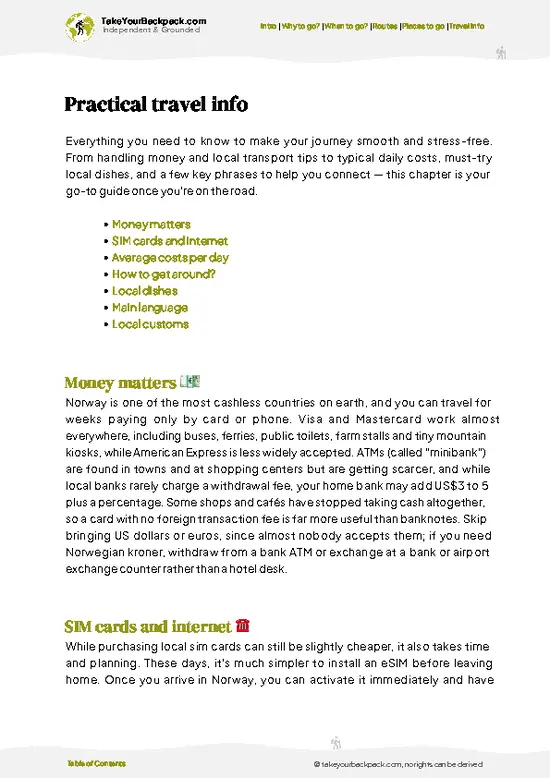
An offline-friendly backpacking guide with optimized travel routes, ranked highlights, transport advice, and the best areas to stay.
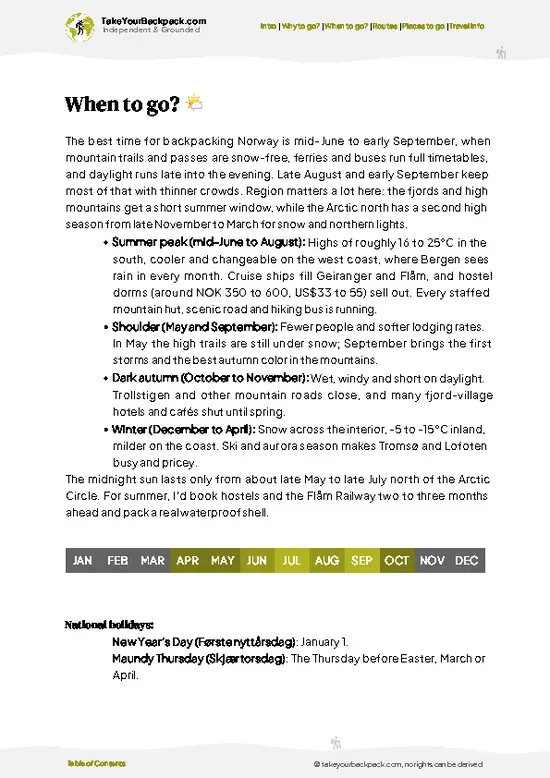
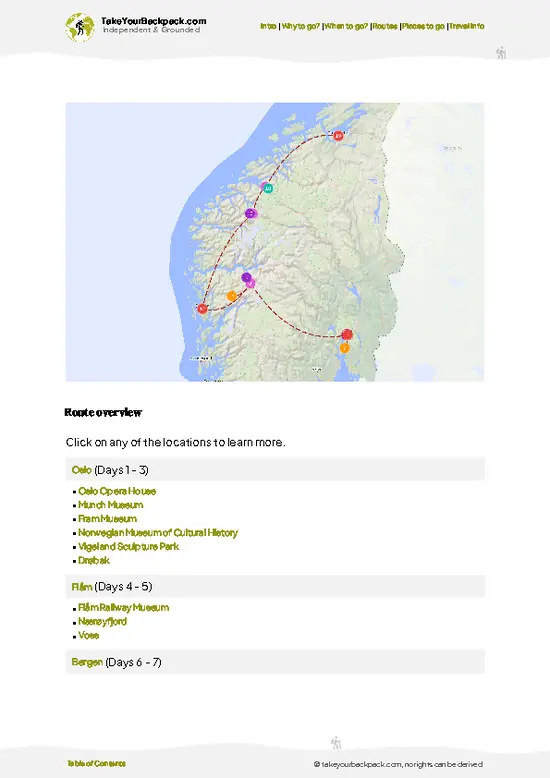
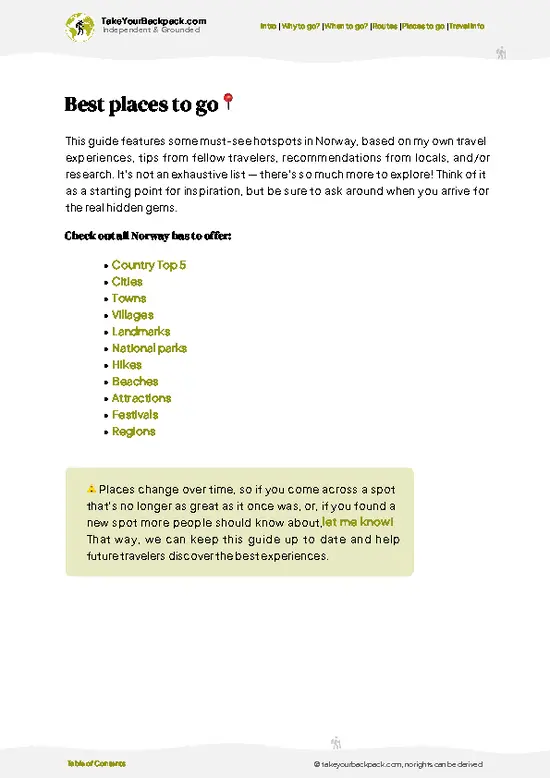
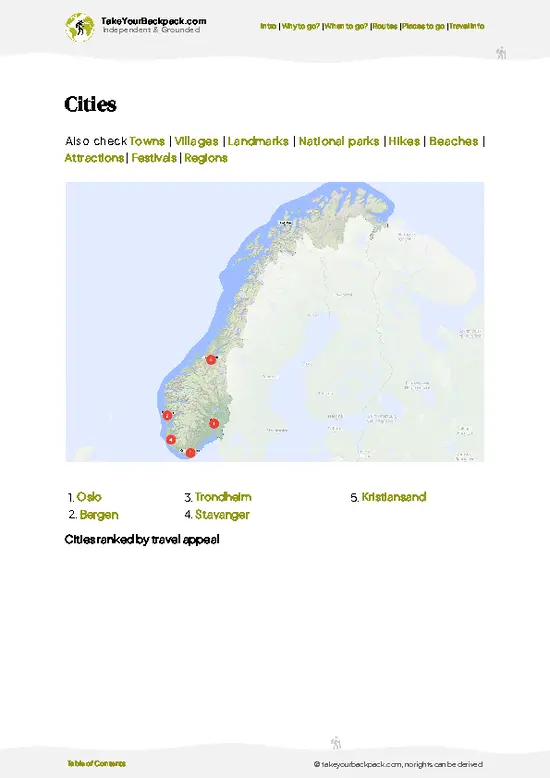
example page 0 from our offline Travel Guide for Norway
example page 1 from our offline Travel Guide for Norway
example page 2 from our offline Travel Guide for Norway
example page 3 from our offline Travel Guide for Norway
example page 4 from our offline Travel Guide for Norway
example page 5 from our offline Travel Guide for Norway
example page 6 from our offline Travel Guide for Norway
example page 7 from our offline Travel Guide for Norway
The digital guide (393 pages) contains:
103 highlights, ranked by travel appeal
Optimized 5, 10 & 15-day travel routes
Cities, national parks, landmarks, beaches
How to get around
Offline-friendly for travel without Wi-Fi
👉 Click to see all 30+ guide features

📅 Plan smarter in minutes, not weeks
Month by month travel advice
Festivals & national holidays
Budget expectations

🗺️ Go to the right places, skip the overrated ones
Honest pros & cons of destinations
Top hikes, parks & viewpoints
Lesser-known places most travelers miss
Clear “worth it vs skip it” guidance

🛏️ Travel smoothly without rookie mistakes
Best areas to stay
Transport systems explained simply
Common scams & safety advice
SIM cards, money & practical tips

🌍 Understand the country, not just visit it
Culture & traditions
52 Essential phrases & customs
Festivals worth planning around
Traveler-friendly historical context
Insights that make places more meaningful

📱 Built for real travel conditions
Fully downloadable PDF
Works completely offline
Optimized for phone use
Useful in remote areas & buses
Everything in one place
Save weeks of stressful planning
Get instant access to your full guide. 30‑day money-back guarantee.


By proceeding you agree to our terms.
Sent to your inbox immediately after payment • 100% Secure Checkout
Best Backpacking Travel Advisor 2025 tourism awardBest Backpacking
Travel Advisor
2025
What others say about Take Your Backpack Guides:
⭐⭐⭐⭐⭐
Fantastic, amazing amount of information!
⭐⭐⭐⭐⭐
My goodness this is amazing, it's what I've been looking for hats off too you!
⭐⭐⭐⭐⭐
I think this is absolutely BRILLIANT
⭐⭐⭐⭐
Very complete and informative. It's still missing places, but I gotta to commend you
⭐⭐⭐⭐⭐
This is truly amazing, thank you, can't wait to explore it with my kids!
⭐⭐⭐⭐⭐
Awesome resource, thank you!
⭐⭐⭐⭐⭐
This is amazing! Can't wait to explore the ones I haven't seen
⭐⭐⭐⭐
I love this! Well done, great idea.
⭐⭐⭐⭐⭐
Thanks for taking the time to make this gem!
⭐⭐⭐⭐⭐
This might be the best website I've ever seen.
⭐⭐⭐⭐⭐
Congratulations, and thank you so much for your work; it's incredibly valuable.
⭐⭐⭐⭐
In all seriousness I think you did a great job pointing out the important spots
⭐⭐⭐⭐⭐
10/10 very good
⭐⭐⭐⭐⭐
As someone who's only just starting to visit regularly this is awesome, thank you.
⭐⭐⭐⭐
Thank you very much! I'm going to visit my dad, it's going to be very useful!
⭐⭐⭐⭐⭐
This is really cool! We'll be travelling for the first time and this definitely come in handy.
⭐⭐⭐⭐⭐
You are now our minister of culture, congratulations 👨‍💼
⭐⭐⭐⭐⭐
Just wanted to tell you that this is a pearl! Going to follow your recommendations.
⭐⭐⭐⭐⭐
This is so cool. I'll definitely be using the resource for my travels soon.
⭐⭐⭐⭐⭐
This is very impressive! Good work.
⭐⭐⭐⭐⭐
This is an amazing and informative site. Very well done!

🛏️ Where to stay?Best areas and accommodation options

In Hamar, the sweet spot for backpackers is the area around the town center, especially near the harbor and the pedestrian streets. This zone hums with life during the day—cafés spill out onto cobblestones, and the scent of fresh coffee blends with the crisp lake air. It’s safe, compact, and easy to navigate on foot, which means you won’t waste energy on transport. Hostels here tend to attract solo travelers and budget adventurers, creating a social vibe that’s low-key but genuine. Compared to quieter residential neighborhoods, staying central plugs you into the pulse of Hamar’s culture and nightlife without the hassle of long commutes.

🚌 Getting aroundMoving around without the hassle

Hamar moves at a pace that feels like a slow dance with the seasons—calm, deliberate, and shaped by the rhythms of the lake and the surrounding hills. It’s not a place where you’ll find frantic rush hours or a tangle of schedules. Instead, the town’s flow leans on a quiet intuition: locals know when the ferry arrives, when the bus rolls in, and when the sun dips low enough to turn the water silver. This isn’t about squeezing every minute out of the day but about syncing with a gentler pulse, where timing is a guide, not a strict rule.


  • Walking: Hamar’s compact center invites you to explore on foot. The air carries the scent of pine and fresh lake water, and most key spots are within a 20-minute stroll, making walking the cheapest and most immersive transit.

  • Local Bus: Buses run roughly
read more 👉
Hamar moves at a pace that feels like a slow dance with the seasons—calm, deliberate, and shaped by the rhythms of the lake and the surrounding hills. It’s not a place where you’ll find frantic rush hours or a tangle of schedules. Instead, the town’s flow leans on a quiet intuition: locals know when the ferry arrives, when the bus rolls in, and when the sun dips low enough to turn the water silver. This isn’t about squeezing every minute out of the day but about syncing with a gentler pulse, where timing is a guide, not a strict rule.


  • Walking: Hamar’s compact center invites you to explore on foot. The air carries the scent of pine and fresh lake water, and most key spots are within a 20-minute stroll, making walking the cheapest and most immersive transit.

  • Local Bus: Buses run roughly every hour from early morning (around 6:30 AM) until evening (around 9 PM). Tickets cost about 40 NOK, offering a reliable way to reach nearby villages and the train station without the hassle of parking.

  • Ferry across Lake Mjøsa: The ferry service connects Hamar with towns on the opposite shore, running a few times daily, typically between 7 AM and 7 PM. It’s a scenic, budget-friendly option that doubles as a mini cruise, with tickets under 100 NOK.

  • Train: The Dovre Line train stops at Hamar Station, linking Oslo and Trondheim. Trains run several times a day, with tickets starting around 150 NOK if booked early. It’s faster but less frequent than buses, perfect for longer hops.

👛 Costs (as of 5 April 2026)Typical daily expenses

Backpacking in Hamar, Norway, means balancing the crisp Scandinavian air with a wallet that feels the pinch of one of Europe’s pricier corners. Here’s the real deal on daily costs, so you can plan without surprises.
  • Dorm Accommodation: Hostels in Hamar typically run between €40 and €60 per night for a bed in a shared dorm. It’s not the cheapest, but the rooms are clean, often with views of the lake or the town’s historic sites, making the price feel fair for Norway.
  • Meals: Eating out leans toward the expensive side. Expect to spend around €15 to €25 for a casual meal at a café or small restaurant. Groceries for self-catering can bring daily food costs down to about €10 to €15 if you shop at local supermarkets, focusing on bread, cheese, and fresh produce.
  • Local Transport: Hamar is compact,
read more 👉
Backpacking in Hamar, Norway, means balancing the crisp Scandinavian air with a wallet that feels the pinch of one of Europe’s pricier corners. Here’s the real deal on daily costs, so you can plan without surprises.
  • Dorm Accommodation: Hostels in Hamar typically run between €40 and €60 per night for a bed in a shared dorm. It’s not the cheapest, but the rooms are clean, often with views of the lake or the town’s historic sites, making the price feel fair for Norway.
  • Meals: Eating out leans toward the expensive side. Expect to spend around €15 to €25 for a casual meal at a café or small restaurant. Groceries for self-catering can bring daily food costs down to about €10 to €15 if you shop at local supermarkets, focusing on bread, cheese, and fresh produce.
  • Local Transport: Hamar is compact, so walking covers most needs. For longer trips, a single bus ticket costs about €3.50. If you plan multiple rides, a day pass around €7 offers better value and flexibility.
  • Basic Activities/Entry Fees: Museums and attractions like the Norwegian Railway Museum or the Domkirkeodden open-air museum charge entry fees between €8 and €12. Outdoor activities like hiking around Mjøsa lake are free, offering a great way to soak in the landscape without extra cost.
  • Miscellaneous Expenses: Budget around €5 to €10 for extras like coffee, snacks, or small souvenirs. Norway’s prices for these little treats add up quickly, so it’s smart to keep an eye on these small spends.

All told, expect a daily budget in Hamar to hover between €70 and €110. It’s a place where the fresh air and quiet streets come with a price tag, but knowing where to trim—like cooking your own meals or sticking to free outdoor activities—makes the experience richer and more manageable.


source: visitnorway.com
⚠️ Prices can change and everyone travels differently, so take this as a rough guide. Hope it helps you plan your adventure!

🚌 Day tripsShort trips worth adding

Hamar, Norway, is a fantastic launchpad for day trips that blend stunning landscapes with rich history. Each excursion offers a unique taste of Norway’s charm, making it easy to explore without the hassle of moving your base.

Mjøsa Lake Adventure
Just a short 30-minute bus ride from Hamar, Mjøsa Lake is Norway’s largest lake, offering serene views and a chance to unwind. Rent a kayak or bike along the shoreline, where the scent of pine trees mingles with the fresh lake air. The best time to visit is during the summer months when the sun lingers late into the evening. A round-trip bus ticket will set you back about 100 NOK, making it a budget-friendly escape. Many first-timers miss the hidden trails that lead to secluded beaches—don’t skip those!


Lillehammer’s Olympic Legacy
A 45-minute … read more 👉
Hamar, Norway, is a fantastic launchpad for day trips that blend stunning landscapes with rich history. Each excursion offers a unique taste of Norway’s charm, making it easy to explore without the hassle of moving your base.

Mjøsa Lake Adventure
Just a short 30-minute bus ride from Hamar, Mjøsa Lake is Norway’s largest lake, offering serene views and a chance to unwind. Rent a kayak or bike along the shoreline, where the scent of pine trees mingles with the fresh lake air. The best time to visit is during the summer months when the sun lingers late into the evening. A round-trip bus ticket will set you back about 100 NOK, making it a budget-friendly escape. Many first-timers miss the hidden trails that lead to secluded beaches—don’t skip those!


Lillehammer’s Olympic Legacy
A 45-minute train ride takes you to Lillehammer, famous for its 1994 Winter Olympics. Stroll through the charming streets, and visit the Olympic Park, where you can feel the energy of past athletes. The train fare is around 150 NOK, and the best time to go is in late spring or early fall when the crowds thin out. Many backpackers rush through the park; take your time to soak in the atmosphere and maybe even try the bobsled track for a thrill.
👉 Explore Lillehammer

Rudshøgda’s Nature Trails
Only 20 minutes by bus, Rudshøgda offers an array of hiking trails that wind through lush forests and past bubbling streams. The trails are well-marked, and the tranquility here is palpable. A bus ticket costs about 50 NOK, and the ideal time to hike is in early autumn when the leaves turn vibrant shades. A common mistake is underestimating the weather; always pack layers, as it can change quickly.


Eidsvoll’s Historic Significance
A 30-minute train ride brings you to Eidsvoll, where Norway’s constitution was signed in 1814. The Eidsvoll Manor is a must-see, with its beautiful gardens and rich history. Expect to pay around 120 NOK for the train. Late spring is perfect for visiting, as the gardens bloom beautifully. Many visitors overlook the guided tours—don’t miss the chance to hear the stories that shaped Norway.
Want to know what more Norway offers?
The Norway Travel Guide describes 103 highlights, from cities to national parks, from beaches to hikes

Get the Travel Guide -

🛡️ SafetyScams, Hazards, and Annoyances

Hamar is generally safe, but a few practical tips can enhance your experience. Stay aware in crowded areas, especially near the train station and popular cafes. Solo travelers should feel comfortable, but keep your wits about you at night—stick to well-lit streets and avoid quiet alleys.

While scams are rare, be cautious of overly friendly strangers offering unsolicited help. It’s best to politely decline and rely on your own navigation. Everyday annoyances might include the occasional tourist group blocking pathways, so a patient attitude goes a long way. Embrace the local vibe, and you’ll find Hamar’s charm shines through, even in the small challenges.

Other Norwegian towns near Hamar

Explore more nearby:

  • Lillehammer—Olympic venues, open-air museum, lakeside trails| 48 km away
  • Drøbak—Oslofjord views, Christmas shop, fortress island| 128 km away
  • Notodden—Blues festival, industrial sites, lakeside setting| 163 km away

💡 Not sure where to go next?
Create a personalized itinerary for Norway including Hamar and the places that fit your trip.

Generate my itinerary

👉 Discover all towns

Or checkout all Norway has to offer (think cities, towns, villages, national parks, hikes, beaches, festivals)
Country photo of Norway

We 💚 feedbackKey takeaways before you go

Hamar’s lakeside charm is magnetic, especially at sunset when the sky ignites with color. You’ll feel the pulse of local life in the cozy cafés and vibrant markets. But be ready for the weather; it can shift from sunny to stormy in minutes. Pack layers and embrace the unpredictability—it’s part of the adventure.

✈️ When did I visit Norway?
Having played floorball, a sport large in the nordic countries, I have visited Norway as well a couple of times from 1999 to 2008.

✍️ Help improve this page!
The information on this page is based on my own backpacking experience in Norway, supplemented with up-to-date research and feedback from other travelers. Travel details can change, so if you notice anything outdated or incomplete, feel free to let me know.


🙋‍♂️ Give feedback

👋 Meet the founderWho’s Behind Take Your Backpack?

Johan, backpacker and founder of TakeYourBackpackHi, I’m Johan (Netherlands 🇳🇱), the creator of TakeYourBackpack. Over the past decade, I’ve backpacked through 80+ countries across six continents, gaining extensive experience with independent travel, long-term trips, and overland routes.

This site is built on a combination of firsthand travel experience and carefully curated insights from other backpackers. Many guides are based on places I’ve personally visited, while others bring together tips, observations, and practical advice shared by trusted travelers I’ve met along the way.

The goal is to provide realistic, experience-driven guidance — not generic itineraries — so you can explore destinations with better context, clearer expectations, and more confidence.

Get full Norway guide •
Instant download • 103 highlights • Full Offline guide