×

Pakistan🇵🇰 | hikesDeosai Plains TrekHigh plateau, brown bear territory, wide open sky | things to do and best time to go

Explore Rakaposhi Base CampExplore Ratti Gali Lake Trek

Backpacking in Deosai Plains Trek
By Johan Kruseman 🇳🇱 | Updated October 15, 2026

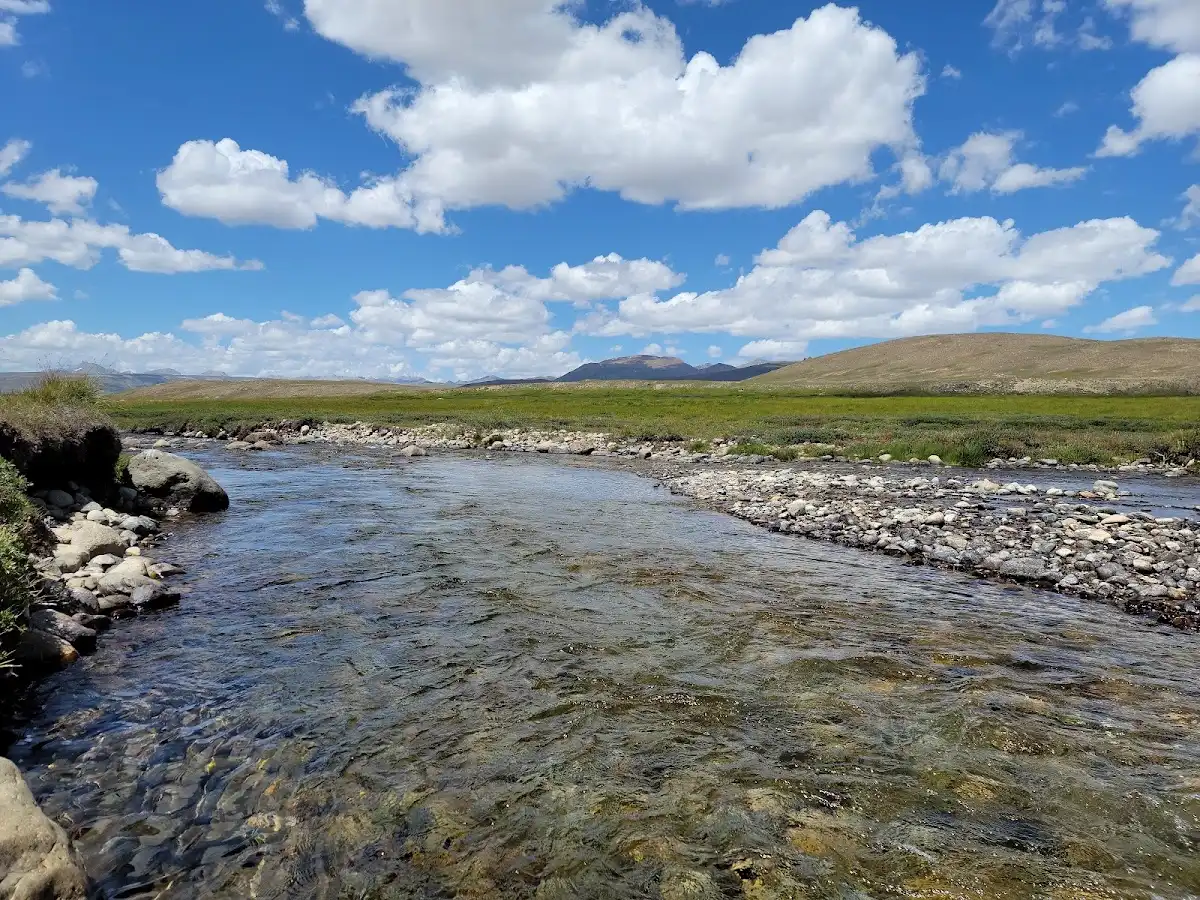
Most trekkers roll through Deosai chasing brown bears and never notice the small stone cairns the local Balti and Kashmiri shepherds still stack along the old grazing routes, markers that predate any trekking map by generations. Deosai Plains sit on the border of Gilgit-Baltistan and Skardu district, a rolling high-altitude plateau east of Skardu town. The trek itself is moderate rather than technical: wide, springy tundra underfoot, minimal elevation gain day to day, but the altitude (mostly above 4,000 meters) makes lungs work harder than legs. Getting to the Skardu trailhead area is straightforward by jeep from Skardu, though public transport thins out fast past the last villages. Compared to the sharper, more demanding routes around Hushe or Baltoro, Deosai is gentler and more forgiving for a first big-altitude trek. I still remember lying flat on cold grass near Sheosar Lake, breath fogging, watching a golden sky pull itself over the water, absolutely silent except my own heartbeat.

Discover everything you want to know in the 📖 Pakistan Travel Guide.
Best time to go: May - September
Duration: 2 to 4 days
Distance: 50 kilometers


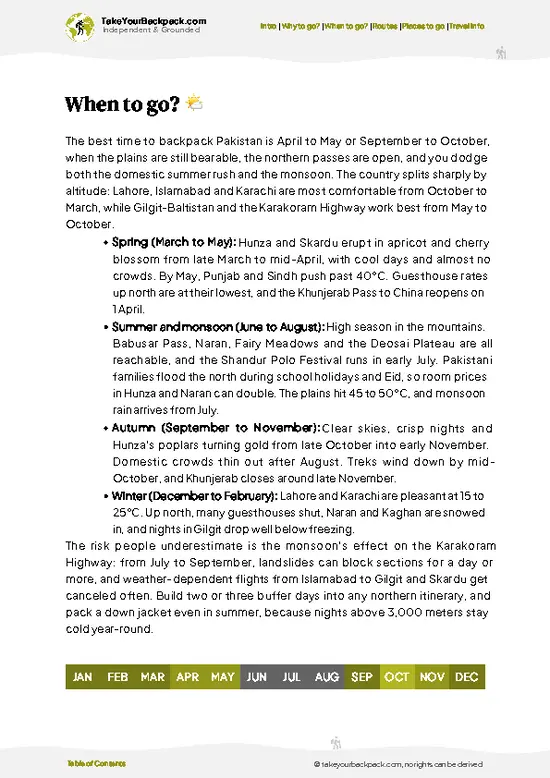
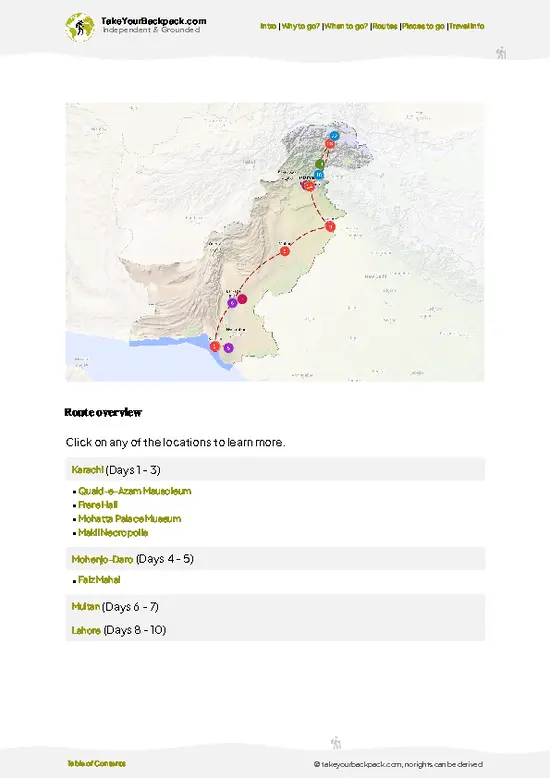
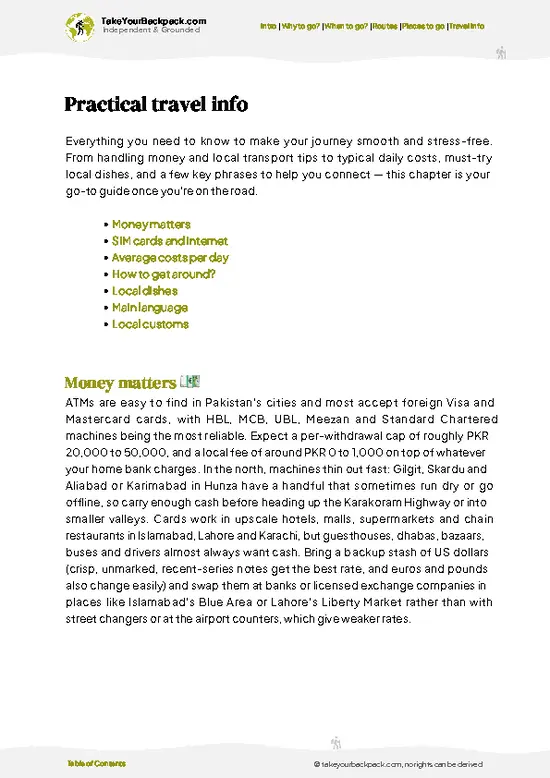
example page 0 from our offline Travel Guide for Pakistan
example page 1 from our offline Travel Guide for Pakistan
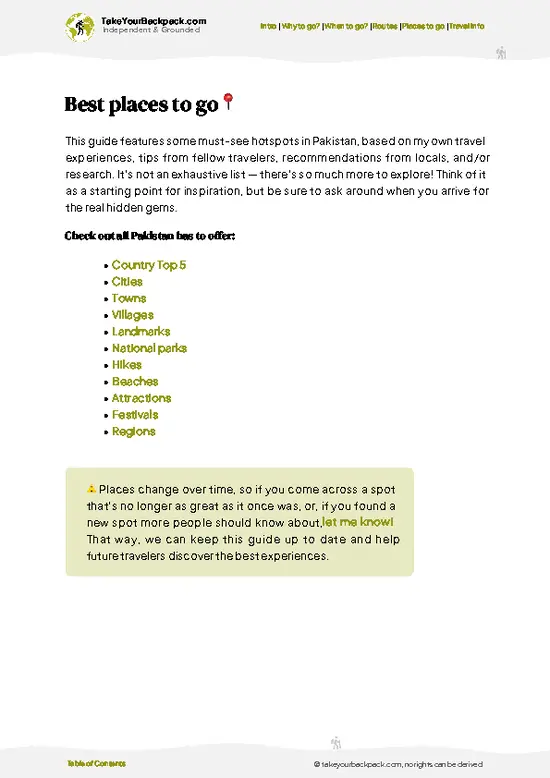
example page 2 from our offline Travel Guide for Pakistan
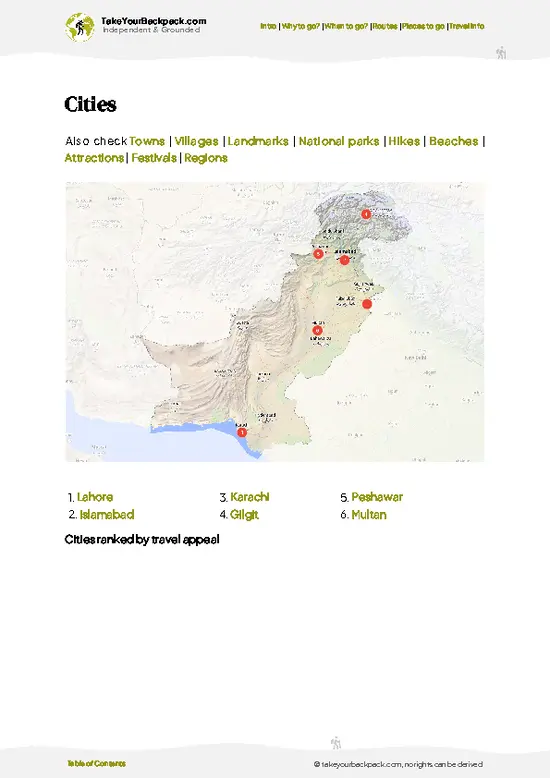
example page 3 from our offline Travel Guide for Pakistan
example page 4 from our offline Travel Guide for Pakistan
example page 5 from our offline Travel Guide for Pakistan
example page 6 from our offline Travel Guide for Pakistan
example page 7 from our offline Travel Guide for Pakistan
Loading the map 🌍
CLICK TO FILTER
cities
towns
villages
landmarks
national parks
hikes
beaches
attractions
festivals
regions
SHOW COUNTRY’S BESTSHOW ALL

✨ Why go?
Ranked #99 hike in Pakistan
Why Deosai Plains Trek should be on your travel list

Backpackers come to Deosai for one of the best scenery-to-effort ratios in northern Pakistan: flat, rolling plains at serious altitude without technical climbing. The wildflower blooms in July and August, the chance of a brown bear sighting from a safe distance, and the vast open horizon make it feel dramatically different from the sharp granite valleys nearby. It's also genuinely low cost once you're past Skardu, jeep-shared groups split fuel and permit fees, and camping is the norm rather than pricier lodges. The route is flexible: you can do a short overnight loop to Sheosar Lake or extend toward Chilim and Bara Pani for a longer traverse. Because Skardu is already a major hub for Baltoro and K2 base camp trekkers, Deosai slots in easily as a shorter, lower-risk add-on before or after a … read more 👉
Backpackers come to Deosai for one of the best scenery-to-effort ratios in northern Pakistan: flat, rolling plains at serious altitude without technical climbing. The wildflower blooms in July and August, the chance of a brown bear sighting from a safe distance, and the vast open horizon make it feel dramatically different from the sharp granite valleys nearby. It's also genuinely low cost once you're past Skardu, jeep-shared groups split fuel and permit fees, and camping is the norm rather than pricier lodges. The route is flexible: you can do a short overnight loop to Sheosar Lake or extend toward Chilim and Bara Pani for a longer traverse. Because Skardu is already a major hub for Baltoro and K2 base camp trekkers, Deosai slots in easily as a shorter, lower-risk add-on before or after a bigger expedition. Public jeep access from Skardu means you don't need your own vehicle, and shared rides are common in peak season. For anyone building a longer Gilgit-Baltistan route, it's an efficient, rewarding detour that doesn't demand technical gear or specialized experience.

💡 HighlightsWhat this place is best known for

  1. Sheosar Lake: A glacial lake sitting near 4,142 meters, ringed by open plains, and one of the most photographed spots on the plateau. The color shifts from steel grey to deep blue depending on cloud cover, and it's calm enough most mornings for near-perfect reflections.
  2. Brown Bear Viewing Zones: Deosai holds one of the few protected populations of Himalayan brown bears in South Asia. Sightings aren't guaranteed, but rangers and local guides know the grazing patches where bears feed on marmots and roots in early morning and dusk.
  3. Bara Pani: A river crossing point and popular camping spot, known for cold, clear water and wide grassy banks. It's a good rest stop that breaks up longer traverses toward Chilim.
  4. Wildflower Meadows (July-August): During peak summer the plateau turns dense with alpine
… read more 👉
  1. Sheosar Lake: A glacial lake sitting near 4,142 meters, ringed by open plains, and one of the most photographed spots on the plateau. The color shifts from steel grey to deep blue depending on cloud cover, and it's calm enough most mornings for near-perfect reflections.
  2. Brown Bear Viewing Zones: Deosai holds one of the few protected populations of Himalayan brown bears in South Asia. Sightings aren't guaranteed, but rangers and local guides know the grazing patches where bears feed on marmots and roots in early morning and dusk.
  3. Bara Pani: A river crossing point and popular camping spot, known for cold, clear water and wide grassy banks. It's a good rest stop that breaks up longer traverses toward Chilim.
  4. Wildflower Meadows (July-August): During peak summer the plateau turns dense with alpine flowers, purples and yellows spread across the tundra in a way that feels completely different from the rocky valleys most people associate with northern Pakistan.
  5. Chilim Valley Approach: Less crowded than the main Sheosar route, this stretch offers a quieter feel and closer views of the surrounding peaks without the jeep traffic. This is my personal favorite section, precisely because you can walk for an hour without seeing another group, just wind, grass, and distant snow.
Spotted a mistake or missing something? Contact us.

Things to do near Deosai Plains Trek

Ratings based on Tripadvisor reviews. When you book through this link, you support our work at no extra cost to you.

🌤️ When to go?Best time to hike the Deosai Plains Trek

  • Peak Summer (July-August): Warmest window, daytime temps around 10-15°C (50-59°F), nights still drop near freezing. Wildflowers carpet the plains and this is prime brown bear activity season, so it's also the busiest and priciest for jeep hire.
  • Early Summer (June): Snow is still melting off higher patches, fewer crowds, temps cooler (5-12°C / 41-54°F), and some routes may still be partially closed.
  • Early Autumn (September): Crisp air, golden grass, thinning crowds, temps dropping to near 0°C (32°F) at night. Good light for photography but shorter daylight hours, roughly 11-12 hours.
  • Winter (October-May): Deosai is snowbound and the road closes entirely; not accessible for trekking.
Go in late July if you want the wildflowers and bear sightings without the absolute peak crowd of early August.

source: climatestotravel.comJANJanuary: below average for travelingFEBFebruary: below average for travelingMARMarch: below average for travelingAPRApril: fair for travelingMAYMay: good for travelingJUNJune: excellent for travelingJULJuly: excellent for travelingAUGAugust: highly recommended for travelingSEPSeptember: highly recommended for travelingOCTOctober: fair for travelingNOVNovember: below average for travelingDECDecember: below average for traveling
pakistan-hike-deosai-plains-trek
© Google |

✈️ The backpacker research shortcutPakistan Travel Guide

An offline-friendly backpacking guide with optimized travel routes, ranked highlights, transport advice, and the best areas to stay.
example page 0 from our offline Travel Guide for Pakistan
example page 1 from our offline Travel Guide for Pakistan
example page 2 from our offline Travel Guide for Pakistan
example page 3 from our offline Travel Guide for Pakistan
example page 4 from our offline Travel Guide for Pakistan
example page 5 from our offline Travel Guide for Pakistan
example page 6 from our offline Travel Guide for Pakistan
example page 7 from our offline Travel Guide for Pakistan
The digital guide (290 pages) contains:
✅ 97 highlights, ranked by travel appeal
✅ Optimized 7, 14 & 21-day travel routes
✅ Cities, national parks, landmarks, beaches
✅ How to get around
✅ Offline-friendly for travel without Wi-Fi
👉 Click to see all 30+ guide features

📅 Plan smarter in minutes, not weeks
✅ Month by month travel advice
✅ Festivals & national holidays
✅ Budget expectations

🗺️ Go to the right places, skip the overrated ones
✅ Honest pros & cons of destinations
✅ Top hikes, parks & viewpoints
✅ Lesser-known places most travelers miss
✅ Clear “worth it vs skip it” guidance

🛏️ Travel smoothly without rookie mistakes
✅ Best areas to stay
✅ Transport systems explained simply
✅ Common scams & safety advice
✅ SIM cards, money & practical tips

🌍 Understand the country, not just visit it
✅ Culture & traditions
✅ 52 Essential phrases & customs
✅ Festivals worth planning around
✅ Traveler-friendly historical context
✅ Insights that make places more meaningful

📱 Built for real travel conditions
✅ Fully downloadable PDF
✅ Works completely offline
✅ Optimized for phone use
✅ Useful in remote areas & buses
✅ Everything in one place
Stop searching, start planning
Get instant access to your full guide. 30‑day money-back guarantee.
+ Add another guide for just

By proceeding you agree to our terms.
Sent to your inbox immediately after payment • 100% Secure Checkout
Best Backpacking Travel Advisor 2025 tourism awardBest Backpacking
Travel Advisor
2025
What others say about Take Your Backpack Guides:
⭐⭐⭐⭐⭐
Fantastic, amazing amount of information!
⭐⭐⭐⭐⭐
My goodness this is amazing, it's what I've been looking for hats off too you!
⭐⭐⭐⭐⭐
I think this is absolutely BRILLIANT
⭐⭐⭐⭐
Very complete and informative. It's still missing places, but I gotta to commend you
⭐⭐⭐⭐⭐
This is truly amazing, thank you, can't wait to explore it with my kids!
⭐⭐⭐⭐⭐
Awesome resource, thank you!
⭐⭐⭐⭐⭐
This is amazing! Can't wait to explore the ones I haven't seen
⭐⭐⭐⭐
I love this! Well done, great idea.
⭐⭐⭐⭐⭐
Thanks for taking the time to make this gem!
⭐⭐⭐⭐⭐
This might be the best website I've ever seen.
⭐⭐⭐⭐⭐
Congratulations, and thank you so much for your work; it's incredibly valuable.
⭐⭐⭐⭐
In all seriousness I think you did a great job pointing out the important spots
⭐⭐⭐⭐⭐
10/10 very good
⭐⭐⭐⭐⭐
As someone who's only just starting to visit regularly this is awesome, thank you.
⭐⭐⭐⭐
Thank you very much! I'm going to visit my dad, it's going to be very useful!
⭐⭐⭐⭐⭐
This is really cool! We'll be travelling for the first time and this definitely come in handy.
⭐⭐⭐⭐⭐
You are now our minister of culture, congratulations 👨‍💼
⭐⭐⭐⭐⭐
Just wanted to tell you that this is a pearl! Going to follow your recommendations.
⭐⭐⭐⭐⭐
This is so cool. I'll definitely be using the resource for my travels soon.
⭐⭐⭐⭐⭐
This is very impressive! Good work.
⭐⭐⭐⭐⭐
This is an amazing and informative site. Very well done!

🛏️ Where to stay?Where staying makes the most sense

If you enjoy meeting fellow travelers, consider choosing hostels with high ratings for atmosphere. On the other hand, if you prefer having your own space, a hotel might be a better option.

🥾 Hike detailsHike details: route, duration, and difficulty of Deosai Plains Trek

Total Distance: Roughly 40 to 60 kilometers depending on the route chosen, from Sheosar Lake loops to longer Bara Pani-Chilim traverses.
Estimated Duration: 2 to 4 days for most backpacker itineraries, though a fast day loop from Skardu is possible with a jeep.
Difficulty: Moderate. Terrain is gentle underfoot, but altitude above 4,000 meters means acclimatization matters more than fitness.
Starting Point: Most treks begin near Deosai's entrance gate, reached by jeep from Skardu town (roughly 2 to 3 hours on rough unpaved road). No public bus service covers this stretch; shared or hired jeeps are
… read more 👉
Total Distance: Roughly 40 to 60 kilometers depending on the route chosen, from Sheosar Lake loops to longer Bara Pani-Chilim traverses.
Estimated Duration: 2 to 4 days for most backpacker itineraries, though a fast day loop from Skardu is possible with a jeep.
Difficulty: Moderate. Terrain is gentle underfoot, but altitude above 4,000 meters means acclimatization matters more than fitness.
Starting Point: Most treks begin near Deosai's entrance gate, reached by jeep from Skardu town (roughly 2 to 3 hours on rough unpaved road). No public bus service covers this stretch; shared or hired jeeps are standard.
Major Landmarks:
  • Sheosar Lake: The scenic centerpiece and most common overnight camp.
  • Bara Pani: A river crossing and rest point along the eastern route.
  • Kala Pani: A smaller checkpoint area used for camping and wildlife spotting.
Terrain and Scenery: Open, rolling alpine tundra with almost no tree cover, broad river valleys, and distant views of the Deosai and Nanga Parbat ranges on clear days.
Vegetation: Low alpine grasses and seasonal wildflowers in summer; no forest cover at this elevation.
Wildlife: Himalayan brown bears, marmots, golden marmot colonies, and various high-altitude bird species including the occasional golden eagle sighting.
⚠️ Hiking info can sometimes be outdated or inaccurate. Before you hit the trail, check the latest conditions with locals. If you do spot anything that's off, I'd love to hear from you, so I can update it for fellow travelers.

🛡️ SafetyScams, Hazards, and Annoyances

Deosai is generally a straightforward trek, but altitude is the main factor to respect. Most of the plateau sits above 4,000 meters, so headaches or shortness of breath in the first day are common even for fit hikers; slow pacing and a night of acclimatization before pushing further helps a lot. Weather flips fast, clear mornings can turn to cold wind and rain by afternoon, so pack a proper windproof layer even in July. River crossings near Bara Pani can run higher after rain or heavy snowmelt, so check conditions with local jeep drivers before committing to a route. Brown bear encounters are rare and bears generally avoid people, but don't approach or leave food unsecured at camp. First-timers sometimes underestimate the cold nights, temperatures near freezing are normal even in summer, so … read more 👉
Deosai is generally a straightforward trek, but altitude is the main factor to respect. Most of the plateau sits above 4,000 meters, so headaches or shortness of breath in the first day are common even for fit hikers; slow pacing and a night of acclimatization before pushing further helps a lot. Weather flips fast, clear mornings can turn to cold wind and rain by afternoon, so pack a proper windproof layer even in July. River crossings near Bara Pani can run higher after rain or heavy snowmelt, so check conditions with local jeep drivers before committing to a route. Brown bear encounters are rare and bears generally avoid people, but don't approach or leave food unsecured at camp. First-timers sometimes underestimate the cold nights, temperatures near freezing are normal even in summer, so a warm sleeping bag rated below 0°C is worth having.

FAQTraveler FAQ

Most backpackers spend 2 to 4 days on Deosai, depending on whether they do a simple loop to Sheosar Lake or extend toward Bara Pani and Chilim. A rushed day trip by jeep from Skardu is also possible if time is tight, though it skips most of the walking.
It's moderate overall: the ground itself is gentle, rolling tundra with minimal steep climbing, but the altitude above 4,000 meters makes it tougher than the terrain alone suggests. Fitness helps, but acclimatization matters more than raw endurance.
A permit is required to enter Deosai National Park, usually arranged through the park entrance gate or a local guide in Skardu, with a small entry fee. A guide isn't strictly mandatory for the main routes, but hiring a local driver or guide is strongly recommended since trails aren't well marked and weather can change quickly.
⚠️ Things can change over time, so always validate details locally before you go.

Other Pakistani hikes near Deosai Plains Trek

Explore more nearby:


💡 Not sure where to go next?
Create a personalized itinerary for Pakistan including Deosai Plains Trek and the places that fit your trip.

Generate my itinerary

👉 Discover all hikes

Or checkout all Pakistan has to offer (think cities, towns, villages, national parks, hikes, beaches, festivals)
Country photo of Pakistan

We 💚 feedbackKey takeaways before you go

Deosai delivers a wide-open, high-altitude landscape without demanding technical skill, which makes it one of the more approachable big treks in northern Pakistan. The drawback is unpredictability: weather shifts fast, bear sightings aren't guaranteed, and the short trekking season (basically July through September) means your window is narrow. Go for the space and silence, not for guarantees.

✈️ When did I visit Pakistan?
Even though the media portrays Pakistan often as a dangerous country, it has its great spots, and for a mountain lover like me the mountain regions in the north are just heaven. Visited Pakistan in October 2022.

✍️ Help improve this page!
The information on this page is based on my own backpacking experience in Pakistan, supplemented with up-to-date research and feedback from other travelers. Travel details can change, so if you notice anything outdated or incomplete, feel free to let me know.


🙋‍♂️ Give feedback

👋 Meet the founderWho’s Behind Take Your Backpack?

Johan, backpacker and founder of TakeYourBackpackHi, I’m Johan (Netherlands 🇳🇱), the creator of TakeYourBackpack. Over the past 3 decades, I’ve backpacked through 90+ countries across six continents, gaining extensive experience with independent travel, long-term trips, and overland routes.

This site is built on a combination of firsthand travel experience and carefully curated insights from other backpackers. Many guides are based on places I’ve personally visited, while others bring together tips, observations, and practical advice shared by trusted travelers I’ve met along the way.

The goal is to provide realistic, experience-driven guidance — not generic itineraries — so you can explore destinations with better context, clearer expectations, and more confidence.