×

Pakistan🇵🇰 | hikesKarambar LakeBorder lake, Broghil highlands, Afghan frontier | things to do and best time to go

Explore K2 Base CampExplore Nanga Parbat Base Camp

Backpacking in Karambar Lake
👍 Recommendedhike ranked #10
By Johan Kruseman 🇳🇱 | Updated September 29, 2026

My lungs burned first, then my legs went numb somewhere past 4,200 meters, and then I stopped caring because the water opened up ahead, that flat sheet of glacial blue sitting under a ridge of raw scree. Karambar Lake sits high on the border zone between Ishkoman Valley in Gilgit-Baltistan and the Chitral side of Khyber Pakhtunkhwa, one of the highest lakes in the region. The scenery is genuinely rare, silence, ice-melt color, yak trails, but this isn't a casual walk. It's a multi-day, high-altitude slog with real exposure, and public transport gets you only as far as Ishkoman or Chatorkhand; the rest is jeep track and foot. Compared to Rush Lake or Patundas near Hunza, this one demands more logistics and more legs for a similar visual payoff.

Discover everything you want to know in the 📖 Pakistan Travel Guide.
Best time to go: May - September
Duration: 3 days
Distance: 35 kilometers
Total ascent: 1600 meters


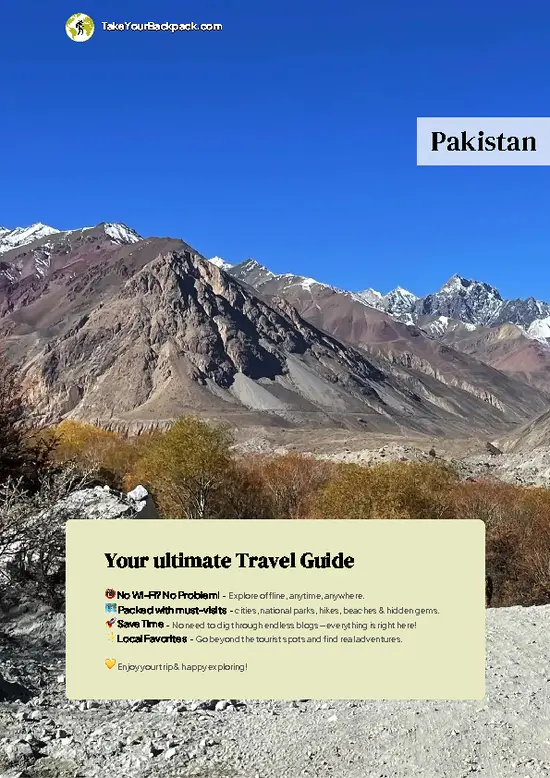
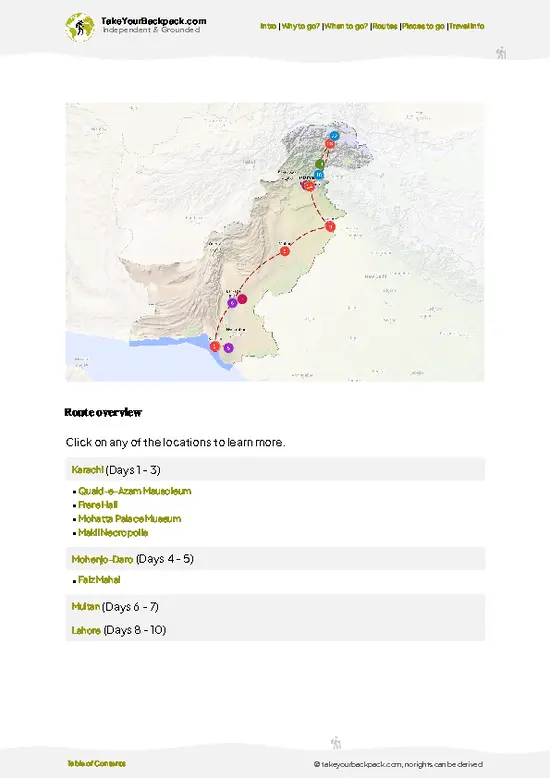
example page 0 from our offline Travel Guide for Pakistan
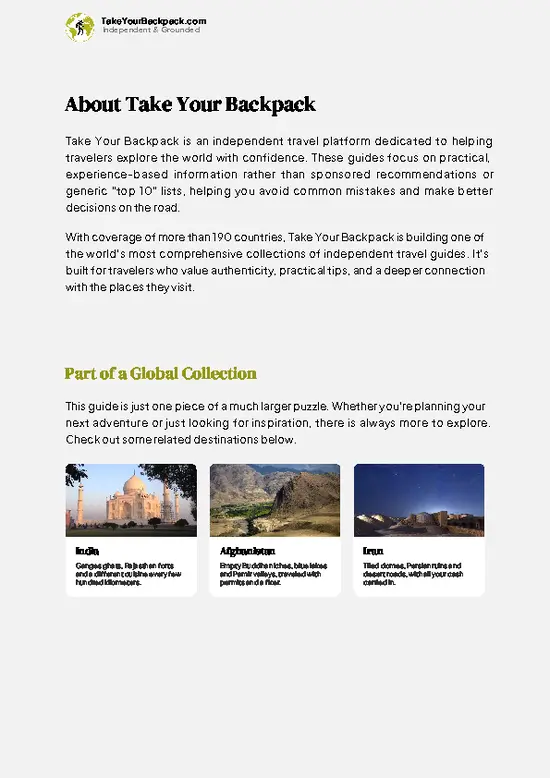
example page 1 from our offline Travel Guide for Pakistan
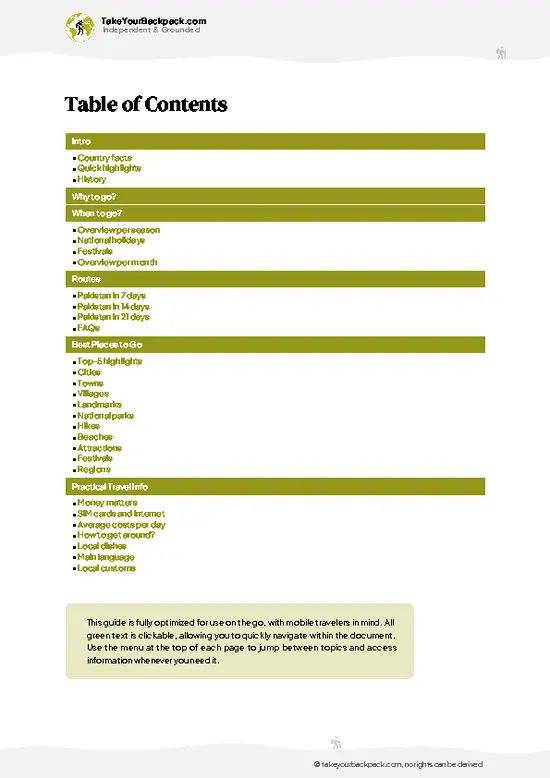
example page 2 from our offline Travel Guide for Pakistan
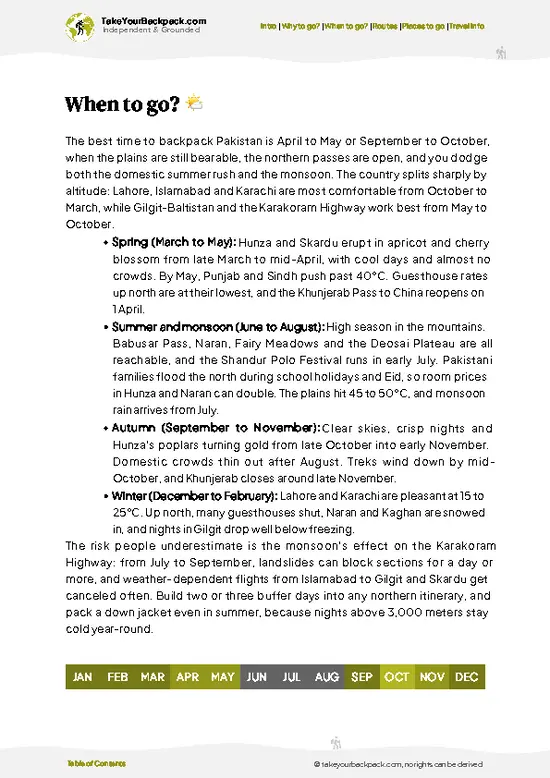
example page 3 from our offline Travel Guide for Pakistan
example page 4 from our offline Travel Guide for Pakistan
example page 5 from our offline Travel Guide for Pakistan
example page 6 from our offline Travel Guide for Pakistan
example page 7 from our offline Travel Guide for Pakistan
Loading the map 🌍
CLICK TO FILTER
cities
towns
villages
landmarks
national parks
hikes
beaches
attractions
festivals
regions
SHOW COUNTRY’S BESTSHOW ALL

✨ Why go?
Ranked #10 hike in Pakistan
Why Karambar Lake should be on your travel list

Backpackers chase Karambar Lake because it delivers a huge scenery-to-effort ratio once you clear the approach: glacial water, bare ridgelines, and total quiet without the crowds of Hunza's better-known lakes. It's genuinely low cost, guesthouse stays in Ishkoman run cheap, and shared jeeps keep transport affordable even if public transport access stops short of the trailhead. The route offers flexible distances, you can base camp partway or push straight for the lake depending on fitness and time. It also slots naturally into a longer Gilgit-Baltistan loop, connecting logically with Chitral or the Ishkoman-Yasin circuit for travelers already moving through the north. For anyone who's done the popular lakes and wants something with fewer boot prints and more solitude, Karambar delivers exactly … read more 👉
Backpackers chase Karambar Lake because it delivers a huge scenery-to-effort ratio once you clear the approach: glacial water, bare ridgelines, and total quiet without the crowds of Hunza's better-known lakes. It's genuinely low cost, guesthouse stays in Ishkoman run cheap, and shared jeeps keep transport affordable even if public transport access stops short of the trailhead. The route offers flexible distances, you can base camp partway or push straight for the lake depending on fitness and time. It also slots naturally into a longer Gilgit-Baltistan loop, connecting logically with Chitral or the Ishkoman-Yasin circuit for travelers already moving through the north. For anyone who's done the popular lakes and wants something with fewer boot prints and more solitude, Karambar delivers exactly that kind of payoff without needing technical climbing skills, just stamina and proper altitude sense.

💡 HighlightsPlaces and moments you shouldn't skip

  1. Karambar Lake itself: The payoff. Cold, glacial-blue, sitting in a bowl of scree and thin air above 4,200 meters. Few lakes in Pakistan feel this remote or this quiet.
  2. Ishkoman Valley approach: The lower valley walk through scattered villages and irrigated fields gives a real sense of daily life in one of the country's more isolated corners before the terrain turns to rock and yak pasture.
  3. Karambar Pass area: Near the lake, the pass marks the old route linking Chitral and Gilgit-Baltistan; standing there, you get a genuine sense of how travelers and traders crossed this terrain generations ago.
  4. High-altitude wildlife zones: Marmots are common near the upper meadows, and with luck and quiet movement, ibex can be spotted on the surrounding slopes. This is a personal favorite part of the trek, that
… read more 👉
  1. Karambar Lake itself: The payoff. Cold, glacial-blue, sitting in a bowl of scree and thin air above 4,200 meters. Few lakes in Pakistan feel this remote or this quiet.
  2. Ishkoman Valley approach: The lower valley walk through scattered villages and irrigated fields gives a real sense of daily life in one of the country's more isolated corners before the terrain turns to rock and yak pasture.
  3. Karambar Pass area: Near the lake, the pass marks the old route linking Chitral and Gilgit-Baltistan; standing there, you get a genuine sense of how travelers and traders crossed this terrain generations ago.
  4. High-altitude wildlife zones: Marmots are common near the upper meadows, and with luck and quiet movement, ibex can be spotted on the surrounding slopes. This is a personal favorite part of the trek, that stretch where the trail flattens and animals actually feel closer than you expected.
  5. Border ridge views: From the higher camps, the view stretches toward the Hindu Raj range, a jagged, mostly unnamed skyline that most visitors to Pakistan never see because it sits so far off the standard trekking circuit.
Spotted a mistake or missing something? Contact us.

🌤️ When to go?Seasonal considerations and timing

  • Summer (June to August): This is the only realistic window. Daytime temperatures sit around 10-18°C (50-64°F) at the lake, dropping near freezing at night. Trails are clear of snow and jeep tracks into Ishkoman are passable.
  • Early Season (June): Snowmelt can still block higher sections; check locally before committing.
  • Late Season (September): Weather turns unstable and cold fast, with nighttime temperatures well below 0°C (32°F); crowds thin to almost nothing.
  • Daylight: Long summer days give roughly 14-15 hours of usable light, important for the long approach days.
  • Crowds and Costs: This trail sees very few foreign hikers year-round, so pricing for guesthouses and jeep hire stays stable rather than seasonal-surge driven.
Go in July if you want the safest snow conditions and the longest daylight margin for the push to the lake.

source: climatestotravel.comJANJanuary: below average for travelingFEBFebruary: below average for travelingMARMarch: fair for travelingAPRApril: fair for travelingMAYMay: good for travelingJUNJune: highly recommended for travelingJULJuly: excellent for travelingAUGAugust: excellent for travelingSEPSeptember: highly recommended for travelingOCTOctober: fair for travelingNOVNovember: below average for travelingDECDecember: below average for traveling
when-to-go

✈️ The backpacker research shortcutPakistan Travel Guide

An offline-friendly backpacking guide with optimized travel routes, ranked highlights, transport advice, and the best areas to stay.
example page 0 from our offline Travel Guide for Pakistan
example page 1 from our offline Travel Guide for Pakistan
example page 2 from our offline Travel Guide for Pakistan
example page 3 from our offline Travel Guide for Pakistan
example page 4 from our offline Travel Guide for Pakistan
example page 5 from our offline Travel Guide for Pakistan
example page 6 from our offline Travel Guide for Pakistan
example page 7 from our offline Travel Guide for Pakistan
The digital guide (290 pages) contains:
✅ 97 highlights, ranked by travel appeal
✅ Optimized 7, 14 & 21-day travel routes
✅ Cities, national parks, landmarks, beaches
✅ How to get around
✅ Offline-friendly for travel without Wi-Fi
👉 Click to see all 30+ guide features

📅 Plan smarter in minutes, not weeks
✅ Month by month travel advice
✅ Festivals & national holidays
✅ Budget expectations

🗺️ Go to the right places, skip the overrated ones
✅ Honest pros & cons of destinations
✅ Top hikes, parks & viewpoints
✅ Lesser-known places most travelers miss
✅ Clear “worth it vs skip it” guidance

🛏️ Travel smoothly without rookie mistakes
✅ Best areas to stay
✅ Transport systems explained simply
✅ Common scams & safety advice
✅ SIM cards, money & practical tips

🌍 Understand the country, not just visit it
✅ Culture & traditions
✅ 52 Essential phrases & customs
✅ Festivals worth planning around
✅ Traveler-friendly historical context
✅ Insights that make places more meaningful

📱 Built for real travel conditions
✅ Fully downloadable PDF
✅ Works completely offline
✅ Optimized for phone use
✅ Useful in remote areas & buses
✅ Everything in one place
Stop searching, start planning
Get instant access to your full guide. 30‑day money-back guarantee.
+ Add another guide for just

By proceeding you agree to our terms.
Sent to your inbox immediately after payment • 100% Secure Checkout
Best Backpacking Travel Advisor 2025 tourism awardBest Backpacking
Travel Advisor
2025
What others say about Take Your Backpack Guides:
⭐⭐⭐⭐⭐
Fantastic, amazing amount of information!
⭐⭐⭐⭐⭐
My goodness this is amazing, it's what I've been looking for hats off too you!
⭐⭐⭐⭐⭐
I think this is absolutely BRILLIANT
⭐⭐⭐⭐
Very complete and informative. It's still missing places, but I gotta to commend you
⭐⭐⭐⭐⭐
This is truly amazing, thank you, can't wait to explore it with my kids!
⭐⭐⭐⭐⭐
Awesome resource, thank you!
⭐⭐⭐⭐⭐
This is amazing! Can't wait to explore the ones I haven't seen
⭐⭐⭐⭐
I love this! Well done, great idea.
⭐⭐⭐⭐⭐
Thanks for taking the time to make this gem!
⭐⭐⭐⭐⭐
This might be the best website I've ever seen.
⭐⭐⭐⭐⭐
Congratulations, and thank you so much for your work; it's incredibly valuable.
⭐⭐⭐⭐
In all seriousness I think you did a great job pointing out the important spots
⭐⭐⭐⭐⭐
10/10 very good
⭐⭐⭐⭐⭐
As someone who's only just starting to visit regularly this is awesome, thank you.
⭐⭐⭐⭐
Thank you very much! I'm going to visit my dad, it's going to be very useful!
⭐⭐⭐⭐⭐
This is really cool! We'll be travelling for the first time and this definitely come in handy.
⭐⭐⭐⭐⭐
You are now our minister of culture, congratulations 👨‍💼
⭐⭐⭐⭐⭐
Just wanted to tell you that this is a pearl! Going to follow your recommendations.
⭐⭐⭐⭐⭐
This is so cool. I'll definitely be using the resource for my travels soon.
⭐⭐⭐⭐⭐
This is very impressive! Good work.
⭐⭐⭐⭐⭐
This is an amazing and informative site. Very well done!

🛏️ Where to stay?How to pick the right area

If you enjoy meeting fellow travelers, consider choosing hostels with high ratings for atmosphere. On the other hand, if you prefer having your own space, a hotel might be a better option.

🥾 Hike detailsHike details: route, duration, and difficulty of Karambar Lake

Total Distance: Roughly 30-40 kilometers round trip from the last drivable point in Ishkoman Valley, depending on the exact starting village used.
Estimated Duration: Typically 3-4 days round trip, including acclimatization time.
Difficulty: Strenuous. High altitude (lake sits above 4,200 meters), rough jeep-track and foot trail, and no rescue infrastructure nearby.
Starting Point: Access begins from Chatorkhand or further up in Ishkoman Valley, reached by jeep from Gilgit town (roughly 4-5 hours by road). No direct public transport reaches the trailhead; shared jeeps or private hire are standard.
… read more 👉
Total Distance: Roughly 30-40 kilometers round trip from the last drivable point in Ishkoman Valley, depending on the exact starting village used.
Estimated Duration: Typically 3-4 days round trip, including acclimatization time.
Difficulty: Strenuous. High altitude (lake sits above 4,200 meters), rough jeep-track and foot trail, and no rescue infrastructure nearby.
Starting Point: Access begins from Chatorkhand or further up in Ishkoman Valley, reached by jeep from Gilgit town (roughly 4-5 hours by road). No direct public transport reaches the trailhead; shared jeeps or private hire are standard.
Major Landmarks:
  • Ishkoman Valley villages: Last points for supplies and guesthouse stays.
  • Karambar Pass: Historic crossing point near the lake, linking Chitral and Gilgit-Baltistan.
  • Karambar Lake: The trek's endpoint, one of the highest lakes in the region.
Terrain and Scenery: Mixed jeep track transitions into rocky foot trail, moraine, and open high-altitude pasture. Expect loose scree near the pass and cold wind exposure at elevation.
Vegetation: Sparse. Lower valley shows irrigated farmland and scattered willow and poplar; higher up, vegetation drops to alpine grasses and scrub before disappearing entirely near the lake.
Wildlife: Marmots are frequently seen in upper meadows; ibex occasionally spotted on distant slopes. Golden eagles and other raptors are sometimes visible overhead.
⚠️ Hiking info can sometimes be outdated or inaccurate. Before you hit the trail, check the latest conditions with locals. If you do spot anything that's off, I'd love to hear from you, so I can update it for fellow travelers.

🛡️ SafetyTraveler Safety Guide

Altitude is the main factor here, the lake sits above 4,200 meters, and moving too fast from Gilgit without a night or two to adjust is the most common mistake. Weather can shift quickly even in summer, with wind and sudden cold snaps at elevation, so pack proper layers regardless of how warm the valley felt that morning. Footing gets loose near the pass, scree and moraine slow you down, so pace yourself rather than pushing hard on tired legs. There's no cell coverage and no rescue infrastructure, so travel with a local guide or at minimum someone who knows the route, and carry more food and water than you think you'll need. Wildlife here poses no real threat, marmots and distant ibex are harmless if left alone.

FAQCommon questions from travelers

The round trip typically takes 3 to 4 days from the last drivable point in Ishkoman Valley, including a night for acclimatization before pushing to the lake at over 4,200 meters. Trekkers moving efficiently with good weather can sometimes compress this to 3 days, but rushing increases altitude risk.
It's a strenuous trek rather than a casual walk, mainly due to elevation above 4,200 meters, rough scree sections near the pass, and the total lack of rescue infrastructure along the route. Fitness alone isn't enough; proper acclimatization and pacing matter more than raw stamina.
A permit isn't formally required for Pakistani citizens, but foreign travelers should check current regional entry rules before heading into Ishkoman Valley, as border-zone areas can have shifting requirements. A local guide isn't legally mandatory but is strongly recommended given the remoteness, lack of signage, and absence of cell coverage on the trail.
⚠️ Things can change over time, so always validate details locally before you go.

Other Pakistani hikes near Karambar Lake

Explore more nearby:


💡 Not sure where to go next?
Create a personalized itinerary for Pakistan including Karambar Lake and the places that fit your trip.

Generate my itinerary

👉 Discover all hikes

Or checkout all Pakistan has to offer (think cities, towns, villages, national parks, hikes, beaches, festivals)
Country photo of Pakistan

We 💚 feedbackSumming up the experience

Karambar Lake rewards you with a kind of solitude that's getting rare in Pakistan's more famous trekking valleys, real quiet, real distance from other travelers. The drawback is logistics: no public transport to the trailhead, no rescue nearby, and altitude that punishes anyone who rushes. Worth it if you respect the climb and plan properly.

✈️ When did I visit Pakistan?
Even though the media portrays Pakistan often as a dangerous country, it has its great spots, and for a mountain lover like me the mountain regions in the north are just heaven. Visited Pakistan in October 2022.

✍️ Help improve this page!
The information on this page is based on my own backpacking experience in Pakistan, supplemented with up-to-date research and feedback from other travelers. Travel details can change, so if you notice anything outdated or incomplete, feel free to let me know.


🙋‍♂️ Give feedback

👋 Meet the founderWho’s Behind Take Your Backpack?

Johan, backpacker and founder of TakeYourBackpackHi, I’m Johan (Netherlands 🇳🇱), the creator of TakeYourBackpack. Over the past 3 decades, I’ve backpacked through 90+ countries across six continents, gaining extensive experience with independent travel, long-term trips, and overland routes.

This site is built on a combination of firsthand travel experience and carefully curated insights from other backpackers. Many guides are based on places I’ve personally visited, while others bring together tips, observations, and practical advice shared by trusted travelers I’ve met along the way.

The goal is to provide realistic, experience-driven guidance — not generic itineraries — so you can explore destinations with better context, clearer expectations, and more confidence.