×

Panama🇵🇦 | national parksCoiba National ParkPacific islands, marine life, former penal colony, whale migration | things to do and best time to go

Explore Chagres National ParkExplore El Cope National Park

Backpacking in Coiba
🏆 Top picknational park ranked #1
By Johan Kruseman 🇳🇱 | Updated May 27, 2026

Your mask strap snaps back against your cheek as you surface, salt on your lips, the boat rocking gently while a turtle’s shell disappears into the blue below. The air smells like wet wood and gasoline, and somewhere in the trees on shore, howler monkeys are losing their minds. This is Coiba National Park, off Panama’s Pacific coast in the Gulf of Chiriquí, and it feels a lot farther away than a boat ride from Santa Catalina.

For backpackers, Coiba is wild ocean first, land second. Diving and snorkeling are the headline; hiking is limited to short, sweaty trails with big payoff in birds, crocs, and dense forest, not sweeping viewpoints. It’s expensive by Panama standards: boat transfers, mandatory guide, entrance fees, and no true shoestring camping, just basic bunk-style lodging that still costs more than you want. Compared with places like Parque Nacional Marino Golfo de Chiriquí or even Volcán Barú, Coiba is harder to reach, pricier, less flexible, but the marine life is on another level. I treat it as a deliberate splurge day or two, not a casual add-on.

Discover everything you want to know in the 📖 Panama Travel Guide.


Get your Panama guide
96 ranked highlights, routes & tips, works offline (363 pages)
Loading the map 🌍
CLICK TO FILTER
cities
towns
villages
landmarks
national parks
hikes
beaches
attractions
festivals
regions
SHOW COUNTRY’S BESTSHOW ALL

✨ Why go?
Ranked #1 national park in Panama
The unique appeal for travelers

Coiba National Park in Panama attracts backpackers for several compelling reasons. First, independent exploration is a major draw. The park’s vast landscapes and diverse ecosystems invite you to wander off the beaten path. You can hike, snorkel, or simply soak in the scenery without the constraints of a guided tour.

Budget-conscious travelers appreciate the camping and hostel options nearby. Affordable accommodations allow you to stretch your funds while still enjoying the park’s beauty. Whether you pitch a tent or stay in a dorm, you’ll find a community of like-minded adventurers.

The trail variety is another highlight. From easy walks to challenging treks, there’s something for everyone. You can choose your own adventure based on your energy levels and interests. This flexibility is perfect … read more 👉
Coiba National Park in Panama attracts backpackers for several compelling reasons. First, independent exploration is a major draw. The park’s vast landscapes and diverse ecosystems invite you to wander off the beaten path. You can hike, snorkel, or simply soak in the scenery without the constraints of a guided tour.

Budget-conscious travelers appreciate the camping and hostel options nearby. Affordable accommodations allow you to stretch your funds while still enjoying the park’s beauty. Whether you pitch a tent or stay in a dorm, you’ll find a community of like-minded adventurers.

The trail variety is another highlight. From easy walks to challenging treks, there’s something for everyone. You can choose your own adventure based on your energy levels and interests. This flexibility is perfect for self-guided travelers who want to tailor their experience.

While tours are available, many find that the park is best suited for those who prefer to explore at their own pace. The chance to connect with nature without a guide enhances the experience. Just be prepared for the logistical challenges of getting to and around the park, as planning ahead will save you time and energy.
Want to include Coiba National Park in your Panama route?
Create a personalized Panama itinerary that includes Coiba National Park and the places that fit your trip — based on your travel style, budget, and available time. Get your route in seconds.

Generate my trip

💡 HighlightsMust-see experiences and standout moments

  • Coiba Island rainforest and endemic wildlife — Dense tropical forest that feels properly wild. You can spot the endemic Coiba howler monkey and lots of reptiles and insects you won’t see on the mainland; short hikes lead to viewpoints and quiet understory that’s great for wildlife watching.
  • Penal colony ruins — The old prison buildings and ghostly infrastructure from the 20th-century penal camp are surprisingly atmospheric. It’s an easy, evocative stop that shows a very different layer of the island’s history alongside the nature.
  • World-class diving and snorkeling — Coral gardens, huge schools of fish, manta rays, and regular encounters with large pelagics (hammerheads and whale sharks turn up seasonally). Water’s clear, marine life is abundant thanks to protections — my personal favorite
read more 👉
  • Coiba Island rainforest and endemic wildlife — Dense tropical forest that feels properly wild. You can spot the endemic Coiba howler monkey and lots of reptiles and insects you won’t see on the mainland; short hikes lead to viewpoints and quiet understory that’s great for wildlife watching.
  • Penal colony ruins — The old prison buildings and ghostly infrastructure from the 20th-century penal camp are surprisingly atmospheric. It’s an easy, evocative stop that shows a very different layer of the island’s history alongside the nature.
  • World-class diving and snorkeling — Coral gardens, huge schools of fish, manta rays, and regular encounters with large pelagics (hammerheads and whale sharks turn up seasonally). Water’s clear, marine life is abundant thanks to protections — my personal favorite for the “wow” factor underwater.
  • Pristine white-sand beaches — Long, empty beaches with turquoise water and good spots for swimming or chilling after a hike. These beaches are also important nesting grounds for sea turtles, so timing a visit can add a nesting or hatchling sighting.
  • Isla Jicarón and the island cluster — Small islands around Coiba are perfect day-trip stops: local village vibes, easy snorkeling right off the sand, and short walks to viewpoints. A great place to break up a boat day.
  • Mangrove channels and estuaries — The mangrove fringes are alive with juvenile fish, crabs and a huge variety of shorebirds and waders. Paddle or take a skiff through for close birdwatching and a different, quieter ecosystem than the open coast.
  • Whale and dolphin watching — Seasonal humpback whales pass through and dolphins are commonly seen from boats. If you’re on a multi-day trip or visit in the right months, a cetacean encounter is very possible.
Spotted a mistake or missing something? Contact us.

Things to do near Coiba National Park

Ratings based on Tripadvisor reviews. When you book through this link, you support our work at no extra cost to you.

🌤️ When to go?Choosing the right time of year


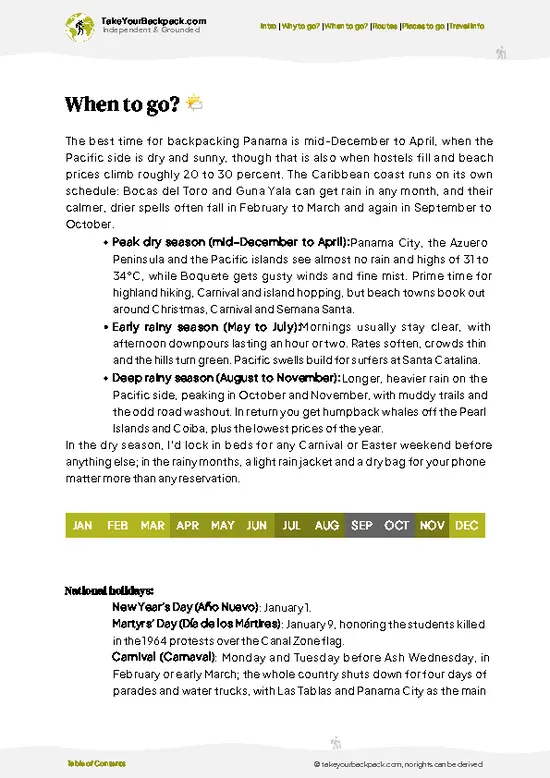
  • Weather: The dry season from mid-December to April is the safest bet for backpackers. Expect less rain, which means clearer trails and better boat rides. The wet season, May to November, brings heavy rains that can turn paths slippery and limit access to some areas.

  • Temperature: Daytime temps hover around 28-32°C (82-90°F) year-round, but humidity spikes in the wet season, making it feel hotter and stickier. Nights cool down to about 22-24°C (72-75°F), offering some relief.

  • Daylight Hours: Near the equator, daylight is steady—roughly 12 hours daily. This consistency means you can plan hikes and boat trips without worrying about early sunsets messing up your schedule.

  • Crowds: Coiba is remote, so crowds are never overwhelming. Still, the dry season draws more visitors, especially around
read more 👉

  • Weather: The dry season from mid-December to April is the safest bet for backpackers. Expect less rain, which means clearer trails and better boat rides. The wet season, May to November, brings heavy rains that can turn paths slippery and limit access to some areas.

  • Temperature: Daytime temps hover around 28-32°C (82-90°F) year-round, but humidity spikes in the wet season, making it feel hotter and stickier. Nights cool down to about 22-24°C (72-75°F), offering some relief.

  • Daylight Hours: Near the equator, daylight is steady—roughly 12 hours daily. This consistency means you can plan hikes and boat trips without worrying about early sunsets messing up your schedule.

  • Crowds: Coiba is remote, so crowds are never overwhelming. Still, the dry season draws more visitors, especially around holidays. If you want near solitude, aim for the shoulder months of December or April.

  • Seasonal Activities: Dry months are prime for snorkeling and diving, thanks to better underwater visibility. The wet season can limit these activities but is when the jungle is lushest, and wildlife is more active.

  • Price Fluctuations: Expect higher prices for tours and accommodations during the dry season, especially around Christmas and Easter. The wet season offers better deals but comes with the trade-off of less predictable weather.


Pro-tip: Visit just before or after the dry season to balance decent weather, fewer crowds, and better prices—your energy and budget will thank you.


source: climatestotravel.comJANJanuary: excellent for travelingFEBFebruary: excellent for travelingMARMarch: excellent for travelingAPRApril: highly recommended for travelingMAYMay: fair for travelingJUNJune: fair for travelingJULJuly: fair for travelingAUGAugust: fair for travelingSEPSeptember: fair for travelingOCTOctober: fair for travelingNOVNovember: fair for travelingDECDecember: highly recommended for traveling
panama-national-park-coiba-national-park
© Google | Gabi M

✈️ The backpacker research shortcutPanama Travel Guide

An offline-friendly backpacking guide with optimized travel routes, ranked highlights, transport advice, and the best areas to stay.
example page 0 from our offline Travel Guide for Panama
example page 1 from our offline Travel Guide for Panama
example page 2 from our offline Travel Guide for Panama
example page 3 from our offline Travel Guide for Panama
example page 4 from our offline Travel Guide for Panama
example page 5 from our offline Travel Guide for Panama
example page 6 from our offline Travel Guide for Panama
example page 7 from our offline Travel Guide for Panama
The digital guide (363 pages) contains:
96 highlights, ranked by travel appeal
Optimized 5, 10 & 15-day travel routes
Cities, national parks, landmarks, beaches
How to get around
Offline-friendly for travel without Wi-Fi
👉 Click to see all 30+ guide features

📅 Plan smarter in minutes, not weeks
Month by month travel advice
Festivals & national holidays
Budget expectations

🗺️ Go to the right places, skip the overrated ones
Honest pros & cons of destinations
Top hikes, parks & viewpoints
Lesser-known places most travelers miss
Clear “worth it vs skip it” guidance

🛏️ Travel smoothly without rookie mistakes
Best areas to stay
Transport systems explained simply
Common scams & safety advice
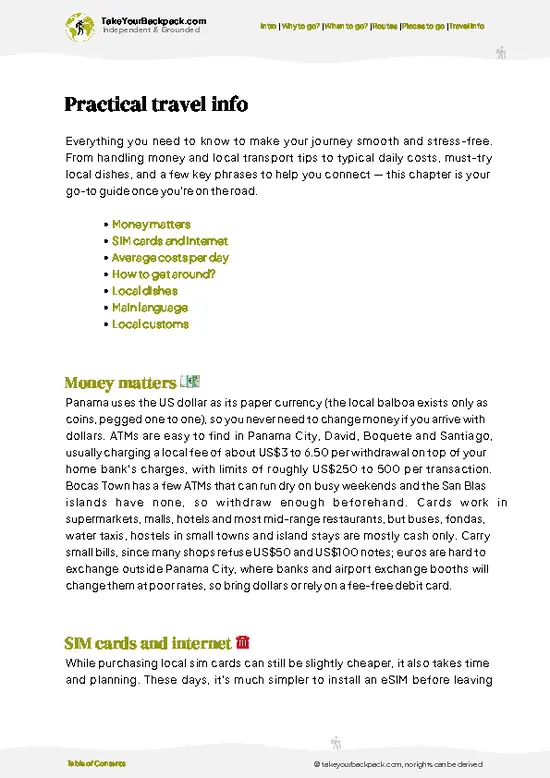
SIM cards, money & practical tips

🌍 Understand the country, not just visit it
Culture & traditions
52 Essential phrases & customs
Festivals worth planning around
Traveler-friendly historical context
Insights that make places more meaningful

📱 Built for real travel conditions
Fully downloadable PDF
Works completely offline
Optimized for phone use
Useful in remote areas & buses
Everything in one place
Save weeks of stressful planning
Get instant access to your full guide. 30‑day money-back guarantee.


By proceeding you agree to our terms.
Sent to your inbox immediately after payment • 100% Secure Checkout
Best Backpacking Travel Advisor 2025 tourism awardBest Backpacking
Travel Advisor
2025
What others say about Take Your Backpack Guides:
⭐⭐⭐⭐⭐
Fantastic, amazing amount of information!
⭐⭐⭐⭐⭐
My goodness this is amazing, it's what I've been looking for hats off too you!
⭐⭐⭐⭐⭐
I think this is absolutely BRILLIANT
⭐⭐⭐⭐
Very complete and informative. It's still missing places, but I gotta to commend you
⭐⭐⭐⭐⭐
This is truly amazing, thank you, can't wait to explore it with my kids!
⭐⭐⭐⭐⭐
Awesome resource, thank you!
⭐⭐⭐⭐⭐
This is amazing! Can't wait to explore the ones I haven't seen
⭐⭐⭐⭐
I love this! Well done, great idea.
⭐⭐⭐⭐⭐
Thanks for taking the time to make this gem!
⭐⭐⭐⭐⭐
This might be the best website I've ever seen.
⭐⭐⭐⭐⭐
Congratulations, and thank you so much for your work; it's incredibly valuable.
⭐⭐⭐⭐
In all seriousness I think you did a great job pointing out the important spots
⭐⭐⭐⭐⭐
10/10 very good
⭐⭐⭐⭐⭐
As someone who's only just starting to visit regularly this is awesome, thank you.
⭐⭐⭐⭐
Thank you very much! I'm going to visit my dad, it's going to be very useful!
⭐⭐⭐⭐⭐
This is really cool! We'll be travelling for the first time and this definitely come in handy.
⭐⭐⭐⭐⭐
You are now our minister of culture, congratulations 👨‍💼
⭐⭐⭐⭐⭐
Just wanted to tell you that this is a pearl! Going to follow your recommendations.
⭐⭐⭐⭐⭐
This is so cool. I'll definitely be using the resource for my travels soon.
⭐⭐⭐⭐⭐
This is very impressive! Good work.
⭐⭐⭐⭐⭐
This is an amazing and informative site. Very well done!

🛏️ Where to stay?Choosing the right base

Coiba National Park is a paradise for backpackers, but finding the right place to stay can make or break your experience. Inside the park, options are limited. The main accommodation is at the ranger station on Coiba Island. It’s basic but offers a unique chance to immerse yourself in nature. Expect shared facilities and a communal vibe. Bring your own food; supplies are scarce.

If you prefer more amenities, head to the nearby town of Santa Catalina. This laid-back surf town is your gateway to the park. Here, you’ll find a range of hostels and budget-friendly hotels. Options like Hostel La Buena … read more 👉
Coiba National Park is a paradise for backpackers, but finding the right place to stay can make or break your experience. Inside the park, options are limited. The main accommodation is at the ranger station on Coiba Island. It’s basic but offers a unique chance to immerse yourself in nature. Expect shared facilities and a communal vibe. Bring your own food; supplies are scarce.

If you prefer more amenities, head to the nearby town of Santa Catalina. This laid-back surf town is your gateway to the park. Here, you’ll find a range of hostels and budget-friendly hotels. Options like Hostel La Buena Vida or Hotel Santa Catalina provide a cozy atmosphere and are popular among travelers. They often help arrange boat trips to the park, which is a bonus.

Keep in mind that transportation costs can add up. Boat rides to Coiba can be pricey, especially if you’re going solo. Consider teaming up with other travelers to share costs. Also, check the weather; the rainy season can affect boat schedules.

Plan ahead, and you’ll preserve your energy and budget for the breathtaking moments that await in Coiba.

👛 Costs (as of 5 February 2026)Money, prices, and spending tips

Visiting Coiba National Park in Panama can be a rewarding experience, but it’s essential to be aware of the costs involved to avoid surprises.

Entry fees to the park are around $15 USD per person. This fee helps maintain the park and its facilities. If you plan to camp, expect to pay an additional $5 to $10 USD per night for a camping permit.

Transportation to the park is another factor. Boat rides from the mainland, typically from Santa Catalina, can range from $30 to $50 USD round trip. Prices vary based on the operator and whether you choose a private or shared boat.

Guided tours are popular for exploring the park. These can cost anywhere from $50 to $100 USD per person, depending on the length and inclusivity of the tour. Some tours include snorkeling gear, meals, or additional activities, … read more 👉
Visiting Coiba National Park in Panama can be a rewarding experience, but it’s essential to be aware of the costs involved to avoid surprises.

Entry fees to the park are around $15 USD per person. This fee helps maintain the park and its facilities. If you plan to camp, expect to pay an additional $5 to $10 USD per night for a camping permit.

Transportation to the park is another factor. Boat rides from the mainland, typically from Santa Catalina, can range from $30 to $50 USD round trip. Prices vary based on the operator and whether you choose a private or shared boat.

Guided tours are popular for exploring the park. These can cost anywhere from $50 to $100 USD per person, depending on the length and inclusivity of the tour. Some tours include snorkeling gear, meals, or additional activities, which can justify the price.

Food options are limited within the park. If you’re planning to eat, budget around $10 to $20 USD per meal at local eateries. Bringing your own snacks or meals can save money and ensure you have what you need.

Lastly, consider the cost of gear. If you need to rent snorkeling equipment or other gear, expect to pay around $10 to $20 USD per day.

By planning for these costs, you can preserve your energy and budget for the experiences that truly matter in Coiba National Park.


source: visitpanama.com
⚠️ Prices can change and everyone travels differently, so take this as a rough guide. Hope it helps you plan your adventure!

🥾 TrailsHiking Coiba national park: highlights and difficulty

Coiba National Park is a hidden gem in Panama, offering some fantastic hiking opportunities with breathtaking views and diverse wildlife. The terrain varies from sandy beaches to dense tropical forests, making it a treat for nature lovers. While the trails aren’t super extensive, the ones available lead you through lush landscapes and along stunning coastlines.

One of the main trails is Sendero de la Isla Coiba. Here are the details:
  • Length: 5 km
  • Estimated Duration: 2-3 hours
  • Difficulty Level: Moderate
  • Key Features: Coastal views, mangrove forests, and opportunities for wildlife spotting like monkeys
read more 👉
Coiba National Park is a hidden gem in Panama, offering some fantastic hiking opportunities with breathtaking views and diverse wildlife. The terrain varies from sandy beaches to dense tropical forests, making it a treat for nature lovers. While the trails aren’t super extensive, the ones available lead you through lush landscapes and along stunning coastlines.

One of the main trails is Sendero de la Isla Coiba. Here are the details:
  • Length: 5 km
  • Estimated Duration: 2-3 hours
  • Difficulty Level: Moderate
  • Key Features: Coastal views, mangrove forests, and opportunities for wildlife spotting like monkeys and various bird species.
  • Terrain: Mostly flat with some uneven sections, sandy paths, and occasional rocky areas.

Reaching Coiba can be a bit of an adventure, as you’ll need to take a boat from Santa Catalina, which is about a 2-hour bus ride from David. Public transport is available, but it’s best to check schedules ahead of time since they can be a bit hit or miss. The park isn’t overly crowded, especially compared to more popular spots, so you can enjoy the tranquility of nature. Just be ready for a small entrance fee to help with park maintenance. Overall, it’s a sweet spot for those looking to escape the hustle and bustle and dive into some beautiful scenery.
⚠️ Hiking info can sometimes be outdated or inaccurate. Before you hit the trail, check the latest conditions with locals. If you do spot anything that's off, I'd love to hear from you, so I can update it for fellow travelers.

🛡️ SafetyStaying Safe: What Travelers Should Know

Coiba National Park is a treasure, but it’s essential to approach it with a grounded mindset. The weather can shift quickly, especially during the rainy season from May to November. Be prepared for sudden downpours; a lightweight, waterproof jacket is your best friend.

The terrain varies, with some trails featuring steep sections and uneven footing. Navigation can be tricky, so a reliable map or GPS device is crucial. Don’t underestimate river crossings; they can be swift after rain, so assess conditions carefully before proceeding.

Wildlife encounters are part of the experience. You might spot monkeys or sea turtles, but keep your distance. Feeding animals disrupts their natural behavior and can lead to unwanted encounters.

First-timers often overlook the importance of pacing. Take your … read more 👉
Coiba National Park is a treasure, but it’s essential to approach it with a grounded mindset. The weather can shift quickly, especially during the rainy season from May to November. Be prepared for sudden downpours; a lightweight, waterproof jacket is your best friend.

The terrain varies, with some trails featuring steep sections and uneven footing. Navigation can be tricky, so a reliable map or GPS device is crucial. Don’t underestimate river crossings; they can be swift after rain, so assess conditions carefully before proceeding.

Wildlife encounters are part of the experience. You might spot monkeys or sea turtles, but keep your distance. Feeding animals disrupts their natural behavior and can lead to unwanted encounters.

First-timers often overlook the importance of pacing. Take your time; the trails are designed for exploration, not speed. Proper footwear is vital—opt for sturdy hiking boots with good grip. With these considerations in mind, you’ll preserve your energy and budget for the moments that truly matter.

Other Panamanian national parks near Coiba

Explore more nearby:


💡 Not sure where to go next?
Create a personalized itinerary for Panama including Coiba and the places that fit your trip.

Generate my itinerary

👉 Discover all national parks

Or checkout all Panama has to offer (think cities, towns, villages, national parks, hikes, beaches, festivals)
Country photo of Panama

We 💚 feedbackFinal thoughts on exploring Coiba

Coiba National Park is a slice of paradise for those who crave untouched nature. The marine life here is extraordinary—snorkeling with vibrant fish and sea turtles feels like stepping into another world. But be prepared: getting to the park can be a hassle. Limited boat schedules and the need for advance planning can drain your energy. Embrace the journey, though; it’s all part of the adventure. Just keep your expectations in check, and you’ll be golden.

✈️ When did I visit Panama?
Panama I visited during my half year trip through South and Central America back in 2003

✍️ Help improve this page!
The information on this page is based on my own backpacking experience in Panama, supplemented with up-to-date research and feedback from other travelers. Travel details can change, so if you notice anything outdated or incomplete, feel free to let me know.


🙋‍♂️ Give feedback

👋 Meet the founderWho’s Behind Take Your Backpack?

Johan, backpacker and founder of TakeYourBackpackHi, I’m Johan (Netherlands 🇳🇱), the creator of TakeYourBackpack. Over the past decade, I’ve backpacked through 80+ countries across six continents, gaining extensive experience with independent travel, long-term trips, and overland routes.

This site is built on a combination of firsthand travel experience and carefully curated insights from other backpackers. Many guides are based on places I’ve personally visited, while others bring together tips, observations, and practical advice shared by trusted travelers I’ve met along the way.

The goal is to provide realistic, experience-driven guidance — not generic itineraries — so you can explore destinations with better context, clearer expectations, and more confidence.

Get full Panama guide •
Instant download • 96 highlights • Full Offline guide