
×

Panama🇵🇦 | national parksChagres National ParkDugout canoes, Emberá villages, canal watershed, Cerro Jefe cloud forest | things to do and best time to go

Explore Cerro ChameExplore Coiba National Park

Backpacking in Chagres
🌟 Highlightnational park ranked #6
By Johan Kruseman 🇳🇱 | Updated October 23, 2026

The decision at Chagres National Park is whether to base yourself at an Emberá village on the Río Chagres or push deeper toward the Alajuela lake side, and what tips it is how much time you have and whether you want culture or empty forest. The park sits just north of Panama City, in Panama’s capital region, and feeds the canal with water. That is why it stays protected, so access is controlled and trails are fewer than you expect. Villages arrange dugout canoes because rivers are the roads here. I once showed up at a ranger post without cash for the fee and turned around, so now I carry small bills, since card readers rarely work in the forest. Experienced travelers book boats ahead through the community and bring that cash. Howler monkeys were calling over the water when I left.

Discover everything you want to know in the 📖 Panama Travel Guide.


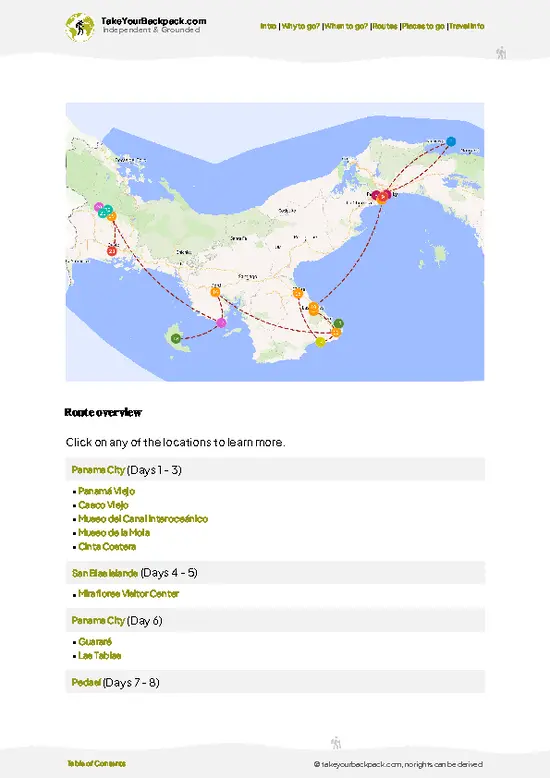
example page 0 from our offline Travel Guide for Panama
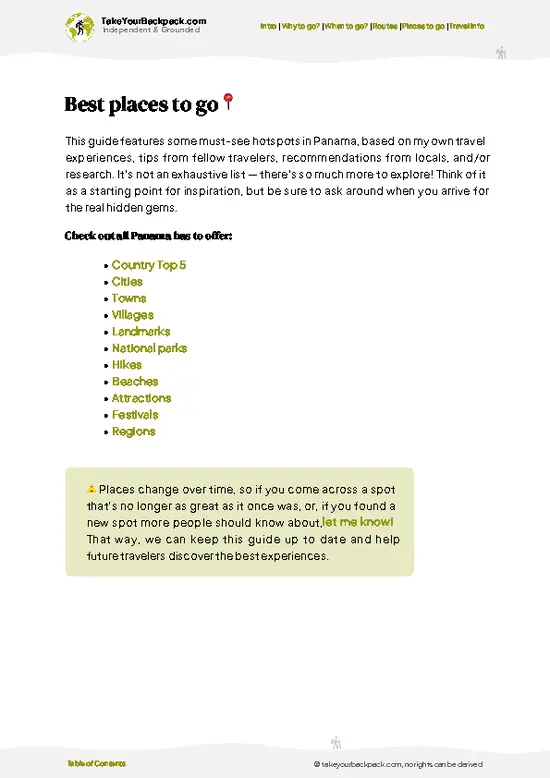
example page 1 from our offline Travel Guide for Panama
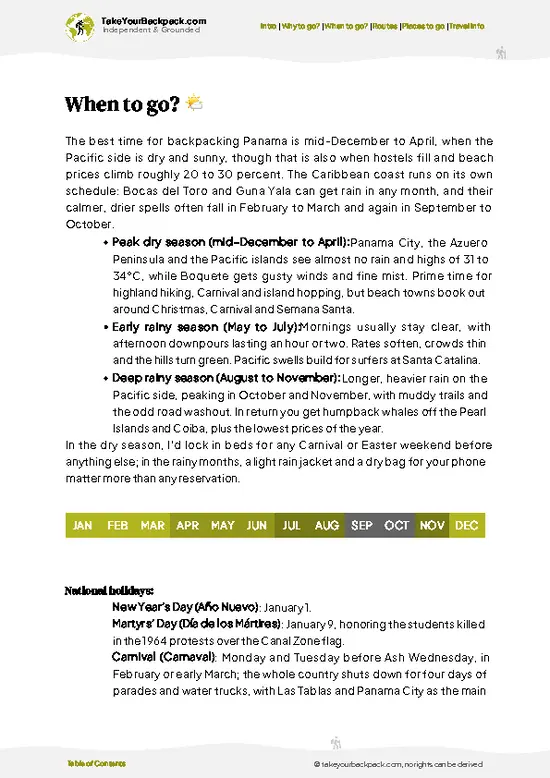
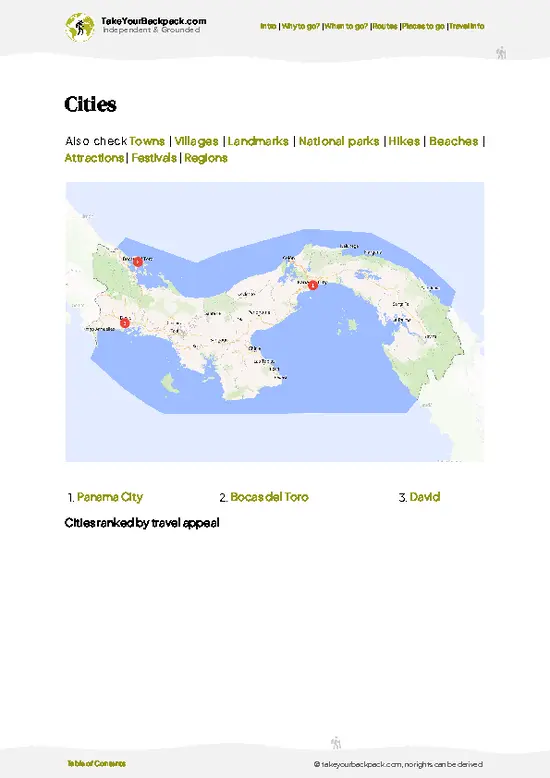
example page 2 from our offline Travel Guide for Panama
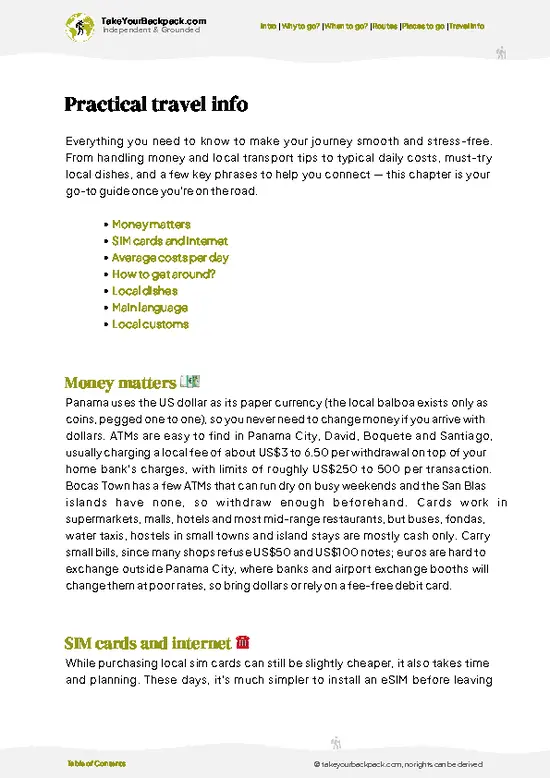
example page 3 from our offline Travel Guide for Panama
example page 4 from our offline Travel Guide for Panama
example page 5 from our offline Travel Guide for Panama
example page 6 from our offline Travel Guide for Panama
example page 7 from our offline Travel Guide for Panama
Loading the map 🌍
CLICK TO FILTER
cities
towns
villages
landmarks
national parks
hikes
beaches
attractions
festivals
regions
SHOW COUNTRY’S BESTSHOW ALL

✨ Why go?
Ranked #6 national park in Panama
What makes this national park worth exploring

Chagres National Park supplies most of the water that runs the Panama Canal, and it sits close enough to Panama City that you can be under forest canopy within a morning. That proximity is the main draw. You skip the long haul to Darién or Chiriquí and still get real rainforest, with howler monkeys roaring before dawn and toucans crossing the clearings.

Independent travelers do well here because the park rewards a self-directed approach. The Emberá communities along the Río Chagres run their own dugout canoe transfers and village visits, so you can deal with them directly rather than buying a package. Trails near Cerro Jefe and Cerro Azul are walkable on your own, and the cloud forest up there is cool, misty and a world away from the city heat.

The flip side is that much of the interior … read more 👉
Chagres National Park supplies most of the water that runs the Panama Canal, and it sits close enough to Panama City that you can be under forest canopy within a morning. That proximity is the main draw. You skip the long haul to Darién or Chiriquí and still get real rainforest, with howler monkeys roaring before dawn and toucans crossing the clearings.

Independent travelers do well here because the park rewards a self-directed approach. The Emberá communities along the Río Chagres run their own dugout canoe transfers and village visits, so you can deal with them directly rather than buying a package. Trails near Cerro Jefe and Cerro Azul are walkable on your own, and the cloud forest up there is cool, misty and a world away from the city heat.

The flip side is that much of the interior is trackless and wet, so deep trekking calls for a guide. For a few days of flexible, low-cost exploring with a mix of river, village and ridge walks, it suits you well. Remote jungle seekers may want more.

💡 HighlightsDon't-miss highlights and experiences

  1. Río Chagres: The park’s main artery and the water source for the canal. Dugout canoe trips run upriver through lowland forest, with herons, kingfishers and the odd caiman along the banks.
  2. Emberá Villages: Several Emberá communities on the river welcome visitors with dance, crafts and fish lunches served on plantain leaves. Arrive by motorized canoe and expect a half-day visit.
  3. Lago Alajuela: A reservoir created to regulate canal water, ringed by forested hills. Boat trips and quiet shoreline picnic spots give you easy access to the park’s edge.
  4. Cerro Jefe: The highest accessible point near the capital, around 1,000 meters. Its dwarf cloud forest holds orchids, tree ferns and rare endemic plants, with birders hunting for hummingbirds along the road and short paths.
  5. Cerro Azul: A cool hill community
… read more 👉
  1. Río Chagres: The park’s main artery and the water source for the canal. Dugout canoe trips run upriver through lowland forest, with herons, kingfishers and the odd caiman along the banks.
  2. Emberá Villages: Several Emberá communities on the river welcome visitors with dance, crafts and fish lunches served on plantain leaves. Arrive by motorized canoe and expect a half-day visit.
  3. Lago Alajuela: A reservoir created to regulate canal water, ringed by forested hills. Boat trips and quiet shoreline picnic spots give you easy access to the park’s edge.
  4. Cerro Jefe: The highest accessible point near the capital, around 1,000 meters. Its dwarf cloud forest holds orchids, tree ferns and rare endemic plants, with birders hunting for hummingbirds along the road and short paths.
  5. Cerro Azul: A cool hill community with forest walks and viewpoints, where mist often drifts through the trees by midday.
  6. Sendero Los Quetzales Trail: A forest path in the Cerro Jefe area where birders scan for resplendent quetzals and other highland species in the early morning.
  7. Fort San Lorenzo: A Spanish fortress ruin on a cliff above the mouth of the Chagres, with sweeping river and sea views. It lies at the western edge of the river’s course and ties the area to its colonial history.
Chagres National Park pairs a morning at Cerro Jefe with an afternoon at Lago Alajuela, since both sit on the same side of the park and the road between them is short.
Spotted a mistake or missing something? Contact us.

Things to do near Chagres National Park

Ratings based on Tripadvisor reviews. When you book through this link, you support our work at no extra cost to you.

🌤️ When to go?Weather, crowds, and seasonal trade-offs

  • Dry Season (mid-December to April): Chagres National Park is easiest now, with trails firm, rivers lower and highs of 31 to 33°C (88 to 91°F). Nights stay warm at 22 to 24°C (72 to 75°F). Embera village visits and Lake Alajuela boat trips run most reliably, and prices for guided trips are at their highest.
  • Green Season (May to November): Rain arrives most afternoons, rivers rise and dugout canoe trips can be postponed. Temperatures hold at 24 to 31°C (75 to 88°F). Forest is lush, birding stays good, and guides and lodges often discount.
  • Daylight: Days run about 11 to 12.5 hours all year, so start hikes early to finish before afternoon storms.
  • Crowds: Weekends and Panamanian holidays bring day-trippers from Panama City to Embera villages and Lake Alajuela. Weekdays are quiet.
Book Embera trips … read more 👉
  • Dry Season (mid-December to April): Chagres National Park is easiest now, with trails firm, rivers lower and highs of 31 to 33°C (88 to 91°F). Nights stay warm at 22 to 24°C (72 to 75°F). Embera village visits and Lake Alajuela boat trips run most reliably, and prices for guided trips are at their highest.
  • Green Season (May to November): Rain arrives most afternoons, rivers rise and dugout canoe trips can be postponed. Temperatures hold at 24 to 31°C (75 to 88°F). Forest is lush, birding stays good, and guides and lodges often discount.
  • Daylight: Days run about 11 to 12.5 hours all year, so start hikes early to finish before afternoon storms.
  • Crowds: Weekends and Panamanian holidays bring day-trippers from Panama City to Embera villages and Lake Alajuela. Weekdays are quiet.
Book Embera trips for a weekday in January or February and expect a calm river.


source: climatestotravel.comJANJanuary: excellent for travelingFEBFebruary: excellent for travelingMARMarch: excellent for travelingAPRApril: excellent for travelingMAYMay: fair for travelingJUNJune: fair for travelingJULJuly: fair for travelingAUGAugust: fair for travelingSEPSeptember: fair for travelingOCTOctober: fair for travelingNOVNovember: good for travelingDECDecember: highly recommended for traveling
panama-national-park-chagres-national-park
© Google | Vlad Barjovanu

✈️ The backpacker research shortcutPanama Travel Guide

An offline-friendly backpacking guide with optimized travel routes, ranked highlights, transport advice, and the best areas to stay.
example page 0 from our offline Travel Guide for Panama
example page 1 from our offline Travel Guide for Panama
example page 2 from our offline Travel Guide for Panama
example page 3 from our offline Travel Guide for Panama
example page 4 from our offline Travel Guide for Panama
example page 5 from our offline Travel Guide for Panama
example page 6 from our offline Travel Guide for Panama
example page 7 from our offline Travel Guide for Panama
The digital guide (272 pages) contains:
✅ 89 highlights, ranked by travel appeal
✅ Optimized 5, 10 & 15-day travel routes
✅ Cities, national parks, landmarks, beaches
✅ How to get around
✅ Offline-friendly for travel without Wi-Fi
👉 Click to see all 30+ guide features

📅 Plan smarter in minutes, not weeks
✅ Month by month travel advice
✅ Festivals & national holidays
✅ Budget expectations

🗺️ Go to the right places, skip the overrated ones
✅ Honest pros & cons of destinations
✅ Top hikes, parks & viewpoints
✅ Lesser-known places most travelers miss
✅ Clear “worth it vs skip it” guidance

🛏️ Travel smoothly without rookie mistakes
✅ Best areas to stay
✅ Transport systems explained simply
✅ Common scams & safety advice
✅ SIM cards, money & practical tips

🌍 Understand the country, not just visit it
✅ Culture & traditions
✅ 52 Essential phrases & customs
✅ Festivals worth planning around
✅ Traveler-friendly historical context
✅ Insights that make places more meaningful

📱 Built for real travel conditions
✅ Fully downloadable PDF
✅ Works completely offline
✅ Optimized for phone use
✅ Useful in remote areas & buses
✅ Everything in one place
Stop searching, start planning
Get instant access to your full guide. 30‑day money-back guarantee.
+ Add another guide for just

By proceeding you agree to our terms.
Sent to your inbox immediately after payment • 100% Secure Checkout
Best Backpacking Travel Advisor 2025 tourism awardBest Backpacking
Travel Advisor
2025
What others say about Take Your Backpack Guides:
⭐⭐⭐⭐⭐
Fantastic, amazing amount of information!
⭐⭐⭐⭐⭐
My goodness this is amazing, it's what I've been looking for hats off too you!
⭐⭐⭐⭐⭐
I think this is absolutely BRILLIANT
⭐⭐⭐⭐
Very complete and informative. It's still missing places, but I gotta to commend you
⭐⭐⭐⭐⭐
This is truly amazing, thank you, can't wait to explore it with my kids!
⭐⭐⭐⭐⭐
Awesome resource, thank you!
⭐⭐⭐⭐⭐
This is amazing! Can't wait to explore the ones I haven't seen
⭐⭐⭐⭐
I love this! Well done, great idea.
⭐⭐⭐⭐⭐
Thanks for taking the time to make this gem!
⭐⭐⭐⭐⭐
This might be the best website I've ever seen.
⭐⭐⭐⭐⭐
Congratulations, and thank you so much for your work; it's incredibly valuable.
⭐⭐⭐⭐
In all seriousness I think you did a great job pointing out the important spots
⭐⭐⭐⭐⭐
10/10 very good
⭐⭐⭐⭐⭐
As someone who's only just starting to visit regularly this is awesome, thank you.
⭐⭐⭐⭐
Thank you very much! I'm going to visit my dad, it's going to be very useful!
⭐⭐⭐⭐⭐
This is really cool! We'll be travelling for the first time and this definitely come in handy.
⭐⭐⭐⭐⭐
You are now our minister of culture, congratulations 👨‍💼
⭐⭐⭐⭐⭐
Just wanted to tell you that this is a pearl! Going to follow your recommendations.
⭐⭐⭐⭐⭐
This is so cool. I'll definitely be using the resource for my travels soon.
⭐⭐⭐⭐⭐
This is very impressive! Good work.
⭐⭐⭐⭐⭐
This is an amazing and informative site. Very well done!

🛏️ Where to stay?Choosing the right base

Chagres National Park has no hotels inside, so most backpackers sleep in Panama City (about 1 to 1.5 hours by road to the park edge) or in an Emberá village within the park. The community lodges on the Río Chagres, such as those around Emberá Drua, Parara Puru and Quebrada Bonita, offer simple thatched cabins or hammock platforms with mosquito nets, usually US$25 to 60 per person with meals, and a few take overnight guests who arrive by dugout canoe. Staying with a family gets you river bathing, home cooking and an early start on the water that day trippers never see. Bring cash, since there are … read more 👉
Chagres National Park has no hotels inside, so most backpackers sleep in Panama City (about 1 to 1.5 hours by road to the park edge) or in an Emberá village within the park. The community lodges on the Río Chagres, such as those around Emberá Drua, Parara Puru and Quebrada Bonita, offer simple thatched cabins or hammock platforms with mosquito nets, usually US$25 to 60 per person with meals, and a few take overnight guests who arrive by dugout canoe. Staying with a family gets you river bathing, home cooking and an early start on the water that day trippers never see. Bring cash, since there are no ATMs. In Panama City, hostels in Casco Viejo and Bella Vista run about US$12 to 25 for a dorm bed and are the easiest place to book a tour pickup. Gamboa, roughly 40 minutes from the capital, has a few small hotels and lodges at the Chagres river mouth near the park's western edge, handy for early boat departures. Colón, on the Caribbean side, is rougher and I would skip it for a night. Camping inside the park needs ranger approval, so arrange it through the ANAM-era office, now the Ministry of Environment, in advance.

👛 Costs (as of 23 October 2026)Typical daily expenses

Chagres National Park costs a backpacker about US$85 a day when you combine a guided village visit, transport from Panama City and simple meals.
CategoryBudget RangeLocal Reality
Entrance feesUS$5 to 20Foreign visitors pay a small park fee, and Embera communities charge a village fee that often comes bundled with the tour price.
Accommodation (high season)US$12 to 35Panama City dorms are cheapest, while a basic Embera overnight with meals runs US$30 to 60.
Local transportUS$10 to 30Buses and shared taxis reach Gamboa or the lake area. Dugout canoe rides to villages are usually included in tours.
Guided toursUS$25 to 75Day trips with canoe, lunch and a cultural demonstration are common. Group tours cost less per person.
Food and suppliesUS$8 to 20Fried fish with patacones is often served in villages.
… read more 👉
Chagres National Park costs a backpacker about US$85 a day when you combine a guided village visit, transport from Panama City and simple meals.
CategoryBudget RangeLocal Reality
Entrance feesUS$5 to 20Foreign visitors pay a small park fee, and Embera communities charge a village fee that often comes bundled with the tour price.
Accommodation (high season)US$12 to 35Panama City dorms are cheapest, while a basic Embera overnight with meals runs US$30 to 60.
Local transportUS$10 to 30Buses and shared taxis reach Gamboa or the lake area. Dugout canoe rides to villages are usually included in tours.
Guided toursUS$25 to 75Day trips with canoe, lunch and a cultural demonstration are common. Group tours cost less per person.
Food and suppliesUS$8 to 20Fried fish with patacones is often served in villages. Bring water, snacks and repellent from the city.
Total Daily BudgetUS$60 to 180Roughly US$85 for a typical budget day with a shared tour and a dorm bed.
⚠️ Prices can change and everyone travels differently, so take this as a rough guide. Hope it helps you plan your adventure!

🥾 TrailsScenic routes and wildlife spotting in Chagres

Chagres National Park offers walks that range from short cloud forest strolls to rough multi-day jungle treks, with most independent hikers sticking to the ridges near Cerro Jefe and Cerro Azul.

  • Cerro Jefe Road and Paths: Easy to moderate, 2 to 4 hours of wandering. A paved road climbs to the summit, with short footpaths into dwarf cloud forest. Expect mud, mist, orchids and bird calls.
  • Sendero Los Quetzales: Easy to moderate, around 2 to 3 hours. Soft forest floor, tree ferns and mossy trunks. Dawn is best for birds.
  • Cerro Azul Forest Walks: Easy, 1 to 3 hours along quiet roads and tracks between
… read more 👉
Chagres National Park offers walks that range from short cloud forest strolls to rough multi-day jungle treks, with most independent hikers sticking to the ridges near Cerro Jefe and Cerro Azul.

  • Cerro Jefe Road and Paths: Easy to moderate, 2 to 4 hours of wandering. A paved road climbs to the summit, with short footpaths into dwarf cloud forest. Expect mud, mist, orchids and bird calls.
  • Sendero Los Quetzales: Easy to moderate, around 2 to 3 hours. Soft forest floor, tree ferns and mossy trunks. Dawn is best for birds.
  • Cerro Azul Forest Walks: Easy, 1 to 3 hours along quiet roads and tracks between hillside homes, with lookouts toward the lake and canal basin.
  • Emberá River Walks: Easy, 1 to 2 hours. Short jungle paths near villages along the Río Chagres, often to small waterfalls or swimming spots, usually with a community guide.
  • Fort San Lorenzo Approach: Easy, about 1 hour. Walk the old ruins and surrounding forest above the river mouth.

Wildlife is the highlight. Howler monkeys, sloths, coatis, toucans, and hundreds of bird species live here, and the rarer cats stay deep in the interior. Terrain is slippery after rain, and the wet season brings heavy downpours and swollen streams, so waterproof footwear matters.

Getting to the park is straightforward from Panama City by bus to the gateway towns followed by a taxi or arranged transfer, and the Emberá villages require a boat. Visitor numbers are low outside weekends, and you will often have the trails to yourself. An entrance fee applies, typically a few dollars, paid at ranger posts or arranged through village operators.
⚠️ Hiking info can sometimes be outdated or inaccurate. Before you hit the trail, check the latest conditions with locals. If you do spot anything that's off, I'd love to hear from you, so I can update it for fellow travelers.

🛡️ SafetySafety Tips and Common Scams in Chagres

Chagres National Park is straightforward if you respect the river and the rain. The Río Chagres rises fast after storms upstream, so a calm morning can turn into a brown, swollen current by afternoon. Skip crossings when water is rising, and ask your boatman or village guide before wading anywhere. From May to December downpours are daily, so pack a dry bag and shoes with real grip, because clay trails turn slick. Humidity is heavy, so start early, drink more than you think you need and carry about 3 liters. Insects are the most constant nuisance, so bring repellent and long, light sleeves. Snakes, including the venomous fer-de-lance, live here, so watch your footing and never reach under logs. Jaguars and pumas exist but are almost never met on the trail. Hire a local guide for anything beyond … read more 👉
Chagres National Park is straightforward if you respect the river and the rain. The Río Chagres rises fast after storms upstream, so a calm morning can turn into a brown, swollen current by afternoon. Skip crossings when water is rising, and ask your boatman or village guide before wading anywhere. From May to December downpours are daily, so pack a dry bag and shoes with real grip, because clay trails turn slick. Humidity is heavy, so start early, drink more than you think you need and carry about 3 liters. Insects are the most constant nuisance, so bring repellent and long, light sleeves. Snakes, including the venomous fer-de-lance, live here, so watch your footing and never reach under logs. Jaguars and pumas exist but are almost never met on the trail. Hire a local guide for anything beyond the established paths, since navigation in dense forest is hard and phone signal is patchy.

FAQCommon questions from travelers

Two to three days covers Chagres National Park well. A single day trip from Panama City (about 1.5 hours each way) gets you a dugout canoe ride and an Emberá village visit. An overnight in a community lodge adds jungle walks, river swimming and a quieter evening, while a third day suits a longer hike or boat trip toward Lake Alajuela.
Yes, but expect to rely on organized transport for the last stretch. Buses run from Panama City's Albrook terminal to Cáceres or Gamboa-area stops for about US$1 to 3, then you pay a boatman for a dugout canoe to reach Emberá villages in Chagres National Park. Tours from Panama City cost roughly US$60 to 100 per person with transfers, lunch and village visit included. A taxi from the city to the boat landing is about US$40 to 60.
Yes, you pay an entrance fee to Chagres National Park, typically a few dollars for foreigners, often bundled into community or tour prices. Emberá villages charge their own visit fee, generally US$20 to 30 per person with lunch and a cultural show. Overnight camping or independent trekking requires approval from the Ministry of Environment, so arrange it in Panama City before you travel.
⚠️ Things can change over time, so always validate details locally before you go.

Other Panamanian national parks near Chagres

Explore more nearby:


💡 Not sure where to go next?
Create a personalized itinerary for Panama including Chagres and the places that fit your trip.

Generate my itinerary

👉 Discover all national parks

Or checkout all Panama has to offer (think cities, towns, villages, national parks, hikes, beaches, festivals)
Country photo of Panama

We 💚 feedbackFinal thoughts on exploring Chagres

Chagres National Park is at its best in the early morning, when mist hangs over the river and the monkeys are loudest. Go early in the drier months so trails are firmer, and I would bring a dry bag and cash for the canoe.

✈️ When did I visit Panama?
Panama I visited during my half year trip through South and Central America back in 2003

✍️ Help improve this page!
The information on this page is based on my own backpacking experience in Panama, supplemented with up-to-date research and feedback from other travelers. Travel details can change, so if you notice anything outdated or incomplete, feel free to let me know.


🙋‍♂️ Give feedback

👋 Meet the founderWho’s Behind Take Your Backpack?

Johan, backpacker and founder of TakeYourBackpackHi, I’m Johan (Netherlands 🇳🇱), the creator of TakeYourBackpack. Over the past 3 decades, I’ve backpacked through 90+ countries across six continents, gaining extensive experience with independent travel, long-term trips, and overland routes.

This site is built on a combination of firsthand travel experience and carefully curated insights from other backpackers. Many guides are based on places I’ve personally visited, while others bring together tips, observations, and practical advice shared by trusted travelers I’ve met along the way.

The goal is to provide realistic, experience-driven guidance — not generic itineraries — so you can explore destinations with better context, clearer expectations, and more confidence.