×

Panama🇵🇦 | national parksSan Lorenzo National ParkChagres river mouth, UNESCO fortress, sloth road, Achiote birding | things to do and best time to go

Explore GamboaExplore Biomuseo

Backpacking in San Lorenzo
By Johan Kruseman 🇳🇱 | Updated October 23, 2026

The cold Balboa beer I bought from a vendor near the fort cost US$2, and I drank it on a wall above the Chagres River mouth while howler monkeys grumbled behind me. San Lorenzo National Park sits on the Caribbean side of Panama, west of Colón across the canal. Trails are short and mostly flat, with toucans, sloths and the occasional white-faced capuchin. Access is easy on a paved road, so crowds stay thin, though shade is patchy and the forest is small. Unlike Soberanía National Park near Panama City, it pairs jungle walking with a Spanish fort.

Discover everything you want to know in the 📖 Panama Travel Guide.


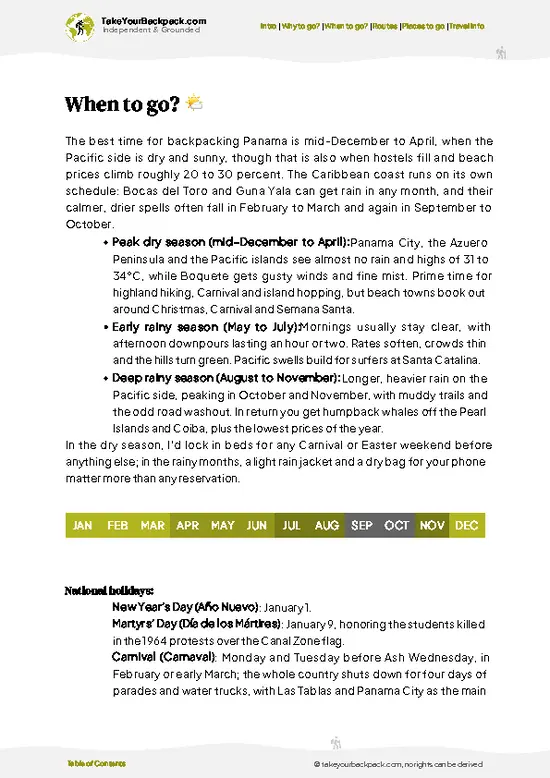
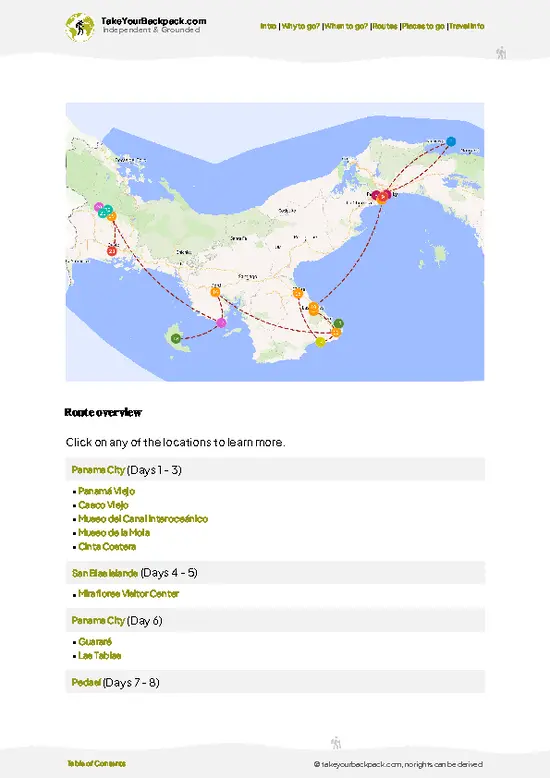
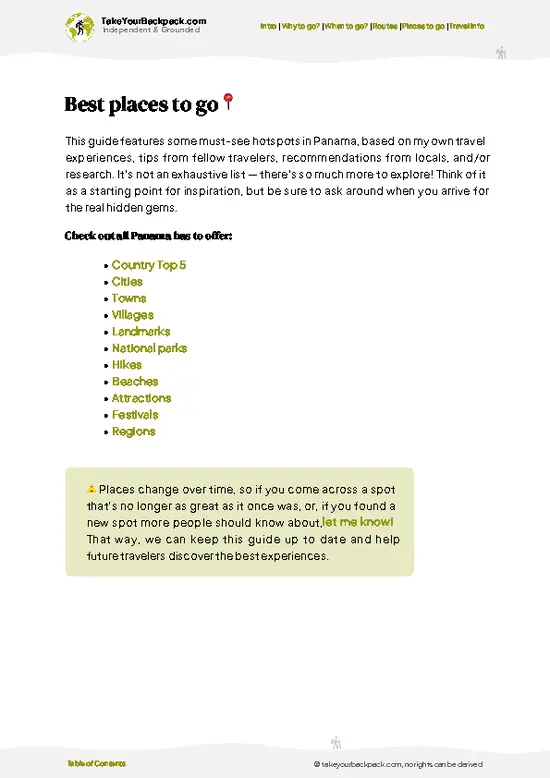
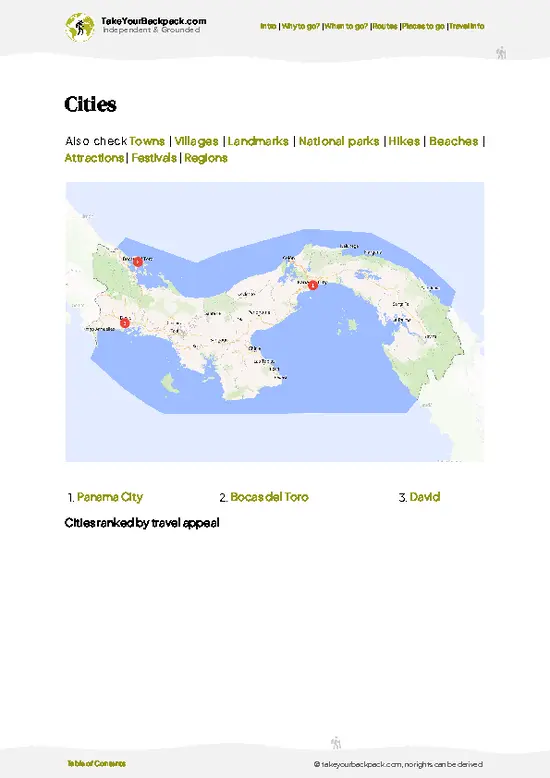
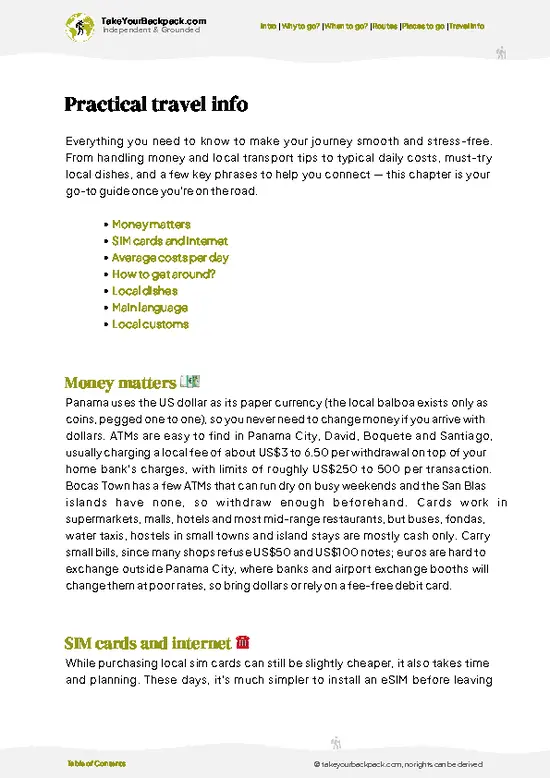
example page 0 from our offline Travel Guide for Panama
example page 1 from our offline Travel Guide for Panama
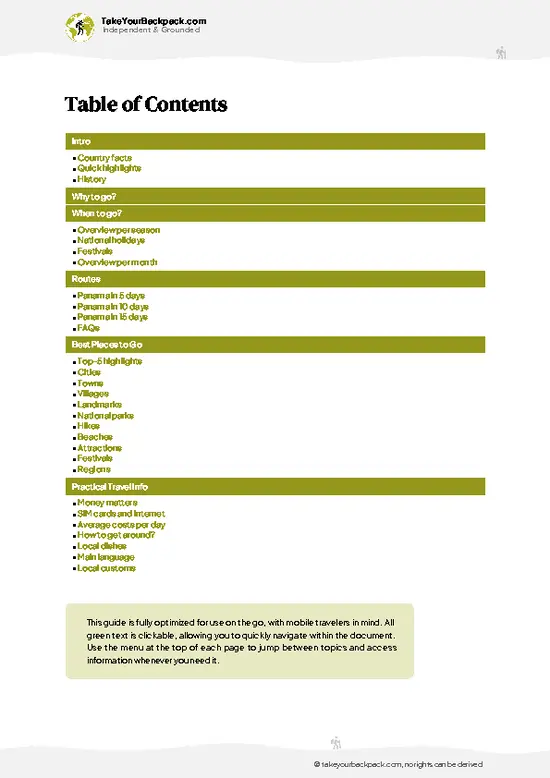
example page 2 from our offline Travel Guide for Panama
example page 3 from our offline Travel Guide for Panama
example page 4 from our offline Travel Guide for Panama
example page 5 from our offline Travel Guide for Panama
example page 6 from our offline Travel Guide for Panama
example page 7 from our offline Travel Guide for Panama
Loading the map 🌍
CLICK TO FILTER
cities
towns
villages
landmarks
national parks
hikes
beaches
attractions
festivals
regions
SHOW COUNTRY’S BESTSHOW ALL

✨ Why go?
Ranked #14 national park in Panama
Why visitors keep coming back

San Lorenzo National Park suits independent travelers because everything sits within a few kilometers of the main road, so you can walk it at your own pace without a guide. The big draw is Fort San Lorenzo, a 17th-century Spanish fortress on a cliff above the Chagres River mouth, where you can read the history on your own and watch ships pass. Birders also come for the Achiote Road corridor, a quiet strip where toucans, trogons and raptors show up without any jungle tour. Both are cheap to reach and easy to combine with the Caribbean coast.

💡 HighlightsThe experiences that define the visit

  1. Fort San Lorenzo: A UNESCO-listed Spanish fortress on a headland above the Chagres River mouth. Stone walls, old cannons and a dry moat give wide views over the sea and river.
  2. Chagres River mouth viewpoint: From the fort walls you can watch the brown river meet the Caribbean, with ships and fishing boats crossing the bar.
  3. Howler monkey troops: Their roars carry across the forest around the fort, and the animals are often visible in the canopy beside the access road.
  4. Achiote Road: A quiet road through secondary forest that birders walk for toucans, trogons, hawks and tanagers.
  5. Sloth spotting along the entrance road: Two-toed and three-toed sloths hang in cecropia trees beside the lane, easiest to spot with binoculars.
  6. Fort moat and dungeon ruins: Walk the lower rooms and the drawbridge area to understand
… read more 👉
  1. Fort San Lorenzo: A UNESCO-listed Spanish fortress on a headland above the Chagres River mouth. Stone walls, old cannons and a dry moat give wide views over the sea and river.
  2. Chagres River mouth viewpoint: From the fort walls you can watch the brown river meet the Caribbean, with ships and fishing boats crossing the bar.
  3. Howler monkey troops: Their roars carry across the forest around the fort, and the animals are often visible in the canopy beside the access road.
  4. Achiote Road: A quiet road through secondary forest that birders walk for toucans, trogons, hawks and tanagers.
  5. Sloth spotting along the entrance road: Two-toed and three-toed sloths hang in cecropia trees beside the lane, easiest to spot with binoculars.
  6. Fort moat and dungeon ruins: Walk the lower rooms and the drawbridge area to understand how the fort defended the river against pirates.
  7. Gatun Locks overlook nearby: The road to the park passes close to the Atlantic-side canal works, a good stop on the way in or out.
For a first visit, Fort San Lorenzo is the one to prioritize, since it combines history, views and monkeys in a single easy walk.
Spotted a mistake or missing something? Contact us.

Things to do near San Lorenzo National Park

Ratings based on Tripadvisor reviews. When you book through this link, you support our work at no extra cost to you.

🌤️ When to go?Weather, crowds, and seasonal trade-offs

  • Dry Season (mid-December to April): Trails around Fort San Lorenzo and the Chagres River mouth are firmest, days run 30 to 33°C (86 to 91°F) and nights hold near 23°C (73°F). Weekend crowds from Colón and Panama City peak, and guided boat trips cost most.
  • Early Wet Season (May to July): Showers arrive most afternoons, so start hikes by 7 a.m. Mud slows the forest paths, though crowds thin.
  • Late Wet Season (August to mid-December): Rain is heaviest on the Caribbean side, especially November, with 26 to 30°C (79 to 86°F) and some rivers running high. Lodging is easiest to bargain for.
Book your Chagres boat or guide for a weekday in February or March to dodge the weekend rush.

source: climatestotravel.comJANJanuary: excellent for travelingFEBFebruary: excellent for travelingMARMarch: excellent for travelingAPRApril: highly recommended for travelingMAYMay: good for travelingJUNJune: fair for travelingJULJuly: fair for travelingAUGAugust: fair for travelingSEPSeptember: fair for travelingOCTOctober: fair for travelingNOVNovember: good for travelingDECDecember: highly recommended for traveling
when-to-go

✈️ The backpacker research shortcutPanama Travel Guide

An offline-friendly backpacking guide with optimized travel routes, ranked highlights, transport advice, and the best areas to stay.
example page 0 from our offline Travel Guide for Panama
example page 1 from our offline Travel Guide for Panama
example page 2 from our offline Travel Guide for Panama
example page 3 from our offline Travel Guide for Panama
example page 4 from our offline Travel Guide for Panama
example page 5 from our offline Travel Guide for Panama
example page 6 from our offline Travel Guide for Panama
example page 7 from our offline Travel Guide for Panama
The digital guide (272 pages) contains:
✅ 89 highlights, ranked by travel appeal
✅ Optimized 5, 10 & 15-day travel routes
✅ Cities, national parks, landmarks, beaches
✅ How to get around
✅ Offline-friendly for travel without Wi-Fi
👉 Click to see all 30+ guide features

📅 Plan smarter in minutes, not weeks
✅ Month by month travel advice
✅ Festivals & national holidays
✅ Budget expectations

🗺️ Go to the right places, skip the overrated ones
✅ Honest pros & cons of destinations
✅ Top hikes, parks & viewpoints
✅ Lesser-known places most travelers miss
✅ Clear “worth it vs skip it” guidance

🛏️ Travel smoothly without rookie mistakes
✅ Best areas to stay
✅ Transport systems explained simply
✅ Common scams & safety advice
✅ SIM cards, money & practical tips

🌍 Understand the country, not just visit it
✅ Culture & traditions
✅ 52 Essential phrases & customs
✅ Festivals worth planning around
✅ Traveler-friendly historical context
✅ Insights that make places more meaningful

📱 Built for real travel conditions
✅ Fully downloadable PDF
✅ Works completely offline
✅ Optimized for phone use
✅ Useful in remote areas & buses
✅ Everything in one place
Stop searching, start planning
Get instant access to your full guide. 30‑day money-back guarantee.
+ Add another guide for just

By proceeding you agree to our terms.
Sent to your inbox immediately after payment • 100% Secure Checkout
Best Backpacking Travel Advisor 2025 tourism awardBest Backpacking
Travel Advisor
2025
What others say about Take Your Backpack Guides:
⭐⭐⭐⭐⭐
Fantastic, amazing amount of information!
⭐⭐⭐⭐⭐
My goodness this is amazing, it's what I've been looking for hats off too you!
⭐⭐⭐⭐⭐
I think this is absolutely BRILLIANT
⭐⭐⭐⭐
Very complete and informative. It's still missing places, but I gotta to commend you
⭐⭐⭐⭐⭐
This is truly amazing, thank you, can't wait to explore it with my kids!
⭐⭐⭐⭐⭐
Awesome resource, thank you!
⭐⭐⭐⭐⭐
This is amazing! Can't wait to explore the ones I haven't seen
⭐⭐⭐⭐
I love this! Well done, great idea.
⭐⭐⭐⭐⭐
Thanks for taking the time to make this gem!
⭐⭐⭐⭐⭐
This might be the best website I've ever seen.
⭐⭐⭐⭐⭐
Congratulations, and thank you so much for your work; it's incredibly valuable.
⭐⭐⭐⭐
In all seriousness I think you did a great job pointing out the important spots
⭐⭐⭐⭐⭐
10/10 very good
⭐⭐⭐⭐⭐
As someone who's only just starting to visit regularly this is awesome, thank you.
⭐⭐⭐⭐
Thank you very much! I'm going to visit my dad, it's going to be very useful!
⭐⭐⭐⭐⭐
This is really cool! We'll be travelling for the first time and this definitely come in handy.
⭐⭐⭐⭐⭐
You are now our minister of culture, congratulations 👨‍💼
⭐⭐⭐⭐⭐
Just wanted to tell you that this is a pearl! Going to follow your recommendations.
⭐⭐⭐⭐⭐
This is so cool. I'll definitely be using the resource for my travels soon.
⭐⭐⭐⭐⭐
This is very impressive! Good work.
⭐⭐⭐⭐⭐
This is an amazing and informative site. Very well done!

🛏️ Where to stay?Where staying makes the most sense

No lodging operates inside San Lorenzo National Park, so most backpackers sleep in Gamboa or Colón. Gamboa, about 1.5 hours by road from the fort, has the Gamboa Rainforest Reserve resort (US$150 and up) and a few simple guesthouses at US$30 to 60. For the cheapest beds, stay in Panama City’s Casco Viejo or Via España area, where hostel dorms run US$12 to 25, then take an early bus to Colón. Colón has basic hotels around US$35 to 60, but the city has rough areas, so arrive by day and use taxis at night. Portobelo to the east offers small guesthouses at US$30 to 50 and a calmer feel. Sherman and … read more 👉
No lodging operates inside San Lorenzo National Park, so most backpackers sleep in Gamboa or Colón. Gamboa, about 1.5 hours by road from the fort, has the Gamboa Rainforest Reserve resort (US$150 and up) and a few simple guesthouses at US$30 to 60. For the cheapest beds, stay in Panama City’s Casco Viejo or Via España area, where hostel dorms run US$12 to 25, then take an early bus to Colón. Colón has basic hotels around US$35 to 60, but the city has rough areas, so arrive by day and use taxis at night. Portobelo to the east offers small guesthouses at US$30 to 50 and a calmer feel. Sherman and Fort Sherman have limited options, so plan ahead and confirm availability before you arrive.

👛 Costs (as of 23 October 2026)Money, prices, and spending tips

San Lorenzo National Park costs a backpacker roughly US$52 to 135 a day, depending mostly on where you sleep and how you reach the fort.
CategoryBudget RangeLocal Reality
Entrance feeUS$5 to 10Foreign visitors pay a small fee at the fort gate, paid in US dollars.
Accommodation (high season)US$12 to 35Dorms in Panama City or basic Colón rooms.
Local transportUS$10 to 30Bus to Colón, then a taxi or shared ride to the fort, with a return leg.
Guide or boatUS$15 to 40Optional guide or short Chagres boat trip, cheaper when split.
Food and suppliesUS$10 to 20Fondas serve set lunches for US$4 to 7. Bring water and snacks.
Total Daily BudgetUS$52 to 135Typical mid-range day with one guide.
⚠️ Prices can change and everyone travels differently, so take this as a rough guide. Hope it helps you plan your adventure!

🥾 TrailsDiscover San Lorenzo's top trails and natural wonders

San Lorenzo National Park is a place for short, easy walks rather than long treks, and most people cover it in a half day. The terrain is flat to gently rolling, with some muddy patches after rain.
  • Fort San Lorenzo approach: Short walk from the parking area up to the fort, roughly 15 to 30 minutes. Easy, with wooden steps and stone paths. Highlights are the river views and the monkeys overhead.
  • Achiote Road: A flat road with forest on both sides, good for birding at a slow pace of 1 to 3 hours. Easy, with little shade in places.
  • Forest edge paths: Short informal paths near the fort entrance suit
… read more 👉
San Lorenzo National Park is a place for short, easy walks rather than long treks, and most people cover it in a half day. The terrain is flat to gently rolling, with some muddy patches after rain.
  • Fort San Lorenzo approach: Short walk from the parking area up to the fort, roughly 15 to 30 minutes. Easy, with wooden steps and stone paths. Highlights are the river views and the monkeys overhead.
  • Achiote Road: A flat road with forest on both sides, good for birding at a slow pace of 1 to 3 hours. Easy, with little shade in places.
  • Forest edge paths: Short informal paths near the fort entrance suit casual wildlife watching. Easy, with uneven roots.
Wildlife includes howler monkeys, sloths, toucans, trogons and the occasional capuchin. Early morning gives the best activity and the coolest walking. Reaching the park is simplest by taxi or rental car from the Colón side, since there is little public transport on the final stretch. Crowds are usually light except on weekends when school groups visit. An entrance fee applies at the fort, and it is modest, with extra fees for foreign visitors paid in US dollars.
⚠️ Hiking info can sometimes be outdated or inaccurate. Before you hit the trail, check the latest conditions with locals. If you do spot anything that's off, I'd love to hear from you, so I can update it for fellow travelers.

🛡️ SafetyScams, Hazards, and Annoyances

San Lorenzo National Park is straightforward for hikers who go in with a plan. Heat and humidity are the main strain, so carry at least 2 liters of water per person and walk early. Trails turn slick after rain, so wear shoes with grip. Snakes, ants and the occasional caiman exist, and the answer is simple: watch your footing, keep hands off vegetation and never feed monkeys. The area sits near former military ground, so stay on marked paths. Use a local guide for the Chagres River mouth, and keep valuables out of sight in Colón.

FAQFrequently asked questions about San Lorenzo

One full day covers San Lorenzo National Park, since the fort, the Chagres viewpoint and the short forest trails take 3 to 5 hours. Add a second day if you want a guided birding walk or a boat trip toward the river mouth. Many people base in Colón or Panama City, which are 1.5 to 2 hours away.
Yes, San Lorenzo National Park can be reached without a car, though it takes some effort. Take a bus from Panama City to Colón (about 1.5 to 2 hours, US$3 to 5), then a taxi to the fort for roughly US$25 to 40 each way. Tours from Panama City or Gamboa run US$60 to 120 and handle transport.
Yes, San Lorenzo National Park charges a small entrance fee, generally around US$5 to 10 for foreign visitors, payable on site. No hiking permit is normally required for the main fort and short trails. Guided birding or longer routes may need arrangements through a local operator, so confirm before you go.
⚠️ Things can change over time, so always validate details locally before you go.

Other Panamanian national parks near San Lorenzo

Explore more nearby:


💡 Not sure where to go next?
Create a personalized itinerary for Panama including San Lorenzo and the places that fit your trip.

Generate my itinerary

👉 Discover all national parks

Or checkout all Panama has to offer (think cities, towns, villages, national parks, hikes, beaches, festivals)
Country photo of Panama

We 💚 feedbackKey takeaways before you go

San Lorenzo National Park trips often go wrong when travelers arrive late and rush the fort, missing the monkeys and the birds. Get there early, walk slowly and carry binoculars. I would skip the midday visit and plan a long morning here instead.

✈️ When did I visit Panama?
Panama I visited during my half year trip through South and Central America back in 2003

✍️ Help improve this page!
The information on this page is based on my own backpacking experience in Panama, supplemented with up-to-date research and feedback from other travelers. Travel details can change, so if you notice anything outdated or incomplete, feel free to let me know.


🙋‍♂️ Give feedback

👋 Meet the founderWho’s Behind Take Your Backpack?

Johan, backpacker and founder of TakeYourBackpackHi, I’m Johan (Netherlands 🇳🇱), the creator of TakeYourBackpack. Over the past 3 decades, I’ve backpacked through 90+ countries across six continents, gaining extensive experience with independent travel, long-term trips, and overland routes.

This site is built on a combination of firsthand travel experience and carefully curated insights from other backpackers. Many guides are based on places I’ve personally visited, while others bring together tips, observations, and practical advice shared by trusted travelers I’ve met along the way.

The goal is to provide realistic, experience-driven guidance — not generic itineraries — so you can explore destinations with better context, clearer expectations, and more confidence.