v2.webp)
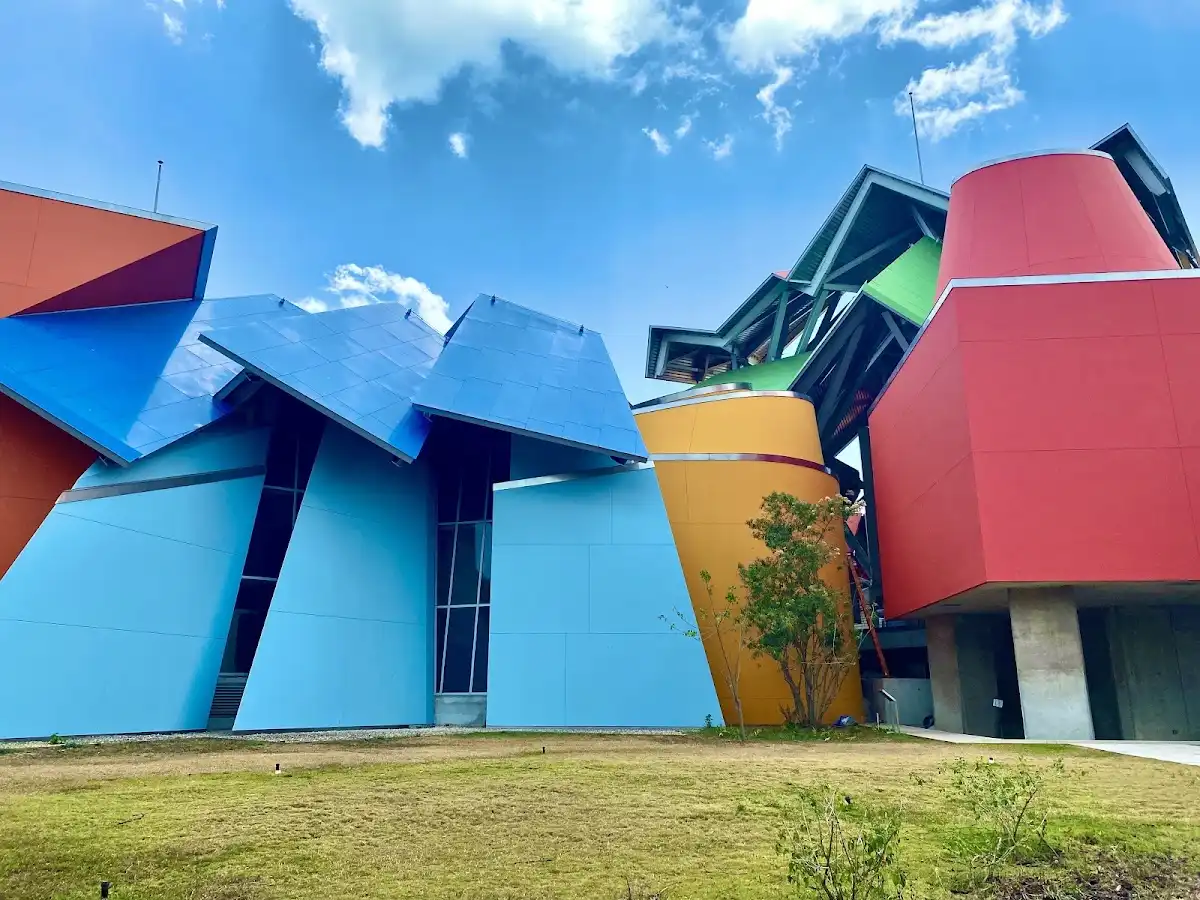
- Gehry’s façade and roof: The museum is best known for Frank Gehry’s design, a jumble of tilted, brightly painted metal panels in red, yellow, blue and green that sit under a canopy of crumpled roofs. Walk the outside first. The angles change with every step, and the roofs shade the entrance plaza.
- Panamarama: The second gallery is a tall, loud room where screens and projections cover the walls and a wall of images shows Panama’s species and landscapes. It works as a fast orientation to the country’s wildlife before you ever hit a trail.
- Showcase of Biodiversity: A gallery of display cases on several levels, stacked with specimens that show how many different life forms live in Panama. It makes the point about biodiversity through sheer volume.
- Building the Bridge: Here the exhibits explain how
- Gehry’s façade and roof: The museum is best known for Frank Gehry’s design, a jumble of tilted, brightly painted metal panels in red, yellow, blue and green that sit under a canopy of crumpled roofs. Walk the outside first. The angles change with every step, and the roofs shade the entrance plaza.
- Panamarama: The second gallery is a tall, loud room where screens and projections cover the walls and a wall of images shows Panama’s species and landscapes. It works as a fast orientation to the country’s wildlife before you ever hit a trail.
- Showcase of Biodiversity: A gallery of display cases on several levels, stacked with specimens that show how many different life forms live in Panama. It makes the point about biodiversity through sheer volume.
- Building the Bridge: Here the exhibits explain how the isthmus rose from the sea and joined North and South America, which let animals and plants cross between the continents. It is the clearest account of why Panama is so rich in species.
- The Human Path: This exhibit looks at how people have shaped, and been shaped by, the land. It adds a cultural layer that most natural history museums skip.
- Oceans Divided: The museum explains the Atlantic and Pacific coasts, and how the closing of the seaway divided marine life into two distinct communities. The displays are dense, so pick a few and read them properly.
- Worlds Collide: This gallery presents the great American biotic interchange through a stampede of sculptures of 72 species that crossed the isthmus. It is the most dramatic piece and ties the whole museum together.
- Amador Causeway views from the grounds: The grounds look out over the causeway, the bay and the skyline of Panama City. Leave time to walk the garden path outside, where native plants are labeled and the skyline views make good photos.
Spotted a mistake or missing something? Contact us.

Panama Canal With Entry Ticket & City Tour: Old Town & City Views

Private Panama City Tour in a Classic VW Safari

Discover Panamá city like no other- the Tour

City Tour: Miraflores Locks, Casco Viejo & Amador Causeway

City Sightseeing Panama City Hop-On Hop-Off Bus Tour

Miraflores canal Locks, Amador Causeway and Biomuseo private tour

Panama City Tour for 1 Person in a Chauffeur-Driven VW Buggy

Get to know the city on board CitySightseeing Panama (24 Hours)

Fuerte Amador Shore Excursion: Private Full-Day Tour of Panama City and Canal

 Best Backpacking
.jpg) Hi, I’m Johan (Netherlands 🇳🇱), the creator of TakeYourBackpack. Over the past 3 decades, I’ve backpacked through 90+ countries across six continents, gaining extensive experience with independent travel, long-term trips, and overland routes.
Hi, I’m Johan (Netherlands 🇳🇱), the creator of TakeYourBackpack. Over the past 3 decades, I’ve backpacked through 90+ countries across six continents, gaining extensive experience with independent travel, long-term trips, and overland routes.