×

Panama🇵🇦 | townsSanta FeCerro Tute, quetzal guides, river pools, small coffee farms | things to do and best time to go

Explore El Valle de AntónExplore Portobelo

Backpacking in Santa Fe
🌟 Highlighttown ranked #6
By Johan Kruseman 🇳🇱 | Updated October 23, 2026

Santa Fe sits in the mountains, not on the coast, and travelers who expect a beach stop are corrected the moment the road starts climbing. It lies in the north of Veraguas province in western Panama, in cool highlands above the Pacific plain. There is no nightlife and no big sight list, so don't plan a long stay around the town itself. The value is the surrounding cloud forest, rivers and coffee farms, and the hiking is the reason to come. It is quiet, with a few small guesthouses and cafés where hikers swap trail notes. Meeting people is easy but in small numbers. Compared with Boquete, which has tour offices, crowds and a polished café scene, Santa Fe is smaller, rougher and far cheaper in spirit.

Discover everything you want to know in the 📖 Panama Travel Guide.


example page 0 from our offline Travel Guide for Panama
example page 1 from our offline Travel Guide for Panama
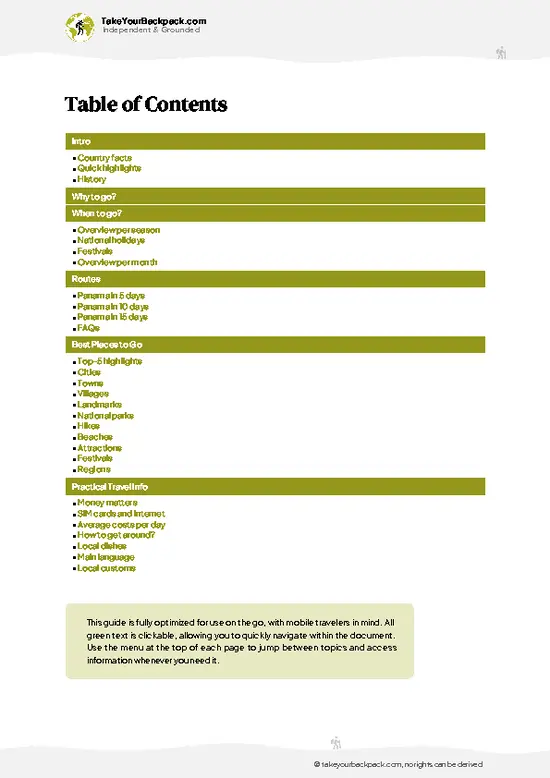
example page 2 from our offline Travel Guide for Panama
example page 3 from our offline Travel Guide for Panama
example page 4 from our offline Travel Guide for Panama
example page 5 from our offline Travel Guide for Panama
example page 6 from our offline Travel Guide for Panama
example page 7 from our offline Travel Guide for Panama
Loading the map 🌍
CLICK TO FILTER
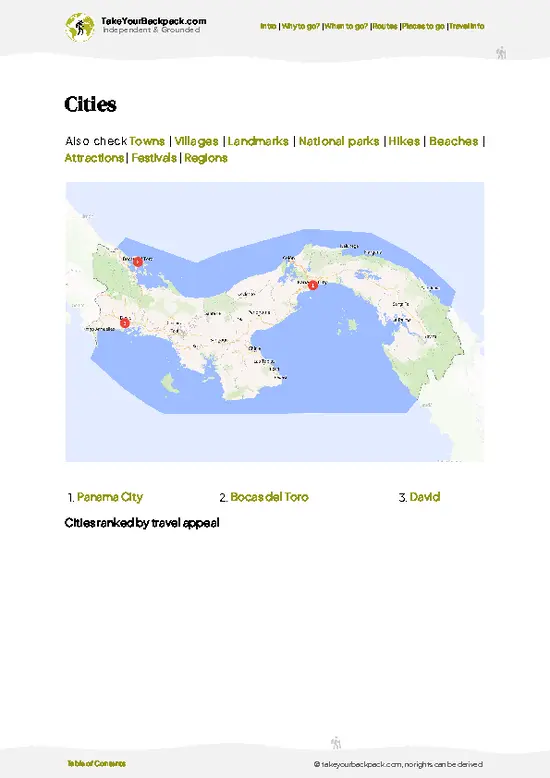
cities
towns
villages
landmarks
national parks
hikes
beaches
attractions
festivals
regions
SHOW COUNTRY’S BESTSHOW ALL

✨ Why go?
Ranked #6 town in Panama
What makes this town worth visiting

Santa Fe works because it puts you at the edge of real mountain country without the polish of better-known highland towns. The main draw is the trail network around Cerro Tute, where forest guides lead birders and hikers through cloud forest, and the nearby Río Santa María swimming holes and waterfalls that make easy afternoon outings. Most travelers stay two or three nights, long enough for one proper hike and one slow day on a farm or at a river. Evenings are calm. You eat early, talk with the few other guests and sleep well in cool air. That suits hikers, birders, solo travelers who like small guesthouses and slow travelers who want local life more than entertainment. If you need bars, tours on every corner or a packed schedule, this is better as a short stop. The town also gives you a … read more 👉
Santa Fe works because it puts you at the edge of real mountain country without the polish of better-known highland towns. The main draw is the trail network around Cerro Tute, where forest guides lead birders and hikers through cloud forest, and the nearby Río Santa María swimming holes and waterfalls that make easy afternoon outings. Most travelers stay two or three nights, long enough for one proper hike and one slow day on a farm or at a river. Evenings are calm. You eat early, talk with the few other guests and sleep well in cool air. That suits hikers, birders, solo travelers who like small guesthouses and slow travelers who want local life more than entertainment. If you need bars, tours on every corner or a packed schedule, this is better as a short stop. The town also gives you a look at campesino life, with farmers selling produce and coffee growing on the slopes.

💡 HighlightsTop highlights of Santa Fe

  1. Cerro Tute Reserve: The area's best-known draw, a cloud forest on a mountain above town with trails, birdlife and views on clear mornings. Go early, when birds are active and mist is thinner. Expect a modest fee of roughly US$5 to 10, plus a guide if you want, and allow 3 to 6 hours.
  2. Río Santa María swimming spots: Cool river pools just outside the center, good after a hike. Afternoons are warmest. Free, and an hour or two is plenty.
  3. Santa Fe town center and church: A short walk around the plaza, the small church and the produce stalls shows how the town lives. Mornings are liveliest. Free, about 45 minutes.
  4. Local coffee farm visits: Small producers on the hillsides let you see the harvest and taste fresh coffee. Visits are best in the morning. Expect about US$10 to 25 depending on the farm,
… read more 👉
  1. Cerro Tute Reserve: The area's best-known draw, a cloud forest on a mountain above town with trails, birdlife and views on clear mornings. Go early, when birds are active and mist is thinner. Expect a modest fee of roughly US$5 to 10, plus a guide if you want, and allow 3 to 6 hours.
  2. Río Santa María swimming spots: Cool river pools just outside the center, good after a hike. Afternoons are warmest. Free, and an hour or two is plenty.
  3. Santa Fe town center and church: A short walk around the plaza, the small church and the produce stalls shows how the town lives. Mornings are liveliest. Free, about 45 minutes.
  4. Local coffee farm visits: Small producers on the hillsides let you see the harvest and taste fresh coffee. Visits are best in the morning. Expect about US$10 to 25 depending on the farm, and 1 to 2 hours.
  5. Guided birdwatching walks: Local guides know where quetzals and other highland species appear, with early starts giving the best chances. Costs usually run US$25 to 60, and 3 to 4 hours is typical.
From Santa Fe, day trips reach the Santa Fe National Park trails. Guided birdwatching walks and farm visits are best arranged in advance, since guides are few.
Spotted a mistake or missing something? Contact us.

Things to do near Santa Fe

Ratings based on Tripadvisor reviews. When you book through this link, you support our work at no extra cost to you.

🏘️ NeighborhoodsWhere things are and how it's laid out

Santa Fe is a small highland town in Veraguas Province, and everything useful sits within a few minutes on foot along one main road. The areas differ more by altitude and function than by distance.
  • Town Center (around the plaza and main road): This is where buses stop, and where you find the small supermarkets, bakeries, a bank with an ATM and a few cheap comedores serving rice, chicken and fried plantain for lunch. Walk it in 10 minutes. Spend an hour here, no more, because the real appeal lies outside.
  • Calovébora Road and Surrounding Farms: Coffee plots, orange groves and cloud-forest edges line the roads out of town. Hiring a local guide is worth the money here, since trails are unmarked and muddy. Quiet by day, silent at night.
  • Río Santa María Riverbanks: The river is the local swimming spot,
… read more 👉
Santa Fe is a small highland town in Veraguas Province, and everything useful sits within a few minutes on foot along one main road. The areas differ more by altitude and function than by distance.
  • Town Center (around the plaza and main road): This is where buses stop, and where you find the small supermarkets, bakeries, a bank with an ATM and a few cheap comedores serving rice, chicken and fried plantain for lunch. Walk it in 10 minutes. Spend an hour here, no more, because the real appeal lies outside.
  • Calovébora Road and Surrounding Farms: Coffee plots, orange groves and cloud-forest edges line the roads out of town. Hiring a local guide is worth the money here, since trails are unmarked and muddy. Quiet by day, silent at night.
  • Río Santa María Riverbanks: The river is the local swimming spot, with cool, clear pools a short walk or ride from the center. It is the best free activity in town and gets busier on weekends with Panamanian families.
  • Upper Hillside Lanes: Steeper streets with views over the valley and cooler air. Skip it unless you enjoy a short climb at dusk. Nightlife is basically absent in all areas; expect a beer on a porch and bed by 9 p.m.

⌛️ 1 daySeeing the highlights in 24 hours

7:00 AM, Santa Fe plaza: Start at the plaza, where a simple breakfast and strong local coffee set you up before the forest heats up and clouds roll in. Chat with your guesthouse host about trail conditions.
8:00 AM, Cerro Tute trailhead: Head up early, since birds are most active and the views are clearest. Take a guide if you want species names. Walk slowly and expect a good few hours on the paths.
12:30 PM, Back in town: Eat a plain lunch of rice, beans and grilled or stewed meat at a family-run comedor, the cheapest and most local way to eat here.
2:00 PM, Río Santa María pools: Walk or take a short ride to the river and cool off. It is a good place to rest tired legs and meet other hikers.
4:00 PM, Hillside coffee farm: Less visited than the forest, a small farm visit shows how the crop is … read more 👉
7:00 AM, Santa Fe plaza: Start at the plaza, where a simple breakfast and strong local coffee set you up before the forest heats up and clouds roll in. Chat with your guesthouse host about trail conditions.
8:00 AM, Cerro Tute trailhead: Head up early, since birds are most active and the views are clearest. Take a guide if you want species names. Walk slowly and expect a good few hours on the paths.
12:30 PM, Back in town: Eat a plain lunch of rice, beans and grilled or stewed meat at a family-run comedor, the cheapest and most local way to eat here.
2:00 PM, Río Santa María pools: Walk or take a short ride to the river and cool off. It is a good place to rest tired legs and meet other hikers.
4:00 PM, Hillside coffee farm: Less visited than the forest, a small farm visit shows how the crop is grown and dried, and you can taste a fresh cup with the owners.
6:00 PM, Plaza again: Finish with a slow walk past the church and produce stalls as the town winds down, then an early dinner and bed.

🌤️ When to go?When to go for the best experience

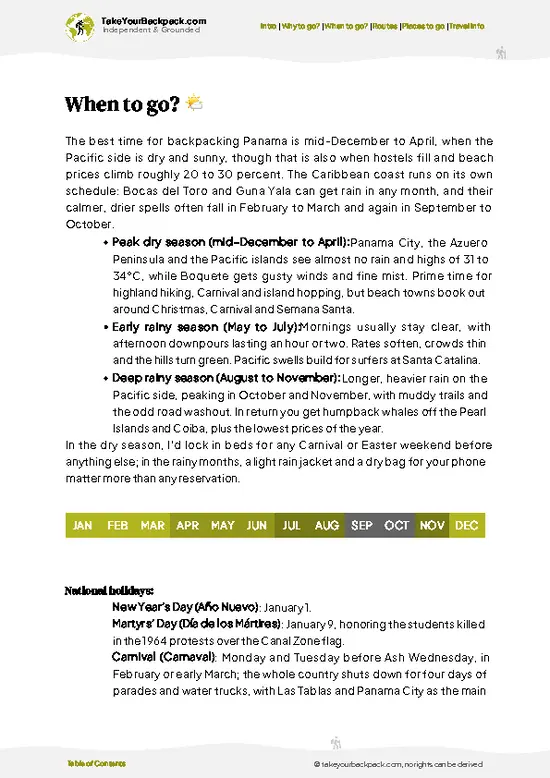
Santa Fe is most comfortable from January to April, when mornings are clear and trails dry out enough for hiking.
  • Dry Season (January to April): Days reach about 27 to 30°C (81 to 86°F), nights drop to 17 to 19°C (63 to 66°F) in the hills. Trails and river crossings are easiest, and weekend crowds of Panamanian visitors grow slightly.
  • Green Season (May to November): Expect afternoon downpours, with temperatures of 22 to 28°C (72 to 82°F). Mud makes walks slower and roads can wash out, but waterfalls run full and lodging stays easy to find at lower rates.
  • Daylight: Close to 12 hours year-round, so start hikes early to finish before the clouds roll in.
  • Holidays: Carnival in February and Semana Santa bring local crowds and fuller buses.
Plan outdoor days for mornings in any month.

source: climatestotravel.comJANJanuary: excellent for travelingFEBFebruary: excellent for travelingMARMarch: excellent for travelingAPRApril: excellent for travelingMAYMay: highly recommended for travelingJUNJune: fair for travelingJULJuly: fair for travelingAUGAugust: fair for travelingSEPSeptember: fair for travelingOCTOctober: fair for travelingNOVNovember: highly recommended for travelingDECDecember: excellent for traveling
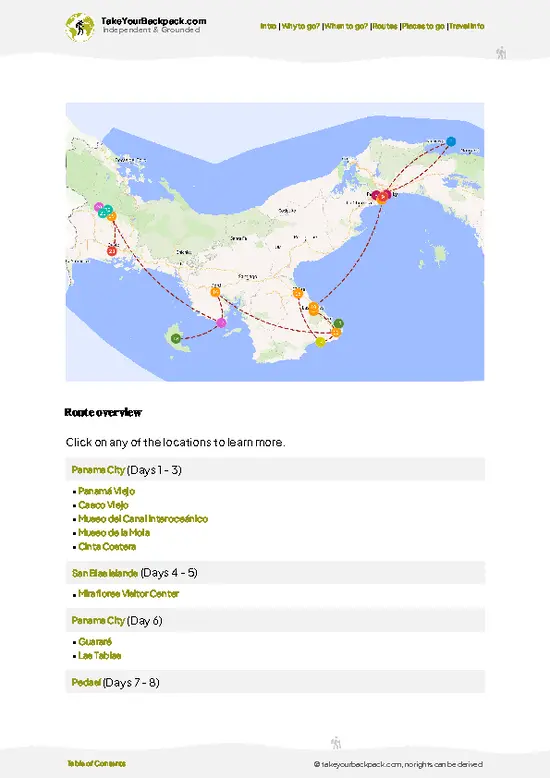
panama-city-santa-fe v1
© Google |

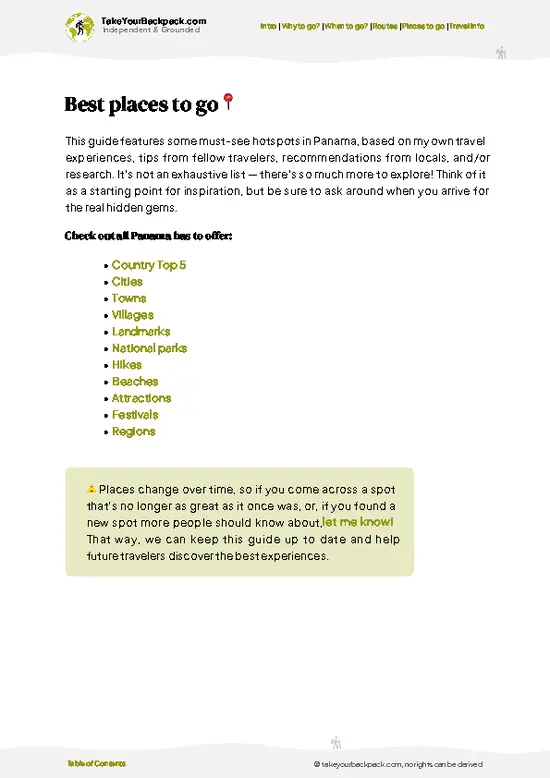
✈️ The backpacker research shortcutPanama Travel Guide

An offline-friendly backpacking guide with optimized travel routes, ranked highlights, transport advice, and the best areas to stay.
example page 0 from our offline Travel Guide for Panama
example page 1 from our offline Travel Guide for Panama
example page 2 from our offline Travel Guide for Panama
example page 3 from our offline Travel Guide for Panama
example page 4 from our offline Travel Guide for Panama
example page 5 from our offline Travel Guide for Panama
example page 6 from our offline Travel Guide for Panama
example page 7 from our offline Travel Guide for Panama
The digital guide (272 pages) contains:
✅ 89 highlights, ranked by travel appeal
✅ Optimized 5, 10 & 15-day travel routes
✅ Cities, national parks, landmarks, beaches
✅ How to get around
✅ Offline-friendly for travel without Wi-Fi
👉 Click to see all 30+ guide features

📅 Plan smarter in minutes, not weeks
✅ Month by month travel advice
✅ Festivals & national holidays
✅ Budget expectations

🗺️ Go to the right places, skip the overrated ones
✅ Honest pros & cons of destinations
✅ Top hikes, parks & viewpoints
✅ Lesser-known places most travelers miss
✅ Clear “worth it vs skip it” guidance

🛏️ Travel smoothly without rookie mistakes
✅ Best areas to stay
✅ Transport systems explained simply
✅ Common scams & safety advice
✅ SIM cards, money & practical tips

🌍 Understand the country, not just visit it
✅ Culture & traditions
✅ 52 Essential phrases & customs
✅ Festivals worth planning around
✅ Traveler-friendly historical context
✅ Insights that make places more meaningful

📱 Built for real travel conditions
✅ Fully downloadable PDF
✅ Works completely offline
✅ Optimized for phone use
✅ Useful in remote areas & buses
✅ Everything in one place
Stop searching, start planning
Get instant access to your full guide. 30‑day money-back guarantee.
+ Add another guide for just

By proceeding you agree to our terms.
Sent to your inbox immediately after payment • 100% Secure Checkout
Best Backpacking Travel Advisor 2025 tourism awardBest Backpacking
Travel Advisor
2025
What others say about Take Your Backpack Guides:
⭐⭐⭐⭐⭐
Fantastic, amazing amount of information!
⭐⭐⭐⭐⭐
My goodness this is amazing, it's what I've been looking for hats off too you!
⭐⭐⭐⭐⭐
I think this is absolutely BRILLIANT
⭐⭐⭐⭐
Very complete and informative. It's still missing places, but I gotta to commend you
⭐⭐⭐⭐⭐
This is truly amazing, thank you, can't wait to explore it with my kids!
⭐⭐⭐⭐⭐
Awesome resource, thank you!
⭐⭐⭐⭐⭐
This is amazing! Can't wait to explore the ones I haven't seen
⭐⭐⭐⭐
I love this! Well done, great idea.
⭐⭐⭐⭐⭐
Thanks for taking the time to make this gem!
⭐⭐⭐⭐⭐
This might be the best website I've ever seen.
⭐⭐⭐⭐⭐
Congratulations, and thank you so much for your work; it's incredibly valuable.
⭐⭐⭐⭐
In all seriousness I think you did a great job pointing out the important spots
⭐⭐⭐⭐⭐
10/10 very good
⭐⭐⭐⭐⭐
As someone who's only just starting to visit regularly this is awesome, thank you.
⭐⭐⭐⭐
Thank you very much! I'm going to visit my dad, it's going to be very useful!
⭐⭐⭐⭐⭐
This is really cool! We'll be travelling for the first time and this definitely come in handy.
⭐⭐⭐⭐⭐
You are now our minister of culture, congratulations 👨‍💼
⭐⭐⭐⭐⭐
Just wanted to tell you that this is a pearl! Going to follow your recommendations.
⭐⭐⭐⭐⭐
This is so cool. I'll definitely be using the resource for my travels soon.
⭐⭐⭐⭐⭐
This is very impressive! Good work.
⭐⭐⭐⭐⭐
This is an amazing and informative site. Very well done!

🛏️ Where to stay?How to pick the right area

The center of Santa Fe is the best place to sleep, because bus drop-off, food and the ATM are all within a five-minute walk. Budget beds here are limited to a handful of small guesthouses and a few simple rooms, with private rooms typically US$15 to 30 a night and dorm beds rarer and about US$10 to 15. Book ahead in the dry season and on holiday weekends.

The center is calm at night, with only the occasional dog or rooster for noise, and walking back after dinner is comfortable because streets stay lit and people know each other. Early morning buses pass nearby, so light sleepers may want a room … read more 👉
The center of Santa Fe is the best place to sleep, because bus drop-off, food and the ATM are all within a five-minute walk. Budget beds here are limited to a handful of small guesthouses and a few simple rooms, with private rooms typically US$15 to 30 a night and dorm beds rarer and about US$10 to 15. Book ahead in the dry season and on holiday weekends.

The center is calm at night, with only the occasional dog or rooster for noise, and walking back after dinner is comfortable because streets stay lit and people know each other. Early morning buses pass nearby, so light sleepers may want a room away from the main road.

The second option is the outskirts along the river and farm roads, where simple lodges and homestays offer quieter evenings and cooler air. The compromise is distance: you need a ride or a 15 to 30 minute walk to reach shops and restaurants, and the final stretch is dark. Pick it if you plan to hike early and want a calm base, and choose the center for easier logistics.

🚌 Getting aroundHow to get around Santa Fe

A shared pickup or bus ride within Santa Fe and to nearby villages costs about US$0.50 to 3, paid in cash (US dollars, small bills and coins) directly to the driver or his helper when you get off. The center is walkable in ten minutes and nobody here needs an app, a rental car or a plan. The real transport question is how to reach the hills and villages around town, and that is where local buses and pickups matter.
  • Walking. Free and the best choice for the main street, the market, the church and the cafes. Streets are quiet, but sidewalks are patchy and rain makes the steep side roads slick, so wear shoes with grip.
  • Local buses. Regular buses run between Santa Fe and Santiago, the provincial hub, for roughly US$3.50 to 5 over 1.5 to 2 hours on a winding mountain road. Service starts early in
… read more 👉
A shared pickup or bus ride within Santa Fe and to nearby villages costs about US$0.50 to 3, paid in cash (US dollars, small bills and coins) directly to the driver or his helper when you get off. The center is walkable in ten minutes and nobody here needs an app, a rental car or a plan. The real transport question is how to reach the hills and villages around town, and that is where local buses and pickups matter.
  • Walking. Free and the best choice for the main street, the market, the church and the cafes. Streets are quiet, but sidewalks are patchy and rain makes the steep side roads slick, so wear shoes with grip.
  • Local buses. Regular buses run between Santa Fe and Santiago, the provincial hub, for roughly US$3.50 to 5 over 1.5 to 2 hours on a winding mountain road. Service starts early in the morning (around 5 a.m.) and thins out by mid-afternoon, so plan to leave before lunch. The terminal in Santiago also connects to the Pan-American Highway and to David and Panama City.
  • Chivas and pickups. Open-sided trucks and 4x4 pickups serve villages such as Alto de Piedra and the roads toward the Cordillera. Fares are about US$1 to 4 depending on distance. They leave when full and become scarce after mid-afternoon, so ask the driver for the last return before you go. Riding in the back is part of the experience, as long as you bring a rain jacket.
  • Taxis. A handful of local taxis wait near the plaza. A short hop in town runs US$1 to 3, and a private run to a trailhead or waterfall costs US$10 to 30. Agree the fare before you get in, as there are no meters. Taxis are a sensible splurge for trailheads where buses do not go, and a poor value for anything you can walk.

Skip renting a car unless you want to explore remote mountain roads, since gravel stretches and fog demand experience. The bus plus the occasional pickup covers nearly everything a backpacker would want.

👛 Costs (as of 23 October 2026)What things cost and how to budget

Santa Fe costs a backpacker about US$32 to 67 a day, and the table below adds up to US$52 for a high-season day. Prices are low by Panamanian standards, though the town is small, so choices are limited and card payments are not always accepted. Carry cash in US dollars.
CategoryBudget RangeLocal Reality
Dorm accommodationUS$12 to 20Dorm beds are scarce. Expect a few hostel beds or a basic private room, with prices at the top of the range in high season (about US$20).
MealsUS$10 to 18A fixed lunch at a local fonda costs US$3 to 5. Dinner at a casual restaurant runs US$6 to 10. Bakery breakfasts are cheap. Budget US$14 on average.
Local transportUS$2 to 8Pickups and buses to nearby villages cost US$0.50 to 4 per ride. Budget US$4 for a typical day.
Basic activities/entry feesUS$5 to 15Hiking is mostly
… read more 👉
Santa Fe costs a backpacker about US$32 to 67 a day, and the table below adds up to US$52 for a high-season day. Prices are low by Panamanian standards, though the town is small, so choices are limited and card payments are not always accepted. Carry cash in US dollars.
CategoryBudget RangeLocal Reality
Dorm accommodationUS$12 to 20Dorm beds are scarce. Expect a few hostel beds or a basic private room, with prices at the top of the range in high season (about US$20).
MealsUS$10 to 18A fixed lunch at a local fonda costs US$3 to 5. Dinner at a casual restaurant runs US$6 to 10. Bakery breakfasts are cheap. Budget US$14 on average.
Local transportUS$2 to 8Pickups and buses to nearby villages cost US$0.50 to 4 per ride. Budget US$4 for a typical day.
Basic activities/entry feesUS$5 to 15Hiking is mostly free. Guides, coffee farm visits and waterfall access cost US$5 to 15. Budget US$10.
Miscellaneous expensesUS$3 to 6Snacks, bottled water, coffee and laundry. Budget US$4.
Total Daily BudgetUS$32 to 67About US$52 with high-season accommodation.
Eat your main meal at midday, when the fixed lunch plates are the cheapest food in town, and keep dinner light.
⚠️ Prices can change and everyone travels differently, so take this as a rough guide. Hope it helps you plan your adventure!

🚌 Day tripsBest day trips from Santa Fe

Santa Fe works well as a base for day trips, because most natural sights lie within an hour or two on rough roads, and local guides handle logistics.
Río Santa María Swimming Holes:
The river pools just outside town are the easiest outing, reachable on foot or with a US$3 to 5 ride. Allow a half day with a picnic. Go in the dry season for clear water, and avoid swimming after heavy rain, a common first-timer error when the current picks up.

Cloud Forest Hike near Alto de Piedra:
This trail climbs through misty forest known for birds and orchids. Expect about 1 hour to reach the area from town, and US$20 to 40 for a guide with transport. Start at dawn, since fog often fills the canopy by midday.

Santiago de Veraguas:
A practical outing for supplies, banking and onward buses. The bus takes … read more 👉
Santa Fe works well as a base for day trips, because most natural sights lie within an hour or two on rough roads, and local guides handle logistics.
Río Santa María Swimming Holes:
The river pools just outside town are the easiest outing, reachable on foot or with a US$3 to 5 ride. Allow a half day with a picnic. Go in the dry season for clear water, and avoid swimming after heavy rain, a common first-timer error when the current picks up.

Cloud Forest Hike near Alto de Piedra:
This trail climbs through misty forest known for birds and orchids. Expect about 1 hour to reach the area from town, and US$20 to 40 for a guide with transport. Start at dawn, since fog often fills the canopy by midday.

Santiago de Veraguas:
A practical outing for supplies, banking and onward buses. The bus takes about 1.5 to 2 hours each way for US$3 to 5 and the city offers larger markets and restaurants. Leave Santa Fe early to avoid being stranded after the last bus.

Coffee Farm Visit:
Small farms in the surrounding hills sell fresh-roasted beans and sometimes offer short tours for around US$10 to 20. The harvest runs roughly from November to February, which is the best window. Arrange it a day ahead through your guesthouse.

🛡️ SafetyScams, Hazards, and Annoyances

Santa Fe is a calm, small town where violent crime against travelers is rare, and most problems are about terrain and weather. Streets in the center are fine after dark, and solo travelers, including women, report few issues, though it helps to be back from trails before dusk. Carry a flashlight, since lighting thins quickly beyond the main road.

The real risks are natural. Rivers rise fast after rain upstream, so skip swimming when the water turns brown. Trails are unmarked and muddy, so go with a local guide for longer hikes and tell your guesthouse where you are heading. Petty theft is uncommon, but keep valuables out of sight on buses, especially around Santiago. Some taxi drivers quote inflated fares to visitors, so agree on the price first. Carry cash, since card payments are rare, and bring insect repellent for the evenings.

FAQTraveler FAQ

Santa Fe is worth visiting for two or three nights if you like hiking, rivers and cooler mountain air, but it is not a place for sights or nightlife. The cloud forest trails near Alto de Piedra and the swimming pools of the Río Santa María are the main draws. Guided hikes cost about US$20 to 40, and meals stay under US$6 at local comedores.
Two to three days works for Santa Fe, giving you one day for a guided forest hike, one for river swimming and a coffee farm visit, and spare time for rain delays. A single night only covers the town itself. Stay longer, up to five days, if you want to explore farther trails or volunteer on local farms.
Santa Fe is hard to do as a day trip from Santiago, since the bus takes about 1.5 to 2 hours each way for US$3 to 5 and last departures leave mid-afternoon. That leaves only three or four hours on the ground, which is barely enough for the river or a short walk. An overnight stay lets you reach trailheads at dawn when the forest is clearest.
⚠️ Things can change over time, so always validate details locally before you go.

Other Panamanian towns near Santa Fe

Explore more nearby:

  • Soná—Highway junction, farm-country market, panaderías, Coiba gateway| 62 km away
  • Parita—Clay workshops, bahareque houses, seventeenth-century church, dusk plaza| 83 km away
  • Antón—Roadside straw stands, Pan-American Highway, plaza and market| 90 km away

💡 Not sure where to go next?
Create a personalized itinerary for Panama including Santa Fe and the places that fit your trip.

Generate my itinerary

👉 Discover all towns

Or checkout all Panama has to offer (think cities, towns, villages, national parks, hikes, beaches, festivals)
Country photo of Panama

We 💚 feedbackIs it worth it?

Santa Fe is easy to rush through, and people overlook the farms around it. I would book a morning at a small coffee plot before or after your Cerro Tute hike, since talking with the growers shows you the town better than any viewpoint. Bring a rain jacket and warm layer for evenings.

✈️ When did I visit Panama?
Panama I visited during my half year trip through South and Central America back in 2003

✍️ Help improve this page!
The information on this page is based on my own backpacking experience in Panama, supplemented with up-to-date research and feedback from other travelers. Travel details can change, so if you notice anything outdated or incomplete, feel free to let me know.


🙋‍♂️ Give feedback

👋 Meet the founderWho’s Behind Take Your Backpack?

Johan, backpacker and founder of TakeYourBackpackHi, I’m Johan (Netherlands 🇳🇱), the creator of TakeYourBackpack. Over the past 3 decades, I’ve backpacked through 90+ countries across six continents, gaining extensive experience with independent travel, long-term trips, and overland routes.

This site is built on a combination of firsthand travel experience and carefully curated insights from other backpackers. Many guides are based on places I’ve personally visited, while others bring together tips, observations, and practical advice shared by trusted travelers I’ve met along the way.

The goal is to provide realistic, experience-driven guidance — not generic itineraries — so you can explore destinations with better context, clearer expectations, and more confidence.