v2.webp)
- Fuerte Santiago de la Gloria: The first fort on the road in, at the western entrance to town, has cannon facing the harbor and stone walls you can climb. Go early, before the heat builds. Entry is around US$3 to 5, and an hour is plenty.
- Iglesia de San Felipe and the Black Christ: This church holds the life-size dark wooden Cristo Negro, central to local devotion. Visit on a quiet weekday to see it without crowds. Entry is free and 30 minutes is enough. The pilgrimage on October 21 is huge and packed.
- Aduana de Portobelo (Customs House): The old stone customs house, where silver and gold were counted, now holds exhibits on the colonial trade. Mornings are cooler. Allow 45 minutes, with a small fee of US$1 to 3.
- Fuerte San Jerónimo: The largest fort, in the town center beside the Customs House.
- Fuerte Santiago de la Gloria: The first fort on the road in, at the western entrance to town, has cannon facing the harbor and stone walls you can climb. Go early, before the heat builds. Entry is around US$3 to 5, and an hour is plenty.
- Iglesia de San Felipe and the Black Christ: This church holds the life-size dark wooden Cristo Negro, central to local devotion. Visit on a quiet weekday to see it without crowds. Entry is free and 30 minutes is enough. The pilgrimage on October 21 is huge and packed.
- Aduana de Portobelo (Customs House): The old stone customs house, where silver and gold were counted, now holds exhibits on the colonial trade. Mornings are cooler. Allow 45 minutes, with a small fee of US$1 to 3.
- Fuerte San Jerónimo: The largest fort, in the town center beside the Customs House. It is usually emptier, which makes it good for photos at golden hour. Entry is small, and 45 minutes is enough.
- Congo dance and Afro-Panamanian crafts: Local groups perform drumming and colorful masked dances, and artisans sell handmade pieces along the road. Ask at your guesthouse for schedules, since performances are not daily. Costs range from free to US$10 for a show, and an hour or two covers it.
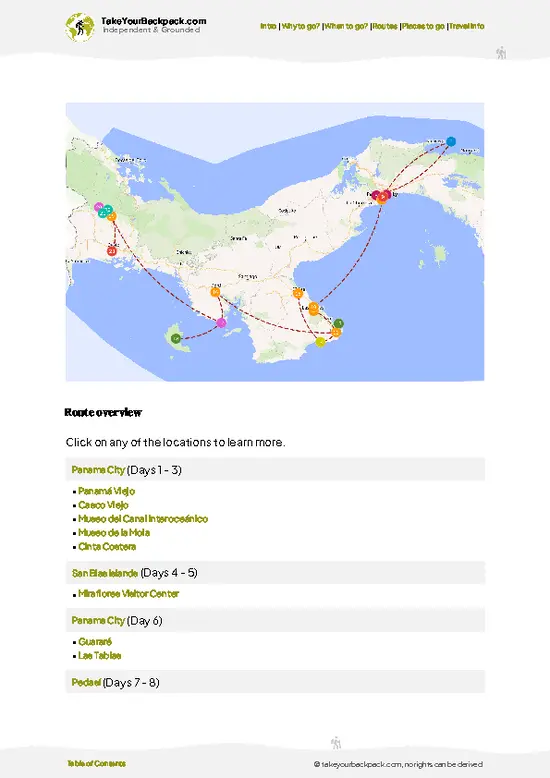
All five stops together fit comfortably into one long day, or a relaxed day and a half.
Spotted a mistake or missing something? Contact us.


 Best Backpacking
.jpg) Hi, I’m Johan (Netherlands 🇳🇱), the creator of TakeYourBackpack. Over the past 3 decades, I’ve backpacked through 90+ countries across six continents, gaining extensive experience with independent travel, long-term trips, and overland routes.
Hi, I’m Johan (Netherlands 🇳🇱), the creator of TakeYourBackpack. Over the past 3 decades, I’ve backpacked through 90+ countries across six continents, gaining extensive experience with independent travel, long-term trips, and overland routes.