×

Papua New Guinea🇵🇬 | beachesBougainville Island Beachesblack sand, mountain views, untamed coastline | things to do and best time to go

Explore Manus Island BeachesExplore Kiriwina Island Beaches

Backpacking in Bougainville Island Beaches
🌟 Highlightbeach ranked #7
By Johan Kruseman 🇳🇱 | Updated September 4, 2026

Most people only realize after they leave that Bougainville’s beaches are where you can have an entire palm-fringed bay to yourself without paying private-island prices. Sitting in Papua New Guinea’s far east, in the Autonomous Region of Bougainville, these beaches are wild, quiet, and visually dramatic, with black and white sands, strong Pacific surf, and patchy but promising snorkel and dive spots. They’re cleaner and emptier than PNG’s mainland coasts, but infrastructure is thin: rough roads, limited transport, basic guesthouses, and simple roadside food instead of beach bars. Swimming can be glorious on calm days and sketchy when the swell kicks up, and compared with easier spots like around Kokopo or Madang, Bougainville trades convenience and polish for raw, off-grid atmosphere and the feeling you’ve gone properly far from everything.

Discover everything you want to know in the 📖 Papua New Guinea Travel Guide.
Loading the map 🌍
CLICK TO FILTER
cities
towns
national parks
hikes
beaches
attractions
festivals
regions
SHOW COUNTRY’S BESTSHOW ALL

✨ Why go?
Ranked #7 beach in Papua New Guinea
What makes it a must-see beach

Bougainville Island Beaches in Papua New Guinea? Essential. Here’s why: the laid-back atmosphere is like a warm hug after a long trek. You can kick off your shoes, sink your toes into the sand, and let the world slow down.

Affordability is another win. You won’t need to sell a kidney to grab a cold drink or a fresh fish meal. Plus, the social scene is a delightful mix of locals and fellow travelers, all sharing stories and laughter. It’s the kind of place where you can bond over a shared love for adventure—or the absurdity of trying to find Wi-Fi.

Water access is a no-brainer. Crystal-clear waters invite you to take a dip, but it’s not just about swimming. These beaches serve as a connector along your coastal route, a perfect pause to recharge before diving back into the wild.

So, whether … read more 👉
Bougainville Island Beaches in Papua New Guinea? Essential. Here’s why: the laid-back atmosphere is like a warm hug after a long trek. You can kick off your shoes, sink your toes into the sand, and let the world slow down.

Affordability is another win. You won’t need to sell a kidney to grab a cold drink or a fresh fish meal. Plus, the social scene is a delightful mix of locals and fellow travelers, all sharing stories and laughter. It’s the kind of place where you can bond over a shared love for adventure—or the absurdity of trying to find Wi-Fi.

Water access is a no-brainer. Crystal-clear waters invite you to take a dip, but it’s not just about swimming. These beaches serve as a connector along your coastal route, a perfect pause to recharge before diving back into the wild.

So, whether you’re lounging with a book or swapping tales with a new friend, Bougainville Island Beaches offer a slice of paradise that’s worth every effort. Embrace the grind; the gold is waiting just beyond the waves.
Want to include Bougainville Island Beaches in your Papua New Guinea route?
Create a personalized Papua New Guinea itinerary that includes Bougainville Island Beaches and the places that fit your trip — based on your travel style, budget, and available time. Get your route in seconds.

Generate my trip

💡 HighlightsMust-see experiences and standout moments

  • Daytime — Top 5
    1. WWII wreck dives and snorkels — intact ship and aircraft wrecks sit in shallow, clear water; they’re not polished tourist sites but real history reclaimed by coral and schooling fish, great for snorkelers and divers who like maritime archaeology with a wild, untouched feel (local guide recommended).
    2. Coral gardens and bommie snorkeling — patch reefs and bommies close to shore teem with color and small reef life; fewer visitors mean you often get uninterrupted snorkels with butterflyfish, wrasse, and healthy hard corals.
    3. Village kastom visits — drop in on coastal villages for woven handicrafts, food shared on the beach, and informal dances or songs; these are authentic community-run interactions rather than staged tourist shows, so you learn local stories
read more 👉
  • Daytime — Top 5
    1. WWII wreck dives and snorkels — intact ship and aircraft wrecks sit in shallow, clear water; they’re not polished tourist sites but real history reclaimed by coral and schooling fish, great for snorkelers and divers who like maritime archaeology with a wild, untouched feel (local guide recommended).
    2. Coral gardens and bommie snorkeling — patch reefs and bommies close to shore teem with color and small reef life; fewer visitors mean you often get uninterrupted snorkels with butterflyfish, wrasse, and healthy hard corals.
    3. Village kastom visits — drop in on coastal villages for woven handicrafts, food shared on the beach, and informal dances or songs; these are authentic community-run interactions rather than staged tourist shows, so you learn local stories and ways of life.
    4. Coastal jungle hikes to WWII relics and lookouts — short hikes from the sand lead into thick coastal forest and up to gun emplacements, caves and viewpoints where jungle, beach and history collide; the trails are rough but the panoramas and relics reward the effort.
    5. Dugout canoe or kayak trips and mangrove birding — paddle into mangrove channels and sheltered bays to see kingfishers, shorebirds and frigatebirds that feed in the shallows; the silence and close wildlife encounters feel very remote.
  • Nighttime — Top 5 (where relevant)
    1. Night dives/snorkels for nocturnal reef life — shining lights reveal lobsters, sleeping reef fish, hunting predators and other critters you don’t see by day; some sheltered bays also show patches of bioluminescence on calm nights.
    2. Traditional night fishing with locals — join villagers in dugout canoes or on the reef for handline or torch-and-net fishing; it’s a hands-on cultural experience and often ends with a fresh-caught meal.
    3. Village feasts, storytelling and dances after dark — communal meals and evening performances are where local history, kastom law and WWII memories are passed on; these nights are intimate and often arranged through a homestay or community contact.
    4. Beach bonfires and stargazing — the lack of light pollution makes for sharp Milky Way views and quiet, raw nights on the sand; perfect if you like counting satellites more than cocktails.
    5. Seasonal turtle nesting and monitoring — on some stretches sea turtles come ashore to nest; community-run monitoring programs sometimes let visitors observe responsibly or help under local guidance (seasonal and regulated).
Spotted a mistake or missing something? Contact us.

🌤️ When to go?When to go for the best experience


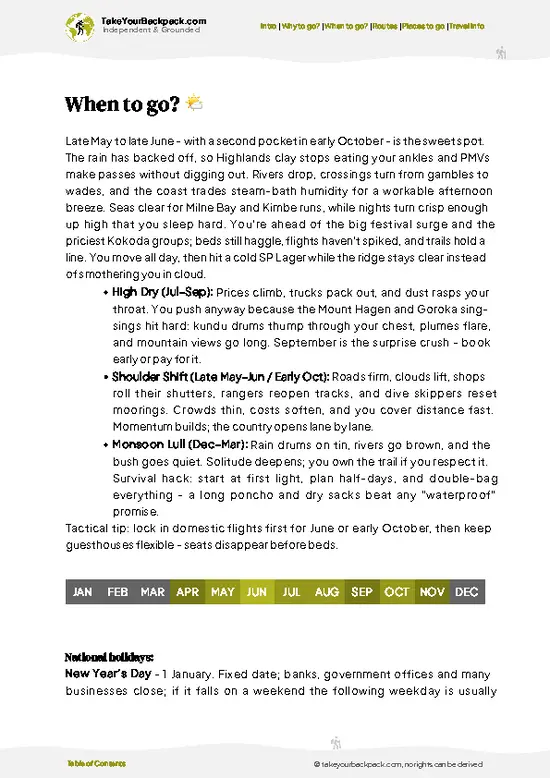
  • Weather: Bougainville Island’s beaches shine from May to October, when the dry season kicks in. Expect less rain, which means fewer mudslides blocking your path and more sun for that perfect tan—or lobster roast.

  • Temperature: Daytime temps hover around 27-30°C (80-86°F), which is beach-perfect without turning you into a puddle of sweat. Nights cool down to a comfy 22°C (72°F), so pack a light jacket just in case.

  • Daylight Hours: Roughly 11-12 hours of daylight year-round, but the dry season offers clearer skies, making every minute count for snorkeling or beachcombing.

  • Crowds: Expect solitude almost always. Bougainville isn’t exactly a tourist hotspot, so you’ll have the sand mostly to yourself—unless you count the local crabs.

  • Seasonal Activities: Dry season is prime for diving
read more 👉

  • Weather: Bougainville Island’s beaches shine from May to October, when the dry season kicks in. Expect less rain, which means fewer mudslides blocking your path and more sun for that perfect tan—or lobster roast.

  • Temperature: Daytime temps hover around 27-30°C (80-86°F), which is beach-perfect without turning you into a puddle of sweat. Nights cool down to a comfy 22°C (72°F), so pack a light jacket just in case.

  • Daylight Hours: Roughly 11-12 hours of daylight year-round, but the dry season offers clearer skies, making every minute count for snorkeling or beachcombing.

  • Crowds: Expect solitude almost always. Bougainville isn’t exactly a tourist hotspot, so you’ll have the sand mostly to yourself—unless you count the local crabs.

  • Seasonal Activities: Dry season is prime for diving and fishing. Wet season? More mud, fewer boat rides, and a higher chance your gear gets soggy.

  • Price Fluctuations: Prices barely budge here, but travel costs spike during the dry season as it’s the only time most visitors show up. Book early to dodge last-minute price hikes.


Pro-tip: Aim for the shoulder months of May or October—good weather, fewer visitors, and you avoid the peak-season price pinch.


source: climatestotravel.comJANJanuary: fair for travelingFEBFebruary: fair for travelingMARMarch: fair for travelingAPRApril: good for travelingMAYMay: highly recommended for travelingJUNJune: excellent for travelingJULJuly: excellent for travelingAUGAugust: excellent for travelingSEPSeptember: excellent for travelingOCTOctober: highly recommended for travelingNOVNovember: fair for travelingDECDecember: fair for traveling
when-to-go

✈️ The backpacker research shortcutPapua New Guinea Travel Guide

An offline-friendly backpacking guide with optimized travel routes, ranked highlights, transport advice, and the best areas to stay.
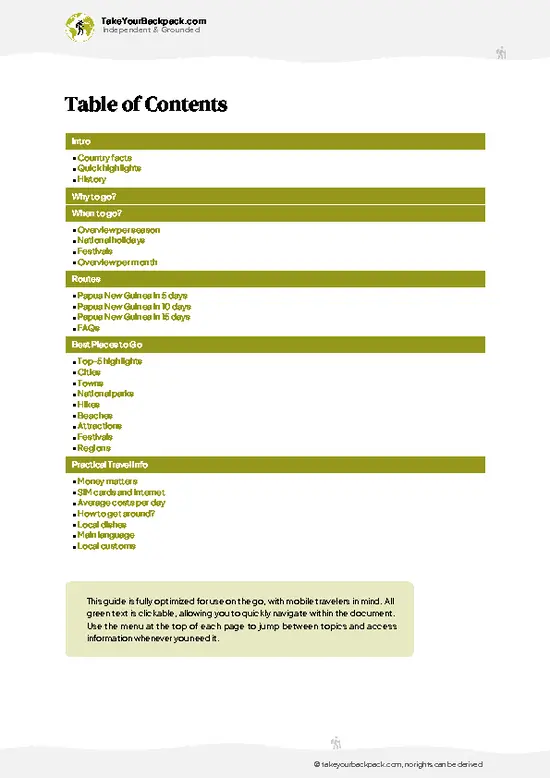
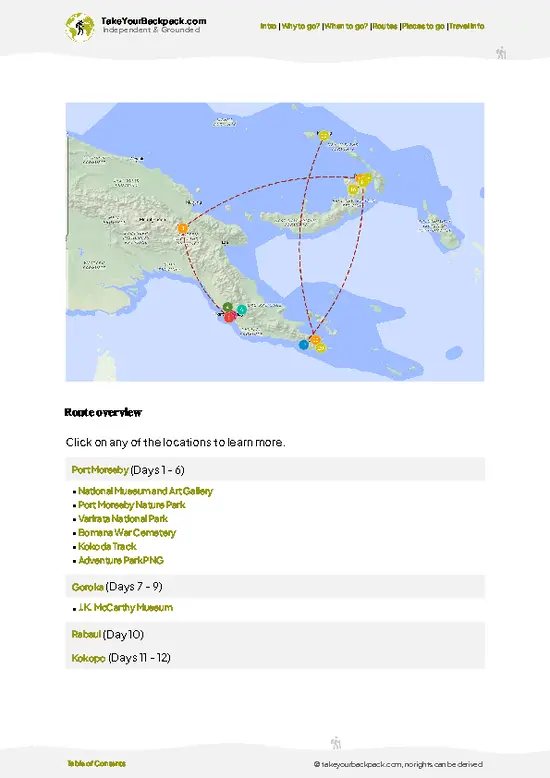
example page 0 from our offline Travel Guide for Papua New Guinea
example page 1 from our offline Travel Guide for Papua New Guinea
example page 2 from our offline Travel Guide for Papua New Guinea
example page 3 from our offline Travel Guide for Papua New Guinea
example page 4 from our offline Travel Guide for Papua New Guinea
example page 5 from our offline Travel Guide for Papua New Guinea
example page 6 from our offline Travel Guide for Papua New Guinea
example page 7 from our offline Travel Guide for Papua New Guinea
The digital guide (319 pages) contains:
86 highlights, ranked by travel appeal
Optimized 5, 10 & 15-day travel routes
Cities, national parks, landmarks, beaches
How to get around
Offline-friendly for travel without Wi-Fi
👉 Click to see all 30+ guide features

📅 Plan smarter in minutes, not weeks
Month by month travel advice
Festivals & national holidays
Budget expectations

🗺️ Go to the right places, skip the overrated ones
Honest pros & cons of destinations
Top hikes, parks & viewpoints
Lesser-known places most travelers miss
Clear “worth it vs skip it” guidance

🛏️ Travel smoothly without rookie mistakes
Best areas to stay
Transport systems explained simply
Common scams & safety advice
SIM cards, money & practical tips

🌍 Understand the country, not just visit it
Culture & traditions
52 Essential phrases & customs
Festivals worth planning around
Traveler-friendly historical context
Insights that make places more meaningful

📱 Built for real travel conditions
Fully downloadable PDF
Works completely offline
Optimized for phone use
Useful in remote areas & buses
Everything in one place
Save weeks of stressful planning
Get instant access to your full guide. 30‑day money-back guarantee.
+ Add another guide for just US$7.80

By proceeding you agree to our terms.
Sent to your inbox immediately after payment • 100% Secure Checkout
Best Backpacking Travel Advisor 2025 tourism awardBest Backpacking
Travel Advisor
2025
What others say about Take Your Backpack Guides:
⭐⭐⭐⭐⭐
Fantastic, amazing amount of information!
⭐⭐⭐⭐⭐
My goodness this is amazing, it's what I've been looking for hats off too you!
⭐⭐⭐⭐⭐
I think this is absolutely BRILLIANT
⭐⭐⭐⭐
Very complete and informative. It's still missing places, but I gotta to commend you
⭐⭐⭐⭐⭐
This is truly amazing, thank you, can't wait to explore it with my kids!
⭐⭐⭐⭐⭐
Awesome resource, thank you!
⭐⭐⭐⭐⭐
This is amazing! Can't wait to explore the ones I haven't seen
⭐⭐⭐⭐
I love this! Well done, great idea.
⭐⭐⭐⭐⭐
Thanks for taking the time to make this gem!
⭐⭐⭐⭐⭐
This might be the best website I've ever seen.
⭐⭐⭐⭐⭐
Congratulations, and thank you so much for your work; it's incredibly valuable.
⭐⭐⭐⭐
In all seriousness I think you did a great job pointing out the important spots
⭐⭐⭐⭐⭐
10/10 very good
⭐⭐⭐⭐⭐
As someone who's only just starting to visit regularly this is awesome, thank you.
⭐⭐⭐⭐
Thank you very much! I'm going to visit my dad, it's going to be very useful!
⭐⭐⭐⭐⭐
This is really cool! We'll be travelling for the first time and this definitely come in handy.
⭐⭐⭐⭐⭐
You are now our minister of culture, congratulations 👨‍💼
⭐⭐⭐⭐⭐
Just wanted to tell you that this is a pearl! Going to follow your recommendations.
⭐⭐⭐⭐⭐
This is so cool. I'll definitely be using the resource for my travels soon.
⭐⭐⭐⭐⭐
This is very impressive! Good work.
⭐⭐⭐⭐⭐
This is an amazing and informative site. Very well done!

🛏️ Where to stay?Choosing the right base

Bougainville Island Beaches are a backpacker’s dream, but not all areas are created equal. Let’s cut through the noise and focus on where you should pitch your tent—or at least your backpack.

Start with Arawa. This town is the heart of Bougainville, offering a mix of local culture and beach access. It’s safe, social, and you’ll find fellow travelers eager to swap stories over a cold drink. The vibe is laid-back, and the nearby beaches are perfect for a lazy afternoon or a spontaneous swim. Just don’t expect five-star resorts; the charm lies in its simplicity.

Then there’s Kieta, a bit more off … read more 👉
Bougainville Island Beaches are a backpacker’s dream, but not all areas are created equal. Let’s cut through the noise and focus on where you should pitch your tent—or at least your backpack.

Start with Arawa. This town is the heart of Bougainville, offering a mix of local culture and beach access. It’s safe, social, and you’ll find fellow travelers eager to swap stories over a cold drink. The vibe is laid-back, and the nearby beaches are perfect for a lazy afternoon or a spontaneous swim. Just don’t expect five-star resorts; the charm lies in its simplicity.

Then there’s Kieta, a bit more off the beaten path but worth the trek. It’s quieter, with stunning views and fewer tourists. You can find budget-friendly accommodations that feel more like home than a hostel. The locals are friendly, and you’ll likely end up sharing a meal or two, which is a fantastic way to soak in the culture.

Finally, check out the beaches around Buin. This area is less developed, giving you that raw, untouched feel. It’s a bit of a grind to get there, but the reward is a slice of paradise with fewer crowds. Just remember, the journey is part of the adventure—embrace the absurdities, and you’ll find the gold.

🛡️ SafetyStaying Safe: What Travelers Should Know

Bougainville Island Beaches are a slice of paradise, but like any good adventure, they come with their quirks. Swimming here is generally safe, but keep an eye on the currents. Some areas can surprise you with rips, especially during high tide. Locals know where to swim, so follow their lead.

As for marine life, you might spot a friendly ray or two, but jellyfish can pop up unexpectedly. A quick glance at the water before diving in can save you a sting. Sharks? They’re more interested in fish than you, but it’s wise to stay aware.

Weather can shift quickly; the sun is relentless, so slather on that sunscreen. Mornings are usually calm, but afternoons can bring wind and waves. Keep your belongings close; theft isn’t rampant, but it’s smart to be cautious. Enjoy the beauty, but remember: … read more 👉
Bougainville Island Beaches are a slice of paradise, but like any good adventure, they come with their quirks. Swimming here is generally safe, but keep an eye on the currents. Some areas can surprise you with rips, especially during high tide. Locals know where to swim, so follow their lead.

As for marine life, you might spot a friendly ray or two, but jellyfish can pop up unexpectedly. A quick glance at the water before diving in can save you a sting. Sharks? They’re more interested in fish than you, but it’s wise to stay aware.

Weather can shift quickly; the sun is relentless, so slather on that sunscreen. Mornings are usually calm, but afternoons can bring wind and waves. Keep your belongings close; theft isn’t rampant, but it’s smart to be cautious. Enjoy the beauty, but remember: a little situational awareness goes a long way in making your beach day smooth sailing.

FAQCommon questions from travelers

You get to Bougainville Island Beaches by flying into Buka Airport or Bougainville Airport from Port Moresby or other regional hubs, followed by local transport to the coast. Flights typically take around 1.5 to 2 hours from Port Moresby. Overland travel is limited due to the island's terrain and infrastructure.
Bougainville Island Beaches are good for swimming and snorkeling, with clear waters and coral reefs supporting diverse marine life. Surfing is less common due to inconsistent wave conditions, but some spots may offer occasional surfable waves during the wet season from December to March.
Yes, Bougainville Island Beaches are free to visit. There are no entrance fees, but travelers should budget for transportation and local guide services if needed, which can vary depending on the area and season.
⚠️ Things can change over time, so always validate details locally before you go.

Other Papua New Guinean beaches near Bougainville Island Beaches

Explore more nearby:


💡 Not sure where to go next?
Create a personalized itinerary for Papua New Guinea including Bougainville Island Beaches and the places that fit your trip.

Generate my itinerary

👉 Discover all beaches

Or checkout all Papua New Guinea has to offer (think cities, towns, villages, national parks, hikes, beaches, festivals)
Country photo of Papua New Guinea

We 💚 feedbackWhat to keep in mind

Bougainville Island beaches? Essential. You’ll find powdery sand and water that looks like it was plucked from a postcard. The vibe? Laid-back, with locals who’ll share a laugh over a kava bowl. The best surprise? Stumbling upon a hidden cove where the only soundtrack is the gentle lapping of waves and the occasional coconut falling from a tree. Just a heads-up: don’t expect five-star resorts. Embrace the rustic charm, and you’ll leave with stories that outshine any luxury.

✍️ Help improve this page!
The information on this page is based on in-depth research, insights shared by experienced travelers, and feedback from the local travel community in Papua New Guinea. While every effort is made to keep the information accurate and current, conditions can change — so if you spot anything incorrect or outdated, please get in touch.


🙋‍♂️ Give feedback

👋 Meet the founderWho’s Behind Take Your Backpack?

Johan, backpacker and founder of TakeYourBackpackHi, I’m Johan (Netherlands 🇳🇱), the creator of TakeYourBackpack. Over the past decade, I’ve backpacked through 80+ countries across six continents, gaining extensive experience with independent travel, long-term trips, and overland routes.

This site is built on a combination of firsthand travel experience and carefully curated insights from other backpackers. Many guides are based on places I’ve personally visited, while others bring together tips, observations, and practical advice shared by trusted travelers I’ve met along the way.

The goal is to provide realistic, experience-driven guidance — not generic itineraries — so you can explore destinations with better context, clearer expectations, and more confidence.

Get full country guide •
Instant download • 86 highlights • Full Offline guide