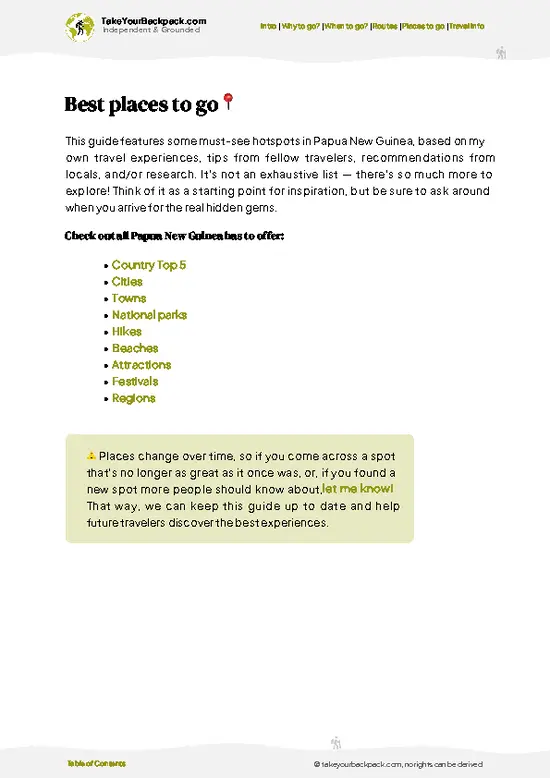
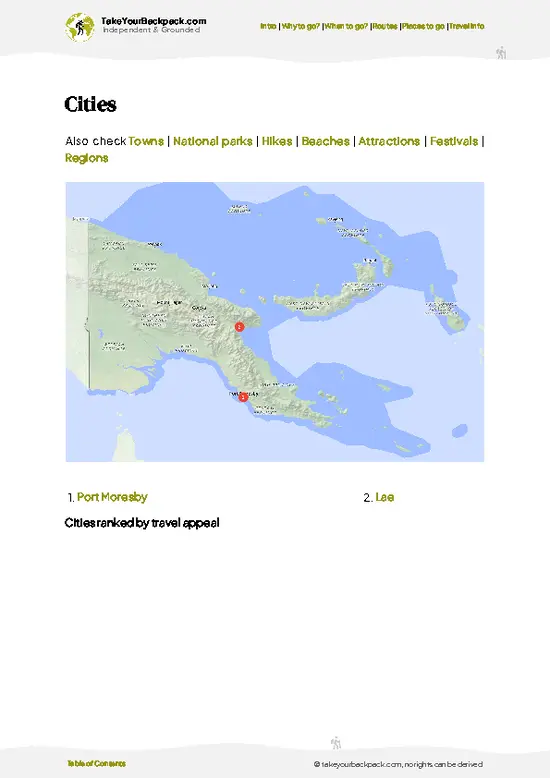
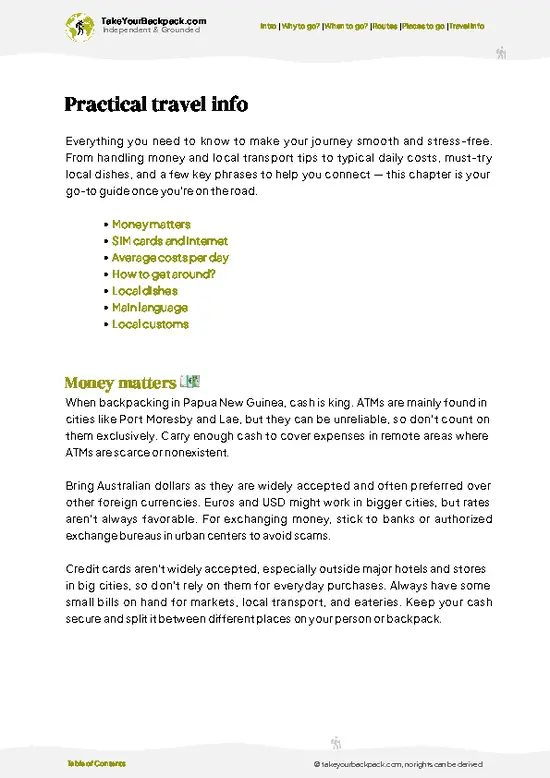
×

Papua New Guinea🇵🇬 | beachesManus Island Beachesturtle nesting, forested headlands, offshore reefs | things to do and best time to go

Explore Aitape BeachExplore Bougainville Island Beaches

Backpacking in Manus Island Beaches
👌 Worth visitingbeach ranked #17
By Johan Kruseman 🇳🇱 | Updated September 4, 2026

You know what nobody tells you about Manus Island beaches? You’ll probably have them almost entirely to yourself, so your “sunrise swim” isn’t a tripod convention. Sitting in northern Papua New Guinea, off the mainland in Manus Province, these beaches are wild, quiet, and gorgeous in that raw, Pacific way: clear water, decent snorkeling, patchy reef, and village vibes instead of beach bars. Sand can be messy with drift and plastic, access is slow and pricey, and budget stays or food are basic and scattered. Compared with easier spots like around Madang or Kavieng, Manus feels more remote, less polished, and more like you accidentally time-traveled twenty years back in backpacker history.

Discover everything you want to know in the 📖 Papua New Guinea Travel Guide.
Loading the map 🌍
CLICK TO FILTER
cities
towns
national parks
hikes
beaches
attractions
festivals
regions
SHOW COUNTRY’S BESTSHOW ALL

✨ Why go?
Ranked #17 beach in Papua New Guinea
Why visitors keep coming back

Manus Island Beaches are a backpacker’s haven in Papua New Guinea, and here’s why you’ll find yourself stopping there. First off, the laid-back atmosphere is like a warm hug after a long trek. You can kick back without the pressure of a five-star resort.

Affordability? Check. You can grab a cold drink without feeling like you just financed a small car. The social scene is lively, with fellow travelers swapping stories over a shared plate of fresh fish.

But it’s not just about lounging. These beaches serve as a connector along the coastal route, a perfect pause to recharge before diving back into the adventure. Plus, the water access is a bonus; it’s not just for swimming, but for cooling off and washing off the dust of the road. Embrace the grind; the gold is waiting just beyond the waves.
Want to include Manus Island Beaches in your Papua New Guinea route?
Create a personalized Papua New Guinea itinerary that includes Manus Island Beaches and the places that fit your trip — based on your travel style, budget, and available time. Get your route in seconds.

Generate my trip

💡 HighlightsEssential experiences to have while visiting Manus Island Beaches

  • WWII wreck snorkeling and shallow dives — Pieces of the Admiralty Islands’ wartime history sit right off many beaches: aircraft, reefed ships and scattered artifacts. The shallow, easy-access wrecks make for a surreal snorkel where history meets busy reef life—expect crabs, schools of fish and encrusted metal that’s turned into miniature reefs.
  • Beachfront village visits and homestays — Manus beaches are lined with small communities where you can swap stories, try freshly grilled fish, and be invited to a kastom (traditional) song or dance on the sand. It’s one of the most genuine cultural exchanges you’ll find: informal, immersive and rooted in daily seaside life rather than tourist shows.
  • Coral bommie snorkeling and turtle spotting — The reefs near the beaches often have exposed bommies
read more 👉
  • WWII wreck snorkeling and shallow dives — Pieces of the Admiralty Islands’ wartime history sit right off many beaches: aircraft, reefed ships and scattered artifacts. The shallow, easy-access wrecks make for a surreal snorkel where history meets busy reef life—expect crabs, schools of fish and encrusted metal that’s turned into miniature reefs.
  • Beachfront village visits and homestays — Manus beaches are lined with small communities where you can swap stories, try freshly grilled fish, and be invited to a kastom (traditional) song or dance on the sand. It’s one of the most genuine cultural exchanges you’ll find: informal, immersive and rooted in daily seaside life rather than tourist shows.
  • Coral bommie snorkeling and turtle spotting — The reefs near the beaches often have exposed bommies and shallow coral gardens teeming with color. Snorkel close to shore and you’ll frequently see green turtles, reef fish aggregations and curious juvenile creatures that concentrate around those coral outcrops.
  • Mangrove channels, tidepools and coastal foraging — Paddle or walk along the mangrove fringes and tidal flats to find unexpected life: fiddler crabs, giant clams in shallows, and calm channels perfect for a cheap kayak hire. Local fishing techniques and beach foraging provide hands-on learning you won’t get from a brochure.
  • Moonlit beaches, night fishing and bioluminescent displays — After dark the beaches take on a different vibe: join local nighttime fishers, listen to seaside songs around small fires, or, if conditions are right, see faint bioluminescence wash with each wave. It’s low-key and atmospheric—more about quiet, starry nights and local rhythm than neon nightlife.
Spotted a mistake or missing something? Contact us.

🌤️ When to go?Seasonal considerations and timing


  • Topic: Weather – Dry season from May to October is your best bet. Expect less rain, which means fewer mudslides and more beach time. Wet season (November to April) brings heavy downpours and humidity that can turn your gear into a soggy mess.

  • Topic: Temperature – Temperatures hover around 27-31°C (80-88°F) year-round. Not much variation, but the dry season feels less sticky and more breathable.

  • Topic: Daylight Hours – Roughly 12 hours of daylight all year, so no need to rush your beach strolls or sunset chases.

  • Topic: Crowds – Manus Island beaches are rarely crowded, but the dry season sees a slight uptick in local visitors and adventurous backpackers.

  • Topic: Seasonal Activities – Dry season aligns with better diving and snorkeling conditions. Visibility improves, and marine life
read more 👉

  • Topic: Weather – Dry season from May to October is your best bet. Expect less rain, which means fewer mudslides and more beach time. Wet season (November to April) brings heavy downpours and humidity that can turn your gear into a soggy mess.

  • Topic: Temperature – Temperatures hover around 27-31°C (80-88°F) year-round. Not much variation, but the dry season feels less sticky and more breathable.

  • Topic: Daylight Hours – Roughly 12 hours of daylight all year, so no need to rush your beach strolls or sunset chases.

  • Topic: Crowds – Manus Island beaches are rarely crowded, but the dry season sees a slight uptick in local visitors and adventurous backpackers.

  • Topic: Seasonal Activities – Dry season aligns with better diving and snorkeling conditions. Visibility improves, and marine life is more active.

  • Topic: Price Fluctuations – Expect slightly higher prices during dry season due to demand, but nothing that’ll break your budget if you book smart.


Pro-tip: Aim for the shoulder months of May or October to dodge both the rain and the small surge of visitors—sweet spot for solitude and sun.


source: climatestotravel.comJANJanuary: fair for travelingFEBFebruary: fair for travelingMARMarch: fair for travelingAPRApril: fair for travelingMAYMay: highly recommended for travelingJUNJune: excellent for travelingJULJuly: excellent for travelingAUGAugust: excellent for travelingSEPSeptember: excellent for travelingOCTOctober: highly recommended for travelingNOVNovember: fair for travelingDECDecember: fair for traveling
when-to-go

✈️ The backpacker research shortcutPapua New Guinea Travel Guide

An offline-friendly backpacking guide with optimized travel routes, ranked highlights, transport advice, and the best areas to stay.
example page 0 from our offline Travel Guide for Papua New Guinea
example page 1 from our offline Travel Guide for Papua New Guinea
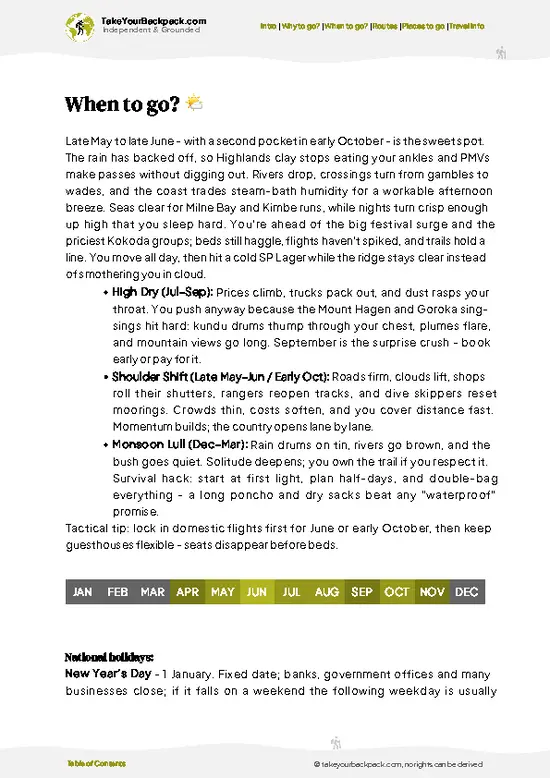
example page 2 from our offline Travel Guide for Papua New Guinea
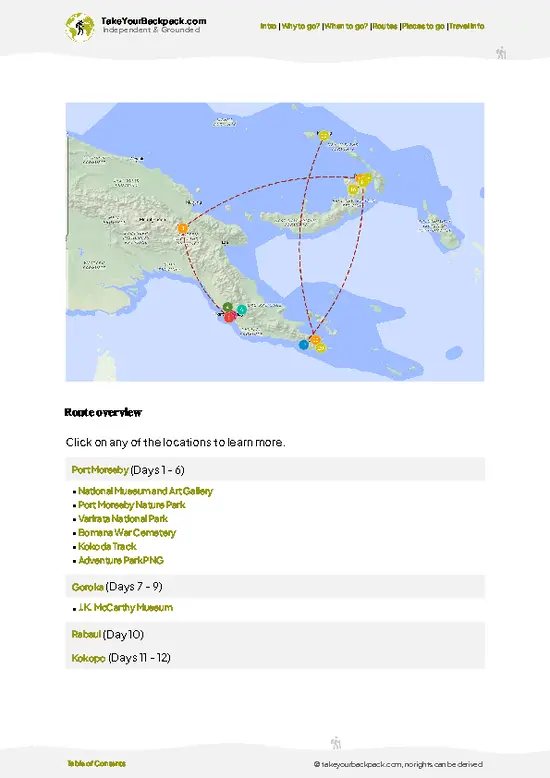
example page 3 from our offline Travel Guide for Papua New Guinea
example page 4 from our offline Travel Guide for Papua New Guinea
example page 5 from our offline Travel Guide for Papua New Guinea
example page 6 from our offline Travel Guide for Papua New Guinea
example page 7 from our offline Travel Guide for Papua New Guinea
The digital guide (319 pages) contains:
86 highlights, ranked by travel appeal
Optimized 5, 10 & 15-day travel routes
Cities, national parks, landmarks, beaches
How to get around
Offline-friendly for travel without Wi-Fi
👉 Click to see all 30+ guide features

📅 Plan smarter in minutes, not weeks
Month by month travel advice
Festivals & national holidays
Budget expectations

🗺️ Go to the right places, skip the overrated ones
Honest pros & cons of destinations
Top hikes, parks & viewpoints
Lesser-known places most travelers miss
Clear “worth it vs skip it” guidance

🛏️ Travel smoothly without rookie mistakes
Best areas to stay
Transport systems explained simply
Common scams & safety advice
SIM cards, money & practical tips

🌍 Understand the country, not just visit it
Culture & traditions
52 Essential phrases & customs
Festivals worth planning around
Traveler-friendly historical context
Insights that make places more meaningful

📱 Built for real travel conditions
Fully downloadable PDF
Works completely offline
Optimized for phone use
Useful in remote areas & buses
Everything in one place
Save weeks of stressful planning
Get instant access to your full guide. 30‑day money-back guarantee.
+ Add another guide for just US$7.80

By proceeding you agree to our terms.
Sent to your inbox immediately after payment • 100% Secure Checkout
Best Backpacking Travel Advisor 2025 tourism awardBest Backpacking
Travel Advisor
2025
What others say about Take Your Backpack Guides:
⭐⭐⭐⭐⭐
Fantastic, amazing amount of information!
⭐⭐⭐⭐⭐
My goodness this is amazing, it's what I've been looking for hats off too you!
⭐⭐⭐⭐⭐
I think this is absolutely BRILLIANT
⭐⭐⭐⭐
Very complete and informative. It's still missing places, but I gotta to commend you
⭐⭐⭐⭐⭐
This is truly amazing, thank you, can't wait to explore it with my kids!
⭐⭐⭐⭐⭐
Awesome resource, thank you!
⭐⭐⭐⭐⭐
This is amazing! Can't wait to explore the ones I haven't seen
⭐⭐⭐⭐
I love this! Well done, great idea.
⭐⭐⭐⭐⭐
Thanks for taking the time to make this gem!
⭐⭐⭐⭐⭐
This might be the best website I've ever seen.
⭐⭐⭐⭐⭐
Congratulations, and thank you so much for your work; it's incredibly valuable.
⭐⭐⭐⭐
In all seriousness I think you did a great job pointing out the important spots
⭐⭐⭐⭐⭐
10/10 very good
⭐⭐⭐⭐⭐
As someone who's only just starting to visit regularly this is awesome, thank you.
⭐⭐⭐⭐
Thank you very much! I'm going to visit my dad, it's going to be very useful!
⭐⭐⭐⭐⭐
This is really cool! We'll be travelling for the first time and this definitely come in handy.
⭐⭐⭐⭐⭐
You are now our minister of culture, congratulations 👨‍💼
⭐⭐⭐⭐⭐
Just wanted to tell you that this is a pearl! Going to follow your recommendations.
⭐⭐⭐⭐⭐
This is so cool. I'll definitely be using the resource for my travels soon.
⭐⭐⭐⭐⭐
This is very impressive! Good work.
⭐⭐⭐⭐⭐
This is an amazing and informative site. Very well done!

🛏️ Where to stay?Choosing the right base

Manus Island Beaches in Papua New Guinea is a slice of paradise that can feel like a well-kept secret. For backpackers, the best areas to stay are around Lorengau, the island’s main town. It’s where the action is, with a mix of local charm and a friendly vibe.

You’ll find budget-friendly accommodations that cater to solo travelers, making it easy to swap stories over a cold drink. The beach is just a hop away, so you can dive into the turquoise waters or lounge on the sand without breaking a sweat.

Another option is the coastal villages. They offer a more laid-back experience, where you can … read more 👉
Manus Island Beaches in Papua New Guinea is a slice of paradise that can feel like a well-kept secret. For backpackers, the best areas to stay are around Lorengau, the island’s main town. It’s where the action is, with a mix of local charm and a friendly vibe.

You’ll find budget-friendly accommodations that cater to solo travelers, making it easy to swap stories over a cold drink. The beach is just a hop away, so you can dive into the turquoise waters or lounge on the sand without breaking a sweat.

Another option is the coastal villages. They offer a more laid-back experience, where you can immerse yourself in local culture. Just be prepared for the occasional logistical hiccup—like figuring out the local transport. But hey, that’s part of the adventure, right? Embrace the grind; the gold is in the connections you make and the sunsets you chase.

🛡️ SafetyScams, Hazards, and Annoyances

Manus Island Beaches offer a laid-back vibe, but don’t let that fool you—nature has its quirks. Swimming is generally safe, but keep an eye on the currents. Locals know the best spots, so follow their lead. The tides can shift, and those waves? They can pack a punch, especially if you’re not paying attention.

Watch out for jellyfish during certain seasons; they can be sneaky little stingers. As for sharks, they’re more interested in their own business than yours, but it’s wise to stay aware.

The sun can be relentless, so slather on that sunscreen and take breaks in the shade. Theft isn’t rampant, but don’t leave your stuff unattended. Enjoy the surf, but keep your wits about you—this is paradise, not a free-for-all.

FAQFrequently asked questions about Manus Island Beaches

You get to Manus Island Beaches by flying into Lorengau Airport on Manus Island, Papua New Guinea, typically via a connecting flight from Port Moresby. From Lorengau, local transport such as boats or motorbikes can take you to various beach locations, often within 30 minutes to an hour depending on the beach.
Manus Island Beaches are good for swimming and snorkeling due to clear waters and coral reefs, but surfing opportunities are limited as the island is not known for large waves. Snorkeling is best from March to November when water visibility is highest.
Yes, Manus Island Beaches are free to visit. There are no entrance fees, but budget for local transport and possibly a small fee if accessing private or resort-managed beach areas.
⚠️ Things can change over time, so always validate details locally before you go.

Other Papua New Guinean beaches near Manus Island Beaches

Explore more nearby:

  • Wewak Beach—river mouth, local gatherings, sunset views| 396 km away
  • Nusa Island—surf breaks, island bungalows, mangrove inlets| 437 km away
  • Kavieng Beach—surf points, coconut groves, island-hopping base| 438 km away

💡 Not sure where to go next?
Create a personalized itinerary for Papua New Guinea including Manus Island Beaches and the places that fit your trip.

Generate my itinerary

👉 Discover all beaches

Or checkout all Papua New Guinea has to offer (think cities, towns, villages, national parks, hikes, beaches, festivals)
Country photo of Papua New Guinea

We 💚 feedbackFinal thoughts on visiting Manus Island Beaches

Manus Island beaches are like that quirky friend who surprises you with their depth. The vibe? Laid-back and genuine, with locals who’ll share a laugh over a kava bowl. The best surprise? The bioluminescent waters at night—seriously, it’s like swimming in a starry sky. Just a heads-up: the logistics can be a bit of a circus, so pack your patience.

✍️ Help improve this page!
The information on this page is based on in-depth research, insights shared by experienced travelers, and feedback from the local travel community in Papua New Guinea. While every effort is made to keep the information accurate and current, conditions can change — so if you spot anything incorrect or outdated, please get in touch.


🙋‍♂️ Give feedback

👋 Meet the founderWho’s Behind Take Your Backpack?

Johan, backpacker and founder of TakeYourBackpackHi, I’m Johan (Netherlands 🇳🇱), the creator of TakeYourBackpack. Over the past decade, I’ve backpacked through 80+ countries across six continents, gaining extensive experience with independent travel, long-term trips, and overland routes.

This site is built on a combination of firsthand travel experience and carefully curated insights from other backpackers. Many guides are based on places I’ve personally visited, while others bring together tips, observations, and practical advice shared by trusted travelers I’ve met along the way.

The goal is to provide realistic, experience-driven guidance — not generic itineraries — so you can explore destinations with better context, clearer expectations, and more confidence.

Get full country guide •
Instant download • 86 highlights • Full Offline guide