


×

Papua New Guinea🇵🇬 | beachesKavieng BeachHarbor wall sunsets, Kavieng market, Japanese wrecks, reef-pass surf | things to do and best time to go

Explore Salamaua BeachExplore Wewak Beach

Backpacking in Kavieng Beach
🏆 Top pickbeach ranked #3
By Johan Kruseman 🇳🇱 | Updated October 15, 2026

Kavieng Beach is best known for its harbor-edge sunsets, when the sky behind Nusa and Nago islands turns orange and fishing canoes slide home across flat water. The beach sits in the town of Kavieng, at the northern tip of New Ireland in Papua New Guinea. Walk the waterfront road and you get a narrow, sandy-gray shoreline, palms leaning over it, and kids launching themselves off the old jetty pilings. Don’t expect a resort strip. The sand is patchy, litter shows up near the market end, and the harbor water is better for a cooling dip than for serious swimming. Beyond it, though, the reef passages draw divers and surfers, and boats shuttle to islands with clearer water. Cheap guesthouses and food stalls cluster a short walk inland. Finish at dusk by the harbor wall, where smoke from grilled fish drifts across the road.

Discover everything you want to know in the 📖 Papua New Guinea Travel Guide.


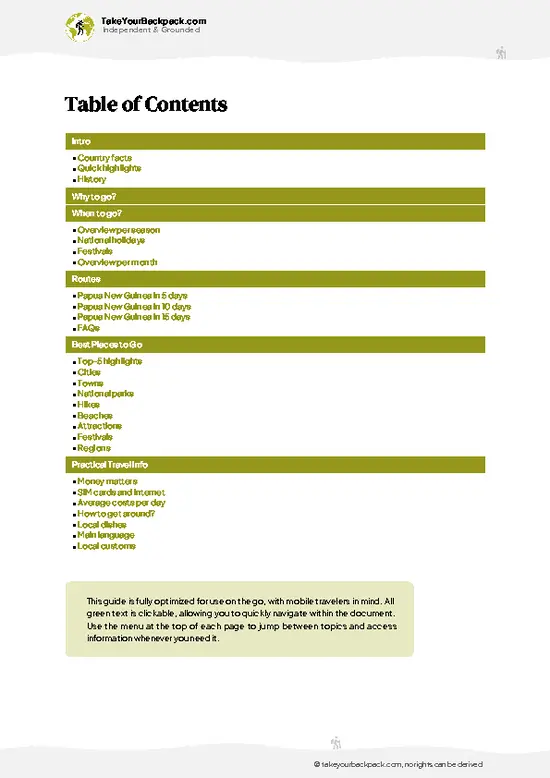
example page 0 from our offline Travel Guide for Papua New Guinea
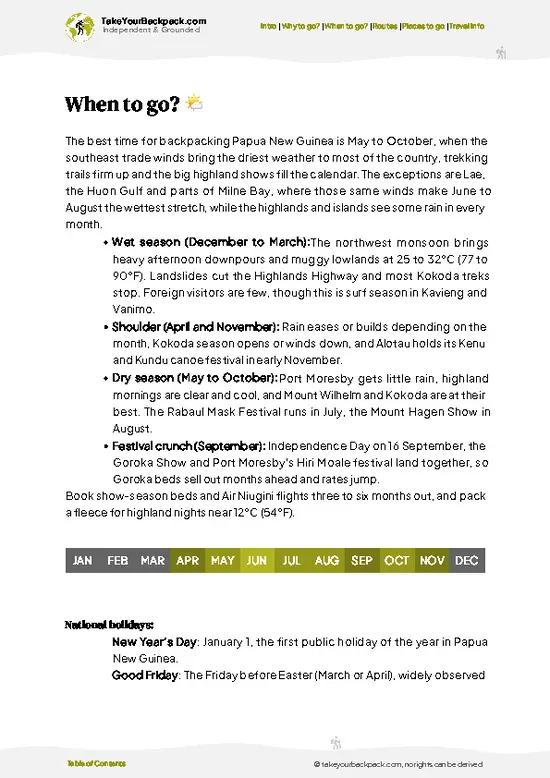
example page 1 from our offline Travel Guide for Papua New Guinea
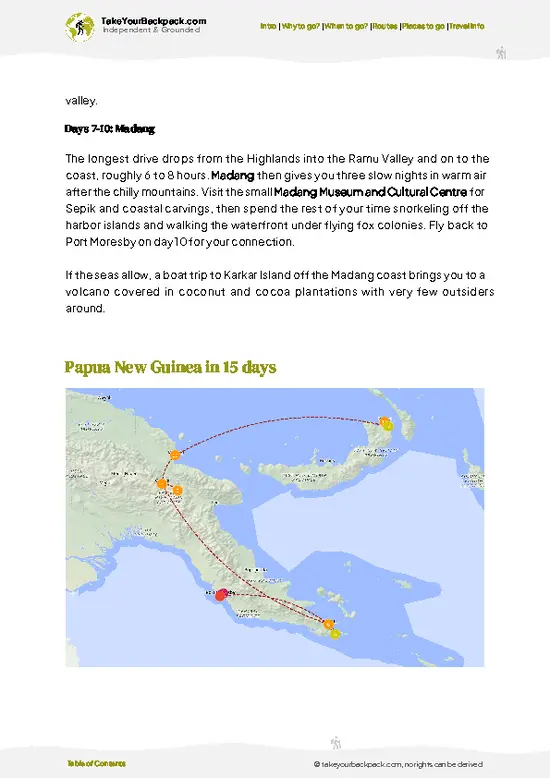
example page 2 from our offline Travel Guide for Papua New Guinea
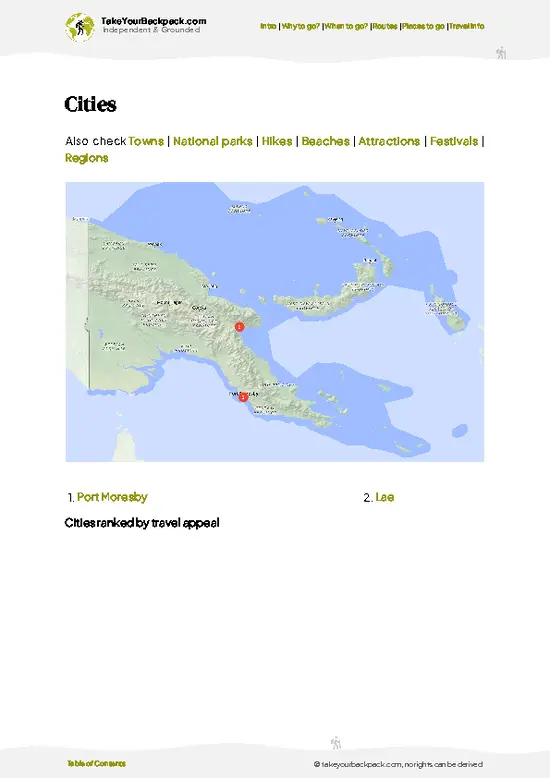
example page 3 from our offline Travel Guide for Papua New Guinea
example page 4 from our offline Travel Guide for Papua New Guinea
example page 5 from our offline Travel Guide for Papua New Guinea
example page 6 from our offline Travel Guide for Papua New Guinea
example page 7 from our offline Travel Guide for Papua New Guinea
Loading the map 🌍
CLICK TO FILTER
cities
towns
national parks
hikes
beaches
attractions
festivals
regions
SHOW COUNTRY’S BESTSHOW ALL

✨ Why go?
Ranked #3 beach in Papua New Guinea
Reasons people choose to visit here

Backpackers stop here because Kavieng is the gateway to New Ireland’s northern reefs, and the beach is where that world starts. Dive operators and boat owners work from the harbor, so you can arrange a day on the water without a long search or a big outlay. The town waterfront is also the easiest place to meet people: locals fish from the shore, traders unload sacks of produce, and the evening crowd gathers along the seawall to talk. If you carry a mask, the nearby islands deliver the clear water the town beach lacks.

The second pull is history underfoot. Kavieng was a major Japanese base in World War II, and rusted wartime wrecks still lie in the harbor and on the seabed, which makes the area a rare spot for wreck diving in a country already famous for it. Add the surf breaks beyond the harbor … read more 👉
Backpackers stop here because Kavieng is the gateway to New Ireland’s northern reefs, and the beach is where that world starts. Dive operators and boat owners work from the harbor, so you can arrange a day on the water without a long search or a big outlay. The town waterfront is also the easiest place to meet people: locals fish from the shore, traders unload sacks of produce, and the evening crowd gathers along the seawall to talk. If you carry a mask, the nearby islands deliver the clear water the town beach lacks.

The second pull is history underfoot. Kavieng was a major Japanese base in World War II, and rusted wartime wrecks still lie in the harbor and on the seabed, which makes the area a rare spot for wreck diving in a country already famous for it. Add the surf breaks beyond the harbor mouth and you have a place that rewards anyone who stays longer than a stopover.

💡 HighlightsPlaces and moments you shouldn't skip

  1. Harbor sunset along the waterfront: This is what Kavieng Beach is known for. Sit on the seawall as the sun drops behind Nusa and Nago islands, with outrigger canoes crossing the glassy water and the sky going orange, then pink.
  2. Kavieng Market: Just along the shoreline, this is where you see the real town. Stalls pile up with bananas, taro, coconuts, mud crabs and the day’s catch, and the sellers will happily tell you what is in season. Go in the morning, when the best produce is out.
  3. Wreck diving and snorkeling in Kavieng Harbour: Japanese wartime wrecks rest in and around the harbor, and the reefs outside hold big schools of fish. Dive shops arrange trips, while snorkelers can ask boat owners about safe, shallower spots.
  4. Surfing the passes off Kavieng: Reef breaks beyond the harbor mouth make
… read more 👉
  1. Harbor sunset along the waterfront: This is what Kavieng Beach is known for. Sit on the seawall as the sun drops behind Nusa and Nago islands, with outrigger canoes crossing the glassy water and the sky going orange, then pink.
  2. Kavieng Market: Just along the shoreline, this is where you see the real town. Stalls pile up with bananas, taro, coconuts, mud crabs and the day’s catch, and the sellers will happily tell you what is in season. Go in the morning, when the best produce is out.
  3. Wreck diving and snorkeling in Kavieng Harbour: Japanese wartime wrecks rest in and around the harbor, and the reefs outside hold big schools of fish. Dive shops arrange trips, while snorkelers can ask boat owners about safe, shallower spots.
  4. Surfing the passes off Kavieng: Reef breaks beyond the harbor mouth make the area a known surf destination in Papua New Guinea. Access is by boat, so check conditions with local operators and be ready for coral beneath you.
  5. Boat trip to Nusa and Nago islands: Hire a local boat to reach the islands facing the beach. Water is clearer than at the town shore, and you can swim, snorkel and see village life on small, quiet islands with no crowds.
Start with the sunset at the waterfront, because it costs nothing, shows you the harbor layout and helps you pick which boat and island trips to arrange afterward.
Spotted a mistake or missing something? Contact us.

🌤️ When to go?When to go for the best experience

  • Drier Months (May to October): Southeast trade winds bring the least rain, with sunny mornings and humid afternoons of 30 to 32°C (86 to 90°F) and nights near 24°C (75°F). Seas are usually calmer on the sheltered town side, and flights and the few guesthouses fill up with dive and fishing visitors.
  • Wetter Months (November to April): Northwest monsoon squalls roll in with heavy, short downpours, though Kavieng, on New Ireland’s northern tip, never goes fully dry in any month. Temperatures hold at the same 29 to 31°C (84 to 88°F), water is warm, and visibility on the reef can dip after storms. Rooms are easier to book, and some boat trips get canceled when swells build.
  • Daylight: Sunrise and sunset barely move, with roughly 12 hours of light all year. Plan beach time before 3 pm, since dusk drops
… read more 👉
  • Drier Months (May to October): Southeast trade winds bring the least rain, with sunny mornings and humid afternoons of 30 to 32°C (86 to 90°F) and nights near 24°C (75°F). Seas are usually calmer on the sheltered town side, and flights and the few guesthouses fill up with dive and fishing visitors.
  • Wetter Months (November to April): Northwest monsoon squalls roll in with heavy, short downpours, though Kavieng, on New Ireland’s northern tip, never goes fully dry in any month. Temperatures hold at the same 29 to 31°C (84 to 88°F), water is warm, and visibility on the reef can dip after storms. Rooms are easier to book, and some boat trips get canceled when swells build.
  • Daylight: Sunrise and sunset barely move, with roughly 12 hours of light all year. Plan beach time before 3 pm, since dusk drops fast around 6 pm.
  • Surf Season: Swell for the outer breaks tends to peak from roughly November to April, which is also when the surf camps open.
Book flights and dive trips early for June to September, then use the flexible weeks on either side.


source: climatestotravel.comJANJanuary: fair for travelingFEBFebruary: fair for travelingMARMarch: fair for travelingAPRApril: good for travelingMAYMay: highly recommended for travelingJUNJune: excellent for travelingJULJuly: excellent for travelingAUGAugust: excellent for travelingSEPSeptember: excellent for travelingOCTOctober: highly recommended for travelingNOVNovember: good for travelingDECDecember: fair for traveling
when-to-go

✈️ The backpacker research shortcutPapua New Guinea Travel Guide

An offline-friendly backpacking guide with optimized travel routes, ranked highlights, transport advice, and the best areas to stay.
example page 0 from our offline Travel Guide for Papua New Guinea
example page 1 from our offline Travel Guide for Papua New Guinea
example page 2 from our offline Travel Guide for Papua New Guinea
example page 3 from our offline Travel Guide for Papua New Guinea
example page 4 from our offline Travel Guide for Papua New Guinea
example page 5 from our offline Travel Guide for Papua New Guinea
example page 6 from our offline Travel Guide for Papua New Guinea
example page 7 from our offline Travel Guide for Papua New Guinea
The digital guide (251 pages) contains:
✅ 81 highlights, ranked by travel appeal
✅ Optimized 5, 10 & 15-day travel routes
✅ Cities, national parks, landmarks, beaches
✅ How to get around
✅ Offline-friendly for travel without Wi-Fi
👉 Click to see all 30+ guide features

📅 Plan smarter in minutes, not weeks
✅ Month by month travel advice
✅ Festivals & national holidays
✅ Budget expectations

🗺️ Go to the right places, skip the overrated ones
✅ Honest pros & cons of destinations
✅ Top hikes, parks & viewpoints
✅ Lesser-known places most travelers miss
✅ Clear “worth it vs skip it” guidance

🛏️ Travel smoothly without rookie mistakes
✅ Best areas to stay
✅ Transport systems explained simply
✅ Common scams & safety advice
✅ SIM cards, money & practical tips

🌍 Understand the country, not just visit it
✅ Culture & traditions
✅ 52 Essential phrases & customs
✅ Festivals worth planning around
✅ Traveler-friendly historical context
✅ Insights that make places more meaningful

📱 Built for real travel conditions
✅ Fully downloadable PDF
✅ Works completely offline
✅ Optimized for phone use
✅ Useful in remote areas & buses
✅ Everything in one place
Stop searching, start planning
Get instant access to your full guide. 30‑day money-back guarantee.
+ Add another guide for just

By proceeding you agree to our terms.
Sent to your inbox immediately after payment • 100% Secure Checkout
Best Backpacking Travel Advisor 2025 tourism awardBest Backpacking
Travel Advisor
2025
What others say about Take Your Backpack Guides:
⭐⭐⭐⭐⭐
Fantastic, amazing amount of information!
⭐⭐⭐⭐⭐
My goodness this is amazing, it's what I've been looking for hats off too you!
⭐⭐⭐⭐⭐
I think this is absolutely BRILLIANT
⭐⭐⭐⭐
Very complete and informative. It's still missing places, but I gotta to commend you
⭐⭐⭐⭐⭐
This is truly amazing, thank you, can't wait to explore it with my kids!
⭐⭐⭐⭐⭐
Awesome resource, thank you!
⭐⭐⭐⭐⭐
This is amazing! Can't wait to explore the ones I haven't seen
⭐⭐⭐⭐
I love this! Well done, great idea.
⭐⭐⭐⭐⭐
Thanks for taking the time to make this gem!
⭐⭐⭐⭐⭐
This might be the best website I've ever seen.
⭐⭐⭐⭐⭐
Congratulations, and thank you so much for your work; it's incredibly valuable.
⭐⭐⭐⭐
In all seriousness I think you did a great job pointing out the important spots
⭐⭐⭐⭐⭐
10/10 very good
⭐⭐⭐⭐⭐
As someone who's only just starting to visit regularly this is awesome, thank you.
⭐⭐⭐⭐
Thank you very much! I'm going to visit my dad, it's going to be very useful!
⭐⭐⭐⭐⭐
This is really cool! We'll be travelling for the first time and this definitely come in handy.
⭐⭐⭐⭐⭐
You are now our minister of culture, congratulations 👨‍💼
⭐⭐⭐⭐⭐
Just wanted to tell you that this is a pearl! Going to follow your recommendations.
⭐⭐⭐⭐⭐
This is so cool. I'll definitely be using the resource for my travels soon.
⭐⭐⭐⭐⭐
This is very impressive! Good work.
⭐⭐⭐⭐⭐
This is an amazing and informative site. Very well done!

🛏️ Where to stay?Where staying makes the most sense

Stay in Kavieng town itself, within a 5 to 15 minute walk of the waterfront, because that is where nearly everything a backpacker needs is clustered. The town is small, with one main street, a market, a handful of trade stores, banks with ATMs and the wharf where boats leave for the islands. Budget guesthouses and basic rooms here run roughly K120 to 300 (US$30 to 75) a night, and dorm beds are rare, so expect private rooms and the odd shared house. Staying central means you can walk to the market for cheap fruit and cooked food, and hire a boat or arrange a lift without paying for long transfers. … read more 👉
Stay in Kavieng town itself, within a 5 to 15 minute walk of the waterfront, because that is where nearly everything a backpacker needs is clustered. The town is small, with one main street, a market, a handful of trade stores, banks with ATMs and the wharf where boats leave for the islands. Budget guesthouses and basic rooms here run roughly K120 to 300 (US$30 to 75) a night, and dorm beds are rare, so expect private rooms and the odd shared house. Staying central means you can walk to the market for cheap fruit and cooked food, and hire a boat or arrange a lift without paying for long transfers.

The quieter edge of town along the harbor road has a few more relaxed lodgings with water views and fewer people about at night. They suit travelers who want to sleep well and are happy to walk or take a PMV (local minibus, around K2 to 5) into the center.

Resorts on nearby islands and the Nusa Island side cost more, usually US$100 and up, but they put you right at the reef and surf. Social contact is mostly with dive guests, expats and other travelers over dinner. Book ahead, as rooms are limited.

🛡️ SafetyScams, Hazards, and Annoyances

Kavieng Beach is generally calm and manageable, and the main concerns are the town rather than the sea. Water along the harbor front is sheltered and lightly surfed, so currents are mild, though tide flow through channels between the islands can be strong enough to tire a swimmer. Swim from the sandy stretches where locals do, avoid the wharf and anywhere boats are launching, and keep clear of the shipping lanes.

Reef edges can have sharp coral and sea urchins, so wear reef shoes. Saltwater crocodiles live in PNG’s coastal waters, so ask residents before swimming near river mouths or mangroves, and skip dusk swims. The sun is intense year-round, so cover up between 10 am and 3 pm.

Petty theft can happen, so do not leave bags unattended on the sand. Walk in daylight, avoid isolated stretches … read more 👉
Kavieng Beach is generally calm and manageable, and the main concerns are the town rather than the sea. Water along the harbor front is sheltered and lightly surfed, so currents are mild, though tide flow through channels between the islands can be strong enough to tire a swimmer. Swim from the sandy stretches where locals do, avoid the wharf and anywhere boats are launching, and keep clear of the shipping lanes.

Reef edges can have sharp coral and sea urchins, so wear reef shoes. Saltwater crocodiles live in PNG’s coastal waters, so ask residents before swimming near river mouths or mangroves, and skip dusk swims. The sun is intense year-round, so cover up between 10 am and 3 pm.

Petty theft can happen, so do not leave bags unattended on the sand. Walk in daylight, avoid isolated stretches at night and take a taxi after dark. Greet people, and ask before photographing.

FAQCommon questions from travelers

Fly into Kavieng Airport (KVG) from Port Moresby, a direct flight of roughly 2 hours operated by Air Niugini or PNG Air, with fares often around K700 to 1,500 (US$180 to 380) one way. From the airport it is a 10 to 15 minute taxi or PMV ride, about K10 to 30, into town and to the waterfront. A slower alternative is the coastal road from Namatanai, which takes many hours and is rarely used by visitors.
Swimming is fine in calm, sheltered spots near the town, but tidal currents in channels and boat traffic mean you should choose your place with care. Snorkeling and diving are the real draw, with reefs, WWII wrecks and drop-offs reached by dive operators on short boat trips, and one-tank dives costing around US$80 to 120. Surfing happens at outer reef breaks around Nusa and Kavieng, usually reached by boat and typically through a resort or surf camp, with fees of about US$30 to 60 for a trip.
Access to the town beach itself is free, as most of the foreshore is open public space used daily by locals. Island beaches and reef areas, however, often belong to local landowners or villages, and a small fee of roughly K10 to 50 (US$3 to 13) may be asked for access, camping or a canoe crossing. Boat transfers to nearby islands usually cost around K50 to 200 (US$13 to 50) per person depending on distance, so ask a price before you go.
⚠️ Things can change over time, so always validate details locally before you go.

Other Papua New Guinean beaches near Kavieng Beach

Explore more nearby:

  • Nusa Island—Albatross Passage, harbor wrecks, house reef, island kayak loop| 1 km away
  • New Ireland Beaches—Boluminski Highway coves, Kontu shark calling, malagan carvers, Kavieng surf| 159 km away
  • Kokopo Beach—Volcanic bay sand, Pacific War museum, Tolai market, Tavurvur lookouts| 256 km away

💡 Not sure where to go next?
Create a personalized itinerary for Papua New Guinea including Kavieng Beach and the places that fit your trip.

Generate my itinerary

👉 Discover all beaches

Or checkout all Papua New Guinea has to offer (think cities, towns, villages, national parks, hikes, beaches, festivals)
Country photo of Papua New Guinea

We 💚 feedbackWhat to keep in mind

Kavieng Beach suits curious travelers who like working-town waterfronts, divers heading for the wrecks and surfers chasing the passes. Skip it if you want a postcard beach right outside your door. I would treat the town shore as the evening hangout and spend daylight on the islands. Bring your own mask and reef shoes, and keep a few small bills for boat fares and snacks.

✍️ Help improve this page!
The information on this page is based on in-depth research, insights shared by experienced travelers, and feedback from the local travel community in Papua New Guinea. While every effort is made to keep the information accurate and current, conditions can change — so if you spot anything incorrect or outdated, please get in touch.


🙋‍♂️ Give feedback

👋 Meet the founderWho’s Behind Take Your Backpack?

Johan, backpacker and founder of TakeYourBackpackHi, I’m Johan (Netherlands 🇳🇱), the creator of TakeYourBackpack. Over the past 3 decades, I’ve backpacked through 90+ countries across six continents, gaining extensive experience with independent travel, long-term trips, and overland routes.

This site is built on a combination of firsthand travel experience and carefully curated insights from other backpackers. Many guides are based on places I’ve personally visited, while others bring together tips, observations, and practical advice shared by trusted travelers I’ve met along the way.

The goal is to provide realistic, experience-driven guidance — not generic itineraries — so you can explore destinations with better context, clearer expectations, and more confidence.