
×

Papua New Guinea🇵🇬 | beachesSalamaua BeachIsthmus village, Japanese bunkers, Huon Gulf sunrise, offshore wreckage | things to do and best time to go

Explore Hula BeachExplore Kavieng Beach

Backpacking in Salamaua Beach
👍 Recommendedbeach ranked #20
By Johan Kruseman 🇳🇱 | Updated October 15, 2026

Salamaua Beach rewards you with empty sand and a front-row seat to World War II history, with no resort crowds in sight. It sits on a narrow peninsula in Morobe Province, in the north of Papua New Guinea, south of Lae. Water is warm and clear, snorkeling off the point is easy, and wartime relics lie in the hills behind. Services are basic and food options are thin. Getting there means a boat from Lae, so confirm your ride back before you leave.

Discover everything you want to know in the 📖 Papua New Guinea Travel Guide.


example page 0 from our offline Travel Guide for Papua New Guinea
example page 1 from our offline Travel Guide for Papua New Guinea
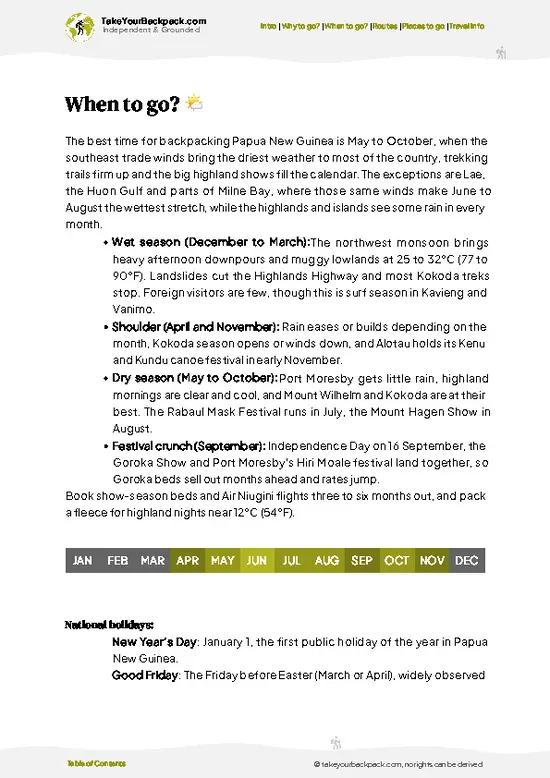
example page 2 from our offline Travel Guide for Papua New Guinea
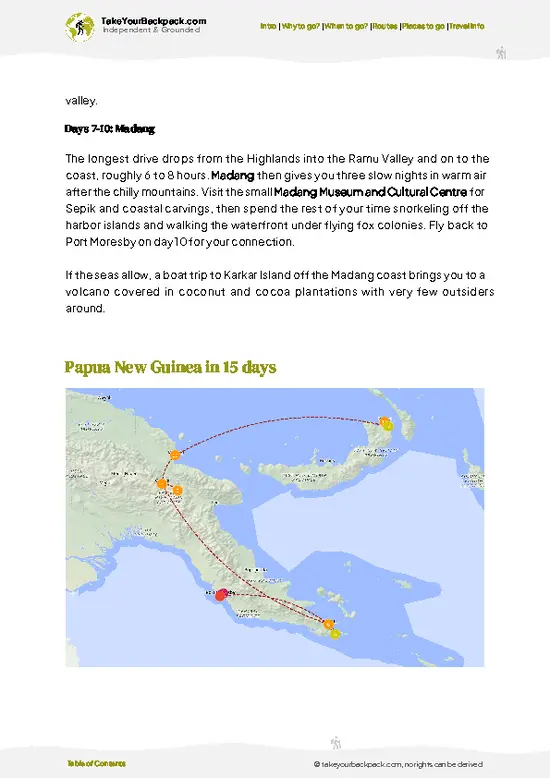
example page 3 from our offline Travel Guide for Papua New Guinea
example page 4 from our offline Travel Guide for Papua New Guinea
example page 5 from our offline Travel Guide for Papua New Guinea
example page 6 from our offline Travel Guide for Papua New Guinea
example page 7 from our offline Travel Guide for Papua New Guinea
Loading the map 🌍
CLICK TO FILTER
cities
towns
national parks
hikes
beaches
attractions
festivals
regions
SHOW COUNTRY’S BESTSHOW ALL

✨ Why go?
Ranked #20 beach in Papua New Guinea
The unique appeal for travelers

Backpackers come to Salamaua for the war. Japanese and Allied forces fought over this isthmus in 1942 and 1943, and rusting guns and tunnels in the hills still sit above the village. The second pull is the water: the twin bays on either side of the isthmus give you calm swimming on one side and a view of the Huon Gulf on the other. Villagers run guesthouses and guide walks, so your money lands directly with locals. Few visitors arrive, which means you get the place nearly alone.

💡 HighlightsPlaces and moments you shouldn't skip

  1. Wartime relics above the village: Walk up with a local guide to old Japanese guns, bunkers and scattered debris from the 1943 campaign. The hills give you views over both bays.
  2. The isthmus walk: The village sits on a thin strip of land with sea on both sides. Stroll the length of it and watch canoes, children and fishing nets share the sand.
  3. Snorkeling the reef edges: Warm water and coral patches sit close to shore, and wartime wreckage lies in places offshore. Ask villagers where to enter and bring your own mask.
  4. Village life and canoe rides: Hire a local canoe to cross the bay or visit nearby settlements. You will see sago, fishing and gardening up close, and people are keen to talk.
  5. Sunrise and sunset on the Huon Gulf: The sea faces open water, so mornings glow over the gulf and evenings are
… read more 👉
  1. Wartime relics above the village: Walk up with a local guide to old Japanese guns, bunkers and scattered debris from the 1943 campaign. The hills give you views over both bays.
  2. The isthmus walk: The village sits on a thin strip of land with sea on both sides. Stroll the length of it and watch canoes, children and fishing nets share the sand.
  3. Snorkeling the reef edges: Warm water and coral patches sit close to shore, and wartime wreckage lies in places offshore. Ask villagers where to enter and bring your own mask.
  4. Village life and canoe rides: Hire a local canoe to cross the bay or visit nearby settlements. You will see sago, fishing and gardening up close, and people are keen to talk.
  5. Sunrise and sunset on the Huon Gulf: The sea faces open water, so mornings glow over the gulf and evenings are quiet, with cooking fires and no nightlife to compete.
Together these fill one full day comfortably, or an easy two if you add a long snorkel and a slow hike.
Spotted a mistake or missing something? Contact us.

🌤️ When to go?When to go for the best experience

  • Dry Season (May to October): Southeast trade winds bring the clearest skies and calmer mornings, with highs of 29 to 31°C (84 to 88°F) and nights near 23°C (73°F). Seas can be choppier on windy afternoons.
  • Wet Season (November to April): Heavy showers and humidity, same temperatures, muddier tracks and more cancelled boats.
  • Daylight and Crowds: Days run close to 12 hours all year, and visitors are few in any month.
  • Events: Trekkers on the Black Cat Track tend to pass through in the drier months.
Aim for June to September, and book transport a few days ahead.

source: climatestotravel.comJANJanuary: fair for travelingFEBFebruary: fair for travelingMARMarch: fair for travelingAPRApril: fair for travelingMAYMay: highly recommended for travelingJUNJune: highly recommended for travelingJULJuly: good for travelingAUGAugust: good for travelingSEPSeptember: highly recommended for travelingOCTOctober: highly recommended for travelingNOVNovember: fair for travelingDECDecember: fair for traveling
when-to-go

✈️ The backpacker research shortcutPapua New Guinea Travel Guide

An offline-friendly backpacking guide with optimized travel routes, ranked highlights, transport advice, and the best areas to stay.
example page 0 from our offline Travel Guide for Papua New Guinea
example page 1 from our offline Travel Guide for Papua New Guinea
example page 2 from our offline Travel Guide for Papua New Guinea
example page 3 from our offline Travel Guide for Papua New Guinea
example page 4 from our offline Travel Guide for Papua New Guinea
example page 5 from our offline Travel Guide for Papua New Guinea
example page 6 from our offline Travel Guide for Papua New Guinea
example page 7 from our offline Travel Guide for Papua New Guinea
The digital guide (251 pages) contains:
✅ 81 highlights, ranked by travel appeal
✅ Optimized 5, 10 & 15-day travel routes
✅ Cities, national parks, landmarks, beaches
✅ How to get around
✅ Offline-friendly for travel without Wi-Fi
👉 Click to see all 30+ guide features

📅 Plan smarter in minutes, not weeks
✅ Month by month travel advice
✅ Festivals & national holidays
✅ Budget expectations

🗺️ Go to the right places, skip the overrated ones
✅ Honest pros & cons of destinations
✅ Top hikes, parks & viewpoints
✅ Lesser-known places most travelers miss
✅ Clear “worth it vs skip it” guidance

🛏️ Travel smoothly without rookie mistakes
✅ Best areas to stay
✅ Transport systems explained simply
✅ Common scams & safety advice
✅ SIM cards, money & practical tips

🌍 Understand the country, not just visit it
✅ Culture & traditions
✅ 52 Essential phrases & customs
✅ Festivals worth planning around
✅ Traveler-friendly historical context
✅ Insights that make places more meaningful

📱 Built for real travel conditions
✅ Fully downloadable PDF
✅ Works completely offline
✅ Optimized for phone use
✅ Useful in remote areas & buses
✅ Everything in one place
Stop searching, start planning
Get instant access to your full guide. 30‑day money-back guarantee.
+ Add another guide for just

By proceeding you agree to our terms.
Sent to your inbox immediately after payment • 100% Secure Checkout
Best Backpacking Travel Advisor 2025 tourism awardBest Backpacking
Travel Advisor
2025
What others say about Take Your Backpack Guides:
⭐⭐⭐⭐⭐
Fantastic, amazing amount of information!
⭐⭐⭐⭐⭐
My goodness this is amazing, it's what I've been looking for hats off too you!
⭐⭐⭐⭐⭐
I think this is absolutely BRILLIANT
⭐⭐⭐⭐
Very complete and informative. It's still missing places, but I gotta to commend you
⭐⭐⭐⭐⭐
This is truly amazing, thank you, can't wait to explore it with my kids!
⭐⭐⭐⭐⭐
Awesome resource, thank you!
⭐⭐⭐⭐⭐
This is amazing! Can't wait to explore the ones I haven't seen
⭐⭐⭐⭐
I love this! Well done, great idea.
⭐⭐⭐⭐⭐
Thanks for taking the time to make this gem!
⭐⭐⭐⭐⭐
This might be the best website I've ever seen.
⭐⭐⭐⭐⭐
Congratulations, and thank you so much for your work; it's incredibly valuable.
⭐⭐⭐⭐
In all seriousness I think you did a great job pointing out the important spots
⭐⭐⭐⭐⭐
10/10 very good
⭐⭐⭐⭐⭐
As someone who's only just starting to visit regularly this is awesome, thank you.
⭐⭐⭐⭐
Thank you very much! I'm going to visit my dad, it's going to be very useful!
⭐⭐⭐⭐⭐
This is really cool! We'll be travelling for the first time and this definitely come in handy.
⭐⭐⭐⭐⭐
You are now our minister of culture, congratulations 👨‍💼
⭐⭐⭐⭐⭐
Just wanted to tell you that this is a pearl! Going to follow your recommendations.
⭐⭐⭐⭐⭐
This is so cool. I'll definitely be using the resource for my travels soon.
⭐⭐⭐⭐⭐
This is very impressive! Good work.
⭐⭐⭐⭐⭐
This is an amazing and informative site. Very well done!

🛏️ Where to stay?How to pick the right area

Stay in Lae, because Salamaua has almost no commercial lodging and most travelers visit from there. Lae offers guesthouses and mid-range hotels from roughly K150 to K400 (US$40 to 105) a night, with secure compounds, meals on site and easy contacts for boat transfers. Budget travelers meet others in the Lae guesthouses near the market and Botanic Garden side of town. Dormitory-style options are scarce, so expect private rooms. Within Salamaua, a village homestay or guesthouse may be arranged through local contacts, usually with basic rooms, shared washing facilities and village meals. Bring cash, … read more 👉
Stay in Lae, because Salamaua has almost no commercial lodging and most travelers visit from there. Lae offers guesthouses and mid-range hotels from roughly K150 to K400 (US$40 to 105) a night, with secure compounds, meals on site and easy contacts for boat transfers. Budget travelers meet others in the Lae guesthouses near the market and Botanic Garden side of town. Dormitory-style options are scarce, so expect private rooms. Within Salamaua, a village homestay or guesthouse may be arranged through local contacts, usually with basic rooms, shared washing facilities and village meals. Bring cash, a torch and a mosquito net. Choose Lae if you want reliability, and the village if you want local company.

🛡️ SafetyStaying Safe: What Travelers Should Know

Salamaua’s sheltered bay water is generally calm, and villagers swim and paddle canoes there daily. Rips are not a typical concern, though waves build on windy afternoons and after heavy rain. Swim in the morning when the sea is flattest, and stay near where locals bathe. The tropical sun is strong, so cover up. Keep valuables with you or leave them in Lae, and ask villagers before photographing people or entering coral and old wartime sites. Rain can make walking tracks slippery.

FAQFrequently asked questions about Salamaua Beach

Take a banana boat from Lae, usually a 45 to 90 minute ride along the coast depending on the sea and engine. Boats generally leave from the Voco Point area, and fares are typically about K50 to 100 (US$13 to 26) per person, often more if you charter. Go in the morning, because afternoon winds make the crossing rougher. Arrange your return pickup before you leave.
Swimming is the main draw, and the sheltered water is usually calm enough for relaxed dips, best in the morning. Snorkeling is possible over nearby coral, and local boatmen can point out spots and wartime wrecks. Surfing is not a feature here, as the bay lacks reliable breaks. Bring your own mask and fins, since rental gear is rare.
There is no ticket booth, but this is customary land, so expect to pay villagers for access, guiding or camping. A small fee of around K20 to 50 (US$5 to 13) is typical, and boat transfers and guides cost extra. Carry small kina notes, since there are no ATMs in the village. Ask the village leader before walking tracks or visiting wartime relics.
⚠️ Things can change over time, so always validate details locally before you go.

Other Papua New Guinean beaches near Salamaua Beach

Explore more nearby:

  • Oro Province Beaches—Popondetta black sand, Oro Bay wrecks, Tufi inlets, dusk lamp fishing| 240 km away
  • Loloata Island—Private resort island, house reef, Bootless Bay dives, sheltered kayaking| 277 km away
  • Tufi Beach—Tufi fjords, sandy inlet coves, reef walls, tapa cloth villages| 336 km away

💡 Not sure where to go next?
Create a personalized itinerary for Papua New Guinea including Salamaua Beach and the places that fit your trip.

Generate my itinerary

👉 Discover all beaches

Or checkout all Papua New Guinea has to offer (think cities, towns, villages, national parks, hikes, beaches, festivals)
Country photo of Papua New Guinea

We 💚 feedbackFinal thoughts on visiting Salamaua Beach

Stay two nights. One day goes on the hills and relics, the second on snorkeling and lazy village time, and the boat ride feels worth it. I would bring cash, snacks and a mask.

✍️ Help improve this page!
The information on this page is based on in-depth research, insights shared by experienced travelers, and feedback from the local travel community in Papua New Guinea. While every effort is made to keep the information accurate and current, conditions can change — so if you spot anything incorrect or outdated, please get in touch.


🙋‍♂️ Give feedback

👋 Meet the founderWho’s Behind Take Your Backpack?

Johan, backpacker and founder of TakeYourBackpackHi, I’m Johan (Netherlands 🇳🇱), the creator of TakeYourBackpack. Over the past 3 decades, I’ve backpacked through 90+ countries across six continents, gaining extensive experience with independent travel, long-term trips, and overland routes.

This site is built on a combination of firsthand travel experience and carefully curated insights from other backpackers. Many guides are based on places I’ve personally visited, while others bring together tips, observations, and practical advice shared by trusted travelers I’ve met along the way.

The goal is to provide realistic, experience-driven guidance — not generic itineraries — so you can explore destinations with better context, clearer expectations, and more confidence.