
×

Papua New Guinea🇵🇬 | citiesLaeContainer port, war graves, Morobe market, Unitech wildlife | things to do and best time to go

Explore Oro Province BeachesExplore Port Moresby

Backpacking in Lae
👍 Recommendedcity ranked #2
By Johan Kruseman 🇳🇱 | Updated October 16, 2026

Port Moresby holds the capital title, but Lae is the country’s second city and its busiest cargo port, sitting on the Huon Gulf in the north of Papua New Guinea. It’s a working town of container cranes, trucking depots and university students, not a resort. Skip it if you want polished sights or easy strolling, because Lae is a place where you plan your movements and take taxis. Spend your time instead on the war cemetery, the botanical gardens and the market, which show you real daily life. The humid heat and the security awareness it demands are the downsides. Lae suits curious, self-reliant travelers heading to the Highlands, islands or Morobe’s backcountry who want to understand how the country actually runs. It won’t suit anyone after beaches, nightlife or casual wandering.

Discover everything you want to know in the 📖 Papua New Guinea Travel Guide.


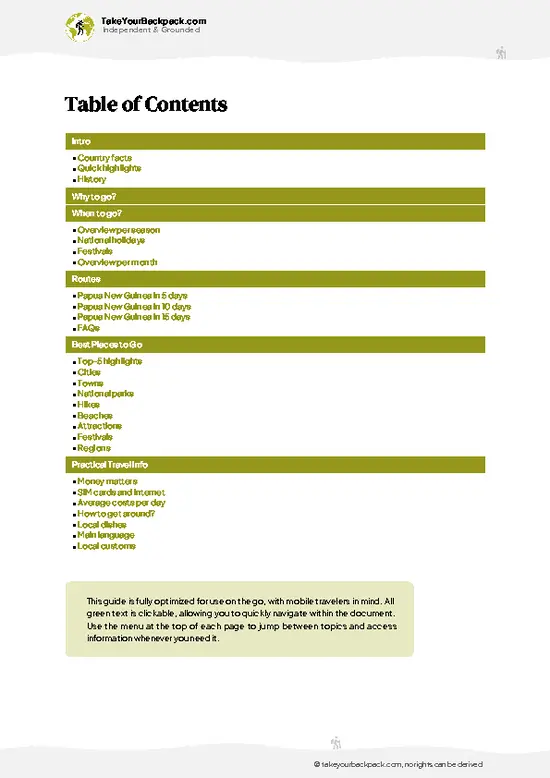
example page 0 from our offline Travel Guide for Papua New Guinea
example page 1 from our offline Travel Guide for Papua New Guinea
example page 2 from our offline Travel Guide for Papua New Guinea
example page 3 from our offline Travel Guide for Papua New Guinea
example page 4 from our offline Travel Guide for Papua New Guinea
example page 5 from our offline Travel Guide for Papua New Guinea
example page 6 from our offline Travel Guide for Papua New Guinea
example page 7 from our offline Travel Guide for Papua New Guinea
Loading the map 🌍
CLICK TO FILTER
cities
towns
national parks
hikes
beaches
attractions
festivals
regions
SHOW COUNTRY’S BESTSHOW ALL

✨ Why go?
Ranked #2 city in Papua New Guinea
What makes it a must-see city

Lae earns its place as a gateway city. The Highlands Highway starts here and climbs toward Goroka and Mount Hagen, and the town has flights to the capital, the islands and Madang, so most routes through the north pass through it. That makes it a practical place to restock, change money, sort out onward bookings and meet local contacts. You’ll also find a better range of supermarkets and decent restaurants than in most PNG towns, which matters when the next few weeks involve village guesthouses and basic food. Lae suits a short, purposeful stop of one or two nights rather than a long stay. The pull for history-minded travelers is the World War II legacy, with the Allied campaign for the Huon Gulf leaving a mark on the area, and for nature lovers it’s a big botanical garden that has no equal … read more 👉
Lae earns its place as a gateway city. The Highlands Highway starts here and climbs toward Goroka and Mount Hagen, and the town has flights to the capital, the islands and Madang, so most routes through the north pass through it. That makes it a practical place to restock, change money, sort out onward bookings and meet local contacts. You’ll also find a better range of supermarkets and decent restaurants than in most PNG towns, which matters when the next few weeks involve village guesthouses and basic food. Lae suits a short, purposeful stop of one or two nights rather than a long stay. The pull for history-minded travelers is the World War II legacy, with the Allied campaign for the Huon Gulf leaving a mark on the area, and for nature lovers it’s a big botanical garden that has no equal nearby. Nightlife is limited and walking around is not advised after dark, so expect early evenings in your guesthouse.

💡 HighlightsMust-see experiences and standout moments

  1. Lae War Cemetery: Neat lawns and bronze plaques mark the graves of around 2,800 Commonwealth servicemen from the New Guinea campaign, kept in immaculate condition by the Commonwealth War Graves Commission. It’s the single most moving place in town. Go early morning or late afternoon for cooler air. Free, allow 45 minutes to 1 hour.
  2. Lae Botanical Gardens: A large, shaded park of orchids, giant trees and palm collections, with quiet paths where birds are easy to spot. Weekday mornings are calmest, when you’ll have it nearly to yourself. Entry is roughly K10 to 20 (US$3 to 5), and a visit takes 1.5 to 2 hours.
  3. Lae Main Market: A loud, crowded daily market with mountains of betel nut, sweet potato, taro, fish, bilums (woven string bags) and tropical fruit from Morobe farms. Go before 10:00 AM, keep
… read more 👉
  1. Lae War Cemetery: Neat lawns and bronze plaques mark the graves of around 2,800 Commonwealth servicemen from the New Guinea campaign, kept in immaculate condition by the Commonwealth War Graves Commission. It’s the single most moving place in town. Go early morning or late afternoon for cooler air. Free, allow 45 minutes to 1 hour.
  2. Lae Botanical Gardens: A large, shaded park of orchids, giant trees and palm collections, with quiet paths where birds are easy to spot. Weekday mornings are calmest, when you’ll have it nearly to yourself. Entry is roughly K10 to 20 (US$3 to 5), and a visit takes 1.5 to 2 hours.
  3. Lae Main Market: A loud, crowded daily market with mountains of betel nut, sweet potato, taro, fish, bilums (woven string bags) and tropical fruit from Morobe farms. Go before 10:00 AM, keep your phone out of sight and carry only small kina notes. Free to enter, about 1 hour.
  4. Rainforest Habitat at Unitech: A native-species garden and animal enclosure on the university campus, where you can see birds of paradise, cassowaries and tree kangaroos without a Highlands trek. Aim for the morning when animals are active. Entry runs roughly K20 to 40 (US$5 to 10), and you’ll need 1 to 1.5 hours.
  5. Lae Yacht Club: The easiest spot for a cold drink with a harbor view, where you’ll meet expats, boat crews and aid workers swapping route advice. Late afternoon into sunset is best. Drinks cost a few kina to a few dozen, and you’ll usually stay 1 to 2 hours.
  6. Voco Point and the waterfront: The working port edge of Lae, with fishing boats, ferries bound for Morobe’s coast and views over the Huon Gulf. Visit by taxi in daylight only, and keep camera use discreet. Free, 30 to 45 minutes.
Salamaua, Labu Lagoon, Bulolo and Wau all make good day trips for beaches, WWII relics and mountain scenery beyond the city. Start with the war cemetery, since it’s quiet, cool in the morning and gives context to the whole area before you head out.
Spotted a mistake or missing something? Contact us.

🏘️ NeighborhoodsHow different areas shape the experience

Lae is a spread-out port city, and its areas are worth ranking, so here is where your hours go.
  • Central Lae (Top Town): The grid around Markham Road, Coronation Drive and the main shops is flat and walkable in daylight. Bank branches, supermarkets, bakeries and the Lae Main Market (the biggest produce market in the country, piled with betel nut, sweet potato and fresh tuna) all sit here. Spend your first morning at the market.
  • Voco Point: The waterfront by the harbor is where ships, fishing boats and the yacht club cluster. Walk out for sunset and a cold drink. It is a short, easy outing, not a full day.
  • Lae Botanical Garden: Skip nothing here. The big grounds hold orchids, huge shade trees and a small war cemetery nearby, the Lae War Cemetery, which is neat, quiet and moving. Go by taxi, then
… read more 👉
Lae is a spread-out port city, and its areas are worth ranking, so here is where your hours go.
  • Central Lae (Top Town): The grid around Markham Road, Coronation Drive and the main shops is flat and walkable in daylight. Bank branches, supermarkets, bakeries and the Lae Main Market (the biggest produce market in the country, piled with betel nut, sweet potato and fresh tuna) all sit here. Spend your first morning at the market.
  • Voco Point: The waterfront by the harbor is where ships, fishing boats and the yacht club cluster. Walk out for sunset and a cold drink. It is a short, easy outing, not a full day.
  • Lae Botanical Garden: Skip nothing here. The big grounds hold orchids, huge shade trees and a small war cemetery nearby, the Lae War Cemetery, which is neat, quiet and moving. Go by taxi, then wander on foot for two hours.
  • Eriku and Butibum: Industrial and port zones with warehouses and truck traffic. Nothing to see. Pass through, do not linger.
  • Malahang and Nadzab road: Residential and university suburbs on the way to the airport. Only visit for a specific errand, and take a taxi.
  • Bumbu settlement edges: Not for sightseeing. Local life is real here, but go only with a local host.

⌛️ 1 dayHow to make the most of one day

Lae is a city for taxis and short walks, so plan the day around hopping between a few clustered spots and sheltering from the midday heat with a long lunch. Use only registered taxis or a hotel-arranged driver, and carry little.
8:00 AM: Lae Botanical Garden (Ahi side)
Start early while the air is still cool. Wander the shaded paths under huge old trees and past orchid collections. The garden is large and quiet before 10, so you can take your time. Arrange for your driver to wait or collect you.
10:30 AM: Lae War Cemetery
A short taxi ride takes you to rows of bronze plaques set in manicured lawns, an unexpectedly calm space in a busy city. Allow 30 to 40 minutes to read the names and the regiments, mostly Australian and Commonwealth soldiers from the Huon Gulf campaign.
12:00 PM: Lunch at Lae … read more 👉
Lae is a city for taxis and short walks, so plan the day around hopping between a few clustered spots and sheltering from the midday heat with a long lunch. Use only registered taxis or a hotel-arranged driver, and carry little.
8:00 AM: Lae Botanical Garden (Ahi side)
Start early while the air is still cool. Wander the shaded paths under huge old trees and past orchid collections. The garden is large and quiet before 10, so you can take your time. Arrange for your driver to wait or collect you.
10:30 AM: Lae War Cemetery
A short taxi ride takes you to rows of bronze plaques set in manicured lawns, an unexpectedly calm space in a busy city. Allow 30 to 40 minutes to read the names and the regiments, mostly Australian and Commonwealth soldiers from the Huon Gulf campaign.
12:00 PM: Lunch at Lae Yacht Club
Take a taxi to the waterfront for a long lunch and a cold drink while the heat peaks. Sit on the deck and watch boats and cargo ships on the Huon Gulf. Visitors usually need a sign-in or a member to host them, so ask at the gate.
2:30 PM: Lae Main Market
After the heat eases, go to the big market. Browse piles of sweet potato, betel nut, and fresh tuna, and look for woven bilums (string bags) from highland sellers. Go with a local guide or friend, keep your phone in a zipped pocket, and leave before the afternoon crowds thicken.
4:30 PM: Voco Point wharf area
For something off the standard route, ask your driver to take you along the harbor road toward Voco Point, where Lae’s working port life is on display: stevedores, dinghies, and fish being unloaded. Stay in the car or very close to it, and keep this stop to 20 minutes.
6:00 PM: Dinner back at your hotel
Finish with dinner on site and an early night. After dark, taxis are the only sensible way to move around Lae.

🌤️ When to go?When to go for the best experience

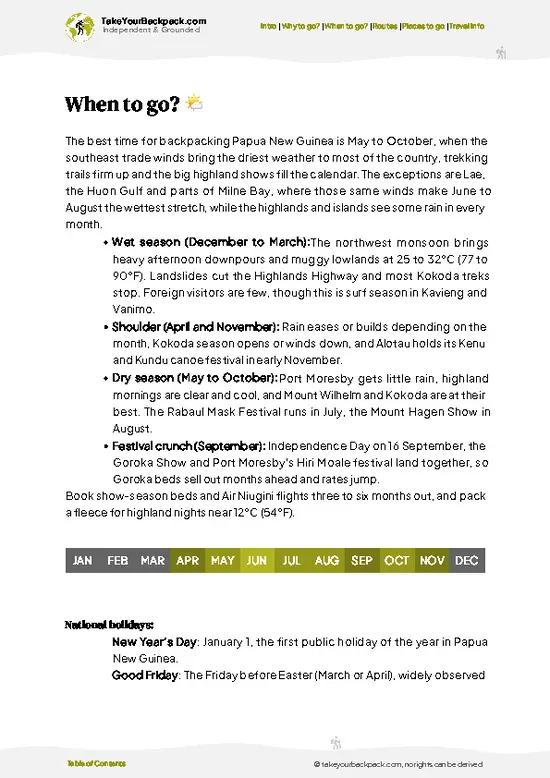
Lae is hot and humid all year, with the least rain from December to March.
  • Drier Season (December to March): Days reach 29 to 31°C (84 to 88°F), nights around 23°C (73°F). Showers still fall, but less often, so walks and day trips go smoother. Flights and hotel beds fill up around the Morobe Show and school holidays.
  • Wetter Season (June to October): Lae gets some of the heaviest rain in the country, with downpours that flood roads and slow trips toward the highlands. Highs stay similar, with stickier air. Beds are easier to find and sometimes cheaper.
  • Daylight: Sunrise is near 6 a.m. and sunset near 6 p.m. all year, so plan tasks for the morning.
  • Events: The Morobe Show, a big cultural festival, is usually held in October, and the Lae International Hotel area gets busy around it.
Book transport … read more 👉
Lae is hot and humid all year, with the least rain from December to March.
  • Drier Season (December to March): Days reach 29 to 31°C (84 to 88°F), nights around 23°C (73°F). Showers still fall, but less often, so walks and day trips go smoother. Flights and hotel beds fill up around the Morobe Show and school holidays.
  • Wetter Season (June to October): Lae gets some of the heaviest rain in the country, with downpours that flood roads and slow trips toward the highlands. Highs stay similar, with stickier air. Beds are easier to find and sometimes cheaper.
  • Daylight: Sunrise is near 6 a.m. and sunset near 6 p.m. all year, so plan tasks for the morning.
  • Events: The Morobe Show, a big cultural festival, is usually held in October, and the Lae International Hotel area gets busy around it.
Book transport and a bed well ahead for show week, and carry a light rain jacket whatever the month.


source: climatestotravel.comJANJanuary: fair for travelingFEBFebruary: fair for travelingMARMarch: fair for travelingAPRApril: highly recommended for travelingMAYMay: excellent for travelingJUNJune: excellent for travelingJULJuly: excellent for travelingAUGAugust: excellent for travelingSEPSeptember: excellent for travelingOCTOctober: highly recommended for travelingNOVNovember: fair for travelingDECDecember: fair for traveling
when-to-go

✈️ The backpacker research shortcutPapua New Guinea Travel Guide

An offline-friendly backpacking guide with optimized travel routes, ranked highlights, transport advice, and the best areas to stay.
example page 0 from our offline Travel Guide for Papua New Guinea
example page 1 from our offline Travel Guide for Papua New Guinea
example page 2 from our offline Travel Guide for Papua New Guinea
example page 3 from our offline Travel Guide for Papua New Guinea
example page 4 from our offline Travel Guide for Papua New Guinea
example page 5 from our offline Travel Guide for Papua New Guinea
example page 6 from our offline Travel Guide for Papua New Guinea
example page 7 from our offline Travel Guide for Papua New Guinea
The digital guide (251 pages) contains:
✅ 81 highlights, ranked by travel appeal
✅ Optimized 5, 10 & 15-day travel routes
✅ Cities, national parks, landmarks, beaches
✅ How to get around
✅ Offline-friendly for travel without Wi-Fi
👉 Click to see all 30+ guide features

📅 Plan smarter in minutes, not weeks
✅ Month by month travel advice
✅ Festivals & national holidays
✅ Budget expectations

🗺️ Go to the right places, skip the overrated ones
✅ Honest pros & cons of destinations
✅ Top hikes, parks & viewpoints
✅ Lesser-known places most travelers miss
✅ Clear “worth it vs skip it” guidance

🛏️ Travel smoothly without rookie mistakes
✅ Best areas to stay
✅ Transport systems explained simply
✅ Common scams & safety advice
✅ SIM cards, money & practical tips

🌍 Understand the country, not just visit it
✅ Culture & traditions
✅ 52 Essential phrases & customs
✅ Festivals worth planning around
✅ Traveler-friendly historical context
✅ Insights that make places more meaningful

📱 Built for real travel conditions
✅ Fully downloadable PDF
✅ Works completely offline
✅ Optimized for phone use
✅ Useful in remote areas & buses
✅ Everything in one place
Stop searching, start planning
Get instant access to your full guide. 30‑day money-back guarantee.
+ Add another guide for just

By proceeding you agree to our terms.
Sent to your inbox immediately after payment • 100% Secure Checkout
Best Backpacking Travel Advisor 2025 tourism awardBest Backpacking
Travel Advisor
2025
What others say about Take Your Backpack Guides:
⭐⭐⭐⭐⭐
Fantastic, amazing amount of information!
⭐⭐⭐⭐⭐
My goodness this is amazing, it's what I've been looking for hats off too you!
⭐⭐⭐⭐⭐
I think this is absolutely BRILLIANT
⭐⭐⭐⭐
Very complete and informative. It's still missing places, but I gotta to commend you
⭐⭐⭐⭐⭐
This is truly amazing, thank you, can't wait to explore it with my kids!
⭐⭐⭐⭐⭐
Awesome resource, thank you!
⭐⭐⭐⭐⭐
This is amazing! Can't wait to explore the ones I haven't seen
⭐⭐⭐⭐
I love this! Well done, great idea.
⭐⭐⭐⭐⭐
Thanks for taking the time to make this gem!
⭐⭐⭐⭐⭐
This might be the best website I've ever seen.
⭐⭐⭐⭐⭐
Congratulations, and thank you so much for your work; it's incredibly valuable.
⭐⭐⭐⭐
In all seriousness I think you did a great job pointing out the important spots
⭐⭐⭐⭐⭐
10/10 very good
⭐⭐⭐⭐⭐
As someone who's only just starting to visit regularly this is awesome, thank you.
⭐⭐⭐⭐
Thank you very much! I'm going to visit my dad, it's going to be very useful!
⭐⭐⭐⭐⭐
This is really cool! We'll be travelling for the first time and this definitely come in handy.
⭐⭐⭐⭐⭐
You are now our minister of culture, congratulations 👨‍💼
⭐⭐⭐⭐⭐
Just wanted to tell you that this is a pearl! Going to follow your recommendations.
⭐⭐⭐⭐⭐
This is so cool. I'll definitely be using the resource for my travels soon.
⭐⭐⭐⭐⭐
This is very impressive! Good work.
⭐⭐⭐⭐⭐
This is an amazing and informative site. Very well done!

🛏️ Where to stay?Where staying makes the most sense

Stay near Top Town or around the Voco Point and Lae Main Market side, because these have the most budget beds, guesthouses and secure compounds within a short ride of everything. Lae has few true hostels, so expect guesthouses and church-run lodges at roughly K150 to 300 (US$40 to 80) for a basic room, with shared or cheaper dorm-style setups rare. Book ahead for show week.
Top Town is the practical choice. Taxis and PMVs pass constantly, shops and banks are close, and many guesthouses have fenced grounds with a night guard. Evenings are best spent in the compound, and a taxi covers dinner out. … read more 👉
Stay near Top Town or around the Voco Point and Lae Main Market side, because these have the most budget beds, guesthouses and secure compounds within a short ride of everything. Lae has few true hostels, so expect guesthouses and church-run lodges at roughly K150 to 300 (US$40 to 80) for a basic room, with shared or cheaper dorm-style setups rare. Book ahead for show week.
Top Town is the practical choice. Taxis and PMVs pass constantly, shops and banks are close, and many guesthouses have fenced grounds with a night guard. Evenings are best spent in the compound, and a taxi covers dinner out.
Voco Point suits you if you want harbor air and a quieter feel. It is a little farther from the market, so you rely on taxis more, but it is calmer at night and has several secure places with restaurants attached.
Whichever you choose, ask about a fence, a guard and a taxi on call. Skip budget rooms with an open street frontage, and avoid industrial Eriku and Butibum for sleeping, because noise and truck traffic start early and the area is poorly lit after dark.

🚌 Getting aroundTransportation options and practical tips

The center around Top Town and the market is walkable in daylight, but beyond it, distances stretch and walking stops making sense. Lae is flat, spread out and dominated by minibuses and taxis, and public transport is cheap and frequent but crowded. Bring small notes and travel in daylight.
  • Walking: Fine between the market, banks and Top Town shops in the morning. Avoid walking with a bag or phone out, and skip it after dark. Free.
  • PMV minibuses: The workhorse. Routes are shouted by the crew, and flat fares are about K2 to 3 (US$0.50 to 0.80). They run from early morning to around dusk. Fast and fun, but packed. Ask your accommodation which routes to take.
  • Taxis: Worth the money for evenings, the airport and botanical garden. Short city trips cost roughly K20 to 40 (US$5 to 10), and the airport
… read more 👉
The center around Top Town and the market is walkable in daylight, but beyond it, distances stretch and walking stops making sense. Lae is flat, spread out and dominated by minibuses and taxis, and public transport is cheap and frequent but crowded. Bring small notes and travel in daylight.
  • Walking: Fine between the market, banks and Top Town shops in the morning. Avoid walking with a bag or phone out, and skip it after dark. Free.
  • PMV minibuses: The workhorse. Routes are shouted by the crew, and flat fares are about K2 to 3 (US$0.50 to 0.80). They run from early morning to around dusk. Fast and fun, but packed. Ask your accommodation which routes to take.
  • Taxis: Worth the money for evenings, the airport and botanical garden. Short city trips cost roughly K20 to 40 (US$5 to 10), and the airport at Nadzab is much more, around K100 to 150 (US$25 to 40) and about 45 minutes. Have your hotel call a trusted driver rather than hailing one.
  • Shared PMV to Nadzab and the Highlands Highway: Trucks and buses leave from the market area for Nadzab and onward to Mt Hagen, mostly in the morning. Fares to Nadzab run about K10 to 20 (US$3 to 5), and Mt Hagen about K80 to 120 (US$20 to 30), 8 to 10 hours. Leave early and travel in daytime only.
  • Boats: Small cargo and passenger boats serve Finschhafen and Salamaua from the harbor. Schedules shift, so ask at the wharf the day before.

👛 Costs (as of 16 October 2026)How expensive it really is

Plan on about US$55 to 105 a day in Lae, since the city is pricey for what it offers and safe transport adds up.
CategoryBudget RangeLocal Reality
Dorm accommodation (high season)US$35 to 55True dorms are rare, so this means a basic guesthouse room or shared bed.
Dorm accommodation (off-season)US$30 to 45Slightly lower in the wet months.
MealsUS$10 to 20Market food and bakery meals are cheap, guesthouse dinners cost more.
Local transportUS$5 to 15PMVs are cheap, taxis after dark are the main expense.
City transport passNot availableNo pass exists, you pay per ride.
Basic activities/entry feesUS$2 to 10Botanical garden and market are low cost, boats to Salamaua cost more.
MiscellaneousUS$3 to 5Water, SIM data, small snacks.
Total Daily BudgetUS$55 to 105Based on high-season accommodation.
Eat at the … read more 👉
Plan on about US$55 to 105 a day in Lae, since the city is pricey for what it offers and safe transport adds up.
CategoryBudget RangeLocal Reality
Dorm accommodation (high season)US$35 to 55True dorms are rare, so this means a basic guesthouse room or shared bed.
Dorm accommodation (off-season)US$30 to 45Slightly lower in the wet months.
MealsUS$10 to 20Market food and bakery meals are cheap, guesthouse dinners cost more.
Local transportUS$5 to 15PMVs are cheap, taxis after dark are the main expense.
City transport passNot availableNo pass exists, you pay per ride.
Basic activities/entry feesUS$2 to 10Botanical garden and market are low cost, boats to Salamaua cost more.
MiscellaneousUS$3 to 5Water, SIM data, small snacks.
Total Daily BudgetUS$55 to 105Based on high-season accommodation.
Eat at the market and bakeries at lunch and have your guesthouse cook dinner, which cuts the biggest daily costs.
⚠️ Prices can change and everyone travels differently, so take this as a rough guide. Hope it helps you plan your adventure!

🚌 Day tripsWhere to go beyond the main area

Lae works as a base for a few solid day trips, though roads are rough and transport thins out by afternoon, so leave early.
Salamaua:
A peninsula village with WWII history, sandy bays and snorkeling. Speedboats from Lae take about 45 minutes to 1 hour and cost roughly K50 to 100 (US$13 to 26) each way, usually shared. Go in the drier months for calmer water. First-timers often forget to arrange a return boat before leaving.

Lae Botanical Garden and War Cemetery:
A quick, cheap outing. Orchid houses and tall trees fill the grounds, and the Commonwealth war cemetery sits nearby. Taxi both ways costs about K40 to 80 (US$10 to 20), and entry is small. Mornings are best, before heat and showers.

Nadzab:
A flat valley along the Markham River where WWII paratroopers landed and the airport now sits. … read more 👉
Lae works as a base for a few solid day trips, though roads are rough and transport thins out by afternoon, so leave early.
Salamaua:
A peninsula village with WWII history, sandy bays and snorkeling. Speedboats from Lae take about 45 minutes to 1 hour and cost roughly K50 to 100 (US$13 to 26) each way, usually shared. Go in the drier months for calmer water. First-timers often forget to arrange a return boat before leaving.

Lae Botanical Garden and War Cemetery:
A quick, cheap outing. Orchid houses and tall trees fill the grounds, and the Commonwealth war cemetery sits nearby. Taxi both ways costs about K40 to 80 (US$10 to 20), and entry is small. Mornings are best, before heat and showers.

Nadzab:
A flat valley along the Markham River where WWII paratroopers landed and the airport now sits. Shared PMVs cost about K10 to 20 (US$3 to 5) and take 45 minutes to 1 hour. Interesting for history and riverside views, but go only with a local contact.

Busu River:
A short ride west of the city where locals swim and picnic on weekends. Hire a taxi or go with a guide, about K50 to 100 (US$13 to 26) round trip, and avoid it after heavy rain, when currents rise.

🍲 FoodEating & Drinking in Lae

Lae sits on the Huon Gulf, so fresh tuna and reef fish are the local edge. Look for grilled or fried fish with rice or boiled bananas, and for fish cooked in coconut milk. The Lae Main Market is where you eat cheaply and see what grows nearby: sweet potato, taro, bananas, pineapples, greens and sago, plus bundles of betel nut on every corner. Ripe mangoes and fresh coconuts are cheap when in season, around K1 to 3 (US$0.25 to 0.80).
Coastal Morobe cooking leans on coconut cream, steamed greens and root vegetables, often cooked in a mumu (earth oven) for feasts and festivals. You may be invited to one if a local host takes you.
For casual meals, look for bakeries and takeaway counters in Top Town, where meat pies, fried chicken and rice cost about K10 to 20 (US$3 to 5). Fresh bread and rolls … read more 👉
Lae sits on the Huon Gulf, so fresh tuna and reef fish are the local edge. Look for grilled or fried fish with rice or boiled bananas, and for fish cooked in coconut milk. The Lae Main Market is where you eat cheaply and see what grows nearby: sweet potato, taro, bananas, pineapples, greens and sago, plus bundles of betel nut on every corner. Ripe mangoes and fresh coconuts are cheap when in season, around K1 to 3 (US$0.25 to 0.80).
Coastal Morobe cooking leans on coconut cream, steamed greens and root vegetables, often cooked in a mumu (earth oven) for feasts and festivals. You may be invited to one if a local host takes you.
For casual meals, look for bakeries and takeaway counters in Top Town, where meat pies, fried chicken and rice cost about K10 to 20 (US$3 to 5). Fresh bread and rolls from the bakeries are an easy breakfast. Guesthouses often serve a simple dinner, which is smart after dark.
For drinks, SP Lager is the local beer, served at bars attached to hotels and the yacht club at Voco Point, where the harbor breeze makes it the best sunset spot. Fresh coconut water from the market is the best daytime drink. Drink bottled or boiled water only.

🛡️ SafetySafety Tips and Common Scams in Lae

Lae has a reputation for petty and opportunistic crime, so treat it with sensible, calm habits rather than fear. Daytime in Top Town and around the market is manageable if you keep phones, cameras and cash out of sight. Do not walk at night, even a short distance; take a taxi arranged by your accommodation. Solo travelers do best staying in secure compounds with a guard, and women travelers should be extra careful on PMVs, preferably sitting near the front. Skip settlement edges, the dock area after dark, and quiet roads on foot. Travel between towns by road in daylight only and avoid roadside stops after dark. Carry only the cash you need for the day. Local contacts, church guesthouses and your host are your best safety tools, so ask them before heading anywhere new. Most daily annoyances … read more 👉
Lae has a reputation for petty and opportunistic crime, so treat it with sensible, calm habits rather than fear. Daytime in Top Town and around the market is manageable if you keep phones, cameras and cash out of sight. Do not walk at night, even a short distance; take a taxi arranged by your accommodation. Solo travelers do best staying in secure compounds with a guard, and women travelers should be extra careful on PMVs, preferably sitting near the front. Skip settlement edges, the dock area after dark, and quiet roads on foot. Travel between towns by road in daylight only and avoid roadside stops after dark. Carry only the cash you need for the day. Local contacts, church guesthouses and your host are your best safety tools, so ask them before heading anywhere new. Most daily annoyances are crowds, heat and pushy market touts rather than anything serious.

FAQCommon questions from travelers

Two to three days is enough for Lae itself. That covers the Main Market, the Botanical Garden and war cemetery, and an evening at Voco Point, with one more day for a boat trip to Salamaua (about 45 minutes to 1 hour each way). Most travelers use Lae as a transit stop before the Highlands Highway or the coast.
Lae needs more caution than most Papua New Guinea destinations, but it is manageable. Stay in a secure guesthouse, do not walk after dark, and use taxis arranged by your host, costing about K20 to 40 (US$5 to 10) for short rides. Solo travelers should keep phones and cash hidden and travel between towns only in daylight.
Lae is known as Papua New Guinea’s main port and industrial city, the starting point of the Highlands Highway toward Mt Hagen. It has the largest produce market in the country, a botanical garden with orchids, and a Commonwealth war cemetery. It is also the gateway to Salamaua, a WWII battle site reached by a boat ride of about 45 minutes to 1 hour.
⚠️ Things can change over time, so always validate details locally before you go.

Ideas for continuing your journey

Lae isn’t the only highlight in Papua New Guinea. Explore all what Papua New Guinea has to offer.
Country photo of Papua New Guinea

We 💚 feedbackSumming up the experience

Give Lae one full day and one night, two if you need to sort flights or cash. That’s enough for the cemetery, the gardens and the market without testing your patience with the heat. I’d book a reliable driver through your guesthouse on arrival, skip walking after dark, and treat the Rainforest Habitat as the surprise worth the detour.

✍️ Help improve this page!
The information on this page is based on in-depth research, insights shared by experienced travelers, and feedback from the local travel community in Papua New Guinea. While every effort is made to keep the information accurate and current, conditions can change — so if you spot anything incorrect or outdated, please get in touch.


🙋‍♂️ Give feedback

👋 Meet the founderWho’s Behind Take Your Backpack?

Johan, backpacker and founder of TakeYourBackpackHi, I’m Johan (Netherlands 🇳🇱), the creator of TakeYourBackpack. Over the past 3 decades, I’ve backpacked through 90+ countries across six continents, gaining extensive experience with independent travel, long-term trips, and overland routes.

This site is built on a combination of firsthand travel experience and carefully curated insights from other backpackers. Many guides are based on places I’ve personally visited, while others bring together tips, observations, and practical advice shared by trusted travelers I’ve met along the way.

The goal is to provide realistic, experience-driven guidance — not generic itineraries — so you can explore destinations with better context, clearer expectations, and more confidence.