×

Papua New Guinea🇵🇬 | citiesPort MoresbyNational Parliament, Ela Beach, urban sprawl, Motu villages | things to do and best time to go

Explore LaeExplore Goroka Show

Backpacking in Port Moresby
🏆 Top pickcity ranked #1
By Johan Kruseman 🇳🇱 | Updated September 4, 2026

Port Moresby is not for people chasing easy beaches, bar crawls, and carefree wandering after dark. It’s a capital that makes you work for every good moment, which is exactly why it can be valuable for backpackers who want to understand Papua New Guinea beyond the postcards. Sitting on the south coast of the main island, facing the Coral Sea, Port Moresby is the country’s political and logistical hub: you pass through here to reach the Highlands, Kokoda Track, or remote islands. The city itself has a few worthwhile stops – the National Museum and Art Gallery, Parliament House, Ela Beach, the Nature Park – but they’re spread out and usually require taxis or arranged transport. Costs are high for the region, safety is a real concern after dark, and meeting other travelers is mostly limited to guesthouses and dive or trekking operators. Compared to Lae or Mount Hagen, Port Moresby feels more guarded, more fragmented, but also more revealing about how the country actually runs.

Discover everything you want to know in the 📖 Papua New Guinea Travel Guide.
Loading the map 🌍
CLICK TO FILTER
cities
towns
national parks
hikes
beaches
attractions
festivals
regions
SHOW COUNTRY’S BESTSHOW ALL

✨ Why go?
Ranked #1 city in Papua New Guinea
The unique appeal for travelers

Port Moresby is often seen as a gateway rather than a destination, but it has its own unique appeal for backpackers. The city offers a solid basecamp for day trips into the stunning landscapes of Papua New Guinea. You can easily access some of the country’s most breathtaking spots, making it a strategic stop on your journey.

Accommodations are generally affordable, with a range of hostels that cater to budget travelers. These places often foster a sense of community, perfect for swapping stories and tips with fellow adventurers. When it comes to food, you’ll find a mix of local markets and eateries that serve up authentic flavors without breaking the bank.

The walkability of the city is a plus, allowing you to explore neighborhoods and soak in the local vibe without the hassle of transport. … read more 👉
Port Moresby is often seen as a gateway rather than a destination, but it has its own unique appeal for backpackers. The city offers a solid basecamp for day trips into the stunning landscapes of Papua New Guinea. You can easily access some of the country’s most breathtaking spots, making it a strategic stop on your journey.

Accommodations are generally affordable, with a range of hostels that cater to budget travelers. These places often foster a sense of community, perfect for swapping stories and tips with fellow adventurers. When it comes to food, you’ll find a mix of local markets and eateries that serve up authentic flavors without breaking the bank.

The walkability of the city is a plus, allowing you to explore neighborhoods and soak in the local vibe without the hassle of transport. While the nightlife might not rival major cities, there are spots where you can unwind and connect with locals and travelers alike.

If you’re looking for a quick stop to recharge and plan your next move, Port Moresby fits the bill. Just remember, it’s about balancing your time, money, and comfort—and this city can help you do just that.
Want to include Port Moresby in your Papua New Guinea route?
Create a personalized Papua New Guinea itinerary that includes Port Moresby and the places that fit your trip — based on your travel style, budget, and available time. Get your route in seconds.

Generate my trip

💡 HighlightsDon't-miss highlights and experiences

  • National Parliament House (Waigani) — A striking building with local motifs and carved pillars; even if you can’t get inside, the architecture, grounds and the political vibe give a clear sense of PNG’s modern identity.
  • Papua New Guinea National Museum & Art Gallery — The best place in the city to see traditional carvings, ceremonial masks, tapa cloths and contemporary PNG art—all the objects that tell the island stories you’ve heard about.
  • Bomana War Cemetery — A quiet, well-kept Commonwealth cemetery set among hills; it’s an emotionally powerful, very tangible reminder of PNG’s role in World War II.
  • Port Moresby Nature Park — A compact patch of rainforest with native birds, small mammals, orchids and interpretive trails; great if you want a half-day dose of local wildlife without leaving
read more 👉
  • National Parliament House (Waigani) — A striking building with local motifs and carved pillars; even if you can’t get inside, the architecture, grounds and the political vibe give a clear sense of PNG’s modern identity.
  • Papua New Guinea National Museum & Art Gallery — The best place in the city to see traditional carvings, ceremonial masks, tapa cloths and contemporary PNG art—all the objects that tell the island stories you’ve heard about.
  • Bomana War Cemetery — A quiet, well-kept Commonwealth cemetery set among hills; it’s an emotionally powerful, very tangible reminder of PNG’s role in World War II.
  • Port Moresby Nature Park — A compact patch of rainforest with native birds, small mammals, orchids and interpretive trails; great if you want a half-day dose of local wildlife without leaving the city.
  • Hanuabada (the stilt village) — One of the largest Motuan coastal villages, built on the lagoon; walking through the stilt houses, watching canoe traffic and seeing bilum making gives a real, living-cultural experience.
  • Koki Fish Market — Early-morning chaos and colour: local fishers and island vendors bring fresh catches and seafood straight off the boats. Smells intense, photos brilliant, people-watching unmatched.
  • Ela Beach & Boardwalk — Port Moresby’s main public beach where locals gather for sunsets, cricket, small markets and weekend stalls; simple, social and a good place to feel the city’s coastal rhythm.
  • Paga Hill Lookout & Harbourfront — A short climb or drive rewards you with wide views over the harbour, ships and the city skyline—handy for orientation, photos and watching daily harbour life.
  • Port Moresby Handicraft Centre / Markets — The place to meet artisans and buy honest-made bilums, wood carvings and jewelry; buying here supports small makers and teaches you about local materials and motifs.
  • Royal Papua Yacht Club & Harbour Charters — More than a yacht club: it’s where you can grab a harbour drink, book a short boat trip, or arrange a transfer to nearby islands—useful for a relaxed slice of waterfront life.
For day trips just outside Port Moresby try Varirata National Park (birdwatching and lookouts), Loloata Island (snorkelling/diving off the harbour) and the Sogeri plateau area (waterfalls and countryside drives).
Spotted a mistake or missing something? Contact us.

Things to do in Port Moresby

Ratings based on Tripadvisor reviews. When you book through this link, you support our work at no extra cost to you.

🏘️ NeighborhoodsHow different areas shape the experience

Port Moresby is a city of contrasts, where the pulse of urban life meets the raw beauty of Papua New Guinea. Understanding its neighborhoods can help you maximize your experience while balancing time, money, and comfort.

Downtown: The heart of the city, Downtown is bustling with activity. It’s where you’ll find government buildings, shops, and some decent eateries. Costs can be higher here, but the convenience is worth it. Walkability is decent, though be cautious at night. Perfect for short stays if you want to be in the thick of things.

Ela Beach: This area offers a more relaxed vibe with stunning ocean views. It’s a great spot for backpackers looking to unwind after a day of exploring. Accommodation ranges from budget to mid-range. The beach is walkable, and you’ll find a few bars and … read more 👉
Port Moresby is a city of contrasts, where the pulse of urban life meets the raw beauty of Papua New Guinea. Understanding its neighborhoods can help you maximize your experience while balancing time, money, and comfort.

Downtown: The heart of the city, Downtown is bustling with activity. It’s where you’ll find government buildings, shops, and some decent eateries. Costs can be higher here, but the convenience is worth it. Walkability is decent, though be cautious at night. Perfect for short stays if you want to be in the thick of things.

Ela Beach: This area offers a more relaxed vibe with stunning ocean views. It’s a great spot for backpackers looking to unwind after a day of exploring. Accommodation ranges from budget to mid-range. The beach is walkable, and you’ll find a few bars and restaurants nearby. Ideal for longer stays if you enjoy a laid-back atmosphere.

Boroko: A residential area with a local feel, Boroko is less touristy. It’s affordable and offers a glimpse into everyday life in Port Moresby. Public transport is accessible, but walking isn’t as pleasant. Great for longer stays if you want to immerse yourself in local culture, but nightlife is minimal.

Konedobu: This neighborhood is quieter, making it suitable for those seeking peace. It’s a bit further from the main attractions, so transport is necessary. Costs are lower, and you’ll find a few local markets. Best for longer stays if you prefer a slower pace and don’t mind the commute.

Gerehu: A bit off the beaten path, Gerehu is a budget-friendly option with a strong community vibe. It’s not walkable to major attractions, but public transport is available. Nightlife is limited, making it ideal for those looking to recharge. Suitable for longer stays if you want to experience local life without breaking the bank.

⌛️ 1 daySeeing the highlights in 24 hours

Port Moresby, the capital of Papua New Guinea, is a city that pulses with life and culture, often overlooked by travelers. It’s a place where the vibrant local traditions meet the challenges of urban development. You’ll find a mix of bustling markets, stunning coastal views, and a rich tapestry of Melanesian heritage.

Start your day in the waterfront area of Ela Beach. Grab a coffee at one of the local cafés and soak in the morning sun while watching fishermen cast their nets. The beach itself is a lively spot, perfect for a stroll. After your caffeine fix, head over to the nearby Port Moresby Nature Park. This isn’t just a zoo; it’s a sanctuary for native wildlife, showcasing the unique biodiversity of the region. Spend a couple of hours wandering the trails, spotting birds of paradise, … read more 👉
Port Moresby, the capital of Papua New Guinea, is a city that pulses with life and culture, often overlooked by travelers. It’s a place where the vibrant local traditions meet the challenges of urban development. You’ll find a mix of bustling markets, stunning coastal views, and a rich tapestry of Melanesian heritage.

Start your day in the waterfront area of Ela Beach. Grab a coffee at one of the local cafés and soak in the morning sun while watching fishermen cast their nets. The beach itself is a lively spot, perfect for a stroll. After your caffeine fix, head over to the nearby Port Moresby Nature Park. This isn’t just a zoo; it’s a sanctuary for native wildlife, showcasing the unique biodiversity of the region. Spend a couple of hours wandering the trails, spotting birds of paradise, and learning about the local flora.

For lunch, make your way to the bustling Boroko Market. Here, you’ll find an array of fresh produce and local delicacies. Try some traditional dishes like kaukau (sweet potato) or taro, and don’t miss the chance to chat with the vendors. This experience offers a genuine taste of local life, far from the tourist traps.

In the afternoon, explore the National Museum and Art Gallery. It’s a treasure trove of artifacts and art that narrate the rich history of Papua New Guinea. The exhibits are engaging and provide context to the vibrant culture you’ve been experiencing.

As the sun begins to set, head to the suburb of Konedobu for dinner. Look for a local eatery where you can enjoy fresh seafood while watching the sunset over the harbor. This area is often overlooked by tourists, but it’s where you’ll find authentic flavors and a relaxed atmosphere.

Wrap up your day with a leisurely walk along the waterfront, reflecting on the unique blend of experiences Port Moresby offers. You’ll leave with a deeper appreciation for this dynamic city, having tasted its heart and soul in just one day.
Turn your Port Moresby visit into an Papua New Guinea adventure
Build a complete Papua New Guinea route with Port Moresby, hidden gems, must-see destinations, and realistic travel times included.

Generate my trip

🌤️ When to go?Weather, crowds, and seasonal trade-offs


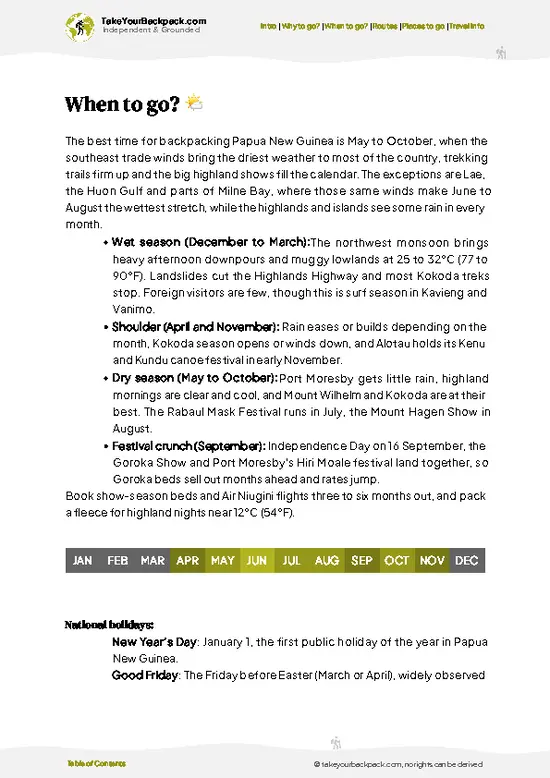
  • Topic: Weather – Port Moresby’s tropical climate means it’s hot year-round, but the wet season from December to March brings heavy rains and humidity that can turn trails into mudslides. The dry season, May to October, offers clearer skies and less sweat, making it the prime window for backpackers.

  • Topic: Temperature – Expect daytime highs around 30–32°C (86–90°F) during the dry season, with nights cooling to a comfortable 22–24°C (72–75°F). The wet season feels hotter thanks to humidity, pushing the heat index higher and sapping energy faster.

  • Topic: Daylight Hours – Near the equator, daylight stays steady year-round at about 12 hours, so no need to juggle your schedule for longer days. Early mornings and late afternoons are your best bets to avoid the midday scorch.

  • Topic: Crowds
read more 👉

  • Topic: Weather – Port Moresby’s tropical climate means it’s hot year-round, but the wet season from December to March brings heavy rains and humidity that can turn trails into mudslides. The dry season, May to October, offers clearer skies and less sweat, making it the prime window for backpackers.

  • Topic: Temperature – Expect daytime highs around 30–32°C (86–90°F) during the dry season, with nights cooling to a comfortable 22–24°C (72–75°F). The wet season feels hotter thanks to humidity, pushing the heat index higher and sapping energy faster.

  • Topic: Daylight Hours – Near the equator, daylight stays steady year-round at about 12 hours, so no need to juggle your schedule for longer days. Early mornings and late afternoons are your best bets to avoid the midday scorch.

  • Topic: Crowds – Tourist traffic peaks during the dry season, especially July and August, coinciding with local festivals. This means more social opportunities but also higher prices and busier accommodations.

  • Topic: Seasonal Activities – The dry season unlocks outdoor adventures like diving, hiking, and cultural festivals. The wet season limits these options but offers lush landscapes and fewer tourists if you don’t mind the rain.

  • Topic: Price Fluctuations – Expect accommodation and tour prices to spike during the dry season’s peak months. Traveling shoulder months like May or October can save money while still enjoying decent weather.


Pro-tip: Aim for the shoulder dry months to balance comfort, cost, and crowd size—your backpacker sweet spot in Port Moresby.


source: climatestotravel.comJANJanuary: fair for travelingFEBFebruary: fair for travelingMARMarch: fair for travelingAPRApril: good for travelingMAYMay: highly recommended for travelingJUNJune: excellent for travelingJULJuly: excellent for travelingAUGAugust: excellent for travelingSEPSeptember: excellent for travelingOCTOctober: highly recommended for travelingNOVNovember: good for travelingDECDecember: fair for traveling
when-to-go

✈️ The backpacker research shortcutPapua New Guinea Travel Guide

An offline-friendly backpacking guide with optimized travel routes, ranked highlights, transport advice, and the best areas to stay.
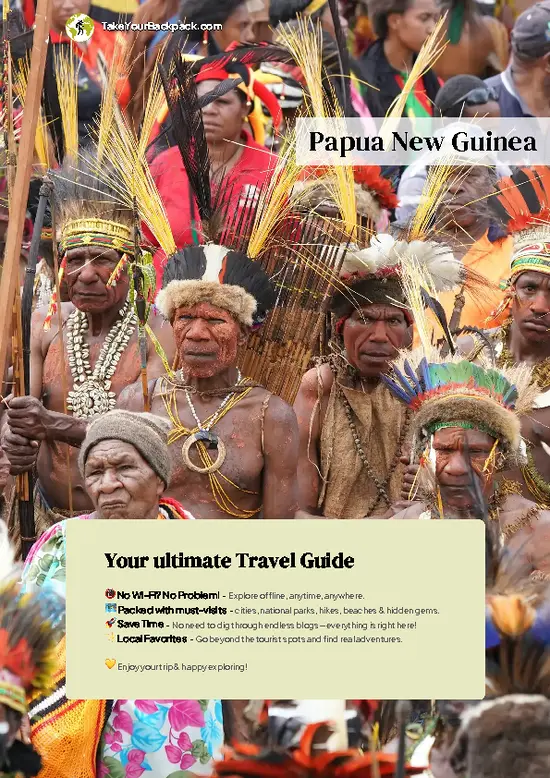
example page 0 from our offline Travel Guide for Papua New Guinea
example page 1 from our offline Travel Guide for Papua New Guinea
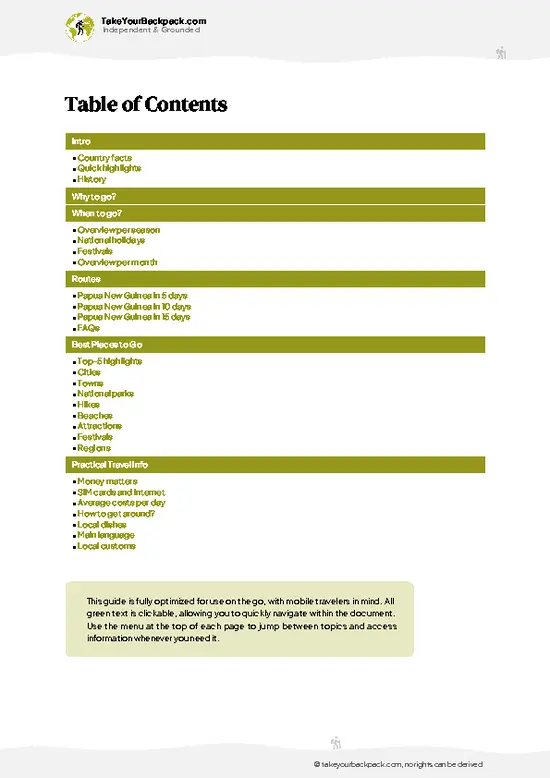
example page 2 from our offline Travel Guide for Papua New Guinea
example page 3 from our offline Travel Guide for Papua New Guinea
example page 4 from our offline Travel Guide for Papua New Guinea
example page 5 from our offline Travel Guide for Papua New Guinea
example page 6 from our offline Travel Guide for Papua New Guinea
example page 7 from our offline Travel Guide for Papua New Guinea
The digital guide (319 pages) contains:
86 highlights, ranked by travel appeal
Optimized 5, 10 & 15-day travel routes
Cities, national parks, landmarks, beaches
How to get around
Offline-friendly for travel without Wi-Fi
👉 Click to see all 30+ guide features

📅 Plan smarter in minutes, not weeks
Month by month travel advice
Festivals & national holidays
Budget expectations

🗺️ Go to the right places, skip the overrated ones
Honest pros & cons of destinations
Top hikes, parks & viewpoints
Lesser-known places most travelers miss
Clear “worth it vs skip it” guidance

🛏️ Travel smoothly without rookie mistakes
Best areas to stay
Transport systems explained simply
Common scams & safety advice
SIM cards, money & practical tips

🌍 Understand the country, not just visit it
Culture & traditions
52 Essential phrases & customs
Festivals worth planning around
Traveler-friendly historical context
Insights that make places more meaningful

📱 Built for real travel conditions
Fully downloadable PDF
Works completely offline
Optimized for phone use
Useful in remote areas & buses
Everything in one place
Save weeks of stressful planning
Get instant access to your full guide. 30‑day money-back guarantee.
+ Add another guide for just US$7.80

By proceeding you agree to our terms.
Sent to your inbox immediately after payment • 100% Secure Checkout
Best Backpacking Travel Advisor 2025 tourism awardBest Backpacking
Travel Advisor
2025
What others say about Take Your Backpack Guides:
⭐⭐⭐⭐⭐
Fantastic, amazing amount of information!
⭐⭐⭐⭐⭐
My goodness this is amazing, it's what I've been looking for hats off too you!
⭐⭐⭐⭐⭐
I think this is absolutely BRILLIANT
⭐⭐⭐⭐
Very complete and informative. It's still missing places, but I gotta to commend you
⭐⭐⭐⭐⭐
This is truly amazing, thank you, can't wait to explore it with my kids!
⭐⭐⭐⭐⭐
Awesome resource, thank you!
⭐⭐⭐⭐⭐
This is amazing! Can't wait to explore the ones I haven't seen
⭐⭐⭐⭐
I love this! Well done, great idea.
⭐⭐⭐⭐⭐
Thanks for taking the time to make this gem!
⭐⭐⭐⭐⭐
This might be the best website I've ever seen.
⭐⭐⭐⭐⭐
Congratulations, and thank you so much for your work; it's incredibly valuable.
⭐⭐⭐⭐
In all seriousness I think you did a great job pointing out the important spots
⭐⭐⭐⭐⭐
10/10 very good
⭐⭐⭐⭐⭐
As someone who's only just starting to visit regularly this is awesome, thank you.
⭐⭐⭐⭐
Thank you very much! I'm going to visit my dad, it's going to be very useful!
⭐⭐⭐⭐⭐
This is really cool! We'll be travelling for the first time and this definitely come in handy.
⭐⭐⭐⭐⭐
You are now our minister of culture, congratulations 👨‍💼
⭐⭐⭐⭐⭐
Just wanted to tell you that this is a pearl! Going to follow your recommendations.
⭐⭐⭐⭐⭐
This is so cool. I'll definitely be using the resource for my travels soon.
⭐⭐⭐⭐⭐
This is very impressive! Good work.
⭐⭐⭐⭐⭐
This is an amazing and informative site. Very well done!

🛏️ Where to stay?How to pick the right area

Port Moresby isn’t your typical backpacker hotspot, so choosing where to stay is a strategic move. The key is balancing safety, social opportunities, and budget. The standout area for backpackers is the suburb of Gordons. It’s a practical choice because it offers a cluster of budget accommodations and guesthouses that cater to solo travelers and small groups. Gordons has a more relaxed vibe compared to the city center, which can feel chaotic and less secure. Here, you’ll find a mix of locals and expats, which makes it easier to connect and get insider tips without feeling like you’re in a tourist … read more 👉
Port Moresby isn’t your typical backpacker hotspot, so choosing where to stay is a strategic move. The key is balancing safety, social opportunities, and budget. The standout area for backpackers is the suburb of Gordons. It’s a practical choice because it offers a cluster of budget accommodations and guesthouses that cater to solo travelers and small groups. Gordons has a more relaxed vibe compared to the city center, which can feel chaotic and less secure. Here, you’ll find a mix of locals and expats, which makes it easier to connect and get insider tips without feeling like you’re in a tourist bubble.

Compared to downtown Port Moresby, Gordons is quieter and safer, with better access to basic amenities and local markets. It’s not luxury, but it’s comfortable enough to recharge after a day of exploring. The social scene is low-key but genuine—think casual meetups rather than party hostels, which are scarce. If you want to stretch your budget without sacrificing a sense of community or safety, Gordons is your best bet.

Other neighborhoods either push the budget too high or compromise safety, so Gordons strikes the right balance. It’s the smart choice for backpackers who want to navigate Port Moresby with confidence, making the city’s unique culture accessible without unnecessary risk or expense.

🚌 Getting aroundGetting around like a local

Port Moresby moves at its own rhythm—partly dictated by the sun, partly by the unpredictable pulse of local life. Forget rigid timetables or neat transit grids; here, the flow is a blend of informal hustle and bursts of waiting, where intuition and local knowledge beat any printed schedule. You’ll find that time bends around the city’s traffic snarls and the informal networks of minibuses and taxis, making every trip a small puzzle to solve. Your choices boil down to a trade-off between how much time you want to spend, how much cash you’re willing to part with, and how much comfort you can tolerate without losing your cool.


  • Walking: The cheapest and often the fastest way to get around in the central areas if you’re light on luggage and ready for some heat. No cost, no schedule, but expect
read more 👉
Port Moresby moves at its own rhythm—partly dictated by the sun, partly by the unpredictable pulse of local life. Forget rigid timetables or neat transit grids; here, the flow is a blend of informal hustle and bursts of waiting, where intuition and local knowledge beat any printed schedule. You’ll find that time bends around the city’s traffic snarls and the informal networks of minibuses and taxis, making every trip a small puzzle to solve. Your choices boil down to a trade-off between how much time you want to spend, how much cash you’re willing to part with, and how much comfort you can tolerate without losing your cool.


  • Walking: The cheapest and often the fastest way to get around in the central areas if you’re light on luggage and ready for some heat. No cost, no schedule, but expect uneven sidewalks and the occasional stray dog. Best for short hops under 2 kilometers.


  • PMV (Public Motor Vehicle) Minibuses: These are the backbone of local transit—cheap (around 1-2 PGK per ride), frequent, but unpredictable. No fixed schedules; they leave when full, which means waiting times can vary wildly. Comfort is minimal, and routes can be confusing without local guidance, but they’re unbeatable for budget travelers who want to dive into the city’s daily grind.


  • Shared Taxis: Slightly pricier than PMVs (expect 5-10 PGK depending on distance), these offer a bit more comfort and speed, especially during off-peak hours. They don’t run on strict schedules but tend to circulate main routes continuously. Negotiating fares upfront is a must to avoid surprises.


  • Private Taxis: The fastest and most comfortable option, but also the most expensive—expect to pay 30 PGK or more for typical city trips. They run on your schedule, which means zero waiting, but this convenience comes at a steep price. Ideal if you’re short on time or traveling with gear.


  • Airport Shuttle Services: Limited in frequency and mostly catering to tourists and business travelers. Prices hover around 50 PGK. They run on a fixed schedule aligned with flight times, offering a rare slice of predictability in an otherwise fluid transit scene.


Mastering Port Moresby’s transit game means balancing your priorities: save time by splurging on private taxis, save money by embracing the chaotic charm of PMVs, or find a middle ground with shared taxis. Walking keeps you grounded in the city’s textures but demands stamina and street smarts. Each choice reshapes your experience, turning the city’s flow into a strategic dance you can learn to lead.

👛 Costs (as of 4 September 2026)Travel costs and budget guide for Port Moresby

Backpacking in Port Moresby, Papua New Guinea, demands a sharp eye on your budget because the city’s costs don’t follow the typical low-cost backpacker pattern. Here’s the breakdown to help you see exactly where your money goes and what you’re trading off.
  • Dorm Accommodation (High Season): Expect to pay around $25 to $40 USD per night. High season drives prices up due to limited options and increased demand, especially in safer, more comfortable hostels.
  • Dorm Accommodation (Off-Season): Prices drop to roughly $15 to $25 USD per night. Off-season means fewer tourists, so you can negotiate better deals, but quality and security might vary more.
  • Meals: Budget about $10 to $20 USD daily if you stick to local eateries and street food. Western-style or restaurant meals push this higher, often
read more 👉
Backpacking in Port Moresby, Papua New Guinea, demands a sharp eye on your budget because the city’s costs don’t follow the typical low-cost backpacker pattern. Here’s the breakdown to help you see exactly where your money goes and what you’re trading off.
  • Dorm Accommodation (High Season): Expect to pay around $25 to $40 USD per night. High season drives prices up due to limited options and increased demand, especially in safer, more comfortable hostels.
  • Dorm Accommodation (Off-Season): Prices drop to roughly $15 to $25 USD per night. Off-season means fewer tourists, so you can negotiate better deals, but quality and security might vary more.
  • Meals: Budget about $10 to $20 USD daily if you stick to local eateries and street food. Western-style or restaurant meals push this higher, often $15 to $30 USD per meal, so plan accordingly if you want comfort over cost.
  • Local Transport: Public transport options are limited and informal, with rides typically costing $1 to $3 USD per trip. Taxis are more reliable but can run $5 to $10 USD for short distances, so factor that in if you prioritize safety and convenience.
  • City Transport Pass: There is no formal city transport pass system. Budget travelers rely on taxis or arranged rides, which means transport costs can add up unpredictably.
  • Basic Activities/Entry Fees: Entry fees for local attractions or cultural sites usually range from $5 to $15 USD. Organized tours or guided experiences can cost $30 to $60 USD, reflecting the premium on safety and expertise in this region.
  • Miscellaneous Expenses: Include about $5 to $10 USD daily for essentials like bottled water, SIM cards, or small personal items. Port Moresby’s infrastructure means you’ll pay a bit more for convenience and security.

Port Moresby’s daily budget for backpackers realistically falls between $60 and $120 USD. You’re trading off lower costs for safety, comfort, and access to reliable services. Understanding this trade-off lets you plan smarter, choosing where to save and where to invest in your experience.


source: papuanewguinea.travel
⚠️ Prices can change and everyone travels differently, so take this as a rough guide. Hope it helps you plan your adventure!

🚌 Day tripsShort trips worth adding

Port Moresby is more than just a gateway; it’s a launchpad for some incredible day trips that pack a punch without draining your wallet. Here’s how to make the most of your time, money, and comfort while exploring the surrounding wonders.

Varirata National Park
Just a 45-minute drive from the city, Varirata National Park is a lush escape that feels worlds away. You’ll find well-marked trails that lead you through dense rainforest, where you can spot colorful birds of paradise and other wildlife. Bring a packed lunch to enjoy at one of the scenic lookouts. The entrance fee is minimal, making this a budget-friendly option. The best time to visit is during the dry season from May to October, when the trails are less muddy. A common mistake is underestimating the park’s size; plan for a few … read more 👉
Port Moresby is more than just a gateway; it’s a launchpad for some incredible day trips that pack a punch without draining your wallet. Here’s how to make the most of your time, money, and comfort while exploring the surrounding wonders.

Varirata National Park
Just a 45-minute drive from the city, Varirata National Park is a lush escape that feels worlds away. You’ll find well-marked trails that lead you through dense rainforest, where you can spot colorful birds of paradise and other wildlife. Bring a packed lunch to enjoy at one of the scenic lookouts. The entrance fee is minimal, making this a budget-friendly option. The best time to visit is during the dry season from May to October, when the trails are less muddy. A common mistake is underestimating the park’s size; plan for a few hours of hiking to fully appreciate it.
👉 Explore Varirata National Park

Loloata Island
A quick boat ride from Port Moresby, Loloata Island is a slice of paradise perfect for a day of relaxation and snorkeling. The island offers stunning coral reefs teeming with marine life, and you can rent gear on-site. Expect to spend around 100 PGK for the boat ride and equipment rental. The best time to go is during the dry season, but be mindful of the tides for optimal snorkeling conditions. Many first-timers overlook the importance of sunscreen; the sun can be fierce, so slather it on generously.
👉 Explore Loloata Island

Sogeri Road
For those who crave a scenic drive, Sogeri Road is a must. This winding route takes you through lush landscapes and traditional villages, culminating in the stunning Sogeri Plateau. It’s about a 30-minute drive from the city, and you can stop at local markets along the way for fresh produce and snacks. The trip is free aside from your fuel costs. The dry season is ideal for clear views, but be cautious of potholes. A common rookie error is rushing the drive; take your time to soak in the views and interact with locals.


Kokoda Track (Section)
While the full Kokoda Track requires multiple days, you can hike a section of it as a day trip. Start at Owers Corner, about an hour from Port Moresby, and trek a few kilometers into the jungle. This experience is rich in history and offers a glimpse into the rugged beauty of Papua New Guinea. Expect to spend around 50 PGK for transport and snacks. The best time to hike is during the dry season, but be prepared for sudden weather changes. Many first-timers underestimate the trail’s difficulty; wear sturdy shoes and bring plenty of water.
👉 Explore Kokoda Track
Want to know what more Papua New Guinea offers?
The Papua New Guinea Travel Guide describes 86 highlights, from cities to national parks, from beaches to hikes

Get the Travel Guide -

🍲 FoodEating & Drinking in Port Moresby

In Port Moresby, food is more than sustenance; it’s a vibrant expression of culture. Dive into the local cuisine with mumu, a traditional dish where meat and vegetables are wrapped in banana leaves and slow-cooked in an underground oven. The smoky flavor is a must-try, and it’s often served at community gatherings, so if you get invited, consider it a win.

Street food is where the action is. Vendors line the streets, offering everything from sago (a starchy staple) to grilled fish, often seasoned with a zesty local sauce. The markets buzz with energy, and you’ll find fresh fruits like papaya and pineapple that burst with sweetness. Don’t skip the chance to grab a cup of kula coffee, locally grown and rich in flavor, perfect for fueling your adventures.

When it comes to drinks, the local … read more 👉
In Port Moresby, food is more than sustenance; it’s a vibrant expression of culture. Dive into the local cuisine with mumu, a traditional dish where meat and vegetables are wrapped in banana leaves and slow-cooked in an underground oven. The smoky flavor is a must-try, and it’s often served at community gatherings, so if you get invited, consider it a win.

Street food is where the action is. Vendors line the streets, offering everything from sago (a starchy staple) to grilled fish, often seasoned with a zesty local sauce. The markets buzz with energy, and you’ll find fresh fruits like papaya and pineapple that burst with sweetness. Don’t skip the chance to grab a cup of kula coffee, locally grown and rich in flavor, perfect for fueling your adventures.

When it comes to drinks, the local beer scene is worth exploring. Try a cold SP Lager or a craft brew from one of the emerging local breweries. The drinking culture is laid-back, often enjoyed in casual settings with friends. Just remember, sharing a drink is a sign of camaraderie, so don’t hesitate to raise a glass with locals.

Etiquette is straightforward: be respectful, engage in conversation, and savor the experience. Port Moresby’s culinary landscape is a feast for the senses, inviting you to taste, share, and connect.

🛡️ SafetyStaying Safe: What Travelers Should Know

Port Moresby has its quirks, but with a bit of awareness, you can navigate it smoothly. The city is generally safe, but like any urban area, some neighborhoods are best approached with caution. Areas like Boroko and downtown can be lively during the day but may feel less secure after dark. If you’re solo, stick to well-lit streets and avoid wandering too far off the beaten path at night.

Scams are not rampant, but be wary of overly friendly locals who might offer unsolicited help. Politely decline and keep your belongings close. Taxis are a reliable way to get around, but always negotiate the fare beforehand to avoid surprises.

Everyday annoyances include the occasional street vendor who might be a bit too persistent. A firm but friendly “no, thank you” usually does the trick. Carry yourself … read more 👉
Port Moresby has its quirks, but with a bit of awareness, you can navigate it smoothly. The city is generally safe, but like any urban area, some neighborhoods are best approached with caution. Areas like Boroko and downtown can be lively during the day but may feel less secure after dark. If you’re solo, stick to well-lit streets and avoid wandering too far off the beaten path at night.

Scams are not rampant, but be wary of overly friendly locals who might offer unsolicited help. Politely decline and keep your belongings close. Taxis are a reliable way to get around, but always negotiate the fare beforehand to avoid surprises.

Everyday annoyances include the occasional street vendor who might be a bit too persistent. A firm but friendly “no, thank you” usually does the trick. Carry yourself confidently and engage with locals when appropriate; they often appreciate a genuine smile and a respectful attitude. This approach will enhance your experience while keeping you grounded.

FAQTraveler FAQ

2 to 3 days is sufficient to explore Port Moresby, covering main attractions like the National Museum, the Port Moresby Nature Park, and local markets. Additional days may be needed for day trips to nearby villages or beaches.
No, Port Moresby is generally not considered safe for solo backpackers due to high crime rates, including theft and violent crime. Travelers should take strict precautions, avoid walking alone at night, and use trusted transportation options.
Port Moresby is known for its cultural diversity, vibrant markets, and as the gateway to Papua New Guinea's natural attractions. It is also recognized for its World War II history and the annual Hiri Moale Festival celebrating local traditions.
⚠️ Things can change over time, so always validate details locally before you go.

Other destinations worth considering

Port Moresby isn’t the only highlight in Papua New Guinea. Explore all what Papua New Guinea has to offer.
Country photo of Papua New Guinea

We 💚 feedbackFinal thoughts on visiting Port Moresby

Port Moresby is a wild card. The vibe is electric, a blend of cultures that’s both chaotic and captivating. Don’t miss the local markets; they’re a sensory overload in the best way. You’ll find fresh produce, vibrant crafts, and the friendliest faces. But be cautious after dark; some areas can feel a bit sketchy. Embrace the unexpected, and you’ll leave with stories that outshine any postcard. It’s not just a destination; it’s an experience that challenges your perceptions.

✍️ Help improve this page!
The information on this page is based on in-depth research, insights shared by experienced travelers, and feedback from the local travel community in Papua New Guinea. While every effort is made to keep the information accurate and current, conditions can change — so if you spot anything incorrect or outdated, please get in touch.


🙋‍♂️ Give feedback

👋 Meet the founderWho’s Behind Take Your Backpack?

Johan, backpacker and founder of TakeYourBackpackHi, I’m Johan (Netherlands 🇳🇱), the creator of TakeYourBackpack. Over the past decade, I’ve backpacked through 80+ countries across six continents, gaining extensive experience with independent travel, long-term trips, and overland routes.

This site is built on a combination of firsthand travel experience and carefully curated insights from other backpackers. Many guides are based on places I’ve personally visited, while others bring together tips, observations, and practical advice shared by trusted travelers I’ve met along the way.

The goal is to provide realistic, experience-driven guidance — not generic itineraries — so you can explore destinations with better context, clearer expectations, and more confidence.

Get full country guide •
Instant download • 86 highlights • Full Offline guide