v2.webp)
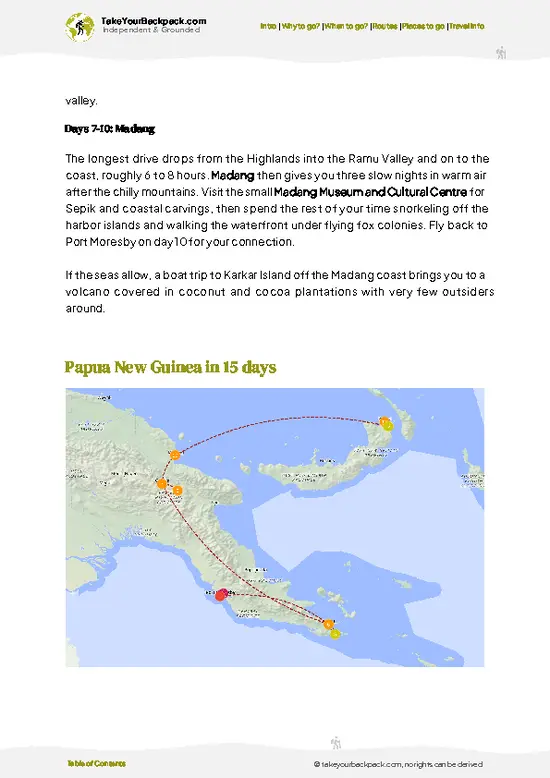
- Sepik River Channels: The main artery of the wetlands is a wide, brown, slow river lined with sago palms and floating meadows. Travel by motorized canoe for distance, then switch to a paddled dugout for quiet side streams.
- Haus Tambaran Spirit Houses: Towering, steep-roofed ceremonial houses in villages such as Kanganaman rise above the huts. Carved posts and masks inside are central to initiation traditions, and visitors normally pay a small village fee to enter.
- Oxbow Lakes: Cut-off river bends hold still, mirror-like water covered in water hyacinth and lilies. Dawn here brings kingfishers, herons and the occasional crocodile slipping under the surface.
- Wood Carving Villages: Carvers in riverside communities make masks, story boards and crocodile figures. Buying directly from the artist is
- Sepik River Channels: The main artery of the wetlands is a wide, brown, slow river lined with sago palms and floating meadows. Travel by motorized canoe for distance, then switch to a paddled dugout for quiet side streams.
- Haus Tambaran Spirit Houses: Towering, steep-roofed ceremonial houses in villages such as Kanganaman rise above the huts. Carved posts and masks inside are central to initiation traditions, and visitors normally pay a small village fee to enter.
- Oxbow Lakes: Cut-off river bends hold still, mirror-like water covered in water hyacinth and lilies. Dawn here brings kingfishers, herons and the occasional crocodile slipping under the surface.
- Wood Carving Villages: Carvers in riverside communities make masks, story boards and crocodile figures. Buying directly from the artist is better value than shops in town, and you can see pieces take shape.
- Birdwatching by Canoe: Egrets, ibises, hornbills and parrots are easy to spot from a low boat. Go at first light, when the water is calm and birds are most active.
- Village Homestays: Stilted guesthouses offer simple beds under a net, fish and sago meals, and evenings of conversation by lamplight. The setting is basic, the welcome is warm.
- Sunset on the River: As light fades, the water turns copper and fishing canoes drift home. It costs nothing and is easily the best way to end a day.
Spotted a mistake or missing something? Contact us.
 Best Backpacking
.jpg) Hi, I’m Johan (Netherlands 🇳🇱), the creator of TakeYourBackpack. Over the past 3 decades, I’ve backpacked through 90+ countries across six continents, gaining extensive experience with independent travel, long-term trips, and overland routes.
Hi, I’m Johan (Netherlands 🇳🇱), the creator of TakeYourBackpack. Over the past 3 decades, I’ve backpacked through 90+ countries across six continents, gaining extensive experience with independent travel, long-term trips, and overland routes.