×

Papua New Guinea🇵🇬 | best national parksExplore the 11 Best national parks in Papua New Guinea

In Papua New Guinea, national parks are gateways to raw landscapes and vibrant ecosystems, each offering a unique flavor of adventure. From the dense rainforests of Varirata National Park to the rugged peaks of Mount Wilhelm, the diversity shapes your experience. Seasonal nuances, like the wet season, can transform trails into muddy challenges, while the dry months unveil breathtaking vistas.

Choosing the right park influences your backpacking journey significantly—think budget, safety, and cultural immersion. Some parks are easily accessible, while others demand grit and determination. The vibe shifts dramatically; whether you seek solitude or community, your choice sets the tone for exploration.

By Johan Kruseman 🇳🇱 | Updated September 5, 2026
Explore the best hikes in Papua New Guinea

Why go?What Makes Them Special

National parks in Papua New Guinea stand apart due to their extraordinary biodiversity and rugged landscapes. This country is a living laboratory of evolution, home to species found nowhere else on Earth. The dense rainforests, towering mountains, and vibrant coral reefs create a backdrop that is as challenging as it is breathtaking.

However, accessing these parks often requires a trade-off. Many areas are remote, demanding time and effort to reach. This can mean long travel times on rough roads or navigating through dense jungle. Yet, this very challenge enhances the experience, offering a deeper connection to the land and its rich cultural heritage. The journey becomes part of the adventure, revealing the stories of the indigenous communities that call these landscapes home.

Climate plays … read more 👉
National parks in Papua New Guinea stand apart due to their extraordinary biodiversity and rugged landscapes. This country is a living laboratory of evolution, home to species found nowhere else on Earth. The dense rainforests, towering mountains, and vibrant coral reefs create a backdrop that is as challenging as it is breathtaking.

However, accessing these parks often requires a trade-off. Many areas are remote, demanding time and effort to reach. This can mean long travel times on rough roads or navigating through dense jungle. Yet, this very challenge enhances the experience, offering a deeper connection to the land and its rich cultural heritage. The journey becomes part of the adventure, revealing the stories of the indigenous communities that call these landscapes home.

Climate plays a significant role, too. The tropical weather can be unpredictable, with heavy rains impacting accessibility and trail conditions. Travelers must be prepared for sudden changes, balancing the thrill of exploration with the realities of nature.

Papua New Guinea’s national parks are not just destinations; they are immersive experiences that demand respect and resilience. The effort invested yields profound rewards—an intimate understanding of a unique ecosystem and the chance to witness the raw beauty of a land that remains largely untouched.
Behind the Scenes of Selection
The list of best national parks in Papua New Guinea is created based on landscapes, wildlife, adventure opportunities, facilities, and overall experience. If you feel a national park is missing in this list, please let us know.

When to go?Timing Your Visit for the Best Experience

Seasonality in Papua New Guinea significantly influences the experience in national parks. The dry season, typically from May to October, offers the best conditions for wildlife visibility. Trails are more accessible, and the chances of spotting birds of paradise or wallabies increase. Temperatures are generally mild, making hikes enjoyable. However, this period can attract larger crowds, especially in popular parks.

Rainfall peaks from November to April, transforming trails into muddy challenges. While the lush scenery is breathtaking, visibility can drop, and wildlife may be harder to spot. The humidity rises, and temperatures can soar, leading to discomfort during treks. Yet, this is also the time when fewer tourists venture out, allowing for a more solitary experience in nature.

Shoulder read more 👉
Seasonality in Papua New Guinea significantly influences the experience in national parks. The dry season, typically from May to October, offers the best conditions for wildlife visibility. Trails are more accessible, and the chances of spotting birds of paradise or wallabies increase. Temperatures are generally mild, making hikes enjoyable. However, this period can attract larger crowds, especially in popular parks.

Rainfall peaks from November to April, transforming trails into muddy challenges. While the lush scenery is breathtaking, visibility can drop, and wildlife may be harder to spot. The humidity rises, and temperatures can soar, leading to discomfort during treks. Yet, this is also the time when fewer tourists venture out, allowing for a more solitary experience in nature.

Shoulder seasons—just before and after the dry season—offer a balance. Expect moderate crowds and lower costs, but be prepared for unpredictable weather. Rain can still occur, and trail conditions may vary.

Peak periods coincide with major festivals or events, drawing visitors and potentially leading to crowded trails. Planning around these times can enhance the experience, but it may come at the cost of solitude. Understanding these seasonal dynamics is crucial for maximizing the rewards of exploration in Papua New Guinea’s national parks.

national park hoppingSuggested Travel Strategies

Combining national parks in Papua New Guinea requires strategic planning and an adventurous spirit. Start by clustering parks regionally. The Highlands, for instance, offer a rich tapestry of biodiversity and cultural experiences. Begin in the central region, where parks like Mount Hagen and Goroka are accessible. From there, head east to the stunning landscapes of the Rabaul area, which includes the volcanic beauty of the East New Britain parks.

Travelers should allocate at least two to three days per park. This allows for exploration without feeling rushed. However, if time is tight, consider prioritizing parks based on interests—wildlife, hiking, or cultural experiences. The trade-off here is between depth and breadth. Spending longer in one park can yield deeper connections and richer read more 👉
Combining national parks in Papua New Guinea requires strategic planning and an adventurous spirit. Start by clustering parks regionally. The Highlands, for instance, offer a rich tapestry of biodiversity and cultural experiences. Begin in the central region, where parks like Mount Hagen and Goroka are accessible. From there, head east to the stunning landscapes of the Rabaul area, which includes the volcanic beauty of the East New Britain parks.

Travelers should allocate at least two to three days per park. This allows for exploration without feeling rushed. However, if time is tight, consider prioritizing parks based on interests—wildlife, hiking, or cultural experiences. The trade-off here is between depth and breadth. Spending longer in one park can yield deeper connections and richer experiences, while covering multiple parks offers a broader view of the country’s diverse ecosystems.

Common planning mistakes include underestimating travel times between parks and over-scheduling activities. Roads can be rough, and weather unpredictable. Flexibility is key. Budget constraints may also limit options for comfortable accommodations, so plan accordingly. Ultimately, the effort of navigating these rugged terrains pays off with breathtaking views and the thrill of discovery. Prioritize what resonates most, and let the journey unfold organically.

The ListMust-Visit national parks in Papua New Guinea

1 Varirata National Park

upland rainforest, panoramic lookouts, birdwatching trails

Follow marked trails through cool upland forest, pausing at viewpoints to scan for rare birds and distant city views.

papua-new-guinea-national-park-varirata-national-park
© Google | Sankarson Banerjee

2 Mount Wilhelm National Park

Papua New Guinea’s highest peak, alpine grasslands, glacial tarns

Ascend through changing ecosystems to reach the country’s highest summit, passing alpine meadows and small glacial lakes along the way.

3 YUS Conservation Area

steep mountain valleys, tree kangaroo habitat, community-managed forests

Traverse steep valleys and dense forest, encountering rare marsupials in a conservation area managed by local villages.

4 Crater Mountain Wildlife Management Area

montane cloud forest, rugged limestone ridges, endemic orchids

Trek through misty forests and limestone outcrops, where rare orchids and elusive wildlife thrive in a challenging, high-altitude environment.

papua-new-guinea-national-park-crater-mountain-wildlife-management-area
© Google |

5 Tonda Wildlife Management Area

savanna wetlands, crocodile habitat, international bird flyway

Navigate vast wetlands supporting crocodiles and migratory birds, with seasonal flooding shaping both wildlife patterns and local livelihoods.

6 Lake Kutubu Wildlife Management Area

crystal-clear lake, endemic fish species, forested hills

Experience tranquil waters surrounded by forested slopes, and discover unique aquatic life found only in this ancient highland lake.

papua-new-guinea-national-park-lake-kutubu-wildlife-management-area
© Google |

7 Mount Gahavisuka Provincial Park

botanical gardens, mossy forest, highland viewpoints

Stroll through curated gardens and moss-draped forest, enjoying cool air and sweeping views over the surrounding highlands.

8 Torricelli Mountain Range Conservation Area

tropical montane forest, endangered tree kangaroos, rugged peaks

Hike forested slopes and ridges, searching for rare mammals and experiencing the biodiversity of a little-visited mountain range.

9 Bensbach Wildlife Sanctuary

floodplain grasslands, migratory waterbirds, remote river channels

Watch seasonal bird migrations and spot wallabies along open grasslands, where river channels shape a landscape rarely visited by outsiders.

10 Sepik Wetlands

flooded grasslands, sago swamps, traditional stilt villages

Travel by canoe through wetlands dotted with stilt houses, where daily life adapts to seasonal flooding and abundant birdlife.

papua-new-guinea-national-park-sepik-wetlands
© Google |

11 Mount Giluwe National Park

volcanic plateau, alpine heath, giant tree ferns

Climb a volcanic landscape shaped by ancient eruptions, where alpine heath and unusual flora dominate the upper slopes.

papua-new-guinea-national-park-mount-giluwe-national-park
© Google |
Loading the map 🌍

Expert viewTips and Advice from Travelers

Terrain
Papua New Guinea’s national parks are a wild tapestry of rugged mountains, dense rainforests, and coastal landscapes. Each park offers a unique slice of this diverse terrain, but the challenge lies in navigating it. Expect steep ascents in places like the Highlands, where trails can be slippery and overgrown. The Kokoda Track, for instance, is not just a hike; it’s a test of endurance, with its relentless ups and downs. If you’re not prepared for mud and sweat, you might find yourself wishing for a more leisurely stroll.

Park Infrastructure
Infrastructure varies widely across parks. Some, like Varirata National Park, have well-maintained trails and basic facilities, making them accessible for day trips. Others, such as the remote Mount Wilhelm, require serious planning. Expect … read more 👉
Terrain
Papua New Guinea’s national parks are a wild tapestry of rugged mountains, dense rainforests, and coastal landscapes. Each park offers a unique slice of this diverse terrain, but the challenge lies in navigating it. Expect steep ascents in places like the Highlands, where trails can be slippery and overgrown. The Kokoda Track, for instance, is not just a hike; it’s a test of endurance, with its relentless ups and downs. If you’re not prepared for mud and sweat, you might find yourself wishing for a more leisurely stroll.

Park Infrastructure
Infrastructure varies widely across parks. Some, like Varirata National Park, have well-maintained trails and basic facilities, making them accessible for day trips. Others, such as the remote Mount Wilhelm, require serious planning. Expect to camp or stay in basic lodges, and be ready for limited amenities. This lack of infrastructure can be a double-edged sword; while it means fewer crowds, it also demands more from you in terms of preparation. Bring your own gear and be ready to adapt.

Wildlife Activity
Wildlife encounters are a highlight, but they require patience. Birds of paradise flit through the trees, and spotting a cassowary can feel like winning the lottery. However, wildlife is often most active at dawn and dusk, so plan your hikes accordingly. If you’re hoping to catch a glimpse of elusive species, be prepared for early mornings and late evenings. The payoff? A front-row seat to nature’s theater, where the sounds of the jungle come alive.

Time and Trade-offs
You’ll want to prioritize your time wisely. Visiting two to three parks in a week is realistic, but don’t expect to see everything. Each park demands time to truly appreciate its offerings. If you rush, you’ll miss the nuances—the way the light filters through the trees or the subtle shifts in bird calls. Consider focusing on one region at a time. This approach allows for deeper exploration and less time spent in transit.

Budget and Effort
Budgeting can be tricky. Costs vary based on park fees, accommodation, and transportation. While some parks are more accessible, others require a hefty investment in time and money. Factor in the cost of guides, especially in remote areas where local knowledge is invaluable. The effort you put in will directly correlate with your experience. The more you engage with local guides, the richer your understanding of the culture and environment will be.

Safety and Cultural Considerations
Safety is paramount. While most parks are safe for visitors, always stay aware of your surroundings. Some areas may have cultural sensitivities; respect local customs and engage with communities thoughtfully. Learning a few words in Tok Pisin can go a long way in building rapport. This isn’t just about safety; it’s about connection.

Planning and Prioritizing
When planning, consider the season. The dry season offers better hiking conditions, but it can also mean more tourists. If you’re looking for solitude, aim for the shoulder seasons. Prioritize parks based on your interests—whether it’s birdwatching, trekking, or cultural experiences. Each park has its own rhythm, and syncing with that can enhance your adventure.

In the end, the journey through Papua New Guinea’s national parks is as much about the experience as it is about the destination. Embrace the grit, the sweat, and the unexpected moments. They’ll become the stories you tell long after the trails have faded from your boots.

✈️ The backpacker research shortcutPapua New Guinea Travel Guide

An offline-friendly backpacking guide with optimized travel routes, ranked highlights, transport advice, and the best areas to stay.
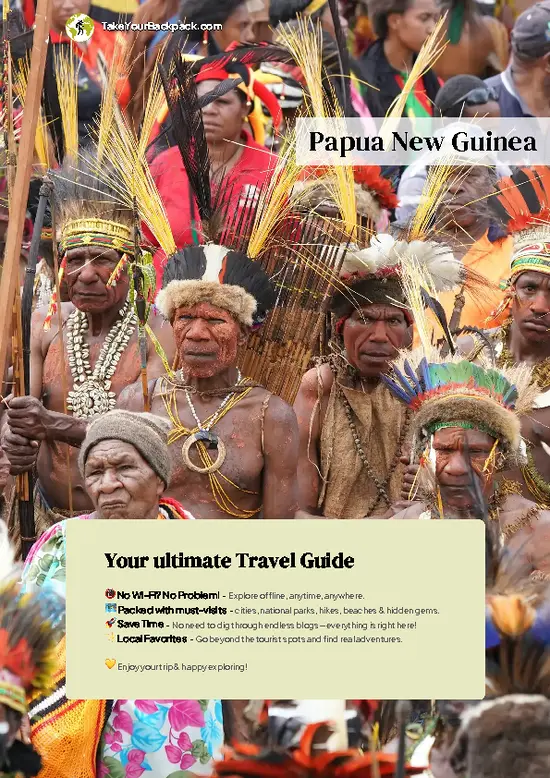
example page 0 from our offline Travel Guide for Papua New Guinea
example page 1 from our offline Travel Guide for Papua New Guinea
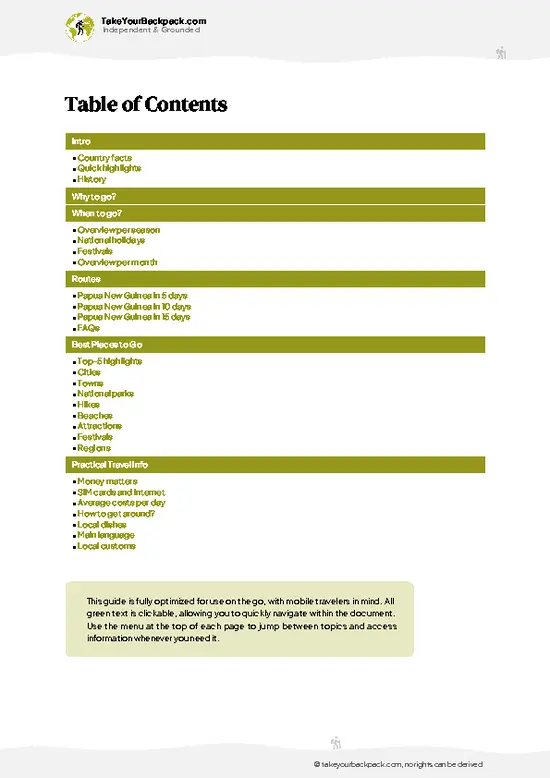
example page 2 from our offline Travel Guide for Papua New Guinea
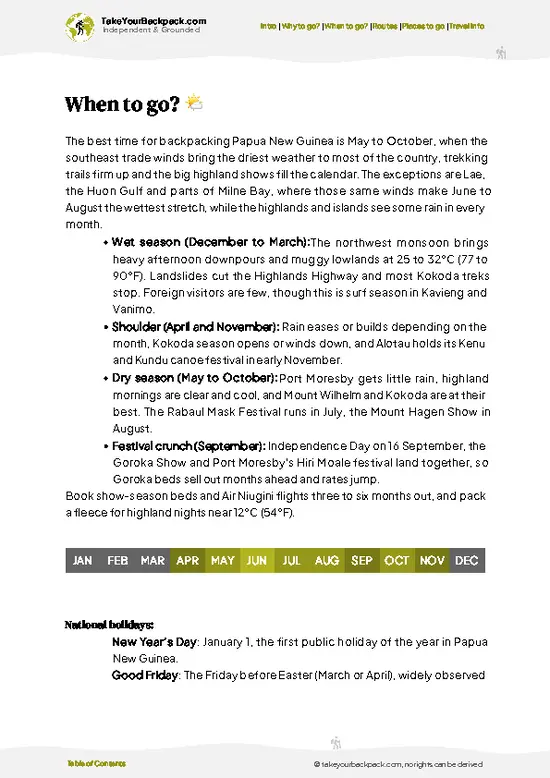
example page 3 from our offline Travel Guide for Papua New Guinea
example page 4 from our offline Travel Guide for Papua New Guinea
example page 5 from our offline Travel Guide for Papua New Guinea
example page 6 from our offline Travel Guide for Papua New Guinea
example page 7 from our offline Travel Guide for Papua New Guinea
The digital guide (319 pages) contains:
86 highlights, ranked by travel appeal
Optimized 5, 10 & 15-day travel routes
Cities, national parks, landmarks, beaches
How to get around
Offline-friendly for travel without Wi-Fi
👉 Click to see all 30+ guide features

📅 Plan smarter in minutes, not weeks
Month by month travel advice
Festivals & national holidays
Budget expectations

🗺️ Go to the right places, skip the overrated ones
Honest pros & cons of destinations
Top hikes, parks & viewpoints
Lesser-known places most travelers miss
Clear “worth it vs skip it” guidance

🛏️ Travel smoothly without rookie mistakes
Best areas to stay
Transport systems explained simply
Common scams & safety advice
SIM cards, money & practical tips

🌍 Understand the country, not just visit it
Culture & traditions
52 Essential phrases & customs
Festivals worth planning around
Traveler-friendly historical context
Insights that make places more meaningful

📱 Built for real travel conditions
Fully downloadable PDF
Works completely offline
Optimized for phone use
Useful in remote areas & buses
Everything in one place
Save weeks of stressful planning
Get instant access to your full guide. 30‑day money-back guarantee.
+ Add another guide for just US$7.80

By proceeding you agree to our terms.
Sent to your inbox immediately after payment • 100% Secure Checkout
Best Backpacking Travel Advisor 2025 tourism awardBest Backpacking
Travel Advisor
2025
What others say about Take Your Backpack Guides:
⭐⭐⭐⭐⭐
Fantastic, amazing amount of information!
⭐⭐⭐⭐⭐
My goodness this is amazing, it's what I've been looking for hats off too you!
⭐⭐⭐⭐⭐
I think this is absolutely BRILLIANT
⭐⭐⭐⭐
Very complete and informative. It's still missing places, but I gotta to commend you
⭐⭐⭐⭐⭐
This is truly amazing, thank you, can't wait to explore it with my kids!
⭐⭐⭐⭐⭐
Awesome resource, thank you!
⭐⭐⭐⭐⭐
This is amazing! Can't wait to explore the ones I haven't seen
⭐⭐⭐⭐
I love this! Well done, great idea.
⭐⭐⭐⭐⭐
Thanks for taking the time to make this gem!
⭐⭐⭐⭐⭐
This might be the best website I've ever seen.
⭐⭐⭐⭐⭐
Congratulations, and thank you so much for your work; it's incredibly valuable.
⭐⭐⭐⭐
In all seriousness I think you did a great job pointing out the important spots
⭐⭐⭐⭐⭐
10/10 very good
⭐⭐⭐⭐⭐
As someone who's only just starting to visit regularly this is awesome, thank you.
⭐⭐⭐⭐
Thank you very much! I'm going to visit my dad, it's going to be very useful!
⭐⭐⭐⭐⭐
This is really cool! We'll be travelling for the first time and this definitely come in handy.
⭐⭐⭐⭐⭐
You are now our minister of culture, congratulations 👨‍💼
⭐⭐⭐⭐⭐
Just wanted to tell you that this is a pearl! Going to follow your recommendations.
⭐⭐⭐⭐⭐
This is so cool. I'll definitely be using the resource for my travels soon.
⭐⭐⭐⭐⭐
This is very impressive! Good work.
⭐⭐⭐⭐⭐
This is an amazing and informative site. Very well done!

🛏️ Where to stay?Top Places to Consider Staying

Yes — Papua New Guinea has hostels and budget guesthouses concentrated in major towns rather than the bush, but options are scarcer and more basic than in Southeast Asia so book ahead and expect simple shared facilities.
In Port Moresby look around the CBD, Boroko and Gordons for the most budget choices—good for airport access and museums but limited nightlife and higher crime, so pick compounds with security and avoid walking after dark.
Madang (town centre/waterfront) is best for diving and relaxed evenings with safer daytime streets; Lae and other coastal towns are practical transit bases with limited amenities; Highlands hubs like Goroka and Mount Hagen offer basic guesthouses for shows … read more 👉
Yes — Papua New Guinea has hostels and budget guesthouses concentrated in major towns rather than the bush, but options are scarcer and more basic than in Southeast Asia so book ahead and expect simple shared facilities.
In Port Moresby look around the CBD, Boroko and Gordons for the most budget choices—good for airport access and museums but limited nightlife and higher crime, so pick compounds with security and avoid walking after dark.
Madang (town centre/waterfront) is best for diving and relaxed evenings with safer daytime streets; Lae and other coastal towns are practical transit bases with limited amenities; Highlands hubs like Goroka and Mount Hagen offer basic guesthouses for shows and treks but services and after-dark safety vary, so carry cash, confirm transfers, and prioritize secure properties.

If you enjoy meeting fellow travelers, consider choosing hostels with high ratings for atmosphere. On the other hand, if you prefer having your own space, a hotel might be a better option.

Papua New GuineaMore Places Across Papua New Guinea

👋 Meet the founderWho’s Behind Take Your Backpack?

Johan, backpacker and founder of TakeYourBackpackHi, I’m Johan (Netherlands 🇳🇱), the creator of TakeYourBackpack. Over the past decade, I’ve backpacked through 80+ countries across six continents, gaining extensive experience with independent travel, long-term trips, and overland routes.

This site is built on a combination of firsthand travel experience and carefully curated insights from other backpackers. Many guides are based on places I’ve personally visited, while others bring together tips, observations, and practical advice shared by trusted travelers I’ve met along the way.

The goal is to provide realistic, experience-driven guidance — not generic itineraries — so you can explore destinations with better context, clearer expectations, and more confidence.

Get full country guide •
Instant download • 86 highlights • Full Offline guide