×

Papua New Guinea🇵🇬 | beachesTawali Resorthouse reef, limestone cliffs, overwater bungalows | things to do and best time to go

Explore Samarai IslandExplore Tufi Beach

Backpacking in Tawali Resort
🏆 Top pickbeach ranked #5
By Johan Kruseman 🇳🇱 | Updated September 4, 2026

Your mask fogs as you surface, and the first thing you hear is a generator humming somewhere in the trees while a parrot heckles you from above. That’s Tawali Resort beach, clinging to the forested limestone coast of Milne Bay, eastern Papua New Guinea. For backpackers, it’s gorgeous and annoying in equal measure: the water is absurdly clear, the reef right off the shore is world-class for diving and snorkeling, and the small, private feel keeps crowds low, but it’s very much a resort bubble, not a scruffy shoestring hangout. The beach itself is clean but small and more for jumping in than long walks or surf. Access is a mission and pushes costs up, with limited cheap eats or beds nearby, especially compared with easier, more local-feeling spots around Alotau’s public beaches or the outer village shores.

Discover everything you want to know in the 📖 Papua New Guinea Travel Guide.
Loading the map 🌍
CLICK TO FILTER
cities
towns
national parks
hikes
beaches
attractions
festivals
regions
SHOW COUNTRY’S BESTSHOW ALL

✨ Why go?
Ranked #5 beach in Papua New Guinea
What makes it a must-see beach

Tawali Resort beach is a backpacker’s oasis in Papua New Guinea, and it’s not just for sunbathing. The laid-back atmosphere invites you to kick back and swap stories with fellow travelers over a cold drink. It’s surprisingly affordable, making it a budget-friendly stop on your journey. The social scene is vibrant, with evenings filled with laughter and shared meals. Plus, the water access is a game changer; you can dive into crystal-clear waters or just float your worries away. Think of it as a connector along the coastal route, a perfect pause before diving back into the adventure.
Want to include Tawali Resort in your Papua New Guinea route?
Create a personalized Papua New Guinea itinerary that includes Tawali Resort and the places that fit your trip — based on your travel style, budget, and available time. Get your route in seconds.

Generate my trip

💡 HighlightsThe experiences that define the visit

  • Dive the house-reef and nearby walls — Day: The reef right off the resort drops into steep, healthy walls with crazy coral life and big visibility; you can hop from gentle sloping coral to dramatic drop-offs in one boat run. Night: Night dives here highlight sleeping reef fish and hunting critters you won’t see in daylight, so bring a good torch and patience.
  • Muck and macro hunting — Day: The sandy bays and coral rubble near the beach are a macro photographer’s dream: tiny frogfish, mandarin fish, and weird critters that make PNG famous. Night: Many of the rare micro-animals (shrimp, blennies, nudibranchs) come out after dark, turning a torch-lit search into a treasure hunt.
  • Community village visits and cultural evenings — Day: The resort’s strong ties with the local village mean guided
read more 👉
  • Dive the house-reef and nearby walls — Day: The reef right off the resort drops into steep, healthy walls with crazy coral life and big visibility; you can hop from gentle sloping coral to dramatic drop-offs in one boat run. Night: Night dives here highlight sleeping reef fish and hunting critters you won’t see in daylight, so bring a good torch and patience.
  • Muck and macro hunting — Day: The sandy bays and coral rubble near the beach are a macro photographer’s dream: tiny frogfish, mandarin fish, and weird critters that make PNG famous. Night: Many of the rare micro-animals (shrimp, blennies, nudibranchs) come out after dark, turning a torch-lit search into a treasure hunt.
  • Community village visits and cultural evenings — Day: The resort’s strong ties with the local village mean guided walks and home-stay style interactions where you learn fishing techniques, garden life, and everyday island culture. Night: Local performances and storytelling sometimes happen at the resort—simple, authentic, and far less touristy than staged shows.
  • Early-morning rainforest and birding treks — Day: Short hikes from the beach climb into lush coastal rainforest where birders chase regional specialties and watch bright birds-of-paradise do their displays; it’s a peaceful contrast to the water-based stuff. Night: Night walks along the edge of the forest reveal nocturnal frogs and insects if you’re into slow, quiet wildlife watching.
  • Island runs, WWII relic glimpses and bioluminescent swims — Day: Short boat trips take you to tiny neighboring islands and sheltered bays with secluded snorkel spots and visible wartime relics on some seafloors—perfect for exploration without long boat rides. Night: On calm nights the sheltered bays often light up with bioluminescent plankton; a quiet, warm swim under the stars is about as magical as beach life gets here.
Spotted a mistake or missing something? Contact us.

🌤️ When to go?Seasonal considerations and timing


  • Topic: Weather – The dry season from May to October is your best bet. Expect less rain, which means no surprise mud baths or canceled boat trips. The wet season (November to April) turns the jungle into a soggy mess, and the beach loses its charm under heavy downpours.

  • Topic: Temperature – Temperatures hover around 27-30°C (80-86°F) year-round, so it’s warm enough to swim anytime. But the dry season feels less sticky, making your backpack feel a little lighter on your back.

  • Topic: Daylight Hours – Papua New Guinea sticks close to 12 hours of daylight year-round. No dramatic shifts here, so plan your beach lounging and snorkeling without worrying about early sunsets.

  • Topic: Crowds – Tawali Resort beach is never a throng of tourists, but the dry season draws the most visitors. If you
read more 👉

  • Topic: Weather – The dry season from May to October is your best bet. Expect less rain, which means no surprise mud baths or canceled boat trips. The wet season (November to April) turns the jungle into a soggy mess, and the beach loses its charm under heavy downpours.

  • Topic: Temperature – Temperatures hover around 27-30°C (80-86°F) year-round, so it’s warm enough to swim anytime. But the dry season feels less sticky, making your backpack feel a little lighter on your back.

  • Topic: Daylight Hours – Papua New Guinea sticks close to 12 hours of daylight year-round. No dramatic shifts here, so plan your beach lounging and snorkeling without worrying about early sunsets.

  • Topic: Crowds – Tawali Resort beach is never a throng of tourists, but the dry season draws the most visitors. If you want solitude, shoulder months like April or November might be quieter, though wetter.

  • Topic: Seasonal Activities – Dry season unlocks the best diving and snorkeling conditions, with clearer water and calmer seas. The wet season can make marine life spotting a frustrating game of hide-and-seek.

  • Topic: Price Fluctuations – Expect higher prices during the dry season when demand peaks. The wet season offers better deals but at the cost of unpredictable weather and limited activities.


Pro-tip: Aim for late May or early October—when the weather’s still dry, crowds are thinner, and prices haven’t hit their peak. It’s the sweet spot between paradise and practicality.


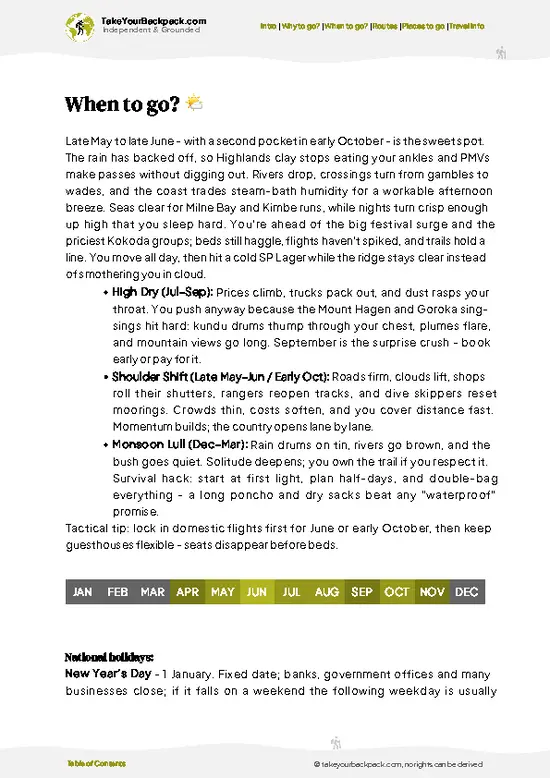
source: climatestotravel.comJANJanuary: fair for travelingFEBFebruary: fair for travelingMARMarch: fair for travelingAPRApril: good for travelingMAYMay: highly recommended for travelingJUNJune: excellent for travelingJULJuly: excellent for travelingAUGAugust: excellent for travelingSEPSeptember: excellent for travelingOCTOctober: highly recommended for travelingNOVNovember: good for travelingDECDecember: fair for traveling
when-to-go

✈️ The backpacker research shortcutPapua New Guinea Travel Guide

An offline-friendly backpacking guide with optimized travel routes, ranked highlights, transport advice, and the best areas to stay.
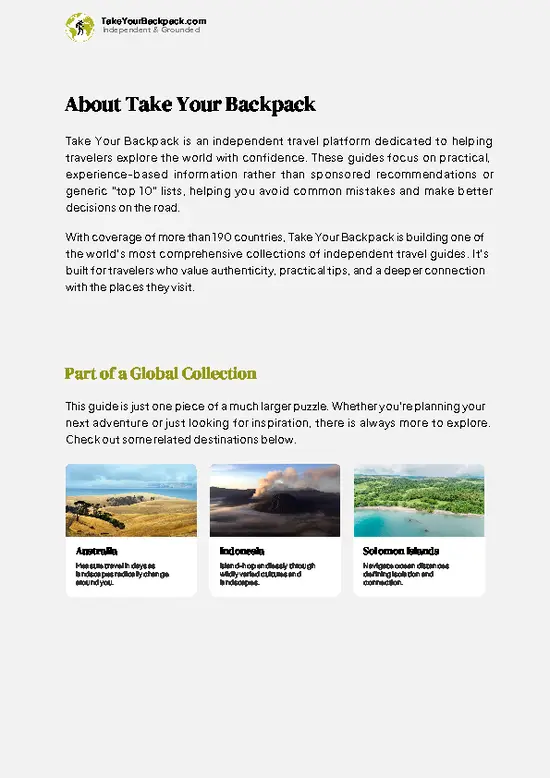
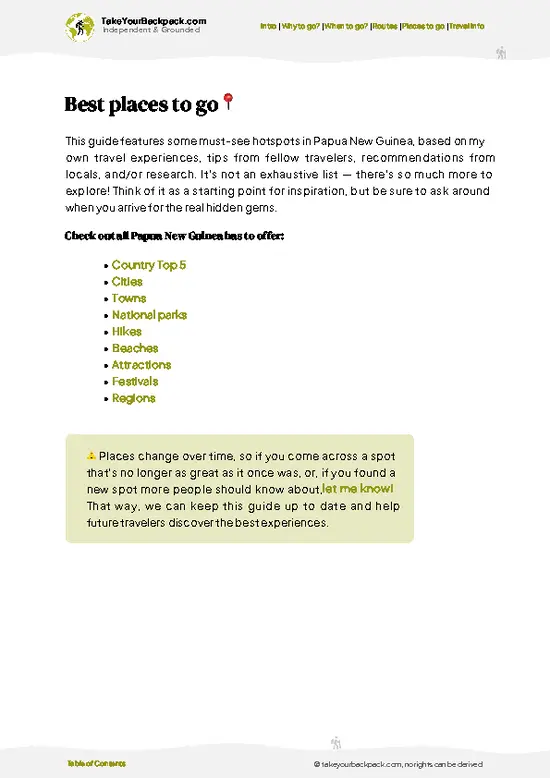
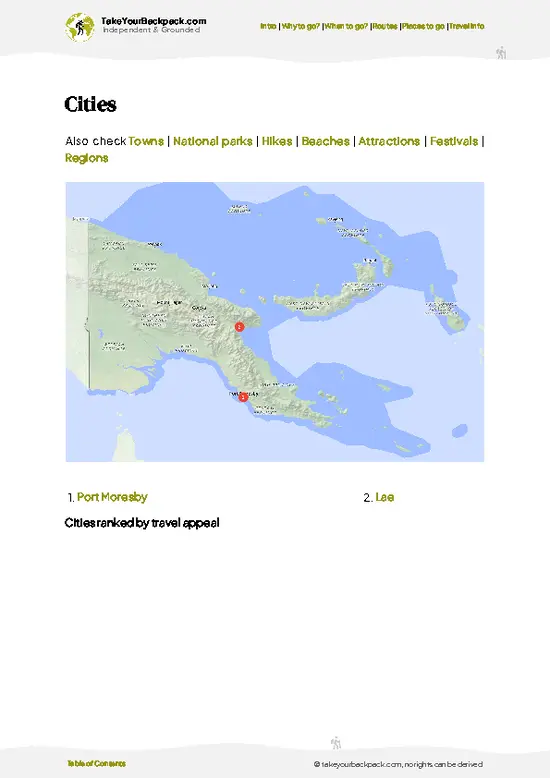
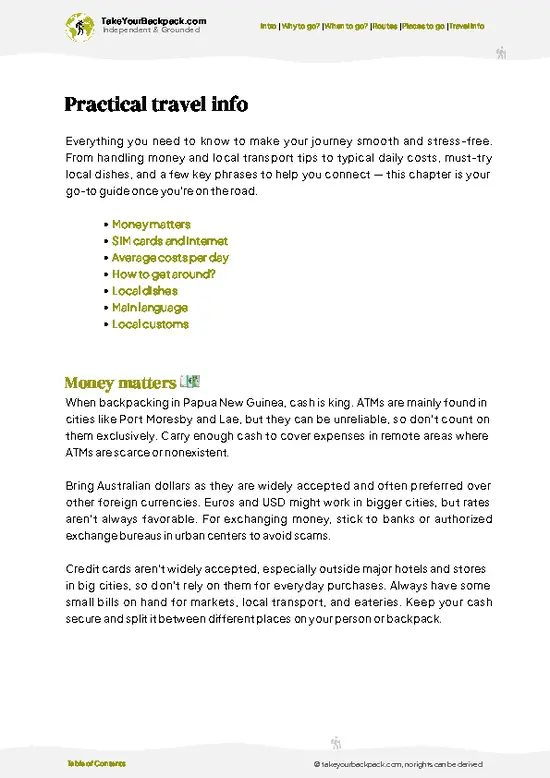
example page 0 from our offline Travel Guide for Papua New Guinea
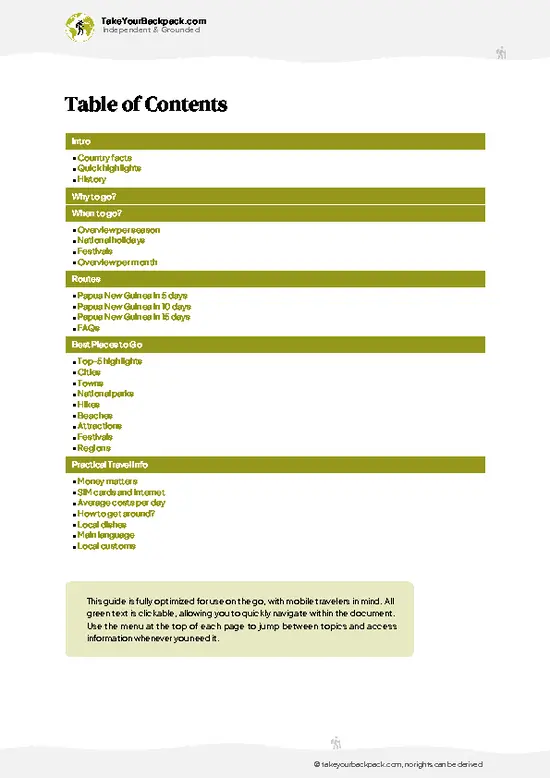
example page 1 from our offline Travel Guide for Papua New Guinea
example page 2 from our offline Travel Guide for Papua New Guinea
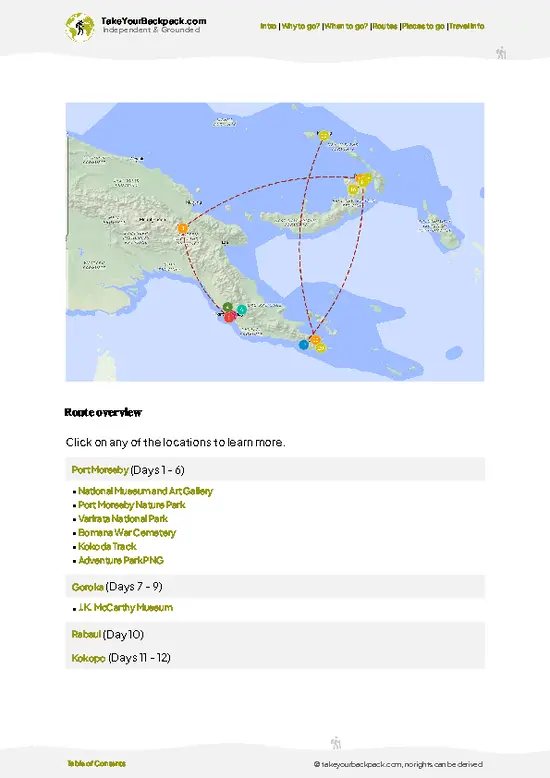
example page 3 from our offline Travel Guide for Papua New Guinea
example page 4 from our offline Travel Guide for Papua New Guinea
example page 5 from our offline Travel Guide for Papua New Guinea
example page 6 from our offline Travel Guide for Papua New Guinea
example page 7 from our offline Travel Guide for Papua New Guinea
The digital guide (319 pages) contains:
86 highlights, ranked by travel appeal
Optimized 5, 10 & 15-day travel routes
Cities, national parks, landmarks, beaches
How to get around
Offline-friendly for travel without Wi-Fi
👉 Click to see all 30+ guide features

📅 Plan smarter in minutes, not weeks
Month by month travel advice
Festivals & national holidays
Budget expectations

🗺️ Go to the right places, skip the overrated ones
Honest pros & cons of destinations
Top hikes, parks & viewpoints
Lesser-known places most travelers miss
Clear “worth it vs skip it” guidance

🛏️ Travel smoothly without rookie mistakes
Best areas to stay
Transport systems explained simply
Common scams & safety advice
SIM cards, money & practical tips

🌍 Understand the country, not just visit it
Culture & traditions
52 Essential phrases & customs
Festivals worth planning around
Traveler-friendly historical context
Insights that make places more meaningful

📱 Built for real travel conditions
Fully downloadable PDF
Works completely offline
Optimized for phone use
Useful in remote areas & buses
Everything in one place
Save weeks of stressful planning
Get instant access to your full guide. 30‑day money-back guarantee.
+ Add another guide for just US$7.80

By proceeding you agree to our terms.
Sent to your inbox immediately after payment • 100% Secure Checkout
Best Backpacking Travel Advisor 2025 tourism awardBest Backpacking
Travel Advisor
2025
What others say about Take Your Backpack Guides:
⭐⭐⭐⭐⭐
Fantastic, amazing amount of information!
⭐⭐⭐⭐⭐
My goodness this is amazing, it's what I've been looking for hats off too you!
⭐⭐⭐⭐⭐
I think this is absolutely BRILLIANT
⭐⭐⭐⭐
Very complete and informative. It's still missing places, but I gotta to commend you
⭐⭐⭐⭐⭐
This is truly amazing, thank you, can't wait to explore it with my kids!
⭐⭐⭐⭐⭐
Awesome resource, thank you!
⭐⭐⭐⭐⭐
This is amazing! Can't wait to explore the ones I haven't seen
⭐⭐⭐⭐
I love this! Well done, great idea.
⭐⭐⭐⭐⭐
Thanks for taking the time to make this gem!
⭐⭐⭐⭐⭐
This might be the best website I've ever seen.
⭐⭐⭐⭐⭐
Congratulations, and thank you so much for your work; it's incredibly valuable.
⭐⭐⭐⭐
In all seriousness I think you did a great job pointing out the important spots
⭐⭐⭐⭐⭐
10/10 very good
⭐⭐⭐⭐⭐
As someone who's only just starting to visit regularly this is awesome, thank you.
⭐⭐⭐⭐
Thank you very much! I'm going to visit my dad, it's going to be very useful!
⭐⭐⭐⭐⭐
This is really cool! We'll be travelling for the first time and this definitely come in handy.
⭐⭐⭐⭐⭐
You are now our minister of culture, congratulations 👨‍💼
⭐⭐⭐⭐⭐
Just wanted to tell you that this is a pearl! Going to follow your recommendations.
⭐⭐⭐⭐⭐
This is so cool. I'll definitely be using the resource for my travels soon.
⭐⭐⭐⭐⭐
This is very impressive! Good work.
⭐⭐⭐⭐⭐
This is an amazing and informative site. Very well done!

🛏️ Where to stay?Where staying makes the most sense

Staying near Tawali Resort beach? You’ve got options that won’t break the bank.

Consider the nearby village areas. They’re safe, social, and buzzing with local life. You’ll find budget-friendly guesthouses where the owners might even invite you for a meal.

The beach itself is a magnet for fellow backpackers. You’ll swap stories over a cold drink, and maybe even join a spontaneous snorkeling trip.

Avoid the tourist traps that charge a premium for mediocre views. Instead, embrace the laid-back vibe of the local spots. They offer character, camaraderie, and a genuine taste of Papua New Guinea without the inflated price tag.

🛡️ SafetyTraveler Safety Guide

Tawali Resort beach is generally a safe haven for swimmers, but keep an eye on the tides. Currents can sneak up on you, especially during the afternoon when the waves pick up. Locals know where to swim, often sticking to the calmer spots, so follow their lead. Sun exposure can be intense, so slather on that sunscreen early and often. As for marine life, jellyfish can make an appearance, so a quick check with the staff is wise. Just stay aware of your belongings; beachside distractions can lead to a sneaky theft. Enjoy the water, but respect its rhythm.

FAQCommon questions from travelers

Tawali Resort beach is accessed by flying into Port Moresby, Papua New Guinea, then taking a domestic flight to Daru or Kerema followed by a boat transfer arranged by the resort. The entire journey from Port Moresby can take around 6 to 8 hours including transfers. The resort provides detailed transport arrangements upon booking.
Tawali Resort beach is excellent for snorkeling due to its clear waters and vibrant coral reefs. Swimming is safe in designated areas, but surfing is not common here as the beach is more sheltered and calm. The best snorkeling months are from May to October when visibility is highest.
Tawali Resort beach is not free to visit as it is part of the private resort property. Access is included in the accommodation package, which typically starts around 300 USD per night. Day visitors are generally not permitted without prior arrangement with the resort.
⚠️ Things can change over time, so always validate details locally before you go.

Other Papua New Guinean beaches near Tawali Resort

Explore more nearby:


💡 Not sure where to go next?
Create a personalized itinerary for Papua New Guinea including Tawali Resort and the places that fit your trip.

Generate my itinerary

👉 Discover all beaches

Or checkout all Papua New Guinea has to offer (think cities, towns, villages, national parks, hikes, beaches, festivals)
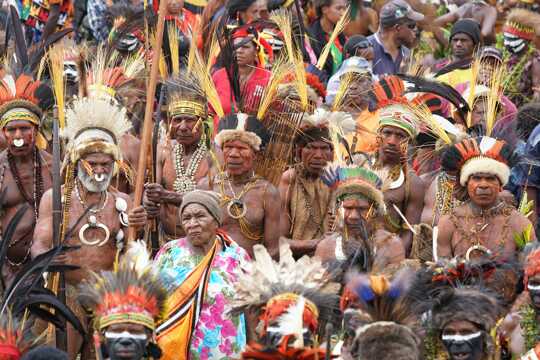
Country photo of Papua New Guinea

We 💚 feedbackWhat to keep in mind

Tawali Resort is a slice of paradise, but don’t expect five-star fluff. The vibe? Laid-back with a side of adventure. Best surprise: the local dive spots—like swimming in an aquarium. Just watch for the occasional power outage; it adds to the charm, right?

✍️ Help improve this page!
The information on this page is based on in-depth research, insights shared by experienced travelers, and feedback from the local travel community in Papua New Guinea. While every effort is made to keep the information accurate and current, conditions can change — so if you spot anything incorrect or outdated, please get in touch.


🙋‍♂️ Give feedback

👋 Meet the founderWho’s Behind Take Your Backpack?

Johan, backpacker and founder of TakeYourBackpackHi, I’m Johan (Netherlands 🇳🇱), the creator of TakeYourBackpack. Over the past decade, I’ve backpacked through 80+ countries across six continents, gaining extensive experience with independent travel, long-term trips, and overland routes.

This site is built on a combination of firsthand travel experience and carefully curated insights from other backpackers. Many guides are based on places I’ve personally visited, while others bring together tips, observations, and practical advice shared by trusted travelers I’ve met along the way.

The goal is to provide realistic, experience-driven guidance — not generic itineraries — so you can explore destinations with better context, clearer expectations, and more confidence.

Get full country guide •
Instant download • 86 highlights • Full Offline guide