
×

Papua New Guinea🇵🇬 | townsWewakSepik gateway, coastal hills, war memorials | things to do and best time to go

Explore SinasinaExplore Alotau

Backpacking in Wewak
🌟 Highlighttown ranked #8
By Johan Kruseman 🇳🇱 | Updated September 4, 2026

Most people only realize after they leave Wewak that it’s one of the easiest places in Papua New Guinea to ease into the country’s chaos: a small town where you can actually walk the seafront, figure out PMV rhythms, and meet fixers and boatmen before heading deeper. Wewak sits on the north coast of PNG, in East Sepik Province, facing the Bismarck Sea. As a destination, it’s more launchpad than headline act: a humid, slightly scruffy port town with a long beach, a few WWII relics, and access to Sepik River trips that are the real draw. It’s calmer and more low-key than Madang, less intense than the Highlands, but still very local and underdeveloped. You’ll mostly walk or grab shared taxis; nights are quiet, social life happens in guesthouse yards and basic bars, and you won’t find a classic hostel scene or many other backpackers. Costs are high for what you get, and security is about being sensible rather than paranoid, but as a staging point for river journeys and coastal hops, Wewak earns its place on the route.

Discover everything you want to know in the 📖 Papua New Guinea Travel Guide.
Loading the map 🌍
CLICK TO FILTER
cities
towns
national parks
hikes
beaches
attractions
festivals
regions
SHOW COUNTRY’S BESTSHOW ALL

✨ Why go?
Ranked #8 town in Papua New Guinea
The unique appeal for travelers

Wewak serves as a gateway for backpackers exploring Papua New Guinea’s rugged beauty. Its convenience is hard to beat; you can easily access nearby hikes in the lush hinterlands or relax on beaches that feel untouched. The local food scene is vibrant, with street vendors offering fresh seafood and tropical fruits that burst with flavor.

Strolling through the walkable streets, you’ll find small-scale hostels and guesthouses where the atmosphere is friendly and communal. This isn’t a party town; it’s more about connecting with fellow travelers over shared experiences. Expect to stay a few days, soaking in the laid-back vibe and the rich cultural tapestry of the area.

Wewak attracts slow travelers, hikers, and solo adventurers looking for a genuine experience rather than a whirlwind tour. … read more 👉
Wewak serves as a gateway for backpackers exploring Papua New Guinea’s rugged beauty. Its convenience is hard to beat; you can easily access nearby hikes in the lush hinterlands or relax on beaches that feel untouched. The local food scene is vibrant, with street vendors offering fresh seafood and tropical fruits that burst with flavor.

Strolling through the walkable streets, you’ll find small-scale hostels and guesthouses where the atmosphere is friendly and communal. This isn’t a party town; it’s more about connecting with fellow travelers over shared experiences. Expect to stay a few days, soaking in the laid-back vibe and the rich cultural tapestry of the area.

Wewak attracts slow travelers, hikers, and solo adventurers looking for a genuine experience rather than a whirlwind tour. If you appreciate a place that feels authentic and unpolished, you’ll find Wewak a rewarding stop on your journey.
Want to include Wewak in your Papua New Guinea route?
Create a personalized Papua New Guinea itinerary that includes Wewak and the places that fit your trip — based on your travel style, budget, and available time. Get your route in seconds.

Generate my trip

💡 HighlightsTop highlights of Wewak

  • Wewak War Cemetery — Quiet, well-kept graves of Allied servicemen from WWII; an easy, solemn stop that gives real context to the town’s wartime history and has ocean views on clear days.
  • Wewak Central Market — The sensory heart of town: fresh fish, fruit, carved wood, shell money and loud bargaining. Great for people-watching, cheap eats and seeing everyday local life up close.
  • Wewak Harbour and Jetty — A working waterfront where fishing boats, passenger launches and the odd rusting hull congregate; good for sunrise/sunset, chatting to fishermen and catching small boat departures to nearby villages.
  • Town Beaches and WWII Ruins — Sandy stretches within town peppered with visible bunkers, gun emplacements and scattered relics; you can walk sections of the coastline and get a hands-on feel
read more 👉
  • Wewak War Cemetery — Quiet, well-kept graves of Allied servicemen from WWII; an easy, solemn stop that gives real context to the town’s wartime history and has ocean views on clear days.
  • Wewak Central Market — The sensory heart of town: fresh fish, fruit, carved wood, shell money and loud bargaining. Great for people-watching, cheap eats and seeing everyday local life up close.
  • Wewak Harbour and Jetty — A working waterfront where fishing boats, passenger launches and the odd rusting hull congregate; good for sunrise/sunset, chatting to fishermen and catching small boat departures to nearby villages.
  • Town Beaches and WWII Ruins — Sandy stretches within town peppered with visible bunkers, gun emplacements and scattered relics; you can walk sections of the coastline and get a hands-on feel for the island’s Pacific War past.
  • Hospital Hill / Japanese War Memorial — A local high point that doubles as a wartime memorial and viewpoint. It’s compact, accessible on foot or by short taxi, and gives both history and a decent panorama of Wewak.
  • Colonial-Era Main Street — The low-slung administrative buildings, old bank facades and government offices tell the town’s colonial story; good for a slow walk to pick up postcards, take photos and imagine days gone by.
  • Town Churches and Community Halls — The big Catholic and Anglican churches are central to town life; drop in for a service or community event to hear choirs and kundu drumming and to see how religion, music and social life mix here.
  • Foreshore Fishing Villages & Seafood Stalls — Small local settlements tucked into the shoreline inside Wewak’s boundaries where fish are cleaned and sold straight off the boats — excellent for cheap, fresh seafood and chatting with fishers.
  • Carving Stalls and Small Galleries — You’ll find Sepik-style carvings, masks and painted panels for sale in town; watching a carver or buying directly from the maker supports local artists and brings home a real piece of the region.
  • War Memorial Park / Town Promenade — A compact green space where families gather, ceremonies happen and veterans’ memorials sit; an easy, social spot to observe daily life and reflect on the town’s layered history.
A few easy day trips from Wewak: the WWII surrender site at Cape Wom, river-village trips up the Sepik (Angoram/Karawari areas) to see haus tambaran and carvings, and nearby coastal villages for beaches and snorkeling.
Spotted a mistake or missing something? Contact us.

🏘️ NeighborhoodsUnderstanding the local layout

Wewak, a coastal town in Papua New Guinea, offers a unique blend of culture and adventure. Each neighborhood has its own character, making it essential to choose wisely for your backpacking experience.

Central Wewak: This is the heart of the town, buzzing with local markets and shops. The vibe is lively, perfect for those who thrive on energy. You can easily walk to most attractions, and the cost of food is low, with street vendors serving up delicious local dishes. Nightlife is modest, with a few bars, but it’s more about soaking in the local scene. Ideal for short stays, as you can dive into the culture quickly.

Wewak Beach: If you’re after tranquility, this area is your go-to. The atmosphere is serene, with the sound of waves lapping against the shore. Accommodations range from budget … read more 👉
Wewak, a coastal town in Papua New Guinea, offers a unique blend of culture and adventure. Each neighborhood has its own character, making it essential to choose wisely for your backpacking experience.

Central Wewak: This is the heart of the town, buzzing with local markets and shops. The vibe is lively, perfect for those who thrive on energy. You can easily walk to most attractions, and the cost of food is low, with street vendors serving up delicious local dishes. Nightlife is modest, with a few bars, but it’s more about soaking in the local scene. Ideal for short stays, as you can dive into the culture quickly.

Wewak Beach: If you’re after tranquility, this area is your go-to. The atmosphere is serene, with the sound of waves lapping against the shore. Accommodations range from budget to mid-range, and you’ll find some great spots for sunset views. It’s a bit farther from the town center, so transport is necessary, but the peaceful vibe makes it worth it for longer stays.

Mission Hill: This neighborhood offers a unique cultural experience, with a mix of locals and expats. It’s quieter, making it suitable for those looking to recharge. The walkability is decent, but you’ll want to budget for transport to the main attractions. It’s a great spot for longer stays, especially if you want to immerse yourself in the local community.

⌛️ 1 dayHow to make the most of one day

Wewak, a coastal town in Papua New Guinea, pulses with a unique blend of indigenous culture and tropical charm. The air is thick with the scent of salt and frangipani, and the vibrant colors of local markets beckon you to explore. This isn’t just a stopover; it’s a chance to dive into the heart of Melanesian life.

Start your morning at the Wewak Market, where the sun spills golden light over stalls brimming with fresh produce and handmade crafts. Engage with local vendors; their stories are as rich as the fruits they sell. Grab a sweet, juicy pineapple or a handful of taro for later. The market buzzes with energy, setting a lively tone for your day.

Afterward, stroll along the waterfront to the iconic Wewak War Memorial. The gentle lapping of waves against the shore provides a serene backdrop … read more 👉
Wewak, a coastal town in Papua New Guinea, pulses with a unique blend of indigenous culture and tropical charm. The air is thick with the scent of salt and frangipani, and the vibrant colors of local markets beckon you to explore. This isn’t just a stopover; it’s a chance to dive into the heart of Melanesian life.

Start your morning at the Wewak Market, where the sun spills golden light over stalls brimming with fresh produce and handmade crafts. Engage with local vendors; their stories are as rich as the fruits they sell. Grab a sweet, juicy pineapple or a handful of taro for later. The market buzzes with energy, setting a lively tone for your day.

Afterward, stroll along the waterfront to the iconic Wewak War Memorial. The gentle lapping of waves against the shore provides a serene backdrop as you reflect on the town’s history. From there, head to the nearby village of Tinputz, often overlooked by tourists. Here, you can witness traditional canoe-making and perhaps even join a local family for a cup of kava, a drink that’s as much about connection as it is about taste.

As the afternoon sun dips, make your way to the stunning Wewak Beach. The soft sand and warm water invite you to unwind. Take a dip or simply lounge while the sky transforms into a canvas of oranges and purples.

As evening falls, find a local eatery like the Beachfront Restaurant. Savor fresh fish grilled to perfection, paired with a side of sweet potato. The sound of laughter and the aroma of grilled seafood create a perfect end to your day. Wewak isn’t just a destination; it’s an experience that lingers long after you leave.
Turn your Wewak visit into an Papua New Guinea adventure
Build a complete Papua New Guinea route with Wewak, hidden gems, must-see destinations, and realistic travel times included.

Generate my trip

🌤️ When to go?Choosing the right time of year


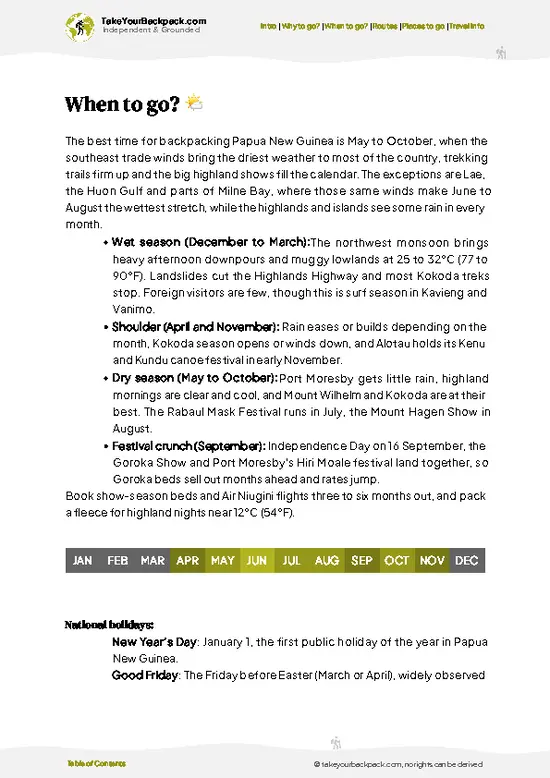
  • Weather: Wewak’s dry season runs from May to October, offering clearer skies and less humidity. This means fewer sudden downpours, so your gear stays dry and trails stay manageable.

  • Temperature: Expect daytime highs around 28-32°C (82-90°F) during the dry months, with nights cooling to about 22°C (72°F). The wet season heats up slightly and feels stickier, which can sap your energy on hikes.

  • Daylight Hours: Near the equator, daylight is steady year-round—roughly 12 hours. But during the dry season, mornings tend to start clearer, giving you crisp light perfect for early exploration.

  • Crowds: Wewak stays low-key year-round, but the dry season draws a few more travelers, especially around local festivals. You’ll find a balance between solitude and social buzz.

  • Seasonal Activities:
read more 👉

  • Weather: Wewak’s dry season runs from May to October, offering clearer skies and less humidity. This means fewer sudden downpours, so your gear stays dry and trails stay manageable.

  • Temperature: Expect daytime highs around 28-32°C (82-90°F) during the dry months, with nights cooling to about 22°C (72°F). The wet season heats up slightly and feels stickier, which can sap your energy on hikes.

  • Daylight Hours: Near the equator, daylight is steady year-round—roughly 12 hours. But during the dry season, mornings tend to start clearer, giving you crisp light perfect for early exploration.

  • Crowds: Wewak stays low-key year-round, but the dry season draws a few more travelers, especially around local festivals. You’ll find a balance between solitude and social buzz.

  • Seasonal Activities: Dry months are prime for diving and snorkeling, as water visibility improves. Wet season can bring lush jungle hikes but expect muddy trails and occasional river swells.

  • Price Fluctuations: Accommodation and flights tend to be pricier during the dry season due to demand. Booking ahead can lock in better rates, especially if you want a spot near the waterfront.


Pro-tip: Aim for late May or early June—when the dry season settles in but before the peak crowd and price surge—to enjoy crisp mornings, vibrant underwater life, and a quieter vibe.


source: climatestotravel.comJANJanuary: fair for travelingFEBFebruary: fair for travelingMARMarch: fair for travelingAPRApril: good for travelingMAYMay: highly recommended for travelingJUNJune: highly recommended for travelingJULJuly: excellent for travelingAUGAugust: excellent for travelingSEPSeptember: excellent for travelingOCTOctober: highly recommended for travelingNOVNovember: fair for travelingDECDecember: fair for traveling
papua-new-guinea-city-wewak
© Google |

✈️ The backpacker research shortcutPapua New Guinea Travel Guide

An offline-friendly backpacking guide with optimized travel routes, ranked highlights, transport advice, and the best areas to stay.
example page 0 from our offline Travel Guide for Papua New Guinea
example page 1 from our offline Travel Guide for Papua New Guinea
example page 2 from our offline Travel Guide for Papua New Guinea
example page 3 from our offline Travel Guide for Papua New Guinea
example page 4 from our offline Travel Guide for Papua New Guinea
example page 5 from our offline Travel Guide for Papua New Guinea
example page 6 from our offline Travel Guide for Papua New Guinea
example page 7 from our offline Travel Guide for Papua New Guinea
The digital guide (319 pages) contains:
86 highlights, ranked by travel appeal
Optimized 5, 10 & 15-day travel routes
Cities, national parks, landmarks, beaches
How to get around
Offline-friendly for travel without Wi-Fi
👉 Click to see all 30+ guide features

📅 Plan smarter in minutes, not weeks
Month by month travel advice
Festivals & national holidays
Budget expectations

🗺️ Go to the right places, skip the overrated ones
Honest pros & cons of destinations
Top hikes, parks & viewpoints
Lesser-known places most travelers miss
Clear “worth it vs skip it” guidance

🛏️ Travel smoothly without rookie mistakes
Best areas to stay
Transport systems explained simply
Common scams & safety advice
SIM cards, money & practical tips

🌍 Understand the country, not just visit it
Culture & traditions
52 Essential phrases & customs
Festivals worth planning around
Traveler-friendly historical context
Insights that make places more meaningful

📱 Built for real travel conditions
Fully downloadable PDF
Works completely offline
Optimized for phone use
Useful in remote areas & buses
Everything in one place
Save weeks of stressful planning
Get instant access to your full guide. 30‑day money-back guarantee.
+ Add another guide for just US$7.80

By proceeding you agree to our terms.
Sent to your inbox immediately after payment • 100% Secure Checkout
Best Backpacking Travel Advisor 2025 tourism awardBest Backpacking
Travel Advisor
2025
What others say about Take Your Backpack Guides:
⭐⭐⭐⭐⭐
Fantastic, amazing amount of information!
⭐⭐⭐⭐⭐
My goodness this is amazing, it's what I've been looking for hats off too you!
⭐⭐⭐⭐⭐
I think this is absolutely BRILLIANT
⭐⭐⭐⭐
Very complete and informative. It's still missing places, but I gotta to commend you
⭐⭐⭐⭐⭐
This is truly amazing, thank you, can't wait to explore it with my kids!
⭐⭐⭐⭐⭐
Awesome resource, thank you!
⭐⭐⭐⭐⭐
This is amazing! Can't wait to explore the ones I haven't seen
⭐⭐⭐⭐
I love this! Well done, great idea.
⭐⭐⭐⭐⭐
Thanks for taking the time to make this gem!
⭐⭐⭐⭐⭐
This might be the best website I've ever seen.
⭐⭐⭐⭐⭐
Congratulations, and thank you so much for your work; it's incredibly valuable.
⭐⭐⭐⭐
In all seriousness I think you did a great job pointing out the important spots
⭐⭐⭐⭐⭐
10/10 very good
⭐⭐⭐⭐⭐
As someone who's only just starting to visit regularly this is awesome, thank you.
⭐⭐⭐⭐
Thank you very much! I'm going to visit my dad, it's going to be very useful!
⭐⭐⭐⭐⭐
This is really cool! We'll be travelling for the first time and this definitely come in handy.
⭐⭐⭐⭐⭐
You are now our minister of culture, congratulations 👨‍💼
⭐⭐⭐⭐⭐
Just wanted to tell you that this is a pearl! Going to follow your recommendations.
⭐⭐⭐⭐⭐
This is so cool. I'll definitely be using the resource for my travels soon.
⭐⭐⭐⭐⭐
This is very impressive! Good work.
⭐⭐⭐⭐⭐
This is an amazing and informative site. Very well done!

🛏️ Where to stay?Choosing the right base

Wewak’s best backpacker zone centers around the town’s waterfront and the adjacent main street corridor. This area hums with a low-key energy—fishermen unloading their catch, vendors grilling fresh fish, and the salty tang of the sea mixing with tropical blooms. It’s where you’ll find the handful of budget guesthouses and hostels that cater to solo travelers and small groups, offering a chance to swap stories over a cold drink or plan your next dive or trek.

Why here? Safety and social life go hand in hand. The waterfront’s steady foot traffic means you’re less likely to feel isolated or uneasy, … read more 👉
Wewak’s best backpacker zone centers around the town’s waterfront and the adjacent main street corridor. This area hums with a low-key energy—fishermen unloading their catch, vendors grilling fresh fish, and the salty tang of the sea mixing with tropical blooms. It’s where you’ll find the handful of budget guesthouses and hostels that cater to solo travelers and small groups, offering a chance to swap stories over a cold drink or plan your next dive or trek.

Why here? Safety and social life go hand in hand. The waterfront’s steady foot traffic means you’re less likely to feel isolated or uneasy, especially after dark. Compared to the quieter residential neighborhoods inland, this strip is alive without being overwhelming—perfect for easing into Wewak’s pace. Plus, it’s close to the local markets and eateries where you can sample authentic flavors without the tourist markup. Staying here means you’re plugged into the town’s rhythm, not just passing through it.

🚌 Getting aroundHow to get around Wewak

Wewak moves at its own rhythm — a laid-back pulse shaped by the tropical heat and the salty tang of the nearby sea. The town’s pace isn’t dictated by strict timetables but by the ebb and flow of daily life, where the sun’s angle and the chatter of locals set the tempo. Streets hum with the occasional honk of a motorbike or the clatter of a market vendor’s call, but there’s no rush here. You’ll find that patience is your best companion; the town’s charm is in its unhurried moments, where the light filters through palm fronds and the scent of grilled fish drifts from the waterfront stalls. Understanding this flow means you won’t just get around—you’ll glide through Wewak’s rhythms like a local, turning transit into part of the experience rather than a chore.


  • Walking: The heart of Wewak is
read more 👉
Wewak moves at its own rhythm — a laid-back pulse shaped by the tropical heat and the salty tang of the nearby sea. The town’s pace isn’t dictated by strict timetables but by the ebb and flow of daily life, where the sun’s angle and the chatter of locals set the tempo. Streets hum with the occasional honk of a motorbike or the clatter of a market vendor’s call, but there’s no rush here. You’ll find that patience is your best companion; the town’s charm is in its unhurried moments, where the light filters through palm fronds and the scent of grilled fish drifts from the waterfront stalls. Understanding this flow means you won’t just get around—you’ll glide through Wewak’s rhythms like a local, turning transit into part of the experience rather than a chore.


  • Walking: The heart of Wewak is compact enough to explore on foot, especially around the waterfront and market areas. Walking lets you soak in the humid air, catch the scent of fresh seafood, and notice the small details—like hand-painted signs and children playing in the streets. It’s free, flexible, and the best way to sync with the town’s slow, sensory pace.


  • Motorbike Taxis (PMVs): These are the go-to for quick hops across town. Expect to pay around 2-5 PGK per ride. They don’t run on a fixed schedule—just flag one down when you need it. The ride is bumpy and open to the elements, so brace for dust, heat, and the occasional burst of laughter from the driver. It’s fast and cheap but not for those who mind a bit of chaos.


  • Minibus Taxis: For longer distances or trips to nearby villages, minibuses are your budget workhorse. They leave when full, so timing is flexible but unpredictable. Fares hover around 10-15 PGK. The interiors are basic, often packed, and windows might be open to let in the humid air and roadside smells. It’s a social ride—expect to share space and stories with locals.


  • Public Buses: Less common but available for scheduled routes to and from Wewak’s outskirts. They run early morning to late afternoon, with fares around 15-20 PGK. Buses are slower but more comfortable than minibuses, with covered seating and some shade from the tropical sun. Ideal if you want a bit more structure without breaking the bank.


  • Boat Taxi: For crossing the nearby rivers or reaching coastal spots, small motorized boats operate on demand. Prices vary but expect around 20-30 PGK for short trips. The ride offers a refreshing breeze and a different perspective on Wewak’s landscape—water, mangroves, and fishing nets. It’s a scenic, budget-friendly detour that feels like a mini-adventure.

👛 Costs (as of 4 September 2026)Money, prices, and spending tips

Backpacking in Wewak, Papua New Guinea, means stepping into a place where the pace is slow, the air is thick with tropical humidity, and the cost of living reflects its remote, less-touristed nature. Here’s what you can expect to spend daily, broken down by essentials.
  • Dorm Accommodation: Options are limited and basic, often guesthouses rather than hostels. Expect to pay around $10 to $20 USD per night. Rooms might be simple with shared bathrooms, but they offer a cool refuge from the heat and a chance to connect with locals or other travelers.
  • Meals: Local food is affordable and flavorful, with fresh fish, root vegetables, and tropical fruits dominating menus. Street food or small local eateries will cost about $3 to $7 USD per meal. Western-style meals or dining at tourist-oriented spots
read more 👉
Backpacking in Wewak, Papua New Guinea, means stepping into a place where the pace is slow, the air is thick with tropical humidity, and the cost of living reflects its remote, less-touristed nature. Here’s what you can expect to spend daily, broken down by essentials.
  • Dorm Accommodation: Options are limited and basic, often guesthouses rather than hostels. Expect to pay around $10 to $20 USD per night. Rooms might be simple with shared bathrooms, but they offer a cool refuge from the heat and a chance to connect with locals or other travelers.
  • Meals: Local food is affordable and flavorful, with fresh fish, root vegetables, and tropical fruits dominating menus. Street food or small local eateries will cost about $3 to $7 USD per meal. Western-style meals or dining at tourist-oriented spots can push closer to $10.
  • Local Transport: Getting around Wewak usually means hopping on a PMV (public motor vehicle) or a shared taxi. Fares are low, typically $0.50 to $2 USD depending on distance. For more remote excursions, hiring a motorbike or boat can cost more, but daily local travel stays cheap.
  • Basic Activities/Entry Fees: Wewak’s main draws are natural and cultural, with minimal entry fees. Visiting local markets, beaches, or small museums might cost $1 to $5 USD. Organized tours or guided trips to nearby villages or dive spots can run $20 to $50, but casual exploration is mostly free.
  • Miscellaneous Expenses: This includes bottled water, snacks, occasional internet access, or small tips. Budget around $2 to $5 USD daily. Keep in mind that essentials like reliable Wi-Fi or imported goods can be pricier due to the town’s isolation.

All told, you’re looking at roughly $20 to $40 USD per day to cover the basics in Wewak. This range gives you enough room to stay comfortable without cutting corners, while still soaking in the raw, unfiltered vibe of this coastal town.


source: papuanewguinea.travel
⚠️ Prices can change and everyone travels differently, so take this as a rough guide. Hope it helps you plan your adventure!

🚌 Day tripsExploring the surroundings

Wewak, Papua New Guinea, is a vibrant launchpad for unforgettable day trips, each offering a unique slice of local culture and stunning landscapes.

1. Kairiru Island Adventure
Just a short boat ride from Wewak, Kairiru Island is a tropical paradise that feels like stepping into a postcard. The journey takes about 30 minutes, and you’ll be greeted by the scent of saltwater and the sound of waves lapping against the shore. Spend your day snorkeling in crystal-clear waters, exploring lush trails, or simply lounging on the beach. Budget around 50 PGK for the boat fare and a bit more for snacks. The best time to visit is during the dry season, from May to October, when the weather is perfect for outdoor activities. A common mistake? Forgetting sunscreen; the sun here is relentless.


2. The read more 👉
Wewak, Papua New Guinea, is a vibrant launchpad for unforgettable day trips, each offering a unique slice of local culture and stunning landscapes.

1. Kairiru Island Adventure
Just a short boat ride from Wewak, Kairiru Island is a tropical paradise that feels like stepping into a postcard. The journey takes about 30 minutes, and you’ll be greeted by the scent of saltwater and the sound of waves lapping against the shore. Spend your day snorkeling in crystal-clear waters, exploring lush trails, or simply lounging on the beach. Budget around 50 PGK for the boat fare and a bit more for snacks. The best time to visit is during the dry season, from May to October, when the weather is perfect for outdoor activities. A common mistake? Forgetting sunscreen; the sun here is relentless.


2. The Sepik River Experience
A day trip to the Sepik River is like diving into the heart of Papua New Guinea’s culture. It’s about a two-hour drive to the river’s edge, where you can hop on a canoe and glide through the tranquil waters. Expect to pay around 100 PGK for transport and a small fee for canoe rentals. The river is best explored in the dry season, when the water levels are just right for navigation. Many first-timers underestimate the river’s vastness; it’s easy to get lost in its beauty, so keep your guide close.


3. Wewak’s Cultural Village Tour
Stay close to home with a cultural village tour that immerses you in local traditions. These tours typically last half a day and cost about 80 PGK. You’ll meet artisans, witness traditional dances, and savor local dishes. The best time for this is during the morning, when the village is alive with activity. A common pitfall is rushing through; take your time to engage with the locals. Their stories are as rich as the land they inhabit.


4. Mission Hill Hike
For those craving a bit of a workout, the hike up Mission Hill is a must. It’s a steep trek, taking about an hour, but the panoramic views of Wewak and the surrounding islands are worth every drop of sweat. Bring water and snacks, as you’ll need them. The hike is best done in the early morning to avoid the midday heat. Many underestimate the trail’s difficulty; wear sturdy shoes and pace yourself.
Want to know what more Papua New Guinea offers?
The Papua New Guinea Travel Guide describes 86 highlights, from cities to national parks, from beaches to hikes

Get the Travel Guide -

🛡️ SafetyScams, Hazards, and Annoyances

Wewak is generally safe, but a few practical tips can enhance your experience. Stay alert in crowded markets, especially around the bus station. Keep your belongings close; petty theft can happen when you least expect it.

If you’re traveling solo, avoid wandering too far after dark. The streets can feel different at night, and it’s best to stick to well-lit areas.

Watch for common scams, like overly friendly locals offering unsolicited help that leads to a hefty fee. A polite but firm “no, thank you” usually suffices.

Annoyances can include aggressive taxi drivers; agree on a fare before getting in. Carry small bills for easier transactions, as change can be a hassle. By staying aware and grounded, you’ll navigate Wewak like a pro, soaking in its unique atmosphere without unnecessary stress.

FAQCommon questions from travelers

Wewak is worth visiting for its unique World War II history and coastal scenery, not just a stopover. The town offers several war relics and museums, plus access to nearby beaches and islands. It provides a more authentic Papua New Guinea experience compared to larger cities.
Two to three days are sufficient to explore Wewak's main attractions, including the WWII sites, local markets, and nearby beaches. This allows time for a day trip to Cape Boram or the Sepik River area. Staying longer is only necessary if you want to explore the surrounding region in depth.
No, Wewak cannot be visited as a day trip from a nearby city due to its remote location. The nearest major city, Madang, is about 350 kilometers away and requires a flight or a long, difficult road trip. Plan to stay overnight in Wewak to fully experience the area.
⚠️ Things can change over time, so always validate details locally before you go.

Other Papua New Guinean towns near Wewak

Explore more nearby:

  • Aitape—north coast, tsunami history, sago swamps| 153 km away
  • Mount Hagen—mountain backdrop, tribal gatherings, produce markets| 261 km away
  • Tari—Huli Wigmen, misty valleys, birdwatching| 265 km away

💡 Not sure where to go next?
Create a personalized itinerary for Papua New Guinea including Wewak and the places that fit your trip.

Generate my itinerary

👉 Discover all towns

Or checkout all Papua New Guinea has to offer (think cities, towns, villages, national parks, hikes, beaches, festivals)
Country photo of Papua New Guinea

We 💚 feedbackIs it worth it?

Wewak has a raw, unfiltered vibe that feels like stepping into a living postcard. The best surprise? The local markets bursting with color and the scent of fresh fish grilling nearby. You’ll find warmth in the smiles of the vendors, but don’t underestimate the sun—wear that sunscreen liberally. Embrace the slow pace; it’s part of the charm. This isn’t just a destination; it’s a moment to breathe and soak in the essence of Papua New Guinea.

✍️ Help improve this page!
The information on this page is based on in-depth research, insights shared by experienced travelers, and feedback from the local travel community in Papua New Guinea. While every effort is made to keep the information accurate and current, conditions can change — so if you spot anything incorrect or outdated, please get in touch.


🙋‍♂️ Give feedback

👋 Meet the founderWho’s Behind Take Your Backpack?

Johan, backpacker and founder of TakeYourBackpackHi, I’m Johan (Netherlands 🇳🇱), the creator of TakeYourBackpack. Over the past decade, I’ve backpacked through 80+ countries across six continents, gaining extensive experience with independent travel, long-term trips, and overland routes.

This site is built on a combination of firsthand travel experience and carefully curated insights from other backpackers. Many guides are based on places I’ve personally visited, while others bring together tips, observations, and practical advice shared by trusted travelers I’ve met along the way.

The goal is to provide realistic, experience-driven guidance — not generic itineraries — so you can explore destinations with better context, clearer expectations, and more confidence.

Get full country guide •
Instant download • 86 highlights • Full Offline guide