×

Paraguay🇵🇾 | citiesPedro Juan Caballeroborder town, duty-free shops, Amambay hills | things to do and best time to go

Explore ItauguáExplore Fernando de la Mora

Backpacking in Pedro Juan Caballero
🌟 Highlightcity ranked #6
By Johan Kruseman 🇳🇱 | Updated May 27, 2026

Most people who’ve heard of Pedro Juan Caballero think “sketchy border town, full stop.” That’s lazy shorthand. It is a frontier city with real cartel-related crime, but it’s also a functional commercial hub that most Paraguayans experience as a place to shop, work, and cross into Brazil, not a war zone. You’ll find it in Paraguay’s far northeast, in Amambay department, glued to Ponta Porã on the Brazilian side. For backpackers, it’s more logistics node than bucket-list stop: cheap shopping, a few plazas, basic parks, and some surprisingly lively bars thanks to the cross-border crowd. It’s easy and cheap to reach by bus, but harder to meet other travelers than in Asunción or Encarnación. Safety is very neighborhood- and time-of-day-dependent; you move with purpose, avoid flaunting gear, and skip aimless night walks. The vibe: gritty, transactional, oddly fascinating if you like border dynamics more than pretty facades.

Discover everything you want to know in the 📖 Paraguay Travel Guide.


Get your Paraguay guide
90 ranked highlights, routes & tips, works offline (352 pages)
Loading the map 🌍
CLICK TO FILTER
cities
towns
landmarks
national parks
hikes
beaches
attractions
festivals
regions
SHOW COUNTRY’S BESTSHOW ALL

✨ Why go?
Ranked #6 city in Paraguay
What makes it a must-see city

Pedro Juan Caballero is a strategic stop for backpackers navigating Paraguay. It’s not just about the highlights; it’s about how they fit into your journey. The city offers a solid basecamp for day trips to nearby attractions, making it easy to explore without the hassle of constant packing.

Affordable hostels provide a welcoming atmosphere, perfect for meeting fellow travelers. The food scene is a delightful mix of local flavors, and you can grab a hearty meal without breaking the bank. Plus, the city is walkable, allowing you to soak in the local vibe without the need for transport.

When the sun sets, the nightlife kicks in, offering a taste of local culture. With easy onward travel options, Pedro Juan Caballero can be a rewarding stop or a quick pit stop, depending on your travel style.
Want to include Pedro Juan Caballero in your Paraguay route?
Create a personalized Paraguay itinerary that includes Pedro Juan Caballero and the places that fit your trip — based on your travel style, budget, and available time. Get your route in seconds.

Generate my trip

💡 HighlightsWhat this place is best known for

  1. Plaza de la Democracia — The city’s beating heart: a shaded central square where locals meet, street vendors set up, and municipal events or weekend fairs take place. Good spot to feel the everyday rhythm and watch border-town life unfold.
  2. Catedral Nuestra Señora del Carmen — The main Catholic church in Pedro Juan Caballero; worth visiting for its architecture, stained glass, and to observe weekday or Sunday services that show the city’s religious and community life.
  3. Mercado Municipal (Central Market) — A busy indoor/outdoor market selling fresh produce, regional meats, snacks, and small stalls with local goods. Excellent place to try Paraguayan food, buy basics cheap, and see authentic local commerce.
  4. Border strip / Avenida Internacional (Pedro Juan Caballero - Ponta Porã) — The contiguous
read more 👉
  1. Plaza de la Democracia — The city’s beating heart: a shaded central square where locals meet, street vendors set up, and municipal events or weekend fairs take place. Good spot to feel the everyday rhythm and watch border-town life unfold.
  2. Catedral Nuestra Señora del Carmen — The main Catholic church in Pedro Juan Caballero; worth visiting for its architecture, stained glass, and to observe weekday or Sunday services that show the city’s religious and community life.
  3. Mercado Municipal (Central Market) — A busy indoor/outdoor market selling fresh produce, regional meats, snacks, and small stalls with local goods. Excellent place to try Paraguayan food, buy basics cheap, and see authentic local commerce.
  4. Border strip / Avenida Internacional (Pedro Juan Caballero - Ponta Porã) — The contiguous urban border with Ponta Porã (Brazil) is an attraction in itself: cross-border shopping, Brazilian supermarkets, electronics and clothing stalls, and that unique twin-city atmosphere where languages, prices, and products mix.
  5. Local craft and ñandutí shops in the city center — Small stores and street vendors selling Paraguayan lace (ñandutí), leather goods, and souvenirs. These stalls showcase regional handicraft skills and are the best places in town to pick up locally made gifts.
A few real, visitable highlights just outside the city worth day trips: the Brazilian twin city Ponta Porã (right across the border), Cerro Corá National Park (historic national park in the Amambay region), and the Mbaracayú Reserve area for Atlantic forest hiking and wildlife.
Spotted a mistake or missing something? Contact us.
🏘️ NeighborhoodsHow different areas shape the experience

Pedro Juan Caballero offers a unique blend of culture and practicality for backpackers. Here’s how the neighborhoods stack up:

Centro: This is the heart of the city. You’ll find affordable hostels, local eateries, and vibrant street life. It’s walkable, making it easy to explore shops and markets. Nightlife is lively but not overwhelming, perfect for a short stay.

San José: A quieter area, ideal for those seeking a more laid-back vibe. It’s slightly more residential, with cozy cafes and parks. While it’s a bit farther from the nightlife, it’s still accessible by bus. Great for longer stays if you prefer a slower pace.

Las Lomas: This neighborhood is a bit upscale, with more amenities and a relaxed atmosphere. Prices are higher, but you get better comfort. It’s less walkable, so plan for … read more 👉
Pedro Juan Caballero offers a unique blend of culture and practicality for backpackers. Here’s how the neighborhoods stack up:

Centro: This is the heart of the city. You’ll find affordable hostels, local eateries, and vibrant street life. It’s walkable, making it easy to explore shops and markets. Nightlife is lively but not overwhelming, perfect for a short stay.

San José: A quieter area, ideal for those seeking a more laid-back vibe. It’s slightly more residential, with cozy cafes and parks. While it’s a bit farther from the nightlife, it’s still accessible by bus. Great for longer stays if you prefer a slower pace.

Las Lomas: This neighborhood is a bit upscale, with more amenities and a relaxed atmosphere. Prices are higher, but you get better comfort. It’s less walkable, so plan for taxis or rideshares. Perfect for those looking to splurge a little while still enjoying local charm.

Parque del Lago: A scenic area with a focus on outdoor activities. It’s great for nature lovers and offers a peaceful retreat from the city buzz. While it’s not the best for nightlife, it’s perfect for longer stays if you enjoy tranquility and nature.

⌛️ 1 day1-day itinerary for Pedro Juan Caballero

Pedro Juan Caballero, a lively border town in Paraguay, pulses with a unique blend of cultures and experiences. It’s a place where the vibrant street life meets the laid-back charm of local markets, making it a fascinating stop for those willing to explore beyond the usual tourist paths.

Start your day in the bustling Mercado Municipal. The aroma of fresh produce and sizzling street food fills the air. Grab a traditional breakfast of *chipa*, a cheesy bread that’s a local favorite. As you wander through the stalls, engage with friendly vendors who are eager to share stories about their goods. This is where you’ll feel the heart of the city.

In the afternoon, head to the Parque Internacional, a serene spot that straddles the border with Brazil. It’s a perfect place to unwind, with lush greenery … read more 👉
Pedro Juan Caballero, a lively border town in Paraguay, pulses with a unique blend of cultures and experiences. It’s a place where the vibrant street life meets the laid-back charm of local markets, making it a fascinating stop for those willing to explore beyond the usual tourist paths.

Start your day in the bustling Mercado Municipal. The aroma of fresh produce and sizzling street food fills the air. Grab a traditional breakfast of *chipa*, a cheesy bread that’s a local favorite. As you wander through the stalls, engage with friendly vendors who are eager to share stories about their goods. This is where you’ll feel the heart of the city.

In the afternoon, head to the Parque Internacional, a serene spot that straddles the border with Brazil. It’s a perfect place to unwind, with lush greenery and a small lake. Take a leisurely stroll or simply soak in the atmosphere. If you’re feeling adventurous, check out the nearby *Cerro Corá National Park*, where you can hike and enjoy stunning views, a bit off the beaten path but well worth the effort.

As evening approaches, make your way to the vibrant neighborhood of Villa Aurora. Here, you’ll find a mix of local eateries and bars. Try a plate of *asado* at a family-run restaurant, where the warmth of the locals matches the heat of the grill. End your day with a cold *tereré*, a traditional herbal drink, while chatting with locals. This blend of experiences will leave you feeling connected to the spirit of Pedro Juan Caballero, making your visit truly memorable.
Turn your Pedro Juan Caballero visit into an Paraguay adventure
Build a complete Paraguay route with Pedro Juan Caballero, hidden gems, must-see destinations, and realistic travel times included.

Generate my trip

🌤️ When to go?Seasonal considerations and timing


  • Weather: The dry season from May to September offers clear skies and minimal rain, making trekking and exploring more predictable. The wet season, October to April, brings heavy showers that can turn trails muddy and slow you down.

  • Temperature: Daytime highs hover around 25-30°C (77-86°F) during the dry months, comfortable for active days. Wet season spikes can push temps above 32°C (90°F), adding humidity that saps energy fast.

  • Daylight Hours: Roughly 11 to 12 hours year-round, with slightly longer days in the southern hemisphere’s summer (December-February). This consistency means you can plan hikes without worrying about early nightfall.

  • Crowds: Tourist traffic peaks during the dry season, especially July and August, when locals and travelers converge. The wet season sees fewer
read more 👉

  • Weather: The dry season from May to September offers clear skies and minimal rain, making trekking and exploring more predictable. The wet season, October to April, brings heavy showers that can turn trails muddy and slow you down.

  • Temperature: Daytime highs hover around 25-30°C (77-86°F) during the dry months, comfortable for active days. Wet season spikes can push temps above 32°C (90°F), adding humidity that saps energy fast.

  • Daylight Hours: Roughly 11 to 12 hours year-round, with slightly longer days in the southern hemisphere’s summer (December-February). This consistency means you can plan hikes without worrying about early nightfall.

  • Crowds: Tourist traffic peaks during the dry season, especially July and August, when locals and travelers converge. The wet season sees fewer visitors, giving you more space but fewer open services.

  • Seasonal Activities: Dry months align with outdoor festivals and markets, offering cultural immersion. Wet months limit outdoor events but bring lush landscapes if you’re into photography or birdwatching.

  • Price Fluctuations: Expect higher accommodation and transport costs during the dry season’s peak. Off-season rates drop significantly, rewarding those willing to brave the rain with better deals and quieter spots.


Pro-tip: Aim for shoulder months like April or September to balance decent weather, manageable crowds, and moderate prices—your sweet spot for a smart, high-value visit.


source: climatestotravel.comJANJanuary: fair for travelingFEBFebruary: fair for travelingMARMarch: fair for travelingAPRApril: highly recommended for travelingMAYMay: excellent for travelingJUNJune: excellent for travelingJULJuly: highly recommended for travelingAUGAugust: highly recommended for travelingSEPSeptember: highly recommended for travelingOCTOctober: fair for travelingNOVNovember: fair for travelingDECDecember: fair for traveling
when-to-go

✈️ The backpacker research shortcutParaguay Travel Guide

An offline-friendly backpacking guide with optimized travel routes, ranked highlights, transport advice, and the best areas to stay.
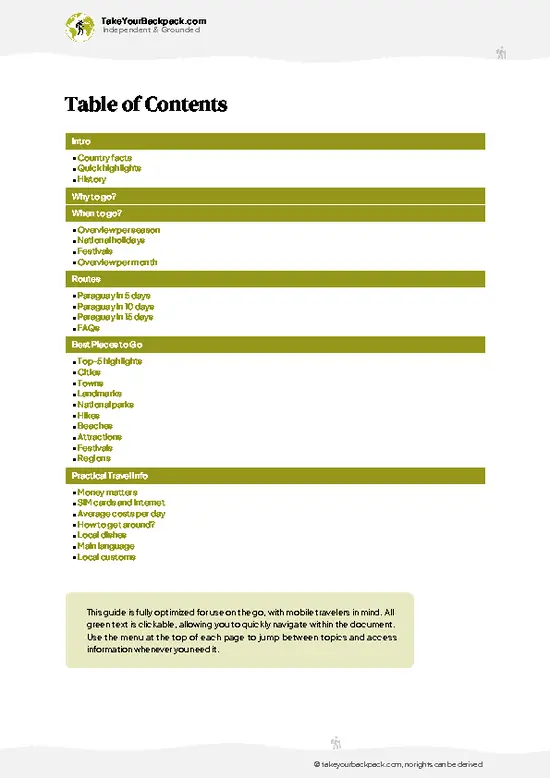
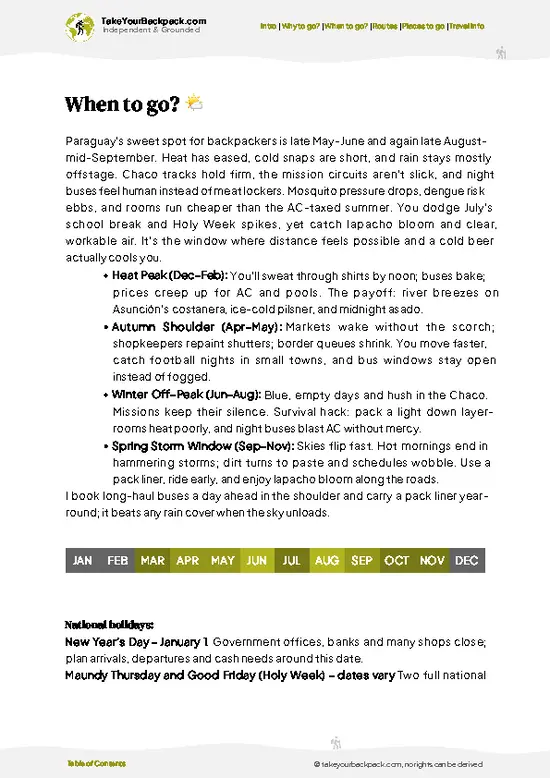
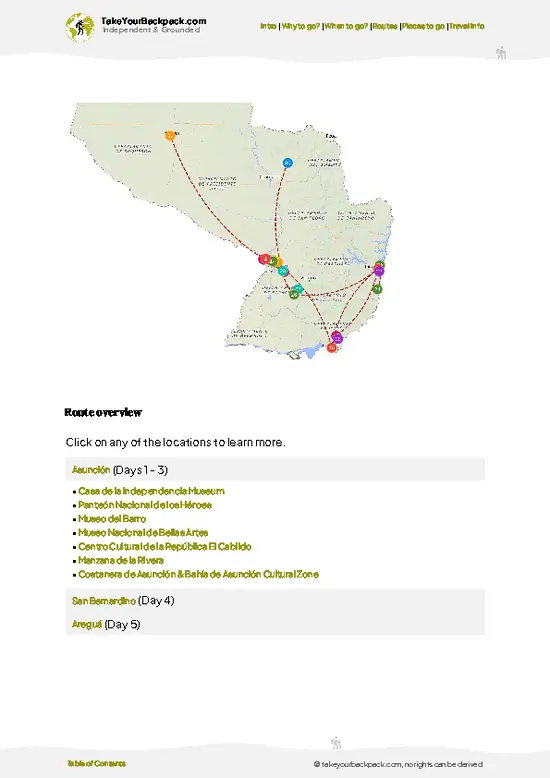
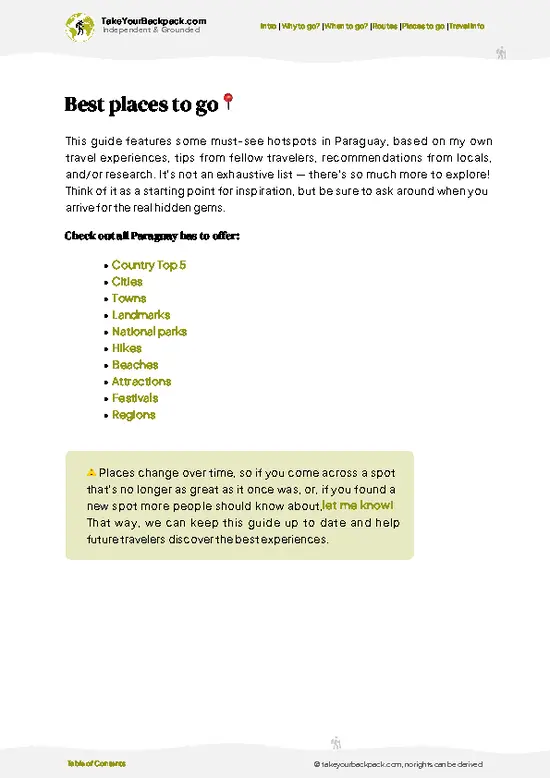
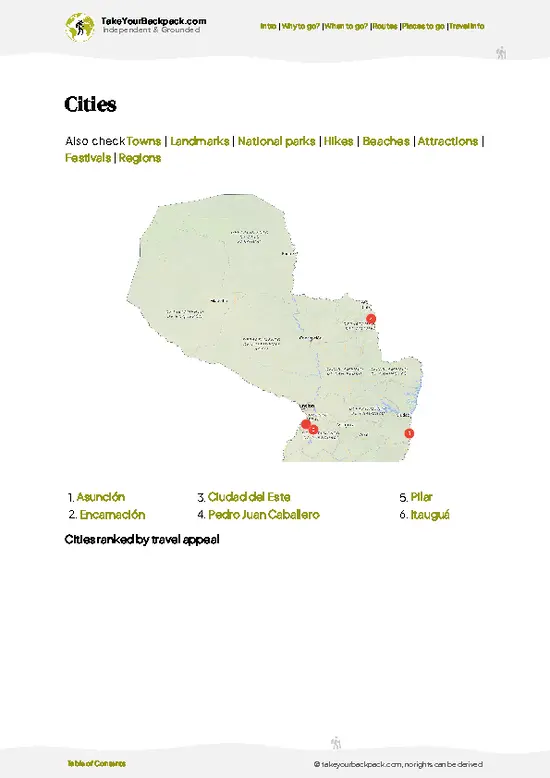
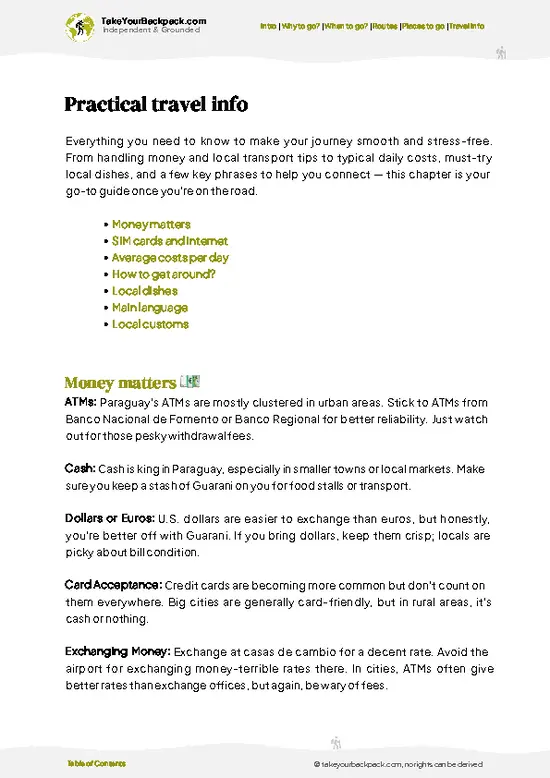
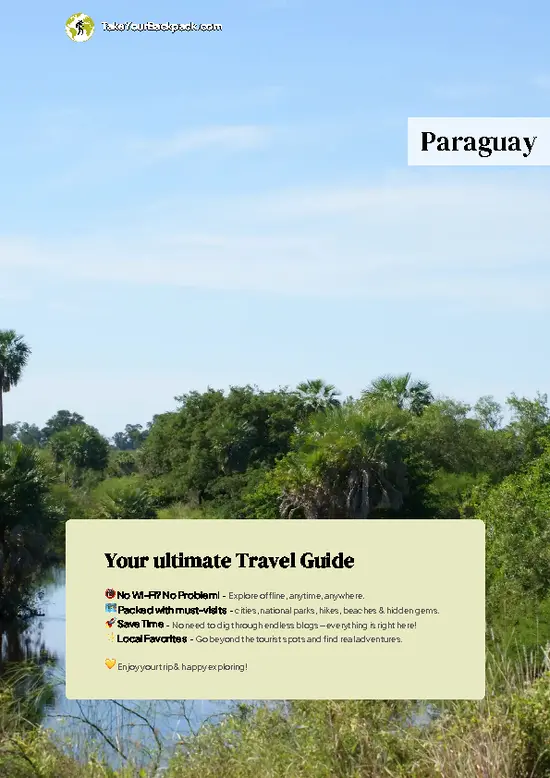
example page 0 from our offline Travel Guide for Paraguay
example page 1 from our offline Travel Guide for Paraguay
example page 2 from our offline Travel Guide for Paraguay
example page 3 from our offline Travel Guide for Paraguay
example page 4 from our offline Travel Guide for Paraguay
example page 5 from our offline Travel Guide for Paraguay
example page 6 from our offline Travel Guide for Paraguay
example page 7 from our offline Travel Guide for Paraguay
The digital guide (352 pages) contains:
90 highlights, ranked by travel appeal
Optimized 5, 10 & 15-day travel routes
Cities, national parks, landmarks, beaches
How to get around
Offline-friendly for travel without Wi-Fi
👉 Click to see all 30+ guide features

📅 Plan smarter in minutes, not weeks
Month by month travel advice
Festivals & national holidays
Budget expectations

🗺️ Go to the right places, skip the overrated ones
Honest pros & cons of destinations
Top hikes, parks & viewpoints
Lesser-known places most travelers miss
Clear “worth it vs skip it” guidance

🛏️ Travel smoothly without rookie mistakes
Best areas to stay
Transport systems explained simply
Common scams & safety advice
SIM cards, money & practical tips

🌍 Understand the country, not just visit it
Culture & traditions
52 Essential phrases & customs
Festivals worth planning around
Traveler-friendly historical context
Insights that make places more meaningful

📱 Built for real travel conditions
Fully downloadable PDF
Works completely offline
Optimized for phone use
Useful in remote areas & buses
Everything in one place
Save weeks of stressful planning
Get instant access to your full guide. 30‑day money-back guarantee.


By proceeding you agree to our terms.
Sent to your inbox immediately after payment • 100% Secure Checkout
Best Backpacking Travel Advisor 2025 tourism awardBest Backpacking
Travel Advisor
2025
What others say about Take Your Backpack Guides:
⭐⭐⭐⭐⭐
Fantastic, amazing amount of information!
⭐⭐⭐⭐⭐
My goodness this is amazing, it's what I've been looking for hats off too you!
⭐⭐⭐⭐⭐
I think this is absolutely BRILLIANT
⭐⭐⭐⭐
Very complete and informative. It's still missing places, but I gotta to commend you
⭐⭐⭐⭐⭐
This is truly amazing, thank you, can't wait to explore it with my kids!
⭐⭐⭐⭐⭐
Awesome resource, thank you!
⭐⭐⭐⭐⭐
This is amazing! Can't wait to explore the ones I haven't seen
⭐⭐⭐⭐
I love this! Well done, great idea.
⭐⭐⭐⭐⭐
Thanks for taking the time to make this gem!
⭐⭐⭐⭐⭐
This might be the best website I've ever seen.
⭐⭐⭐⭐⭐
Congratulations, and thank you so much for your work; it's incredibly valuable.
⭐⭐⭐⭐
In all seriousness I think you did a great job pointing out the important spots
⭐⭐⭐⭐⭐
10/10 very good
⭐⭐⭐⭐⭐
As someone who's only just starting to visit regularly this is awesome, thank you.
⭐⭐⭐⭐
Thank you very much! I'm going to visit my dad, it's going to be very useful!
⭐⭐⭐⭐⭐
This is really cool! We'll be travelling for the first time and this definitely come in handy.
⭐⭐⭐⭐⭐
You are now our minister of culture, congratulations 👨‍💼
⭐⭐⭐⭐⭐
Just wanted to tell you that this is a pearl! Going to follow your recommendations.
⭐⭐⭐⭐⭐
This is so cool. I'll definitely be using the resource for my travels soon.
⭐⭐⭐⭐⭐
This is very impressive! Good work.
⭐⭐⭐⭐⭐
This is an amazing and informative site. Very well done!

🛏️ Where to stay?Where staying makes the most sense

In Pedro Juan Caballero, the real backpacker action centers around the downtown district, especially near Avenida Mariscal López. This area strikes a rare balance between safety and social buzz, which is a big deal in a border city known for its rough edges. You’ll find a handful of hostels here, modest but reliable, catering to budget travelers and solo adventurers who want to connect without sacrificing peace of mind. The streets hum with local life—street vendors, small cafés, and a steady flow of fellow travelers swapping stories.

Compared to the outskirts or residential zones, downtown … read more 👉
In Pedro Juan Caballero, the real backpacker action centers around the downtown district, especially near Avenida Mariscal López. This area strikes a rare balance between safety and social buzz, which is a big deal in a border city known for its rough edges. You’ll find a handful of hostels here, modest but reliable, catering to budget travelers and solo adventurers who want to connect without sacrificing peace of mind. The streets hum with local life—street vendors, small cafés, and a steady flow of fellow travelers swapping stories.

Compared to the outskirts or residential zones, downtown offers a compact, walkable setup that saves you time and transport costs, which is crucial when every minute and guaraní counts. The vibe is straightforward, no frills, but it’s where you’ll feel plugged into the city’s pulse. Other neighborhoods might promise quiet or luxury, but they lack the social fabric and practical convenience that backpackers crave. Here, you’re not just passing through; you’re part of a gritty, authentic slice of Paraguayan border life, with enough comfort to recharge before the next adventure.

🚌 Getting aroundHow to get around Pedro Juan Caballero

Pedro Juan Caballero moves at its own rhythm—somewhere between the pulse of a border town’s hustle and the laid-back cadence of a place where time bends to local needs. It’s not a city that demands strict adherence to schedules; instead, it’s a dance of intuition and patience. You’ll find that buses and taxis don’t always stick to timetables, but they’re reliable enough if you know when and where to catch them. The flow here rewards those who read the street signs and the crowd, not the clock.


  • Walking: The most straightforward way to navigate Pedro Juan Caballero’s compact center. It’s free, flexible, and perfect for soaking in the local vibe. Most key spots are within a 20-30 minute stroll, making it the best choice if you want to save money and stay nimble.


  • Local Buses: These run
read more 👉
Pedro Juan Caballero moves at its own rhythm—somewhere between the pulse of a border town’s hustle and the laid-back cadence of a place where time bends to local needs. It’s not a city that demands strict adherence to schedules; instead, it’s a dance of intuition and patience. You’ll find that buses and taxis don’t always stick to timetables, but they’re reliable enough if you know when and where to catch them. The flow here rewards those who read the street signs and the crowd, not the clock.


  • Walking: The most straightforward way to navigate Pedro Juan Caballero’s compact center. It’s free, flexible, and perfect for soaking in the local vibe. Most key spots are within a 20-30 minute stroll, making it the best choice if you want to save money and stay nimble.


  • Local Buses: These run roughly from 6:00 AM to 8:00 PM, with fares around 2,000 PYG (about 30 cents). They’re slow and often crowded, but they cover the main routes between neighborhoods and the bus terminal. Expect a no-frills ride with frequent stops—comfort is minimal, but the price is unbeatable.


  • Shared Taxis (Colectivos): Operating all day until about 10:00 PM, these are a step up in speed and comfort compared to buses. Fares hover around 5,000 PYG (75 cents). They leave when full, so timing depends on passenger flow, but they’re a smart middle ground if you want to save time without splurging on private taxis.


  • Private Taxis: Available 24/7, private taxis offer door-to-door convenience and faster trips, but they come at a premium—expect to pay 20,000 to 30,000 PYG ($3-$5) for typical rides within the city. Negotiating the fare upfront is essential. Ideal if you’re carrying heavy gear or traveling late at night when other options dwindle.


  • Motorbike Taxis: A local favorite for quick, nimble trips through traffic. Prices are similar to shared taxis but offer more flexibility on timing. Not the most comfortable or safest option for long distances, but perfect for short hops when you’re in a hurry and traveling light.


Understanding these options is your key to mastering Pedro Juan Caballero’s transit puzzle. You’re balancing time, money, and comfort, but the real win comes from choosing the right mode for the right moment—sometimes slow and cheap, other times fast and flexible. This city rewards the traveler who plays smart, turning every trip into a small victory.

👛 Costs (as of 30 May 2025)Typical daily expenses

Backpacking in Pedro Juan Caballero, Paraguay, offers a straightforward cost structure that rewards savvy travelers who understand the trade-offs between time, money, and comfort. Here’s the breakdown of what you’re likely to spend daily:
  • Dorm Accommodation (High Season): Expect to pay around $10 to $15 per night. High season sees a slight uptick due to demand, but dorms remain basic and functional, perfect for those prioritizing budget over luxury.
  • Dorm Accommodation (Off-Season): Prices drop to about $7 to $10 per night. Off-season travel here means quieter streets and better deals, though some places might have limited availability.
  • Meals: Local eateries serve hearty meals for $3 to $6. Street food and small restaurants dominate the scene, offering filling plates without the tourist
read more 👉
Backpacking in Pedro Juan Caballero, Paraguay, offers a straightforward cost structure that rewards savvy travelers who understand the trade-offs between time, money, and comfort. Here’s the breakdown of what you’re likely to spend daily:
  • Dorm Accommodation (High Season): Expect to pay around $10 to $15 per night. High season sees a slight uptick due to demand, but dorms remain basic and functional, perfect for those prioritizing budget over luxury.
  • Dorm Accommodation (Off-Season): Prices drop to about $7 to $10 per night. Off-season travel here means quieter streets and better deals, though some places might have limited availability.
  • Meals: Local eateries serve hearty meals for $3 to $6. Street food and small restaurants dominate the scene, offering filling plates without the tourist markup. If you’re after something more international or upscale, expect to pay more.
  • Local Transport: Short rides on shared minibuses or moto-taxis cost roughly $0.50 to $1. This is the go-to for quick hops around town, balancing speed and cost efficiently.
  • City Transport Pass: There isn’t a formal city transport pass system here. Instead, pay-as-you-go on local buses or moto-taxis is the norm, which keeps things flexible but requires a bit of mental math if you’re hopping around frequently.
  • Basic Activities/Entry Fees: Most local attractions are either free or charge a nominal fee, typically under $5. This includes parks, markets, and cultural sites, making it easy to fill your days without breaking the bank.
  • Miscellaneous Expenses: Budget around $2 to $5 for essentials like bottled water, snacks, or occasional small purchases. These add up subtly but are manageable with a bit of attention.

All told, you’re looking at a daily budget ranging from about $15 on the leanest days in off-season dorms and street food, up to $30 if you lean into high season dorms and a few paid activities. Pedro Juan Caballero is a place where your money stretches well if you keep your choices deliberate—trading a few dollars here or there can mean more comfort or more time exploring, depending on what you value most.


source: senatur.gov.py
⚠️ Prices can change and everyone travels differently, so take this as a rough guide. Hope it helps you plan your adventure!

🚌 Day tripsBest day trips from Pedro Juan Caballero

Pedro Juan Caballero is a strategic launchpad for day trips that blend adventure with cultural immersion. Here’s how to make the most of your time.

Itaipu Dam
Just a couple of hours from Pedro Juan Caballero, Itaipu is one of the largest hydroelectric dams in the world. The sheer scale is mind-boggling, and the guided tours offer insights into its engineering marvel. Expect to pay around $10 for a tour, which is a steal for the experience. The best time to visit is during the cooler months, from May to September, when the weather is more pleasant. A common mistake? Skipping the evening light show; it’s a spectacular sight that adds a magical touch to your day.


Ciudad del Este
A bustling hub of commerce, Ciudad del Este is only about an hour away. Known for its shopping, you can find … read more 👉
Pedro Juan Caballero is a strategic launchpad for day trips that blend adventure with cultural immersion. Here’s how to make the most of your time.

Itaipu Dam
Just a couple of hours from Pedro Juan Caballero, Itaipu is one of the largest hydroelectric dams in the world. The sheer scale is mind-boggling, and the guided tours offer insights into its engineering marvel. Expect to pay around $10 for a tour, which is a steal for the experience. The best time to visit is during the cooler months, from May to September, when the weather is more pleasant. A common mistake? Skipping the evening light show; it’s a spectacular sight that adds a magical touch to your day.


Ciudad del Este
A bustling hub of commerce, Ciudad del Este is only about an hour away. Known for its shopping, you can find everything from electronics to local crafts. Budget around $20 for transportation and a few purchases. The best time to go is early in the day to avoid the crowds. Many first-timers get overwhelmed by the chaos and miss out on the local food stalls; don’t skip the chance to try some Paraguayan street food while you’re there.
👉 Explore Ciudad del Este

Ybycuí National Park
For nature lovers, Ybycuí National Park is a must-visit. About an hour and a half from the city, it offers hiking trails and stunning waterfalls. Entrance fees are minimal, around $5, making it an affordable escape. The dry season, from June to August, is ideal for hiking. A common pitfall is underestimating the trails; bring enough water and snacks to keep your energy up.


San Ignacio
A bit further afield, San Ignacio is about two hours away and rich in Jesuit history. The ruins are fascinating, and the local culture is vibrant. Expect to spend around $15 on transport and entrance fees. The best time to visit is during the dry season, when the weather is more forgiving. Many travelers overlook the nearby artisan markets; take the time to explore and support local craftspeople.
👉 Explore San Ignacio
Want to know what more Paraguay offers?
The Paraguay Travel Guide describes 90 highlights, from cities to national parks, from beaches to hikes

Get the Travel Guide -

🍲 FoodLocal Cuisine & Drinks

In Pedro Juan Caballero, the food scene is a delightful mix of Paraguayan tradition and Brazilian influence. You can’t miss trying sopa paraguaya, a cornbread-like dish that’s dense and savory, often paired with a side of grilled meats. The local asado is a must; it’s not just a meal but a social event, where friends gather around the grill, sharing stories and laughter.

For a quick bite, hit the street vendors. They serve up empanadas bursting with cheese or meat, perfect for a snack on the go. The markets are alive with the aroma of fresh produce and spices, where you can sample local cheeses and fruits.

When it comes to drinks, don’t overlook tereré, a refreshing herbal infusion served cold, ideal for the hot climate. It’s a communal experience; locals often share the same gourd, so … read more 👉
In Pedro Juan Caballero, the food scene is a delightful mix of Paraguayan tradition and Brazilian influence. You can’t miss trying sopa paraguaya, a cornbread-like dish that’s dense and savory, often paired with a side of grilled meats. The local asado is a must; it’s not just a meal but a social event, where friends gather around the grill, sharing stories and laughter.

For a quick bite, hit the street vendors. They serve up empanadas bursting with cheese or meat, perfect for a snack on the go. The markets are alive with the aroma of fresh produce and spices, where you can sample local cheeses and fruits.

When it comes to drinks, don’t overlook tereré, a refreshing herbal infusion served cold, ideal for the hot climate. It’s a communal experience; locals often share the same gourd, so be prepared to join in. Embrace the laid-back vibe, and you’ll find that every meal is a chance to connect with the culture.

🛡️ SafetyScams, Hazards, and Annoyances

Pedro Juan Caballero is generally safe for travelers, but a few smart habits can enhance your experience. Stay alert in crowded markets and avoid flashing valuables. The area near the border can attract opportunistic scams, so keep your wits about you when approached by overly friendly strangers.

If you’re solo, especially at night, stick to well-lit streets and avoid wandering too far from your accommodation. Taxis are reliable, but always agree on a fare beforehand to sidestep misunderstandings.

Annoyances like persistent street vendors can be a minor hassle, but a polite “no, gracias” usually suffices. Carry yourself confidently, and you’ll navigate the city like a pro.

Other Paraguayan cities near Pedro Juan Caballero

Explore more nearby:

  • Limpio—wetlands, river confluence, traditional pottery| 341 km away
  • Ciudad del Este—shopping malls, Itaipú Dam, border crossing| 346 km away
  • Mariano Roque Alonso—expo grounds, livestock fairs, airport proximity| 348 km away

💡 Not sure where to go next?
Create a personalized itinerary for Paraguay including Pedro Juan Caballero and the places that fit your trip.

Generate my itinerary

👉 Discover all cities

Or checkout all Paraguay has to offer (think cities, towns, villages, national parks, hikes, beaches, festivals)
Country photo of Paraguay

We 💚 feedbackWhat to keep in mind

Pedro Juan Caballero offers a raw glimpse into Paraguayan life, where the local markets pulse with energy and the food is a flavor explosion. But be prepared: the infrastructure can be a bit rough around the edges. If you’re after authenticity over comfort, this place is a treasure trove. Just know that patience is part of the experience.

✈️ When did I visit Paraguay?
Before visiting Argentina in September 2012, I crossed through Paraguay, ending up at the magical Iguazu Falls.

✍️ Help improve this page!
The information on this page is based on my own backpacking experience in Paraguay, supplemented with up-to-date research and feedback from other travelers. Travel details can change, so if you notice anything outdated or incomplete, feel free to let me know.


🙋‍♂️ Give feedback

👋 Meet the founderWho’s Behind Take Your Backpack?

Johan, backpacker and founder of TakeYourBackpackHi, I’m Johan (Netherlands 🇳🇱), the creator of TakeYourBackpack. Over the past decade, I’ve backpacked through 80+ countries across six continents, gaining extensive experience with independent travel, long-term trips, and overland routes.

This site is built on a combination of firsthand travel experience and carefully curated insights from other backpackers. Many guides are based on places I’ve personally visited, while others bring together tips, observations, and practical advice shared by trusted travelers I’ve met along the way.

The goal is to provide realistic, experience-driven guidance — not generic itineraries — so you can explore destinations with better context, clearer expectations, and more confidence.

Get full Paraguay guide •
Instant download • 90 highlights • Full Offline guide