
×
Inca Trail

Peru🇵🇪 | hikesInca Trailstone pathways, archaeological sites, cloud forest passes | things to do and best time to go

Explore Huayna PicchuExplore Lares Trek

Backpacking in Inca Trail
🏆 Top pickhike ranked #1
By Johan Kruseman 🇳🇱 | Updated September 4, 2026

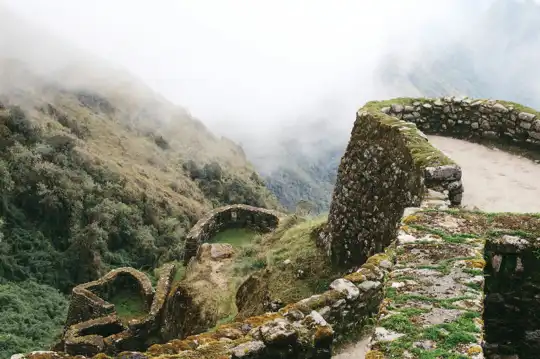
Most people think the Inca Trail is some wild, remote jungle slog where you’re bushwhacking alone to Machu Picchu; in reality it’s a well-regulated, stone-paved highway of history with set camps, porters, and a daily hiker quota. The classic route runs through the Andes of southern Peru, starting in the Sacred Valley near Ollantaytambo and finishing at the Sun Gate above Machu Picchu. It’s gorgeous and demanding: cloud forest dripping with moss, high passes like Dead Woman’s Pass that punch your lungs, and ancient Inca staircases that hammer your knees. Four days, roughly 43 km, feels longer because of altitude and endless steps. Getting to the trailhead is easy—train or bus to Ollantaytambo, then a short drive—much simpler than some remote Cusco-region treks. Compared with Salkantay or Ausangate, the Inca Trail is less wild but far richer in ruins; you trade solitude for that first goosebump sunrise walking through the Sun Gate.

Discover everything you want to know in the 📖 Peru Travel Guide.
Best time to go: April - October
Duration: 4 days
Distance: 43 kilometers
Total ascent: 1,200 meters


Get your Peru guide
113 ranked highlights, routes & tips, works offline (416 pages)
Loading the map 🌍
CLICK TO FILTER
cities
towns
villages
landmarks
national parks
hikes
beaches
attractions
festivals
regions
SHOW COUNTRY’S BESTSHOW ALL

✨ Why go?
Ranked #1 hike in Peru
The unique appeal for travelers

The Inca Trail is a rite of passage for backpackers, blending grueling effort with jaw-dropping scenery. You’ll sweat through steep ascents, but every step brings you closer to the ancient ruins and breathtaking vistas that make this trek legendary. The scenery-to-effort ratio is off the charts; you’ll traverse lush valleys, cloud forests, and high-altitude passes, each offering a new perspective on the Andes.

Getting there is a breeze. Public transport from Cusco to the trailhead is cheap and efficient, making it easy to slot this hike into your backpacking route. Plus, the flexible distances mean you can tailor your experience—whether you’re a seasoned trekker or a curious newbie, there’s a route that fits your style.

And let’s talk about the payoff. Reaching Machu Picchu after days of … read more 👉
The Inca Trail is a rite of passage for backpackers, blending grueling effort with jaw-dropping scenery. You’ll sweat through steep ascents, but every step brings you closer to the ancient ruins and breathtaking vistas that make this trek legendary. The scenery-to-effort ratio is off the charts; you’ll traverse lush valleys, cloud forests, and high-altitude passes, each offering a new perspective on the Andes.

Getting there is a breeze. Public transport from Cusco to the trailhead is cheap and efficient, making it easy to slot this hike into your backpacking route. Plus, the flexible distances mean you can tailor your experience—whether you’re a seasoned trekker or a curious newbie, there’s a route that fits your style.

And let’s talk about the payoff. Reaching Machu Picchu after days of hiking is a moment that hits hard. The first glimpse of the ruins, shrouded in mist, is a reward that makes every sore muscle worth it. Afterward, nothing beats cracking open a cold beer in Aguas Calientes, celebrating your journey with fellow adventurers. This trail isn’t just a hike; it’s an experience that lingers long after you’ve returned home.
Want to include Inca Trail in your Peru route?
Create a personalized Peru itinerary that includes Inca Trail and the places that fit your trip — based on your travel style, budget, and available time. Get your route in seconds.

Generate my trip

💡 HighlightsThe experiences that define the visit

  1. Warmiwañusca (Dead Woman’s Pass) — The trail’s highest point and its toughest day: steep Inca stone staircases that force you to earn every view. What makes it stand out is the sudden shift from cloud forest to high Andean puna, with wide panoramas, dramatic ridgelines and the real sense of having crossed a watershed that many other hikes never deliver.
  2. Runkurakay & Sayacmarca (Perched Inca ruins) — Compact, eerie stone structures clinging to knife-edged slopes that show how the Incas adapted architecture to impossible terrain. These sites aren’t reconstructed theme-park ruins; they’re atmospheric, half-swallowed by vegetation, and offer immediate contrast to the open mountain passes — you feel the ancient engineering up close.
  3. Phuyupatamarca (“Town Above the Clouds”) — A set of terraces,
read more 👉
  1. Warmiwañusca (Dead Woman’s Pass) — The trail’s highest point and its toughest day: steep Inca stone staircases that force you to earn every view. What makes it stand out is the sudden shift from cloud forest to high Andean puna, with wide panoramas, dramatic ridgelines and the real sense of having crossed a watershed that many other hikes never deliver.
  2. Runkurakay & Sayacmarca (Perched Inca ruins) — Compact, eerie stone structures clinging to knife-edged slopes that show how the Incas adapted architecture to impossible terrain. These sites aren’t reconstructed theme-park ruins; they’re atmospheric, half-swallowed by vegetation, and offer immediate contrast to the open mountain passes — you feel the ancient engineering up close.
  3. Phuyupatamarca (“Town Above the Clouds”) — A set of terraces, fountains and well-preserved stonework often sitting in or above the mist, which gives it a surreal, otherworldly vibe. The water channels and ritual baths are unusually intact, and the misty viewpoints make this place feel more like a ceremony than a stop on a hike — rare on most long-distance trails.
  4. Wiñay Wayna — Dramatic agricultural terraces carved into a steep hillside with stone stairways and orchid-draped walls; one of the best-preserved Inca residential-agricultural complexes on the route. It’s visually stunning and a great place to spot cloud-forest birds and bright orchids, plus it’s the last major ruin before the final push — big emotional energy here.
  5. Inti Punku (Sun Gate) & the first view of Machu Picchu — The cinematic payoff: you crest Inti Punku and suddenly Machu Picchu sprawls below. It’s not just the view — it’s the way the trail times the reveal, with centuries-old stairs delivering you to a single unforgettable panorama. (Personal favorite — nothing beats that first, stunned silence looking down at the citadel.)
Spotted a mistake or missing something? Contact us.

🌤️ When to go?Choosing the right time of year


  • Weather: The dry season from May to September is your best bet—clear skies dominate, and trails stay firm underfoot. Rain from November to March turns paths into slippery mudslides, testing your balance and patience.

  • Temperature: Daytime highs hover around 18-20°C (64-68°F), perfect for hiking without overheating. Nights plunge to near freezing, especially in June and July, so pack layers that breathe and insulate.

  • Daylight Hours: June and July offer the longest daylight, about 11-12 hours, giving you more time to cover ground and savor the views before dusk tightens its grip.

  • Crowds: Peak season means packed trails and limited permits. Book months in advance to avoid the crush. Shoulder months like April and October offer fewer hikers but risk sporadic showers.

  • Seasonal Activities:
read more 👉

  • Weather: The dry season from May to September is your best bet—clear skies dominate, and trails stay firm underfoot. Rain from November to March turns paths into slippery mudslides, testing your balance and patience.

  • Temperature: Daytime highs hover around 18-20°C (64-68°F), perfect for hiking without overheating. Nights plunge to near freezing, especially in June and July, so pack layers that breathe and insulate.

  • Daylight Hours: June and July offer the longest daylight, about 11-12 hours, giving you more time to cover ground and savor the views before dusk tightens its grip.

  • Crowds: Peak season means packed trails and limited permits. Book months in advance to avoid the crush. Shoulder months like April and October offer fewer hikers but risk sporadic showers.

  • Seasonal Activities: Dry months align with local festivals and agricultural cycles, adding cultural texture to your trek. Witnessing Andean rituals or harvest celebrations can deepen your connection to the land.

  • Price Fluctuations: Peak season drives up permit and tour costs. Off-peak months offer better deals but demand flexibility with weather and trail conditions.


Pro-tip: Aim for late May or early October—strike a balance between manageable crowds, decent weather, and wallet-friendly prices. The trail rewards patience with moments that make every step worth it.


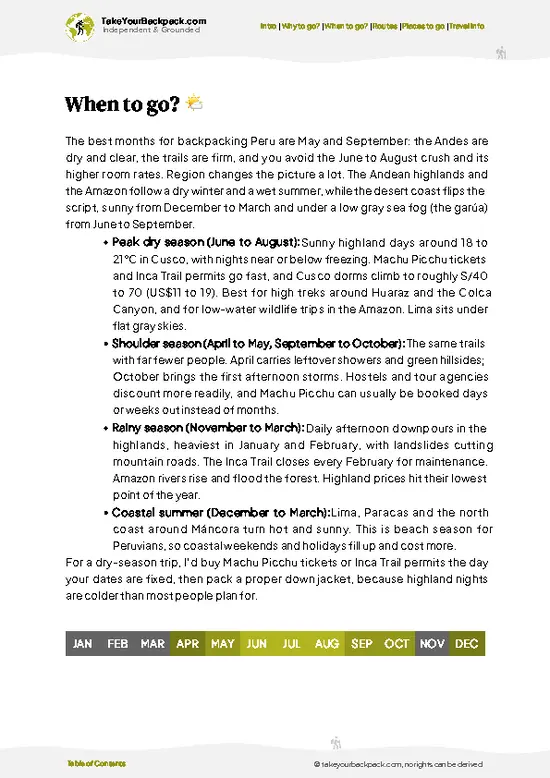
source: climatestotravel.comJANJanuary: below average for travelingFEBFebruary: below average for travelingMARMarch: fair for travelingAPRApril: good for travelingMAYMay: highly recommended for travelingJUNJune: excellent for travelingJULJuly: excellent for travelingAUGAugust: excellent for travelingSEPSeptember: excellent for travelingOCTOctober: highly recommended for travelingNOVNovember: fair for travelingDECDecember: below average for traveling
Peru - the Inca Trail

✈️ The backpacker research shortcutPeru Travel Guide

An offline-friendly backpacking guide with optimized travel routes, ranked highlights, transport advice, and the best areas to stay.
example page 0 from our offline Travel Guide for Peru
example page 1 from our offline Travel Guide for Peru
example page 2 from our offline Travel Guide for Peru
example page 3 from our offline Travel Guide for Peru
example page 4 from our offline Travel Guide for Peru
example page 5 from our offline Travel Guide for Peru
example page 6 from our offline Travel Guide for Peru
example page 7 from our offline Travel Guide for Peru
The digital guide (416 pages) contains:
113 highlights, ranked by travel appeal
Optimized 7, 14 & 21-day travel routes
Cities, national parks, landmarks, beaches
How to get around
Offline-friendly for travel without Wi-Fi
👉 Click to see all 30+ guide features

📅 Plan smarter in minutes, not weeks
Month by month travel advice
Festivals & national holidays
Budget expectations

🗺️ Go to the right places, skip the overrated ones
Honest pros & cons of destinations
Top hikes, parks & viewpoints
Lesser-known places most travelers miss
Clear “worth it vs skip it” guidance

🛏️ Travel smoothly without rookie mistakes
Best areas to stay
Transport systems explained simply
Common scams & safety advice
SIM cards, money & practical tips

🌍 Understand the country, not just visit it
Culture & traditions
52 Essential phrases & customs
Festivals worth planning around
Traveler-friendly historical context
Insights that make places more meaningful

📱 Built for real travel conditions
Fully downloadable PDF
Works completely offline
Optimized for phone use
Useful in remote areas & buses
Everything in one place
Save weeks of stressful planning
Get instant access to your full guide. 30‑day money-back guarantee.
+ Add another guide for just US$7.80

By proceeding you agree to our terms.
Sent to your inbox immediately after payment • 100% Secure Checkout
Best Backpacking Travel Advisor 2025 tourism awardBest Backpacking
Travel Advisor
2025
What others say about Take Your Backpack Guides:
⭐⭐⭐⭐⭐
Fantastic, amazing amount of information!
⭐⭐⭐⭐⭐
My goodness this is amazing, it's what I've been looking for hats off too you!
⭐⭐⭐⭐⭐
I think this is absolutely BRILLIANT
⭐⭐⭐⭐
Very complete and informative. It's still missing places, but I gotta to commend you
⭐⭐⭐⭐⭐
This is truly amazing, thank you, can't wait to explore it with my kids!
⭐⭐⭐⭐⭐
Awesome resource, thank you!
⭐⭐⭐⭐⭐
This is amazing! Can't wait to explore the ones I haven't seen
⭐⭐⭐⭐
I love this! Well done, great idea.
⭐⭐⭐⭐⭐
Thanks for taking the time to make this gem!
⭐⭐⭐⭐⭐
This might be the best website I've ever seen.
⭐⭐⭐⭐⭐
Congratulations, and thank you so much for your work; it's incredibly valuable.
⭐⭐⭐⭐
In all seriousness I think you did a great job pointing out the important spots
⭐⭐⭐⭐⭐
10/10 very good
⭐⭐⭐⭐⭐
As someone who's only just starting to visit regularly this is awesome, thank you.
⭐⭐⭐⭐
Thank you very much! I'm going to visit my dad, it's going to be very useful!
⭐⭐⭐⭐⭐
This is really cool! We'll be travelling for the first time and this definitely come in handy.
⭐⭐⭐⭐⭐
You are now our minister of culture, congratulations 👨‍💼
⭐⭐⭐⭐⭐
Just wanted to tell you that this is a pearl! Going to follow your recommendations.
⭐⭐⭐⭐⭐
This is so cool. I'll definitely be using the resource for my travels soon.
⭐⭐⭐⭐⭐
This is very impressive! Good work.
⭐⭐⭐⭐⭐
This is an amazing and informative site. Very well done!

🛏️ Where to stay?How to pick the right area

If you enjoy meeting fellow travelers, consider choosing hostels with high ratings for atmosphere. On the other hand, if you prefer having your own space, a hotel might be a better option.

🥾 Hike detailsHike details: route, duration, and difficulty of Inca Trail

Total Distance: The Inca Trail stretches about 26 miles (42 kilometers) from the starting point to Machu Picchu.

Estimated Duration: Most hikers take around 4 days to complete the trail, with a mix of trekking and acclimatization days.

Difficulty Level: This trail is generally classified as moderate to challenging. It involves steep ascents and descents, especially on Day 2 when you tackle Dead Woman’s Pass, which sits at 13,828 feet (4,215 meters).

Starting Point: The trailhead is located at Kilometer 82, which you can reach by taking a train from Cusco to Ollantaytambo. From there, a short … read more 👉
Total Distance: The Inca Trail stretches about 26 miles (42 kilometers) from the starting point to Machu Picchu.

Estimated Duration: Most hikers take around 4 days to complete the trail, with a mix of trekking and acclimatization days.

Difficulty Level: This trail is generally classified as moderate to challenging. It involves steep ascents and descents, especially on Day 2 when you tackle Dead Woman’s Pass, which sits at 13,828 feet (4,215 meters).

Starting Point: The trailhead is located at Kilometer 82, which you can reach by taking a train from Cusco to Ollantaytambo. From there, a short bus ride will get you to the trailhead. Alternatively, you can take a colectivo or taxi directly to the starting point.

Major Landmarks Along the Route:
  • Piscacucho (Kilometer 82): The official starting point of the trek, where you’ll find the Inca ruins of Patallacta.
  • Llactapata: An impressive archaeological site that offers stunning views of the surrounding mountains.
  • Dead Woman’s Pass: The highest point on the trail, providing a sense of accomplishment and breathtaking views.
  • Runkuracay: A circular ruin that serves as a rest stop and lookout point.
  • Phuyupatamarca: Known as the ”Town in the Clouds,” this site features well-preserved terraces and water channels.
  • Machu Picchu: The grand finale, where you’ll be rewarded with the iconic view of the ancient city.

Type of Terrain and Scenery: Expect a mix of rocky paths, steep stairs, and some flat sections. The scenery varies from lush cloud forests to high-altitude grasslands, offering a constantly changing backdrop.

Typical Vegetation and Wildlife: The trail is rich in biodiversity. You’ll see polylepis trees, ferns, and various orchids, especially in the lower elevations. As for wildlife, keep an eye out for llamas, Andean condors, and the elusive spectacled bear, although they are quite shy.

This trail is not just a hike; it’s an experience that immerses you in history, culture, and nature. Just be prepared for the altitude and bring plenty of water and snacks!
⚠️ Hiking info can sometimes be outdated or inaccurate. Before you hit the trail, check the latest conditions with locals. If you do spot anything that's off, I'd love to hear from you, so I can update it for fellow travelers.

🛡️ SafetySafety Tips and Common Scams in Inca Trail

The Inca Trail is a thrilling challenge, but it’s not without its realities. Weather can shift quickly; one moment you’re basking in sun, the next, clouds roll in, bringing rain. Dress in layers and be ready for anything.

Altitude is a factor. You’ll start at around 8,000 feet and climb to nearly 13,800 feet. Take it slow, hydrate, and listen to your body. The views at Dead Woman’s Pass make every step worth it, but don’t rush.

The terrain varies. Expect steep ascents and rocky paths that demand focus. Footing can be tricky, especially when wet. Trekking poles can be a lifesaver here, helping you maintain balance on the descent.

Wildlife is part of the experience. You might spot llamas or even the elusive Andean condor. Keep your distance and don’t feed them; respect their space.

Preparation … read more 👉
The Inca Trail is a thrilling challenge, but it’s not without its realities. Weather can shift quickly; one moment you’re basking in sun, the next, clouds roll in, bringing rain. Dress in layers and be ready for anything.

Altitude is a factor. You’ll start at around 8,000 feet and climb to nearly 13,800 feet. Take it slow, hydrate, and listen to your body. The views at Dead Woman’s Pass make every step worth it, but don’t rush.

The terrain varies. Expect steep ascents and rocky paths that demand focus. Footing can be tricky, especially when wet. Trekking poles can be a lifesaver here, helping you maintain balance on the descent.

Wildlife is part of the experience. You might spot llamas or even the elusive Andean condor. Keep your distance and don’t feed them; respect their space.

Preparation is key. Many first-timers underestimate the trail’s demands. Pack smart, pace yourself, and savor the journey. The reward? That first cold beer at the finish line, with Machu Picchu rising majestically in the background.

FAQTraveler FAQ

The Inca Trail hike typically takes 4 days to complete, covering about 43 kilometers (26 miles). Most trekkers start early in the morning and camp overnight at designated sites along the trail.
The Inca Trail is moderately difficult due to high altitude, steep ascents, and uneven terrain. Trekkers should be prepared for altitudes reaching up to 4,215 meters (13,828 feet) and have a good level of fitness.
Yes, you need both a guide and a permit to hike the Inca Trail. Permits are limited and must be booked months in advance, often costing around $500 including guide fees and park entrance.
⚠️ Things can change over time, so always validate details locally before you go.

Other Peruvian hikes near Inca Trail

Explore more nearby:

  • Huayna Picchu—narrow stone steps, panoramic summit, vertiginous drop-offs| 19 km away
  • Salkantay Trek—glacial peaks, high-altitude passes, varied terrain| 36 km away
  • Lares Trek—highland villages, weaving traditions, alpaca herds| 40 km away

💡 Not sure where to go next?
Create a personalized itinerary for Peru including Inca Trail and the places that fit your trip.

Generate my itinerary

👉 Discover all hikes

Or checkout all Peru has to offer (think cities, towns, villages, national parks, hikes, beaches, festivals)
Country photo of Peru

We 💚 feedbackKey takeaways before you go

The Inca Trail is a pulse-pounding adventure that rewards you with breathtaking views of ancient ruins and the Andes’ majesty. You’ll feel every step in your legs, but that’s part of the magic. Just know this: the crowds can be relentless, especially during peak season. It’s a trade-off—sweat and struggle for a slice of history. But when you finally glimpse Machu Picchu at dawn, all that effort melts away. It’s worth every ounce of grit.

✈️ When did I visit Peru?
Peru I visited during my half year trip through South and Central America back in 2003

✍️ Help improve this page!
The information on this page is based on my own backpacking experience in Peru, supplemented with up-to-date research and feedback from other travelers. Travel details can change, so if you notice anything outdated or incomplete, feel free to let me know.


🙋‍♂️ Give feedback

👋 Meet the founderWho’s Behind Take Your Backpack?

Johan, backpacker and founder of TakeYourBackpackHi, I’m Johan (Netherlands 🇳🇱), the creator of TakeYourBackpack. Over the past decade, I’ve backpacked through 80+ countries across six continents, gaining extensive experience with independent travel, long-term trips, and overland routes.

This site is built on a combination of firsthand travel experience and carefully curated insights from other backpackers. Many guides are based on places I’ve personally visited, while others bring together tips, observations, and practical advice shared by trusted travelers I’ve met along the way.

The goal is to provide realistic, experience-driven guidance — not generic itineraries — so you can explore destinations with better context, clearer expectations, and more confidence.

Get full Peru guide •
Instant download • 113 highlights • Full Offline guide