×

Peru🇵🇪 | attractionsHuaca PucllanaSeven-platform pyramid, bookshelf bricks, floodlit dinner, Miraflores | things to do and best time to go

Explore Chan ChanExplore Huaca Huallamarca

Backpacking in Huaca Pucllana
👍 Recommendedattraction ranked #10
By Johan Kruseman 🇳🇱 | Updated October 18, 2026

Huaca Pucllana is the adobe pyramid that rises out of a residential block in Miraflores, and it is the best-preserved pre-Inca site you can reach from Lima’s beach district on foot. What gets overlooked is the evening visit, when floodlights turn the brick stacks gold and the on-site restaurant serves dinner right beside them. The site sits in Peru’s capital, about a 15-minute walk from Parque Kennedy. My mistake was showing up without booking and joining the Spanish tour line, then realizing the English guide had already left; now I reserve a slot first. The guided loop is worth every minute, since without it you just see piles of bricks. Skip the small museum if you are rushed. History lovers and photographers will like it most. Anyone wanting a hike or a big climb will be bored.

Discover everything you want to know in the 📖 Peru Travel Guide.


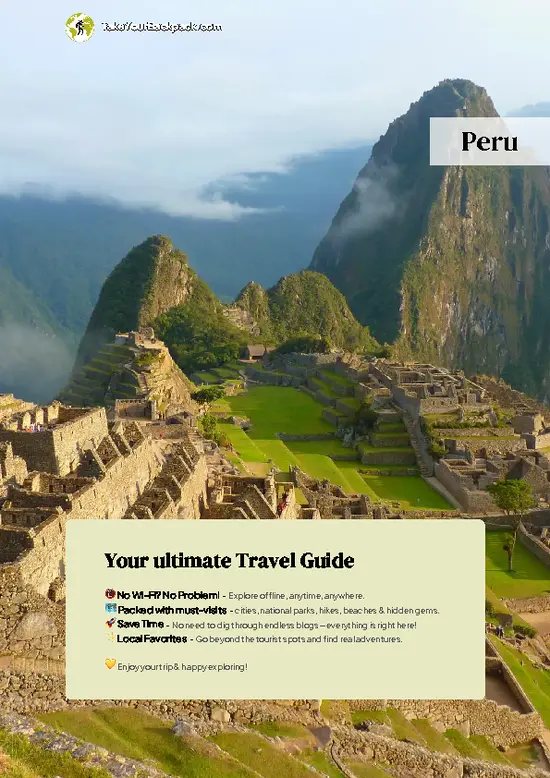
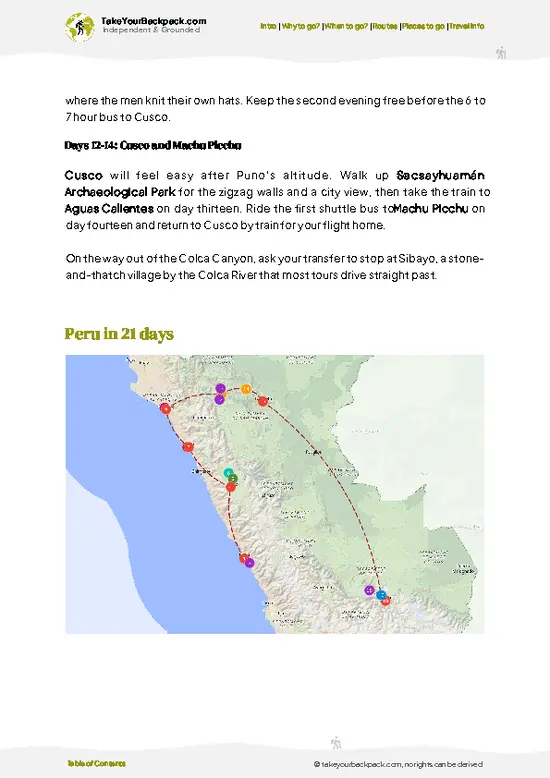
example page 0 from our offline Travel Guide for Peru
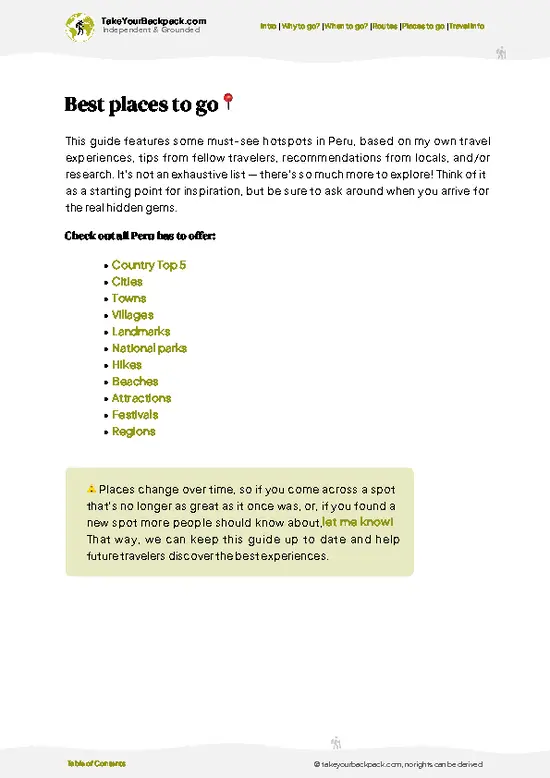
example page 1 from our offline Travel Guide for Peru
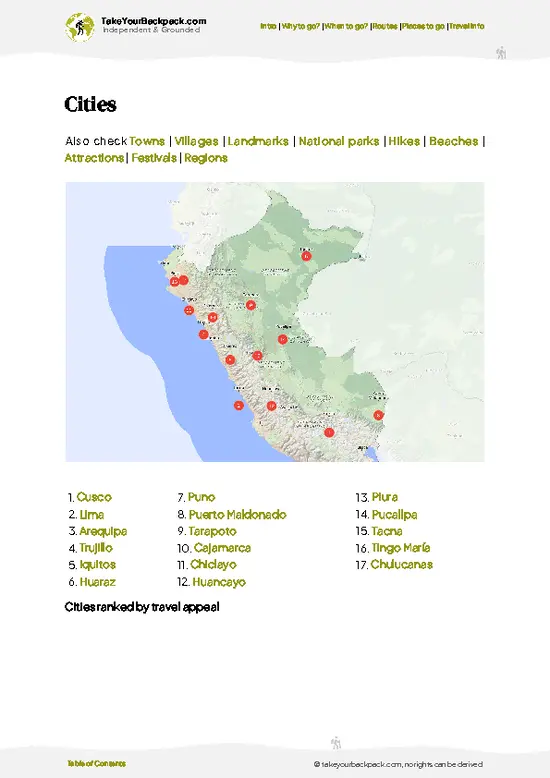
example page 2 from our offline Travel Guide for Peru
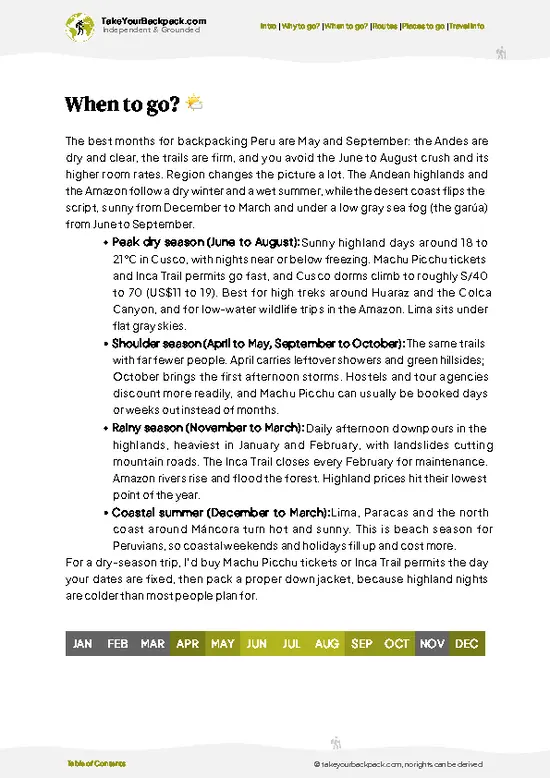
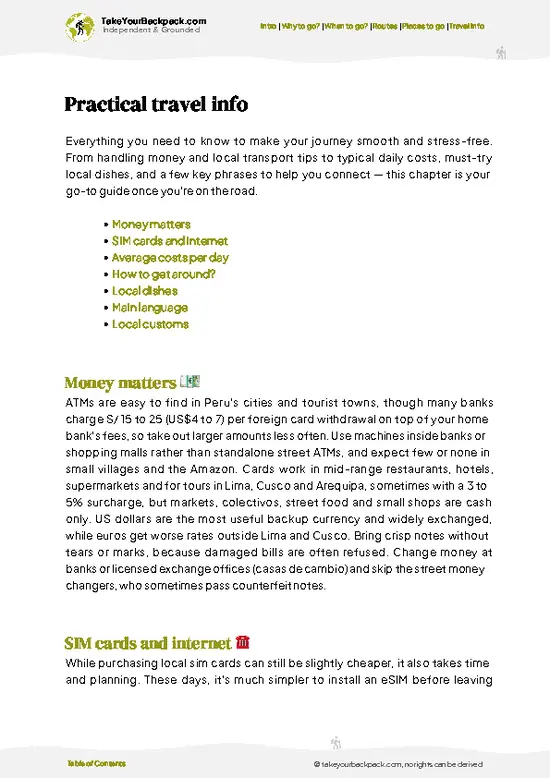
example page 3 from our offline Travel Guide for Peru
example page 4 from our offline Travel Guide for Peru
example page 5 from our offline Travel Guide for Peru
example page 6 from our offline Travel Guide for Peru
example page 7 from our offline Travel Guide for Peru
Loading the map 🌍
CLICK TO FILTER
cities
towns
villages
landmarks
national parks
hikes
beaches
attractions
festivals
regions
SHOW COUNTRY’S BESTSHOW ALL

✨ Why go?
Ranked #10 attraction in Peru
What sets this place apart

Huaca Pucllana gives you a pre-Inca site without leaving the Miraflores grid, which matters when a Lima stopover is only a day or two. The pyramid was built by the Lima culture around AD 200 to 700, and its walls use the “bookshelf” brick technique, upright adobes set with gaps to absorb earthquakes. Seeing it explains why Lima’s coast has stood for so long in a seismic zone. The guided route also puts you beside burial sites with mummies and the ceremonial plazas, so the culture feels concrete rather than abstract. For route planners, it works as a short, easy stop between the beach and the downtown colonial core, and the night visit adds atmosphere you will not get at midday ruins. Go for the engineering, stay for the dusk light.

💡 HighlightsThe experiences that define the visit

  1. The Great Pyramid: the stepped adobe mass is the site’s signature, and walking its base shows how the structure rises in seven platforms.
  2. Bookshelf brick walls: thousands of hand-molded adobes are stacked vertically with gaps, a flexible design that has survived centuries of tremors.
  3. Ceremonial plazas: open courtyards where the Lima culture held gatherings and offerings, easy to picture once the guide points out the layout.
  4. Burial platforms and mummies: excavated tombs include wrapped bodies in seated positions, giving a human face to the ruins.
  5. Wari tomb area: later Wari occupants used the pyramid for burials, showing how the site changed hands.
  6. Site museum: a small display of ceramics, textiles and tools from the digs, handy for context before or after the walk.
  7. Native animal corral: llamas, alpacas
… read more 👉
  1. The Great Pyramid: the stepped adobe mass is the site’s signature, and walking its base shows how the structure rises in seven platforms.
  2. Bookshelf brick walls: thousands of hand-molded adobes are stacked vertically with gaps, a flexible design that has survived centuries of tremors.
  3. Ceremonial plazas: open courtyards where the Lima culture held gatherings and offerings, easy to picture once the guide points out the layout.
  4. Burial platforms and mummies: excavated tombs include wrapped bodies in seated positions, giving a human face to the ruins.
  5. Wari tomb area: later Wari occupants used the pyramid for burials, showing how the site changed hands.
  6. Site museum: a small display of ceramics, textiles and tools from the digs, handy for context before or after the walk.
  7. Native animal corral: llamas, alpacas and guinea pigs live in a garden section, and it is a quick, amusing stop.
  8. Evening illumination: after dark the pyramid is lit up and you can view it from the restaurant terrace, which makes for the best photographs.
The guided tour takes about 45 minutes, and with the museum and garden you should allow roughly 90 minutes in total.
Spotted a mistake or missing something? Contact us.

Things to do around Huaca Pucllana

Ratings based on Tripadvisor reviews. When you book through this link, you support our work at no extra cost to you.

🌤️ When to go?Best time to visit Huaca Pucllana

  • Summer (December to April): Lima’s sunniest stretch, with highs of 26 to 29°C (79 to 84°F) and nearly no rain. Daylight runs about 12.5 hours. The pyramid’s adobe bricks bake, so shade is scarce at midday, and hotel prices in Miraflores climb.
  • Winter (June to September): Gray, damp garúa mist hangs over the coast, with temperatures of 15 to 19°C (59 to 66°F) and about 11 hours of daylight. Crowds thin out and beds are cheaper, but photos come out flat.
  • Shoulder months (May, October, November): Temperatures of 18 to 23°C (64 to 73°F), patchy sun, and few tour groups.
  • Evenings (year-round): The site stays open after dark, and the lit pyramid is at its best with a table at the on-site restaurant.
Book an evening slot or arrive at opening to avoid the midday tour buses.

source: climatestotravel.comJANJanuary: good for travelingFEBFebruary: fair for travelingMARMarch: fair for travelingAPRApril: good for travelingMAYMay: excellent for travelingJUNJune: highly recommended for travelingJULJuly: highly recommended for travelingAUGAugust: highly recommended for travelingSEPSeptember: excellent for travelingOCTOctober: good for travelingNOVNovember: fair for travelingDECDecember: good for traveling
peru-attraction-huaca-pucllana
© Google |

✈️ The backpacker research shortcutPeru Travel Guide

An offline-friendly backpacking guide with optimized travel routes, ranked highlights, transport advice, and the best areas to stay.
example page 0 from our offline Travel Guide for Peru
example page 1 from our offline Travel Guide for Peru
example page 2 from our offline Travel Guide for Peru
example page 3 from our offline Travel Guide for Peru
example page 4 from our offline Travel Guide for Peru
example page 5 from our offline Travel Guide for Peru
example page 6 from our offline Travel Guide for Peru
example page 7 from our offline Travel Guide for Peru
The digital guide (310 pages) contains:
✅ 102 highlights, ranked by travel appeal
✅ Optimized 7, 14 & 21-day travel routes
✅ Cities, national parks, landmarks, beaches
✅ How to get around
✅ Offline-friendly for travel without Wi-Fi
👉 Click to see all 30+ guide features

📅 Plan smarter in minutes, not weeks
✅ Month by month travel advice
✅ Festivals & national holidays
✅ Budget expectations

🗺️ Go to the right places, skip the overrated ones
✅ Honest pros & cons of destinations
✅ Top hikes, parks & viewpoints
✅ Lesser-known places most travelers miss
✅ Clear “worth it vs skip it” guidance

🛏️ Travel smoothly without rookie mistakes
✅ Best areas to stay
✅ Transport systems explained simply
✅ Common scams & safety advice
✅ SIM cards, money & practical tips

🌍 Understand the country, not just visit it
✅ Culture & traditions
✅ 52 Essential phrases & customs
✅ Festivals worth planning around
✅ Traveler-friendly historical context
✅ Insights that make places more meaningful

📱 Built for real travel conditions
✅ Fully downloadable PDF
✅ Works completely offline
✅ Optimized for phone use
✅ Useful in remote areas & buses
✅ Everything in one place
Stop searching, start planning
Get instant access to your full guide. 30‑day money-back guarantee.
+ Add another guide for just

By proceeding you agree to our terms.
Sent to your inbox immediately after payment • 100% Secure Checkout
Best Backpacking Travel Advisor 2025 tourism awardBest Backpacking
Travel Advisor
2025
What others say about Take Your Backpack Guides:
⭐⭐⭐⭐⭐
Fantastic, amazing amount of information!
⭐⭐⭐⭐⭐
My goodness this is amazing, it's what I've been looking for hats off too you!
⭐⭐⭐⭐⭐
I think this is absolutely BRILLIANT
⭐⭐⭐⭐
Very complete and informative. It's still missing places, but I gotta to commend you
⭐⭐⭐⭐⭐
This is truly amazing, thank you, can't wait to explore it with my kids!
⭐⭐⭐⭐⭐
Awesome resource, thank you!
⭐⭐⭐⭐⭐
This is amazing! Can't wait to explore the ones I haven't seen
⭐⭐⭐⭐
I love this! Well done, great idea.
⭐⭐⭐⭐⭐
Thanks for taking the time to make this gem!
⭐⭐⭐⭐⭐
This might be the best website I've ever seen.
⭐⭐⭐⭐⭐
Congratulations, and thank you so much for your work; it's incredibly valuable.
⭐⭐⭐⭐
In all seriousness I think you did a great job pointing out the important spots
⭐⭐⭐⭐⭐
10/10 very good
⭐⭐⭐⭐⭐
As someone who's only just starting to visit regularly this is awesome, thank you.
⭐⭐⭐⭐
Thank you very much! I'm going to visit my dad, it's going to be very useful!
⭐⭐⭐⭐⭐
This is really cool! We'll be travelling for the first time and this definitely come in handy.
⭐⭐⭐⭐⭐
You are now our minister of culture, congratulations 👨‍💼
⭐⭐⭐⭐⭐
Just wanted to tell you that this is a pearl! Going to follow your recommendations.
⭐⭐⭐⭐⭐
This is so cool. I'll definitely be using the resource for my travels soon.
⭐⭐⭐⭐⭐
This is very impressive! Good work.
⭐⭐⭐⭐⭐
This is an amazing and informative site. Very well done!

🛏️ Where to stay?How to pick the right area

Miraflores is the obvious choice, and Huaca Pucllana sits right inside it, about a 10 to 15 minute walk from the Parque Kennedy area. The streets around Parque Kennedy and Avenida Larco hold the densest cluster of hostels, with dorm beds typically US$9 to 18. You get lit, busy streets late into the evening, plenty of cafes, laundry shops and walking tour meeting points, so it is easy to meet other travelers. Pharmacies and ATMs are everywhere, and police patrol the main avenues.

The quieter blocks toward the Malecon cliffs suit light sleepers and anyone who wants ocean views and paragliding nearby. … read more 👉
Miraflores is the obvious choice, and Huaca Pucllana sits right inside it, about a 10 to 15 minute walk from the Parque Kennedy area. The streets around Parque Kennedy and Avenida Larco hold the densest cluster of hostels, with dorm beds typically US$9 to 18. You get lit, busy streets late into the evening, plenty of cafes, laundry shops and walking tour meeting points, so it is easy to meet other travelers. Pharmacies and ATMs are everywhere, and police patrol the main avenues.

The quieter blocks toward the Malecon cliffs suit light sleepers and anyone who wants ocean views and paragliding nearby.

Barranco, a 15 minute taxi or Metropolitano ride south, is the alternative if you want nightlife, street art and a younger crowd. It is livelier at night, so expect noise. Surquillo, just east of the huaca, is cheaper and local, with good market food, though it has fewer hostels and less of a social scene.

👛 Costs (as of 18 October 2026)Travel costs and budget guide for Huaca Pucllana

Budget about US$45 to 70 per day around Huaca Pucllana, including a dorm bed, meals and local transport.
CategoryBudget RangeLocal Reality
Entry (day visit)US$4 to 8Foreign adults pay more than Peruvians, and the guided tour of about 45 minutes is included in the ticket.
Night visitUS$6 to 10Evening entry is offered on set nights, and it is mainly for diners at the restaurant.
Dorm bed (high season)US$10 to 18Miraflores hostels fill up from December to April.
FoodUS$8 to 15A set lunch (menú) costs US$3 to 5, while the on-site restaurant costs US$25 and up per person.
Local transportUS$2 to 6A short taxi ride from Miraflores or Barranco costs US$2 to 5, and you pay in cash.
Tips and extrasUS$1 to 3Guides expect tips, and the on-site shop sells small souvenirs.
Total Daily BudgetUS$45 to 70Includes entry, a dorm bed, food, transport and extras.


source: peru.travel
⚠️ Prices can change and everyone travels differently, so take this as a rough guide. Hope it helps you plan your adventure!

FAQFrequently asked questions about Huaca Pucllana

Plan on 1 to 1.5 hours at Huaca Pucllana. The guided walk through the adobe pyramid takes about 45 minutes, and you can add 30 to 45 minutes for the small museum, the llama and alpaca pens and the garden of native plants. Allow a longer evening if you stay for dinner at the on-site restaurant.
Yes, Huaca Pucllana is a fair deal at roughly US$4 to 8, because the price includes a guide who explains the layered clay-brick construction of this pre-Inca site. It is a pyramid of hand-stacked bricks built by the Lima culture around 500 AD. You can see it fully in about an hour, and the lit pyramid at night is the best way to see it.
From Miraflores, Huaca Pucllana is a 10 to 15 minute walk or a taxi ride of US$2 to 4. The site is on Calle General Borgoño, close to Avenida Angamos. From Barranco, the Metropolitano bus to Angamos station followed by a short walk takes about 25 minutes. From Jorge Chávez Airport, a taxi takes 40 to 60 minutes and costs US$15 to 25.
⚠️ Things can change over time, so always validate details locally before you go.

Other Peruvian attractions near Huaca Pucllana

Explore more nearby:


💡 Not sure where to go next?
Create a personalized itinerary for Peru including Huaca Pucllana and the places that fit your trip.

Generate my itinerary

👉 Discover all attractions

Or checkout all Peru has to offer (think cities, towns, villages, national parks, hikes, beaches, festivals)
Country photo of Peru

We 💚 feedbackIs it worth it?

Huaca Pucllana hides its best detail in the walls themselves. Most first-timers rush toward the top platforms and photos, yet the gaps between the upright bricks are the real story of the place. Slow down at the base and ask your guide to show them. I would book the dusk slot and eat dinner on the terrace.

✈️ When did I visit Peru?
Peru I visited during my half year trip through South and Central America back in 2003

✍️ Help improve this page!
The information on this page is based on my own backpacking experience in Peru, supplemented with up-to-date research and feedback from other travelers. Travel details can change, so if you notice anything outdated or incomplete, feel free to let me know.


🙋‍♂️ Give feedback

👋 Meet the founderWho’s Behind Take Your Backpack?

Johan, backpacker and founder of TakeYourBackpackHi, I’m Johan (Netherlands 🇳🇱), the creator of TakeYourBackpack. Over the past 3 decades, I’ve backpacked through 90+ countries across six continents, gaining extensive experience with independent travel, long-term trips, and overland routes.

This site is built on a combination of firsthand travel experience and carefully curated insights from other backpackers. Many guides are based on places I’ve personally visited, while others bring together tips, observations, and practical advice shared by trusted travelers I’ve met along the way.

The goal is to provide realistic, experience-driven guidance — not generic itineraries — so you can explore destinations with better context, clearer expectations, and more confidence.