×

Peru🇵🇪 | national parksMegantoni National SanctuaryPongo de Mainique, Urubamba rapids, Machiguenga villages, Quillabamba route | things to do and best time to go

Explore Otishi National ParkExplore Allpahuayo-Mishana National Reserve

Backpacking in Megantoni National Sanctuary
👌 Worth visitingnational park ranked #21
By Johan Kruseman 🇳🇱 | Updated October 19, 2026

Megantoni gives you Amazon cloud forest with almost nobody else on the trail, but only if you book the river leg ahead and pad your schedule. It sits in the north of Peru’s Cusco region, in La Convención province, north of Cusco city. I reached it by road to Quillabamba, then a boat down the Urubamba, and a toucan-billed bird flapped over the hull as the pilot waved us into a gorge. Skip the dates tied to flights, since river schedules slip. Adventurers will love it; comfort seekers won’t.

Discover everything you want to know in the 📖 Peru Travel Guide.


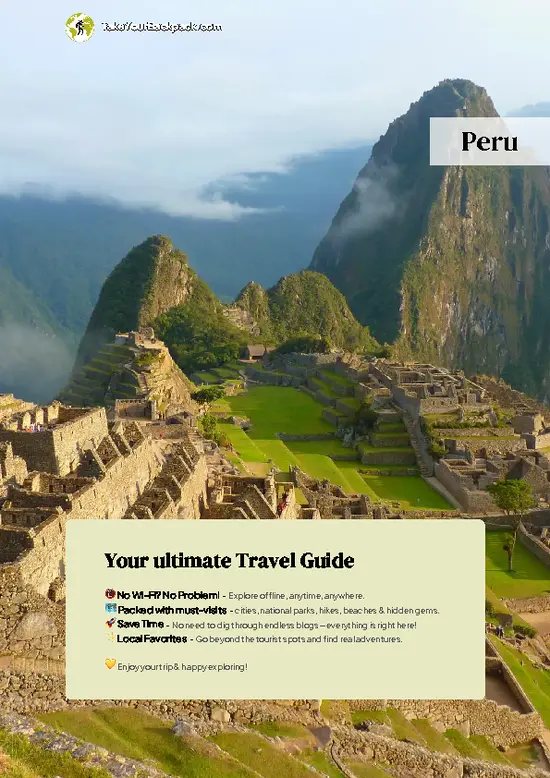
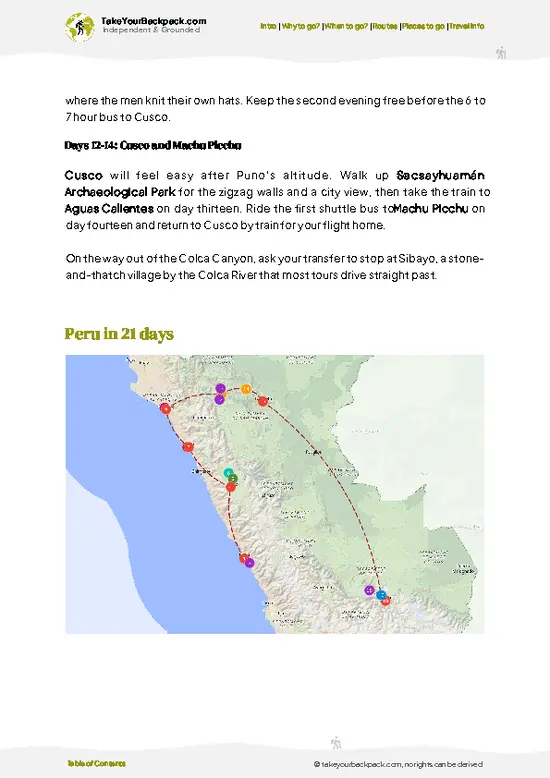
example page 0 from our offline Travel Guide for Peru
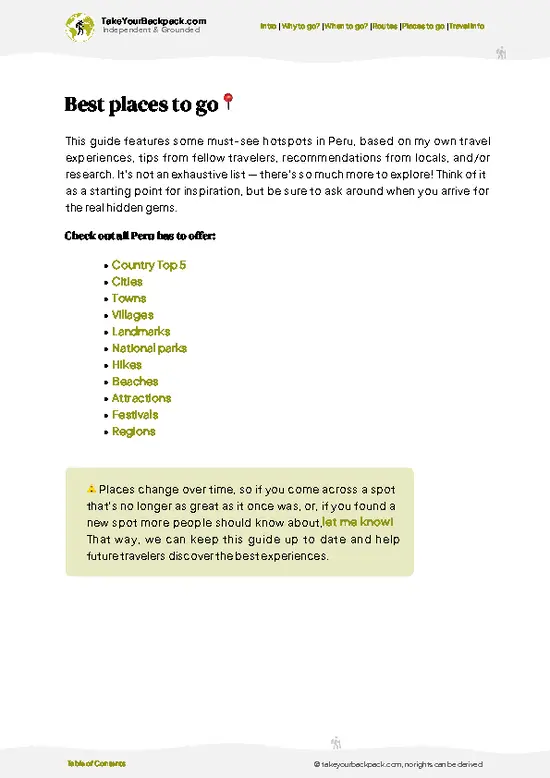
example page 1 from our offline Travel Guide for Peru
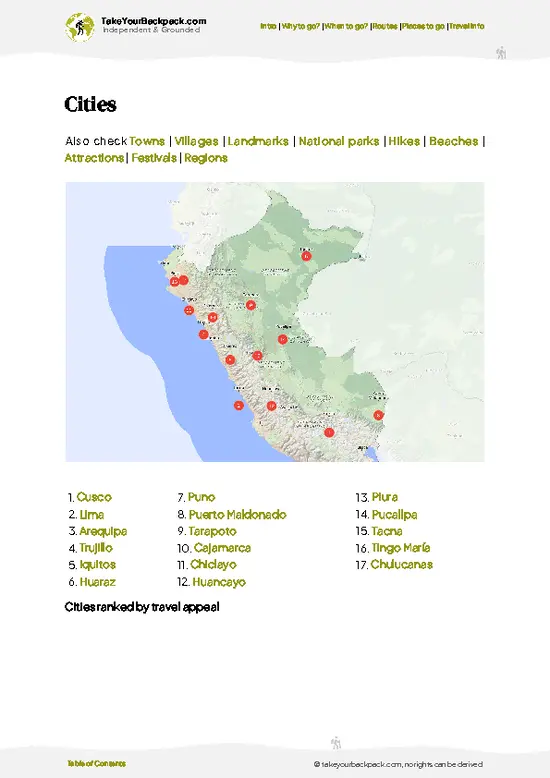
example page 2 from our offline Travel Guide for Peru
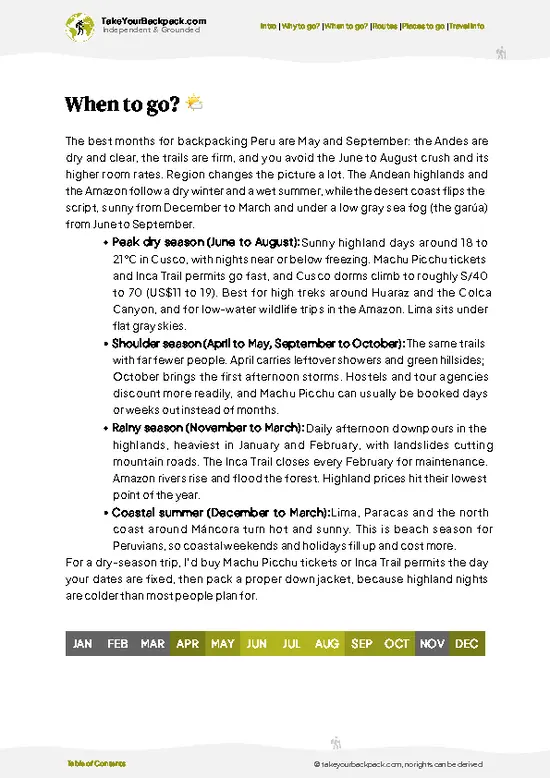
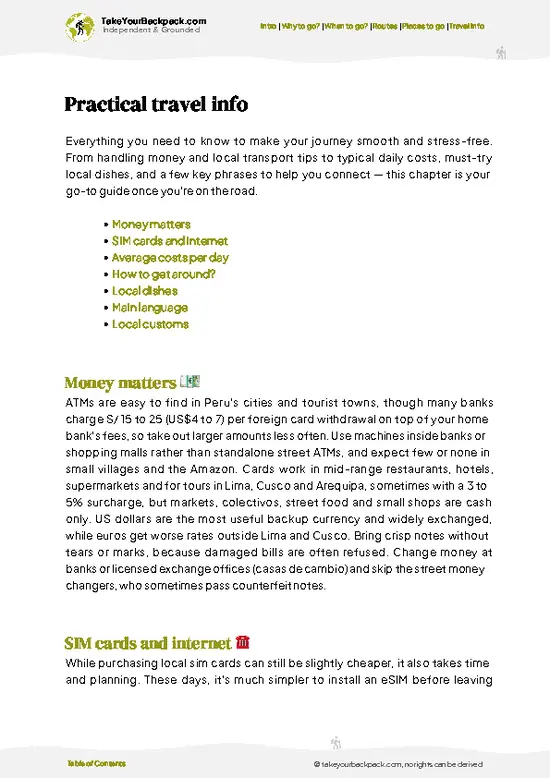
example page 3 from our offline Travel Guide for Peru
example page 4 from our offline Travel Guide for Peru
example page 5 from our offline Travel Guide for Peru
example page 6 from our offline Travel Guide for Peru
example page 7 from our offline Travel Guide for Peru
Loading the map 🌍
CLICK TO FILTER
cities
towns
villages
landmarks
national parks
hikes
beaches
attractions
festivals
regions
SHOW COUNTRY’S BESTSHOW ALL

✨ Why go?
Ranked #21 national park in Peru
The unique appeal for travelers

Megantoni National Sanctuary draws backpackers who want wilderness without a queue. The park protects the Pongo de Mainique, a narrow gorge on the Urubamba, and the surrounding cloud forest holds spectacled bears, giant otters and the cock-of-the-rock. Access runs through Machiguenga communities, so you travel by river and footpath rather than a signed network, and you can arrange a local guide directly in Kiteni or Quillabamba. Independent travelers who like improvising will find it rewarding. Organized tours exist but are costly and rarely necessary.

💡 HighlightsPlaces and moments you shouldn't skip

  1. Pongo de Mainique: the gorge the sanctuary is best known for, where the Urubamba squeezes between steep walls, with waterfalls dropping from the cliffs and boats threading the rapids.
  2. Urubamba River boat run: a motorized canoe ride through jungle bends with sandbars, herons and kingfishers along the banks.
  3. Cloud forest of the Megantoni massif: mossy slopes, tree ferns and orchids, home to spectacled bears that are rarely seen but real.
  4. Andean cock-of-the-rock: males display in the early morning at leks, flashing bright orange-red plumage.
  5. Giant otter habitat: quiet river stretches where otter families fish and call loudly.
  6. Machiguenga communities: villages such as Kiteni where you can meet residents who know the forest, plants and fishing methods.
  7. Mainique waterfalls: thin cascades near the gorge
… read more 👉
  1. Pongo de Mainique: the gorge the sanctuary is best known for, where the Urubamba squeezes between steep walls, with waterfalls dropping from the cliffs and boats threading the rapids.
  2. Urubamba River boat run: a motorized canoe ride through jungle bends with sandbars, herons and kingfishers along the banks.
  3. Cloud forest of the Megantoni massif: mossy slopes, tree ferns and orchids, home to spectacled bears that are rarely seen but real.
  4. Andean cock-of-the-rock: males display in the early morning at leks, flashing bright orange-red plumage.
  5. Giant otter habitat: quiet river stretches where otter families fish and call loudly.
  6. Machiguenga communities: villages such as Kiteni where you can meet residents who know the forest, plants and fishing methods.
  7. Mainique waterfalls: thin cascades near the gorge that are best viewed from the boat.
Allow two to four days for these, depending on river conditions.
Spotted a mistake or missing something? Contact us.

🌤️ When to go?When to go for the best experience

  • Dry Season (May to September): Trails are firmest and river levels lowest. Days reach 25 to 30°C (77 to 86°F), nights drop to 14 to 18°C (57 to 64°F). Daylight runs about 11.5 to 12.5 hours.
  • Wet Season (November to March): Heavy daily rain, mud, and swollen rivers. Boats and river transport can be delayed or cancelled.
  • Shoulder Months (April, October): Mixed weather and fewer visitors.
Megantoni sees little tourism in any month, so prices barely move. Book river transport in July and August, when guide availability tightens.

source: climatestotravel.comJANJanuary: fair for travelingFEBFebruary: fair for travelingMARMarch: fair for travelingAPRApril: fair for travelingMAYMay: excellent for travelingJUNJune: excellent for travelingJULJuly: excellent for travelingAUGAugust: excellent for travelingSEPSeptember: excellent for travelingOCTOctober: below average for travelingNOVNovember: below average for travelingDECDecember: below average for traveling
when-to-go

✈️ The backpacker research shortcutPeru Travel Guide

An offline-friendly backpacking guide with optimized travel routes, ranked highlights, transport advice, and the best areas to stay.
example page 0 from our offline Travel Guide for Peru
example page 1 from our offline Travel Guide for Peru
example page 2 from our offline Travel Guide for Peru
example page 3 from our offline Travel Guide for Peru
example page 4 from our offline Travel Guide for Peru
example page 5 from our offline Travel Guide for Peru
example page 6 from our offline Travel Guide for Peru
example page 7 from our offline Travel Guide for Peru
The digital guide (310 pages) contains:
✅ 102 highlights, ranked by travel appeal
✅ Optimized 7, 14 & 21-day travel routes
✅ Cities, national parks, landmarks, beaches
✅ How to get around
✅ Offline-friendly for travel without Wi-Fi
👉 Click to see all 30+ guide features

📅 Plan smarter in minutes, not weeks
✅ Month by month travel advice
✅ Festivals & national holidays
✅ Budget expectations

🗺️ Go to the right places, skip the overrated ones
✅ Honest pros & cons of destinations
✅ Top hikes, parks & viewpoints
✅ Lesser-known places most travelers miss
✅ Clear “worth it vs skip it” guidance

🛏️ Travel smoothly without rookie mistakes
✅ Best areas to stay
✅ Transport systems explained simply
✅ Common scams & safety advice
✅ SIM cards, money & practical tips

🌍 Understand the country, not just visit it
✅ Culture & traditions
✅ 52 Essential phrases & customs
✅ Festivals worth planning around
✅ Traveler-friendly historical context
✅ Insights that make places more meaningful

📱 Built for real travel conditions
✅ Fully downloadable PDF
✅ Works completely offline
✅ Optimized for phone use
✅ Useful in remote areas & buses
✅ Everything in one place
Stop searching, start planning
Get instant access to your full guide. 30‑day money-back guarantee.
+ Add another guide for just

By proceeding you agree to our terms.
Sent to your inbox immediately after payment • 100% Secure Checkout
Best Backpacking Travel Advisor 2025 tourism awardBest Backpacking
Travel Advisor
2025
What others say about Take Your Backpack Guides:
⭐⭐⭐⭐⭐
Fantastic, amazing amount of information!
⭐⭐⭐⭐⭐
My goodness this is amazing, it's what I've been looking for hats off too you!
⭐⭐⭐⭐⭐
I think this is absolutely BRILLIANT
⭐⭐⭐⭐
Very complete and informative. It's still missing places, but I gotta to commend you
⭐⭐⭐⭐⭐
This is truly amazing, thank you, can't wait to explore it with my kids!
⭐⭐⭐⭐⭐
Awesome resource, thank you!
⭐⭐⭐⭐⭐
This is amazing! Can't wait to explore the ones I haven't seen
⭐⭐⭐⭐
I love this! Well done, great idea.
⭐⭐⭐⭐⭐
Thanks for taking the time to make this gem!
⭐⭐⭐⭐⭐
This might be the best website I've ever seen.
⭐⭐⭐⭐⭐
Congratulations, and thank you so much for your work; it's incredibly valuable.
⭐⭐⭐⭐
In all seriousness I think you did a great job pointing out the important spots
⭐⭐⭐⭐⭐
10/10 very good
⭐⭐⭐⭐⭐
As someone who's only just starting to visit regularly this is awesome, thank you.
⭐⭐⭐⭐
Thank you very much! I'm going to visit my dad, it's going to be very useful!
⭐⭐⭐⭐⭐
This is really cool! We'll be travelling for the first time and this definitely come in handy.
⭐⭐⭐⭐⭐
You are now our minister of culture, congratulations 👨‍💼
⭐⭐⭐⭐⭐
Just wanted to tell you that this is a pearl! Going to follow your recommendations.
⭐⭐⭐⭐⭐
This is so cool. I'll definitely be using the resource for my travels soon.
⭐⭐⭐⭐⭐
This is very impressive! Good work.
⭐⭐⭐⭐⭐
This is an amazing and informative site. Very well done!

🛏️ Where to stay?Choosing the right base

There are no lodges inside Megantoni National Sanctuary, so most backpackers sleep in Quillabamba or Kiteni. Quillabamba, the jungle-edge town in La Convención province, has basic hostales at US$8 to 20 a night and the best supplies and transport links. Kiteni, the river port on the Urubamba near the sanctuary, offers simple guesthouses at roughly US$6 to 12. Community lodges and Machiguenga homestays near Cusco-side access points exist, but arrange them through a local guide. Camping along the river is possible with a guide and community permission. Stock up on food and cash in Quillabamba before heading downriver.

👛 Costs (as of 19 October 2026)Travel costs and budget guide for Megantoni National Sanctuary

Budget about US$42 to 97 a day for Megantoni National Sanctuary, mostly for guides and river transport.
CategoryBudget RangeLocal Reality
Entrance and permitsUS$0 to 10Permits come via SERNANP; fees vary by route
Accommodation (high season)US$6 to 20Basic hostales in Quillabamba and Kiteni
GuideUS$25 to 40Local guide essential for most routes, shared costs lower it
Local transportUS$5 to 15Colectivos and river boats, paid in soles
Food and suppliesUS$6 to 12Set lunches in town, bring snacks for trails
Total Daily BudgetUS$42 to 97Typical midpoint near US$60


source: gob.pe
⚠️ Prices can change and everyone travels differently, so take this as a rough guide. Hope it helps you plan your adventure!

🥾 TrailsDiscover Megantoni National Sanctuary's top trails and natural wonders

Megantoni National Sanctuary has few formal, marked routes. Most walking is done on community paths with a local guide.
  • Pongo de Mainique approach: boats leave from the river landings near Ivochote, and short forest walks reach viewpoints above the gorge. Roughly 1 to 3 hours, easy to moderate, muddy and root-covered.
  • Forest paths near Machiguenga villages: guided half-day loops through secondary and primary forest, with birds, monkeys and medicinal plants. Easy to moderate, humid, with stream crossings.
  • Cloud forest ascents: longer, steeper routes into the upper massif demand multi-day logistics,
… read more 👉
Megantoni National Sanctuary has few formal, marked routes. Most walking is done on community paths with a local guide.
  • Pongo de Mainique approach: boats leave from the river landings near Ivochote, and short forest walks reach viewpoints above the gorge. Roughly 1 to 3 hours, easy to moderate, muddy and root-covered.
  • Forest paths near Machiguenga villages: guided half-day loops through secondary and primary forest, with birds, monkeys and medicinal plants. Easy to moderate, humid, with stream crossings.
  • Cloud forest ascents: longer, steeper routes into the upper massif demand multi-day logistics, a guide and camping gear. Hard, slippery and remote.
Access is by road from Cusco to Quillabamba and onward toward Kiteni and Ivochote, with local transport and river boats for the final stretch. Services are scarce, so carry cash. Crowds are almost nonexistent. Entry usually needs permission from the SERNANP office in Cusco or Quillabamba, and a small fee may apply.
⚠️ Hiking info can sometimes be outdated or inaccurate. Before you hit the trail, check the latest conditions with locals. If you do spot anything that's off, I'd love to hear from you, so I can update it for fellow travelers.

🛡️ SafetyTraveler Safety Guide

Megantoni is remote, wet, and undeveloped, so self-reliance matters more than any single hazard. Trails are muddy, steep, and often unmarked, and rivers rise fast after rain, so hire a local guide and never cross swollen water. Pongo de Mainique rapids call for experienced boatmen. Expect mosquitoes, so carry repellent and consider yellow fever vaccination. Snakes and stinging insects are present, so wear closed boots and watch where you put your hands. Medical help is hours away; carry a full first-aid kit and water treatment.

FAQTraveler FAQ

Plan on 3 to 5 days for Megantoni National Sanctuary, including travel from Cusco. The overland trip to Quillabamba takes about 7 to 8 hours, and Kiteni is a further half day or more by road and boat. A trip to the Pongo de Mainique gorge fits in roughly 3 days from Quillabamba.
Yes, Megantoni National Sanctuary can be reached without a car, though not easily. Buses and colectivos run from Cusco to Quillabamba (US$8 to 12), then onward transport goes to Kiteni or Ivochote. From there, river boats are the only way deeper in, usually arranged with a local guide.
Megantoni National Sanctuary is managed by SERNANP, and entry generally requires a permit or registration, often arranged through a guide or local community. Costs are modest, typically US$0 to 10 depending on route. Confirm requirements at the SERNANP office in Quillabamba before heading to Kiteni.
⚠️ Things can change over time, so always validate details locally before you go.

Other Peruvian national parks near Megantoni National Sanctuary

Explore more nearby:


💡 Not sure where to go next?
Create a personalized itinerary for Peru including Megantoni National Sanctuary and the places that fit your trip.

Generate my itinerary

👉 Discover all national parks

Or checkout all Peru has to offer (think cities, towns, villages, national parks, hikes, beaches, festivals)
Country photo of Peru

We 💚 feedbackKey takeaways before you go

Many travelers arrive in Megantoni National Sanctuary with a rigid itinerary, then lose days to river delays and rain. Build in two spare days, confirm your boat pilot and guide in advance, and pack dry bags for everything.

✈️ When did I visit Peru?
Peru I visited during my half year trip through South and Central America back in 2003

✍️ Help improve this page!
The information on this page is based on my own backpacking experience in Peru, supplemented with up-to-date research and feedback from other travelers. Travel details can change, so if you notice anything outdated or incomplete, feel free to let me know.


🙋‍♂️ Give feedback

👋 Meet the founderWho’s Behind Take Your Backpack?

Johan, backpacker and founder of TakeYourBackpackHi, I’m Johan (Netherlands 🇳🇱), the creator of TakeYourBackpack. Over the past 3 decades, I’ve backpacked through 90+ countries across six continents, gaining extensive experience with independent travel, long-term trips, and overland routes.

This site is built on a combination of firsthand travel experience and carefully curated insights from other backpackers. Many guides are based on places I’ve personally visited, while others bring together tips, observations, and practical advice shared by trusted travelers I’ve met along the way.

The goal is to provide realistic, experience-driven guidance — not generic itineraries — so you can explore destinations with better context, clearer expectations, and more confidence.