
×

Philippines🇵🇭 | citiesBaguiopine forests, hillside markets, cool climate | things to do and best time to go

Explore Lake SebuExplore Siargao

Backpacking in Baguio
🏆 Top pickcity ranked #4
By Johan Kruseman 🇳🇱 | Updated July 30, 2026

Everyone talks about Baguio for the “cold weather,” as if 18°C alone justifies a bus ride from Manila. The real value for a backpacker is how that cooler air changes the game: you can actually walk all day, think clearly, and treat the city as a base for exploring the Cordillera rather than just hiding in a mall. Baguio sits in the mountains of northern Luzon, a few hours’ climb from the lowland heat.

For backpackers, it’s a mixed but interesting hub: cheap street food around Session Road, student nightlife that’s casual not wild, a few worthwhile stops like Burnham Park at sunrise and the public market for coffee and strawberries, plus easy onward transport to Sagada and Banaue. It’s safer and more walkable than most lowland cities, but also busier, noisier, and more commercial than romanticized photos suggest. You come for access and climate, not charm alone.

Discover everything you want to know in the 📖 Philippines Travel Guide.
Loading the map 🌍
CLICK TO FILTER
cities
towns
landmarks
national parks
hikes
beaches
attractions
festivals
regions
SHOW COUNTRY’S BESTSHOW ALL

✨ Why go?
Ranked #4 city in Philippines
What makes this city worth visiting

Baguio is a backpacker’s basecamp for a reason. It’s not just about the cool climate; it’s the blend of affordability and accessibility that makes it a smart choice. The city is packed with highlights and activities, but it’s also a strategic stop on your journey through the Philippines.

You’ll find a range of hostels that cater to every budget, making it easy to meet fellow travelers. The food scene is a delightful mix of local flavors and international options, often at prices that won’t break the bank. Plus, Baguio is incredibly walkable, allowing you to explore its vibrant streets without needing to rely on transport.

When the sun sets, the nightlife offers a laid-back vibe, perfect for unwinding after a day of exploration. And if you’re looking to venture further, Baguio serves as … read more 👉
Baguio is a backpacker’s basecamp for a reason. It’s not just about the cool climate; it’s the blend of affordability and accessibility that makes it a smart choice. The city is packed with highlights and activities, but it’s also a strategic stop on your journey through the Philippines.

You’ll find a range of hostels that cater to every budget, making it easy to meet fellow travelers. The food scene is a delightful mix of local flavors and international options, often at prices that won’t break the bank. Plus, Baguio is incredibly walkable, allowing you to explore its vibrant streets without needing to rely on transport.

When the sun sets, the nightlife offers a laid-back vibe, perfect for unwinding after a day of exploration. And if you’re looking to venture further, Baguio serves as a convenient launchpad for day trips to nearby attractions. This city isn’t just a stop; it’s a strategic piece of your backpacking puzzle, balancing time, money, and comfort seamlessly.
Want to include Baguio in your Philippines route?
Create a personalized Philippines itinerary that includes Baguio and the places that fit your trip — based on your travel style, budget, and available time. Get your route in seconds.

Generate my trip

💡 HighlightsWhat this place is best known for

  1. Burnham Park — The city’s living room: a man-made lake with boat rentals, wide lawns for picnics, bike rentals and people-watching that captures Baguio’s easy pace. Perfect for morning jogs, slow afternoons, or watching vendors and locals mix during festivals.
  2. Baguio Cathedral (Our Lady of Atonement) — That iconic pink church on a hill with dramatic stained-glass windows and wide staircases; it’s as much a viewpoint as a place of worship, giving a quiet pause and great city views at sunrise or sunset.
  3. Mines View Park — A short climb to panoramic terraces that look over the old mining valleys and mountain towns. Crowded, yes, but the viewpoint, souvenir stalls, and cordillera character make it a must-see for first-timers.
  4. Camp John Hay — Pine groves and American-era history turned into
read more 👉
  1. Burnham Park — The city’s living room: a man-made lake with boat rentals, wide lawns for picnics, bike rentals and people-watching that captures Baguio’s easy pace. Perfect for morning jogs, slow afternoons, or watching vendors and locals mix during festivals.
  2. Baguio Cathedral (Our Lady of Atonement) — That iconic pink church on a hill with dramatic stained-glass windows and wide staircases; it’s as much a viewpoint as a place of worship, giving a quiet pause and great city views at sunrise or sunset.
  3. Mines View Park — A short climb to panoramic terraces that look over the old mining valleys and mountain towns. Crowded, yes, but the viewpoint, souvenir stalls, and cordillera character make it a must-see for first-timers.
  4. Camp John Hay — Pine groves and American-era history turned into a walkable compound: historic buildings, a small museum vibe, the quirky Cemetery of Negativism, cafes and trails. It’s where Baguio’s colonial past meets present-day leisure.
  5. The Mansion — The ornate gatehouse of the presidential summer residence is a photo-ready symbol of Baguio’s history. You can’t wander inside, but the grounds and adjacent gardens (and the stories) are worth a stroll.
  6. Wright Park — Long reflecting pool, rows of pines and the horseback-riding area where local caretakers offer short rides. It’s a slice of old-Baguio formality and a hands-on way to meet everyday locals.
  7. Botanical Garden — A quiet network of paths, native-plant collections and reconstructed Igorot huts. It’s low-key, a good place to learn about local flora and indigenous crafts without the tourist crush.
  8. Tam-Awan Village — A hilltop reconstructed Cordillera village and artists’ enclave with traditional huts, ongoing art projects and occasional cultural performances. You’ll leave with a clearer idea of mountain lifeways and contemporary Cordillera art.
  9. Bell Church — An ornate Chinese-Filipino temple tucked into the hills with colorful architecture, incense-filled courtyards and peaceful gardens; a gentle reminder of Baguio’s multicultural layers and a calm spot for reflection.
  10. Baguio Public Market — The best place to taste and buy what the region produces: strawberries and preserves, fresh vegetables, woven rugs, and ukay-ukay. It’s loud, messy and utterly revealing of local daily life—great for pasalubong hunting.
A few easy day trips just outside Baguio: the La Trinidad strawberry farms/market, the BenCab Museum (art with mountain views), and the hot springs around Asin—my personal favorite for a day trip is the BenCab Museum.
Spotted a mistake or missing something? Contact us.

Things to do near Baguio

Ratings based on Tripadvisor reviews. When you book through this link, you support our work at no extra cost to you.

🏘️ NeighborhoodsHow different areas shape the experience

Baguio is a vibrant city in the Philippines, known for its cool climate and rich culture. Each neighborhood offers unique advantages for backpackers, so let’s break down the key areas.

Session Road: This is the bustling heart of Baguio. It’s packed with shops, cafes, and restaurants. The vibe is energetic, making it perfect for socializing. Prices can be higher here, but you’re paying for convenience. Walkability is excellent, and public transport is readily available. Ideal for short stays where you want to soak in the city’s pulse.

Burnham Park: A serene escape in the city center. This area is great for those who enjoy nature and leisurely strolls. Accommodation here tends to be budget-friendly, and the park itself is a lovely spot for relaxation. It’s walkable and close to transport hubs. … read more 👉
Baguio is a vibrant city in the Philippines, known for its cool climate and rich culture. Each neighborhood offers unique advantages for backpackers, so let’s break down the key areas.

Session Road: This is the bustling heart of Baguio. It’s packed with shops, cafes, and restaurants. The vibe is energetic, making it perfect for socializing. Prices can be higher here, but you’re paying for convenience. Walkability is excellent, and public transport is readily available. Ideal for short stays where you want to soak in the city’s pulse.

Burnham Park: A serene escape in the city center. This area is great for those who enjoy nature and leisurely strolls. Accommodation here tends to be budget-friendly, and the park itself is a lovely spot for relaxation. It’s walkable and close to transport hubs. Perfect for longer stays if you want a peaceful base.

Camp John Hay: A bit more upscale, this area offers a mix of nature and leisure. Think golf courses and pine trees. Prices are moderate, and it’s quieter than the city center. While it’s less walkable, shuttle services are available. Best for those looking for a longer retreat with a touch of luxury.

La Trinidad: Just outside Baguio, this area is known for its strawberry farms. It’s cheaper and less touristy, making it a hidden treasure. Transport to Baguio is easy, but it’s not as walkable. Great for longer stays if you want to experience local life.

⌛️ 1 dayWhat you can realistically do in a day

Baguio, often called the ”Summer Capital of the Philippines,” is a cool escape from the tropical heat, nestled in the Cordillera mountains. Its pine-scented air and vibrant local culture make it a unique blend of urban and natural charm. You can spend a day here that feels both leisurely and fulfilling, tapping into the city’s character without feeling rushed.

Start your morning at Burnham Park. Grab a quick breakfast at a local café, perhaps a steaming bowl of arroz caldo, and then rent a bike or paddle a swan boat on the lake. The park is a hub of activity, and you’ll see locals jogging or enjoying picnics, giving you a taste of everyday life.

In the afternoon, head to the bustling Session Road, where you can explore shops and street food stalls. Don’t miss the chance to try the famous … read more 👉
Baguio, often called the ”Summer Capital of the Philippines,” is a cool escape from the tropical heat, nestled in the Cordillera mountains. Its pine-scented air and vibrant local culture make it a unique blend of urban and natural charm. You can spend a day here that feels both leisurely and fulfilling, tapping into the city’s character without feeling rushed.

Start your morning at Burnham Park. Grab a quick breakfast at a local café, perhaps a steaming bowl of arroz caldo, and then rent a bike or paddle a swan boat on the lake. The park is a hub of activity, and you’ll see locals jogging or enjoying picnics, giving you a taste of everyday life.

In the afternoon, head to the bustling Session Road, where you can explore shops and street food stalls. Don’t miss the chance to try the famous strawberry taho—silken tofu topped with sweet strawberry syrup. For a less touristy experience, venture to the nearby neighborhood of Asin, known for its hot springs. A dip in the natural pools is a refreshing way to unwind and connect with the local vibe.

As evening falls, make your way to the iconic Mines View Park. The panoramic view of the mountains is breathtaking, especially at sunset. Grab a snack from one of the vendors—maybe some freshly grilled corn—and soak in the scenery.

End your day at Café by the Ruins, where the ambiance is as rich as the food. Their chocolate cake is a must-try. Baguio isn’t just a stopover; it’s a place that invites you to linger, savor, and connect. Each moment spent here is a choice, balancing time, money, and comfort, but the rewards are well worth it.
Turn your Baguio visit into an Philippines adventure
Build a complete Philippines route with Baguio, hidden gems, must-see destinations, and realistic travel times included.

Generate my trip

🌤️ When to go?When to go for the best experience


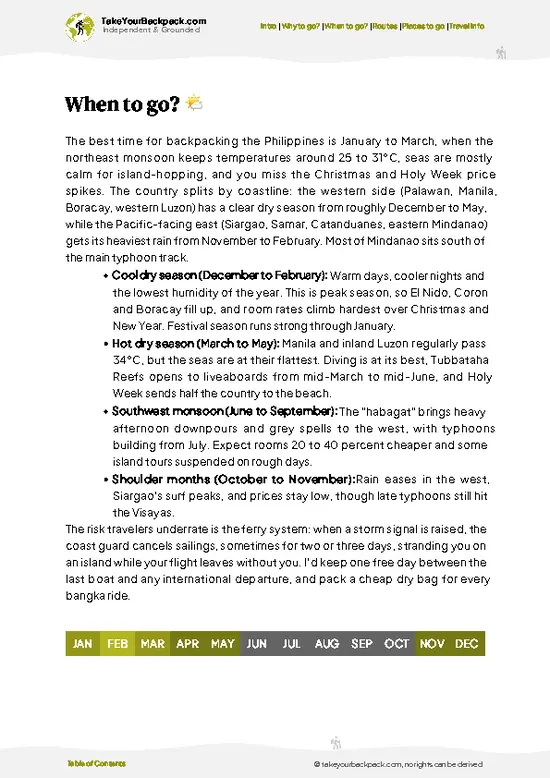
  • Topic: Weather – Baguio’s climate is a cool reprieve from the Philippine lowlands, averaging 15-23°C (59-73°F). The dry season, from November to April, offers the most reliable weather for trekking and outdoor activities, avoiding the heavy rains that dominate June to October.

  • Topic: Temperature – Expect crisp mornings and evenings, especially December to February, when temps dip to around 12°C (54°F). Daytime highs rarely exceed 23°C (73°F), making layers essential but comfortable for backpackers who prefer cool over sweltering.

  • Topic: Daylight Hours – Daylight stays fairly consistent year-round, roughly 11 to 12 hours. This steadiness means you can plan hikes and sightseeing without the frustration of early nightfall cutting your day short.

  • Topic: Crowds – Peak tourist influx hits
read more 👉

  • Topic: Weather – Baguio’s climate is a cool reprieve from the Philippine lowlands, averaging 15-23°C (59-73°F). The dry season, from November to April, offers the most reliable weather for trekking and outdoor activities, avoiding the heavy rains that dominate June to October.

  • Topic: Temperature – Expect crisp mornings and evenings, especially December to February, when temps dip to around 12°C (54°F). Daytime highs rarely exceed 23°C (73°F), making layers essential but comfortable for backpackers who prefer cool over sweltering.

  • Topic: Daylight Hours – Daylight stays fairly consistent year-round, roughly 11 to 12 hours. This steadiness means you can plan hikes and sightseeing without the frustration of early nightfall cutting your day short.

  • Topic: Crowds – Peak tourist influx hits during the Panagbenga Flower Festival in February and Holy Week in March/April. These times bring vibrant street scenes but also inflated prices and packed accommodations, so weigh the cultural buzz against your comfort.

  • Topic: Seasonal Activities – The flower festival is a major draw, but the dry months also unlock hiking trails and open-air markets. The rainy season shuts down many outdoor options and can turn dirt paths into mudslides, a real drag for backpackers.

  • Topic: Price Fluctuations – Accommodation and transport costs spike during festival season and holidays. Off-peak months (May to October) offer better deals but come with the trade-off of unpredictable weather and fewer events.


Pro-tip: Aim for late November or early December—before the festival rush and after the rainy season—when Baguio’s charm, cool air, and prices align for a smart, comfortable backpacking window.


source: climatestotravel.comJANJanuary: excellent for travelingFEBFebruary: highly recommended for travelingMARMarch: good for travelingAPRApril: good for travelingMAYMay: fair for travelingJUNJune: below average for travelingJULJuly: below average for travelingAUGAugust: below average for travelingSEPSeptember: below average for travelingOCTOctober: fair for travelingNOVNovember: highly recommended for travelingDECDecember: excellent for traveling
when-to-go

✈️ The backpacker research shortcutPhilippines Travel Guide

An offline-friendly backpacking guide with optimized travel routes, ranked highlights, transport advice, and the best areas to stay.
example page 0 from our offline Travel Guide for Philippines
example page 1 from our offline Travel Guide for Philippines
example page 2 from our offline Travel Guide for Philippines
example page 3 from our offline Travel Guide for Philippines
example page 4 from our offline Travel Guide for Philippines
example page 5 from our offline Travel Guide for Philippines
example page 6 from our offline Travel Guide for Philippines
example page 7 from our offline Travel Guide for Philippines
The digital guide (503 pages) contains:
144 highlights, ranked by travel appeal
Optimized 7, 14 & 21-day travel routes
Cities, national parks, landmarks, beaches
How to get around
Offline-friendly for travel without Wi-Fi
👉 Click to see all 30+ guide features

📅 Plan smarter in minutes, not weeks
Month by month travel advice
Festivals & national holidays
Budget expectations

🗺️ Go to the right places, skip the overrated ones
Honest pros & cons of destinations
Top hikes, parks & viewpoints
Lesser-known places most travelers miss
Clear “worth it vs skip it” guidance

🛏️ Travel smoothly without rookie mistakes
Best areas to stay
Transport systems explained simply
Common scams & safety advice
SIM cards, money & practical tips

🌍 Understand the country, not just visit it
Culture & traditions
52 Essential phrases & customs
Festivals worth planning around
Traveler-friendly historical context
Insights that make places more meaningful

📱 Built for real travel conditions
Fully downloadable PDF
Works completely offline
Optimized for phone use
Useful in remote areas & buses
Everything in one place
Save weeks of stressful planning
Get instant access to your full guide. 30‑day money-back guarantee.


By proceeding you agree to our terms.
Sent to your inbox immediately after payment • 100% Secure Checkout
Best Backpacking Travel Advisor 2025 tourism awardBest Backpacking
Travel Advisor
2025
What others say about Take Your Backpack Guides:
⭐⭐⭐⭐⭐
Fantastic, amazing amount of information!
⭐⭐⭐⭐⭐
My goodness this is amazing, it's what I've been looking for hats off too you!
⭐⭐⭐⭐⭐
I think this is absolutely BRILLIANT
⭐⭐⭐⭐
Very complete and informative. It's still missing places, but I gotta to commend you
⭐⭐⭐⭐⭐
This is truly amazing, thank you, can't wait to explore it with my kids!
⭐⭐⭐⭐⭐
Awesome resource, thank you!
⭐⭐⭐⭐⭐
This is amazing! Can't wait to explore the ones I haven't seen
⭐⭐⭐⭐
I love this! Well done, great idea.
⭐⭐⭐⭐⭐
Thanks for taking the time to make this gem!
⭐⭐⭐⭐⭐
This might be the best website I've ever seen.
⭐⭐⭐⭐⭐
Congratulations, and thank you so much for your work; it's incredibly valuable.
⭐⭐⭐⭐
In all seriousness I think you did a great job pointing out the important spots
⭐⭐⭐⭐⭐
10/10 very good
⭐⭐⭐⭐⭐
As someone who's only just starting to visit regularly this is awesome, thank you.
⭐⭐⭐⭐
Thank you very much! I'm going to visit my dad, it's going to be very useful!
⭐⭐⭐⭐⭐
This is really cool! We'll be travelling for the first time and this definitely come in handy.
⭐⭐⭐⭐⭐
You are now our minister of culture, congratulations 👨‍💼
⭐⭐⭐⭐⭐
Just wanted to tell you that this is a pearl! Going to follow your recommendations.
⭐⭐⭐⭐⭐
This is so cool. I'll definitely be using the resource for my travels soon.
⭐⭐⭐⭐⭐
This is very impressive! Good work.
⭐⭐⭐⭐⭐
This is an amazing and informative site. Very well done!

🛏️ Where to stay?Where staying makes the most sense

Baguio’s backpacker sweet spot is the area around Session Road and the nearby Burnham Park district. This zone nails the balance between safety, social buzz, and budget options, making it the go-to for solo travelers and thrifty adventurers. Session Road pulses with local life—cafes, street food stalls, and shops create a lively backdrop where meeting fellow travelers feels organic, not forced. Hostels here tend to cluster within walking distance, offering dorm-style rooms that keep costs low without sacrificing basic comfort.

Burnham Park, just a short stroll away, adds a green, open-air vibe … read more 👉
Baguio’s backpacker sweet spot is the area around Session Road and the nearby Burnham Park district. This zone nails the balance between safety, social buzz, and budget options, making it the go-to for solo travelers and thrifty adventurers. Session Road pulses with local life—cafes, street food stalls, and shops create a lively backdrop where meeting fellow travelers feels organic, not forced. Hostels here tend to cluster within walking distance, offering dorm-style rooms that keep costs low without sacrificing basic comfort.

Burnham Park, just a short stroll away, adds a green, open-air vibe that’s perfect for downtime or casual socializing. It’s a natural gathering point, especially in the evenings when locals and tourists mingle over street snacks or impromptu music sessions. Compared to the quieter, more residential areas like Camp John Hay, which leans toward resorts and pricier stays, Session Road and Burnham Park keep you plugged into the city’s heartbeat without blowing your budget.

If you want to maximize your time and social energy, this is where you want to be. You’re trading a bit of the polished resort comfort for raw, authentic city life and the chance to connect with others on the same budget-conscious journey. It’s a strategic choice that pays off in stories and friendships.

🚌 Getting aroundGetting around like a local

Baguio moves at its own rhythm—partly dictated by the mountain air’s cool insistence on slowing you down, partly by the steady pulse of jeepneys and buses threading through its steep streets. It’s not a city where you’ll find rigid timetables nailed to every corner; instead, it’s a dance of intuition and local know-how. The flow here rewards those who read the subtle cues: the gathering of passengers at a corner, the sudden honk signaling a jeepney’s arrival, the quiet moments when the city exhales between rushes. Your choices in transit are a balancing act between time, money, and comfort, and understanding this trade-off is your secret weapon to mastering Baguio’s pulse.


  • Walking: The purest way to absorb Baguio’s character, walking costs nothing and lets you explore narrow alleys and
read more 👉
Baguio moves at its own rhythm—partly dictated by the mountain air’s cool insistence on slowing you down, partly by the steady pulse of jeepneys and buses threading through its steep streets. It’s not a city where you’ll find rigid timetables nailed to every corner; instead, it’s a dance of intuition and local know-how. The flow here rewards those who read the subtle cues: the gathering of passengers at a corner, the sudden honk signaling a jeepney’s arrival, the quiet moments when the city exhales between rushes. Your choices in transit are a balancing act between time, money, and comfort, and understanding this trade-off is your secret weapon to mastering Baguio’s pulse.


  • Walking: The purest way to absorb Baguio’s character, walking costs nothing and lets you explore narrow alleys and parks at your own pace. It’s slow but unbeatable for comfort and immersion—just watch your step on the hills. Expect to spend 15-30 minutes between major spots, depending on your stamina.


  • Jeepneys: The backbone of Baguio’s public transit, jeepneys run roughly from 5:00 AM to 9:00 PM. They’re cheap—fares hover around 10-20 PHP—and frequent, but expect cramped seating and a stop-anywhere vibe that can stretch your travel time. If you’re on a budget and not in a rush, jeepneys are your go-to.


  • UV Express Vans: These vans offer a middle ground—faster and more direct than jeepneys, with fares around 40-60 PHP. They run from early morning until about 8:00 PM. Comfort is better, with air conditioning and fewer stops, but you’ll pay a premium in both cash and the need to catch them at designated terminals.


  • Tricycles: Perfect for short hops or when you’re hauling gear, tricycles are flexible and fast but pricier per kilometer (roughly 20-50 PHP depending on distance). They run all day and night but negotiate fares upfront. Comfort is basic, and the ride can be bumpy on uneven roads.


  • Taxi: The most comfortable and fastest option, taxis are available 24/7 but come with a steep price tag for Baguio standards—expect to pay 150 PHP or more for short trips. Metered fares aren’t always enforced, so be ready to bargain or insist on the meter. Ideal if you’re tight on time and willing to spend.


Mastering Baguio’s transit means knowing when to save time by splurging on a van or taxi, when to embrace the slow charm of walking, and when to squeeze into a jeepney for the full local experience. Each choice is a trade-off, but with this map in your head, you’re not just getting around—you’re playing the city’s game and winning.

👛 Costs (as of 30 July 2026)What things cost and how to budget

Backpacking in Baguio, Philippines, offers a clear trade-off map between time, money, and comfort, and knowing the daily costs helps you play that game smartly.
  • Dorm Accommodation (High Season and Off-Season): In peak months like March and December, dorm beds in budget hostels typically run between $8 and $12 per night. Off-season, you can snag spots for as low as $5 to $7. The difference isn’t just price; high season means busier hostels and less wiggle room on location and amenities.
  • Meals: Street food and local eateries keep your food budget lean. Expect to spend around $2 to $4 per meal if you stick to places serving traditional Filipino dishes like “taho,” “halo-halo,” or “pork barbecue.” Western-style cafes or restaurants will push that up to $5-$8 per meal.
  • Local Transport: Jeepneys
read more 👉
Backpacking in Baguio, Philippines, offers a clear trade-off map between time, money, and comfort, and knowing the daily costs helps you play that game smartly.
  • Dorm Accommodation (High Season and Off-Season): In peak months like March and December, dorm beds in budget hostels typically run between $8 and $12 per night. Off-season, you can snag spots for as low as $5 to $7. The difference isn’t just price; high season means busier hostels and less wiggle room on location and amenities.
  • Meals: Street food and local eateries keep your food budget lean. Expect to spend around $2 to $4 per meal if you stick to places serving traditional Filipino dishes like “taho,” “halo-halo,” or “pork barbecue.” Western-style cafes or restaurants will push that up to $5-$8 per meal.
  • Local Transport: Jeepneys and tricycles are the backbone of getting around Baguio. A typical ride costs about $0.20 to $0.50 depending on distance. Budget around $1.50 to $3 daily if you’re hopping between neighborhoods or tourist spots.
  • City Transport Pass: Baguio doesn’t have a formal city transport pass system like bigger metros. Instead, you’ll rely on cash fares for each trip, so no upfront pass savings here—just keep small bills handy.
  • Basic Activities/Entry Fees: Most natural attractions and parks charge minimal fees, usually between $0.50 and $2. Places like Burnham Park or Mines View Park are either free or very cheap. Museums and cultural sites might ask for $1 to $3. Budget $3 to $6 daily if you plan to hit a few spots.
  • Miscellaneous Expenses: This covers bottled water, snacks, occasional coffee, or small souvenirs. Around $2 to $4 daily is a safe estimate to keep you comfortable without splurging.

Add it all up, and you’re looking at a daily budget roughly between $15 and $30. The lower end means embracing dorm life, street eats, and minimal transport, while the higher end buys a bit more comfort or flexibility. Knowing these trade-offs lets you decide where to save and where to invest in your Baguio experience.
⚠️ Prices can change and everyone travels differently, so take this as a rough guide. Hope it helps you plan your adventure!

🚌 Day tripsEasy escapes and nearby places

Baguio is a fantastic launchpad for day trips that blend culture, nature, and adventure. Here are some top picks that make the most of your time, money, and comfort.

**Burnham Park**
Just a short jeepney ride from the city center, Burnham Park is a lush oasis perfect for a leisurely morning. Rent a boat on the lake or simply stroll through the gardens. It’s a great spot to people-watch and soak in the local vibe. The park is free, but boat rentals are around 50 PHP. Best visited early in the day to avoid crowds. A common mistake is to overlook the food stalls nearby; grab some local snacks to fuel your exploration.


**La Trinidad Strawberry Farm**
A quick 30-minute ride from Baguio, this farm offers a unique chance to pick your own strawberries. The experience is not just about the … read more 👉
Baguio is a fantastic launchpad for day trips that blend culture, nature, and adventure. Here are some top picks that make the most of your time, money, and comfort.

**Burnham Park**
Just a short jeepney ride from the city center, Burnham Park is a lush oasis perfect for a leisurely morning. Rent a boat on the lake or simply stroll through the gardens. It’s a great spot to people-watch and soak in the local vibe. The park is free, but boat rentals are around 50 PHP. Best visited early in the day to avoid crowds. A common mistake is to overlook the food stalls nearby; grab some local snacks to fuel your exploration.


**La Trinidad Strawberry Farm**
A quick 30-minute ride from Baguio, this farm offers a unique chance to pick your own strawberries. The experience is not just about the fruit; it’s about the stunning views of the surrounding mountains. Entry is free, and you pay only for what you pick—around 300 PHP for a basket. Visit during the strawberry season (November to April) for the best experience. Many first-timers forget to bring sunscreen, so don’t make that mistake!


**Tam-awan Village**
This artist village is about 20 minutes from Baguio and showcases local art and culture. Wander through traditional huts and galleries, and you might even catch a workshop in action. The entrance fee is around 50 PHP, making it a budget-friendly option. Aim for a visit during the afternoon when the light is perfect for photography. A common pitfall is rushing through; take your time to appreciate the art and the stories behind it.


**Mount Yangbew**
For those craving a bit of adventure, Mount Yangbew is a rewarding hike just an hour away. The trail is manageable, and the summit offers panoramic views of the Cordillera mountains. The hike is free, but consider bringing snacks and water, which can add up to about 150 PHP. The best time to go is early morning to catch the sunrise. First-timers often underestimate the trail’s difficulty, so wear proper shoes and pace yourself.


**Asin Hot Springs**
If relaxation is what you seek, head to Asin Hot Springs, about 30 minutes from Baguio. The natural hot springs are perfect for unwinding after a day of exploration. Entrance fees vary but expect around 200 PHP. The best time to visit is during the cooler months, when the hot springs feel even more inviting. Many travelers forget to bring their own towels, so pack one to avoid extra costs.
Want to know what more Philippines offers?
The Philippines Travel Guide describes 144 highlights, from cities to national parks, from beaches to hikes

Get the Travel Guide -

🍲 FoodEating & Drinking in Baguio

In **Baguio**, the food scene is a delightful blend of local flavors and vibrant culture. You can’t miss the **signature dish**: **pinakbet**, a savory mix of vegetables and shrimp paste that captures the essence of Cordilleran cuisine. Pair it with **baguio beans**, known for their crispness and flavor, and you’ll understand why locals rave about them.

Street food is the heartbeat of Baguio. Stroll through the **night market** and you’ll be tempted by **fish balls**, skewered meats, and the ever-popular **strawberry taho**—a sweet, silken tofu treat topped with syrupy strawberries. The aroma of grilled corn wafts through the air, inviting you to indulge in this simple yet satisfying snack.

Cafés are sprinkled throughout the city, offering a cozy spot to sip on **local coffee**. The **Baguio … read more 👉
In **Baguio**, the food scene is a delightful blend of local flavors and vibrant culture. You can’t miss the **signature dish**: **pinakbet**, a savory mix of vegetables and shrimp paste that captures the essence of Cordilleran cuisine. Pair it with **baguio beans**, known for their crispness and flavor, and you’ll understand why locals rave about them.

Street food is the heartbeat of Baguio. Stroll through the **night market** and you’ll be tempted by **fish balls**, skewered meats, and the ever-popular **strawberry taho**—a sweet, silken tofu treat topped with syrupy strawberries. The aroma of grilled corn wafts through the air, inviting you to indulge in this simple yet satisfying snack.

Cafés are sprinkled throughout the city, offering a cozy spot to sip on **local coffee**. The **Baguio coffee** is rich and aromatic, often served with a side of **ube** pastries that are as colorful as they are delicious.

When dining, embrace the **communal spirit**. Sharing dishes is common, and it’s a great way to bond with fellow travelers or locals. Just remember to say “**salamat**” (thank you) after your meal; it’s a small gesture that goes a long way in this welcoming city.

🛡️ SafetyScams, Hazards, and Annoyances

Baguio is generally safe, but like any city, it has its quirks. Stay alert in crowded markets like the Public Market, where pickpockets might lurk. Keep your belongings close, especially when sampling local street food.

If you’re solo, be mindful after dark. While the city is lively, some areas can feel quieter. Stick to well-lit streets and avoid wandering too far from the main tourist spots.

Scams are rare, but be cautious with unofficial taxi drivers. Use reputable ride-hailing apps to avoid overcharging. Also, be wary of overly friendly locals who might offer unsolicited help; they could be angling for a tip.

Overall, carry yourself confidently and engage with locals. A friendly demeanor often leads to genuine interactions and valuable tips. Enjoy the vibrant culture, but stay aware, and you’ll navigate Baguio like a pro.

Other Filipino cities near Baguio

Explore more nearby:

  • Clark—former air base, duty-free shops, wide highways| 138 km away
  • Angeles City—Clark airfield, nightlife strip, food alleys| 139 km away
  • Tuguegarao—cave systems, pancit stalls, Cagayan River| 181 km away

💡 Not sure where to go next?
Create a personalized itinerary for Philippines including Baguio and the places that fit your trip.

Generate my itinerary

👉 Discover all cities

Or checkout all Philippines has to offer (think cities, towns, villages, national parks, hikes, beaches, festivals)
Country photo of Philippines

We 💚 feedbackSumming up the experience

Baguio’s cool climate is a breath of fresh air, especially after the tropical heat elsewhere in the Philippines. You can wander through vibrant markets and lush parks, soaking in the local culture. But be ready for the crowds; weekends can feel like a festival of tourists. If you can time your visit right, you’ll enjoy the best of Baguio without the hustle. It’s all about finding that sweet spot.

✈️ When did I visit Philippines?
Philippines being one of my favorites, due to the people and their mentality. I visited it first in 2010 and came back in January 2016 as part of my 1.5 year world trip.

✍️ Help improve this page!
The information on this page is based on my own backpacking experience in Philippines, supplemented with up-to-date research and feedback from other travelers. Travel details can change, so if you notice anything outdated or incomplete, feel free to let me know.


🙋‍♂️ Give feedback

👋 Meet the founderWho’s Behind Take Your Backpack?

Johan, backpacker and founder of TakeYourBackpackHi, I’m Johan (Netherlands 🇳🇱), the creator of TakeYourBackpack. Over the past decade, I’ve backpacked through 80+ countries across six continents, gaining extensive experience with independent travel, long-term trips, and overland routes.

This site is built on a combination of firsthand travel experience and carefully curated insights from other backpackers. Many guides are based on places I’ve personally visited, while others bring together tips, observations, and practical advice shared by trusted travelers I’ve met along the way.

The goal is to provide realistic, experience-driven guidance — not generic itineraries — so you can explore destinations with better context, clearer expectations, and more confidence.

Get full country guide •
Instant download • 144 highlights • Full Offline guide