
×

Philippines🇵🇭 | landmarksCoronlimestone cliffs, shipwreck dives, turquoise lagoons | things to do and best time to go

Explore Bohol’s Chocolate HillsExplore Kawasan Falls

Backpacking in Coron
🌟 Highlightunique site ranked #2
By Johan Kruseman 🇳🇱 | Updated June 6, 2026

Most people realize this too late: Coron is one of the few famous island spots in the Philippines where you can still find quiet, swimmable coves the same day you land, without needing a week-long expedition budget. Coron sits in northern Palawan, in the Calamian Islands, a short flight from Manila or Cebu, and it’s the dramatic-limestone-lagoon place you’ve seen all over social media. The wow-factor is real: Kayangan Lake, Twin Lagoon, those razor-sharp cliffs dropping into glassy water. But the town itself is scruffy, noisy, and not remotely “paradise.” Tours are standardized, boats can feel like a conveyor belt, and prices are creeping up fast for anything near the water. Still, if you accept the crowds at the headline spots and then push one step further—join a camping expedition, hire a private banca with other backpackers, eat carinderia-style instead of beachfront—Coron flips from overhyped postcard to raw, sea-soaked adventure base.

Discover everything you want to know in the 📖 Philippines Travel Guide.
Loading the map 🌍
CLICK TO FILTER
cities
towns
landmarks
national parks
hikes
beaches
attractions
festivals
regions
SHOW COUNTRY’S BESTSHOW ALL

✨ Why go?
Ranked #2 unique site in Philippines
What sets this place apart

Coron isn’t just another pretty face in the Philippines; it’s a backpacker’s paradise that delivers real value. Sure, the crowds can be overwhelming, especially during peak season, but that’s part of the experience. You’re not just visiting a site; you’re joining a community of adventurers. The cost is surprisingly low for what you get. Island-hopping tours can be found for a fraction of what you’d pay elsewhere, and the local food is both delicious and cheap.

What sets Coron apart is its unique landscape. Think towering limestone cliffs, crystal-clear lagoons, and vibrant coral reefs. You can snorkel in Kayangan Lake, often dubbed the cleanest lake in the Philippines, or dive into WWII wrecks that tell stories of history. This isn’t just sightseeing; it’s an immersive experience that connects … read more 👉
Coron isn’t just another pretty face in the Philippines; it’s a backpacker’s paradise that delivers real value. Sure, the crowds can be overwhelming, especially during peak season, but that’s part of the experience. You’re not just visiting a site; you’re joining a community of adventurers. The cost is surprisingly low for what you get. Island-hopping tours can be found for a fraction of what you’d pay elsewhere, and the local food is both delicious and cheap.

What sets Coron apart is its unique landscape. Think towering limestone cliffs, crystal-clear lagoons, and vibrant coral reefs. You can snorkel in Kayangan Lake, often dubbed the cleanest lake in the Philippines, or dive into WWII wrecks that tell stories of history. This isn’t just sightseeing; it’s an immersive experience that connects you to the land and its stories.

Plus, Coron fits seamlessly into a broader route through the Philippines. Pair it with nearby El Nido or even venture to the less-traveled islands for a complete adventure. It’s not just a stop; it’s a highlight that makes the journey worthwhile.
Want to include Coron in your Philippines route?
Create a personalized Philippines itinerary that includes Coron and the places that fit your trip — based on your travel style, budget, and available time. Get your route in seconds.

Generate my trip

💡 HighlightsDon't-miss highlights and experiences

  • Kayangan Lake: That jaw-dropper you’ve seen in postcards — glassy turquoise water cradled by towering limestone cliffs and a short, steep climb to a viewpoint. It’s famous for being incredibly clear (great for snorkelers and photos) and feels almost otherworldly when the water is this still. Personal favorite — nothing beats dipping into that mirror-like lake after the climb.
  • Twin Lagoons: Two jade-green pools separated by a limestone wall and accessible either by a small opening at low tide or a dramatic swim-through at high tide. The contrast between bright sunlight and the cool, shadowed lagoon is striking — perfect for a little adventure and chill time in emerald water.
  • Coron Bay WWII Shipwrecks: A cluster of Japanese supply ships sunk by US forces in 1944, now exceptional wreck dives
read more 👉
  • Kayangan Lake: That jaw-dropper you’ve seen in postcards — glassy turquoise water cradled by towering limestone cliffs and a short, steep climb to a viewpoint. It’s famous for being incredibly clear (great for snorkelers and photos) and feels almost otherworldly when the water is this still. Personal favorite — nothing beats dipping into that mirror-like lake after the climb.
  • Twin Lagoons: Two jade-green pools separated by a limestone wall and accessible either by a small opening at low tide or a dramatic swim-through at high tide. The contrast between bright sunlight and the cool, shadowed lagoon is striking — perfect for a little adventure and chill time in emerald water.
  • Coron Bay WWII Shipwrecks: A cluster of Japanese supply ships sunk by US forces in 1944, now exceptional wreck dives and snorkel sites. They’re historically significant, easy to reach from town, and packed with marine life — eerie, quiet, and beautiful all at once.
  • Barracuda Lake: A diver’s playground with an oddball thermocline — layers of warm freshwater and cold saltwater stacked on top of each other — plus dramatic limestone formations. It’s less about lounging and more about a unique, slightly surreal diving or snorkeling experience.
  • Siete Pecados Marine Park: A small chain of islets and coral gardens just off Coron town that’s budget-snorkeler friendly. Shallow reefs, colorful fish and easy access make it a quick, rewarding stop if you don’t want to go far from the pier.
  • Mount Tapyas Viewpoint: Short but steep stairs up to a sweeping panorama of Coron town, islands, and the bay — spectacular at sunrise or especially sunset. It’s free, local, and gives you the best sense of the scale and layout of the place.
  • Maquinit Hot Springs: One of the rare saltwater hot springs in the world, tucked into mangroves and best visited at dusk. It’s simple, soothing, and a cheap way to recover after a day of island-hopping and hiking.
Spotted a mistake or missing something? Contact us.

Things to do around Coron

Ratings based on Tripadvisor reviews. When you book through this link, you support our work at no extra cost to you.

🌤️ When to go?Choosing the right time of year


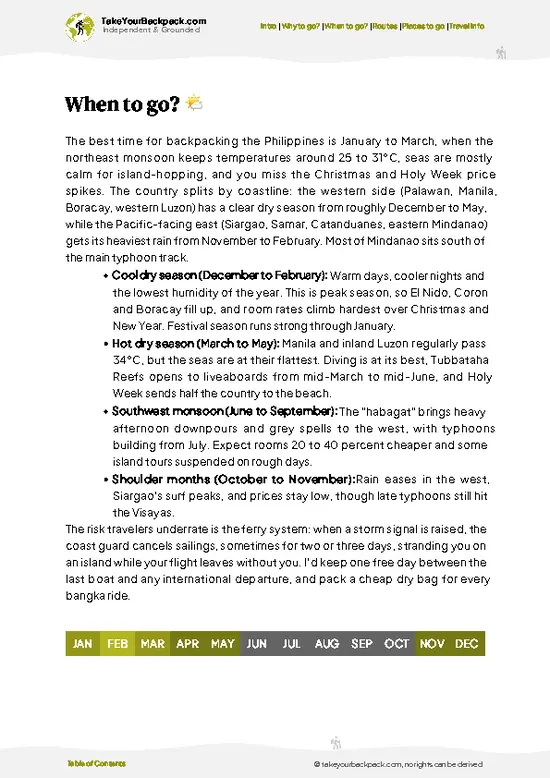
  • Weather: Coron’s dry season runs from November to May, offering clear skies and calm seas perfect for island hopping and diving. The wet season, June to October, brings heavy rains and rough waters, often grounding boats and washing out trails.

  • Temperature: Expect daytime highs between 28°C and 32°C (82°F to 90°F) year-round. Nights cool slightly to around 24°C (75°F), but humidity keeps it sticky. The dry season feels more comfortable; the wet season can be oppressively muggy.

  • Daylight Hours: Roughly 11 to 12 hours of daylight throughout the year, with sunrise around 6 AM and sunset near 6 PM. Early starts are essential to beat the heat and crowds on popular tours.

  • Crowds: Peak season is December to April, especially around Christmas and Easter. Expect packed boats and busy dive
read more 👉

  • Weather: Coron’s dry season runs from November to May, offering clear skies and calm seas perfect for island hopping and diving. The wet season, June to October, brings heavy rains and rough waters, often grounding boats and washing out trails.

  • Temperature: Expect daytime highs between 28°C and 32°C (82°F to 90°F) year-round. Nights cool slightly to around 24°C (75°F), but humidity keeps it sticky. The dry season feels more comfortable; the wet season can be oppressively muggy.

  • Daylight Hours: Roughly 11 to 12 hours of daylight throughout the year, with sunrise around 6 AM and sunset near 6 PM. Early starts are essential to beat the heat and crowds on popular tours.

  • Crowds: Peak season is December to April, especially around Christmas and Easter. Expect packed boats and busy dive spots. Off-peak months see fewer tourists but risk unpredictable weather.

  • Seasonal Activities: Dry months are prime for diving WWII wrecks, snorkeling Kayangan Lake, and hiking Mt. Tapyas. The wet season limits water activities but can be great for inland jungle trekking if you don’t mind mud.

  • Price Fluctuations: Accommodation and tours spike during dry season holidays, sometimes doubling. Off-season offers steep discounts but comes with the gamble of canceled trips due to weather.


Pro-tip: Aim for late March to early May—weather’s solid, crowds thin, and prices start to drop. You’ll dodge the worst of both extremes and get Coron’s magic without the hassle.


source: climatestotravel.comJANJanuary: highly recommended for travelingFEBFebruary: highly recommended for travelingMARMarch: excellent for travelingAPRApril: excellent for travelingMAYMay: excellent for travelingJUNJune: fair for travelingJULJuly: fair for travelingAUGAugust: fair for travelingSEPSeptember: fair for travelingOCTOctober: fair for travelingNOVNovember: highly recommended for travelingDECDecember: highly recommended for traveling
when-to-go

✈️ The backpacker research shortcutPhilippines Travel Guide

An offline-friendly backpacking guide with optimized travel routes, ranked highlights, transport advice, and the best areas to stay.
example page 0 from our offline Travel Guide for Philippines
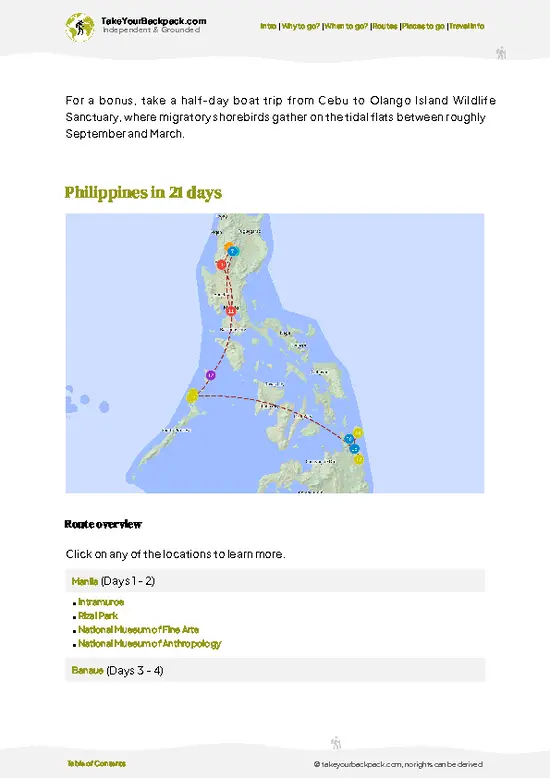
example page 1 from our offline Travel Guide for Philippines
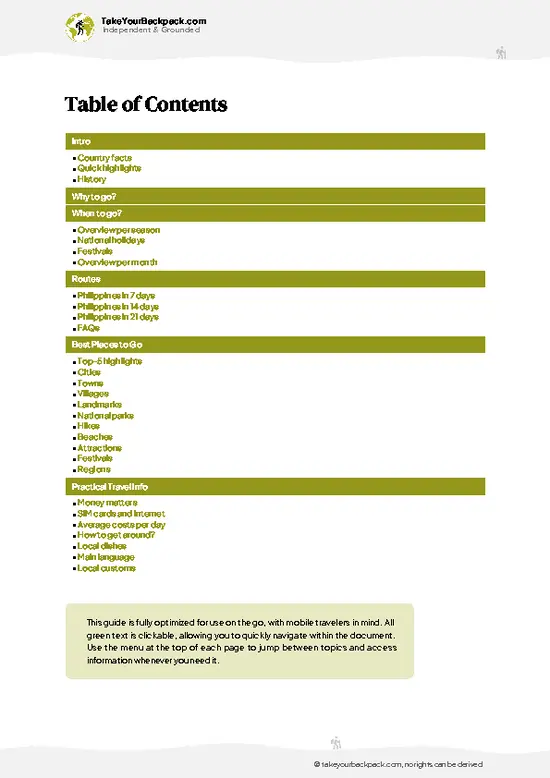
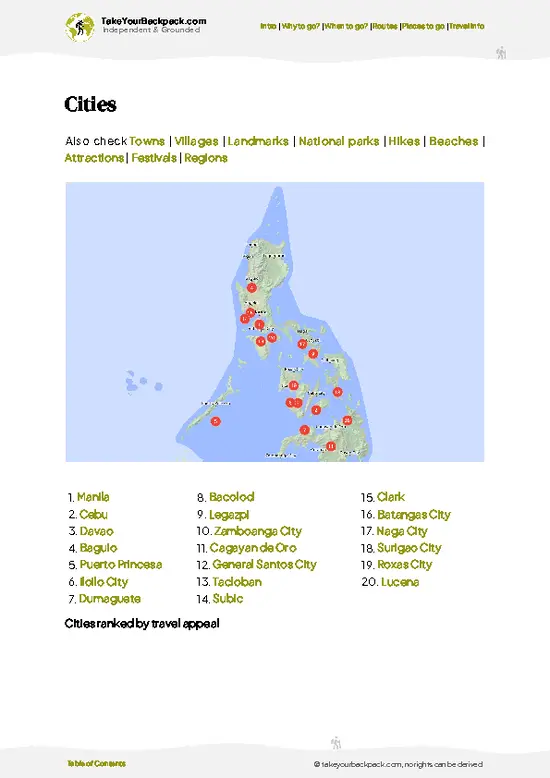
example page 2 from our offline Travel Guide for Philippines
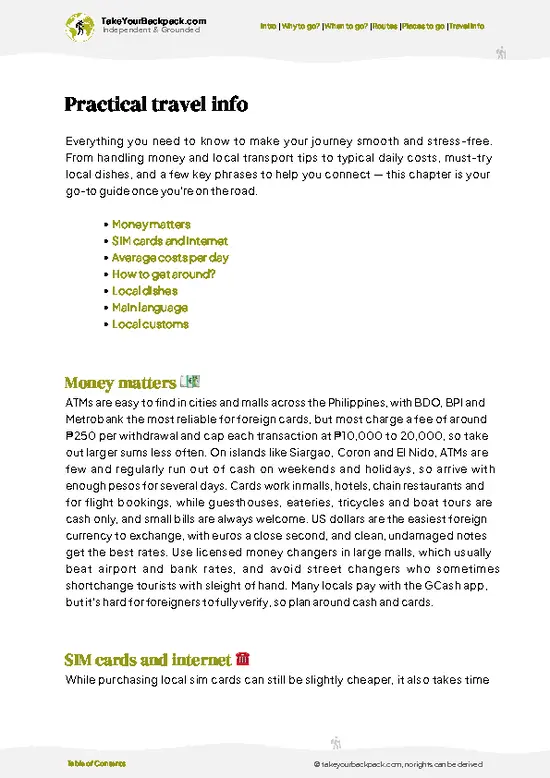
example page 3 from our offline Travel Guide for Philippines
example page 4 from our offline Travel Guide for Philippines
example page 5 from our offline Travel Guide for Philippines
example page 6 from our offline Travel Guide for Philippines
example page 7 from our offline Travel Guide for Philippines
The digital guide (505 pages) contains:
144 highlights, ranked by travel appeal
Optimized 7, 14 & 21-day travel routes
Cities, national parks, landmarks, beaches
How to get around
Offline-friendly for travel without Wi-Fi
👉 Click to see all 30+ guide features

📅 Plan smarter in minutes, not weeks
Month by month travel advice
Festivals & national holidays
Budget expectations

🗺️ Go to the right places, skip the overrated ones
Honest pros & cons of destinations
Top hikes, parks & viewpoints
Lesser-known places most travelers miss
Clear “worth it vs skip it” guidance

🛏️ Travel smoothly without rookie mistakes
Best areas to stay
Transport systems explained simply
Common scams & safety advice
SIM cards, money & practical tips

🌍 Understand the country, not just visit it
Culture & traditions
52 Essential phrases & customs
Festivals worth planning around
Traveler-friendly historical context
Insights that make places more meaningful

📱 Built for real travel conditions
Fully downloadable PDF
Works completely offline
Optimized for phone use
Useful in remote areas & buses
Everything in one place
Save weeks of stressful planning
Get instant access to your full guide. 30‑day money-back guarantee.


By proceeding you agree to our terms.
Sent to your inbox immediately after payment • 100% Secure Checkout
Best Backpacking Travel Advisor 2025 tourism awardBest Backpacking
Travel Advisor
2025
What others say about Take Your Backpack Guides:
⭐⭐⭐⭐⭐
Fantastic, amazing amount of information!
⭐⭐⭐⭐⭐
My goodness this is amazing, it's what I've been looking for hats off too you!
⭐⭐⭐⭐⭐
I think this is absolutely BRILLIANT
⭐⭐⭐⭐
Very complete and informative. It's still missing places, but I gotta to commend you
⭐⭐⭐⭐⭐
This is truly amazing, thank you, can't wait to explore it with my kids!
⭐⭐⭐⭐⭐
Awesome resource, thank you!
⭐⭐⭐⭐⭐
This is amazing! Can't wait to explore the ones I haven't seen
⭐⭐⭐⭐
I love this! Well done, great idea.
⭐⭐⭐⭐⭐
Thanks for taking the time to make this gem!
⭐⭐⭐⭐⭐
This might be the best website I've ever seen.
⭐⭐⭐⭐⭐
Congratulations, and thank you so much for your work; it's incredibly valuable.
⭐⭐⭐⭐
In all seriousness I think you did a great job pointing out the important spots
⭐⭐⭐⭐⭐
10/10 very good
⭐⭐⭐⭐⭐
As someone who's only just starting to visit regularly this is awesome, thank you.
⭐⭐⭐⭐
Thank you very much! I'm going to visit my dad, it's going to be very useful!
⭐⭐⭐⭐⭐
This is really cool! We'll be travelling for the first time and this definitely come in handy.
⭐⭐⭐⭐⭐
You are now our minister of culture, congratulations 👨‍💼
⭐⭐⭐⭐⭐
Just wanted to tell you that this is a pearl! Going to follow your recommendations.
⭐⭐⭐⭐⭐
This is so cool. I'll definitely be using the resource for my travels soon.
⭐⭐⭐⭐⭐
This is very impressive! Good work.
⭐⭐⭐⭐⭐
This is an amazing and informative site. Very well done!

🛏️ Where to stay?How to pick the right area

Coron, Philippines, is a backpacker’s paradise, but let’s cut through the Instagram haze. Yes, the lagoons and lakes are breathtaking, but the crowds can be overwhelming. To truly enjoy Coron, where you stay matters.

Start with the town proper. It’s buzzing with energy and offers a mix of budget-friendly accommodations. You’ll find fellow travelers in every corner, swapping stories over cheap eats. The proximity to the port makes it easy to hop on island-hopping tours without the hassle of long commutes. Just be prepared for the noise; it’s lively, especially at night.

If you’re after a more … read more 👉
Coron, Philippines, is a backpacker’s paradise, but let’s cut through the Instagram haze. Yes, the lagoons and lakes are breathtaking, but the crowds can be overwhelming. To truly enjoy Coron, where you stay matters.

Start with the town proper. It’s buzzing with energy and offers a mix of budget-friendly accommodations. You’ll find fellow travelers in every corner, swapping stories over cheap eats. The proximity to the port makes it easy to hop on island-hopping tours without the hassle of long commutes. Just be prepared for the noise; it’s lively, especially at night.

If you’re after a more laid-back vibe, consider the areas near Maquinit Hot Springs. It’s a bit quieter, with a more local feel. You can soak in natural hot springs after a day of exploring, and the sunsets here are killer. Plus, it’s a great spot to meet other backpackers who appreciate the slower pace.

For those who crave a beachy escape, look at the areas around Malcapuya Island. While it’s a bit off the beaten path, the pristine beaches and fewer tourists make it worth the trek. Just remember, access can be tricky, so plan ahead.

Choose wisely, and you’ll find the real magic of Coron beyond the crowds.

👛 Costs (as of 20 October 2025)Typical daily expenses

Visiting Coron, Philippines, can be a mixed bag of costs, but knowing what to expect will help you navigate the experience without breaking the bank.
  • Accommodation: Expect to pay between $15 to $100 per night. Budget hostels start around $15, while mid-range hotels can range from $40 to $80. For a more luxurious stay, upscale resorts can go up to $100 or more. The key is to book in advance, especially during peak season.
  • Food: Meals can be incredibly affordable. Street food and local eateries offer dishes for as low as $2 to $5. If you prefer dining in restaurants, budget around $10 to $20 per meal. Splurging on a nice dinner? You might spend up to $30, but it’s worth it for the fresh seafood.
  • Transportation: Getting around Coron is relatively cheap. Tricycle rides within the town typically cost
read more 👉
Visiting Coron, Philippines, can be a mixed bag of costs, but knowing what to expect will help you navigate the experience without breaking the bank.
  • Accommodation: Expect to pay between $15 to $100 per night. Budget hostels start around $15, while mid-range hotels can range from $40 to $80. For a more luxurious stay, upscale resorts can go up to $100 or more. The key is to book in advance, especially during peak season.
  • Food: Meals can be incredibly affordable. Street food and local eateries offer dishes for as low as $2 to $5. If you prefer dining in restaurants, budget around $10 to $20 per meal. Splurging on a nice dinner? You might spend up to $30, but it’s worth it for the fresh seafood.
  • Transportation: Getting around Coron is relatively cheap. Tricycle rides within the town typically cost $1 to $3. For island-hopping tours, expect to pay between $25 to $50, depending on the itinerary. Private boat rentals can be pricier, ranging from $100 to $200 for a full day.
  • Activities: Entrance fees for popular spots like Kayangan Lake or Barracuda Lake are usually around $2 to $5. Guided tours can add up, but they often include multiple stops and meals, making them a good value. Budget around $30 to $60 for a full-day tour.
  • Miscellaneous: Don’t forget about travel insurance, which can range from $5 to $15 per day, depending on coverage. Also, set aside some cash for souvenirs and tips, which can add another $10 to $20 to your budget.

Understanding these costs will help you plan effectively. Coron has its touristy spots, but the real magic lies in the untouched beauty and local experiences waiting to be discovered.
⚠️ Prices can change and everyone travels differently, so take this as a rough guide. Hope it helps you plan your adventure!

Other Filipino landmarks near Coron

Explore more nearby:


💡 Not sure where to go next?
Create a personalized itinerary for Philippines including Coron and the places that fit your trip.

Generate my itinerary

👉 Discover all landmarks

Or checkout all Philippines has to offer (think cities, towns, villages, national parks, hikes, beaches, festivals)
Country photo of Philippines

We 💚 feedbackKey takeaways before you go

Coron’s lagoons and crystal-clear waters are a slice of paradise that feels like a dream. You’ll find yourself swimming in spots that look straight out of a postcard. But let’s get real: the crowds can be overwhelming, especially during peak season. You’ll need to navigate through boat tours packed with tourists. Still, if you can embrace the chaos, the beauty here is worth every ounce of effort. Just go in with your eyes wide open.

✈️ When did I visit Philippines?
Philippines being one of my favorites, due to the people and their mentality. I visited it first in 2010 and came back in January 2016 as part of my 1.5 year world trip.

✍️ Help improve this page!
The information on this page is based on my own backpacking experience in Philippines, supplemented with up-to-date research and feedback from other travelers. Travel details can change, so if you notice anything outdated or incomplete, feel free to let me know.


🙋‍♂️ Give feedback

👋 Meet the founderWho’s Behind Take Your Backpack?

Johan, backpacker and founder of TakeYourBackpackHi, I’m Johan (Netherlands 🇳🇱), the creator of TakeYourBackpack. Over the past decade, I’ve backpacked through 80+ countries across six continents, gaining extensive experience with independent travel, long-term trips, and overland routes.

This site is built on a combination of firsthand travel experience and carefully curated insights from other backpackers. Many guides are based on places I’ve personally visited, while others bring together tips, observations, and practical advice shared by trusted travelers I’ve met along the way.

The goal is to provide realistic, experience-driven guidance — not generic itineraries — so you can explore destinations with better context, clearer expectations, and more confidence.

Get full country guide •
Instant download • 144 highlights • Full Offline guide