×

Philippines🇵🇭 | attractionsFort Santiagostone ramparts, Rizal shrine, Spanish-era prison | things to do and best time to go

Explore IntramurosExplore National Museum of Fine Arts

Backpacking in Fort Santiago
🏆 Top pickattraction ranked #4
By Johan Kruseman 🇳🇱 | Updated May 26, 2026

Your boots echo on ancient cobblestones, the air thick with Manila’s humidity and the faint tang of river water. Somewhere, a school group’s laughter bounces off mossy stone walls, mixing with the distant drone of jeepneys. You pause in the shadow of a bullet-pocked gate, the weight of centuries pressing in—this is Fort Santiago, tucked inside Intramuros, the old walled heart of Manila.

Let’s cut through the Instagram filters: Fort Santiago isn’t a secret, and you won’t have it to yourself unless you show up at opening. The crowds are real, especially on weekends, and yes, you’ll dodge selfie sticks. But if you want to feel the pulse of Philippine history—colonial brutality, revolution, and resilience—this place delivers a gut punch. It’s affordable, easy to reach by LRT or Grab, and the drama here is raw, not staged. Compared to the country’s beaches or volcanoes, Fort Santiago is less about adrenaline and more about reckoning with the past. I’ve seen travelers breeze through in 30 minutes, but the ones who linger—reading Rizal’s final footsteps, tracing the scars on the walls—walk out changed.

Discover everything you want to know in the 📖 Philippines Travel Guide.
Loading the map 🌍
CLICK TO FILTER
cities
towns
landmarks
national parks
hikes
beaches
attractions
festivals
regions
SHOW COUNTRY’S BESTSHOW ALL

✨ Why go?
Ranked #4 attraction in Philippines
Why Fort Santiago should be on your travel list

Fort Santiago is not just another photo op on the Philippines’ tourist map—it’s a raw, gritty dive into the country’s layered past. Sure, it gets crowded, especially midday, and yes, the entrance fee is a small pinch compared to some free sights, but that’s where the story thickens. This fortress isn’t just stone and mortar; it’s a living archive of Spanish colonial ambition, wartime scars, and Filipino resilience. Backpackers who make the trek here aren’t just ticking a box—they’re standing where national hero José Rizal was imprisoned before his execution, feeling the weight of history in the air. The adrenaline comes from walking those walls, imagining the battles and betrayals, not from adrenaline parks or thrill rides. It’s a major milestone on any Philippines route because it anchors … read more 👉
Fort Santiago is not just another photo op on the Philippines’ tourist map—it’s a raw, gritty dive into the country’s layered past. Sure, it gets crowded, especially midday, and yes, the entrance fee is a small pinch compared to some free sights, but that’s where the story thickens. This fortress isn’t just stone and mortar; it’s a living archive of Spanish colonial ambition, wartime scars, and Filipino resilience. Backpackers who make the trek here aren’t just ticking a box—they’re standing where national hero José Rizal was imprisoned before his execution, feeling the weight of history in the air. The adrenaline comes from walking those walls, imagining the battles and betrayals, not from adrenaline parks or thrill rides. It’s a major milestone on any Philippines route because it anchors your journey in the country’s soul, grounding the beaches and fiestas in something real and raw. If you want a snapshot of the Philippines beyond the postcard, Fort Santiago delivers with brutal honesty and unforgettable depth.
Want to include Fort Santiago in your Philippines route?
Create a personalized Philippines itinerary that includes Fort Santiago and the places that fit your trip — based on your travel style, budget, and available time. Get your route in seconds.

Generate my trip

💡 HighlightsThe experiences that define the visit

The Main Gate (Fuerza de Santiago)
Let’s get real: most people snap a photo here and move on, but this gate is more than a backdrop for your feed. The scars from cannonballs and the Spanish royal seal above the arch are a punch-in-the-gut reminder that this place was a fortress, not a fairy tale. Stand under the arch and you can almost feel the centuries of tension—colonial ambition, revolution, and the weight of history pressing down. It’s the best place to start if you want to feel the gravity of Fort Santiago, not just see it.


Rizal Shrine
This isn’t just a museum; it’s a pilgrimage site for anyone who cares about the Philippines’ soul. The Rizal Shrine is set inside the barracks where José Rizal, the country’s national hero, spent his last night before execution. The displays are blunt … read more 👉
The Main Gate (Fuerza de Santiago)
Let’s get real: most people snap a photo here and move on, but this gate is more than a backdrop for your feed. The scars from cannonballs and the Spanish royal seal above the arch are a punch-in-the-gut reminder that this place was a fortress, not a fairy tale. Stand under the arch and you can almost feel the centuries of tension—colonial ambition, revolution, and the weight of history pressing down. It’s the best place to start if you want to feel the gravity of Fort Santiago, not just see it.


Rizal Shrine
This isn’t just a museum; it’s a pilgrimage site for anyone who cares about the Philippines’ soul. The Rizal Shrine is set inside the barracks where José Rizal, the country’s national hero, spent his last night before execution. The displays are blunt and personal—his final footsteps are literally marked on the floor. You’ll see his prison cell, his original manuscripts, and even the coat he wore to his death. Skip the Instagram pose and read his letters. They’re raw, angry, and heartbreakingly hopeful. This is the real deal.


The Dungeons
Claustrophobic, damp, and absolutely not sanitized for tourists. The dungeons are where the Spanish and later the Japanese held prisoners—sometimes hundreds at a time, in conditions that make your skin crawl. You’ll see rusted chains and water stains, not polished exhibits. It’s dark tourism at its most honest. If you want to understand the cost of colonial rule, this is where you feel it in your bones. My personal favorite, because it’s impossible to walk out unchanged.


Plaza de Armas
Ignore the tour groups and look up: this open square is the beating heart of the fort. It’s where soldiers drilled, prisoners were paraded, and executions were carried out. Today, it’s a strange mix of serenity and ghosts. The banyan trees are thick and tangled, and if you catch it at dusk, the whole place feels suspended between eras. It’s not “beautiful” in the postcard sense, but it’s alive with stories.


The Moat and River Views
Most people miss this, but the Pasig River wraps around the fort, and the old moat is still visible. Walk the ramparts and you’ll get a gritty, panoramic view of Manila’s chaos colliding with colonial stonework. It’s not pretty, but it’s honest—fishermen, ferries, and the city’s pulse right at your feet. This is where you realize Fort Santiago isn’t a relic; it’s still part of Manila’s bloodstream.
Spotted a mistake or missing something? Contact us.

Things to do around Fort Santiago

Ratings based on Tripadvisor reviews. When you book through this link, you support our work at no extra cost to you.

🌤️ When to go?When to go for the best experience


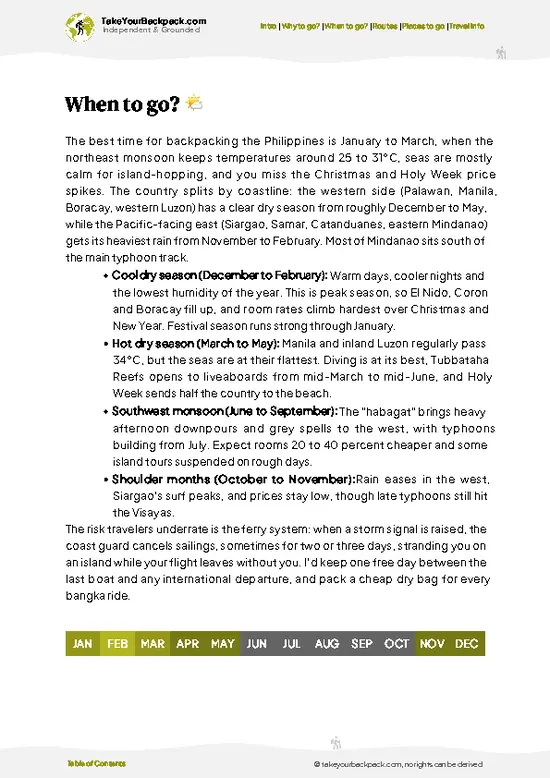
  • Weather: The dry season from November to April is your best bet. Expect less rain, which means fewer muddy trails and more time to explore without a soggy shirt. May to October is the wet season, with heavy downpours that can turn your visit into a soggy slog.

  • Temperature: Temperatures hover between 25°C and 32°C (77°F to 90°F) year-round, but the dry months feel less oppressive thanks to lower humidity. The wet season cranks up the muggy factor, making even a short walk feel like a sauna session.

  • Daylight Hours: Daylight stays fairly consistent, around 11 to 12 hours daily. Plan your visit in the morning to avoid the midday heat and catch the fort in softer light—perfect for photos without the harsh glare.

  • Crowds: Peak tourist season aligns with the dry months, especially December
read more 👉

  • Weather: The dry season from November to April is your best bet. Expect less rain, which means fewer muddy trails and more time to explore without a soggy shirt. May to October is the wet season, with heavy downpours that can turn your visit into a soggy slog.

  • Temperature: Temperatures hover between 25°C and 32°C (77°F to 90°F) year-round, but the dry months feel less oppressive thanks to lower humidity. The wet season cranks up the muggy factor, making even a short walk feel like a sauna session.

  • Daylight Hours: Daylight stays fairly consistent, around 11 to 12 hours daily. Plan your visit in the morning to avoid the midday heat and catch the fort in softer light—perfect for photos without the harsh glare.

  • Crowds: Peak tourist season aligns with the dry months, especially December to February. Expect more visitors and higher prices. If you want to dodge the crowds, early November or late April offer a quieter experience without sacrificing weather.

  • Seasonal Activities: December brings festive vibes with local Christmas celebrations nearby, adding cultural flavor beyond the fort itself. Avoid the rainy months if you want to catch these events without weather interruptions.

  • Price Fluctuations: Entrance fees remain stable, but accommodation and transport costs spike during the dry season and holidays. Booking ahead during these months saves you from last-minute price gouging.


Pro-tip: Visit Fort Santiago in early November or late April—sweet spots where weather, crowd size, and prices align for a smooth, authentic experience without the usual tourist crush.


source: climatestotravel.comJANJanuary: highly recommended for travelingFEBFebruary: highly recommended for travelingMARMarch: highly recommended for travelingAPRApril: highly recommended for travelingMAYMay: fair for travelingJUNJune: fair for travelingJULJuly: fair for travelingAUGAugust: fair for travelingSEPSeptember: fair for travelingOCTOctober: fair for travelingNOVNovember: highly recommended for travelingDECDecember: highly recommended for traveling
when-to-go

✈️ The backpacker research shortcutPhilippines Travel Guide

An offline-friendly backpacking guide with optimized travel routes, ranked highlights, transport advice, and the best areas to stay.
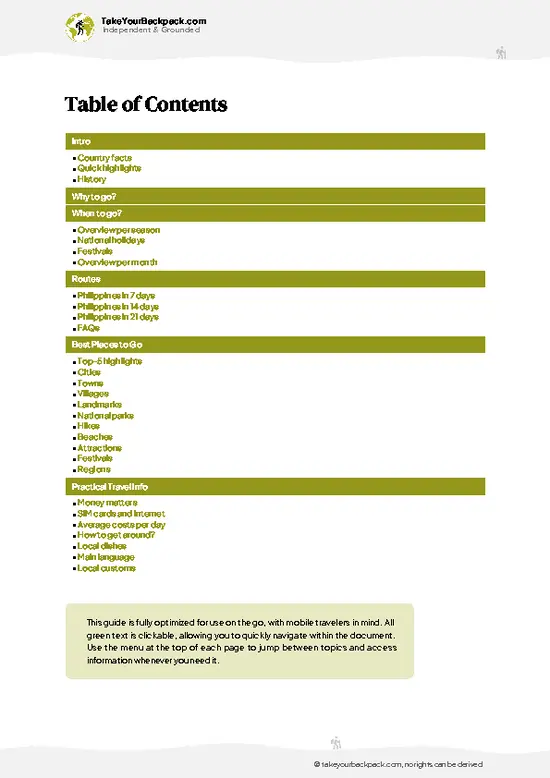
example page 0 from our offline Travel Guide for Philippinesexample page 1 from our offline Travel Guide for Philippinesexample page 2 from our offline Travel Guide for Philippinesexample page 3 from our offline Travel Guide for Philippinesexample page 4 from our offline Travel Guide for Philippinesexample page 5 from our offline Travel Guide for Philippinesexample page 6 from our offline Travel Guide for Philippinesexample page 7 from our offline Travel Guide for Philippines
The digital guide (505 pages) contains:
144 highlights, ranked by travel appeal
Optimized 7, 14 & 21-day travel routes
Cities, national parks, landmarks, beaches
How to get around
Offline-friendly for travel without Wi-Fi
👉 Click to see all 30+ guide features

📅 Plan smarter in minutes, not weeks
Month by month travel advice
Festivals & national holidays
Budget expectations

🗺️ Go to the right places, skip the overrated ones
Honest pros & cons of destinations
Top hikes, parks & viewpoints
Lesser-known places most travelers miss
Clear “worth it vs skip it” guidance

🛏️ Travel smoothly without rookie mistakes
Best areas to stay
Transport systems explained simply
Common scams & safety advice
SIM cards, money & practical tips

🌍 Understand the country, not just visit it
Culture & traditions
52 Essential phrases & customs
Festivals worth planning around
Traveler-friendly historical context
Insights that make places more meaningful

📱 Built for real travel conditions
Fully downloadable PDF
Works completely offline
Optimized for phone use
Useful in remote areas & buses
Everything in one place
Save weeks of stressful planning
Get instant access to your full guide. 30‑day money-back guarantee.


By proceeding you agree to our terms.
Sent to your inbox immediately after payment • 100% Secure Checkout
Best Backpacking Travel Advisor 2025 tourism awardBest Backpacking
Travel Advisor
2025
What others say about Take Your Backpack Guides:
⭐⭐⭐⭐⭐
Fantastic, amazing amount of information!
⭐⭐⭐⭐⭐
My goodness this is amazing, it's what I've been looking for hats off too you!
⭐⭐⭐⭐⭐
I think this is absolutely BRILLIANT
⭐⭐⭐⭐
Very complete and informative. It's still missing places, but I gotta to commend you
⭐⭐⭐⭐⭐
This is truly amazing, thank you, can't wait to explore it with my kids!
⭐⭐⭐⭐⭐
Awesome resource, thank you!
⭐⭐⭐⭐⭐
This is amazing! Can't wait to explore the ones I haven't seen
⭐⭐⭐⭐
I love this! Well done, great idea.
⭐⭐⭐⭐⭐
Thanks for taking the time to make this gem!
⭐⭐⭐⭐⭐
This might be the best website I've ever seen.
⭐⭐⭐⭐⭐
Congratulations, and thank you so much for your work; it's incredibly valuable.
⭐⭐⭐⭐
In all seriousness I think you did a great job pointing out the important spots
⭐⭐⭐⭐⭐
10/10 very good
⭐⭐⭐⭐⭐
As someone who's only just starting to visit regularly this is awesome, thank you.
⭐⭐⭐⭐
Thank you very much! I'm going to visit my dad, it's going to be very useful!
⭐⭐⭐⭐⭐
This is really cool! We'll be travelling for the first time and this definitely come in handy.
⭐⭐⭐⭐⭐
You are now our minister of culture, congratulations 👨‍💼
⭐⭐⭐⭐⭐
Just wanted to tell you that this is a pearl! Going to follow your recommendations.
⭐⭐⭐⭐⭐
This is so cool. I'll definitely be using the resource for my travels soon.
⭐⭐⭐⭐⭐
This is very impressive! Good work.
⭐⭐⭐⭐⭐
This is an amazing and informative site. Very well done!

🛏️ Where to stay?Where staying makes the most sense

Fort Santiago in Manila is a magnet for history buffs and culture seekers, but let’s cut through the postcard-perfect hype. The area around Intramuros, where Fort Santiago sits, is a double-edged sword. It’s packed with tourists during the day, and yes, it can feel like a theme park at times—crowded, noisy, and with prices nudged up for the Instagram crowd. But here’s the kicker: if you stay just outside the thick of Intramuros, in neighborhoods like Binondo or Ermita, you tap into the real pulse of Manila.

Binondo, the world’s oldest Chinatown, is a riot of street food stalls, bustling markets, … read more 👉
Fort Santiago in Manila is a magnet for history buffs and culture seekers, but let’s cut through the postcard-perfect hype. The area around Intramuros, where Fort Santiago sits, is a double-edged sword. It’s packed with tourists during the day, and yes, it can feel like a theme park at times—crowded, noisy, and with prices nudged up for the Instagram crowd. But here’s the kicker: if you stay just outside the thick of Intramuros, in neighborhoods like Binondo or Ermita, you tap into the real pulse of Manila.

Binondo, the world’s oldest Chinatown, is a riot of street food stalls, bustling markets, and a social vibe that’s electric without the tourist markup. It’s safe enough if you stick to the main streets and offers a chance to meet locals and fellow backpackers who are here for the authentic experience, not just the photo op. Ermita, meanwhile, is a backpacker hub with a gritty charm—think lively bars, affordable eats, and a mix of travelers swapping stories. It’s close enough to Fort Santiago for a quick visit but far enough to avoid the daytime crush.

Skip the polished tourist traps. Stay where the city breathes, where the stories are raw, and where your wallet won’t scream for mercy. That’s where the real Manila magic happens.

👛 Costs (as of 12 October 2025)What things cost and how to budget

As of the latest information, the entrance fee for Fort Santiago is PHP 75.00 for regular visitors and PHP 50.00 for students, senior citizens, and persons with disabilities. The fort is open Monday to Friday from 8:00 AM to 10:00 PM, with last entry at 8:00 PM; and Saturday to Sunday from 6:00 AM to 10:00 PM, with last entry at 8:30 PM. Payment options include cash, Maya, and Klook. The dungeon is open to the public from 2:00 PM to 10:00 PM daily, with its entrance included in the Fort Santiago entrance fee.

source: intramuros.gov.ph
⚠️ Prices can change and everyone travels differently, so take this as a rough guide. Hope it helps you plan your adventure!

Other Filipino attractions near Fort Santiago

Explore more nearby:


💡 Not sure where to go next?
Create a personalized itinerary for Philippines including Fort Santiago and the places that fit your trip.

Generate my itinerary

👉 Discover all attractions

Or checkout all Philippines has to offer (think cities, towns, villages, national parks, hikes, beaches, festivals)
Country photo of Philippines

We 💚 feedbackKey takeaways before you go

Fort Santiago isn’t some quiet, untouched relic — it’s smack in the middle of Manila’s chaos, often packed with tourists and locals alike. That noise and crowd can wear on you. But here’s the kicker: walking its walls, you’re tracing the footsteps of history that shaped a nation, feeling the weight of centuries in the air. If you want raw, unfiltered history with a pulse, this is the spot. Just brace for the buzz.

✈️ When did I visit Philippines?
Philippines being one of my favorites, due to the people and their mentality. I visited it first in 2010 and came back in January 2016 as part of my 1.5 year world trip.

✍️ Help improve this page!
The information on this page is based on my own backpacking experience in Philippines, supplemented with up-to-date research and feedback from other travelers. Travel details can change, so if you notice anything outdated or incomplete, feel free to let me know.


🙋‍♂️ Give feedback

👋 Meet the founderWho’s Behind Take Your Backpack?

Johan, backpacker and founder of TakeYourBackpackHi, I’m Johan (Netherlands 🇳🇱), the creator of TakeYourBackpack. Over the past decade, I’ve backpacked through 80+ countries across six continents, gaining extensive experience with independent travel, long-term trips, and overland routes.

This site is built on a combination of firsthand travel experience and carefully curated insights from other backpackers. Many guides are based on places I’ve personally visited, while others bring together tips, observations, and practical advice shared by trusted travelers I’ve met along the way.

The goal is to provide realistic, experience-driven guidance — not generic itineraries — so you can explore destinations with better context, clearer expectations, and more confidence.

Get full country guide •
Instant download • 144 highlights • Full Offline guide