×

Philippines🇵🇭 | attractionsNational Museum of Fine ArtsFilipino paintings, neoclassical building, sculpture halls | things to do and best time to go

Explore Fort SantiagoExplore National Museum of Anthropology

Backpacking in National Museum of Fine Arts
🌟 Highlightattraction ranked #6
By Johan Kruseman 🇳🇱 | Updated May 16, 2026

Here’s what nobody tells you: the National Museum of Fine Arts is air-conditioned, blissfully so, and you’ll thank the gods of climate control the second Manila’s humidity tries to flatten you. Smack in the heart of Ermita, Manila, this museum is a stone’s throw from Rizal Park and the chaos of the city, but inside, it’s all marble halls and quiet. For backpackers, it’s a wild card—no, you won’t get the adrenaline rush of surfing Siargao or the Instagram likes of Palawan’s lagoons, but you will get a crash course in Filipino identity, from epic Spoliarium canvases to revolutionary portraits. It’s cheap (sometimes even free), rarely packed, and the security guards are friendlier than most hostel staff. The vibe is contemplative, not flashy, but if you want to understand the Philippines beyond beaches and bars, this is where the real magic starts.

Discover everything you want to know in the 📖 Philippines Travel Guide.
Loading the map 🌍
CLICK TO FILTER
cities
towns
landmarks
national parks
hikes
beaches
attractions
festivals
regions
SHOW COUNTRY’S BESTSHOW ALL

✨ Why go?
Ranked #6 attraction in Philippines
Why National Museum of Fine Arts should be on your travel list

The National Museum of Fine Arts in the Philippines isn’t just another stop on the tourist checklist—it’s a heavyweight cultural landmark that demands your attention. Sure, it can get crowded, especially on weekends, and the entrance fee is modest but not free. But here’s the kicker: this place houses the backbone of Filipino artistic identity, from Juan Luna’s revolutionary “Spoliarium” to contemporary works that challenge and provoke. It’s not just about pretty pictures; it’s a deep dive into the country’s turbulent history and resilient spirit, all captured on canvas. For backpackers, it’s a rare chance to connect with the Philippines beyond beaches and street food. The museum’s location in Manila makes it a crucial waypoint on any serious route through the archipelago—an anchor point where … read more 👉
The National Museum of Fine Arts in the Philippines isn’t just another stop on the tourist checklist—it’s a heavyweight cultural landmark that demands your attention. Sure, it can get crowded, especially on weekends, and the entrance fee is modest but not free. But here’s the kicker: this place houses the backbone of Filipino artistic identity, from Juan Luna’s revolutionary “Spoliarium” to contemporary works that challenge and provoke. It’s not just about pretty pictures; it’s a deep dive into the country’s turbulent history and resilient spirit, all captured on canvas. For backpackers, it’s a rare chance to connect with the Philippines beyond beaches and street food. The museum’s location in Manila makes it a crucial waypoint on any serious route through the archipelago—an anchor point where history, art, and national pride collide. If you’re after an adrenaline rush, this isn’t it. But if you want to understand the soul of the Philippines, this is non-negotiable.
Want to include National Museum of Fine Arts in your Philippines route?
Create a personalized Philippines itinerary that includes National Museum of Fine Arts and the places that fit your trip — based on your travel style, budget, and available time. Get your route in seconds.

Generate my trip

💡 HighlightsMust-see experiences and standout moments

Spoliarium by Juan Luna
Let’s cut through the hype: this is the Mona Lisa of the Philippines, but with more blood and guts. The Spoliarium isn’t just a painting; it’s a 13-foot-tall, 25-foot-wide gut punch. You’ll see crowds, yes, and a sea of selfie sticks, but stand in front of it and you’ll feel the weight of colonial history and raw human suffering. Luna’s brushwork is so intense you can almost smell the sweat and iron. If you only have ten minutes, spend them here. This is my personal favorite—nothing else in the building hits this hard.


The Assassination of Governor Bustamante by Félix Resurrección Hidalgo
This one’s a full-on historical drama, frozen in oil. Hidalgo doesn’t pull punches: the chaos, the violence, the clerics in the act. It’s a reminder that Philippine history is messy, … read more 👉
Spoliarium by Juan Luna
Let’s cut through the hype: this is the Mona Lisa of the Philippines, but with more blood and guts. The Spoliarium isn’t just a painting; it’s a 13-foot-tall, 25-foot-wide gut punch. You’ll see crowds, yes, and a sea of selfie sticks, but stand in front of it and you’ll feel the weight of colonial history and raw human suffering. Luna’s brushwork is so intense you can almost smell the sweat and iron. If you only have ten minutes, spend them here. This is my personal favorite—nothing else in the building hits this hard.


The Assassination of Governor Bustamante by Félix Resurrección Hidalgo
This one’s a full-on historical drama, frozen in oil. Hidalgo doesn’t pull punches: the chaos, the violence, the clerics in the act. It’s a reminder that Philippine history is messy, bloody, and never boring. The scale and detail are wild—look for the faces in the crowd, each one telling a different story. It’s the kind of painting that makes you want to read up on the real event afterward.


Gallery of Filipino Masters
Don’t skip the halls lined with works by Amorsolo, Edades, and Ocampo. This is where you see the evolution of Filipino identity, from idyllic rice fields to the fractured, modern psyche. It’s not just pretty landscapes—there’s tension, rebellion, and a lot of national soul-searching. If you want to understand the Filipino spirit, this is your crash course.


The Neo-Classical Architecture
The building itself is a statement. Corinthian columns, grand staircases, and marble everywhere—this is Manila’s answer to the Louvre, minus the snobbery. The echo of your footsteps, the shafts of sunlight through high windows, the faint smell of old paper and varnish: it all adds to the drama. Even if you’re not an art nerd, the setting makes you feel like you’re in a movie.


Botong Francisco’s Murals
Francisco’s murals are a riot of color and movement. They’re not locked behind velvet ropes—these are massive, in-your-face slices of Philippine life, from fiestas to revolutions. His style is bold, almost cartoonish, but the stories are dead serious. Stand close and you’ll spot details that textbooks leave out.


Rizal’s Sculptures and Sketches
Yes, that Rizal. The national hero wasn’t just a writer; he could sculpt and sketch with the best of them. These pieces are smaller, quieter, but they pack a punch if you know the backstory. It’s a rare chance to see the softer, more personal side of a man usually cast in bronze and marble.
Spotted a mistake or missing something? Contact us.

Things to do around National Museum of Fine Arts

Ratings based on Tripadvisor reviews. When you book through this link, you support our work at no extra cost to you.

🌤️ When to go?Seasonal considerations and timing


  • Topic: Weather and Temperature – The Philippines is hot and humid year-round, but from December to February, expect cooler, drier air with temperatures around 24-30°C (75-86°F). This is the most comfortable time to explore the National Museum of Fine Arts without sweating through your shirt.

  • Topic: Daylight Hours – Daylight stays fairly consistent, roughly 11 to 12 hours daily. From November to January, the sun sets earlier, around 5:30 PM, so plan museum visits accordingly to maximize your time indoors before closing.

  • Topic: Crowds – Peak tourist season hits December through April, especially around holidays like Christmas and Holy Week. Expect bigger crowds and longer lines. For a quieter experience, aim for the shoulder months of October or May when locals are around but tourists
read more 👉

  • Topic: Weather and Temperature – The Philippines is hot and humid year-round, but from December to February, expect cooler, drier air with temperatures around 24-30°C (75-86°F). This is the most comfortable time to explore the National Museum of Fine Arts without sweating through your shirt.

  • Topic: Daylight Hours – Daylight stays fairly consistent, roughly 11 to 12 hours daily. From November to January, the sun sets earlier, around 5:30 PM, so plan museum visits accordingly to maximize your time indoors before closing.

  • Topic: Crowds – Peak tourist season hits December through April, especially around holidays like Christmas and Holy Week. Expect bigger crowds and longer lines. For a quieter experience, aim for the shoulder months of October or May when locals are around but tourists thin out.

  • Topic: Seasonal Activities – The museum often hosts special exhibits and cultural events during the dry season, particularly in February and March. These can add real depth to your visit but also draw more visitors.

  • Topic: Price Fluctuations – Entrance fees remain stable year-round, but accommodation and flight costs spike during the dry season and holidays. Budget travelers will find better deals from June to September, though expect more rain.


Pro-tip: Visit early in the morning on weekdays during the dry season to dodge crowds and soak in the art with minimal distractions.


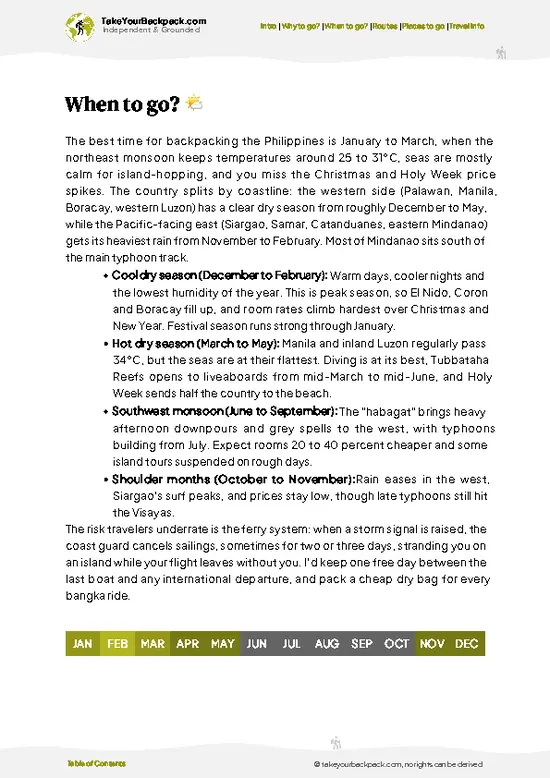
source: climatestotravel.comJANJanuary: highly recommended for travelingFEBFebruary: highly recommended for travelingMARMarch: highly recommended for travelingAPRApril: good for travelingMAYMay: highly recommended for travelingJUNJune: good for travelingJULJuly: good for travelingAUGAugust: good for travelingSEPSeptember: good for travelingOCTOctober: highly recommended for travelingNOVNovember: good for travelingDECDecember: highly recommended for traveling
when-to-go

✈️ The backpacker research shortcutPhilippines Travel Guide

An offline-friendly backpacking guide with optimized travel routes, ranked highlights, transport advice, and the best areas to stay.
example page 0 from our offline Travel Guide for Philippines
example page 1 from our offline Travel Guide for Philippines
example page 2 from our offline Travel Guide for Philippines
example page 3 from our offline Travel Guide for Philippines
example page 4 from our offline Travel Guide for Philippines
example page 5 from our offline Travel Guide for Philippines
example page 6 from our offline Travel Guide for Philippines
example page 7 from our offline Travel Guide for Philippines
The digital guide (505 pages) contains:
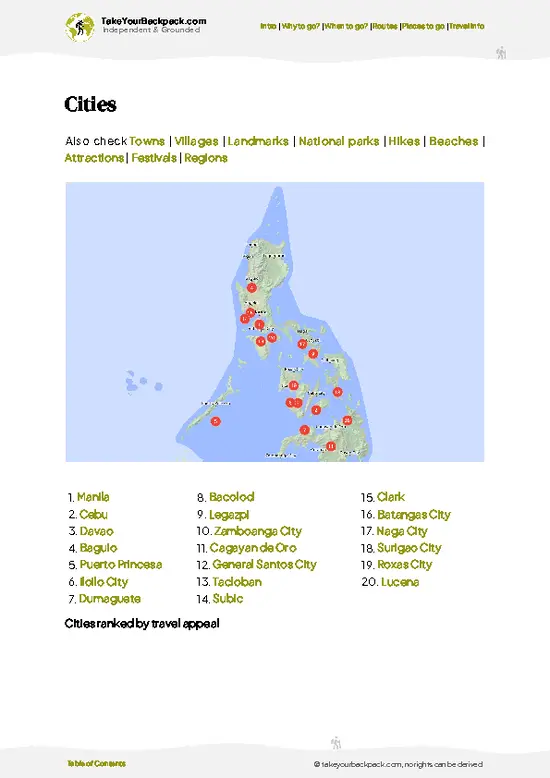
144 highlights, ranked by travel appeal
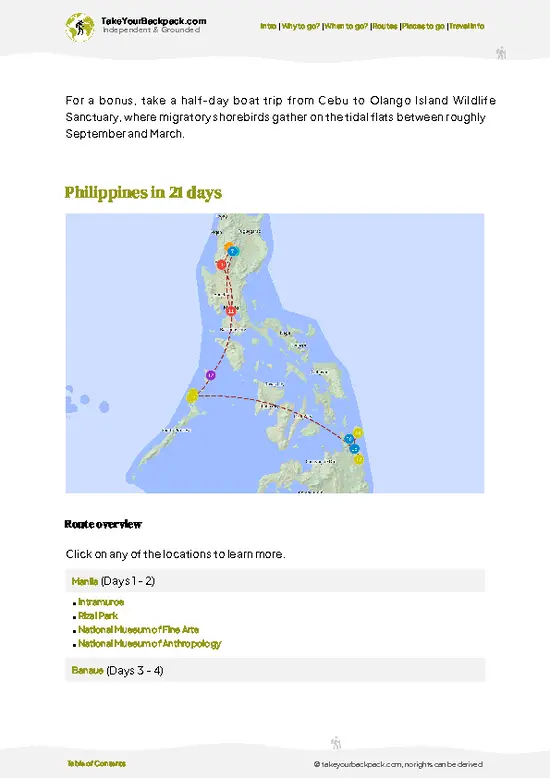
Optimized 7, 14 & 21-day travel routes
Cities, national parks, landmarks, beaches
How to get around
Offline-friendly for travel without Wi-Fi
👉 Click to see all 30+ guide features

📅 Plan smarter in minutes, not weeks
Month by month travel advice
Festivals & national holidays
Budget expectations

🗺️ Go to the right places, skip the overrated ones
Honest pros & cons of destinations
Top hikes, parks & viewpoints
Lesser-known places most travelers miss
Clear “worth it vs skip it” guidance

🛏️ Travel smoothly without rookie mistakes
Best areas to stay
Transport systems explained simply
Common scams & safety advice
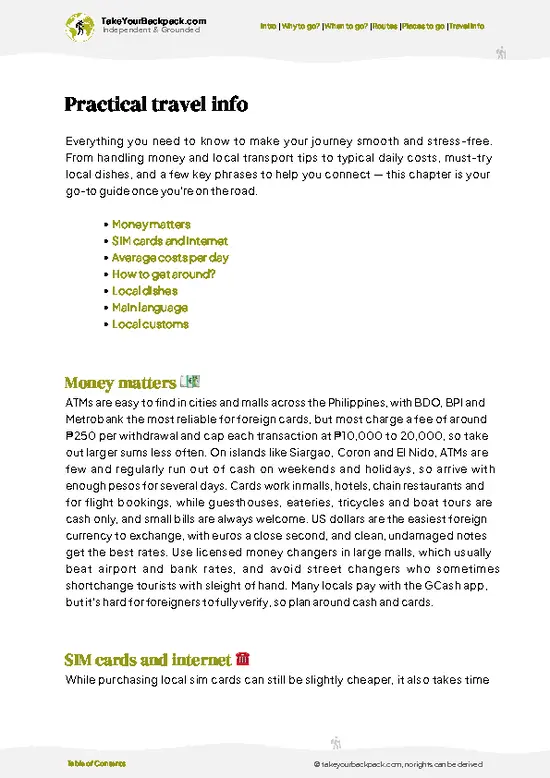
SIM cards, money & practical tips

🌍 Understand the country, not just visit it
Culture & traditions
52 Essential phrases & customs
Festivals worth planning around
Traveler-friendly historical context
Insights that make places more meaningful

📱 Built for real travel conditions
Fully downloadable PDF
Works completely offline
Optimized for phone use
Useful in remote areas & buses
Everything in one place
Save weeks of stressful planning
Get instant access to your full guide. 30‑day money-back guarantee.


By proceeding you agree to our terms.
Sent to your inbox immediately after payment • 100% Secure Checkout
Best Backpacking Travel Advisor 2025 tourism awardBest Backpacking
Travel Advisor
2025
What others say about Take Your Backpack Guides:
⭐⭐⭐⭐⭐
Fantastic, amazing amount of information!
⭐⭐⭐⭐⭐
My goodness this is amazing, it's what I've been looking for hats off too you!
⭐⭐⭐⭐⭐
I think this is absolutely BRILLIANT
⭐⭐⭐⭐
Very complete and informative. It's still missing places, but I gotta to commend you
⭐⭐⭐⭐⭐
This is truly amazing, thank you, can't wait to explore it with my kids!
⭐⭐⭐⭐⭐
Awesome resource, thank you!
⭐⭐⭐⭐⭐
This is amazing! Can't wait to explore the ones I haven't seen
⭐⭐⭐⭐
I love this! Well done, great idea.
⭐⭐⭐⭐⭐
Thanks for taking the time to make this gem!
⭐⭐⭐⭐⭐
This might be the best website I've ever seen.
⭐⭐⭐⭐⭐
Congratulations, and thank you so much for your work; it's incredibly valuable.
⭐⭐⭐⭐
In all seriousness I think you did a great job pointing out the important spots
⭐⭐⭐⭐⭐
10/10 very good
⭐⭐⭐⭐⭐
As someone who's only just starting to visit regularly this is awesome, thank you.
⭐⭐⭐⭐
Thank you very much! I'm going to visit my dad, it's going to be very useful!
⭐⭐⭐⭐⭐
This is really cool! We'll be travelling for the first time and this definitely come in handy.
⭐⭐⭐⭐⭐
You are now our minister of culture, congratulations 👨‍💼
⭐⭐⭐⭐⭐
Just wanted to tell you that this is a pearl! Going to follow your recommendations.
⭐⭐⭐⭐⭐
This is so cool. I'll definitely be using the resource for my travels soon.
⭐⭐⭐⭐⭐
This is very impressive! Good work.
⭐⭐⭐⭐⭐
This is an amazing and informative site. Very well done!

🛏️ Where to stay?How to pick the right area

The National Museum of Fine Arts in Manila sits smack in the middle of the city’s cultural heartbeat, but don’t kid yourself—this isn’t a quiet, tucked-away art haven. The area around it, particularly Ermita and Intramuros, can get noisy and crowded, especially on weekends and holidays when locals and tourists flood in. It’s not the cheapest neighborhood either, but that’s the price of proximity to Manila’s core attractions.

For backpackers, Ermita is your best bet. It’s a lively mix of budget guesthouses, street food stalls, and bars where you can meet fellow travelers without feeling like you’re … read more 👉
The National Museum of Fine Arts in Manila sits smack in the middle of the city’s cultural heartbeat, but don’t kid yourself—this isn’t a quiet, tucked-away art haven. The area around it, particularly Ermita and Intramuros, can get noisy and crowded, especially on weekends and holidays when locals and tourists flood in. It’s not the cheapest neighborhood either, but that’s the price of proximity to Manila’s core attractions.

For backpackers, Ermita is your best bet. It’s a lively mix of budget guesthouses, street food stalls, and bars where you can meet fellow travelers without feeling like you’re stuck in a tourist bubble. Safety here is decent if you stick to the main streets and avoid wandering alone after dark. Plus, it’s walkable to the museum and other landmarks, saving you time and transport costs.

Intramuros, the old walled city, offers a more atmospheric stay with cobblestone streets and colonial vibes. It’s quieter at night but less social, so if you’re flying solo and want to connect, Ermita edges out. Both areas give you a real slice of Manila’s chaotic charm—raw, real, and worth it if you’re ready to dive in headfirst.

👛 Costs (as of 9 June 2026)Travel costs and budget guide for National Museum of Fine Arts

Admission to the National Museum of Fine Arts in Manila is free for all visitors. However, if you plan to purchase souvenirs, prices range from approximately €1 for small items like postcards to €10 for higher-end merchandise such as commemorative watches.

source: weblinks.nationalmuseum.gov.ph
⚠️ Prices can change and everyone travels differently, so take this as a rough guide. Hope it helps you plan your adventure!

Other Filipino attractions near National Museum of Fine Arts

Explore more nearby:


💡 Not sure where to go next?
Create a personalized itinerary for Philippines including National Museum of Fine Arts and the places that fit your trip.

Generate my itinerary

👉 Discover all attractions

Or checkout all Philippines has to offer (think cities, towns, villages, national parks, hikes, beaches, festivals)
Country photo of Philippines

We 💚 feedbackIs it worth it?

The National Museum of Fine Arts in the Philippines isn’t your typical tourist stop swamped with crowds, but it can feel a bit slow if you’re expecting flashy exhibits or interactive tech. What makes it worth your time is the raw, unfiltered glimpse into Filipino identity through art that’s often overlooked elsewhere. If you want to understand the country beyond postcards, this place delivers—no frills, just substance.

✈️ When did I visit Philippines?
Philippines being one of my favorites, due to the people and their mentality. I visited it first in 2010 and came back in January 2016 as part of my 1.5 year world trip.

✍️ Help improve this page!
The information on this page is based on my own backpacking experience in Philippines, supplemented with up-to-date research and feedback from other travelers. Travel details can change, so if you notice anything outdated or incomplete, feel free to let me know.


🙋‍♂️ Give feedback

👋 Meet the founderWho’s Behind Take Your Backpack?

Johan, backpacker and founder of TakeYourBackpackHi, I’m Johan (Netherlands 🇳🇱), the creator of TakeYourBackpack. Over the past decade, I’ve backpacked through 80+ countries across six continents, gaining extensive experience with independent travel, long-term trips, and overland routes.

This site is built on a combination of firsthand travel experience and carefully curated insights from other backpackers. Many guides are based on places I’ve personally visited, while others bring together tips, observations, and practical advice shared by trusted travelers I’ve met along the way.

The goal is to provide realistic, experience-driven guidance — not generic itineraries — so you can explore destinations with better context, clearer expectations, and more confidence.

Get full country guide •
Instant download • 144 highlights • Full Offline guide