
×

Philippines🇵🇭 | townsKaliboAti-Atihan festival, piña weaving, mangrove park | things to do and best time to go

Explore TaalExplore Dumaran

Backpacking in Kalibo
👀 For curious travelerstown ranked #19
By Johan Kruseman 🇳🇱 | Updated May 25, 2026

Most people treat Kalibo as a forgettable airport for Boracay, but it’s actually one of the cheapest, easiest places in the Philippines to reset your budget without feeling stuck in a transit town. Sitting in Aklan province on the northwestern side of Panay Island, Kalibo is scruffy, safe by backpacker standards, and very local. You get cheap eats, walkable streets, a mellow riverside, and the chaotic Ati-Atihan festival if you time it right, but nightlife and fellow travelers are far thinner than in Iloilo or Boracay, so it’s more “logistics hub with character” than destination city.

Discover everything you want to know in the 📖 Philippines Travel Guide.
Loading the map 🌍
CLICK TO FILTER
city
town
unique site
national park
hike
beach
attraction
festival
region
SHOW COUNTRY’S BESTSHOW ALL

✨ Why go?
Ranked #19 town in Philippines
What sets this place apart

Kalibo is a strategic stop for backpackers navigating the Philippines. It’s not just a gateway to Boracay; it offers a blend of affordable hostels and delicious local food that keeps your budget in check. The city is walkable, making it easy to explore local markets and street vendors. Nightlife here is laid-back, perfect for unwinding after a day of adventure. Plus, its location makes for easy onward travel to nearby destinations. While Kalibo may not be the main attraction, its basecamp value for day trips and the chance to soak in local culture make it a worthwhile stop on your journey.
Get the complete Travel Guide for Philippines
Everything organized for offline planning — routes, highlights, costs & tips

See what’s inside 👉

Get the Travel Guide -

💡 HighlightsPlaces and moments you shouldn't skip

Ati-Atihan Festival Museum
Step inside and you’ll smell old wood and dried paint, a hint of incense from past celebrations. This small museum is a crash course in Kalibo’s soul: the wild, rhythmic Ati-Atihan Festival. You’ll see feathered headdresses, battered drums, and photos that pulse with energy. Go in the morning when it’s quiet, and you can almost hear the echo of street parades. Entry is around 50 PHP. You’ll need 30-45 minutes, but you’ll leave with context that makes the whole town feel alive.

Bakhawan Eco-Park
A boardwalk snakes through a mangrove forest, the air thick with salt and the earthy tang of brackish water. This isn’t just a nature walk—it’s a community project that turned a muddy wasteland into a living classroom. Come late afternoon for golden light and bird calls. Entry … read more 👉
Ati-Atihan Festival Museum
Step inside and you’ll smell old wood and dried paint, a hint of incense from past celebrations. This small museum is a crash course in Kalibo’s soul: the wild, rhythmic Ati-Atihan Festival. You’ll see feathered headdresses, battered drums, and photos that pulse with energy. Go in the morning when it’s quiet, and you can almost hear the echo of street parades. Entry is around 50 PHP. You’ll need 30-45 minutes, but you’ll leave with context that makes the whole town feel alive.

Bakhawan Eco-Park
A boardwalk snakes through a mangrove forest, the air thick with salt and the earthy tang of brackish water. This isn’t just a nature walk—it’s a community project that turned a muddy wasteland into a living classroom. Come late afternoon for golden light and bird calls. Entry is about 150 PHP. Give yourself 1-2 hours to walk, watch crabs, and maybe try the local tamilok (mangrove worm) if you’re feeling bold.

Kalibo Cathedral (Cathedral of St. John the Baptist)
The cathedral’s white façade glows in the tropical sun, and inside, the air is cool and heavy with candle wax. This is the spiritual heart of Kalibo, especially during festival season. Visit outside of mass hours for quiet reflection. Free entry. Twenty minutes is enough to take in the stained glass and the sense of history.

Kalibo Public Market
This is where Kalibo wakes up. The scent of grilled fish, ripe mangoes, and fresh pandan hits you before you even see the stalls. It’s loud, a little chaotic, and absolutely real. Go early morning for the best produce and street snacks. Free to enter, but bring cash for impulse buys. Half an hour is plenty unless you get drawn into a conversation with a vendor (which you probably will).

Piña Weaving Workshops
Kalibo’s piña cloth is legendary—light as air, with a subtle sheen. Several small workshops let you watch (and sometimes try) the weaving process. The sound of wooden looms and the feel of raw pineapple fiber between your fingers make this a tactile, memorable stop. Visit mid-morning when weavers are at work. Some workshops are free to observe; others may charge a small fee (50-100 PHP). Plan for 30-45 minutes.

For day trips, the white sands of Boracay, the cool rivers of Nabas, and the jaw-dropping Jawili Falls are all within reach—Jawili Falls is my personal favorite for a midday swim and a break from the crowds.
Spotted a mistake or missing something? Contact us.

Things to do near Kalibo

Ratings based on Tripadvisor reviews. When you book through this link, you support our work at no extra cost to you.

🏘️ NeighborhoodsUnderstanding the local layout

Kalibo is a gateway to the stunning beaches of Boracay, but it has its own unique charm worth exploring. Here’s how the neighborhoods stack up for backpackers:

City Center: The heart of Kalibo, buzzing with local markets and eateries. Affordable accommodations abound, making it ideal for budget travelers. Walkable streets lead to shops and restaurants, but nightlife is low-key. Perfect for short stays.

New Buswang: A quieter residential area with a laid-back vibe. It’s slightly further from the action, but you’ll find cozy guesthouses and local dining. Great for longer stays if you prefer peace over nightlife. Transport options are decent, but expect a bit of a trek to the center.

Estancia: Close to the airport, this area offers convenience for arrivals and departures. It’s more commercial, … read more 👉
Kalibo is a gateway to the stunning beaches of Boracay, but it has its own unique charm worth exploring. Here’s how the neighborhoods stack up for backpackers:

City Center: The heart of Kalibo, buzzing with local markets and eateries. Affordable accommodations abound, making it ideal for budget travelers. Walkable streets lead to shops and restaurants, but nightlife is low-key. Perfect for short stays.

New Buswang: A quieter residential area with a laid-back vibe. It’s slightly further from the action, but you’ll find cozy guesthouses and local dining. Great for longer stays if you prefer peace over nightlife. Transport options are decent, but expect a bit of a trek to the center.

Estancia: Close to the airport, this area offers convenience for arrivals and departures. It’s more commercial, with a mix of budget and mid-range options. Walkability is decent, but nightlife is minimal. Best for short stays or quick stopovers.

⌛️ 1 dayHow to make the most of one day

Kalibo, the capital of Aklan province, is a vibrant hub known for its rich cultural heritage and the famous Ati-Atihan Festival. Start your day with a stroll through the bustling Kalibo Public Market. The aroma of fresh produce and local delicacies fills the air, making it a sensory delight. Grab a hearty breakfast of “binakol,” a chicken soup with coconut, at a nearby eatery.

In the afternoon, head to the nearby town of New Washington. It’s a short ride away and offers a quieter vibe. Visit the serene Bakhawan Eco-Park, where you can walk along the mangrove trails and soak in the lush surroundings. This spot is often overlooked by tourists but provides a refreshing escape into nature.

As evening falls, return to Kalibo and explore the lively streets. Stop by the iconic St. John the Baptist … read more 👉
Kalibo, the capital of Aklan province, is a vibrant hub known for its rich cultural heritage and the famous Ati-Atihan Festival. Start your day with a stroll through the bustling Kalibo Public Market. The aroma of fresh produce and local delicacies fills the air, making it a sensory delight. Grab a hearty breakfast of “binakol,” a chicken soup with coconut, at a nearby eatery.

In the afternoon, head to the nearby town of New Washington. It’s a short ride away and offers a quieter vibe. Visit the serene Bakhawan Eco-Park, where you can walk along the mangrove trails and soak in the lush surroundings. This spot is often overlooked by tourists but provides a refreshing escape into nature.

As evening falls, return to Kalibo and explore the lively streets. Stop by the iconic St. John the Baptist Cathedral, beautifully lit at night. Wrap up your day with a local delicacy, “pancit,” at a street vendor. The flavors will linger, making your day in Kalibo a memorable one.
Build the Right Itinerary
Use the Philippines Travel Guide’s 7, 14 & 21-day routes as a starting point to plan a trip that actually works on the ground.

Get the Travel Guide -

🌤️ When to go?Choosing the right time of year


  • Topic: Weather – Dry season from November to May offers sunny days and minimal rain, ideal for trekking and beach hopping. The wet season (June to October) brings heavy downpours and humidity, which can slow you down and soak your gear.

  • Topic: Temperature – Expect highs around 30–33°C (86–91°F) during the dry months, with nights cooling to 23–25°C (73–77°F). The wet season feels hotter and stickier, pushing daytime temps closer to 34°C (93°F).

  • Topic: Daylight Hours – Roughly 11 to 12 hours of daylight year-round, but the dry season’s clearer skies mean more usable daylight for exploring without the threat of sudden storms.

  • Topic: Crowds – Peak tourist influx aligns with dry months, especially March to May. Expect more travelers and higher prices, but also livelier festivals and events.
read more 👉

  • Topic: Weather – Dry season from November to May offers sunny days and minimal rain, ideal for trekking and beach hopping. The wet season (June to October) brings heavy downpours and humidity, which can slow you down and soak your gear.

  • Topic: Temperature – Expect highs around 30–33°C (86–91°F) during the dry months, with nights cooling to 23–25°C (73–77°F). The wet season feels hotter and stickier, pushing daytime temps closer to 34°C (93°F).

  • Topic: Daylight Hours – Roughly 11 to 12 hours of daylight year-round, but the dry season’s clearer skies mean more usable daylight for exploring without the threat of sudden storms.

  • Topic: Crowds – Peak tourist influx aligns with dry months, especially March to May. Expect more travelers and higher prices, but also livelier festivals and events.

  • Topic: Seasonal Activities – The Ati-Atihan Festival in January is a cultural jackpot but packs the town. Off-peak months offer quieter beaches and easier access to local life.

  • Topic: Price Fluctuations – Accommodation and flights spike during dry season and festivals. The wet season sees significant discounts but comes with the trade-off of unpredictable weather.


Pro-tip: Aim for late November or early December—sweet spot for decent weather, manageable crowds, and better rates, letting you stretch your budget without sacrificing comfort or experience.


source: climatestotravel.comJANJanuary: highly recommended for travelingFEBFebruary: highly recommended for travelingMARMarch: excellent for travelingAPRApril: excellent for travelingMAYMay: excellent for travelingJUNJune: fair for travelingJULJuly: fair for travelingAUGAugust: fair for travelingSEPSeptember: fair for travelingOCTOctober: fair for travelingNOVNovember: highly recommended for travelingDECDecember: highly recommended for traveling
when-to-go

✈️ The backpacker research shortcutPhilippines Travel Guide

An offline-friendly backpacking guide with optimized travel routes, ranked highlights, transport advice, and the best areas to stay.
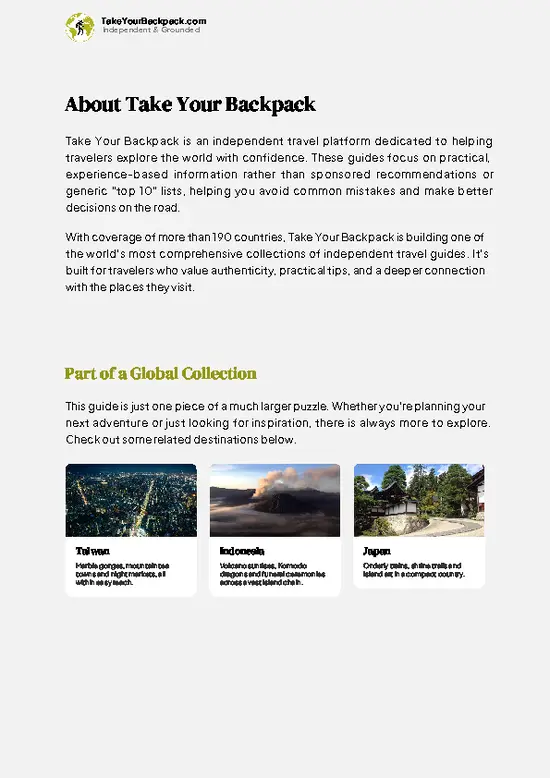
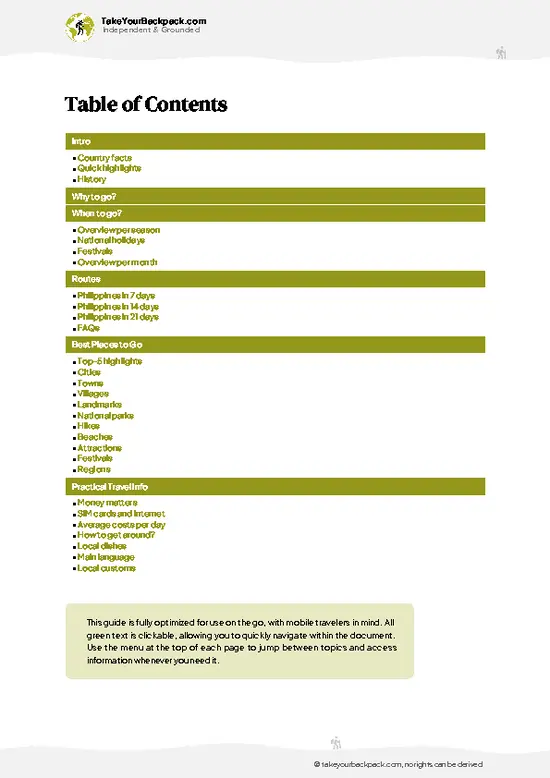
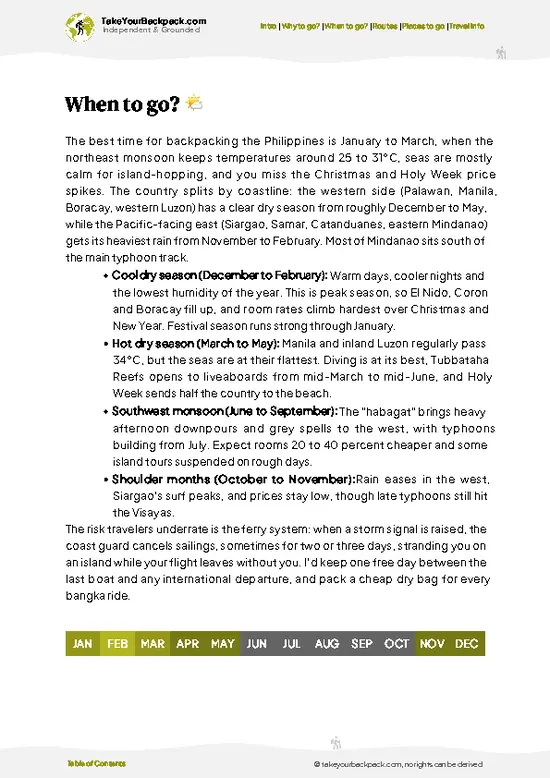
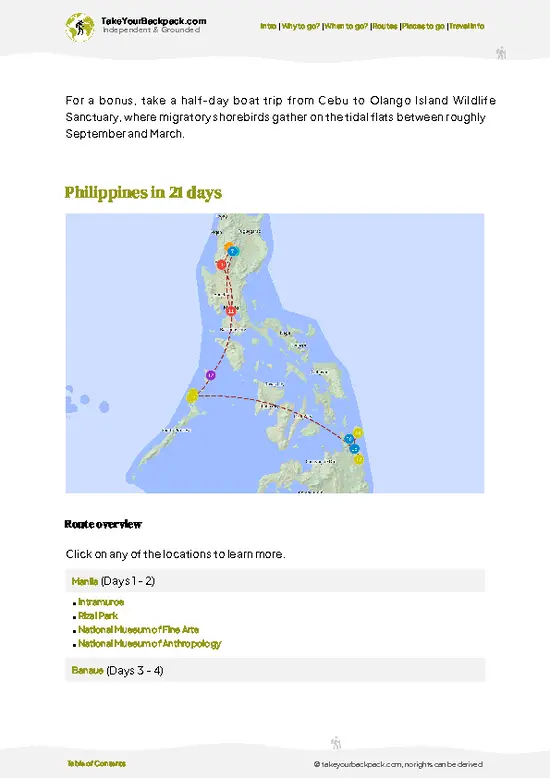
example page 0 from our offline Travel Guide for Philippinesexample page 1 from our offline Travel Guide for Philippinesexample page 2 from our offline Travel Guide for Philippinesexample page 3 from our offline Travel Guide for Philippinesexample page 4 from our offline Travel Guide for Philippinesexample page 5 from our offline Travel Guide for Philippinesexample page 6 from our offline Travel Guide for Philippinesexample page 7 from our offline Travel Guide for Philippines
The digital guide (505 pages) contains:
144 highlights, ranked by travel appeal
Optimized 7, 14 & 21-day travel routes
Cities, national parks, beaches, historical sites, ...
How to get around
Offline-friendly for travel without Wi-Fi
👉 Click to see all 30+ guide features

📅 Plan smarter in minutes, not weeks
Month by month travel advice
Festivals & national holidays
Budget expectations

🗺️ Go to the right places, skip the overrated ones
Honest pros & cons of destinations
Top hikes, parks & viewpoints
Lesser-known places most travelers miss
Clear “worth it vs skip it” guidance

🛏️ Travel smoothly without rookie mistakes
Best areas to stay
Transport systems explained simply
Common scams & safety advice
SIM cards, money & practical tips

🌍 Understand the country, not just visit it
Culture & traditions
52 Essential phrases & customs
Festivals worth planning around
Traveler-friendly historical context
Insights that make places more meaningful

📱 Built for real travel conditions
Fully downloadable PDF
Works completely offline
Optimized for phone use
Useful in remote areas & buses
Everything in one place
Save weeks of stressful planning
Get instant access to the full guide directly. 30-day money-back guarantee.


Sent to your inbox immediately after payment • 100% Secure Checkout
Best Backpacking Travel Advisor 2025 tourism awardBest Backpacking
Travel Advisor
2025
What others say about Take Your Backpack Guides:
⭐⭐⭐⭐⭐
Fantastic, amazing amount of information!
⭐⭐⭐⭐⭐
My goodness this is amazing, it's what I've been looking for hats off too you!
⭐⭐⭐⭐⭐
I think this is absolutely BRILLIANT
⭐⭐⭐⭐
Very complete and informative. It's still missing places, but I gotta to commend you
⭐⭐⭐⭐⭐
This is truly amazing, thank you, can't wait to explore it with my kids!
⭐⭐⭐⭐⭐
Awesome resource, thank you!
⭐⭐⭐⭐⭐
This is amazing! Can't wait to explore the ones I haven't seen
⭐⭐⭐⭐
I love this! Well done, great idea.
⭐⭐⭐⭐⭐
Thanks for taking the time to make this gem!
⭐⭐⭐⭐⭐
This might be the best website I've ever seen.
⭐⭐⭐⭐⭐
Congratulations, and thank you so much for your work; it's incredibly valuable.
⭐⭐⭐⭐
In all seriousness I think you did a great job pointing out the important spots
⭐⭐⭐⭐⭐
10/10 very good
⭐⭐⭐⭐⭐
As someone who's only just starting to visit regularly this is awesome, thank you.
⭐⭐⭐⭐
Thank you very much! I'm going to visit my dad, it's going to be very useful!
⭐⭐⭐⭐⭐
This is really cool! We'll be travelling for the first time and this definitely come in handy.
⭐⭐⭐⭐⭐
You are now our minister of culture, congratulations 👨‍💼
⭐⭐⭐⭐⭐
Just wanted to tell you that this is a pearl! Going to follow your recommendations.
⭐⭐⭐⭐⭐
This is so cool. I'll definitely be using the resource for my travels soon.
⭐⭐⭐⭐⭐
This is very impressive! Good work.
⭐⭐⭐⭐⭐
This is an amazing and informative site. Very well done!

🛏️ Where to stay?Choosing the right base

Kalibo’s sweet spot for backpackers is the area around the town center, especially near the public market and the main plaza. This zone nails the balance between safety and social buzz, where you’re never far from street food stalls, local hangouts, and fellow travelers. It’s compact, so walking or biking is easy, saving you time and transport costs. Hostels cluster here, offering budget beds with a communal vibe that’s perfect for solo adventurers wanting to swap stories or find a travel buddy. Compared to quieter suburbs or the more residential outskirts, this central stretch trades a bit of … read more 👉
Kalibo’s sweet spot for backpackers is the area around the town center, especially near the public market and the main plaza. This zone nails the balance between safety and social buzz, where you’re never far from street food stalls, local hangouts, and fellow travelers. It’s compact, so walking or biking is easy, saving you time and transport costs. Hostels cluster here, offering budget beds with a communal vibe that’s perfect for solo adventurers wanting to swap stories or find a travel buddy. Compared to quieter suburbs or the more residential outskirts, this central stretch trades a bit of peace for convenience and connection—exactly what you want when you’re chasing authentic, on-the-ground experiences without splurging.

🚌 Getting aroundGetting around like a local

Kalibo moves at its own rhythm—partly laid-back, partly a scramble to catch the next jeepney or tricycle. It’s not a city where you’ll find strict timetables posted on every corner. Instead, the flow depends on a mix of local intuition and the occasional honk signaling a ride’s readiness. For a budget traveler, mastering this ebb and flow means knowing when to wait and when to jump in. The trade-off here is clear: save money by embracing the local pace, or pay a bit more for convenience and speed.


  • Walking: The ultimate zero-cost option. Kalibo’s town center is compact enough to explore on foot, especially if you’re light and nimble. It’s slow but gives you a real feel for the streets and local life.

  • Jeepney: The backbone of local transit. Runs roughly from 5:30 AM to 9 PM, fares hover
read more 👉
Kalibo moves at its own rhythm—partly laid-back, partly a scramble to catch the next jeepney or tricycle. It’s not a city where you’ll find strict timetables posted on every corner. Instead, the flow depends on a mix of local intuition and the occasional honk signaling a ride’s readiness. For a budget traveler, mastering this ebb and flow means knowing when to wait and when to jump in. The trade-off here is clear: save money by embracing the local pace, or pay a bit more for convenience and speed.


  • Walking: The ultimate zero-cost option. Kalibo’s town center is compact enough to explore on foot, especially if you’re light and nimble. It’s slow but gives you a real feel for the streets and local life.

  • Jeepney: The backbone of local transit. Runs roughly from 5:30 AM to 9 PM, fares hover around 8-15 PHP. It’s cheap and frequent but expect cramped conditions and stops on demand, which can slow you down.

  • Tricycle: A step up in comfort and speed, especially for short hops. Prices start at about 20 PHP, negotiable if you’re savvy. Runs all day but no fixed schedule—just flag one down when you need it.

  • Multicab: Slightly faster and more comfortable than jeepneys, with fixed routes and fares around 15-25 PHP. They operate from early morning until early evening, ideal if you want a balance between cost and efficiency.

👛 Costs (as of 19 October 2025)Travel costs and budget guide for Kalibo

Backpacking in Kalibo, Philippines, offers a clear trade-off between cost and comfort, with daily expenses that stay comfortably low if you know where to look. Here’s the breakdown of what you’ll typically spend:
  • Dorm Accommodation (High Season): Expect to pay around $8 to $12 per night. High season drives prices up slightly due to demand, but you’re still in budget territory with basic, clean dorms.
  • Dorm Accommodation (Off-Season): Prices drop to about $5 to $8 per night. Off-season means quieter hostels and better bargaining power, perfect for stretching your budget.
  • Meals: Street food and local eateries dominate here. You can eat well for $2 to $5 per meal. A typical plate of chicken adobo or fresh seafood with rice will keep you fueled without breaking the bank.
  • Local Transport: Jeepneys
read more 👉
Backpacking in Kalibo, Philippines, offers a clear trade-off between cost and comfort, with daily expenses that stay comfortably low if you know where to look. Here’s the breakdown of what you’ll typically spend:
  • Dorm Accommodation (High Season): Expect to pay around $8 to $12 per night. High season drives prices up slightly due to demand, but you’re still in budget territory with basic, clean dorms.
  • Dorm Accommodation (Off-Season): Prices drop to about $5 to $8 per night. Off-season means quieter hostels and better bargaining power, perfect for stretching your budget.
  • Meals: Street food and local eateries dominate here. You can eat well for $2 to $5 per meal. A typical plate of chicken adobo or fresh seafood with rice will keep you fueled without breaking the bank.
  • Local Transport: Jeepneys and tricycles are the go-to options, costing roughly $0.20 to $0.50 per ride. They’re slow but cheap, and a great way to soak in local life.
  • City Transport Pass: Kalibo doesn’t have a formal city transport pass system. Instead, budget around $2 to $3 daily if you plan multiple rides on tricycles or jeepneys.
  • Basic Activities/Entry Fees: Most local attractions and cultural sites charge minimal fees, typically $1 to $3. This keeps your adventure affordable while still offering authentic experiences.
  • Miscellaneous Expenses: Budget $1 to $3 for things like bottled water, snacks, or small souvenirs. Kalibo’s markets offer plenty of inexpensive options.

All told, you’re looking at a daily budget between $15 and $30. This range lets you balance comfort and experience without overspending. Kalibo’s charm is in its simplicity—spend smart, and you’ll have more left over for the things that really matter, like local flavors and unexpected discoveries.


source: tourism.gov.ph
⚠️ Prices can change and everyone travels differently, so take this as a rough guide. Hope it helps you plan your adventure!

🚌 Day tripsShort trips worth adding

Kalibo is a strategic launchpad for some incredible day trips that blend adventure with cultural immersion. Here are a few that truly stand out.

Boracay Island
Just a short ferry ride away, Boracay is famous for its powdery white sand beaches and vibrant nightlife. Spend your day lounging on White Beach or trying out water sports like kite surfing. The ferry takes about 1.5 hours, and you’ll spend around $20 for the round trip. Avoid the mistake of heading there during peak season; the crowds can be overwhelming. Instead, aim for the shoulder months for a more relaxed vibe.


Malumpati Cold Spring
If you’re looking for a refreshing escape, Malumpati Cold Spring is your spot. About an hour’s drive from Kalibo, this natural spring offers crystal-clear waters perfect for a swim. The entrance … read more 👉
Kalibo is a strategic launchpad for some incredible day trips that blend adventure with cultural immersion. Here are a few that truly stand out.

Boracay Island
Just a short ferry ride away, Boracay is famous for its powdery white sand beaches and vibrant nightlife. Spend your day lounging on White Beach or trying out water sports like kite surfing. The ferry takes about 1.5 hours, and you’ll spend around $20 for the round trip. Avoid the mistake of heading there during peak season; the crowds can be overwhelming. Instead, aim for the shoulder months for a more relaxed vibe.


Malumpati Cold Spring
If you’re looking for a refreshing escape, Malumpati Cold Spring is your spot. About an hour’s drive from Kalibo, this natural spring offers crystal-clear waters perfect for a swim. The entrance fee is minimal, around $2, making it a budget-friendly option. Bring your own snacks to avoid overpriced food stalls. The best time to visit is early morning to beat the heat and the crowds.


Buruanga
For a taste of local life, head to Buruanga, a small town about 30 minutes away. Here, you can explore traditional markets and sample local delicacies like fresh seafood. The total cost for transportation and food can be around $10. Many first-timers miss out on the local charm by sticking to tourist spots, so embrace the authentic experience.


These trips not only enhance your adventure but also provide a deeper connection to the region.
Want to know what more Philippines offers?
The Philippines Travel Guide describes 144 highlights, from cities to national parks, from beaches to hikes

Get the Travel Guide -

🍲 FoodLocal Flavors for Backpackers

In **Kalibo**, the heart of **Aklan**, you’ll find a culinary scene that’s both vibrant and deeply rooted in local culture. Don’t miss the chance to savor **Laing**, a spicy dish made from dried taro leaves cooked in coconut milk. Pair it with **Inasal**, grilled chicken marinated in a tangy mix that’s smoky and succulent.

Street food is where the action is. Vendors line the streets, serving up **kwek-kwek** (quail eggs coated in orange batter) and **fish balls** with a variety of dipping sauces. The **Kalibo Ati-Atihan Festival** brings a lively drinking culture, where locals enjoy **Tanduay rum** mixed with soft drinks, creating a festive atmosphere.

Etiquette is relaxed; sharing food is common, and don’t be surprised if you’re invited to join a table. Embrace the communal vibe, and let … read more 👉
In **Kalibo**, the heart of **Aklan**, you’ll find a culinary scene that’s both vibrant and deeply rooted in local culture. Don’t miss the chance to savor **Laing**, a spicy dish made from dried taro leaves cooked in coconut milk. Pair it with **Inasal**, grilled chicken marinated in a tangy mix that’s smoky and succulent.

Street food is where the action is. Vendors line the streets, serving up **kwek-kwek** (quail eggs coated in orange batter) and **fish balls** with a variety of dipping sauces. The **Kalibo Ati-Atihan Festival** brings a lively drinking culture, where locals enjoy **Tanduay rum** mixed with soft drinks, creating a festive atmosphere.

Etiquette is relaxed; sharing food is common, and don’t be surprised if you’re invited to join a table. Embrace the communal vibe, and let your taste buds guide you through this flavorful adventure.

🛡️ SafetyTraveler Safety Guide

Kalibo is generally safe, but like any city, it has its quirks. Stay alert in crowded markets and bus stations; pickpockets can be a nuisance. If you’re solo, avoid poorly lit areas at night and stick to main streets.

Watch for common scams, like overcharging for tricycle rides. Always agree on a fare beforehand. Annoyances can include persistent vendors; a polite but firm “no, thank you” usually does the trick. Carry yourself confidently, and you’ll navigate Kalibo like a pro.

Other Filipino towns near Kalibo

Explore more nearby:

  • Boracay—White Beach, nightlife strips, water sports| 57 km away
  • Donsol—Whale shark encounters, river cruises, rural villages| 194 km away
  • Taal—Ancestral houses, basilica, lakefront alleys| 290 km away

👉 Discover all towns

Or checkout all Philippines has to offer (think cities, towns, villages, national parks, hikes, beaches, festivals)
Country photo of Philippines

We 💚 feedbackWhat to keep in mind

Kalibo’s vibrant local culture is a real treat. You’ll find authentic festivals and street food that’ll make your taste buds dance. Just be ready for the heat and humidity; it can be intense. Embrace it, and you’ll discover the heart of the Philippines.

✈️ When did I visit Philippines?
Philippines being one of my favorites, due to the people and their mentality. I visited it first in 2010 and came back in January 2016 as part of my 1.5 year world trip.

✍️ Help improve this page!
The information on this page is based on my own backpacking experience in Philippines, supplemented with up-to-date research and feedback from other travelers. Travel details can change, so if you notice anything outdated or incomplete, feel free to let me know.


🙋‍♂️ Give feedback

👋 Meet the founderWho’s Behind Take Your Backpack?

Johan, backpacker and founder of TakeYourBackpackHi, I’m Johan (Netherlands 🇳🇱), the creator of TakeYourBackpack. Over the past decade, I’ve backpacked through 80+ countries across six continents, gaining extensive experience with independent travel, long-term trips, and overland routes.

This site is built on a combination of firsthand travel experience and carefully curated insights from other backpackers. Many guides are based on places I’ve personally visited, while others bring together tips, observations, and practical advice shared by trusted travelers I’ve met along the way.

The goal is to provide realistic, experience-driven guidance — not generic itineraries — so you can explore destinations with better context, clearer expectations, and more confidence.

Get full country guide •
Instant download • 144 highlights • Full Offline guide