×

Philippines🇵🇭 | townsBoracayWhite Beach, nightlife strips, water sports | things to do and best time to go

Explore Surigao del Norte regionExplore Donsol

Backpacking in Boracay
🏆 Top picktown ranked #1
By Johan Kruseman 🇳🇱 | Updated June 5, 2026

Everyone comes to Boracay for the White Beach photos, but the sand isn’t the real story. What matters more is how you move through the island’s rhythm: the way the light goes from harsh white at noon to soft gold at sunset, the way the crowds thin if you time things right, the way you can still find quiet if you’re willing to walk ten minutes past the noise.

Boracay sits off the northwest coast of Panay Island in the central Philippines, reached via Caticlan then a short boat hop. As a backpacker stop, it’s more end-of-trip reward than rugged basecamp: easy tricycle rides, compact walking along the beachfront path, hostels tucked behind bars and smoothie stands. It’s social, sometimes aggressively so, with cheap street food but inflated beachfront prices and nightlife that can feel more package-holiday than traveler community. Compared with calmer spots like Antique or quieter Panay beaches, Boracay is brighter, busier, safer-feeling at night, and far more touristic—worth it if you want energy and comfort, less so if you’re chasing solitude.

Discover everything you want to know in the 📖 Philippines Travel Guide.
Loading the map 🌍
CLICK TO FILTER
cities
towns
landmarks
national parks
hikes
beaches
attractions
festivals
regions
SHOW COUNTRY’S BESTSHOW ALL

✨ Why go?
Ranked #1 town in Philippines
What makes this town worth visiting

Backpackers flock to Boracay not just for its beaches, but for its role as a strategic hub in the Philippines. The island’s walkable streets make it easy to explore, whether you’re hunting for a local eatery serving fresh seafood or a cozy guesthouse where you can swap stories with fellow travelers. Many come for a few days, but the laid-back vibe often tempts them to linger longer.

The friendly social atmosphere is perfect for solo travelers or small groups looking to connect. You can find a mix of small-scale hostels that cater to budget-conscious adventurers, offering a chance to meet like-minded souls. Beyond the beach, Boracay serves as a launchpad for nearby hikes and cultural sites, making it a practical stop for those wanting to dive deeper into the region.

While it’s not a nightlife … read more 👉
Backpackers flock to Boracay not just for its beaches, but for its role as a strategic hub in the Philippines. The island’s walkable streets make it easy to explore, whether you’re hunting for a local eatery serving fresh seafood or a cozy guesthouse where you can swap stories with fellow travelers. Many come for a few days, but the laid-back vibe often tempts them to linger longer.

The friendly social atmosphere is perfect for solo travelers or small groups looking to connect. You can find a mix of small-scale hostels that cater to budget-conscious adventurers, offering a chance to meet like-minded souls. Beyond the beach, Boracay serves as a launchpad for nearby hikes and cultural sites, making it a practical stop for those wanting to dive deeper into the region.

While it’s not a nightlife hotspot, the evenings bring a relaxed charm, perfect for unwinding after a day of exploration. If you’re a slow traveler who appreciates both the beauty of nature and the warmth of community, Boracay is more than just a stopover; it’s a place where the journey feels as rewarding as the destination.
Want to include Boracay in your Philippines route?
Create a personalized Philippines itinerary that includes Boracay and the places that fit your trip — based on your travel style, budget, and available time. Get your route in seconds.

Generate my trip

💡 HighlightsPlaces and moments you shouldn't skip

  • White Beach (Stations 1-3) — The postcard sand everyone comes for: three distinct stretches (Station 1 is wide and peaceful, Station 2 is the buzzy hub, Station 3 is quieter) where you can swim, watch jaw-dropping sunsets, and see how Boracay’s whole social life folds into one long shoreline.
  • Willy’s Rock — That iconic volcanic rock with a little shrine to the Virgin Mary rising out of the shallows; it’s a photo magnet, a tidal-pool explorer’s spot, and a tiny piece of local religious practice set into the landscape.
  • Mount Luho View Deck — The island’s highest point with a panorama that explains why everyone raves about Boracay; a short climb or tricycle ride gets you sweeping views of the beaches, kite sails and neighboring islets — great for photos and orientation.
  • Puka Shell Beach
read more 👉
  • White Beach (Stations 1-3) — The postcard sand everyone comes for: three distinct stretches (Station 1 is wide and peaceful, Station 2 is the buzzy hub, Station 3 is quieter) where you can swim, watch jaw-dropping sunsets, and see how Boracay’s whole social life folds into one long shoreline.
  • Willy’s Rock — That iconic volcanic rock with a little shrine to the Virgin Mary rising out of the shallows; it’s a photo magnet, a tidal-pool explorer’s spot, and a tiny piece of local religious practice set into the landscape.
  • Mount Luho View Deck — The island’s highest point with a panorama that explains why everyone raves about Boracay; a short climb or tricycle ride gets you sweeping views of the beaches, kite sails and neighboring islets — great for photos and orientation.
  • Puka Shell Beach — A sandier, more natural stretch on the north shore where puka (cone) shells wash up; quieter than White Beach, it gives a rawer island feel and local vendors selling shell crafts add cultural texture.
  • D’Mall (Boracay’s commercial strip) — Not a mall in the mall sense, but the main cluster of shops, eateries and bars where you’ll sample Filipino snacks, haggle for souvenirs and see how local hospitality meets tourism in practice.
  • D’Talipapa / Public Market — A living market where fishermen and vendors trade fresh catch and you can pick seafood to be cooked on the spot; it’s noisy, lively, and a direct window into the island’s food economy and bargaining culture.
  • Bulabog Beach — The island’s windward playground: if you want the kiteboarding and windsurfing scene, lessons, pro riders and a lively sporty atmosphere, this is the place — and it’s fascinating to watch even from the sand.
  • Diniwid Beach (and the cliffside eateries) — A tucked-away cove with cliffside viewpoints and chill restaurants (think breezy platforms and hammock vibes); superb for a quieter sunset or a relaxed swim away from the crowds.
  • Ilig-Iligan Beach — A sheltered little bay north of the main strip with good shallow snorkeling, rock gardens and a quieter rhythm — excellent for seeing small reef life without a full island-hopping trip.
  • Cagban Jetty Port — The practical and cultural gateway to Boracay: arriving and departing here shows you the working side of island life (boats, cargo, local shops) and it’s a good place to watch sunrise/sunset activity and the comings and goings of fishermen and vendors.
If you’ve got time for day trips, easy nearby options include Crystal Cove Island (caves and viewpoints), Crocodile Island (short snorkeling stops) and the cliff-jumping/Ariel’s Point excursions — my personal favorite for a half-day escape is Crystal Cove Island for its views, caves and relaxed pace.
Spotted a mistake or missing something? Contact us.

Things to do around Boracay

Ratings based on Tripadvisor reviews. When you book through this link, you support our work at no extra cost to you.

🏘️ NeighborhoodsUnderstanding the local layout

Boracay is a small island that packs a punch, offering a mix of vibrant energy and serene escapes. Each neighborhood has its own character, catering to different backpacker needs. Here’s how to navigate the island like a pro:

White Beach
This is the heart of Boracay, where the powdery sand meets lively bars and restaurants. Expect a bustling vibe, especially at sunset. Prices can be higher here, but the atmosphere is electric. Walkability is a breeze, with everything from street food to upscale dining within reach. Perfect for short stays where you want to soak up the action.

Station 1
If you’re after a more laid-back experience, this area offers a quieter stretch of White Beach. The vibe is relaxed, with fewer crowds and more upscale accommodations. It’s still walkable, but you might … read more 👉
Boracay is a small island that packs a punch, offering a mix of vibrant energy and serene escapes. Each neighborhood has its own character, catering to different backpacker needs. Here’s how to navigate the island like a pro:

White Beach
This is the heart of Boracay, where the powdery sand meets lively bars and restaurants. Expect a bustling vibe, especially at sunset. Prices can be higher here, but the atmosphere is electric. Walkability is a breeze, with everything from street food to upscale dining within reach. Perfect for short stays where you want to soak up the action.

Station 1
If you’re after a more laid-back experience, this area offers a quieter stretch of White Beach. The vibe is relaxed, with fewer crowds and more upscale accommodations. It’s still walkable, but you might want to rent a bike for exploring. Ideal for longer stays where you can enjoy the beach without the party scene.

Station 2
This is the nightlife hub, where you’ll find clubs and bars that pulse until dawn. The energy is contagious, but it can get loud. Prices are moderate, making it accessible for most budgets. Walkability is excellent, but if you’re looking for peace, this isn’t your spot. Great for those who want to dive into the local nightlife.

Bulabog Beach
Known for windsurfing and kitesurfing, this area attracts a sporty crowd. The vibe is more adventurous, with a focus on water sports. Accommodations are generally cheaper, and it’s less crowded than White Beach. If you’re staying longer, you’ll appreciate the community feel and the chance to engage in activities.

Diniwid Beach
A hidden oasis, Diniwid offers a tranquil escape from the busier areas. The vibe is serene, with small resorts and local eateries. Prices are reasonable, and it’s a short walk from White Beach, making it easy to access the action while enjoying peace. Perfect for longer stays where relaxation is key.

⌛️ 1 dayHow to make the most of one day

Boracay is a slice of paradise known for its powdery white sands and vibrant nightlife, but it’s also a place where you can find quiet corners and local flavors if you know where to look. Start your day early, as the sun rises over White Beach, painting the sky in soft pastels. Grab a cup of strong barako coffee from a local café—its rich aroma will kickstart your adventure.

In the morning, take a stroll along White Beach, feeling the cool sand between your toes. The early hours are perfect for a swim; the water is calm and inviting. Afterward, head to D’Mall, the bustling hub of shops and eateries. Try a fresh mango shake from one of the stands—it’s a sweet burst of tropical goodness.

As the afternoon rolls in, venture to the quieter side of the island. Make your way to Puka Shell Beach, … read more 👉
Boracay is a slice of paradise known for its powdery white sands and vibrant nightlife, but it’s also a place where you can find quiet corners and local flavors if you know where to look. Start your day early, as the sun rises over White Beach, painting the sky in soft pastels. Grab a cup of strong barako coffee from a local café—its rich aroma will kickstart your adventure.

In the morning, take a stroll along White Beach, feeling the cool sand between your toes. The early hours are perfect for a swim; the water is calm and inviting. Afterward, head to D’Mall, the bustling hub of shops and eateries. Try a fresh mango shake from one of the stands—it’s a sweet burst of tropical goodness.

As the afternoon rolls in, venture to the quieter side of the island. Make your way to Puka Shell Beach, a less-traveled spot where the sound of waves crashing against the rocky shore creates a soothing backdrop. The beach is dotted with unique shells, perfect for a little treasure hunting. Bring a book or just soak in the sun; the vibe here is relaxed, a welcome contrast to the busier areas.

When evening approaches, return to White Beach for the iconic sunset. Grab a seat at a beachfront bar and order a local dish like adobo or sinigang while you watch the sky transform into fiery oranges and purples. As night falls, the beach comes alive with fire dancers and live music. For a twist, check out a local bar in Station 3, where you can mingle with locals and fellow travelers, sharing stories over a cold Red Horse beer.

This day in Boracay isn’t just about the sights; it’s about savoring the moments, from the first sip of coffee to the last dance under the stars. Embrace the rhythm of the island, and you’ll leave with memories that linger long after the sand has washed off your feet.
Turn your Boracay visit into an Philippines adventure
Build a complete Philippines route with Boracay, hidden gems, must-see destinations, and realistic travel times included.

Generate my trip

🌤️ When to go?Best time to visit Boracay


  • Topic: Weather and Temperature — The dry season from November to April is your best bet. Expect highs around 30-32°C (86-90°F) with warm, humid air that’s perfect for beach days. May to October brings heavy rains and typhoons, which can turn the island into a soggy, less accessible mess.

  • Topic: Daylight Hours — Boracay enjoys roughly 11 to 12 hours of daylight year-round, but the sun rises earlier and sets later during the dry months. This means more time to explore, swim, or catch that golden hour glow on White Beach without rushing.

  • Topic: Crowds — Peak season (December to March) means packed beaches and higher prices. If you want fewer people but still good weather, late November or April are sweet spots—less noise, more space, and the island still feels alive.

  • Topic: Seasonal
read more 👉

  • Topic: Weather and Temperature — The dry season from November to April is your best bet. Expect highs around 30-32°C (86-90°F) with warm, humid air that’s perfect for beach days. May to October brings heavy rains and typhoons, which can turn the island into a soggy, less accessible mess.

  • Topic: Daylight Hours — Boracay enjoys roughly 11 to 12 hours of daylight year-round, but the sun rises earlier and sets later during the dry months. This means more time to explore, swim, or catch that golden hour glow on White Beach without rushing.

  • Topic: Crowds — Peak season (December to March) means packed beaches and higher prices. If you want fewer people but still good weather, late November or April are sweet spots—less noise, more space, and the island still feels alive.

  • Topic: Seasonal Activities — Dry months bring vibrant nightlife, water sports, and festivals like the Ati-Atihan in January. Rainy season limits outdoor options but offers lush greenery and quieter trails if you’re into that vibe.

  • Topic: Price Fluctuations — Expect prices to spike during Christmas, New Year, and Holy Week. Booking just before or after these peaks can save you a chunk, especially on accommodation and tours.


Pro-tip: Arrive just before the dry season kicks in—late November—when the air still smells of rain but the sun starts to win, giving you the best of both worlds: fewer crowds and a fresh, vibrant island awakening.


source: climatestotravel.comJANJanuary: highly recommended for travelingFEBFebruary: highly recommended for travelingMARMarch: highly recommended for travelingAPRApril: highly recommended for travelingMAYMay: fair for travelingJUNJune: fair for travelingJULJuly: fair for travelingAUGAugust: fair for travelingSEPSeptember: fair for travelingOCTOctober: fair for travelingNOVNovember: highly recommended for travelingDECDecember: good for traveling
when-to-go

✈️ The backpacker research shortcutPhilippines Travel Guide

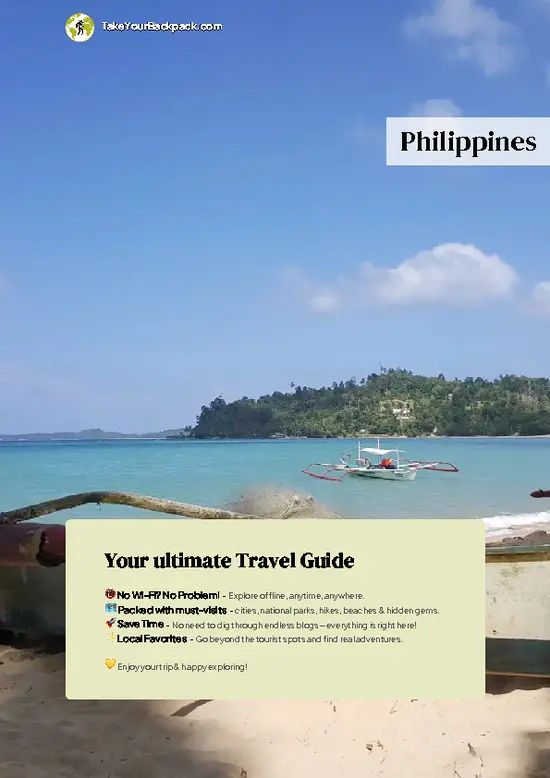
An offline-friendly backpacking guide with optimized travel routes, ranked highlights, transport advice, and the best areas to stay.
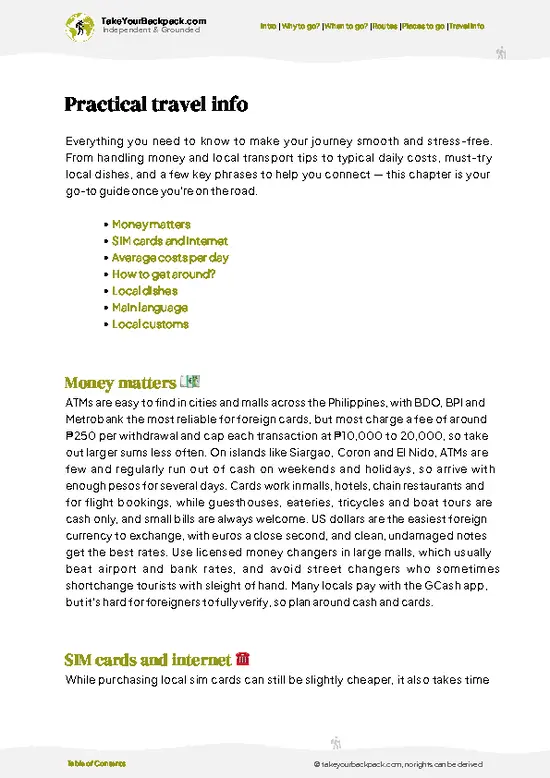
example page 0 from our offline Travel Guide for Philippines
example page 1 from our offline Travel Guide for Philippines
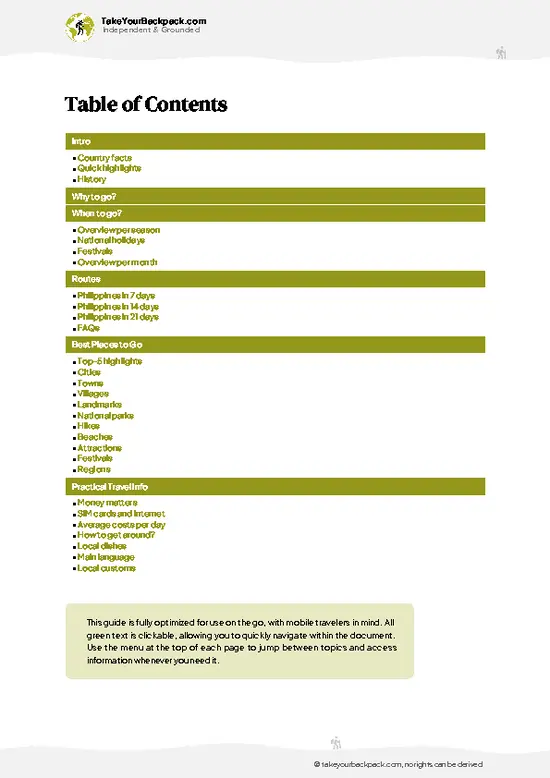
example page 2 from our offline Travel Guide for Philippines
example page 3 from our offline Travel Guide for Philippines
example page 4 from our offline Travel Guide for Philippines
example page 5 from our offline Travel Guide for Philippines
example page 6 from our offline Travel Guide for Philippines
example page 7 from our offline Travel Guide for Philippines
The digital guide (505 pages) contains:
144 highlights, ranked by travel appeal
Optimized 7, 14 & 21-day travel routes
Cities, national parks, landmarks, beaches
How to get around
Offline-friendly for travel without Wi-Fi
👉 Click to see all 30+ guide features

📅 Plan smarter in minutes, not weeks
Month by month travel advice
Festivals & national holidays
Budget expectations

🗺️ Go to the right places, skip the overrated ones
Honest pros & cons of destinations
Top hikes, parks & viewpoints
Lesser-known places most travelers miss
Clear “worth it vs skip it” guidance

🛏️ Travel smoothly without rookie mistakes
Best areas to stay
Transport systems explained simply
Common scams & safety advice
SIM cards, money & practical tips

🌍 Understand the country, not just visit it
Culture & traditions
52 Essential phrases & customs
Festivals worth planning around
Traveler-friendly historical context
Insights that make places more meaningful

📱 Built for real travel conditions
Fully downloadable PDF
Works completely offline
Optimized for phone use
Useful in remote areas & buses
Everything in one place
Save weeks of stressful planning
Get instant access to your full guide. 30‑day money-back guarantee.


By proceeding you agree to our terms.
Sent to your inbox immediately after payment • 100% Secure Checkout
Best Backpacking Travel Advisor 2025 tourism awardBest Backpacking
Travel Advisor
2025
What others say about Take Your Backpack Guides:
⭐⭐⭐⭐⭐
Fantastic, amazing amount of information!
⭐⭐⭐⭐⭐
My goodness this is amazing, it's what I've been looking for hats off too you!
⭐⭐⭐⭐⭐
I think this is absolutely BRILLIANT
⭐⭐⭐⭐
Very complete and informative. It's still missing places, but I gotta to commend you
⭐⭐⭐⭐⭐
This is truly amazing, thank you, can't wait to explore it with my kids!
⭐⭐⭐⭐⭐
Awesome resource, thank you!
⭐⭐⭐⭐⭐
This is amazing! Can't wait to explore the ones I haven't seen
⭐⭐⭐⭐
I love this! Well done, great idea.
⭐⭐⭐⭐⭐
Thanks for taking the time to make this gem!
⭐⭐⭐⭐⭐
This might be the best website I've ever seen.
⭐⭐⭐⭐⭐
Congratulations, and thank you so much for your work; it's incredibly valuable.
⭐⭐⭐⭐
In all seriousness I think you did a great job pointing out the important spots
⭐⭐⭐⭐⭐
10/10 very good
⭐⭐⭐⭐⭐
As someone who's only just starting to visit regularly this is awesome, thank you.
⭐⭐⭐⭐
Thank you very much! I'm going to visit my dad, it's going to be very useful!
⭐⭐⭐⭐⭐
This is really cool! We'll be travelling for the first time and this definitely come in handy.
⭐⭐⭐⭐⭐
You are now our minister of culture, congratulations 👨‍💼
⭐⭐⭐⭐⭐
Just wanted to tell you that this is a pearl! Going to follow your recommendations.
⭐⭐⭐⭐⭐
This is so cool. I'll definitely be using the resource for my travels soon.
⭐⭐⭐⭐⭐
This is very impressive! Good work.
⭐⭐⭐⭐⭐
This is an amazing and informative site. Very well done!

🛏️ Where to stay?Best areas and accommodation options

Boracay’s White Beach is the undeniable heartbeat for backpackers—especially Station 2. This stretch pulses with energy from dawn’s first light, when the salty breeze carries the scent of grilled seafood and fresh coconuts, until the neon glow of beach bars flickers on after sunset. Station 2 strikes a balance: it’s lively without tipping into chaos, making it a magnet for solo travelers and budget adventurers craving both social buzz and safety. The streets here hum with a mix of backpacker hostels, casual eateries, and dive shops, all within easy walking distance. Hostels cluster around this … read more 👉
Boracay’s White Beach is the undeniable heartbeat for backpackers—especially Station 2. This stretch pulses with energy from dawn’s first light, when the salty breeze carries the scent of grilled seafood and fresh coconuts, until the neon glow of beach bars flickers on after sunset. Station 2 strikes a balance: it’s lively without tipping into chaos, making it a magnet for solo travelers and budget adventurers craving both social buzz and safety. The streets here hum with a mix of backpacker hostels, casual eateries, and dive shops, all within easy walking distance. Hostels cluster around this area, offering dorm beds that are wallet-friendly and perfect for meeting fellow travelers over shared stories and local brews.

Station 1, by contrast, leans more upscale and quieter, which means fewer budget options and a less social vibe. Station 3, on the other hand, feels more laid-back and residential, with fewer hostels and a slower pace—great if you want to escape the crowd but less ideal for those chasing connection or convenience.

Choosing Station 2 means waking up to soft sand underfoot and the hum of a community that’s both welcoming and vibrant. It’s where you get the best shot at blending ease, safety, and the kind of spontaneous friendships that turn a trip into a story worth telling.

🚌 Getting aroundMoving around without the hassle

Boracay moves like a tide—sometimes slow and deliberate, other times a rush of energy that sweeps you along. The island’s pulse isn’t dictated by clocks but by the sun’s arc and the ebb of the sea. Mornings start with a gentle calm, the air salty and warm, as fishermen unload their catch and locals set up stalls. By midday, the streets hum with scooters and tricycles weaving through narrow paths, the scent of grilled seafood mingling with tropical blooms. Nightfall brings a different rhythm, where the pace slows again, and the glow of lanterns flickers over the shoreline. Understanding this flow means you don’t just get from point A to B—you move with the island’s natural tempo, making every transit feel like part of the experience, not just a chore.


  • Walking: The most intimate way to navigate
read more 👉
Boracay moves like a tide—sometimes slow and deliberate, other times a rush of energy that sweeps you along. The island’s pulse isn’t dictated by clocks but by the sun’s arc and the ebb of the sea. Mornings start with a gentle calm, the air salty and warm, as fishermen unload their catch and locals set up stalls. By midday, the streets hum with scooters and tricycles weaving through narrow paths, the scent of grilled seafood mingling with tropical blooms. Nightfall brings a different rhythm, where the pace slows again, and the glow of lanterns flickers over the shoreline. Understanding this flow means you don’t just get from point A to B—you move with the island’s natural tempo, making every transit feel like part of the experience, not just a chore.


  • Walking: The most intimate way to navigate Boracay, especially along White Beach. The soft sand underfoot, the occasional splash of seawater, and the vibrant street life make walking both practical and immersive. Distances between key spots are manageable—expect 10 to 30 minutes between major beach stations. It’s free, flexible, and perfect for soaking in the island’s atmosphere.


  • Tricycles: These three-wheeled motorbikes with sidecars are Boracay’s unofficial taxis. They run on a fixed route but don’t follow a strict schedule—flag one down when you see it. Fares are usually around 20 to 50 PHP depending on distance, and they’re the fastest way to cover short hops, especially when the sun is high and walking feels like a sauna session. Be ready for a bumpy ride and the scent of exhaust mixed with tropical humidity.


  • Multicabs: For longer distances or trips to less touristy parts like Bulabog Beach or the airport, multicabs are your budget-friendly option. These small vans run on a loose timetable, starting early morning around 6 AM and tapering off by 8 PM. Fares hover around 20 to 30 PHP. They’re slower than tricycles but more comfortable and shielded from the sun—ideal if you’re carrying gear or want to avoid the midday heat.


  • Bicycle Rentals: If you want control over your pace and a bit of exercise, renting a bike is a smart move. Rates start at about 150 PHP per day. The island’s flat terrain and scenic coastal roads make cycling a breeze, but watch for traffic during peak hours. Early mornings or late afternoons offer the best light and cooler temperatures, turning your transit into a mini-adventure.


  • Boat Transfers: While not for island transit per se, the boat rides between Caticlan and Boracay set the tone for your arrival and departure. They operate roughly from 6 AM to 6 PM, with fares around 100 to 150 PHP. The salty breeze, the splash of waves against the hull, and the view of Boracay’s coastline emerging from the horizon are worth every peso—this is your first taste of the island’s rhythm.

👛 Costs (as of 30 June 2026)Travel costs and budget guide for Boracay

Boracay’s daily costs for backpackers reflect its shift from a wild party island to a more polished, yet still accessible, destination. The island’s charm comes with a price tag that’s reasonable but demands a bit of savvy to keep low.
  • Dorm Accommodation: Expect to pay around $10 to $20 per night for a bed in a shared dorm. These are usually basic but clean, often with air conditioning or a fan, and located within walking distance of the beach. Booking ahead during peak season is crucial to avoid last-minute price hikes.
  • Meals: Street food and local eateries offer meals for $2 to $5. A typical plate might be grilled fish or chicken with rice and a side of fresh mango or pineapple. Western-style cafes and restaurants push prices up to $7-$12 per meal, especially near White Beach.
  • Local Transport:
read more 👉
Boracay’s daily costs for backpackers reflect its shift from a wild party island to a more polished, yet still accessible, destination. The island’s charm comes with a price tag that’s reasonable but demands a bit of savvy to keep low.
  • Dorm Accommodation: Expect to pay around $10 to $20 per night for a bed in a shared dorm. These are usually basic but clean, often with air conditioning or a fan, and located within walking distance of the beach. Booking ahead during peak season is crucial to avoid last-minute price hikes.
  • Meals: Street food and local eateries offer meals for $2 to $5. A typical plate might be grilled fish or chicken with rice and a side of fresh mango or pineapple. Western-style cafes and restaurants push prices up to $7-$12 per meal, especially near White Beach.
  • Local Transport: Tricycles are the go-to for short hops around the island, costing about $0.50 to $1.50 depending on distance. Renting a motorbike for the day runs around $8 to $12, which is a smart move if you want to explore beyond the main tourist spots.
  • Basic Activities/Entry Fees: Island hopping tours, snorkeling, and entry to some beaches or parks typically cost between $10 and $25. Booking directly with local operators rather than through hotels can shave a few dollars off these prices.
  • Miscellaneous Expenses: Water, snacks, and small souvenirs add up to around $3 to $7 daily. Keep a refillable bottle handy to avoid buying bottled water constantly, which adds unnecessary cost and plastic waste.

All told, a backpacker can expect to spend roughly $25 to $50 per day in Boracay. The lower end means sticking to dorms, local food, and minimal extras, while the higher end allows for a few splurges on tours or nicer meals. The island’s bright sunlight and salty breeze make every peso spent feel like an investment in a vivid, tropical experience.


source: tourism.gov.ph
⚠️ Prices can change and everyone travels differently, so take this as a rough guide. Hope it helps you plan your adventure!

🚌 Day tripsExploring the surroundings

Boracay is not just about its famous white sands; it’s a launchpad for some incredible day trips that reveal the Philippines’ diverse beauty. Each adventure offers a unique slice of island life, and the logistics are surprisingly easy to navigate.

Island Hopping to Crocodile Island
Just a short boat ride from Boracay, Crocodile Island is a must for snorkelers. The vibrant coral reefs teem with life, and you’ll find yourself surrounded by schools of colorful fish. The trip takes about 30 minutes, and you can snag a boat for around 1,500 PHP if you gather a group. The best time to go is early morning when the water is calm and the sun is just starting to warm the air. A common rookie mistake? Forgetting to bring a waterproof bag for your gear. You’ll want to keep your phone and snacks dry … read more 👉
Boracay is not just about its famous white sands; it’s a launchpad for some incredible day trips that reveal the Philippines’ diverse beauty. Each adventure offers a unique slice of island life, and the logistics are surprisingly easy to navigate.

Island Hopping to Crocodile Island
Just a short boat ride from Boracay, Crocodile Island is a must for snorkelers. The vibrant coral reefs teem with life, and you’ll find yourself surrounded by schools of colorful fish. The trip takes about 30 minutes, and you can snag a boat for around 1,500 PHP if you gather a group. The best time to go is early morning when the water is calm and the sun is just starting to warm the air. A common rookie mistake? Forgetting to bring a waterproof bag for your gear. You’ll want to keep your phone and snacks dry while you dive into the underwater spectacle.


Kalibo for the Ati-Atihan Festival
If your timing is right, head to Kalibo for the Ati-Atihan Festival, usually held in January. It’s about an hour and a half from Boracay, and the bus fare is around 200 PHP. This festival is a riot of color, music, and dance, celebrating the local culture with a fervor that’s contagious. The energy is electric, but first-timers often miss the local delicacies sold at street stalls. Don’t skip the batchoy (noodle soup) — it’s a flavor explosion you won’t forget.
👉 Explore Kalibo

Exploring the Caves of Bat Cave
For a taste of adventure, the Bat Cave is a hidden treasure. Located on the nearby island of Carabao, it’s about a 45-minute boat ride from Boracay. Expect to pay around 1,000 PHP for the round trip. The cave is home to thousands of bats and offers a unique ecosystem to explore. The best time to visit is during the day when the light filters through the cave entrance, creating a mystical atmosphere. Many newcomers underestimate the hike to the cave; wear sturdy shoes to avoid slipping on the rocky path.


Snorkeling at Puka Beach
Puka Beach is less crowded than White Beach and offers a more laid-back vibe. It’s about a 15-minute trike ride from the main area, costing around 100 PHP. The beach is known for its stunning seashells and crystal-clear waters, perfect for snorkeling. Go in the afternoon when the sun casts a golden glow over the sand. First-timers often forget to bring their own snorkeling gear; renting can be hit or miss. Pack your own to ensure you don’t miss out on the underwater wonders.


Each of these trips adds depth to your Boracay experience, transforming a simple beach getaway into a rich tapestry of adventure and culture.
Want to know what more Philippines offers?
The Philippines Travel Guide describes 144 highlights, from cities to national parks, from beaches to hikes

Get the Travel Guide -

🛡️ SafetyTraveler Safety Guide

Boracay is generally safe, but like any popular destination, a little awareness goes a long way. The main White Beach area is bustling, especially at night, so stick to well-lit paths and avoid wandering into quieter spots alone after dark. If you’re solo, consider joining a group for evening activities; it’s a great way to meet fellow travelers and stay secure.

Watch out for common scams, like overly aggressive vendors trying to sell you overpriced water sports or tours. Politely decline and compare prices at multiple stalls. Taxis can also be tricky; always agree on a fare before getting in, or use a ride-hailing app if available.

Annoyances like persistent beach hawkers can be a nuisance, but a firm “no, thank you” usually does the trick. Carry yourself confidently, and don’t hesitate … read more 👉
Boracay is generally safe, but like any popular destination, a little awareness goes a long way. The main White Beach area is bustling, especially at night, so stick to well-lit paths and avoid wandering into quieter spots alone after dark. If you’re solo, consider joining a group for evening activities; it’s a great way to meet fellow travelers and stay secure.

Watch out for common scams, like overly aggressive vendors trying to sell you overpriced water sports or tours. Politely decline and compare prices at multiple stalls. Taxis can also be tricky; always agree on a fare before getting in, or use a ride-hailing app if available.

Annoyances like persistent beach hawkers can be a nuisance, but a firm “no, thank you” usually does the trick. Carry yourself confidently, and don’t hesitate to ask locals for advice—they’re often friendly and helpful. With a bit of savvy, you’ll navigate Boracay like a pro and enjoy its vibrant atmosphere without a hitch.

Other Filipino towns near Boracay

Explore more nearby:

  • Kalibo—Ati-Atihan festival, piña weaving, mangrove park| 57 km away
  • Donsol—Whale shark encounters, river cruises, rural villages| 210 km away
  • Taal—Ancestral houses, basilica, lakefront alleys| 239 km away

💡 Not sure where to go next?
Create a personalized itinerary for Philippines including Boracay and the places that fit your trip.

Generate my itinerary

👉 Discover all towns

Or checkout all Philippines has to offer (think cities, towns, villages, national parks, hikes, beaches, festivals)
Country photo of Philippines

We 💚 feedbackSumming up the experience

Boracay’s powdery white sand and crystal-clear waters are like a slice of paradise, especially at sunrise when the world feels fresh and alive. But don’t let the postcard-perfect scenes fool you; the crowds can be overwhelming, especially during peak season. Embrace the chaos, but plan your beach time for early mornings or late afternoons. That’s when you’ll find the magic—less noise, more connection to the island’s soul. It’s worth the hustle.

✈️ When did I visit Philippines?
Philippines being one of my favorites, due to the people and their mentality. I visited it first in 2010 and came back in January 2016 as part of my 1.5 year world trip.

✍️ Help improve this page!
The information on this page is based on my own backpacking experience in Philippines, supplemented with up-to-date research and feedback from other travelers. Travel details can change, so if you notice anything outdated or incomplete, feel free to let me know.


🙋‍♂️ Give feedback

👋 Meet the founderWho’s Behind Take Your Backpack?

Johan, backpacker and founder of TakeYourBackpackHi, I’m Johan (Netherlands 🇳🇱), the creator of TakeYourBackpack. Over the past decade, I’ve backpacked through 80+ countries across six continents, gaining extensive experience with independent travel, long-term trips, and overland routes.

This site is built on a combination of firsthand travel experience and carefully curated insights from other backpackers. Many guides are based on places I’ve personally visited, while others bring together tips, observations, and practical advice shared by trusted travelers I’ve met along the way.

The goal is to provide realistic, experience-driven guidance — not generic itineraries — so you can explore destinations with better context, clearer expectations, and more confidence.

Get full country guide •
Instant download • 144 highlights • Full Offline guide