


×

Philippines🇵🇭 | townsTaalAncestral houses, basilica, lakefront alleys | things to do and best time to go

Explore TagaytayExplore Kalibo

Backpacking in Taal
🌟 Highlighttown ranked #6
By Johan Kruseman 🇳🇱 | Updated June 8, 2026

Taal is not for people chasing big-city nightlife, infinity pools, or a quick volcano selfie from a tour bus window. It’s for backpackers who like slow streets, old wood creaking under their feet, and the smell of coffee and longganisa drifting out of ancestral houses at sunrise.

Taal town sits in Batangas province on Luzon, south of Manila and inland from the more famous Tagaytay ridge. As a stop on a backpacking loop, it works best as a one- or two-night cultural detour: a compact heritage town you can actually walk, with churches, old houses, and a market that still feels local rather than curated. It’s quieter and more traditional than Tagaytay, cheaper than Manila, and easy enough to reach by bus or van, though onward links can be a bit patchy. Nights are calm, social life is low-key, and you’ll see more families than backpacker bars, but that’s exactly why it sticks in your memory.

Discover everything you want to know in the 📖 Philippines Travel Guide.
Loading the map 🌍
CLICK TO FILTER
cities
towns
landmarks
national parks
hikes
beaches
attractions
festivals
regions
SHOW COUNTRY’S BESTSHOW ALL

✨ Why go?
Ranked #6 town in Philippines
Reasons people choose to visit here

Backpackers flock to Taal for its strategic position as a gateway to stunning hikes and cultural experiences. The town’s walkable streets invite exploration, with small-scale hostels and guesthouses offering a cozy, communal vibe. You’ll find local eateries serving up authentic Filipino dishes, where the aroma of grilled meats mingles with the scent of fresh herbs.

Many travelers stay for a few days, soaking in the friendly atmosphere that encourages connection among solo adventurers and small groups alike. It’s not a party hub, but rather a place to recharge before tackling nearby hikes or heading to the beaches. The balance of quiet charm and accessibility makes Taal ideal for slow travelers seeking a genuine experience. Whether you’re gearing up for an adventure or winding down, Taal offers a meaningful pause in your journey.
Want to include Taal in your Philippines route?
Create a personalized Philippines itinerary that includes Taal and the places that fit your trip — based on your travel style, budget, and available time. Get your route in seconds.

Generate my trip

💡 HighlightsThe experiences that define the visit

  1. Basilica of St. Martin de Tours (Taal Basilica) — The massive Spanish-era church that dominates the town: impressive baroque architecture, ornate altars, and a living parish — seeing it in person (and the sheer scale) gives real context to Taal’s colonial past.
  2. Taal Basilica Bell Tower (Belfry) — The old bell tower across from the basilica is climbable and gives one of the best panoramic views of the church, the town, and Taal Lake; great for photos and a quick geography lesson about the lake-volcano relationship.
  3. Marcela Agoncillo House (Flag House) — The preserved home of Marcela Agoncillo, who helped sew the first Philippine flag. Small museum displays, period furniture and family stories make the nation’s history feel personal and local.
  4. Casa Villavicencio — A beautifully restored
read more 👉
  1. Basilica of St. Martin de Tours (Taal Basilica) — The massive Spanish-era church that dominates the town: impressive baroque architecture, ornate altars, and a living parish — seeing it in person (and the sheer scale) gives real context to Taal’s colonial past.
  2. Taal Basilica Bell Tower (Belfry) — The old bell tower across from the basilica is climbable and gives one of the best panoramic views of the church, the town, and Taal Lake; great for photos and a quick geography lesson about the lake-volcano relationship.
  3. Marcela Agoncillo House (Flag House) — The preserved home of Marcela Agoncillo, who helped sew the first Philippine flag. Small museum displays, period furniture and family stories make the nation’s history feel personal and local.
  4. Casa Villavicencio — A beautifully restored ancestral house turned museum that showcases colonial furniture, old photographs and architecture details (capiz windows, woodwork) — a tidy snapshot of elite provincial life during Spanish times.
  5. Taal Heritage Town (Poblacion walking circuit) — Not a single building but the whole blocky historic core: narrow streets, dozens of ancestral houses, and colonial facades. Walk it slowly — you’ll catch details that photos don’t convey, plus hidden doorways and stoops where locals still live.
  6. Museo ng Taal (Municipal Museum) — Local artifacts, old maps, religious items and documents that place Taal in provincial and national history. Compact but rich — a good primer before you wander the streets.
  7. Goco Ancestral House (example of a bahay na bato) — One of several privately owned ancestral houses in town that showcases typical Filipino-Spanish materials and layouts; when open to visitors it’s a hands-on way to study construction, wood carving and household organization of the era.
  8. Calle Rizal / Calle Real (Heritage street) — The main thoroughfare lined with restored stone-and-wood buildings, small shops and cafés. It’s where daily life meets history — pop into a local café or shop a small pasalubong store and listen to the street hum.
  9. Taal Town Plaza & Rizal Monument — The social heart near the basilica: benches, vendors, and regular civic life. Come late afternoon for people-watching, local vendors and a calm lakeside sunset vibe.
  10. Taal Lakeshore & Town Pier — The town’s edge on Taal Lake: fishermen, boat traffic and open views of the volcano island. It’s a low-effort but very real way to connect the town to the lake economy and see why the volcano has always mattered to locals.
For easy day trips just outside Taal: Tagaytay for the classic Taal-Volcano viewpoint and restaurants, a boat trip and short hike to Taal Volcano island itself, and Anilao for snorkeling/diving. My personal favorite to recommend as a day trip is the boat+hike to Taal Volcano — it’s raw, immediate, and gives you a totally different perspective on why the whole lake-town relationship exists.
Spotted a mistake or missing something? Contact us.

Things to do near Taal

Ratings based on Tripadvisor reviews. When you book through this link, you support our work at no extra cost to you.

🏘️ NeighborhoodsKey areas and districts to know

Taal, with its rich history and vibrant culture, offers a unique blend of experiences for backpackers. Here’s how to navigate its neighborhoods:

Centro Taal: This is the heart of the town, where colonial architecture meets local life. The vibe is lively, with street vendors and cafes buzzing with chatter. It’s walkable, making it easy to explore on foot. Accommodations range from budget hostels to mid-range inns. Perfect for short stays, you can soak in the atmosphere without feeling rushed.

San Nicolas: A quieter area, San Nicolas is ideal for those seeking a more laid-back experience. The streets are lined with traditional homes, and the pace slows down significantly. It’s less touristy, which means lower prices and a chance to connect with locals. Transport options are limited, so it’s … read more 👉
Taal, with its rich history and vibrant culture, offers a unique blend of experiences for backpackers. Here’s how to navigate its neighborhoods:

Centro Taal: This is the heart of the town, where colonial architecture meets local life. The vibe is lively, with street vendors and cafes buzzing with chatter. It’s walkable, making it easy to explore on foot. Accommodations range from budget hostels to mid-range inns. Perfect for short stays, you can soak in the atmosphere without feeling rushed.

San Nicolas: A quieter area, San Nicolas is ideal for those seeking a more laid-back experience. The streets are lined with traditional homes, and the pace slows down significantly. It’s less touristy, which means lower prices and a chance to connect with locals. Transport options are limited, so it’s better suited for longer stays where you can truly unwind.

Bagumbayan: Known for its nightlife, Bagumbayan comes alive after dark. Bars and eateries serve up local delicacies and drinks, creating a vibrant scene. It’s a bit more chaotic, but if you’re looking to socialize, this is your spot. Accommodations are affordable, and it’s well-connected by public transport, making it easy to hop around town.

⌛️ 1 dayA smart one-day plan

Taal, Philippines, is a town steeped in history and charm, known for its well-preserved Spanish colonial architecture and vibrant local culture. The air is thick with the scent of freshly baked goods and the sound of roosters crowing, setting the stage for a day that feels both leisurely and rich in experience.

Start your morning at the Taal Basilica, the largest Catholic church in the Philippines. The intricate details of its façade and the cool stone interior invite you to linger. After soaking in the spiritual atmosphere, stroll through the nearby streets of Bagumbayan, where you can find local artisans crafting traditional goods. Stop by a small bakery for a slice of “buko pie,” a coconut custard pie that’s a local favorite. The flaky crust and sweet filling are a perfect way to fuel … read more 👉
Taal, Philippines, is a town steeped in history and charm, known for its well-preserved Spanish colonial architecture and vibrant local culture. The air is thick with the scent of freshly baked goods and the sound of roosters crowing, setting the stage for a day that feels both leisurely and rich in experience.

Start your morning at the Taal Basilica, the largest Catholic church in the Philippines. The intricate details of its façade and the cool stone interior invite you to linger. After soaking in the spiritual atmosphere, stroll through the nearby streets of Bagumbayan, where you can find local artisans crafting traditional goods. Stop by a small bakery for a slice of “buko pie,” a coconut custard pie that’s a local favorite. The flaky crust and sweet filling are a perfect way to fuel your adventures.

In the afternoon, head to the Taal Heritage Town, where the streets are lined with ancestral homes. Visit the Casa Villavicencio, a lesser-known gem that offers a glimpse into the town’s past. The wooden floors creak underfoot, and the air is filled with the faint scent of old wood and history.

As the sun begins to set, make your way to the waterfront of Taal Lake. The golden light reflecting off the water creates a magical atmosphere. Grab a seat at a local eatery and enjoy a plate of grilled tilapia, fresh from the lake. The evening wraps up with the sound of laughter and the distant hum of local music, leaving you with a sense of connection to this vibrant community.
Turn your Taal visit into an Philippines adventure
Build a complete Philippines route with Taal, hidden gems, must-see destinations, and realistic travel times included.

Generate my trip

🌤️ When to go?Seasonal considerations and timing


  • Weather: The dry season from November to April is your best bet. Expect clear skies and minimal rain, which means trails around Taal Volcano are safer and more enjoyable. The wet season (May to October) brings heavy rains and slippery paths that can turn your hike into a mud slog.

  • Temperature: Daytime temps hover around 25-30°C (77-86°F) during the dry months, perfect for trekking without overheating. The wet season feels warmer and more humid, which can sap your energy fast.

  • Daylight Hours: Roughly 11-12 hours of daylight year-round, but the dry season offers clearer mornings and evenings, ideal for catching sunrise or sunset views over the lake and volcano.

  • Crowds: Peak tourist season coincides with the dry months, especially December to February. You’ll find more groups on the
read more 👉

  • Weather: The dry season from November to April is your best bet. Expect clear skies and minimal rain, which means trails around Taal Volcano are safer and more enjoyable. The wet season (May to October) brings heavy rains and slippery paths that can turn your hike into a mud slog.

  • Temperature: Daytime temps hover around 25-30°C (77-86°F) during the dry months, perfect for trekking without overheating. The wet season feels warmer and more humid, which can sap your energy fast.

  • Daylight Hours: Roughly 11-12 hours of daylight year-round, but the dry season offers clearer mornings and evenings, ideal for catching sunrise or sunset views over the lake and volcano.

  • Crowds: Peak tourist season coincides with the dry months, especially December to February. You’ll find more groups on the trails and busier local spots, but the atmosphere buzzes with energy and local festivals.

  • Seasonal Activities: Dry months bring vibrant festivals like the Parada ng Lechon in December, adding cultural spice to your visit. Wet months limit outdoor events and access to some trails.

  • Price Fluctuations: Accommodation and tours spike during the dry season, especially around holidays. Booking early can save you a chunk, while the wet season offers lower prices but at the cost of less reliable weather.


Pro-tip: Aim for late November or early April—weather is solid, crowds thin, and prices start to dip, giving you the best blend of comfort and authenticity.


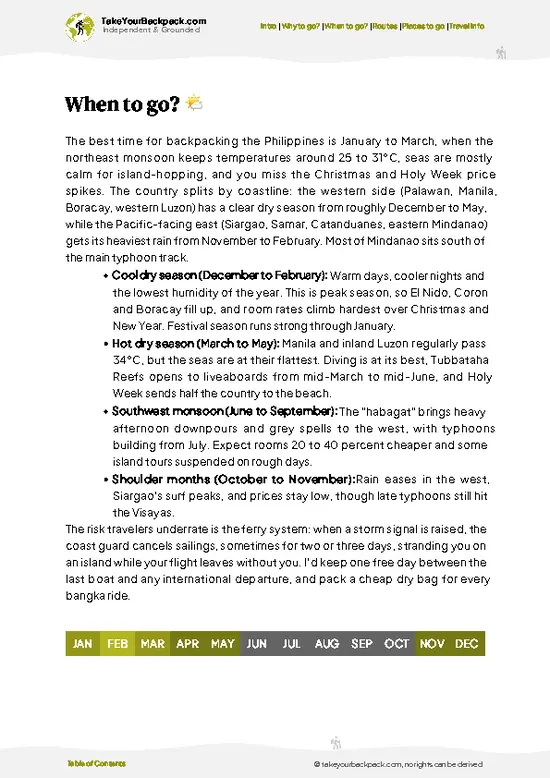
source: climatestotravel.comJANJanuary: excellent for travelingFEBFebruary: excellent for travelingMARMarch: excellent for travelingAPRApril: highly recommended for travelingMAYMay: fair for travelingJUNJune: fair for travelingJULJuly: fair for travelingAUGAugust: fair for travelingSEPSeptember: fair for travelingOCTOctober: fair for travelingNOVNovember: highly recommended for travelingDECDecember: excellent for traveling
when-to-go

✈️ The backpacker research shortcutPhilippines Travel Guide

An offline-friendly backpacking guide with optimized travel routes, ranked highlights, transport advice, and the best areas to stay.
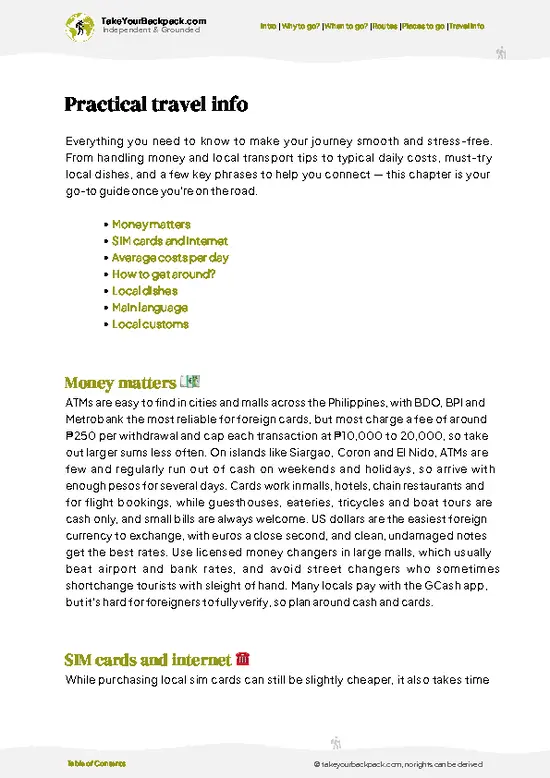
example page 0 from our offline Travel Guide for Philippines
example page 1 from our offline Travel Guide for Philippines
example page 2 from our offline Travel Guide for Philippines
example page 3 from our offline Travel Guide for Philippines
example page 4 from our offline Travel Guide for Philippines
example page 5 from our offline Travel Guide for Philippines
example page 6 from our offline Travel Guide for Philippines
example page 7 from our offline Travel Guide for Philippines
The digital guide (505 pages) contains:
144 highlights, ranked by travel appeal
Optimized 7, 14 & 21-day travel routes
Cities, national parks, landmarks, beaches
How to get around
Offline-friendly for travel without Wi-Fi
👉 Click to see all 30+ guide features

📅 Plan smarter in minutes, not weeks
Month by month travel advice
Festivals & national holidays
Budget expectations

🗺️ Go to the right places, skip the overrated ones
Honest pros & cons of destinations
Top hikes, parks & viewpoints
Lesser-known places most travelers miss
Clear “worth it vs skip it” guidance

🛏️ Travel smoothly without rookie mistakes
Best areas to stay
Transport systems explained simply
Common scams & safety advice
SIM cards, money & practical tips

🌍 Understand the country, not just visit it
Culture & traditions
52 Essential phrases & customs
Festivals worth planning around
Traveler-friendly historical context
Insights that make places more meaningful

📱 Built for real travel conditions
Fully downloadable PDF
Works completely offline
Optimized for phone use
Useful in remote areas & buses
Everything in one place
Save weeks of stressful planning
Get instant access to your full guide. 30‑day money-back guarantee.


By proceeding you agree to our terms.
Sent to your inbox immediately after payment • 100% Secure Checkout
Best Backpacking Travel Advisor 2025 tourism awardBest Backpacking
Travel Advisor
2025
What others say about Take Your Backpack Guides:
⭐⭐⭐⭐⭐
Fantastic, amazing amount of information!
⭐⭐⭐⭐⭐
My goodness this is amazing, it's what I've been looking for hats off too you!
⭐⭐⭐⭐⭐
I think this is absolutely BRILLIANT
⭐⭐⭐⭐
Very complete and informative. It's still missing places, but I gotta to commend you
⭐⭐⭐⭐⭐
This is truly amazing, thank you, can't wait to explore it with my kids!
⭐⭐⭐⭐⭐
Awesome resource, thank you!
⭐⭐⭐⭐⭐
This is amazing! Can't wait to explore the ones I haven't seen
⭐⭐⭐⭐
I love this! Well done, great idea.
⭐⭐⭐⭐⭐
Thanks for taking the time to make this gem!
⭐⭐⭐⭐⭐
This might be the best website I've ever seen.
⭐⭐⭐⭐⭐
Congratulations, and thank you so much for your work; it's incredibly valuable.
⭐⭐⭐⭐
In all seriousness I think you did a great job pointing out the important spots
⭐⭐⭐⭐⭐
10/10 very good
⭐⭐⭐⭐⭐
As someone who's only just starting to visit regularly this is awesome, thank you.
⭐⭐⭐⭐
Thank you very much! I'm going to visit my dad, it's going to be very useful!
⭐⭐⭐⭐⭐
This is really cool! We'll be travelling for the first time and this definitely come in handy.
⭐⭐⭐⭐⭐
You are now our minister of culture, congratulations 👨‍💼
⭐⭐⭐⭐⭐
Just wanted to tell you that this is a pearl! Going to follow your recommendations.
⭐⭐⭐⭐⭐
This is so cool. I'll definitely be using the resource for my travels soon.
⭐⭐⭐⭐⭐
This is very impressive! Good work.
⭐⭐⭐⭐⭐
This is an amazing and informative site. Very well done!

🛏️ Where to stay?How to pick the right area

In Taal, the best spot for backpackers is the town proper around the plaza and the nearby streets. This area pulses with local life—vendors selling fresh fruit, the scent of grilled fish mingling with the earthy aroma of wet stone after a rain. It’s safe, well-lit at night, and packed with small eateries where you can snag a meal for next to nothing. The vibe here is low-key but lively, perfect for solo travelers who want to soak in authentic Filipino town energy without feeling isolated.

Hostels and budget guesthouses cluster around this core, offering simple, clean accommodations that encourage … read more 👉
In Taal, the best spot for backpackers is the town proper around the plaza and the nearby streets. This area pulses with local life—vendors selling fresh fruit, the scent of grilled fish mingling with the earthy aroma of wet stone after a rain. It’s safe, well-lit at night, and packed with small eateries where you can snag a meal for next to nothing. The vibe here is low-key but lively, perfect for solo travelers who want to soak in authentic Filipino town energy without feeling isolated.

Hostels and budget guesthouses cluster around this core, offering simple, clean accommodations that encourage socializing. You’ll find fellow backpackers swapping stories over cheap coffee or local beer, making it easy to connect. Compared to the quieter outskirts or the more residential neighborhoods, staying near the plaza means you’re steps from the town’s heartbeat—churches, markets, and the ferry terminal for Taal Volcano trips. It’s the practical choice that rewards you with convenience and a genuine slice of daily life, not just a place to crash.

🚌 Getting aroundGetting around like a local

Taal moves at its own rhythm, a blend of laid-back provincial charm and bursts of local hustle. The sun slants low in the afternoon, casting long shadows over the cobbled streets, while the scent of wood smoke and simmering adobo drifts from open windows. Time here isn’t dictated by strict schedules but by the ebb and flow of daily life—vendors setting up, fishermen unloading their catch, and tricycles weaving through narrow alleys with a casual urgency. You won’t find a clock everyone obeys, but you will find a pulse that, once you tune into it, makes getting around feel less like a chore and more like a dance with the town itself.


  • Walking: The heart of Taal is compact enough to explore on foot. Streets are uneven and sometimes dusty, so sturdy shoes are a must. Walking lets you soak
read more 👉
Taal moves at its own rhythm, a blend of laid-back provincial charm and bursts of local hustle. The sun slants low in the afternoon, casting long shadows over the cobbled streets, while the scent of wood smoke and simmering adobo drifts from open windows. Time here isn’t dictated by strict schedules but by the ebb and flow of daily life—vendors setting up, fishermen unloading their catch, and tricycles weaving through narrow alleys with a casual urgency. You won’t find a clock everyone obeys, but you will find a pulse that, once you tune into it, makes getting around feel less like a chore and more like a dance with the town itself.


  • Walking: The heart of Taal is compact enough to explore on foot. Streets are uneven and sometimes dusty, so sturdy shoes are a must. Walking lets you soak in the tactile details—the cracked paint on heritage houses, the chatter from sari-sari stores, and the occasional waft of freshly baked pan de sal. It’s free, flexible, and the best way to catch the town’s authentic vibe.


  • Jeepneys: These colorful, open-sided minibuses are the backbone of local transit. Routes aren’t always clearly marked, so listen for the driver’s calls or ask locals for the right jeepney to your destination. Fares hover around 10-15 PHP, making them the cheapest motorized option. They run roughly from 5 AM to 9 PM, but expect irregular intervals—sometimes you wait, sometimes you hop on immediately.


  • Tricycles: For short hops or when you’re carrying gear, tricycles are the go-to. They’re everywhere, buzzing through narrow streets with a mix of caution and bravado. Prices start at about 20 PHP for short distances but always negotiate upfront. They don’t follow fixed routes or schedules, so they’re perfect for direct, flexible trips, especially when the sun is dipping low and you want to avoid walking in the dark.


  • Pedicabs: These human-powered cycles are slower but quieter and more intimate. Ideal for very short distances or when you want to avoid engine noise and fumes. They’re usually available from morning until early evening and cost around 10-20 PHP depending on distance. The gentle pace lets you catch small details missed from faster transport.


  • Motorbike Rentals: If you’re comfortable on two wheels, renting a motorbike unlocks the surrounding countryside beyond Taal’s core. Rentals cost about 300-500 PHP per day. It’s faster and more flexible than public transport but demands confidence on often uneven roads. Fuel is cheap, and the breeze on your face makes the occasional bump worth it.

👛 Costs (as of 3 July 2026)Money, prices, and spending tips

Backpacking in Taal, Philippines, offers a blend of rustic charm and cultural immersion, and knowing the daily costs helps you plan without surprises.
  • Dorm Accommodation: Expect to pay around $8 to $15 per night for a bed in a basic dormitory. These places are simple but clean, often family-run, with the scent of wood and local cooking wafting through the air. It’s not luxury, but it’s enough to rest after a day exploring the town and the iconic Taal Volcano views.
  • Meals: Local eateries serve hearty Filipino dishes for $2 to $5 per meal. Think rice, fresh fish or pork, and vegetables cooked with familiar, comforting spices. Street food snacks like banana cue or lumpia cost less than a dollar, perfect for quick bites while wandering the town’s lively streets.
  • Local Transport: Jeepneys and
read more 👉
Backpacking in Taal, Philippines, offers a blend of rustic charm and cultural immersion, and knowing the daily costs helps you plan without surprises.
  • Dorm Accommodation: Expect to pay around $8 to $15 per night for a bed in a basic dormitory. These places are simple but clean, often family-run, with the scent of wood and local cooking wafting through the air. It’s not luxury, but it’s enough to rest after a day exploring the town and the iconic Taal Volcano views.
  • Meals: Local eateries serve hearty Filipino dishes for $2 to $5 per meal. Think rice, fresh fish or pork, and vegetables cooked with familiar, comforting spices. Street food snacks like banana cue or lumpia cost less than a dollar, perfect for quick bites while wandering the town’s lively streets.
  • Local Transport: Jeepneys and tricycles are the go-to options, with fares typically between $0.20 and $0.50 per ride. The slow, bumpy rides offer a sensory snapshot of daily life—dusty roads, chatter, and the occasional rooster crowing nearby. Renting a motorbike for the day runs about $10 to $15 if you want more freedom to roam.
  • Basic Activities/Entry Fees: Visiting Taal Volcano’s crater or local heritage sites usually costs around $3 to $7. Guides are available for about $10 to $15, which is worth it for the stories and safer navigation. The natural beauty here is raw and tactile—the smell of sulfur, the crunch of volcanic ash underfoot.
  • Miscellaneous Expenses: Budget $2 to $5 for bottled water, snacks, or small souvenirs. Wi-Fi is spotty and often comes with a small fee if you’re not staying at a place with free access. Keep some cash handy; card payments are rare outside bigger towns.

All told, a realistic daily budget for backpacking in Taal falls between $15 and $35. This range covers the essentials without cutting corners, letting you soak in the atmosphere without stress. The modest costs reflect the town’s pace—unhurried, grounded, and full of simple pleasures earned by a day’s walk or ride.


source: taal.gov.ph
⚠️ Prices can change and everyone travels differently, so take this as a rough guide. Hope it helps you plan your adventure!

🚌 Day tripsBest day trips from Taal

Taal, Philippines, is a backpacker’s dream base, offering a blend of culture, adventure, and stunning landscapes. With its proximity to various attractions, you can easily explore the beauty of Batangas province without the hassle of overnight stays.

Mount Taal Trek
This isn’t just a hike; it’s a journey into the heart of a volcano. The trek takes about 45 minutes to an hour, depending on your pace. The trail is well-marked but can get slippery, so sturdy shoes are a must. The view from the top, overlooking Taal Lake and the surrounding islands, is worth every bead of sweat. Aim for an early morning start to catch the sunrise; the light dancing on the water is magical. Expect to spend around PHP 1,500 for the boat ride and entrance fee. A common mistake? Underestimating the weather—bring … read more 👉
Taal, Philippines, is a backpacker’s dream base, offering a blend of culture, adventure, and stunning landscapes. With its proximity to various attractions, you can easily explore the beauty of Batangas province without the hassle of overnight stays.

Mount Taal Trek
This isn’t just a hike; it’s a journey into the heart of a volcano. The trek takes about 45 minutes to an hour, depending on your pace. The trail is well-marked but can get slippery, so sturdy shoes are a must. The view from the top, overlooking Taal Lake and the surrounding islands, is worth every bead of sweat. Aim for an early morning start to catch the sunrise; the light dancing on the water is magical. Expect to spend around PHP 1,500 for the boat ride and entrance fee. A common mistake? Underestimating the weather—bring layers, as it can get chilly at the summit.


Villa Escudero
Just a short bus ride away, Villa Escudero is a cultural experience wrapped in lush greenery. The journey takes about an hour and costs around PHP 200. Here, you can enjoy a traditional Filipino buffet served right at a waterfall—yes, you read that right. The sound of rushing water and the aroma of local dishes create an unforgettable atmosphere. Visit during the dry season for the best experience, and don’t forget to explore the museum showcasing Filipino heritage. Many first-timers miss the chance to wander the grounds, which are just as captivating as the meal.


Nasugbu Beaches
For a day of sun and surf, head to Nasugbu, about an hour and a half from Taal. The bus fare is around PHP 100. The beaches here are less crowded than those in more touristy areas, allowing you to soak in the sun and enjoy the gentle waves. Bring your own snacks and drinks to save money, as beachside vendors can be pricey. The best time to visit is during the dry season, when the skies are clear and the water is inviting. A common rookie mistake? Forgetting sunscreen—trust me, you’ll regret it later.


Tagaytay Ridge
Only about an hour away, Tagaytay offers a cooler climate and breathtaking views of Taal Volcano. The bus fare is around PHP 80. Spend your day sipping coffee at a café overlooking the lake, or take a leisurely stroll along the ridge. The fresh air and the scent of local cuisine make this a refreshing escape. Visit during weekdays to avoid the crowds, and don’t miss the local street food stalls. Many first-timers stick to the main attractions and miss out on the hidden food spots that truly capture the essence of Tagaytay.
Want to know what more Philippines offers?
The Philippines Travel Guide describes 144 highlights, from cities to national parks, from beaches to hikes

Get the Travel Guide -

🛡️ SafetyScams, Hazards, and Annoyances

Taal, Philippines, is generally safe, but a few practical tips can enhance your experience. Stay aware in crowded markets, where pickpockets might lurk. Keep your valuables close and use a crossbody bag. If you’re solo, avoid wandering too far after dark; the streets can feel quiet and less inviting.

Watch for common scams, like overly friendly locals offering unsolicited tours. Politely decline and stick to established guides. Everyday annoyances include aggressive tricycle drivers who may overcharge tourists. Always agree on a fare before hopping in.

Trust your instincts, and carry yourself with confidence. The charm of Taal awaits, and a little awareness goes a long way in unlocking its true beauty.

Other Filipino towns near Taal

Explore more nearby:

  • Tagaytay—Taal Volcano views, cool breezes, roadside markets| 25 km away
  • Boracay—White Beach, nightlife strips, water sports| 239 km away
  • Kalibo—Ati-Atihan festival, piña weaving, mangrove park| 290 km away

💡 Not sure where to go next?
Create a personalized itinerary for Philippines including Taal and the places that fit your trip.

Generate my itinerary

👉 Discover all towns

Or checkout all Philippines has to offer (think cities, towns, villages, national parks, hikes, beaches, festivals)
Country photo of Philippines

We 💚 feedbackFinal thoughts on visiting Taal

Taal is a sensory feast. The aroma of local dishes wafts through the air, mingling with the earthy scent of the surrounding hills. You’ll love wandering the cobblestone streets, soaking in the history. But be ready for the heat; it can be relentless. Hydration is key. Embrace the sweat, and you’ll unlock a deeper connection to this vibrant town. It’s worth every drop.

✈️ When did I visit Philippines?
Philippines being one of my favorites, due to the people and their mentality. I visited it first in 2010 and came back in January 2016 as part of my 1.5 year world trip.

✍️ Help improve this page!
The information on this page is based on my own backpacking experience in Philippines, supplemented with up-to-date research and feedback from other travelers. Travel details can change, so if you notice anything outdated or incomplete, feel free to let me know.


🙋‍♂️ Give feedback

👋 Meet the founderWho’s Behind Take Your Backpack?

Johan, backpacker and founder of TakeYourBackpackHi, I’m Johan (Netherlands 🇳🇱), the creator of TakeYourBackpack. Over the past decade, I’ve backpacked through 80+ countries across six continents, gaining extensive experience with independent travel, long-term trips, and overland routes.

This site is built on a combination of firsthand travel experience and carefully curated insights from other backpackers. Many guides are based on places I’ve personally visited, while others bring together tips, observations, and practical advice shared by trusted travelers I’ve met along the way.

The goal is to provide realistic, experience-driven guidance — not generic itineraries — so you can explore destinations with better context, clearer expectations, and more confidence.

Get full country guide •
Instant download • 144 highlights • Full Offline guide