×

Philippines🇵🇭 | townsSagadaLimestone cliffs, hanging coffins, pine forests | things to do and best time to go

Explore ViganExplore Banaue

Backpacking in Sagada
🏆 Top picktown ranked #3
By Johan Kruseman 🇳🇱 | Updated May 22, 2026

Everyone comes to Sagada for the hanging coffins, but that’s not the reason you stay. What actually matters is the way the air cools on your skin after Manila’s chaos, the smell of pine and woodsmoke at dusk, and how the town slows you down enough to hear your own footsteps. Sagada sits high in the Cordillera mountains of northern Luzon, in the Mountain Province, a long, winding bus ride from Baguio or Banaue that already filters out the impatient.

The town itself is small, stretched along a main road with side lanes dropping into rice terraces and limestone valleys. It works best as a base: caves, waterfalls, echoing cliffs, and sunrise viewpoints all sit within short jeepney rides or guided walks. You can cross it on foot in minutes, but the hills make you earn every bakery run. Evenings are quiet: a few cafés, simple restos, low-key hostels where conversations last longer than your phone battery. It’s cheaper than Baguio, safer than most cities, and more scenic than Banaue’s town proper, but also more touristic than tiny Kalinga villages. For a Luzon loop, Sagada is the pause button between big jumps, not the main show—unless you let the slow mountain rhythm become the point.

Discover everything you want to know in the 📖 Philippines Travel Guide.
Loading the map 🌍
CLICK TO FILTER
city
town
unique site
national park
hike
beach
attraction
festival
region
SHOW COUNTRY’S BESTSHOW ALL

✨ Why go?
Ranked #3 town in Philippines
Why Sagada should be on your travel list

Backpackers flock to Sagada for its unique blend of convenience and authenticity. Nestled in the mountains, it serves as a perfect base for nearby hikes like the Echo Valley and the Hanging Coffins. The trails are well-marked, but they still offer that exhilarating sense of adventure, with misty mornings and the scent of pine filling the air.

Accommodations here are mostly small-scale hostels and guesthouses, fostering a friendly atmosphere where solo travelers and small groups can easily connect. You’ll find communal spaces buzzing with stories from the day’s explorations, making it easy to share tips or plan your next move. The walkable streets are lined with local eateries serving hearty meals that reflect the region’s culture, like the savory pinikpikan or fresh vegetable dishes.

Most … read more 👉
Backpackers flock to Sagada for its unique blend of convenience and authenticity. Nestled in the mountains, it serves as a perfect base for nearby hikes like the Echo Valley and the Hanging Coffins. The trails are well-marked, but they still offer that exhilarating sense of adventure, with misty mornings and the scent of pine filling the air.

Accommodations here are mostly small-scale hostels and guesthouses, fostering a friendly atmosphere where solo travelers and small groups can easily connect. You’ll find communal spaces buzzing with stories from the day’s explorations, making it easy to share tips or plan your next move. The walkable streets are lined with local eateries serving hearty meals that reflect the region’s culture, like the savory pinikpikan or fresh vegetable dishes.

Most travelers linger for a few days, soaking in the laid-back vibe and the chance to slow down. It’s not a party town; instead, it attracts those who appreciate nature and community. If you’re a hiker, a slow traveler, or someone looking to unwind, Sagada is more than just a stop; it’s a rewarding chapter in your journey.
Get the complete Travel Guide for Philippines
Everything organized for offline planning — routes, highlights, costs & tips

See what’s inside 👉

Get the Travel Guide -

💡 HighlightsMust-see experiences and standout moments

  1. Sumaguing Cave — The must-do spelunking cave in Sagada: huge caverns, dramatic stalactites and stalagmites, and a guided route that’s adventurous but doable without specialized gear. It’s where you feel the landscape’s deep, slow work under your boots.
  2. Lumiang Burial Cave — An intimate, eerie place where you can actually see centuries-old coffins tucked into the limestone—part of the Igorot hanging-coffin tradition. The descent through the cave mouth gives real context to local burial customs.
  3. Echo Valley (Hanging Coffins trail) — The classic short hike down to the valley rim to view the famous hanging coffins and hear the echoes of the cliffs; it’s cultural, visual, and a little spine-tingling in the best way.
  4. Kiltepan Viewpoint (Marlboro Hills) — Sunrise here is why people come to Sagada:
read more 👉
  1. Sumaguing Cave — The must-do spelunking cave in Sagada: huge caverns, dramatic stalactites and stalagmites, and a guided route that’s adventurous but doable without specialized gear. It’s where you feel the landscape’s deep, slow work under your boots.
  2. Lumiang Burial Cave — An intimate, eerie place where you can actually see centuries-old coffins tucked into the limestone—part of the Igorot hanging-coffin tradition. The descent through the cave mouth gives real context to local burial customs.
  3. Echo Valley (Hanging Coffins trail) — The classic short hike down to the valley rim to view the famous hanging coffins and hear the echoes of the cliffs; it’s cultural, visual, and a little spine-tingling in the best way.
  4. Kiltepan Viewpoint (Marlboro Hills) — Sunrise here is why people come to Sagada: a sea of clouds spilling over rice terraces and spiky peaks. It’s a small, community-run viewpoint so you’ll be rubbing shoulders with locals and vendors as light changes fast.
  5. St. Mary’s Episcopal Church & Sagada Cemetery — The Anglican church is a focal point of town life, and the adjacent cemetery has unusual tombstones and views over the terraces; visiting gives you a quieter, more reflective slice of Sagada’s history.
  6. Sagada Weaving (local looms) — Small cooperative workshops where you can watch (and sometimes try) traditional handloom weaving and buy real locally made textiles—great for seeing living craft traditions rather than factory souvenirs.
  7. Sagada Pottery — A few potters in town work simple, functional ceramics; some studios offer hands-on sessions. It’s a nice counterpoint to the sightseeing—tactile and honest local craft you can take home.
  8. Sagada Public Market & Main Street — The heartbeat of daily life: sample local produce, smoked meats, beans, and pick up tapey or snacks. The market scene and small eateries around it are where you’ll absorb real local rhythms and food culture.
  9. Sagada Yoghurt House (and local cafés) — Yes, the yoghurt is tourist-famous, but the cafes are also where backpackers swap routes and where you can try local coffee and home-cooked mountain dishes—simple, social, and reliably good after a long hike.
  10. Town Overlook / Bell Tower View — A short walk from the center gets you wide views over Sagada’s patchwork terraces, wooden houses, and the valley below; perfect for a late-afternoon sit when the light softens and the town slows.
A few real day-trip highlights outside town: Bomod-ok Falls (the big, photogenic cascade in Bangaan), the rice-terrace clusters around
Spotted a mistake or missing something? Contact us.

Things to do near Sagada

Ratings based on Tripadvisor reviews. When you book through this link, you support our work at no extra cost to you.

🏘️ NeighborhoodsNeighborhood guide to Sagada

Sagada is a backpacker’s paradise, where the cool mountain air mingles with the scent of pine and the promise of adventure. Each area has its own character, making it essential to choose wisely for your stay.

Central Sagada: This is the heartbeat of the town. You’ll find a mix of budget hostels and cozy guesthouses, all within walking distance of restaurants and shops. The vibe is lively but not overwhelming, perfect for those who want to socialize without the chaos of nightlife. It’s ideal for short stays, as everything is just a stroll away, but longer visits can feel repetitive.

Echo Valley: A bit quieter, this area offers stunning views and a more laid-back atmosphere. It’s a short hike from the main town, making it a great spot for those who appreciate peace and nature. Accommodations … read more 👉
Sagada is a backpacker’s paradise, where the cool mountain air mingles with the scent of pine and the promise of adventure. Each area has its own character, making it essential to choose wisely for your stay.

Central Sagada: This is the heartbeat of the town. You’ll find a mix of budget hostels and cozy guesthouses, all within walking distance of restaurants and shops. The vibe is lively but not overwhelming, perfect for those who want to socialize without the chaos of nightlife. It’s ideal for short stays, as everything is just a stroll away, but longer visits can feel repetitive.

Echo Valley: A bit quieter, this area offers stunning views and a more laid-back atmosphere. It’s a short hike from the main town, making it a great spot for those who appreciate peace and nature. Accommodations here tend to be slightly pricier, but the tranquility is worth it. Perfect for longer stays, especially if you want to immerse yourself in the local culture.

Lake Danum: For the adventurous, this area is a bit off the beaten path. It’s a serene spot for camping and enjoying breathtaking sunsets. The walk to the lake is a bit challenging, but the reward is solitude and stunning scenery. This is best for those looking to escape the hustle and dive deep into nature, making it suitable for longer stays.

Demang: A hidden nook with a local feel, Demang is where you’ll find authentic Filipino hospitality. It’s walkable but requires a bit of effort to reach. Accommodations are budget-friendly, and the area is quieter, making it ideal for those who want to recharge. Perfect for both short and longer stays, especially if you want to connect with locals.

⌛️ 1 dayA smart one-day plan

Sagada, a cool mountain town in the Philippines, is a treasure trove of natural beauty and rich culture. The air is crisp, filled with the scent of pine and the promise of adventure. Known for its hanging coffins and stunning rice terraces, Sagada offers a unique blend of history and breathtaking landscapes that make every moment feel significant.

Start your day early with a hearty breakfast at the local favorite, Café Yagam. The aroma of freshly brewed coffee mingles with the scent of grilled meats, setting the tone for your adventure. After fueling up, head to the Echo Valley and Hanging Coffins. The hike is invigorating, with the sun filtering through the trees, casting playful shadows on the trail. As you approach the coffins, the sight is both eerie and fascinating, a testament to the … read more 👉
Sagada, a cool mountain town in the Philippines, is a treasure trove of natural beauty and rich culture. The air is crisp, filled with the scent of pine and the promise of adventure. Known for its hanging coffins and stunning rice terraces, Sagada offers a unique blend of history and breathtaking landscapes that make every moment feel significant.

Start your day early with a hearty breakfast at the local favorite, Café Yagam. The aroma of freshly brewed coffee mingles with the scent of grilled meats, setting the tone for your adventure. After fueling up, head to the Echo Valley and Hanging Coffins. The hike is invigorating, with the sun filtering through the trees, casting playful shadows on the trail. As you approach the coffins, the sight is both eerie and fascinating, a testament to the local Igorot culture. Take your time here; snap photos, but also soak in the atmosphere.

In the afternoon, wander over to the lesser-known Lumiang Cave. It’s a bit off the beaten path, but the journey is worth it. The entrance is unassuming, but once inside, you’ll find a world of ancient burial sites and stunning rock formations. The cool, damp air and the echo of dripping water create an almost sacred ambiance.

As the sun begins to dip, make your way to the rice terraces in the nearby village of Bangaan. The golden light casts a warm glow over the fields, and the sight is nothing short of magical. Grab a snack from a local vendor—perhaps some sweet rice cakes—and enjoy the view.

Wrap up your day at a cozy eatery like the Salt and Pepper Diner, where you can savor local dishes while reflecting on your day. The warmth of the people and the flavors of the food will linger long after you leave. In Sagada, every moment is a chance to connect with nature and culture, making your one-day visit feel like a rich tapestry of experiences.
Build the Right Itinerary
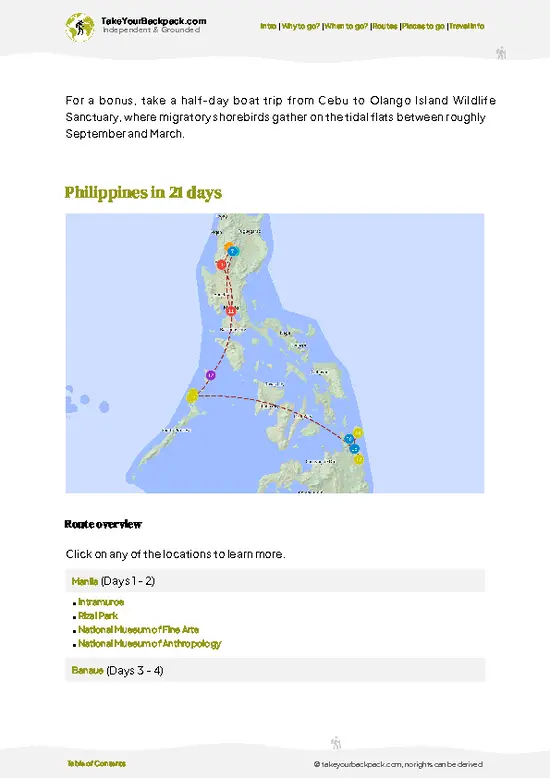
Use the Philippines Travel Guide’s 7, 14 & 21-day routes as a starting point to plan a trip that actually works on the ground.

Get the Travel Guide -

🌤️ When to go?Seasonal considerations and timing


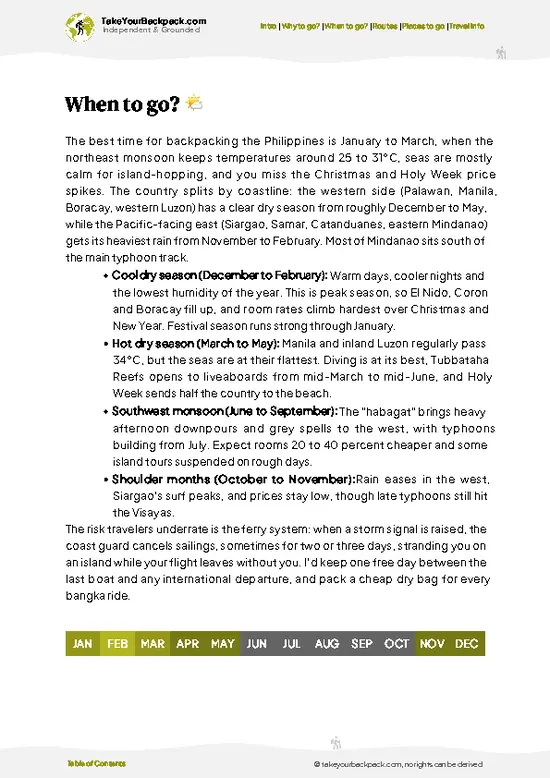
  • Topic: Weather – Sagada’s dry season runs from November to April, offering crisp, clear skies perfect for trekking and cave exploration. The wet season, May to October, brings heavy rains that can turn trails slippery and caves hazardous, dulling the vibrant mountain views.

  • Topic: Temperature – Expect cool mountain air year-round, averaging 15°C to 20°C (59°F to 68°F). Nights can dip to 10°C (50°F) or lower, especially December through February, so pack layers to stay comfortable when the sun sets behind the peaks.

  • Topic: Daylight Hours – Daylight stretches roughly from 6 AM to 6 PM, giving you a solid 12 hours to explore. Arriving early maximizes your daylight for hikes and the famous hanging coffins without rushing.

  • Topic: Crowds – Peak season aligns with the dry months and local
read more 👉

  • Topic: Weather – Sagada’s dry season runs from November to April, offering crisp, clear skies perfect for trekking and cave exploration. The wet season, May to October, brings heavy rains that can turn trails slippery and caves hazardous, dulling the vibrant mountain views.

  • Topic: Temperature – Expect cool mountain air year-round, averaging 15°C to 20°C (59°F to 68°F). Nights can dip to 10°C (50°F) or lower, especially December through February, so pack layers to stay comfortable when the sun sets behind the peaks.

  • Topic: Daylight Hours – Daylight stretches roughly from 6 AM to 6 PM, giving you a solid 12 hours to explore. Arriving early maximizes your daylight for hikes and the famous hanging coffins without rushing.

  • Topic: Crowds – Peak season aligns with the dry months and local holidays, especially December and March, when Sagada fills with tourists. Visiting just before or after these spikes means quieter trails and more authentic encounters.

  • Topic: Seasonal Activities – The dry season unlocks outdoor adventures like the Echo Valley trek and Sumaguing Cave spelunking. The wet season limits these but offers lush greenery and fewer visitors, ideal if you prefer solitude over scrambling.

  • Topic: Price Fluctuations – Accommodation and transport costs rise during peak months and holidays. Booking off-peak can save you 20-30%, freeing up budget for local food or guided tours that deepen your experience.


Pro-tip: Aim for late November or early April—when the air is fresh, the crowds thin, and the trails are still manageable—to catch Sagada’s raw mountain magic without the hassle.


source: climatestotravel.comJANJanuary: highly recommended for travelingFEBFebruary: highly recommended for travelingMARMarch: good for travelingAPRApril: highly recommended for travelingMAYMay: fair for travelingJUNJune: fair for travelingJULJuly: fair for travelingAUGAugust: fair for travelingSEPSeptember: fair for travelingOCTOctober: fair for travelingNOVNovember: highly recommended for travelingDECDecember: good for traveling
when-to-go

✈️ The backpacker research shortcutPhilippines Travel Guide

An offline-friendly backpacking guide with optimized travel routes, ranked highlights, transport advice, and the best areas to stay.
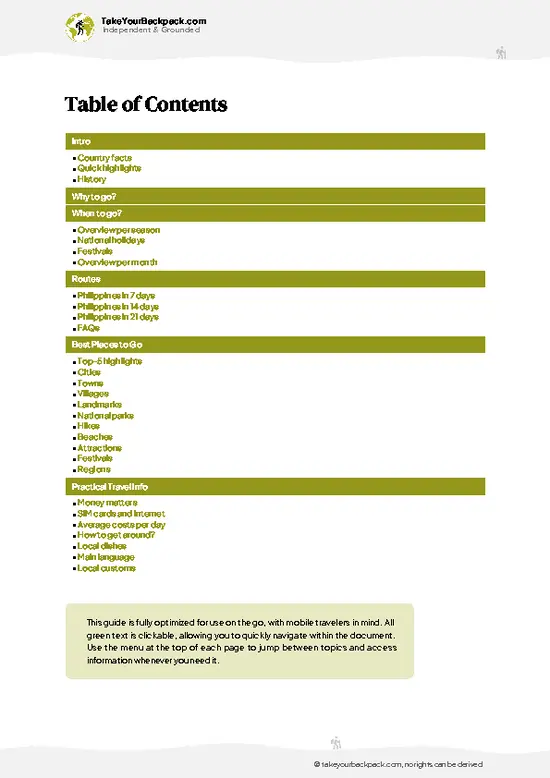
example page 0 from our offline Travel Guide for Philippinesexample page 1 from our offline Travel Guide for Philippinesexample page 2 from our offline Travel Guide for Philippinesexample page 3 from our offline Travel Guide for Philippinesexample page 4 from our offline Travel Guide for Philippinesexample page 5 from our offline Travel Guide for Philippinesexample page 6 from our offline Travel Guide for Philippinesexample page 7 from our offline Travel Guide for Philippines
The digital guide (505 pages) contains:
144 highlights, ranked by travel appeal
Optimized 7, 14 & 21-day travel routes
Cities, national parks, beaches, historical sites, ...
How to get around
Offline-friendly for travel without Wi-Fi
👉 Click to see all 30+ guide features

📅 Plan smarter in minutes, not weeks
Month by month travel advice
Festivals & national holidays
Budget expectations

🗺️ Go to the right places, skip the overrated ones
Honest pros & cons of destinations
Top hikes, parks & viewpoints
Lesser-known places most travelers miss
Clear “worth it vs skip it” guidance

🛏️ Travel smoothly without rookie mistakes
Best areas to stay
Transport systems explained simply
Common scams & safety advice
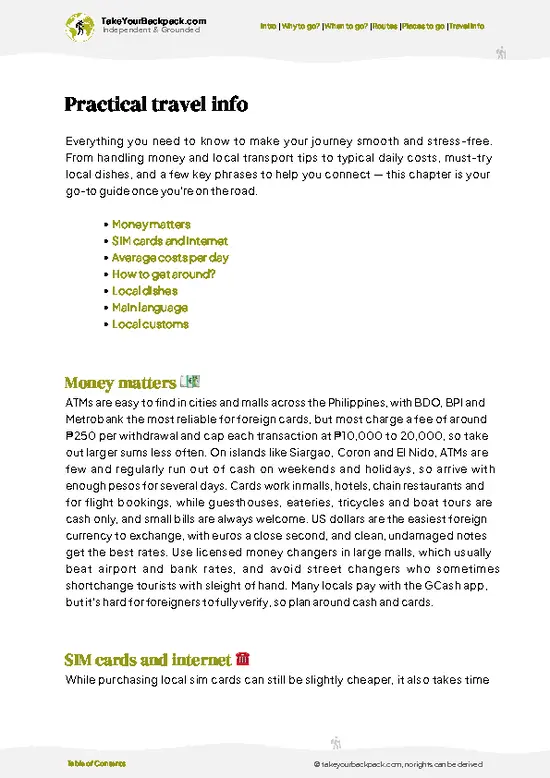
SIM cards, money & practical tips

🌍 Understand the country, not just visit it
Culture & traditions
52 Essential phrases & customs
Festivals worth planning around
Traveler-friendly historical context
Insights that make places more meaningful

📱 Built for real travel conditions
Fully downloadable PDF
Works completely offline
Optimized for phone use
Useful in remote areas & buses
Everything in one place
Save weeks of stressful planning
Get instant access to the full guide directly. 30-day money-back guarantee.


Sent to your inbox immediately after payment • 100% Secure Checkout
Best Backpacking Travel Advisor 2025 tourism awardBest Backpacking
Travel Advisor
2025
What others say about Take Your Backpack Guides:
⭐⭐⭐⭐⭐
Fantastic, amazing amount of information!
⭐⭐⭐⭐⭐
My goodness this is amazing, it's what I've been looking for hats off too you!
⭐⭐⭐⭐⭐
I think this is absolutely BRILLIANT
⭐⭐⭐⭐
Very complete and informative. It's still missing places, but I gotta to commend you
⭐⭐⭐⭐⭐
This is truly amazing, thank you, can't wait to explore it with my kids!
⭐⭐⭐⭐⭐
Awesome resource, thank you!
⭐⭐⭐⭐⭐
This is amazing! Can't wait to explore the ones I haven't seen
⭐⭐⭐⭐
I love this! Well done, great idea.
⭐⭐⭐⭐⭐
Thanks for taking the time to make this gem!
⭐⭐⭐⭐⭐
This might be the best website I've ever seen.
⭐⭐⭐⭐⭐
Congratulations, and thank you so much for your work; it's incredibly valuable.
⭐⭐⭐⭐
In all seriousness I think you did a great job pointing out the important spots
⭐⭐⭐⭐⭐
10/10 very good
⭐⭐⭐⭐⭐
As someone who's only just starting to visit regularly this is awesome, thank you.
⭐⭐⭐⭐
Thank you very much! I'm going to visit my dad, it's going to be very useful!
⭐⭐⭐⭐⭐
This is really cool! We'll be travelling for the first time and this definitely come in handy.
⭐⭐⭐⭐⭐
You are now our minister of culture, congratulations 👨‍💼
⭐⭐⭐⭐⭐
Just wanted to tell you that this is a pearl! Going to follow your recommendations.
⭐⭐⭐⭐⭐
This is so cool. I'll definitely be using the resource for my travels soon.
⭐⭐⭐⭐⭐
This is very impressive! Good work.
⭐⭐⭐⭐⭐
This is an amazing and informative site. Very well done!

🛏️ Where to stay?Best areas to stay in Philippines

Sagada’s heart for backpackers pulses strongest around its town center, where the main road slices through a cluster of guesthouses, eateries, and small shops. This area isn’t just convenient—it’s where the social energy brews. You’ll find yourself stepping out into crisp mountain air, the scent of wood smoke and fresh pine mingling with the chatter of fellow travelers swapping trail stories over steaming cups of local coffee. Staying here means you’re a short walk from the famed hanging coffins and the Echo Valley trailhead, so you can hit the highlights early, before the crowds and the afternoon … read more 👉
Sagada’s heart for backpackers pulses strongest around its town center, where the main road slices through a cluster of guesthouses, eateries, and small shops. This area isn’t just convenient—it’s where the social energy brews. You’ll find yourself stepping out into crisp mountain air, the scent of wood smoke and fresh pine mingling with the chatter of fellow travelers swapping trail stories over steaming cups of local coffee. Staying here means you’re a short walk from the famed hanging coffins and the Echo Valley trailhead, so you can hit the highlights early, before the crowds and the afternoon mist roll in.

Compared to the quieter outskirts, the town center’s vibe is lively without being overwhelming. It’s safe, with a friendly, small-town feel that welcomes solo travelers without the awkwardness of a tourist trap. Hostels and budget inns cluster here, offering communal spaces that make it easy to meet others without forcing it. The light here shifts quickly—morning sun filters through the towering pine trees, while evenings bring a cool hush, perfect for swapping stories under a sky thick with stars.

If you wander too far from this hub, you’ll lose that easy access to both social life and essential services. The trade-off is a quieter night, but for most backpackers, the pulse of the town center is where Sagada’s spirit truly lives.

🚌 Getting aroundHow to get around Sagada

Sagada moves at its own rhythm—less a clock-driven town and more a place where the mist drifts lazily through pine trees and the scent of wood smoke lingers long after dusk. The streets don’t hum with honking or rush; instead, they breathe with the slow shuffle of locals and travelers alike, each step measured and deliberate. Here, schedules are suggestions, not laws. The sun’s angle and the mountain air dictate your pace more than any timetable. Understanding this flow means embracing patience and a bit of improvisation, which unlocks a richer, more authentic experience. You’ll find that the best way to get around isn’t about speed but about syncing with the town’s natural tempo.


  • Walking: The heart of Sagada’s transit. Nearly everything worth seeing—hanging coffins, caves, local markets—is
read more 👉
Sagada moves at its own rhythm—less a clock-driven town and more a place where the mist drifts lazily through pine trees and the scent of wood smoke lingers long after dusk. The streets don’t hum with honking or rush; instead, they breathe with the slow shuffle of locals and travelers alike, each step measured and deliberate. Here, schedules are suggestions, not laws. The sun’s angle and the mountain air dictate your pace more than any timetable. Understanding this flow means embracing patience and a bit of improvisation, which unlocks a richer, more authentic experience. You’ll find that the best way to get around isn’t about speed but about syncing with the town’s natural tempo.


  • Walking: The heart of Sagada’s transit. Nearly everything worth seeing—hanging coffins, caves, local markets—is within a 20- to 40-minute walk from the town center. The trails are uneven, sometimes muddy, so sturdy shoes are a must. Walking lets you soak in the cool mountain air, hear the crunch of pine needles underfoot, and catch glimpses of village life that vanish from bus windows.


  • Jeepneys: The classic Philippine ride, jeepneys here are rugged and colorful, but don’t expect strict schedules. They run from early morning around 6:00 a.m. until about 6:00 p.m., with fares typically under 50 PHP for short hops. They’re slow, often packed, and the ride can be bumpy, but they’re the cheapest way to reach nearby barangays or the bus terminal outside town. Flag one down anywhere along the main road.


  • Tricycles: For short distances or when you’re hauling gear, tricycles are the go-to. They’re small motorcycles with sidecars, perfect for navigating narrow lanes or steep inclines. Expect to pay around 20–50 PHP depending on distance. They don’t run on a schedule—just negotiate a price and hop on. The ride is open-air, so you’ll catch every scent and sound of the mountain village.


  • Bus to Baguio or Banaue: For longer hauls, buses connect Sagada to Baguio and Banaue. Departures are early, often around 5:00 a.m. to 7:00 a.m., and the journey can take 6 to 8 hours depending on road conditions. Tickets cost roughly 300–400 PHP. The roads are winding and narrow, so prepare for slow, cautious driving. This is less about comfort and more about endurance, but it’s the lifeline to the outside world.

👛 Costs (as of 19 October 2025)What things cost and how to budget

Backpacking in Sagada, Philippines, offers a raw, earthy vibe where every peso counts but also stretches far enough to let you savor the place without skimping on essentials.
  • Dorm Accommodation: Expect to pay around $6 to $12 per night for a bed in a shared dormitory. These are simple, often fan-cooled rooms with basic amenities. The charm here is in the rustic feel—wooden floors, open windows letting in the mountain air, and the occasional rooster crowing at dawn.
  • Meals: Local eateries serve hearty meals for about $2 to $4 each. Think steaming bowls of rice, fresh vegetables, and grilled or fried fish or pork. Breakfast might be a cup of strong coffee and a sweet rice cake for under $1. If you want to splurge a bit, some cafes offer fusion dishes around $5 to $7, but sticking to local fare
read more 👉
Backpacking in Sagada, Philippines, offers a raw, earthy vibe where every peso counts but also stretches far enough to let you savor the place without skimping on essentials.
  • Dorm Accommodation: Expect to pay around $6 to $12 per night for a bed in a shared dormitory. These are simple, often fan-cooled rooms with basic amenities. The charm here is in the rustic feel—wooden floors, open windows letting in the mountain air, and the occasional rooster crowing at dawn.
  • Meals: Local eateries serve hearty meals for about $2 to $4 each. Think steaming bowls of rice, fresh vegetables, and grilled or fried fish or pork. Breakfast might be a cup of strong coffee and a sweet rice cake for under $1. If you want to splurge a bit, some cafes offer fusion dishes around $5 to $7, but sticking to local fare is both cheaper and more authentic.
  • Local Transport: Getting around Sagada is mostly on foot or by tricycle. Tricycle rides within town or to nearby spots cost roughly $0.50 to $1.50. Walking is often the best way to soak in the misty mountain air and the scent of pine and damp earth, plus it saves money.
  • Basic Activities/Entry Fees: Most natural attractions like caves, waterfalls, and rice terraces charge modest fees, usually between $1 and $3. Hiring a local guide for activities like spelunking or trekking can add $5 to $10 per trip, but it’s worth it for safety and insider knowledge.
  • Miscellaneous Expenses: Budget $1 to $3 for bottled water, snacks, or small souvenirs. Internet access is spotty and often limited to cafes, where a coffee purchase is expected if you linger.

All told, a daily budget in Sagada typically falls between $12 and $25. This range covers the essentials while leaving room for a guided trek or a special meal. The mountain air and quiet mornings make every peso feel like an investment in a slower, richer experience.


source: tourism.gov.ph
⚠️ Prices can change and everyone travels differently, so take this as a rough guide. Hope it helps you plan your adventure!

🚌 Day tripsEasy escapes and nearby places

Sagada is a backpacker’s dream, offering a perfect launchpad for unforgettable day trips that blend adventure with cultural immersion. The town’s cool mountain air and the scent of pine trees set the stage for exploration. Here are some standout day trips that make Sagada a must-visit.

**Sumaguing Cave Exploration**
This isn’t just a cave; it’s a labyrinth of stunning rock formations and underground rivers. The trek through Sumaguing Cave takes about 2-3 hours, and you’ll need a guide—don’t skimp on this. Expect to pay around 1,000 PHP for the guide and entrance fee. The best time to go is early in the morning when the light filters through the cave openings, illuminating the stalactites. A common mistake? Underestimating the difficulty; wear sturdy shoes and be ready to scramble over rocks. … read more 👉
Sagada is a backpacker’s dream, offering a perfect launchpad for unforgettable day trips that blend adventure with cultural immersion. The town’s cool mountain air and the scent of pine trees set the stage for exploration. Here are some standout day trips that make Sagada a must-visit.

**Sumaguing Cave Exploration**
This isn’t just a cave; it’s a labyrinth of stunning rock formations and underground rivers. The trek through Sumaguing Cave takes about 2-3 hours, and you’ll need a guide—don’t skimp on this. Expect to pay around 1,000 PHP for the guide and entrance fee. The best time to go is early in the morning when the light filters through the cave openings, illuminating the stalactites. A common mistake? Underestimating the difficulty; wear sturdy shoes and be ready to scramble over rocks. The thrill of emerging from the cave, covered in mud but exhilarated, is worth every step.


**Echo Valley and Hanging Coffins**
Just a short hike from town, this trip is steeped in local culture. The Hanging Coffins are a fascinating glimpse into the Igorot traditions. The hike takes about 30 minutes, and it’s free—just your time and energy. Go in the late afternoon for softer light and fewer crowds. Many first-timers miss the viewpoint; take the time to soak in the scenery and listen to the echoes of the valley. The blend of history and breathtaking views makes this a must-do.


**Bokong Falls**
A refreshing escape, Bokong Falls is a hidden treasure just a 30-minute hike from Sagada. The sound of rushing water and the cool mist create a serene atmosphere. Bring a packed lunch and enjoy a picnic by the falls. The trek is free, but you might want to tip your guide if you hire one. The best time to visit is during the dry season when the water flow is manageable. A common pitfall is not bringing enough water; stay hydrated for the hike back.


**Lake Danum**
For a tranquil afternoon, head to Lake Danum, about 30 minutes by tricycle. The lake is stunning at sunset, with reflections that make for perfect photos. Expect to pay around 200 PHP for the ride. Bring snacks and enjoy the peaceful surroundings. Many travelers overlook this spot, rushing back to town; don’t miss the chance to unwind and soak in the beauty.


Each of these trips offers a unique slice of Sagada’s charm, making it easy to craft a memorable adventure without the hassle.
Want to know what more Philippines offers?
The Philippines Travel Guide describes 144 highlights, from cities to national parks, from beaches to hikes

Get the Travel Guide -

🛡️ SafetySafety Tips and Common Scams in Sagada

Sagada is generally safe, but like any travel destination, a little awareness goes a long way. The town’s narrow, winding streets can be tricky at night, especially if you’re solo. Stick to well-lit areas and avoid wandering too far from the main paths after dark. The atmosphere shifts; shadows stretch, and the sounds of the night can feel more pronounced.

While scams are rare, be cautious around local guides offering tours. Always ask for recommendations from fellow travelers or your accommodation. This ensures you’re getting a fair deal and a knowledgeable guide.

Annoyances can pop up, like persistent vendors or the occasional stray dog that might follow you around. A friendly smile and a firm “no, thank you” usually do the trick. Carry yourself confidently, and don’t hesitate to engage … read more 👉
Sagada is generally safe, but like any travel destination, a little awareness goes a long way. The town’s narrow, winding streets can be tricky at night, especially if you’re solo. Stick to well-lit areas and avoid wandering too far from the main paths after dark. The atmosphere shifts; shadows stretch, and the sounds of the night can feel more pronounced.

While scams are rare, be cautious around local guides offering tours. Always ask for recommendations from fellow travelers or your accommodation. This ensures you’re getting a fair deal and a knowledgeable guide.

Annoyances can pop up, like persistent vendors or the occasional stray dog that might follow you around. A friendly smile and a firm “no, thank you” usually do the trick. Carry yourself confidently, and don’t hesitate to engage with locals; they’re often more than willing to help. Embrace the quirks of Sagada, and you’ll find the experience rewarding.

Other Filipino towns near Sagada

Explore more nearby:

  • Banaue—Rice terraces, Ifugao culture, mountain air| 27 km away
  • Vigan—Calle Crisologo, cobblestone streets, Spanish-era mansions| 76 km away
  • Aparri—Cagayan River delta, coastal plains, fishing ports| 156 km away

👉 Discover all towns

Or checkout all Philippines has to offer (think cities, towns, villages, national parks, hikes, beaches, festivals)
Country photo of Philippines

We 💚 feedbackIs it worth it?

Sagada’s charm lies in its cool mountain air and the haunting beauty of its hanging coffins. You’ll feel the weight of history in the mist that clings to the pines. But be ready for the reality: the roads can be rough, and the weather unpredictable. Embrace the challenge; it’s part of the experience. The payoff? A connection to nature and culture that’s hard to find elsewhere.

✈️ When did I visit Philippines?
Philippines being one of my favorites, due to the people and their mentality. I visited it first in 2010 and came back in January 2016 as part of my 1.5 year world trip.

✍️ Help improve this page!
The information on this page is based on my own backpacking experience in Philippines, supplemented with up-to-date research and feedback from other travelers. Travel details can change, so if you notice anything outdated or incomplete, feel free to let me know.


🙋‍♂️ Give feedback

👋 Meet the founderWho’s Behind Take Your Backpack?

Johan, backpacker and founder of TakeYourBackpackHi, I’m Johan (Netherlands 🇳🇱), the creator of TakeYourBackpack. Over the past decade, I’ve backpacked through 80+ countries across six continents, gaining extensive experience with independent travel, long-term trips, and overland routes.

This site is built on a combination of firsthand travel experience and carefully curated insights from other backpackers. Many guides are based on places I’ve personally visited, while others bring together tips, observations, and practical advice shared by trusted travelers I’ve met along the way.

The goal is to provide realistic, experience-driven guidance — not generic itineraries — so you can explore destinations with better context, clearer expectations, and more confidence.

Get full country guide •
Instant download • 144 highlights • Full Offline guide