



×

Philippines🇵🇭 | townsViganCalle Crisologo, cobblestone streets, Spanish-era mansions | things to do and best time to go

Explore DonsolExplore Sagada

Backpacking in Vigan
UNESCO World Heritage site
🏆 Top picktown ranked #2
By Johan Kruseman 🇳🇱 | Updated May 28, 2026

Vigan is not for you if you want wild nightlife, remote jungle trails, or empty beaches at your doorstep. It’s for backpackers who can handle a slower, more curated kind of beauty and still squeeze value out of it. Sitting on the northwest coast of Luzon in Ilocos Sur, Vigan is basically the Philippines’ Spanish-colonial time capsule: cobbled streets, calesa horses, old stone houses glowing amber under evening lamps, and the faint smell of charcoal and longganisa drifting from grills. It’s more polished and touristic than nearby Laoag or sleepy coastal towns, but also more walkable and atmospheric. As a backpacking stop, it works best as a one- or two-night layover between Manila/Baguio and the northern Ilocos or Cordillera routes, with easy bus links and a compact center you can cover on foot. Hostels and cafés exist but the scene is mellow; you’ll meet a few travelers, not a crowd. Costs are mid-range for the Philippines, safety is generally solid, and the payoff is a short, dense hit of history before you head back to beaches and mountains.

Discover everything you want to know in the 📖 Philippines Travel Guide.
Loading the map 🌍
CLICK TO FILTER
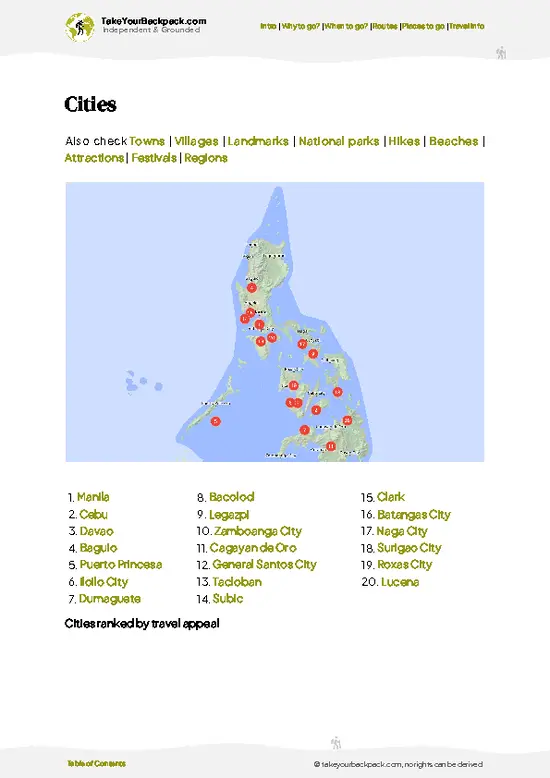
cities
towns
landmarks
national parks
hikes
beaches
attractions
festivals
regions
SHOW COUNTRY’S BESTSHOW ALL

✨ Why go?
Ranked #2 town in Philippines
Why Vigan should be on your travel list

Backpackers flock to Vigan for its unique blend of cultural richness and practicality. This UNESCO World Heritage site isn’t just a pretty face; it’s a strategic stop on the way to nearby hikes and beaches. The walkable streets invite you to explore, with colonial architecture that whispers stories of the past. You’ll find small-scale hostels and guesthouses that offer a cozy atmosphere, perfect for solo travelers or small groups looking to connect.

The local food scene is a highlight, with street vendors serving up empanadas and longganisa that fill the air with mouthwatering scents. While some travelers breeze through in a day, many linger for a few, soaking in the friendly social atmosphere. It’s a place where you can share stories over a meal or simply enjoy a quiet evening stroll.
read more 👉
Backpackers flock to Vigan for its unique blend of cultural richness and practicality. This UNESCO World Heritage site isn’t just a pretty face; it’s a strategic stop on the way to nearby hikes and beaches. The walkable streets invite you to explore, with colonial architecture that whispers stories of the past. You’ll find small-scale hostels and guesthouses that offer a cozy atmosphere, perfect for solo travelers or small groups looking to connect.

The local food scene is a highlight, with street vendors serving up empanadas and longganisa that fill the air with mouthwatering scents. While some travelers breeze through in a day, many linger for a few, soaking in the friendly social atmosphere. It’s a place where you can share stories over a meal or simply enjoy a quiet evening stroll.

Vigan suits slow travelers and those who appreciate a mix of history and community. If you’re seeking a vibrant nightlife, you might want to look elsewhere, but for those who value authentic experiences, this town is a rewarding stop on your journey.
Get the complete Travel Guide for Philippines
Everything organized for offline planning — routes, highlights, costs & tips

See what’s inside 👉

Get the Travel Guide -

💡 HighlightsMust-see experiences and standout moments

  1. Calle Crisologo — the cobblestoned, lamp-lit street that’s the heart of Vigan’s Spanish-era vibe; antique shops, old houses and kalesa rides make it a living museum you can wander for hours.
  2. Plaza Salcedo & Dancing Fountain — the green square beside Calle Crisologo where the evening fountain-and-light show gathers locals and travelers; good for people-watching and a relaxed intro to the city’s rhythm.
  3. St. Paul Metropolitan Cathedral (Vigan Cathedral) — an imposing 18th-century church with wood-and-stone craftsmanship; step inside for the altarpiece and climb nearby points for classic views of the plaza and roofs.
  4. Syquia Mansion Museum — a well-preserved mestizo house turned museum showing family artifacts, period furniture and life under both Spanish and American eras; a compact way to
read more 👉
  1. Calle Crisologo — the cobblestoned, lamp-lit street that’s the heart of Vigan’s Spanish-era vibe; antique shops, old houses and kalesa rides make it a living museum you can wander for hours.
  2. Plaza Salcedo & Dancing Fountain — the green square beside Calle Crisologo where the evening fountain-and-light show gathers locals and travelers; good for people-watching and a relaxed intro to the city’s rhythm.
  3. St. Paul Metropolitan Cathedral (Vigan Cathedral) — an imposing 18th-century church with wood-and-stone craftsmanship; step inside for the altarpiece and climb nearby points for classic views of the plaza and roofs.
  4. Syquia Mansion Museum — a well-preserved mestizo house turned museum showing family artifacts, period furniture and life under both Spanish and American eras; a compact way to see how elite families lived in old Vigan.
  5. Crisologo Museum — the ancestral home of the Crisologo family now showcasing political memorabilia, old photographs and domestic items; it’s a small museum but full of local history and context.
  6. Museo Ilocos Sur (Ilocos Sur Provincial Museum) — a proper regional museum with ethnographic displays, religious art and local crafts; great if you want historical depth beyond the street-level attractions.
  7. Quema House — one of the finest surviving Spanish-period mansions in Vigan, noted for its carved woodwork, capiz windows and preserved interiors; it’s quieter than Calle Crisologo but gorgeous for architecture buffs and photographers.
  8. Pagburnayan (Burnay Jar Workshops) — the traditional pottery cluster where you can watch, buy and sometimes try making burnay jars (local earthenware); real hands-on craft life, not just souvenirs.
  9. Baluarte — Chavit Singson’s roadside mini-zoo and animal park with quirky displays and a butterfly garden; it’s touristy but useful if you’re traveling with kids or want a different, casual local attraction.
  10. The Hidden Garden — a converted ancestral home with courtyards, native crafts and a simple menu of Ilocano dishes; quieter than the main drag and a lovely spot to sit, sip and watch daily life in an old house.
A few easy day trips just outside Vigan: the Bantay Bell Tower (short ride away for great views and history), the UNESCO-listed Santa Maria Church (on a hillside a bit farther out), and the massive Paoay Church if you’re up for a longer drive — my personal favorite for a quick outing is the Bantay Bell Tower.
Spotted a mistake or missing something? Contact us.

🏘️ NeighborhoodsKey areas and districts to know

Vigan is a charming blend of history and culture, where cobblestone streets whisper stories of the past. Each neighborhood offers a unique flavor, making it essential to choose wisely for your stay.

**Calle Crisologo**
This is the heart of Vigan, lined with ancestral houses and shops selling local crafts. The vibe is lively, especially in the evenings when the streets come alive with street food vendors. It’s walkable, so you can easily explore on foot. Prices here can be a bit higher due to the tourist traffic, but the experience is worth it. Perfect for short stays where you want to soak in the atmosphere.

**Baluarte**
A bit quieter, Baluarte is home to a zoo and beautiful gardens. The atmosphere is more relaxed, making it ideal for families or those seeking a peaceful retreat. It’s … read more 👉
Vigan is a charming blend of history and culture, where cobblestone streets whisper stories of the past. Each neighborhood offers a unique flavor, making it essential to choose wisely for your stay.

**Calle Crisologo**
This is the heart of Vigan, lined with ancestral houses and shops selling local crafts. The vibe is lively, especially in the evenings when the streets come alive with street food vendors. It’s walkable, so you can easily explore on foot. Prices here can be a bit higher due to the tourist traffic, but the experience is worth it. Perfect for short stays where you want to soak in the atmosphere.

**Baluarte**
A bit quieter, Baluarte is home to a zoo and beautiful gardens. The atmosphere is more relaxed, making it ideal for families or those seeking a peaceful retreat. It’s a short ride from the main attractions, so you’ll need to rely on tricycles or taxis. Accommodations here are generally more affordable, making it suitable for longer stays without breaking the bank.

**Barangay Santo Domingo**
This area offers a more local vibe, with fewer tourists and more authentic experiences. It’s a bit farther from the main attractions, so you’ll need to plan your transport. The cost of living is lower, and you’ll find local eateries serving delicious, budget-friendly meals. Great for backpackers looking to immerse themselves in everyday life and culture.

**Vigan City Proper**
This is where you’ll find the local market and everyday hustle. The energy is palpable, with vendors selling everything from fresh produce to handmade goods. It’s walkable, but be prepared for a bit of noise. Accommodations here are budget-friendly, making it a solid choice for longer stays where you want to live like a local.

⌛️ 1 daySeeing the highlights in 24 hours

Vigan, a UNESCO World Heritage Site, is a captivating blend of Spanish colonial architecture and rich Filipino culture. Walking its cobblestone streets feels like stepping back in time, where every corner whispers stories of the past. The air is thick with the scent of empanadas frying, and the vibrant colors of the heritage houses pop against the blue sky.

Start your morning at the iconic Calle Crisologo. The soft morning light casts long shadows, perfect for snapping photos of the well-preserved colonial buildings. Grab a breakfast of longganisa (local sausage) at a nearby café, where the aroma of garlic fills the air. After fueling up, wander into the Vigan Cathedral, its baroque facade a stunning sight. The quiet inside invites reflection, a nice contrast to the bustling streets outside. … read more 👉
Vigan, a UNESCO World Heritage Site, is a captivating blend of Spanish colonial architecture and rich Filipino culture. Walking its cobblestone streets feels like stepping back in time, where every corner whispers stories of the past. The air is thick with the scent of empanadas frying, and the vibrant colors of the heritage houses pop against the blue sky.

Start your morning at the iconic Calle Crisologo. The soft morning light casts long shadows, perfect for snapping photos of the well-preserved colonial buildings. Grab a breakfast of longganisa (local sausage) at a nearby café, where the aroma of garlic fills the air. After fueling up, wander into the Vigan Cathedral, its baroque facade a stunning sight. The quiet inside invites reflection, a nice contrast to the bustling streets outside.

In the afternoon, head to the Syquia Mansion, a lesser-known spot that offers a glimpse into the lifestyle of the wealthy during the Spanish era. The intricate woodwork and antique furnishings tell tales of opulence. Afterward, stroll through the nearby Plaza Salcedo, where you can relax by the fountain and watch locals go about their day. Don’t miss the chance to try the famous Vigan empanada from a street vendor; the crispy shell and savory filling are a must.

As evening approaches, make your way to the riverbank for the sunset. The golden hues reflecting off the water create a magical atmosphere. For dinner, seek out a local eatery serving pinakbet, a vegetable dish that bursts with flavor.

End your day with a leisurely walk back through Calle Crisologo, now illuminated by soft lanterns. The ambiance is enchanting, and the sounds of laughter and music fill the air. Each step feels like a celebration of the day’s discoveries, making Vigan not just a destination, but a heartfelt experience.
Build the Right Itinerary
Use the Philippines Travel Guide’s 7, 14 & 21-day routes as a starting point to plan a trip that actually works on the ground.

Get the Travel Guide -

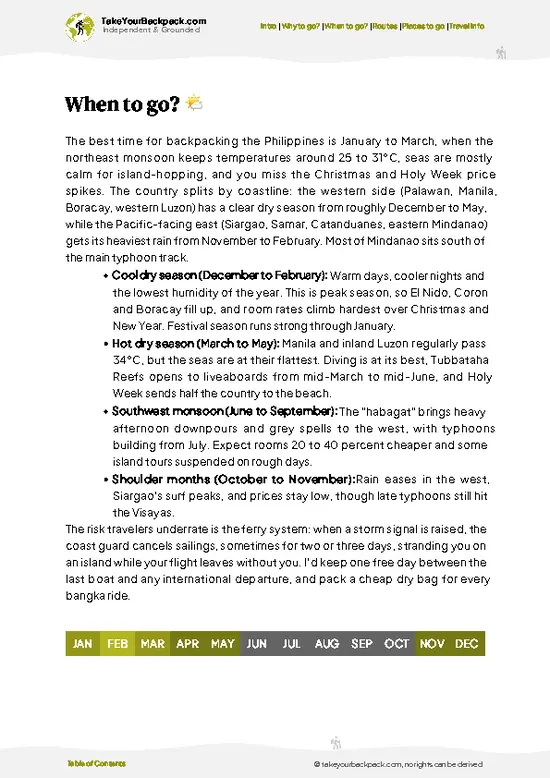
🌤️ When to go?Best time to visit Vigan


  • Weather: Vigan’s dry season runs from November to April, offering clear skies and minimal rain—perfect for wandering cobblestone streets without soggy shoes. The wet season, May to October, brings heavy afternoon showers that can turn your stroll into a soggy slog.

  • Temperature: Expect daytime highs around 28-32°C (82-90°F) during dry months, with evenings cooling to a comfortable 22-24°C (72-75°F). The wet season feels hotter and more humid, often pushing 33°C (91°F) with sticky air that saps energy fast.

  • Daylight Hours: Roughly 11 to 12 hours of daylight year-round, but the sun sets earlier in the wet season, around 5:30 PM, limiting late afternoon exploration.

  • Crowds: Peak tourist flow hits during the dry months, especially December and March, when local festivals and holidays draw
read more 👉

  • Weather: Vigan’s dry season runs from November to April, offering clear skies and minimal rain—perfect for wandering cobblestone streets without soggy shoes. The wet season, May to October, brings heavy afternoon showers that can turn your stroll into a soggy slog.

  • Temperature: Expect daytime highs around 28-32°C (82-90°F) during dry months, with evenings cooling to a comfortable 22-24°C (72-75°F). The wet season feels hotter and more humid, often pushing 33°C (91°F) with sticky air that saps energy fast.

  • Daylight Hours: Roughly 11 to 12 hours of daylight year-round, but the sun sets earlier in the wet season, around 5:30 PM, limiting late afternoon exploration.

  • Crowds: Peak tourist flow hits during the dry months, especially December and March, when local festivals and holidays draw visitors. This means lively streets but also pricier accommodations and busier eateries.

  • Seasonal Activities: The Vigan Longganisa Festival in January and the Semana Santa (Holy Week) celebrations in March or April offer rich cultural immersion but require early bookings and patience with crowds.

  • Price Fluctuations: Dry season rates spike, especially around holidays. The wet season sees lower prices and more room to negotiate, but you trade off with unpredictable weather.


Pro-tip: Aim for late November or early December—cooler air, manageable crowds, and the town’s festive spirit kicking in without the full holiday rush.


source: climatestotravel.comJANJanuary: highly recommended for travelingFEBFebruary: highly recommended for travelingMARMarch: highly recommended for travelingAPRApril: good for travelingMAYMay: fair for travelingJUNJune: fair for travelingJULJuly: fair for travelingAUGAugust: fair for travelingSEPSeptember: fair for travelingOCTOctober: fair for travelingNOVNovember: highly recommended for travelingDECDecember: excellent for traveling
philippines-city-vigan
© Google |

✈️ The backpacker research shortcutPhilippines Travel Guide

An offline-friendly backpacking guide with optimized travel routes, ranked highlights, transport advice, and the best areas to stay.
example page 0 from our offline Travel Guide for Philippinesexample page 1 from our offline Travel Guide for Philippinesexample page 2 from our offline Travel Guide for Philippinesexample page 3 from our offline Travel Guide for Philippinesexample page 4 from our offline Travel Guide for Philippinesexample page 5 from our offline Travel Guide for Philippinesexample page 6 from our offline Travel Guide for Philippinesexample page 7 from our offline Travel Guide for Philippines
The digital guide (505 pages) contains:
144 highlights, ranked by travel appeal
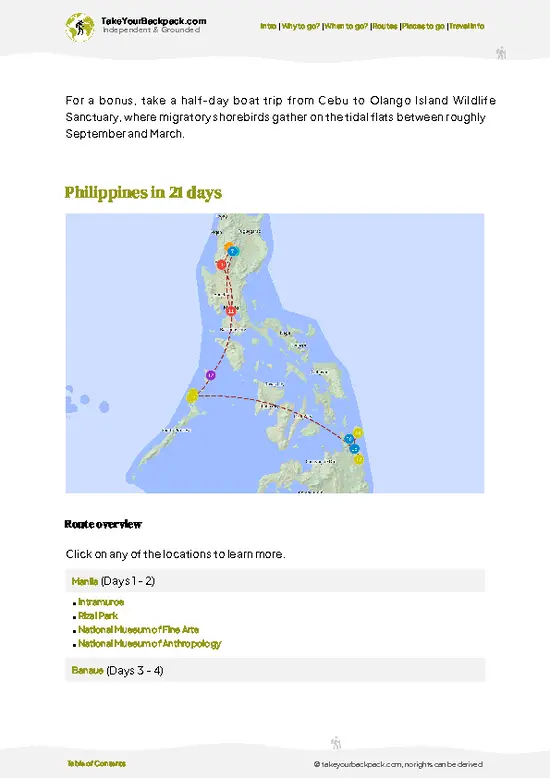
Optimized 7, 14 & 21-day travel routes
Cities, national parks, beaches, historical sites, ...
How to get around
Offline-friendly for travel without Wi-Fi
👉 Click to see all 30+ guide features

📅 Plan smarter in minutes, not weeks
Month by month travel advice
Festivals & national holidays
Budget expectations

🗺️ Go to the right places, skip the overrated ones
Honest pros & cons of destinations
Top hikes, parks & viewpoints
Lesser-known places most travelers miss
Clear “worth it vs skip it” guidance

🛏️ Travel smoothly without rookie mistakes
Best areas to stay
Transport systems explained simply
Common scams & safety advice
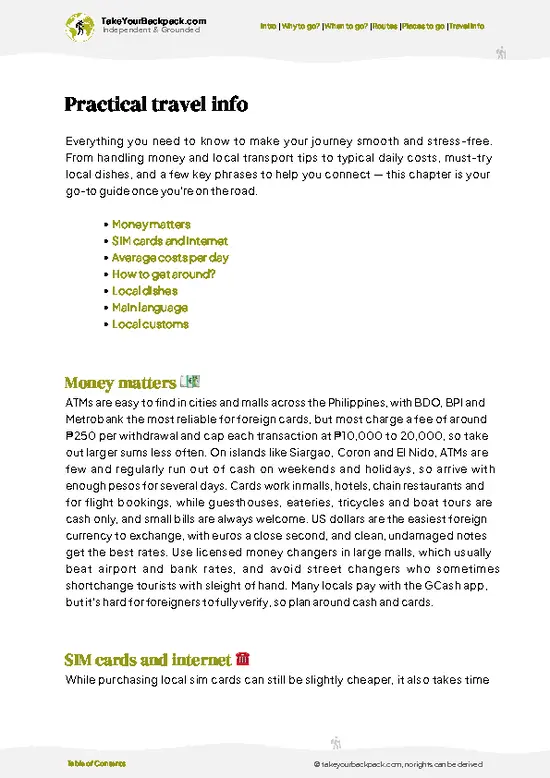
SIM cards, money & practical tips

🌍 Understand the country, not just visit it
Culture & traditions
52 Essential phrases & customs
Festivals worth planning around
Traveler-friendly historical context
Insights that make places more meaningful

📱 Built for real travel conditions
Fully downloadable PDF
Works completely offline
Optimized for phone use
Useful in remote areas & buses
Everything in one place
Save weeks of stressful planning
Get instant access to the full guide directly. 30-day money-back guarantee.


Sent to your inbox immediately after payment • 100% Secure Checkout
Best Backpacking Travel Advisor 2025 tourism awardBest Backpacking
Travel Advisor
2025
What others say about Take Your Backpack Guides:
⭐⭐⭐⭐⭐
Fantastic, amazing amount of information!
⭐⭐⭐⭐⭐
My goodness this is amazing, it's what I've been looking for hats off too you!
⭐⭐⭐⭐⭐
I think this is absolutely BRILLIANT
⭐⭐⭐⭐
Very complete and informative. It's still missing places, but I gotta to commend you
⭐⭐⭐⭐⭐
This is truly amazing, thank you, can't wait to explore it with my kids!
⭐⭐⭐⭐⭐
Awesome resource, thank you!
⭐⭐⭐⭐⭐
This is amazing! Can't wait to explore the ones I haven't seen
⭐⭐⭐⭐
I love this! Well done, great idea.
⭐⭐⭐⭐⭐
Thanks for taking the time to make this gem!
⭐⭐⭐⭐⭐
This might be the best website I've ever seen.
⭐⭐⭐⭐⭐
Congratulations, and thank you so much for your work; it's incredibly valuable.
⭐⭐⭐⭐
In all seriousness I think you did a great job pointing out the important spots
⭐⭐⭐⭐⭐
10/10 very good
⭐⭐⭐⭐⭐
As someone who's only just starting to visit regularly this is awesome, thank you.
⭐⭐⭐⭐
Thank you very much! I'm going to visit my dad, it's going to be very useful!
⭐⭐⭐⭐⭐
This is really cool! We'll be travelling for the first time and this definitely come in handy.
⭐⭐⭐⭐⭐
You are now our minister of culture, congratulations 👨‍💼
⭐⭐⭐⭐⭐
Just wanted to tell you that this is a pearl! Going to follow your recommendations.
⭐⭐⭐⭐⭐
This is so cool. I'll definitely be using the resource for my travels soon.
⭐⭐⭐⭐⭐
This is very impressive! Good work.
⭐⭐⭐⭐⭐
This is an amazing and informative site. Very well done!

🛏️ Where to stay?Best areas and accommodation options

In Vigan, the heart of the backpacker scene pulses strongest around the historic district, especially near Calle Crisologo. This area isn’t just a tourist magnet; it’s where the cobblestones, Spanish-era architecture, and the scent of burning coconut shells in street lamps create an atmosphere that feels like stepping back in time. Staying here means you’re within easy walking distance of the main sights, local eateries, and the lively evening markets. The streets hum with a mix of locals and fellow travelers, making it easy to strike up conversations or find a group to explore with.

Compared … read more 👉
In Vigan, the heart of the backpacker scene pulses strongest around the historic district, especially near Calle Crisologo. This area isn’t just a tourist magnet; it’s where the cobblestones, Spanish-era architecture, and the scent of burning coconut shells in street lamps create an atmosphere that feels like stepping back in time. Staying here means you’re within easy walking distance of the main sights, local eateries, and the lively evening markets. The streets hum with a mix of locals and fellow travelers, making it easy to strike up conversations or find a group to explore with.

Compared to the quieter residential neighborhoods on the outskirts, the historic district offers a safer, more social vibe. You’ll find budget hostels tucked into old colonial houses, where the communal spaces encourage mingling over shared meals or stories. The light here shifts beautifully at dusk, casting long shadows on the walls and inviting you to linger outside rather than retreat early.

If you want a bit more calm but still crave connection, the area around Plaza Salcedo is a solid choice. It’s slightly less touristy but still close enough to the action, with a handful of affordable guesthouses and cafés where solo travelers gather. The trade-off is a quieter night, but the payoff is a more local feel and easier access to public transport for day trips. In Vigan, choosing your neighborhood is about balancing the buzz of history with the comfort of community—and both spots deliver that in spades.

🚌 Getting aroundHow to get around Vigan

Vigan moves at a pace that feels like a slow dance with history. The sun filters through narrow streets lined with Spanish colonial facades, casting long shadows on cobblestones worn smooth by centuries of footsteps. Time here isn’t dictated by clocks but by the rhythm of daily life—vendors calling out their wares, tricycles buzzing past, and the occasional clip-clop of a horse-drawn carriage. It’s a place where schedules bend to the flow of the town, and your best bet is to tune in to its pulse rather than fight it. Understanding this flow means you’ll navigate Vigan with ease, turning what might seem like chaos into a seamless, immersive experience.


  • Walking: The heart of Vigan is compact and best explored on foot. Streets like Calle Crisologo are pedestrian-friendly, letting you soak
read more 👉
Vigan moves at a pace that feels like a slow dance with history. The sun filters through narrow streets lined with Spanish colonial facades, casting long shadows on cobblestones worn smooth by centuries of footsteps. Time here isn’t dictated by clocks but by the rhythm of daily life—vendors calling out their wares, tricycles buzzing past, and the occasional clip-clop of a horse-drawn carriage. It’s a place where schedules bend to the flow of the town, and your best bet is to tune in to its pulse rather than fight it. Understanding this flow means you’ll navigate Vigan with ease, turning what might seem like chaos into a seamless, immersive experience.


  • Walking: The heart of Vigan is compact and best explored on foot. Streets like Calle Crisologo are pedestrian-friendly, letting you soak in the scent of burning wood from local eateries and the texture of antique wooden shutters. Walking costs nothing, offers the richest sensory experience, and lets you pause whenever a scene catches your eye—just watch for the occasional tricycle weaving through.


  • Tricycle: These three-wheeled motorbikes are Vigan’s lifeblood for short hops. They’re cheap (usually around 10-20 PHP per ride), plentiful, and run from early morning until late evening. Tricycles don’t follow strict routes or schedules, so you flag one down when needed. This flexibility means you can dart between neighborhoods or reach spots too far for walking without waiting around.


  • Kalesa (Horse-Drawn Carriage): More than transport, a kalesa ride is a moving history lesson. Prices hover around 300-400 PHP for a 30-minute tour, negotiable if you’re savvy. They operate mostly during daylight hours, slowing you down to savor the town’s colonial charm. Not the fastest, but unbeatable for atmosphere and photo ops.


  • Jeepney: For budget travelers venturing beyond the town center, jeepneys connect Vigan to nearby towns and the airport. Fares are low (20-50 PHP depending on distance), but expect crowded, noisy rides with no fixed timetable—jeepneys leave when full. They’re a raw, authentic slice of Filipino life, best for those who don’t mind a bit of unpredictability and want to stretch their budget.


  • Bicycle Rental: If you want to cover more ground than walking but keep control over your schedule, renting a bicycle is a smart move. Rentals cost about 150-200 PHP per day. The town’s flat terrain and quiet streets make cycling pleasant, especially early morning or late afternoon when the light softens and the air cools. It’s a quiet, personal way to explore beyond the tourist hotspots.

👛 Costs (as of 20 October 2025)What things cost and how to budget

Backpacking in Vigan, Philippines, offers a rich blend of history and culture without draining your wallet, but knowing the local cost rhythm helps you stretch your pesos wisely.
  • Dorm Accommodation: Expect to pay around $8 to $15 per night for a bed in a basic dormitory or guesthouse. These places are simple but clean, often with a fan rather than air conditioning, which suits the warm, humid air that carries the scent of nearby street food stalls.
  • Meals: Street food and local eateries dominate the scene. You can grab a filling meal like Vigan’s famous empanada or a plate of pancit for $1.50 to $3. For a sit-down meal at a modest restaurant, budget $3 to $6. The flavors are bold, with garlic and vinegar notes lingering in the air, making every bite a sensory reward.
  • Local Transport: Tricycles
read more 👉
Backpacking in Vigan, Philippines, offers a rich blend of history and culture without draining your wallet, but knowing the local cost rhythm helps you stretch your pesos wisely.
  • Dorm Accommodation: Expect to pay around $8 to $15 per night for a bed in a basic dormitory or guesthouse. These places are simple but clean, often with a fan rather than air conditioning, which suits the warm, humid air that carries the scent of nearby street food stalls.
  • Meals: Street food and local eateries dominate the scene. You can grab a filling meal like Vigan’s famous empanada or a plate of pancit for $1.50 to $3. For a sit-down meal at a modest restaurant, budget $3 to $6. The flavors are bold, with garlic and vinegar notes lingering in the air, making every bite a sensory reward.
  • Local Transport: Tricycles are the go-to mode, costing about $0.30 to $0.50 for short rides within town. If you’re hopping between nearby barangays or attractions, expect to pay up to $1.50. The slow, open-air tricycles let you soak in the dusty streets and colonial architecture as you go.
  • Basic Activities/Entry Fees: Most heritage sites and museums charge modest fees, typically between $0.50 and $2. The Crisologo Museum and the Syquia Mansion are good examples. Walking tours or renting a bike to explore cobblestone streets can be free or cost a few dollars, depending on your choice.
  • Miscellaneous Expenses: Bottled water, snacks, and occasional treats like halo-halo (a local dessert) add up to about $1 to $3 daily. Keep a small buffer for unexpected purchases like souvenirs or a quick coffee break in a café with air conditioning to escape the midday heat.

All told, you’re looking at roughly $12 to $25 per day to cover the essentials in Vigan. This range lets you enjoy the town’s old-world charm without cutting corners on comfort or experiences. The trick is to embrace the slower pace—walking the streets in the soft afternoon light, letting the smells and sounds guide your choices, and knowing that every peso spent here buys a slice of history and flavor.


source: tourism.gov.ph
⚠️ Prices can change and everyone travels differently, so take this as a rough guide. Hope it helps you plan your adventure!

🚌 Day tripsShort trips worth adding

Vigan is a fantastic launchpad for day trips that immerse you in the rich tapestry of Ilocos Sur. The charm of this UNESCO World Heritage Site lies not just in its cobblestone streets but also in its proximity to stunning landscapes and cultural treasures. Here are some day trips that will elevate your experience.

Paoay Church
Just a 30-minute jeepney ride from Vigan, Paoay Church is a striking example of Earthquake Baroque architecture. The massive façade, with its intricate details, feels like a fortress against time. Spend some time wandering the grounds, where the scent of local street food wafts through the air. A visit here is a blend of history and spirituality, and it’s best to go early in the morning to avoid the crowds. Expect to spend around 50 PHP for the jeepney fare and maybe … read more 👉
Vigan is a fantastic launchpad for day trips that immerse you in the rich tapestry of Ilocos Sur. The charm of this UNESCO World Heritage Site lies not just in its cobblestone streets but also in its proximity to stunning landscapes and cultural treasures. Here are some day trips that will elevate your experience.

Paoay Church
Just a 30-minute jeepney ride from Vigan, Paoay Church is a striking example of Earthquake Baroque architecture. The massive façade, with its intricate details, feels like a fortress against time. Spend some time wandering the grounds, where the scent of local street food wafts through the air. A visit here is a blend of history and spirituality, and it’s best to go early in the morning to avoid the crowds. Expect to spend around 50 PHP for the jeepney fare and maybe another 20 PHP for a snack.


Bangui Windmills
A little over an hour from Vigan, the Bangui Windmills are a sight to behold. Standing tall against the backdrop of the ocean, these wind turbines create a surreal landscape. The drive is scenic, with the salty breeze filling your lungs and the sound of waves crashing nearby. Bring a camera; the golden hour here is magical. The round trip will cost you about 200 PHP for the jeepney, and it’s best to visit during the dry season from November to April. A common mistake is to rush the visit; take your time to soak in the atmosphere.


Pagudpud Beaches
If you’re craving sun and sand, head to Pagudpud, about two hours away. The beaches here are less commercialized, offering a more authentic experience. The soft, white sand and turquoise waters invite you to relax and recharge. Pack a picnic to enjoy while listening to the gentle lapping of waves. The jeepney ride will set you back around 300 PHP, and the best time to visit is during the dry season. Many first-timers underestimate the travel time; leave early to maximize your beach day.


Sinking Bell Tower
A quick trip to Laoag, just an hour from Vigan, leads you to the Sinking Bell Tower. This unique structure is partially submerged, giving it an intriguing character. The surrounding area is bustling with local vendors, offering a taste of authentic Ilocano snacks. The tower is best visited in the late afternoon when the light casts beautiful shadows. Expect to pay around 50 PHP for the jeepney fare. A common oversight is not exploring the nearby market; it’s a treasure trove of local crafts.
Want to know what more Philippines offers?
The Philippines Travel Guide describes 144 highlights, from cities to national parks, from beaches to hikes

Get the Travel Guide -

🛡️ SafetyTraveler Safety Guide

Vigan is generally safe, but a few practical tips can enhance your experience. The cobblestone streets are charming, but they can be uneven, so watch your step, especially at night. Stick to well-lit areas after dark, particularly if you’re solo. The vibrant nightlife is inviting, but it’s wise to keep your belongings close and be aware of your surroundings.

Scams are rare, yet some vendors may inflate prices for tourists. Always ask for a price before indulging in local delicacies or souvenirs. A friendly smile and a polite “no, thank you” go a long way if you feel pressured.

Annoyances can include persistent tricycle drivers eager for your business. A firm but friendly “I’m good, thanks!” usually does the trick. Embrace the local pace, and don’t rush. The beauty of Vigan unfolds slowly, … read more 👉
Vigan is generally safe, but a few practical tips can enhance your experience. The cobblestone streets are charming, but they can be uneven, so watch your step, especially at night. Stick to well-lit areas after dark, particularly if you’re solo. The vibrant nightlife is inviting, but it’s wise to keep your belongings close and be aware of your surroundings.

Scams are rare, yet some vendors may inflate prices for tourists. Always ask for a price before indulging in local delicacies or souvenirs. A friendly smile and a polite “no, thank you” go a long way if you feel pressured.

Annoyances can include persistent tricycle drivers eager for your business. A firm but friendly “I’m good, thanks!” usually does the trick. Embrace the local pace, and don’t rush. The beauty of Vigan unfolds slowly, rewarding your patience with its rich history and warm community.

Other Filipino towns near Vigan

Explore more nearby:

  • Sagada—Limestone cliffs, hanging coffins, pine forests| 76 km away
  • Banaue—Rice terraces, Ifugao culture, mountain air| 103 km away
  • Aparri—Cagayan River delta, coastal plains, fishing ports| 154 km away

👉 Discover all towns

Or checkout all Philippines has to offer (think cities, towns, villages, national parks, hikes, beaches, festivals)
Country photo of Philippines

We 💚 feedbackIs it worth it?

Vigan’s cobblestone streets, lined with centuries-old Spanish colonial architecture, transport you back in time. The air is thick with the scent of empanada frying, a local treat you can’t miss. But be ready for the heat; it can be stifling, especially in the afternoon. Embrace the sweat, though—it makes the cool evening strolls along Calle Crisologo all the more rewarding. The charm here is real, but it demands your patience.

✈️ When did I visit Philippines?
Philippines being one of my favorites, due to the people and their mentality. I visited it first in 2010 and came back in January 2016 as part of my 1.5 year world trip.

✍️ Help improve this page!
The information on this page is based on my own backpacking experience in Philippines, supplemented with up-to-date research and feedback from other travelers. Travel details can change, so if you notice anything outdated or incomplete, feel free to let me know.


🙋‍♂️ Give feedback

👋 Meet the founderWho’s Behind Take Your Backpack?

Johan, backpacker and founder of TakeYourBackpackHi, I’m Johan (Netherlands 🇳🇱), the creator of TakeYourBackpack. Over the past decade, I’ve backpacked through 80+ countries across six continents, gaining extensive experience with independent travel, long-term trips, and overland routes.

This site is built on a combination of firsthand travel experience and carefully curated insights from other backpackers. Many guides are based on places I’ve personally visited, while others bring together tips, observations, and practical advice shared by trusted travelers I’ve met along the way.

The goal is to provide realistic, experience-driven guidance — not generic itineraries — so you can explore destinations with better context, clearer expectations, and more confidence.

Get full country guide •
Instant download • 144 highlights • Full Offline guide