×

Philippines🇵🇭 | citiesZamboanga Cityvinta boats, pink sand beach, Muslim quarter | things to do and best time to go

Explore Iloilo CityExplore Legazpi

Backpacking in Zamboanga City
🌟 Highlightcity ranked #11
By Johan Kruseman 🇳🇱 | Updated May 26, 2026

Most people who’ve heard of Zamboanga City think “too dangerous, skip it.” That’s outdated and only half the story. Zamboanga sits on the western tip of Mindanao, facing Basilan Strait, closer to Sabah than to Manila. For backpackers, it’s a quirky, Spanish-Creole port city with real edges. You get Fort Pilar, Paseo del Mar sunsets, chaotic markets, and that Chavacano street chatter you won’t hear elsewhere. It’s cheaper than Cebu or Davao, but tourism is thinner, so meeting other backpackers takes effort; you’ll meet locals first. Transport is simple (jeepneys, trikes, ferries), but security is context-dependent: central areas feel controlled, outlying islands and night moves require judgment. Overall vibe: gritty coastal energy, more frontier hub than beach town.

Discover everything you want to know in the 📖 Philippines Travel Guide.
Loading the map 🌍
CLICK TO FILTER
cities
towns
landmarks
national parks
hikes
beaches
attractions
festivals
regions
SHOW COUNTRY’S BESTSHOW ALL

✨ Why go?
Ranked #11 city in Philippines
Why visitors keep coming back

Zamboanga City is a strategic stop for backpackers weaving through the Philippines. It offers a unique blend of cultural highlights and activities that make it more than just a layover. The basecamp value is solid; you can easily launch day trips to nearby islands or natural wonders. Affordable hostels provide a cozy place to recharge, while the local food scene is a delightful mix of flavors that won’t break the bank. The city is walkable, allowing you to soak in the sights without the hassle of transport. As for nightlife, it’s laid-back yet lively, perfect for unwinding after a day of exploration. Plus, onward travel options are straightforward, making it easy to continue your adventure.
Want to include Zamboanga City in your Philippines route?
Create a personalized Philippines itinerary that includes Zamboanga City and the places that fit your trip — based on your travel style, budget, and available time. Get your route in seconds.

Generate my trip

💡 HighlightsTop highlights of Zamboanga City

  1. Fort Pilar (Real Fuerza de San José) — A coral-stone fortress turned shrine and small museum; you get history, religious devotion, old Spanish cannons and a nice view of the harbor all in one compact stop.
  2. Paseo del Mar (The Boulevard) — Zamboanga’s seaside promenade where vintas (colorful traditional boats) bob at sunset, street food stalls sell grilled seafood, and locals gather — perfect for people-watching and evening atmosphere.
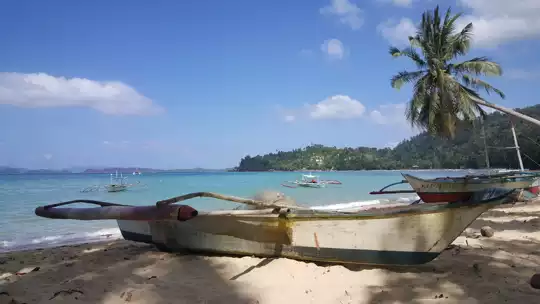
  3. Great Santa Cruz Island (Pink Sand Beach) — Famous pink-hued sand (tiny red organics mixed with white sand), shallow clear water and good snorkeling; it’s a short boat ride from the city and feels like a tropical slice of nowhere.
  4. Yakan Weavers Village — Meet Yakan artisans, watch hand-operated looms and buy bold, handwoven textiles — an actual chance to
read more 👉
  1. Fort Pilar (Real Fuerza de San José) — A coral-stone fortress turned shrine and small museum; you get history, religious devotion, old Spanish cannons and a nice view of the harbor all in one compact stop.
  2. Paseo del Mar (The Boulevard) — Zamboanga’s seaside promenade where vintas (colorful traditional boats) bob at sunset, street food stalls sell grilled seafood, and locals gather — perfect for people-watching and evening atmosphere.
  3. Great Santa Cruz Island (Pink Sand Beach) — Famous pink-hued sand (tiny red organics mixed with white sand), shallow clear water and good snorkeling; it’s a short boat ride from the city and feels like a tropical slice of nowhere.
  4. Yakan Weavers Village — Meet Yakan artisans, watch hand-operated looms and buy bold, handwoven textiles — an actual chance to see a living craft and learn what the patterns mean, not just photos in a shop window.
  5. Pasonanca Park & Tree House — Cooler microclimate, shady gardens, an old wooden “tree house” viewpoint and simple trails; a local favorite for laid-back afternoons and an easy escape from city heat.
  6. Zamboanga City Public Market (Downtown Market) — Raw, noisy and brilliantly useful: seafood auctions, stalls selling all kinds of local produce, and an up-close glimpse at daily life (and the place to sample fresh catches and snacks).
  7. Alavar Seafood Restaurant (for curacha) — Not a monument, but essential: try curacha (spanner crab) in Alavar’s coconut-chili sauce — it’s a local culinary signature and a great way to taste Zamboanga’s food identity.
  8. Cawa-Cawa Fish Port & Ferry Terminal — Watch the early-morning fish landings, arrange island hops, or just soak in the maritime scene; it’s how most island trips start and it’s lively in the best, honest way.
  9. Taluksangay Heritage Area (old watchtower & village) — One of the city’s older Muslim settlements with an historic watchtower and mosque; walking here gives perspective on pre-and post-colonial layers of Zamboanga life.
  10. Recodo Heritage District — Old wooden houses, narrow streets and chunks of authentic Chavacano culture; better for wandering than ticking off landmarks — try local snacks from sidewalk vendors while you stroll.
For easy day trips outside the city try a ferry hop to Isabela City in Basilan, exploring nearby island clusters in Zamboanga Sibugay, or an overland run to Dipolog/Pagadian — my personal favorite for a quick, memorable change of scene is the ferry to Isabela City (Basilan).
Spotted a mistake or missing something? Contact us.
🏘️ NeighborhoodsWhere things are and how it's laid out

Zamboanga City offers a unique blend of cultures and experiences, making it a fascinating stop for backpackers. Here’s how the neighborhoods stack up:

City Proper: The bustling heart of Zamboanga, City Proper is where you’ll find local markets and street food galore. It’s affordable and walkable, perfect for short stays. The nightlife is lively, with bars and eateries that buzz into the night. Transport options are plentiful, making it easy to explore.

Pasonanca: Known for its lush parks and quieter vibe, Pasonanca is ideal for those seeking a more laid-back experience. It’s a bit pricier but offers a serene atmosphere. Walkability is decent, and you can enjoy nature without straying far from the city. Great for longer stays if you want to recharge.

Recodo: This area is more residential … read more 👉
Zamboanga City offers a unique blend of cultures and experiences, making it a fascinating stop for backpackers. Here’s how the neighborhoods stack up:

City Proper: The bustling heart of Zamboanga, City Proper is where you’ll find local markets and street food galore. It’s affordable and walkable, perfect for short stays. The nightlife is lively, with bars and eateries that buzz into the night. Transport options are plentiful, making it easy to explore.

Pasonanca: Known for its lush parks and quieter vibe, Pasonanca is ideal for those seeking a more laid-back experience. It’s a bit pricier but offers a serene atmosphere. Walkability is decent, and you can enjoy nature without straying far from the city. Great for longer stays if you want to recharge.

Recodo: This area is more residential and less touristy, giving you a taste of local life. It’s budget-friendly and offers a slower pace. While nightlife is minimal, it’s a good base for day trips. Transport access is fair, making it suitable for both short and extended visits.

⌛️ 1 daySeeing the highlights in 24 hours

Zamboanga City is a vibrant blend of cultures, where the echoes of Spanish colonial history meet the lively pulse of local traditions. It’s a place where the streets hum with the sounds of daily life, and the scent of fresh seafood wafts through the air.

Start your day in the bustling neighborhood of Recodo, where you can grab a hearty breakfast of “satti,” a local rice dish served with spicy sauce. After fueling up, head to Fort Pilar, a historic Spanish fort that now houses a museum. The fort’s walls tell stories of resilience and defense, and the surrounding gardens offer a peaceful spot to reflect.

In the afternoon, make your way to the vibrant Paseo del Mar. This waterfront promenade is perfect for a leisurely stroll. Grab a fresh coconut from a vendor and watch the locals engage in … read more 👉
Zamboanga City is a vibrant blend of cultures, where the echoes of Spanish colonial history meet the lively pulse of local traditions. It’s a place where the streets hum with the sounds of daily life, and the scent of fresh seafood wafts through the air.

Start your day in the bustling neighborhood of Recodo, where you can grab a hearty breakfast of “satti,” a local rice dish served with spicy sauce. After fueling up, head to Fort Pilar, a historic Spanish fort that now houses a museum. The fort’s walls tell stories of resilience and defense, and the surrounding gardens offer a peaceful spot to reflect.

In the afternoon, make your way to the vibrant Paseo del Mar. This waterfront promenade is perfect for a leisurely stroll. Grab a fresh coconut from a vendor and watch the locals engage in their daily routines. If you’re feeling adventurous, take a short boat ride to the nearby island of Sta. Cruz, known for its stunning sandbars and crystal-clear waters—this is often overlooked by tourists but offers a slice of paradise.

As the sun sets, return to the city and explore the night market at Canelar. Here, you can savor local street food, from grilled skewers to sweet delicacies. It’s a lively atmosphere, and the flavors will linger long after you leave. Zamboanga City may not be on every traveler’s radar, but its charm and authenticity make it a rewarding stop.
Turn your Zamboanga City visit into an Philippines adventure
Build a complete Philippines route with Zamboanga City, hidden gems, must-see destinations, and realistic travel times included.

Generate my trip

🌤️ When to go?When to go for the best experience


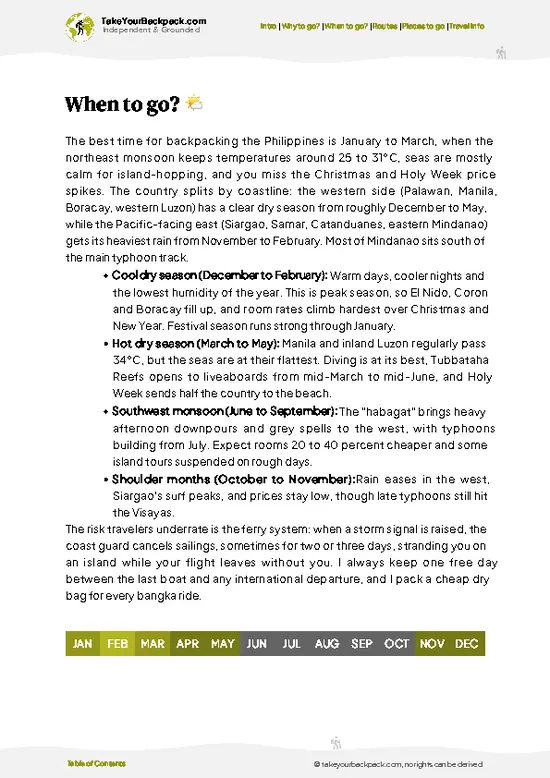
  • Topic: Weather – The dry season from March to May offers the most reliable sunshine, with minimal rain disrupting your plans. Avoid the wet months of June to November when heavy monsoon rains can flood trails and dampen spirits.

  • Topic: Temperature – Expect highs around 32–34°C (90–93°F) during the dry season, cooling slightly to 28–30°C (82–86°F) in the rainy months. Nights stay warm year-round, rarely dropping below 24°C (75°F), so pack light but breathable gear.

  • Topic: Daylight Hours – Near the equator, daylight is steady year-round, roughly 12 hours daily. This consistency means you can plan hikes and city explorations without worrying about early sunsets cutting your day short.

  • Topic: Crowds – Peak tourist influx aligns with the dry season, especially April and May, when locals
read more 👉

  • Topic: Weather – The dry season from March to May offers the most reliable sunshine, with minimal rain disrupting your plans. Avoid the wet months of June to November when heavy monsoon rains can flood trails and dampen spirits.

  • Topic: Temperature – Expect highs around 32–34°C (90–93°F) during the dry season, cooling slightly to 28–30°C (82–86°F) in the rainy months. Nights stay warm year-round, rarely dropping below 24°C (75°F), so pack light but breathable gear.

  • Topic: Daylight Hours – Near the equator, daylight is steady year-round, roughly 12 hours daily. This consistency means you can plan hikes and city explorations without worrying about early sunsets cutting your day short.

  • Topic: Crowds – Peak tourist influx aligns with the dry season, especially April and May, when locals and visitors alike escape to beaches and festivals. For quieter streets and better deals, aim for shoulder months like February or early March.

  • Topic: Seasonal Activities – The Zamboanga Hermosa Festival in October is a cultural highlight but expect crowds and higher prices. If you want to experience local life without the festival frenzy, avoid October and opt for the calmer dry months.

  • Topic: Price Fluctuations – Accommodation and transport costs spike during the dry season and festival periods. Booking in advance during these times is crucial. The rainy season offers the best bargains but at the cost of unpredictable weather.


Pro-tip: Time your visit just before the dry season peaks—late February to early March—when the weather is stable, crowds are thin, and prices haven’t hit their summer highs yet.


source: climatestotravel.comJANJanuary: good for travelingFEBFebruary: highly recommended for travelingMARMarch: highly recommended for travelingAPRApril: excellent for travelingMAYMay: excellent for travelingJUNJune: fair for travelingJULJuly: fair for travelingAUGAugust: fair for travelingSEPSeptember: fair for travelingOCTOctober: good for travelingNOVNovember: fair for travelingDECDecember: good for traveling
when-to-go

✈️ The backpacker research shortcutPhilippines Travel Guide

An offline-friendly backpacking guide with optimized travel routes, ranked highlights, transport advice, and the best areas to stay.
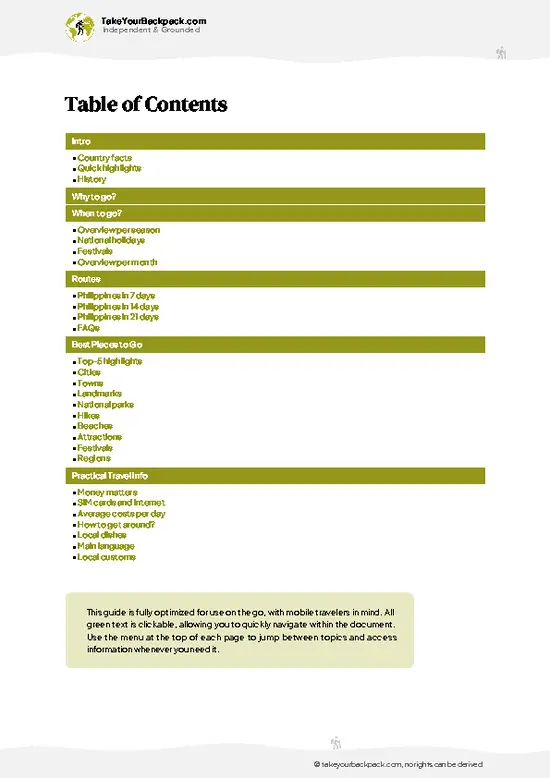
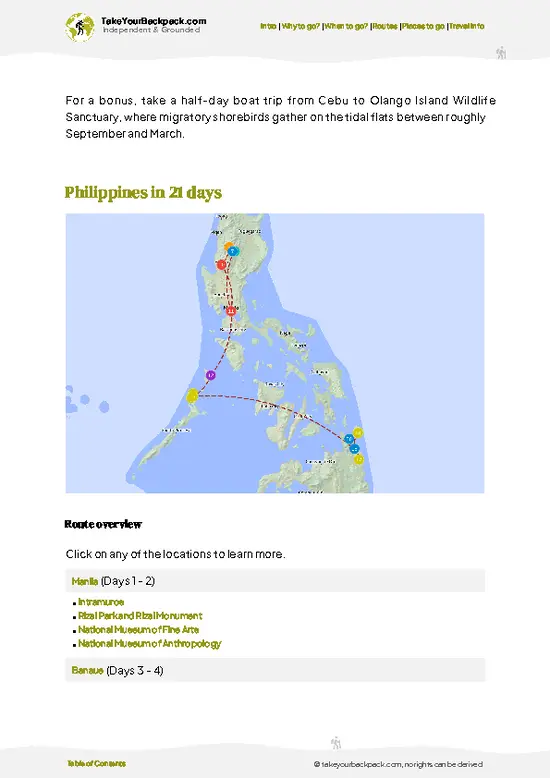
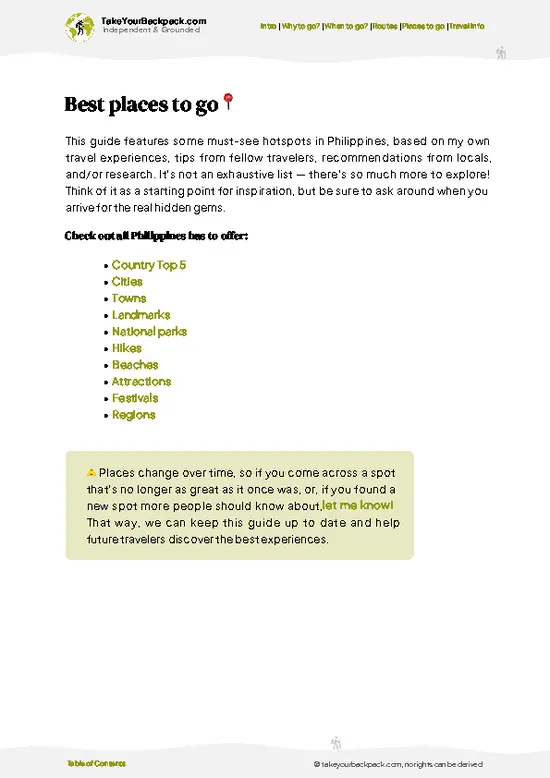
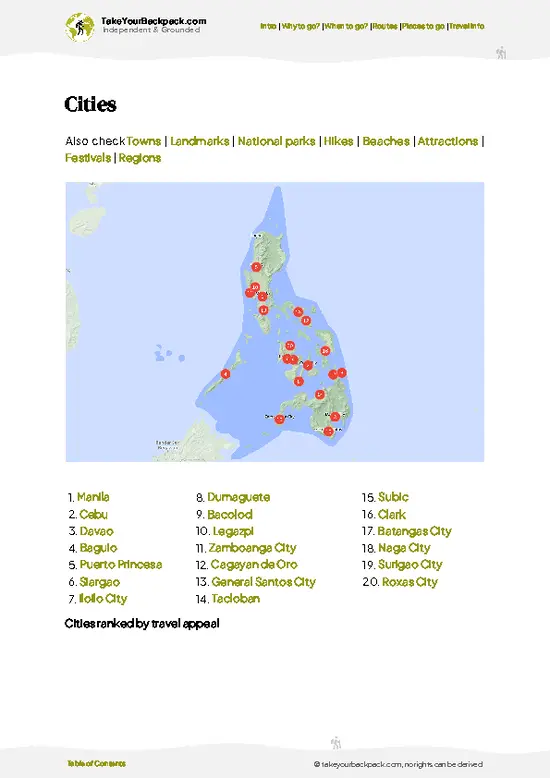
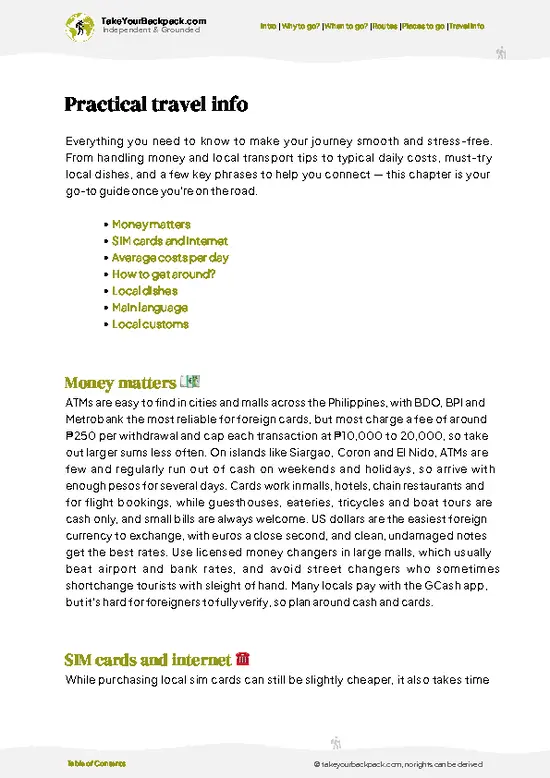
example page 0 from our offline Travel Guide for Philippinesexample page 1 from our offline Travel Guide for Philippinesexample page 2 from our offline Travel Guide for Philippinesexample page 3 from our offline Travel Guide for Philippinesexample page 4 from our offline Travel Guide for Philippinesexample page 5 from our offline Travel Guide for Philippinesexample page 6 from our offline Travel Guide for Philippinesexample page 7 from our offline Travel Guide for Philippines
The digital guide (505 pages) contains:
144 highlights, ranked by travel appeal
Optimized 7, 14 & 21-day travel routes
Cities, national parks, landmarks, beaches
How to get around
Offline-friendly for travel without Wi-Fi
👉 Click to see all 30+ guide features

📅 Plan smarter in minutes, not weeks
Month by month travel advice
Festivals & national holidays
Budget expectations

🗺️ Go to the right places, skip the overrated ones
Honest pros & cons of destinations
Top hikes, parks & viewpoints
Lesser-known places most travelers miss
Clear “worth it vs skip it” guidance

🛏️ Travel smoothly without rookie mistakes
Best areas to stay
Transport systems explained simply
Common scams & safety advice
SIM cards, money & practical tips

🌍 Understand the country, not just visit it
Culture & traditions
52 Essential phrases & customs
Festivals worth planning around
Traveler-friendly historical context
Insights that make places more meaningful

📱 Built for real travel conditions
Fully downloadable PDF
Works completely offline
Optimized for phone use
Useful in remote areas & buses
Everything in one place
Save weeks of stressful planning
Get instant access to your full guide. 30‑day money-back guarantee.


By proceeding you agree to our terms.
Sent to your inbox immediately after payment • 100% Secure Checkout
Best Backpacking Travel Advisor 2025 tourism awardBest Backpacking
Travel Advisor
2025
What others say about Take Your Backpack Guides:
⭐⭐⭐⭐⭐
Fantastic, amazing amount of information!
⭐⭐⭐⭐⭐
My goodness this is amazing, it's what I've been looking for hats off too you!
⭐⭐⭐⭐⭐
I think this is absolutely BRILLIANT
⭐⭐⭐⭐
Very complete and informative. It's still missing places, but I gotta to commend you
⭐⭐⭐⭐⭐
This is truly amazing, thank you, can't wait to explore it with my kids!
⭐⭐⭐⭐⭐
Awesome resource, thank you!
⭐⭐⭐⭐⭐
This is amazing! Can't wait to explore the ones I haven't seen
⭐⭐⭐⭐
I love this! Well done, great idea.
⭐⭐⭐⭐⭐
Thanks for taking the time to make this gem!
⭐⭐⭐⭐⭐
This might be the best website I've ever seen.
⭐⭐⭐⭐⭐
Congratulations, and thank you so much for your work; it's incredibly valuable.
⭐⭐⭐⭐
In all seriousness I think you did a great job pointing out the important spots
⭐⭐⭐⭐⭐
10/10 very good
⭐⭐⭐⭐⭐
As someone who's only just starting to visit regularly this is awesome, thank you.
⭐⭐⭐⭐
Thank you very much! I'm going to visit my dad, it's going to be very useful!
⭐⭐⭐⭐⭐
This is really cool! We'll be travelling for the first time and this definitely come in handy.
⭐⭐⭐⭐⭐
You are now our minister of culture, congratulations 👨‍💼
⭐⭐⭐⭐⭐
Just wanted to tell you that this is a pearl! Going to follow your recommendations.
⭐⭐⭐⭐⭐
This is so cool. I'll definitely be using the resource for my travels soon.
⭐⭐⭐⭐⭐
This is very impressive! Good work.
⭐⭐⭐⭐⭐
This is an amazing and informative site. Very well done!

🛏️ Where to stay?Where staying makes the most sense

Downtown Zamboanga is the clear winner for backpackers who want to balance safety, social buzz, and budget. This area pulses with local life—street vendors, small eateries, and a steady flow of fellow travelers. It’s compact enough to explore on foot, which saves time and money on transport, and the hostels here cater to solo adventurers looking to connect without breaking the bank. The vibe is casual but lively, with enough local color to keep you curious without overwhelming.

Contrast this with the more residential districts like Tetuan or Santa Maria, which offer quiet and safety but lack … read more 👉
Downtown Zamboanga is the clear winner for backpackers who want to balance safety, social buzz, and budget. This area pulses with local life—street vendors, small eateries, and a steady flow of fellow travelers. It’s compact enough to explore on foot, which saves time and money on transport, and the hostels here cater to solo adventurers looking to connect without breaking the bank. The vibe is casual but lively, with enough local color to keep you curious without overwhelming.

Contrast this with the more residential districts like Tetuan or Santa Maria, which offer quiet and safety but lack the social scene and budget lodging options that make a backpacker’s stay rewarding. Meanwhile, beachfront areas tend to lean toward pricier resorts, pushing comfort up but hiking costs and isolating you from the city’s pulse.

Choosing Downtown means you’re trading a bit of luxury for maximum engagement and wallet-friendly convenience—a smart move if you want to squeeze every drop of experience from Zamboanga without overspending.

🚌 Getting aroundTransportation options and practical tips

Zamboanga City moves at its own rhythm—neither strictly regimented nor wildly unpredictable. It’s a blend of old-school hustle and laid-back island time, where schedules exist but bend to the flow of the day. You’ll find that transit here isn’t about clockwork precision but about reading the pulse of the streets and knowing when to jump in. This is a place where your choices between time, money, and comfort aren’t just logistical—they shape your entire experience. Mastering this balance means you’re not just getting from A to B; you’re playing the city’s game and winning.


  • Walking: The ultimate budget option and the best way to soak in Zamboanga’s street life. It costs nothing, gives you total freedom, and lets you discover unexpected corners. It’s slow but unbeatable for comfort and immersion.
read more 👉
Zamboanga City moves at its own rhythm—neither strictly regimented nor wildly unpredictable. It’s a blend of old-school hustle and laid-back island time, where schedules exist but bend to the flow of the day. You’ll find that transit here isn’t about clockwork precision but about reading the pulse of the streets and knowing when to jump in. This is a place where your choices between time, money, and comfort aren’t just logistical—they shape your entire experience. Mastering this balance means you’re not just getting from A to B; you’re playing the city’s game and winning.


  • Walking: The ultimate budget option and the best way to soak in Zamboanga’s street life. It costs nothing, gives you total freedom, and lets you discover unexpected corners. It’s slow but unbeatable for comfort and immersion.

  • Jeepneys: The backbone of local transit. Runs roughly from 5:30 AM to 9 PM, fares hover around 8-12 PHP. They’re cheap and frequent but can get cramped and noisy. Speed varies with traffic, so expect a stop-and-go rhythm.

  • Tricycles: Perfect for short hops or when you’re carrying gear. Available all day, fares start at about 15 PHP. They offer more comfort and flexibility than jeepneys but cost more and can be slower in heavy traffic.

  • Multicabs: A step up in comfort and speed, these minibuses cover longer routes with fewer stops. Operating hours are roughly 6 AM to 8 PM, fares around 15-20 PHP. They’re a solid middle ground if you want to save time without breaking the bank.

  • Ferries: For crossing to nearby islands or the peninsula, ferries run on a less predictable schedule, usually early morning and late afternoon. Prices vary widely, but they’re essential if your itinerary includes island hopping—comfort depends on the vessel, and seas can be rough.

👛 Costs (as of 11 October 2025)Typical daily expenses

Backpacking in Zamboanga City, Philippines, offers a mix of affordability and local flavor, but knowing where your money goes helps you play the game smart.
  • Dorm Accommodation (High Season): Expect to pay around $10 to $15 per night in a basic dorm. High season pushes prices up slightly due to demand, especially near popular spots or during festivals.
  • Dorm Accommodation (Off-Season): Off-season drops rates to about $6 to $10. You get the same basic comfort but with fewer crowds and more bargaining power.
  • Meals: Street food and local eateries serve filling meals for $1.50 to $3.50. If you opt for a mid-range restaurant, budget $4 to $7 per meal. Fresh seafood and local specialties are highlights but can nudge the price up.
  • Local Transport: Jeepneys and tricycles are the backbone here, costing
read more 👉
Backpacking in Zamboanga City, Philippines, offers a mix of affordability and local flavor, but knowing where your money goes helps you play the game smart.
  • Dorm Accommodation (High Season): Expect to pay around $10 to $15 per night in a basic dorm. High season pushes prices up slightly due to demand, especially near popular spots or during festivals.
  • Dorm Accommodation (Off-Season): Off-season drops rates to about $6 to $10. You get the same basic comfort but with fewer crowds and more bargaining power.
  • Meals: Street food and local eateries serve filling meals for $1.50 to $3.50. If you opt for a mid-range restaurant, budget $4 to $7 per meal. Fresh seafood and local specialties are highlights but can nudge the price up.
  • Local Transport: Jeepneys and tricycles are the backbone here, costing roughly $0.20 to $0.50 per ride. It’s cheap but expect basic conditions and a bit of a squeeze during rush hours.
  • City Transport Pass: Zamboanga doesn’t have a formal city transport pass system. Budgeting for daily rides individually is the norm, so factor in about $1.50 to $3 per day if you’re moving around a lot.
  • Basic Activities/Entry Fees: Many cultural sites and beaches have entry fees ranging from $0.50 to $3. Some guided tours or boat trips can cost $10 to $20, but these are optional and often worth it for the experience.
  • Miscellaneous Expenses: This covers bottled water, snacks, occasional SIM cards, or small souvenirs. Around $1 to $3 daily keeps you covered without surprises.

All told, a daily budget for backpacking in Zamboanga City typically falls between $15 and $30. You can stretch your dollar by sticking to off-season dorms and street food, or spend a bit more for comfort and convenience. The key is balancing your priorities—time saved on transport or comfort in lodging often costs more, but it’s your call on what makes the trip worth it.
⚠️ Prices can change and everyone travels differently, so take this as a rough guide. Hope it helps you plan your adventure!

🚌 Day tripsWhere to go beyond the main area

Zamboanga City is a fantastic launchpad for day trips that blend adventure with cultural immersion. Here are some standout options that make the most of your time, money, and comfort.

**Bongao Island**
Just a two-hour boat ride from Zamboanga, Bongao Island offers pristine beaches and a glimpse into the local Tausug culture. The journey is scenic, with turquoise waters and the occasional dolphin sighting. Once there, you can explore the vibrant markets or hike to the top of Bud Bongao for panoramic views. Budget around PHP 1,500 for the round trip and a meal. The best time to visit is during the dry season, from November to April. A common mistake is underestimating the boat schedules, so plan ahead to avoid long waits.


**Santa Cruz Island**
Only a 30-minute boat ride away, Santa … read more 👉
Zamboanga City is a fantastic launchpad for day trips that blend adventure with cultural immersion. Here are some standout options that make the most of your time, money, and comfort.

**Bongao Island**
Just a two-hour boat ride from Zamboanga, Bongao Island offers pristine beaches and a glimpse into the local Tausug culture. The journey is scenic, with turquoise waters and the occasional dolphin sighting. Once there, you can explore the vibrant markets or hike to the top of Bud Bongao for panoramic views. Budget around PHP 1,500 for the round trip and a meal. The best time to visit is during the dry season, from November to April. A common mistake is underestimating the boat schedules, so plan ahead to avoid long waits.


**Santa Cruz Island**
Only a 30-minute boat ride away, Santa Cruz Island is famous for its pink sand beaches. Spend your day swimming, snorkeling, or simply lounging under the sun. The entrance fee is minimal, around PHP 50, plus boat fare of about PHP 200 round trip. Aim for a visit during the weekdays to dodge the crowds. First-timers often forget to bring enough water and snacks, so pack wisely.


**Pasonanca Park**
A quick 15-minute ride from the city center, Pasonanca Park is a lush escape filled with gardens, a butterfly sanctuary, and the iconic tree house. It’s free to enter, making it a budget-friendly option. The park is best enjoyed in the early morning or late afternoon when the heat is manageable. Many overlook the butterfly sanctuary, which is a delightful surprise.


**Malumpati Springs**
A bit further afield, about a two-hour drive, Malumpati Springs is a natural wonder. The springs are crystal clear and perfect for a refreshing dip. Expect to spend around PHP 1,000 for transportation and entrance fees. The dry season is ideal for this trip, as the springs can get crowded during weekends. First-timers often miss the best swimming spots, so ask locals for tips.
Want to know what more Philippines offers?
The Philippines Travel Guide describes 144 highlights, from cities to national parks, from beaches to hikes

Get the Travel Guide -

🍲 FoodLocal Cuisine & Drinks

In Zamboanga City, **food** is a vibrant tapestry of flavors, reflecting its rich cultural heritage. Don’t miss the **satti**, skewered meat served with a spicy sauce that packs a punch. The **curacha**, a local crab dish, is a must-try, often enjoyed with rice and a side of fresh vegetables.

Street food stalls are where the magic happens. Grab a plate of **pancit** from a vendor, and you’ll find locals gathered, sharing stories and laughter. The **merienda** culture thrives here; late afternoon snacks are a social affair.

When it comes to drinks, try the **bandung**, a sweet, refreshing beverage made from rose syrup and milk. It’s a favorite among locals, especially in the heat.

Etiquette is relaxed; sharing food is common, so don’t hesitate to join in. Embrace the communal vibe, and you’ll feel right at home.

🛡️ SafetyTraveler Safety Guide

Zamboanga City is generally safe, but staying alert is key. Stick to well-lit areas at night, especially around the markets and waterfront. Solo travelers should be mindful of their surroundings; it’s easy to get lost in the vibrant hustle.

Watch out for common scams, like overly friendly locals offering unsolicited help, which can lead to unexpected fees. Always negotiate taxi fares upfront to avoid surprises.

Annoyances can include persistent vendors; a polite but firm “no, thank you” usually does the trick. Carry yourself confidently, and you’ll navigate the city with ease, enjoying its unique character without unnecessary stress.

Other Filipino cities near Zamboanga City

Explore more nearby:

  • Dipolog—sunset boulevard, sardine industry, orchid farms| 233 km away
  • Ozamiz—coastal fort, city wharf, mountain backdrop| 240 km away
  • Cotabato City—river delta, Sultan’s palace, Muslim markets| 240 km away

💡 Not sure where to go next?
Create a personalized itinerary for Philippines including Zamboanga City and the places that fit your trip.

Generate my itinerary

👉 Discover all cities

Or checkout all Philippines has to offer (think cities, towns, villages, national parks, hikes, beaches, festivals)
Country photo of Philippines

We 💚 feedbackFinal thoughts on visiting Zamboanga City

Zamboanga City is a cultural melting pot, where the vibrant local markets pulse with life and the food is a delicious adventure. But be prepared: the infrastructure can be a bit rough around the edges. Embrace the chaos, and you’ll find the charm that makes this place truly special. It’s a trade-off worth making.

✈️ When did I visit Philippines?
Philippines being one of my favorites, due to the people and their mentality. I visited it first in 2010 and came back in January 2016 as part of my 1.5 year world trip.

✍️ Help improve this page!
The information on this page is based on my own backpacking experience in Philippines, supplemented with up-to-date research and feedback from other travelers. Travel details can change, so if you notice anything outdated or incomplete, feel free to let me know.


🙋‍♂️ Give feedback

👋 Meet the founderWho’s Behind Take Your Backpack?

Johan, backpacker and founder of TakeYourBackpackHi, I’m Johan (Netherlands 🇳🇱), the creator of TakeYourBackpack. Over the past decade, I’ve backpacked through 80+ countries across six continents, gaining extensive experience with independent travel, long-term trips, and overland routes.

This site is built on a combination of firsthand travel experience and carefully curated insights from other backpackers. Many guides are based on places I’ve personally visited, while others bring together tips, observations, and practical advice shared by trusted travelers I’ve met along the way.

The goal is to provide realistic, experience-driven guidance — not generic itineraries — so you can explore destinations with better context, clearer expectations, and more confidence.

Get full country guide •
Instant download • 144 highlights • Full Offline guide