×

Poland🇵🇱 | citiesWarsawrebuilt center, skyscrapers, WWII sites, diverse neighborhoods | things to do and best time to go

Explore ToruńExplore Wroclaw

Backpacking in Warsaw
UNESCO World Heritage site
🏆 Top pickcity ranked #2
By Johan Kruseman 🇳🇱 | Updated June 13, 2026

You land in Warsaw and the first real decision hits fast: do you stay in a cheap hostel near the central station for convenience, or pay more to sleep in the pretty Old Town and accept longer tram rides to everywhere else? That single choice sets your daily rhythm, your budget burn rate, and how much energy you have left for actual exploring. Warsaw sits in east‑central Poland, roughly between Kraków in the south and the Baltic coast in the north, and it feels like the country’s big, practical brain. For backpackers, it’s affordable, safe, and easy to navigate with trams, buses, and clear signage, but it’s less instantly charming than Kraków or Gdańsk. The rebuilt Old Town, Łazienki Park, POLIN Museum, and the gritty‑fun Praga nightlife strip are the real draws. Hostels are social but not wild every night; the vibe is modern, slightly serious, with pockets of creative chaos if you go looking.

Discover everything you want to know in the 📖 Poland Travel Guide.


Get your Poland guide
116 ranked highlights, routes & tips, works offline (432 pages)
Loading the map 🌍
CLICK TO FILTER
cities
towns
landmarks
national parks
hikes
beaches
attractions
festivals
regions
SHOW COUNTRY’S BESTSHOW ALL

✨ Why go?
Ranked #2 city in Poland
What makes this city worth visiting

Warsaw is a backpacker’s playground that strikes a balance between time, money, and comfort. The city is packed with highlights that cater to every interest, making it a worthy stop on your journey. You’ll find affordable hostels that offer not just a bed but a community vibe, perfect for meeting fellow travelers. The food scene is a delightful mix of traditional and modern, with street food options that won’t break the bank.

One of Warsaw’s biggest advantages is its walkability; you can easily explore neighborhoods on foot, soaking in the local culture without the hassle of public transport. When the sun sets, the nightlife kicks in, with bars and clubs that cater to all tastes, ensuring your evenings are as lively as your days.

As a basecamp, Warsaw opens doors to day trips that are … read more 👉
Warsaw is a backpacker’s playground that strikes a balance between time, money, and comfort. The city is packed with highlights that cater to every interest, making it a worthy stop on your journey. You’ll find affordable hostels that offer not just a bed but a community vibe, perfect for meeting fellow travelers. The food scene is a delightful mix of traditional and modern, with street food options that won’t break the bank.

One of Warsaw’s biggest advantages is its walkability; you can easily explore neighborhoods on foot, soaking in the local culture without the hassle of public transport. When the sun sets, the nightlife kicks in, with bars and clubs that cater to all tastes, ensuring your evenings are as lively as your days.

As a basecamp, Warsaw opens doors to day trips that are just a train ride away, making it easy to explore beyond the city limits. If you’re looking for a city that offers a blend of affordability and vibrancy, Warsaw is more than just a stopover; it’s a strategic point in your backpacking adventure.
Want to include Warsaw in your Poland route?
Create a personalized Poland itinerary that includes Warsaw and the places that fit your trip — based on your travel style, budget, and available time. Get your route in seconds.

Generate my trip

💡 HighlightsThe experiences that define the visit

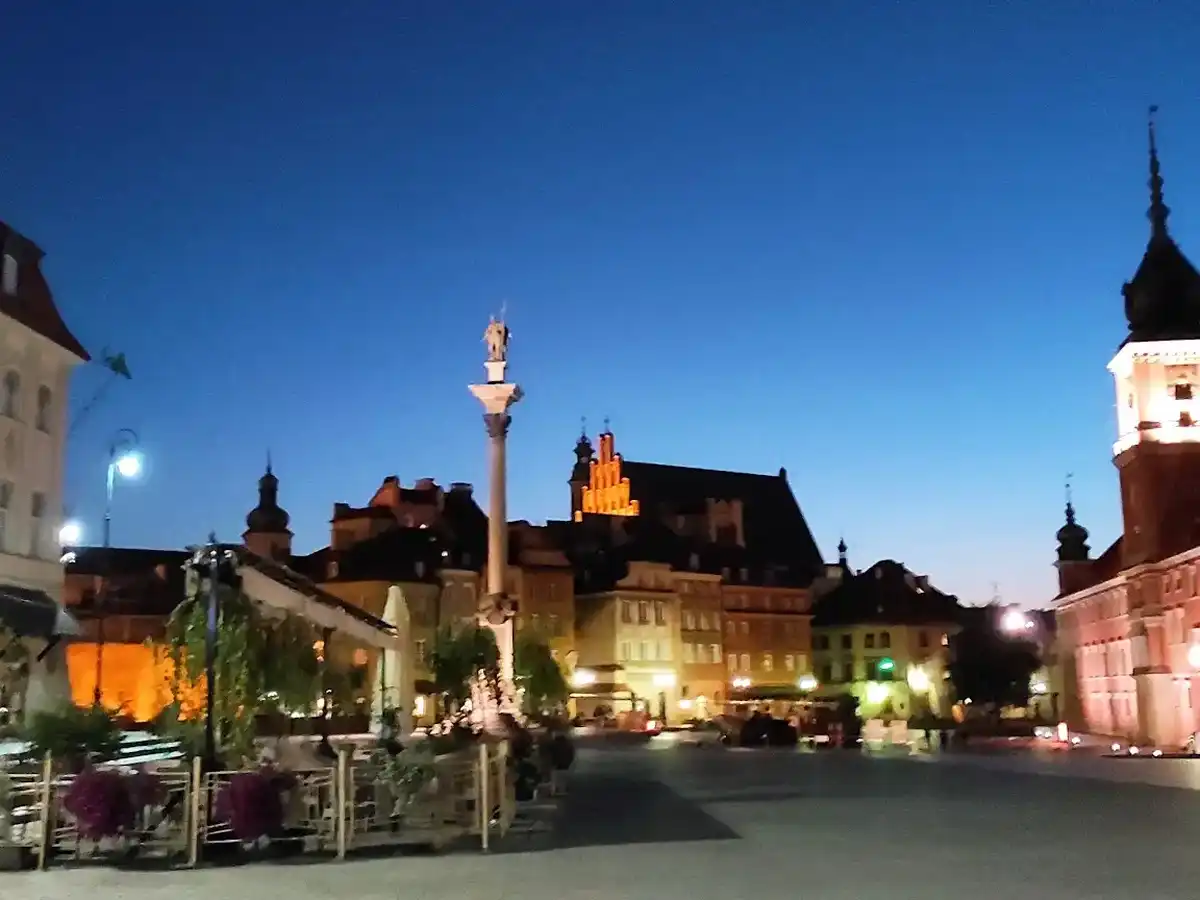
  1. Old Town Market Square (Rynek Starego Miasta) — The cobbles, colorful rebuilt tenements and the mermaid statue give you the heart of Warsaw’s story: demolished in WWII and painstakingly reconstructed. Walk the narrow streets, sip coffee at a terrace, and feel the city’s resilient vibe up close.
  2. Royal Castle (Zamek Królewski) — Former seat of Polish kings with restored state rooms, paintings and historical exhibits; climbing the Castle Square area also puts you face-to-face with Sigismund’s Column and great photo views of the Old Town.
  3. Łazienki Park & Palace on the Isle — A huge, beautifully landscaped park with peacocks, Chopin’s Monument (summer outdoor concerts) and the elegant Palace on the Isle—perfect for a slow afternoon of history and people-watching.
  4. Wilanów Palace — Baroque palace
read more 👉
  1. Old Town Market Square (Rynek Starego Miasta) — The cobbles, colorful rebuilt tenements and the mermaid statue give you the heart of Warsaw’s story: demolished in WWII and painstakingly reconstructed. Walk the narrow streets, sip coffee at a terrace, and feel the city’s resilient vibe up close.
  2. Royal Castle (Zamek Królewski) — Former seat of Polish kings with restored state rooms, paintings and historical exhibits; climbing the Castle Square area also puts you face-to-face with Sigismund’s Column and great photo views of the Old Town.
  3. Łazienki Park & Palace on the Isle — A huge, beautifully landscaped park with peacocks, Chopin’s Monument (summer outdoor concerts) and the elegant Palace on the Isle—perfect for a slow afternoon of history and people-watching.
  4. Wilanów Palace — Baroque palace and gardens once owned by King Jan III Sobieski; it’s ornate, quieter than the center, and shows a different, aristocratic side of Polish history without the wartime scars.
  5. Warsaw Uprising Museum — Immersive, emotionally powerful displays about the 1944 uprising; it mixes artifacts, multimedia and survivor testimony so you walk away with a real sense of what the city endured and fought for.
  6. POLIN Museum of the History of Polish Jews — Architecturally striking and thoughtfully curated, POLIN traces a thousand years of Jewish life in Poland; the core exhibition is moving, well-designed and essential for understanding Warsaw’s cultural layers.
  7. Fryderyk Chopin Museum — Modern, interactive museum dedicated to Poland’s greatest composer—great for music lovers, with manuscripts, instruments, and sound-driven displays that make Chopin’s life and legacy immediate.
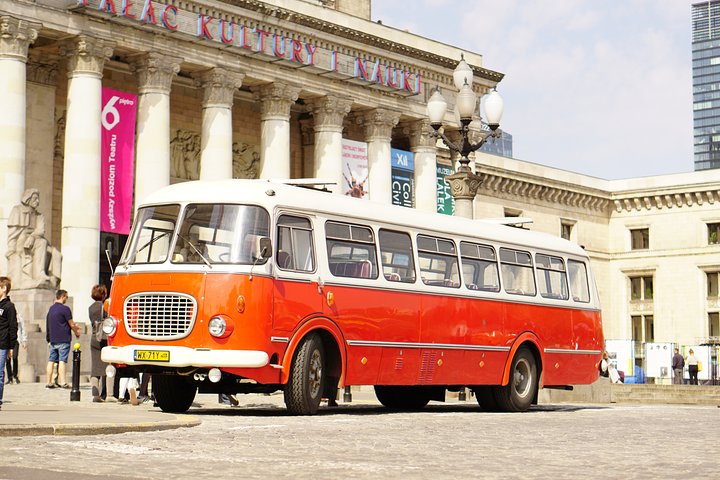
  8. Palace of Culture and Science (Pałac Kultury i Nauki) — Controversial Soviet-era skyscraper that’s now part of Warsaw’s skyline; go up to the observation deck for wide city views, then poke into a theatre, exhibition or café inside for a taste of everyday city life.
  9. Vistula Boulevards (Bulwary Wiślane) — A lively riverside strip for walking, sunbathing, riverside bars and pop-up events in summer; locals gather here when the weather’s good, and the vibe captures Warsaw’s modern, relaxed side.
  10. Praga district (especially Ząbkowska Street, Koneser/Soho Factory and the Neon Museum) — East-bank neighborhood that kept real, working-city character: gritty street art, refurbished factories turned cultural hubs, the quirky Neon Museum and a thriving café/bar scene—great for exploring offbeat Warsaw.
A few excellent day-trip options nearby are Kampinos National Park for hiking, Żelazowa Wola (Chopin’s birthplace) for music and manor-house gardens, and the 19th-century Modlin Fortress for a dose of military history.
Spotted a mistake or missing something? Contact us.
Things to do in Warsaw

Ratings based on Tripadvisor reviews. When you book through this link, you support our work at no extra cost to you.

🏘️ NeighborhoodsNeighborhood guide to Warsaw

Warsaw is a city of contrasts, where history meets modernity. Each neighborhood offers a unique flavor, catering to different backpacker needs. Here’s a breakdown to help you navigate your choices.

Old Town: This is the heart of Warsaw, a UNESCO World Heritage site. The cobblestone streets are perfect for wandering, but prices can be higher here. It’s ideal for short stays, with plenty of cafes and shops. Nightlife is mellow, focusing on cozy bars rather than clubs. Transport access is decent, but you’ll likely walk everywhere.

Praga: Just across the river, Praga has a gritty charm. It’s cheaper than Old Town and has a vibrant arts scene. The vibe is bohemian, with street art and local markets. Walkability is excellent, and you’ll find a mix of quiet spots and lively bars. Perfect for longer … read more 👉
Warsaw is a city of contrasts, where history meets modernity. Each neighborhood offers a unique flavor, catering to different backpacker needs. Here’s a breakdown to help you navigate your choices.

Old Town: This is the heart of Warsaw, a UNESCO World Heritage site. The cobblestone streets are perfect for wandering, but prices can be higher here. It’s ideal for short stays, with plenty of cafes and shops. Nightlife is mellow, focusing on cozy bars rather than clubs. Transport access is decent, but you’ll likely walk everywhere.

Praga: Just across the river, Praga has a gritty charm. It’s cheaper than Old Town and has a vibrant arts scene. The vibe is bohemian, with street art and local markets. Walkability is excellent, and you’ll find a mix of quiet spots and lively bars. Perfect for longer stays if you want to immerse yourself in local culture.

Śródmieście: The city center buzzes with energy. It’s a hub for shopping and dining, with a mix of high-end and budget options. Walkable and well-connected by public transport, it’s great for both short and long visits. Nightlife is diverse, from upscale lounges to casual pubs.

Wola: An up-and-coming area with a mix of modernity and history. It’s less touristy, making it a budget-friendly choice. Walkability is good, but you might need to rely on public transport for nightlife. Ideal for longer stays if you want a local experience away from the crowds.

Choose wisely, and you’ll find the right balance of time, money, and comfort in Warsaw.

⌛️ 1 day1-day itinerary for Warsaw

Warsaw is a city where history and modernity collide in a fascinating dance. From its resilient spirit, showcased in the reconstructed Old Town, to the vibrant energy of Praga, there’s a pulse here that’s hard to ignore. You can spend a day exploring its layers, and trust me, it’s worth every moment.

Start your morning in the Old Town, where cobblestone streets lead you to the Royal Castle. Grab a coffee at one of the local cafés, like Café Bristol, and soak in the atmosphere. The castle itself is a treasure trove of art and history, but don’t rush through it. Take your time to appreciate the details, especially the stunning views from the castle grounds.

As the sun climbs higher, make your way to the Warsaw Uprising Museum in Wola. This isn’t just another museum; it’s an immersive experience … read more 👉
Warsaw is a city where history and modernity collide in a fascinating dance. From its resilient spirit, showcased in the reconstructed Old Town, to the vibrant energy of Praga, there’s a pulse here that’s hard to ignore. You can spend a day exploring its layers, and trust me, it’s worth every moment.

Start your morning in the Old Town, where cobblestone streets lead you to the Royal Castle. Grab a coffee at one of the local cafés, like Café Bristol, and soak in the atmosphere. The castle itself is a treasure trove of art and history, but don’t rush through it. Take your time to appreciate the details, especially the stunning views from the castle grounds.

As the sun climbs higher, make your way to the Warsaw Uprising Museum in Wola. This isn’t just another museum; it’s an immersive experience that tells the story of the city’s fight for freedom. The exhibits are engaging, and you’ll leave with a deeper understanding of Warsaw’s resilience.

For lunch, head to the trendy neighborhood of Powiśle. Here, you’ll find a mix of hip eateries and food stalls. Try some pierogi at a local spot, or indulge in a modern twist on Polish cuisine at one of the bistros.

In the afternoon, stroll along the Vistula Boulevards. It’s a perfect way to unwind, with views of the river and the city skyline. If you’re feeling adventurous, hop on a bike and explore the area further.

As evening approaches, venture into Praga, an up-and-coming district known for its artistic vibe. Check out the street art and pop into a local bar for a craft beer. For dinner, consider a hidden gem like Bistro Praga, where you can enjoy authentic Polish dishes in a cozy setting.

Wrap up your day with a leisurely walk back along the river, reflecting on the rich tapestry of experiences you’ve woven throughout this vibrant city. Each choice you made today—whether to linger in the castle or explore the less-traveled streets—has added depth to your journey.
Turn your Warsaw visit into an Poland adventure
Build a complete Poland route with Warsaw, hidden gems, must-see destinations, and realistic travel times included.

Generate my trip

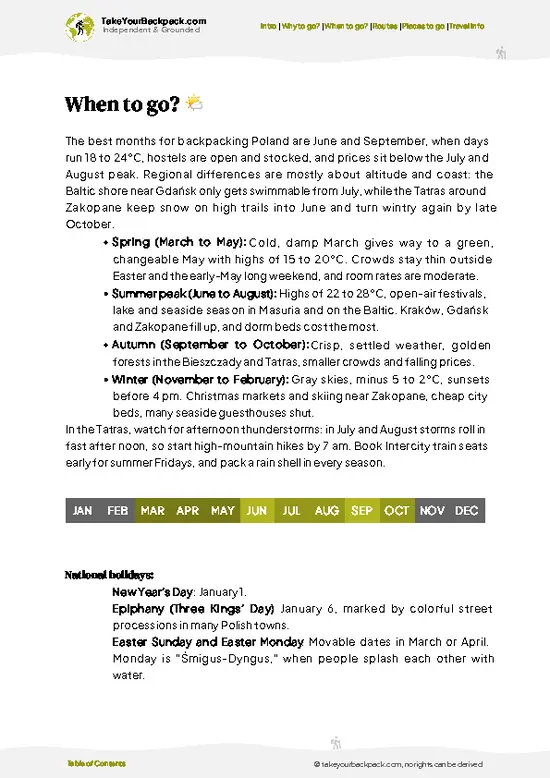
🌤️ When to go?Weather, crowds, and seasonal trade-offs


  • Weather: Warsaw’s climate swings from cold winters to warm summers. Winters hover around -3°C to 2°C (27°F to 36°F), often snowy and gray, which can slow you down. Summers hit a comfortable 20°C to 25°C (68°F to 77°F), perfect for wandering without overheating.

  • Daylight Hours: In summer, expect up to 16 hours of daylight, giving you more time to explore. Winter days shrink to about 7 hours, limiting your sightseeing window and making early nights a norm.

  • Crowds: Peak tourist season is June to August, when the city buzzes with festivals and visitors. This means longer lines and pricier accommodations. Shoulder seasons (May and September) offer a quieter vibe with fewer tourists but still decent weather.

  • Seasonal Activities: Summer brings open-air concerts, street fairs, and vibrant
read more 👉

  • Weather: Warsaw’s climate swings from cold winters to warm summers. Winters hover around -3°C to 2°C (27°F to 36°F), often snowy and gray, which can slow you down. Summers hit a comfortable 20°C to 25°C (68°F to 77°F), perfect for wandering without overheating.

  • Daylight Hours: In summer, expect up to 16 hours of daylight, giving you more time to explore. Winter days shrink to about 7 hours, limiting your sightseeing window and making early nights a norm.

  • Crowds: Peak tourist season is June to August, when the city buzzes with festivals and visitors. This means longer lines and pricier accommodations. Shoulder seasons (May and September) offer a quieter vibe with fewer tourists but still decent weather.

  • Seasonal Activities: Summer brings open-air concerts, street fairs, and vibrant café culture. Winter offers Christmas markets and cozy indoor museums, but outdoor activities can be chilly and less frequent.

  • Price Fluctuations: Accommodation and flights spike in summer. Booking in shoulder seasons can save you 20-30% without sacrificing much on experience. Winter is cheapest but comes with trade-offs in comfort and daylight.


Pro-tip: Aim for late spring or early fall to balance weather, daylight, crowd size, and cost—this sweet spot turns Warsaw into a playground you control, not a race against the clock or wallet.


source: climatestotravel.comJANJanuary: fair for travelingFEBFebruary: fair for travelingMARMarch: good for travelingAPRApril: highly recommended for travelingMAYMay: excellent for travelingJUNJune: highly recommended for travelingJULJuly: highly recommended for travelingAUGAugust: highly recommended for travelingSEPSeptember: excellent for travelingOCTOctober: highly recommended for travelingNOVNovember: good for travelingDECDecember: fair for traveling
poland-city-warsaw
© Google | Miki Mysz

✈️ The backpacker research shortcutPoland Travel Guide

An offline-friendly backpacking guide with optimized travel routes, ranked highlights, transport advice, and the best areas to stay.
example page 0 from our offline Travel Guide for Poland
example page 1 from our offline Travel Guide for Poland
example page 2 from our offline Travel Guide for Poland
example page 3 from our offline Travel Guide for Poland
example page 4 from our offline Travel Guide for Poland
example page 5 from our offline Travel Guide for Poland
example page 6 from our offline Travel Guide for Poland
example page 7 from our offline Travel Guide for Poland
The digital guide (432 pages) contains:
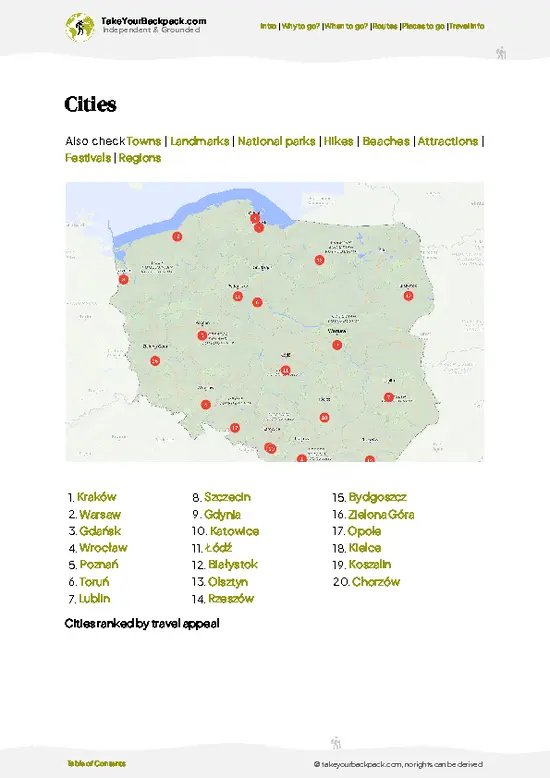
116 highlights, ranked by travel appeal
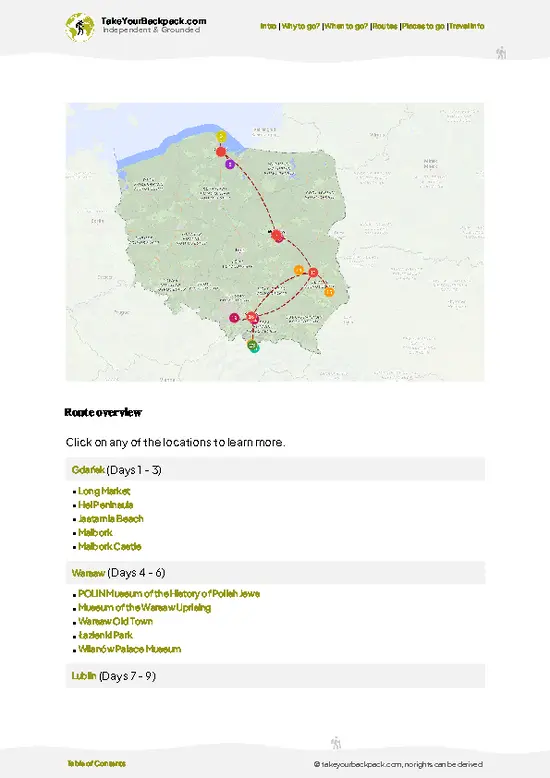
Optimized 5, 10 & 15-day travel routes
Cities, national parks, landmarks, beaches
How to get around
Offline-friendly for travel without Wi-Fi
👉 Click to see all 30+ guide features

📅 Plan smarter in minutes, not weeks
Month by month travel advice
Festivals & national holidays
Budget expectations

🗺️ Go to the right places, skip the overrated ones
Honest pros & cons of destinations
Top hikes, parks & viewpoints
Lesser-known places most travelers miss
Clear “worth it vs skip it” guidance

🛏️ Travel smoothly without rookie mistakes
Best areas to stay
Transport systems explained simply
Common scams & safety advice
SIM cards, money & practical tips

🌍 Understand the country, not just visit it
Culture & traditions
52 Essential phrases & customs
Festivals worth planning around
Traveler-friendly historical context
Insights that make places more meaningful

📱 Built for real travel conditions
Fully downloadable PDF
Works completely offline
Optimized for phone use
Useful in remote areas & buses
Everything in one place
Save weeks of stressful planning
Get instant access to your full guide. 30‑day money-back guarantee.


By proceeding you agree to our terms.
Sent to your inbox immediately after payment • 100% Secure Checkout
Best Backpacking Travel Advisor 2025 tourism awardBest Backpacking
Travel Advisor
2025
What others say about Take Your Backpack Guides:
⭐⭐⭐⭐⭐
Fantastic, amazing amount of information!
⭐⭐⭐⭐⭐
My goodness this is amazing, it's what I've been looking for hats off too you!
⭐⭐⭐⭐⭐
I think this is absolutely BRILLIANT
⭐⭐⭐⭐
Very complete and informative. It's still missing places, but I gotta to commend you
⭐⭐⭐⭐⭐
This is truly amazing, thank you, can't wait to explore it with my kids!
⭐⭐⭐⭐⭐
Awesome resource, thank you!
⭐⭐⭐⭐⭐
This is amazing! Can't wait to explore the ones I haven't seen
⭐⭐⭐⭐
I love this! Well done, great idea.
⭐⭐⭐⭐⭐
Thanks for taking the time to make this gem!
⭐⭐⭐⭐⭐
This might be the best website I've ever seen.
⭐⭐⭐⭐⭐
Congratulations, and thank you so much for your work; it's incredibly valuable.
⭐⭐⭐⭐
In all seriousness I think you did a great job pointing out the important spots
⭐⭐⭐⭐⭐
10/10 very good
⭐⭐⭐⭐⭐
As someone who's only just starting to visit regularly this is awesome, thank you.
⭐⭐⭐⭐
Thank you very much! I'm going to visit my dad, it's going to be very useful!
⭐⭐⭐⭐⭐
This is really cool! We'll be travelling for the first time and this definitely come in handy.
⭐⭐⭐⭐⭐
You are now our minister of culture, congratulations 👨‍💼
⭐⭐⭐⭐⭐
Just wanted to tell you that this is a pearl! Going to follow your recommendations.
⭐⭐⭐⭐⭐
This is so cool. I'll definitely be using the resource for my travels soon.
⭐⭐⭐⭐⭐
This is very impressive! Good work.
⭐⭐⭐⭐⭐
This is an amazing and informative site. Very well done!

🛏️ Where to stay?How to pick the right area

Mokotów stands out as a prime choice for backpackers who want a balance of comfort, safety, and social buzz without the tourist overload. It’s a bit removed from the frantic city center, which means quieter nights and more affordable digs. You’ll find plenty of hostels here that cater to solo travelers and budget-conscious visitors, with communal spaces that encourage meeting others. The vibe is relaxed but lively, thanks to local cafes, parks, and a mix of residential calm and nightlife spots. It’s a smart trade-off: you sacrifice a few minutes on public transit for a more authentic, less touristy … read more 👉
Mokotów stands out as a prime choice for backpackers who want a balance of comfort, safety, and social buzz without the tourist overload. It’s a bit removed from the frantic city center, which means quieter nights and more affordable digs. You’ll find plenty of hostels here that cater to solo travelers and budget-conscious visitors, with communal spaces that encourage meeting others. The vibe is relaxed but lively, thanks to local cafes, parks, and a mix of residential calm and nightlife spots. It’s a smart trade-off: you sacrifice a few minutes on public transit for a more authentic, less touristy experience.

Praga, on the east bank of the Vistula River, is the go-to for backpackers chasing a gritty, artsy atmosphere. It’s safe, but you’ll feel the city’s edge here—graffiti, converted warehouses, and a creative crowd dominate. Hostels are plentiful and often cheaper than central Warsaw, with a social scene that’s more underground than polished. Staying here means embracing a rawer side of Warsaw, trading some comfort for character and a strong local vibe.

For those who want to be in the thick of it, Śródmieście (the city center) offers unbeatable convenience and a bustling social scene. It’s pricier and busier, but the payoff is immediate access to landmarks, nightlife, and a dense cluster of hostels. The trade-off here is money and noise for maximum connectivity and ease.

Each area offers a distinct flavor of Warsaw’s backpacker scene. Your choice boils down to what you value most: quiet comfort with social perks, edgy authenticity, or central convenience. Understanding these trade-offs lets you pick a base that fits your travel style perfectly.

🚌 Getting aroundGetting around like a local

Warsaw moves with a pulse that’s part clockwork, part improvisation. The city’s transit system is a well-oiled machine, but it’s not without its quirks—rush hours feel like a strategic chess match, while off-peak times invite a more relaxed, almost spontaneous rhythm. You’ll find that sticking to schedules pays off, but there’s room for intuition when you’re navigating the city’s layers. Understanding the trade-offs between time, money, and comfort here means you’re not just getting from A to B—you’re mastering the flow of Warsaw itself.


  • Walking: Warsaw’s compact city center is surprisingly walkable, especially around the Old Town and Royal Route. It costs nothing, offers maximum flexibility, and lets you soak in street-level details. However, it’s time-consuming if you’re covering long
read more 👉
Warsaw moves with a pulse that’s part clockwork, part improvisation. The city’s transit system is a well-oiled machine, but it’s not without its quirks—rush hours feel like a strategic chess match, while off-peak times invite a more relaxed, almost spontaneous rhythm. You’ll find that sticking to schedules pays off, but there’s room for intuition when you’re navigating the city’s layers. Understanding the trade-offs between time, money, and comfort here means you’re not just getting from A to B—you’re mastering the flow of Warsaw itself.


  • Walking: Warsaw’s compact city center is surprisingly walkable, especially around the Old Town and Royal Route. It costs nothing, offers maximum flexibility, and lets you soak in street-level details. However, it’s time-consuming if you’re covering long distances or trying to beat the clock.


  • Trams: The backbone of Warsaw’s public transit, trams run from around 4:30 AM to midnight. Tickets are cheap (about 4.40 PLN for a 20-minute ride), and trams are generally reliable and comfortable, but they can crawl during rush hour. If you’re prioritizing budget and don’t mind a slower pace, trams are your best bet.


  • Buses: Covering routes that trams don’t reach, buses operate on a similar schedule but can be less predictable due to traffic. They’re equally affordable and a solid option for late-night travel when some tram lines shut down. Comfort varies—older buses can be cramped, but newer ones offer decent seating and air conditioning.


  • Metro: Warsaw’s two-line metro system is the fastest way to cross the city, running from 5 AM to midnight. Tickets cost the same as trams and buses, but the speed and frequency make it a prime choice if you value time over a few extra zlotys. The metro is clean, efficient, and less affected by surface traffic, though it covers a limited area compared to trams and buses.


  • Bike Sharing (Veturilo): For short hops and a bit of fresh air, Warsaw’s bike-sharing system is a clever middle ground. The first 20 minutes are free after a small registration fee, making it a cost-effective and flexible option. It’s faster than walking and lets you avoid traffic jams, but weather and physical effort are factors to consider.

👛 Costs (as of 28 January 2026)Travel costs and budget guide for Warsaw

Backpacking in Warsaw offers a clear trade-off between cost and comfort, with prices that reflect its status as a vibrant yet affordable European capital. Here’s the breakdown of what you’re likely to spend daily:
  • Dorm Accommodation (High Season): Expect to pay around €15-€25 per night in popular hostels during peak months (May to September). These places tend to fill up fast, so the premium is for convenience and availability.
  • Dorm Accommodation (Off-Season): From October to April, prices drop to about €10-€18. You’ll find quieter hostels and sometimes better deals if you book in advance or stay longer.
  • Meals: Budget about €8-€15 daily if you stick to street food, casual eateries, or supermarket meals. Pierogi, zapiekanka, and local bakeries offer filling options without breaking the bank.
read more 👉
Backpacking in Warsaw offers a clear trade-off between cost and comfort, with prices that reflect its status as a vibrant yet affordable European capital. Here’s the breakdown of what you’re likely to spend daily:
  • Dorm Accommodation (High Season): Expect to pay around €15-€25 per night in popular hostels during peak months (May to September). These places tend to fill up fast, so the premium is for convenience and availability.
  • Dorm Accommodation (Off-Season): From October to April, prices drop to about €10-€18. You’ll find quieter hostels and sometimes better deals if you book in advance or stay longer.
  • Meals: Budget about €8-€15 daily if you stick to street food, casual eateries, or supermarket meals. Pierogi, zapiekanka, and local bakeries offer filling options without breaking the bank. Splurging on a sit-down meal will push this higher.
  • Local Transport: Single tram or bus tickets cost roughly €0.80-€1.00. These are good for short hops but add up if you’re moving around a lot.
  • City Transport Pass: A 24-hour public transport pass runs about €4.50, which is a smarter choice if you plan multiple trips in a day. Weekly passes are also available for longer stays, offering better value.
  • Basic Activities/Entry Fees: Museums and attractions typically charge between €3-€8. Some, like the Warsaw Uprising Museum, hover around €5. Many places offer free entry on certain days, so timing can save you money.
  • Miscellaneous Expenses: Budget €3-€7 for essentials like bottled water, snacks, or a coffee. If you want to grab a beer or a souvenir, expect to add a few euros more.

In total, a backpacker in Warsaw can expect to spend roughly €30-€50 per day, depending on season and lifestyle choices. This range balances comfort and economy, letting you decide where to tighten or loosen the purse strings while still experiencing the city’s core offerings.


source: numbeo.com
⚠️ Prices can change and everyone travels differently, so take this as a rough guide. Hope it helps you plan your adventure!

🚌 Day tripsShort trips worth adding

Warsaw serves as an ideal launchpad for day trips that blend history, nature, and culture, all while keeping your budget in check. Here are some standout options that promise to enrich your Polish adventure.

Auschwitz-Birkenau Memorial and Museum
A visit to Auschwitz is a profound experience that demands reflection. The journey takes about 1.5 hours by train, and entry is free, but booking a guided tour is highly recommended for around 50 PLN. This trip is best undertaken in spring or fall when the weather is mild. Many first-timers underestimate the emotional weight of this site, so prepare yourself mentally. The stark reality of history here is both haunting and educational.


Kraków
Just a 2.5-hour train ride from Warsaw, Kraków is a vibrant city steeped in history. You can explore … read more 👉
Warsaw serves as an ideal launchpad for day trips that blend history, nature, and culture, all while keeping your budget in check. Here are some standout options that promise to enrich your Polish adventure.

Auschwitz-Birkenau Memorial and Museum
A visit to Auschwitz is a profound experience that demands reflection. The journey takes about 1.5 hours by train, and entry is free, but booking a guided tour is highly recommended for around 50 PLN. This trip is best undertaken in spring or fall when the weather is mild. Many first-timers underestimate the emotional weight of this site, so prepare yourself mentally. The stark reality of history here is both haunting and educational.


Kraków
Just a 2.5-hour train ride from Warsaw, Kraków is a vibrant city steeped in history. You can explore the stunning Main Market Square, visit Wawel Castle, and indulge in local pierogi without breaking the bank—expect to spend around 100 PLN for a day of food and attractions. Spring and summer are ideal for enjoying outdoor cafes and street performances. A common mistake is trying to see everything in one day; focus on a few key sites to truly soak in the atmosphere.


Zelazowa Wola
For a more tranquil escape, head to Zelazowa Wola, the birthplace of Chopin. It’s about an hour from Warsaw by train, and entry to the park is around 15 PLN. The best time to visit is during the summer when outdoor concerts celebrate Chopin’s music. Many overlook the charming gardens and serene ambiance, opting instead for the museum alone. Take your time to wander and appreciate the beauty of the surroundings.


Modlin Fortress
A lesser-known gem, Modlin Fortress is just an hour away and offers a fascinating glimpse into military history. The entry is free, and you can explore the impressive fortifications and scenic views of the Vistula River. Spring and early fall are perfect for this trip, as the weather is pleasant for walking. First-timers often miss the chance to explore the surrounding area; don’t rush—take a picnic and enjoy the scenery.


These day trips from Warsaw not only expand your understanding of Poland but also provide a refreshing break from the city’s hustle. Each option offers a unique experience, allowing you to tailor your journey to your interests and budget.
Want to know what more Poland offers?
The Poland Travel Guide describes 116 highlights, from cities to national parks, from beaches to hikes

Get the Travel Guide -

🍲 FoodLocal Cuisine & Drinks

In Warsaw, food is a vibrant tapestry of flavors that tells the story of its history. Start with pierogi, those delightful dumplings filled with everything from potatoes to sauerkraut. They’re often served with a dollop of sour cream, and you’ll find them at bustling markets or cozy milk bars—a nod to the communist era where you can eat like a local without breaking the bank.

Don’t miss żurek, a sour rye soup that warms the soul, often served in a bread bowl. It’s a staple that embodies comfort and tradition. Pair it with a glass of kompot, a sweet fruit drink that’s a refreshing alternative to soda.

When it comes to drinking culture, Warsaw has a lively bar scene. Try a shot of vodka—it’s not just a drink; it’s a ritual. Locals often sip it with pickles or herring, a quirky custom that … read more 👉
In Warsaw, food is a vibrant tapestry of flavors that tells the story of its history. Start with pierogi, those delightful dumplings filled with everything from potatoes to sauerkraut. They’re often served with a dollop of sour cream, and you’ll find them at bustling markets or cozy milk bars—a nod to the communist era where you can eat like a local without breaking the bank.

Don’t miss żurek, a sour rye soup that warms the soul, often served in a bread bowl. It’s a staple that embodies comfort and tradition. Pair it with a glass of kompot, a sweet fruit drink that’s a refreshing alternative to soda.

When it comes to drinking culture, Warsaw has a lively bar scene. Try a shot of vodka—it’s not just a drink; it’s a ritual. Locals often sip it with pickles or herring, a quirky custom that adds a layer of flavor to the experience.

As you wander through the Old Town, grab a zapiekanka from a street vendor. This Polish baguette topped with mushrooms and cheese is the ultimate late-night snack. Eating here isn’t just about the food; it’s about soaking in the atmosphere, sharing stories, and connecting with fellow travelers.

🛡️ SafetyTraveler Safety Guide

Warsaw is generally safe, but like any city, it has its quirks. Stick to well-lit areas at night, especially in neighborhoods like Praga, which has a vibrant scene but can feel a bit edgy after dark. If you’re solo, keep your phone handy and stay aware of your surroundings.

Scams are rare, but watch out for the classic distraction techniques. A friendly local might engage you while an accomplice swipes your bag. Keep your belongings close, especially in crowded spots like the Old Town or public transport.

Annoyances can crop up, like aggressive street performers or overly persistent souvenir sellers. A polite but firm “no, thank you” usually does the trick.

Overall, carry yourself confidently and trust your instincts. Warsaw’s charm is in its history and culture, so don’t let minor bumps deter you from enjoying the experience.

Other Polish cities near Warsaw

Explore more nearby:

  • Radom—aviation museum, industrial suburbs, Mazovian plains| 92 km away
  • Łódź—industrial architecture, street art, textile factories, film school| 119 km away
  • Lublin—medieval gates, multicultural history, hilltop old town| 153 km away

💡 Not sure where to go next?
Create a personalized itinerary for Poland including Warsaw and the places that fit your trip.

Generate my itinerary

👉 Discover all cities

Or checkout all Poland has to offer (think cities, towns, villages, national parks, hikes, beaches, festivals)
Country photo of Poland

We 💚 feedbackParting advice and final tips

Warsaw’s vibe is a mix of grit and grace. You’ll find modern skyscrapers standing shoulder to shoulder with historic buildings, each telling a story. The best surprise? The Praga district—raw, artistic, and full of character. Grab a pierogi from a local babcia; it’s a game-changer. Just a heads-up: the public transport can be a bit tricky if you’re not used to it, but it’s worth the ride. Embrace the chaos; it’s part of the city’s charm.

✍️ Help improve this page!
The information on this page is based on in-depth research, insights shared by experienced travelers, and feedback from the local travel community in Poland. While every effort is made to keep the information accurate and current, conditions can change — so if you spot anything incorrect or outdated, please get in touch.


🙋‍♂️ Give feedback

👋 Meet the founderWho’s Behind Take Your Backpack?

Johan, backpacker and founder of TakeYourBackpackHi, I’m Johan (Netherlands 🇳🇱), the creator of TakeYourBackpack. Over the past decade, I’ve backpacked through 80+ countries across six continents, gaining extensive experience with independent travel, long-term trips, and overland routes.

This site is built on a combination of firsthand travel experience and carefully curated insights from other backpackers. Many guides are based on places I’ve personally visited, while others bring together tips, observations, and practical advice shared by trusted travelers I’ve met along the way.

The goal is to provide realistic, experience-driven guidance — not generic itineraries — so you can explore destinations with better context, clearer expectations, and more confidence.

Get full Poland guide •
Instant download • 116 highlights • Full Offline guide