v2.webp)
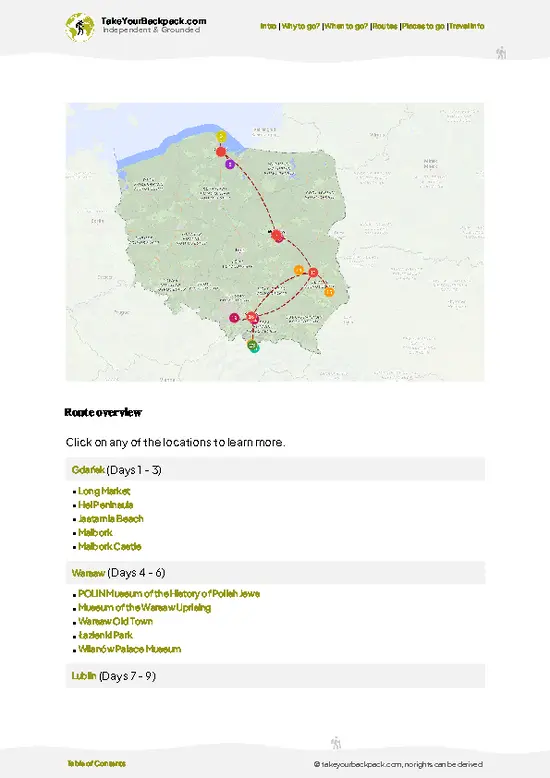
- Rynek (Market Square) & Wrocław Town Hall: The heart of the city — a huge, lively plaza ringed with colorful burgher houses, outdoor cafes, street performers and the ornate Gothic-Renaissance Town Hall where you can peek into local history and people-watch for hours.
- Ostrów Tumski (Cathedral Island): The oldest district, full of lanes, gas lamps (they still light them by hand at dusk), and the Cathedral of St. John the Baptist — a cathedral complex that shows Wrocław’s medieval roots and offers great riverfront views.
- Centennial Hall (Hala Stulecia) and Pergola: A UNESCO-listed early reinforced-concrete masterpiece with a large surrounding park, musical fountain and a peaceful Japanese Garden — impressive architecture plus a nice place to wander and picnic.
- Panorama Racławicka: A huge
- Rynek (Market Square) & Wrocław Town Hall: The heart of the city — a huge, lively plaza ringed with colorful burgher houses, outdoor cafes, street performers and the ornate Gothic-Renaissance Town Hall where you can peek into local history and people-watch for hours.
- Ostrów Tumski (Cathedral Island): The oldest district, full of lanes, gas lamps (they still light them by hand at dusk), and the Cathedral of St. John the Baptist — a cathedral complex that shows Wrocław’s medieval roots and offers great riverfront views.
- Centennial Hall (Hala Stulecia) and Pergola: A UNESCO-listed early reinforced-concrete masterpiece with a large surrounding park, musical fountain and a peaceful Japanese Garden — impressive architecture plus a nice place to wander and picnic.
- Panorama Racławicka: A huge 19th-century cycloramic painting that immerses you in the 1794 Battle of Racławice; seeing it in situ is one of those rare, slightly odd museum experiences that actually pays off.
- University of Wrocław — Aula Leopoldina & Mathematical Tower: The baroque Aula Leopoldina is an over-the-top ceiling-and-gold showpiece, and the adjacent tower gives one of the best compact skyline views of the city.
- Hydropolis: A clever, modern science center housed in a converted nineteenth-century water cistern; hands-on exhibits explain water’s role in nature, technology and daily life — surprisingly engaging for all ages.
- National Museum (Muzeum Narodowe we Wrocławiu): The main museum for Silesian and Polish art and historical objects — well-curated, with standout exhibitions that give context to the region’s complicated past.
- Wrocław’s Dwarfs (Krasnale): Tiny bronze statues scattered all over the city; hunting for them is a playful way to explore neighborhoods, and they’re rooted in the Orange Alternative anti-communist movement — quirky, meaningful, and great for photos.
- Nadodrze neighbourhood & Neon Side Gallery: A gritty-turned-creative district where restored tenements, street art, craft cafés and the Neon Side Gallery show Wrocław’s contemporary, grassroots cultural life — excellent for walking, coffee and local design shops.
- White Stork Synagogue & the Four Denominations area: The restored White Stork Synagogue and its surrounding quarter highlight Wrocław’s multi-faith history; visiting gives insight into the city’s Jewish heritage and the broader story of religious coexistence here.
Spotted a mistake or missing something? Contact us.

Boat Party in Wroclaw with Unlimited Drinks

The Classic E-Scooter (3 wheeler) Tour of Wroclaw - everyday tour at 6:00 pm

Wroclaw To Ksiaz Castle and Church of Peace in Swidnica - half day tour

Wrocław E-Scooter Tour: Old Town & Ostrów Islands (1.5h or 3.5h)

Private "Top Attractions Of Wroclaw" Tour

University of Wrocław: Audio Guide & Admission

Wrocław Segway Tour: Full 3.5-Hour Guided Segway Tour

Wroclaw: 3-Hour Bike Tour in English

Wroclaw Private Guided Tour SHORT AND PROFESSIONAL. 2 pcs., 1 - 9 pers.


 Best Backpacking
.jpg) Hi, I’m Johan (Netherlands 🇳🇱), the creator of TakeYourBackpack. Over the past 3 decades, I’ve backpacked through 90+ countries across six continents, gaining extensive experience with independent travel, long-term trips, and overland routes.
Hi, I’m Johan (Netherlands 🇳🇱), the creator of TakeYourBackpack. Over the past 3 decades, I’ve backpacked through 90+ countries across six continents, gaining extensive experience with independent travel, long-term trips, and overland routes.