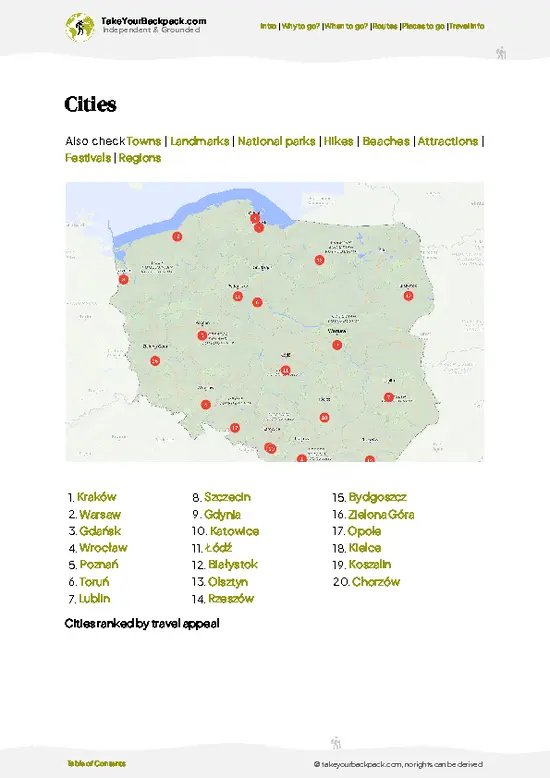
How many cities to visit: Three to five cities is the number I advise for a typical trip of one to two weeks. Poland’s distances are modest but not trivial: main rail legs take 2.5 to 4.5 hours, and each city rewards two nights rather than one. Below three stops, you miss the regional contrast. Above five, you spend a large share of the trip on transit and checking in. If you have only a long weekend, one city with a half-day excursion is a better plan than two.
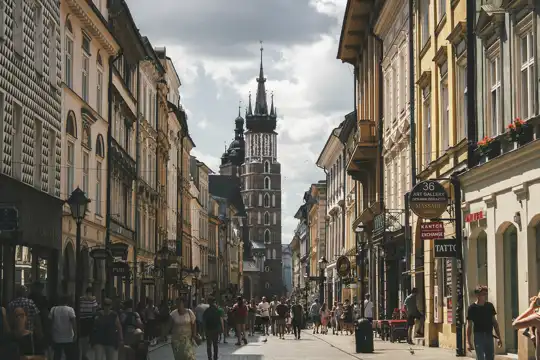
Choosing between kinds of cities: Match the type to your travel style. If you want
medieval squares, museums and dense sightseeing, prioritize the southern historic cities, accepting more visitors and higher prices. If you like
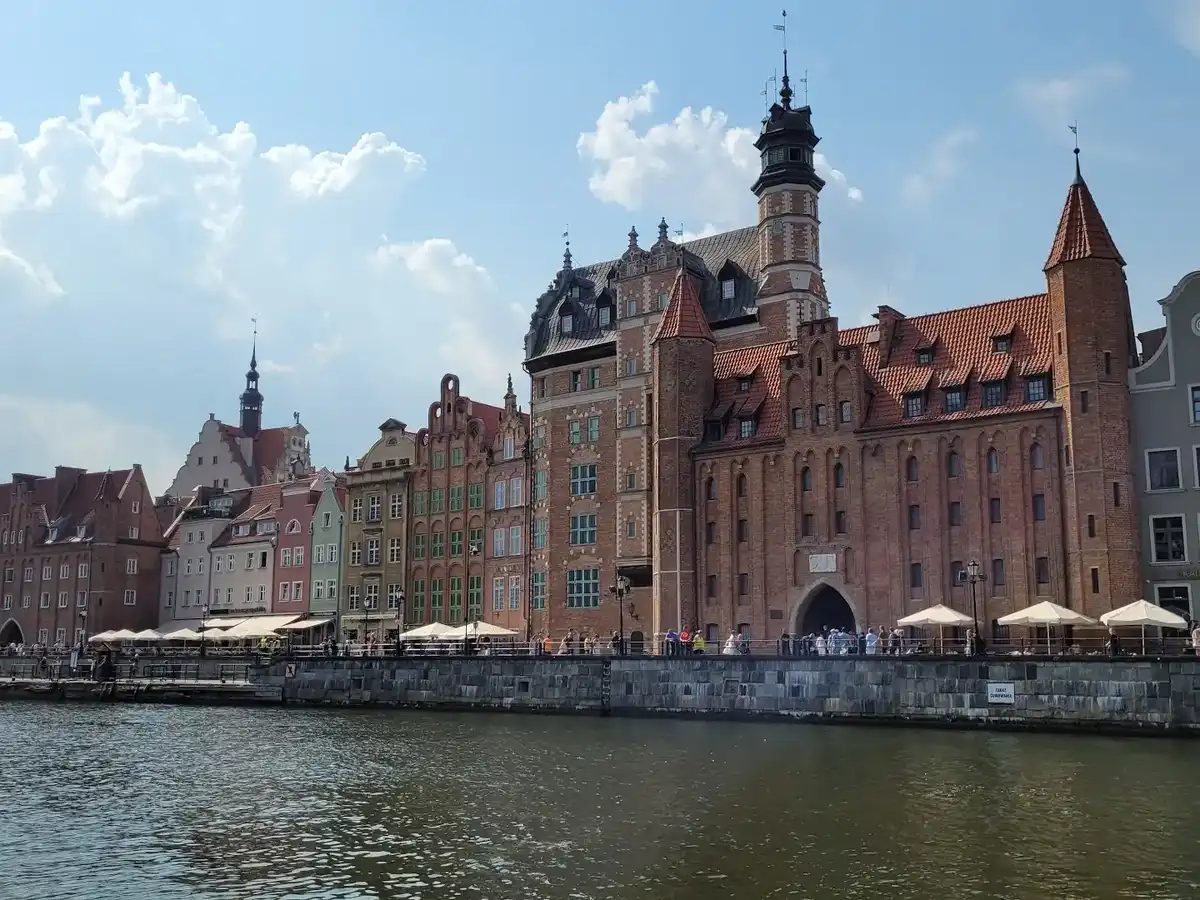
port history, sea air and quieter streets, the Baltic north suits you, though the beach season is short. If …
read more 👉 How many cities to visit: Three to five cities is the number I advise for a typical trip of one to two weeks. Poland’s distances are modest but not trivial: main rail legs take 2.5 to 4.5 hours, and each city rewards two nights rather than one. Below three stops, you miss the regional contrast. Above five, you spend a large share of the trip on transit and checking in. If you have only a long weekend, one city with a half-day excursion is a better plan than two.Choosing between kinds of cities: Match the type to your travel style. If you want medieval squares, museums and dense sightseeing, prioritize the southern historic cities, accepting more visitors and higher prices. If you like port history, sea air and quieter streets, the Baltic north suits you, though the beach season is short. If you prefer nightlife, student energy and lower costs, the western and central university cities fit better, with fewer headline sights. A mixed trip usually works best: one major historic city, one northern or western contrast, and the capital for its museums and its post-1945 story.What it costs: A careful backpacker can travel on about US$40 to 65 a day (roughly 160 to 260 zł), and a comfortable budget traveler with private rooms spends about US$75 to 110 (300 to 440 zł). Dorm beds run about 60 to 130 zł (US$15 to 33), higher in summer in the southern cities. A filling meal at a traditional milk bar costs 20 to 35 zł (US$5 to 9), a restaurant main 40 to 80 zł (US$10 to 20). A city transit ticket costs about 4 to 6 zł (US$1 to 1.50), and Intercity train legs cost 50 to 150 zł (US$12 to 38), cheaper when booked early. Museum entry is usually 15 to 40 zł (US$4 to 10), and some offer a free weekday. Guided walking tours range from donation-based to about 100 zł (US$25) for a few hours. Per visit, a city stop of two nights typically adds up to about US$100 to 160 including lodging, food and entry fees. Contactless card payment is accepted almost everywhere, but carry a little cash for small cafés and public toilets.Safety and etiquette: Poland is a safe country for travelers, with low violent crime. The usual problems are pickpockets on crowded trams, in railway stations and at tourist-heavy squares, and overcharging by unlicensed taxis near stations. Use a ride-hailing app or a taxi from a marked rank. Public drinking of alcohol is prohibited and fined. Poland is largely Catholic, so dress modestly in churches and expect quiet during services. Sunday shop closures apply to most supermarkets, so buy supplies on Saturday. When visiting memorial sites, treat the history with restraint: speak quietly, avoid jokes and use correct terms such as “Nazi German camps.” A few words of Polish, starting with “dzień dobry” (good day) and “dziękuję” (thank you), are noticed and appreciated.
The unusual value here is the combination: carefully restored old towns, frequent trains and a daily budget that stays low. Book accommodation and long train legs early in summer, and the rest is easy.
v2.webp)



 Best Backpacking
.jpg) Hi, I’m Johan (Netherlands 🇳🇱), the creator of TakeYourBackpack. Over the past 3 decades, I’ve backpacked through 90+ countries across six continents, gaining extensive experience with independent travel, long-term trips, and overland routes.
Hi, I’m Johan (Netherlands 🇳🇱), the creator of TakeYourBackpack. Over the past 3 decades, I’ve backpacked through 90+ countries across six continents, gaining extensive experience with independent travel, long-term trips, and overland routes.