v2.webp)
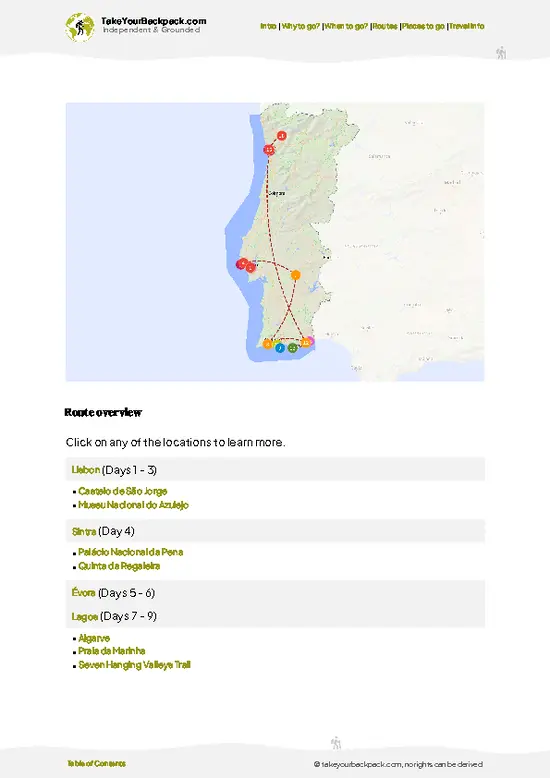
- The vast Cistercian nave — One of the most impressive Gothic spaces in Portugal: insanely tall pointed arches, spare Cistercian austerity and a sense of scale that makes you feel very small (in a good way). The light and the long, uninterrupted volume are the real showstoppers.
- The tombs of King Pedro I and Inês de Castro — The tragic love story everyone talks about is made tangible here by two exquisitely carved 14th-century tombs. The detail on the effigies and the romantic backstory combine art and drama in a way you won’t forget.
- The cloisters and inner courtyards — Quiet arcades, rhythmic stone columns and small planted courtyards where monks once paced and prayed. It’s a perfect spot to sit, cool off and soak up medieval garden geometry away from the crowds.
- The medieval kitchen
- The vast Cistercian nave — One of the most impressive Gothic spaces in Portugal: insanely tall pointed arches, spare Cistercian austerity and a sense of scale that makes you feel very small (in a good way). The light and the long, uninterrupted volume are the real showstoppers.
- The tombs of King Pedro I and Inês de Castro — The tragic love story everyone talks about is made tangible here by two exquisitely carved 14th-century tombs. The detail on the effigies and the romantic backstory combine art and drama in a way you won’t forget.
- The cloisters and inner courtyards — Quiet arcades, rhythmic stone columns and small planted courtyards where monks once paced and prayed. It’s a perfect spot to sit, cool off and soak up medieval garden geometry away from the crowds.
- The medieval kitchen and huge chimneys — Big, functional, oddly photogenic: massive hearths, ovens and iron hooks that show how the monastery fed hundreds. It’s one of those “how did they cook for everyone?” moments that makes history feel domestic and real.
- The chapter house and monastic rooms — Intimate, vaulted spaces where the community held meetings and read the rule. Look for original stonework and carved capitals — it’s quieter and gives a sense of daily monastic life behind the big church.
- Royal burials and funerary sculpture — Beyond Pedro and Inês there are several important royal tombs and funerary artworks that chronicle Portugal’s medieval elite. The sculpted details are excellent examples of Gothic funerary art in the Iberian context.
- Historical weight and UNESCO status — This isn’t just pretty stone; Alcobaça was a power center for the Cistercian order and the early Portuguese kingdom. Being a UNESCO site explains why it’s so well preserved and why every carved capital and aisle matters for European history.
Spotted a mistake or missing something? Contact us.

1 Day | Private SUV Expedition | Nature Park | Local Guide

Half Day Tour | SUV 4x4 | Local Guide | Nature | Porto de Mós

Alcobaça and Batalha Monasteries: Private Tour

Lisboa, Cascais and Sintra - Private guided tour

Transfers from/to Lisbon Airport to: Fátima / Nazaré / Alcobaça..

Ourém, Tomar and Almourol Castle Full Day Private Tour from the West

Coimbra and Aveiro Full Day Private Tour from the West

Lisbon Full Day Private Tour from the West

Óbidos, Peniche and Buddha Eden Full Day Private Tour from the West


 Best Backpacking
.jpg) Hi, I’m Johan (Netherlands 🇳🇱), the creator of TakeYourBackpack. Over the past 3 decades, I’ve backpacked through 90+ countries across six continents, gaining extensive experience with independent travel, long-term trips, and overland routes.
Hi, I’m Johan (Netherlands 🇳🇱), the creator of TakeYourBackpack. Over the past 3 decades, I’ve backpacked through 90+ countries across six continents, gaining extensive experience with independent travel, long-term trips, and overland routes.