×

Portugal🇵🇹 | best landmarksExplore the 6 Best landmarks in Portugal

Portugal’s landmarks are compact, varied and mostly affordable, which suits anyone traveling independently. In the north, granite churches and walled hill towns sit in cool, damp air that smells of woodsmoke and wet stone. Lisbon and Sintra pack limestone monasteries and palaces into tight hills, with long ticket queues and tram-clogged lanes in summer. The Alentejo is quieter: whitewashed towns, cork oaks and Roman and megalithic sites under hard, dry light, though buses are sparse. The Algarve coast brings sea cliffs and fortresses, busy and pricier in July and August. Entry usually runs €3 to 15, and trains cover the main corridors.

By Johan Kruseman 🇳🇱 | Updated October 18, 2026
Explore the best national parks in Portugal

Why go?Why These unique site Stand Out

Portugal sits at the western edge of Europe, and that position shaped almost everything people built here. Phoenicians, Romans, Moors and medieval Christian kings all left layers on a country barely 560 kilometers long, so Roman ruins, Islamic-era street plans, Gothic monasteries and Manueline carving turn up within a few hours of each other. The 15th and 16th century voyages poured spice and gold money into stone, which is why so much ornament is tied to the sea: ropes, anchors and armillary spheres carved into limestone that turns honey-colored at dusk. The 1755 Lisbon earthquake erased much of the capital, so the north and interior hold older fabric than the south.

The practical side is easy. Distances are short, trains and long-distance buses link the major cities, and prices stay below … read more 👉
Portugal sits at the western edge of Europe, and that position shaped almost everything people built here. Phoenicians, Romans, Moors and medieval Christian kings all left layers on a country barely 560 kilometers long, so Roman ruins, Islamic-era street plans, Gothic monasteries and Manueline carving turn up within a few hours of each other. The 15th and 16th century voyages poured spice and gold money into stone, which is why so much ornament is tied to the sea: ropes, anchors and armillary spheres carved into limestone that turns honey-colored at dusk. The 1755 Lisbon earthquake erased much of the capital, so the north and interior hold older fabric than the south.

The practical side is easy. Distances are short, trains and long-distance buses link the major cities, and prices stay below Spain, France or Italy. Know before you choose: the best-known sites draw heavy summer crowds and timed tickets, many monuments close on Mondays or at lunchtime, and hilly cobbles (calçada) turn slick and punishing in the rain. Rural sites often need a car or a patient bus timetable. Expect sun glare off pale stone, warm tiled interiors and the steady sound of church bells and seagulls.
Our Approach to Ranking
The list of best unique sites in Portugal is created based on history or culture, wow factor, atmosphere, quirks, and memorability. If you feel a unique site is missing in this list, please let us know.

When to go?Seasonal Guide to Visiting

Best months for landmarks: April to June and September to October are the best months, with daytime highs of 18 to 27°C, long clear light and far thinner crowds than July and August. Spring brings green hills and the occasional shower, with Porto and the north the wettest. Autumn keeps the sea warm and the stone pleasantly dry.
Peak summer and the shoulders: July and August push the Alentejo and Algarve interior past 35 to 40°C, and exposed hilltop sites turn into anvils by noon. Lisbon and Sintra run 28 to 32°C, with queues and accommodation that cost 30 to 60 percent more than in May or October. Go early, before 10:00, or after 17:00, when the light turns gold.
Winter: November to March is cheap and quiet, with Lisbon around 8 to 15°C. Rain is frequent, 80 to 120 mm a month in Porto and Lisbon … read more 👉
Best months for landmarks: April to June and September to October are the best months, with daytime highs of 18 to 27°C, long clear light and far thinner crowds than July and August. Spring brings green hills and the occasional shower, with Porto and the north the wettest. Autumn keeps the sea warm and the stone pleasantly dry.
Peak summer and the shoulders: July and August push the Alentejo and Algarve interior past 35 to 40°C, and exposed hilltop sites turn into anvils by noon. Lisbon and Sintra run 28 to 32°C, with queues and accommodation that cost 30 to 60 percent more than in May or October. Go early, before 10:00, or after 17:00, when the light turns gold.
Winter: November to March is cheap and quiet, with Lisbon around 8 to 15°C. Rain is frequent, 80 to 120 mm a month in Porto and Lisbon from November to January, and Atlantic wind can make cliff-top sites raw. Some smaller monuments cut hours or close for the season, and many close Mondays year-round, so check each opening schedule. Easter and the June saint festivals in Lisbon and Porto fill beds and raise prices for a few days.

unique site hoppingTips for Visiting Multiple Destinations

Time and direction: A trip linking several landmarks in Portugal needs 7 to 14 days, and 10 days is comfortable. Run it north to south or the reverse, starting and ending at an airport: Porto in the north and Lisbon in the middle are both good. The Porto, Douro and Minho cluster pairs well with Coimbra and the center, then Lisbon, Sintra and Setúbal, then the Alentejo and finally the Algarve.
Pacing and transfers: Allow 2 to 4 hours for a single monument, a full day for large complexes or palace hills, and half a day for a walled town. Porto to Coimbra by train takes about 1.5 hours, Coimbra to Lisbon around 2 hours, and Porto to Lisbon 3 to 3.5 hours on the Alfa Pendular. Lisbon to Évora by bus is around 1.5 hours. Lisbon to Lagos by bus or train and bus runs about 4 to 5 hours.
Common mistakes: … read more 👉
Time and direction: A trip linking several landmarks in Portugal needs 7 to 14 days, and 10 days is comfortable. Run it north to south or the reverse, starting and ending at an airport: Porto in the north and Lisbon in the middle are both good. The Porto, Douro and Minho cluster pairs well with Coimbra and the center, then Lisbon, Sintra and Setúbal, then the Alentejo and finally the Algarve.
Pacing and transfers: Allow 2 to 4 hours for a single monument, a full day for large complexes or palace hills, and half a day for a walled town. Porto to Coimbra by train takes about 1.5 hours, Coimbra to Lisbon around 2 hours, and Porto to Lisbon 3 to 3.5 hours on the Alfa Pendular. Lisbon to Évora by bus is around 1.5 hours. Lisbon to Lagos by bus or train and bus runs about 4 to 5 hours.
Common mistakes: Travelers cram too many towns in, spending the trip on platforms. Pick 3 or 4 bases and do day trips. Another error is arriving on a Monday, when many sites are shut, so plan transfers for that day. Rural sites without trains waste days on slow buses, so rent a car for the Alentejo for 1 to 2 days only. Book popular timed tickets ahead for summer, and carry water for sun-baked stone.

The ListTop landmarks of Portugal

1 Convent of Christ

Templar castle, Manueline windows, spiral staircases

Wander through fortress walls and ornate cloisters, discovering the layered history of knights, monks, and secretive architectural details.

portugal-unique-site-convent-of-christ
© Google | Sérgio Relvas

2 Batalha Monastery

Gothic arches, stained glass, royal tombs

Trace the legacy of Portugal’s independence through intricate stonework, light-filled chapels, and the silent presence of medieval royalty.

portugal-unique-site-batalha-monastery
© Google | Cristian

3 Monastery of Alcobaça

Cistercian nave, lovers’ tombs, medieval kitchen

Absorb the quiet symmetry of soaring stone, then find the poignant resting place of Portugal’s most storied royal couple.

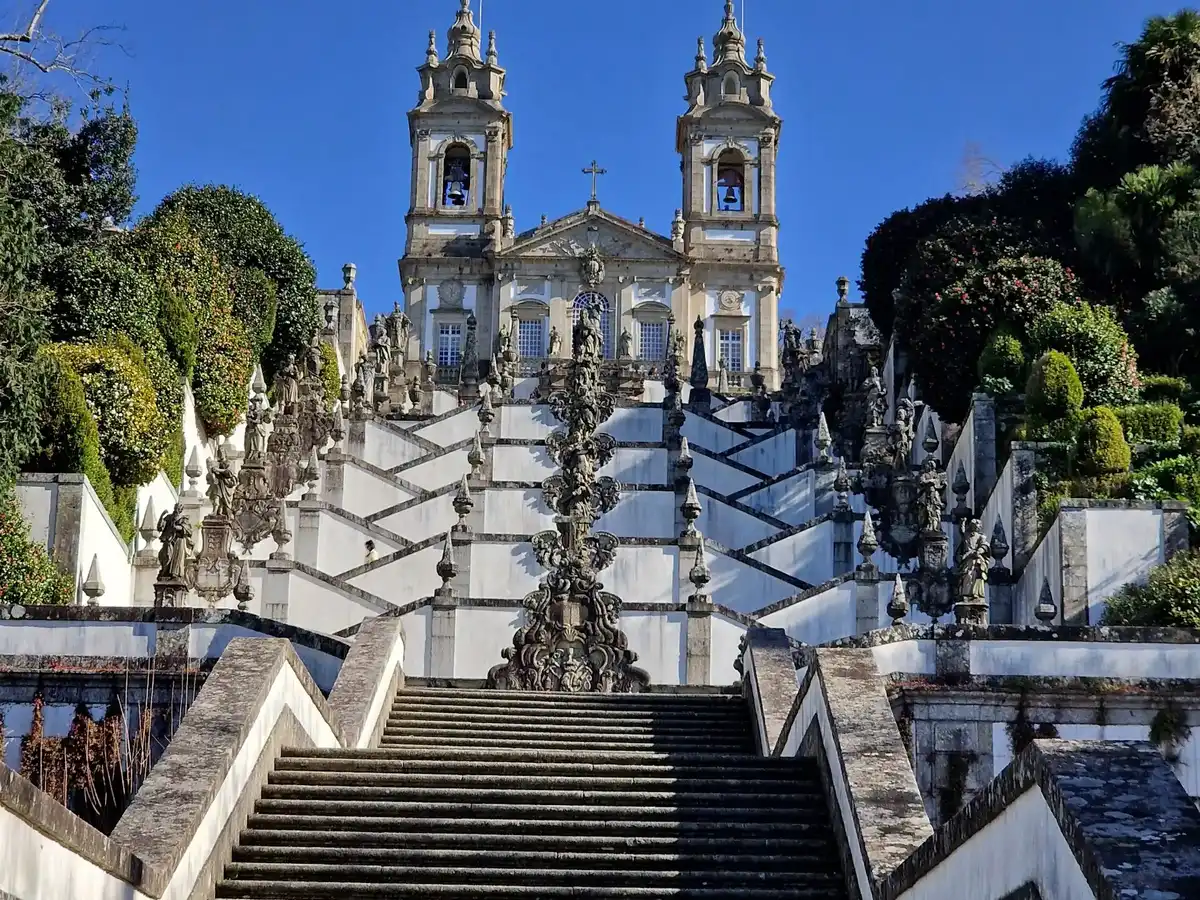
4 Bom Jesus do Monte

Baroque stairway, panoramic terrace, pilgrimage site

Climb the zigzagging steps through gardens and chapels, rewarded at the summit with sweeping views and a sense of ritual ascent.

portugal-unique-site-bom-jesus-do-monte
© Google | Dan Nastase

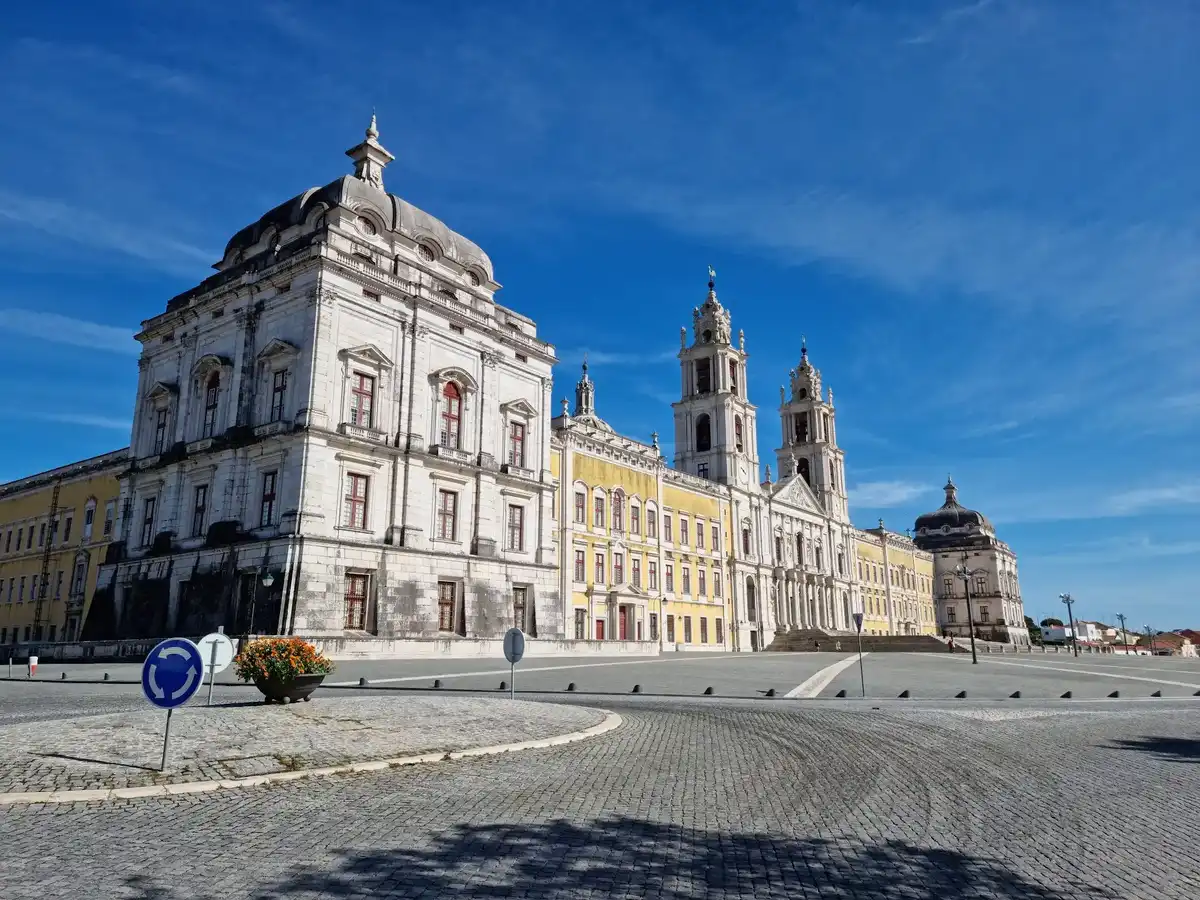
5 Mafra National Palace

Baroque library, twin bell towers, royal apartments

Move between echoing marble halls and a vast library, experiencing the scale and ambition of a palace built for power and display.

portugal-unique-site-mafra-national-palace
© Google | Rui Passos

6 Conímbriga

Roman mosaics, excavated villas, ancient baths

Step among exposed ruins where patterned floors and crumbling walls reveal daily Roman life and the city’s slow return to earth.

Loading the map 🌍

Expert viewPro Tips for Exploring the Best

How many landmarks to see: Aim for one or two landmarks a day, 12 to 18 over a two-week trip. Portuguese monuments are dense in detail: carved cloisters, tile panels, chapels that smell of beeswax and cool stone. Past two a day, everything blurs into one more church. Pace also keeps your legs alive, as the cobbles and hills of Lisbon, Porto and Sintra are brutal in sandals.
Choosing by travel style: History lovers should favor the monasteries, Roman sites and old university and library buildings, which hold the most depth. Budget travelers do better with free viewpoints, churches, castle walls and old town streets, which give a lot for nothing. Those who like the outdoors should prioritize coastal forts, lighthouses and hilltop castles, where the weather and walk are part of the point. Mix … read more 👉
How many landmarks to see: Aim for one or two landmarks a day, 12 to 18 over a two-week trip. Portuguese monuments are dense in detail: carved cloisters, tile panels, chapels that smell of beeswax and cool stone. Past two a day, everything blurs into one more church. Pace also keeps your legs alive, as the cobbles and hills of Lisbon, Porto and Sintra are brutal in sandals.
Choosing by travel style: History lovers should favor the monasteries, Roman sites and old university and library buildings, which hold the most depth. Budget travelers do better with free viewpoints, churches, castle walls and old town streets, which give a lot for nothing. Those who like the outdoors should prioritize coastal forts, lighthouses and hilltop castles, where the weather and walk are part of the point. Mix one paid headline site with two free ones per day, and the trip feels richer and cheaper.
What it costs: Plan on US$45 to 80 (€40 to 75) a day with hostel dorms at €18 to 40, meals of €8 to 15 and local transport. Entry to major monuments typically costs €6 to 18, and smaller churches, museums and castles €2 to 8. Some are free on Sunday mornings or for under-12s, and many have a combined ticket worth buying if you plan several in one city. Audio guides cost €3 to 6, and guided walks €15 to 30, with tip-based free tours common in Lisbon and Porto. Trams and funiculars cost €3 to 4 per ride, so a day pass is cheaper. Trains between cities run €10 to 30, and regional links are cheaper.
Crowds, safety and manners: Summer lines at the most famous sites can mean 1 to 2 hours unless you book timed entry online, and arriving at opening saves most of that. Pickpockets work crowded trams, viewpoints and queues, particularly in Lisbon, so carry a zipped bag in front. The cobbles become slick after rain, and viewpoints and cliff edges often lack rails, so keep clear of edges in wind. Sun is intense, and shade is rare on hilltop sites, so bring a hat and 1 liter of water.
Many churches are active places of worship. Cover shoulders and knees, speak quietly and skip photos during Mass. Lunch from 12:30 to 14:30 is sacred, and some sites close then. Carry some cash, as a few small chapels and village sites only take coins, and bring a little Portuguese: a simple “bom dia” and “obrigado” goes a long way.
The reward for putting up with the queues is the detail: salt-stained stone, blue and white azulejo tiles cool under your fingers, and the sound of sea wind through a fortress gate.

✈️ The backpacker research shortcutPortugal Travel Guide

An offline-friendly backpacking guide with optimized travel routes, ranked highlights, transport advice, and the best areas to stay.
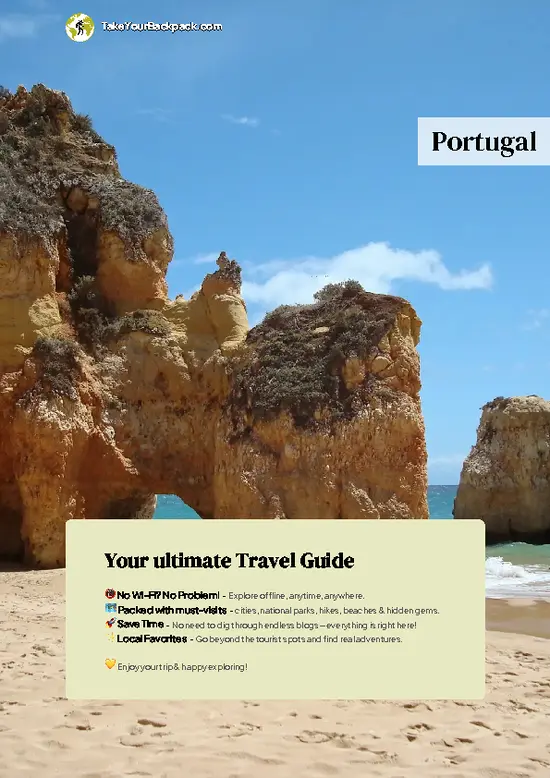
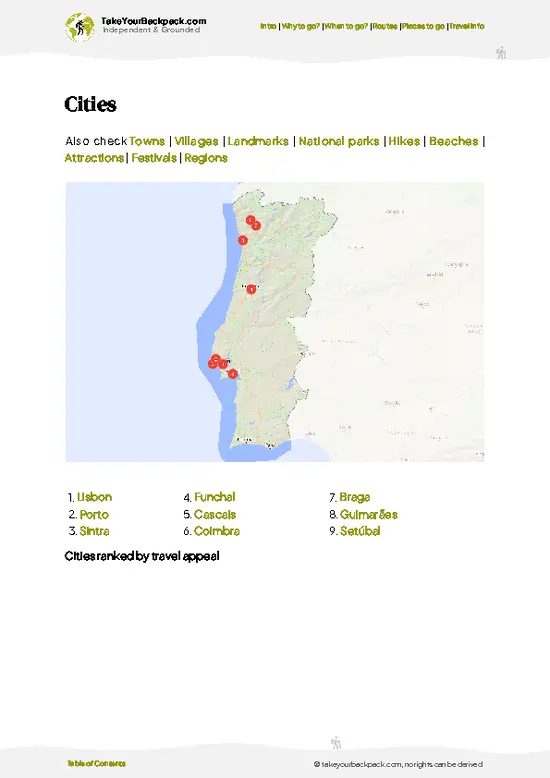
example page 0 from our offline Travel Guide for Portugal
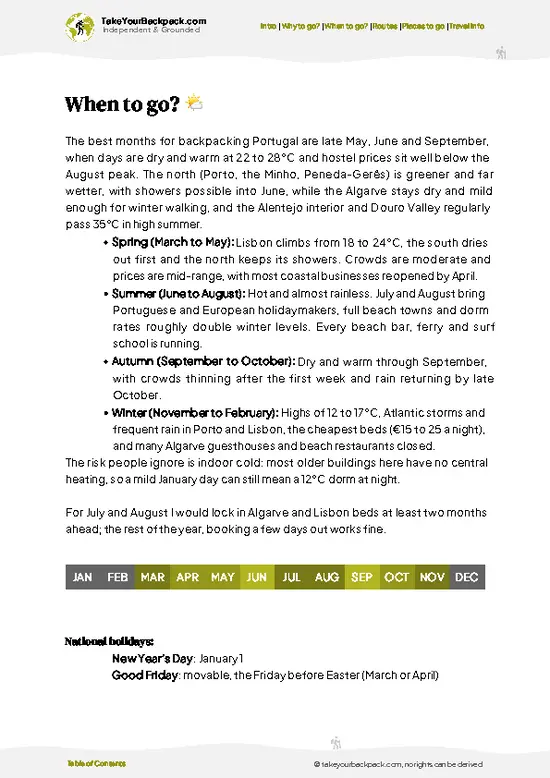
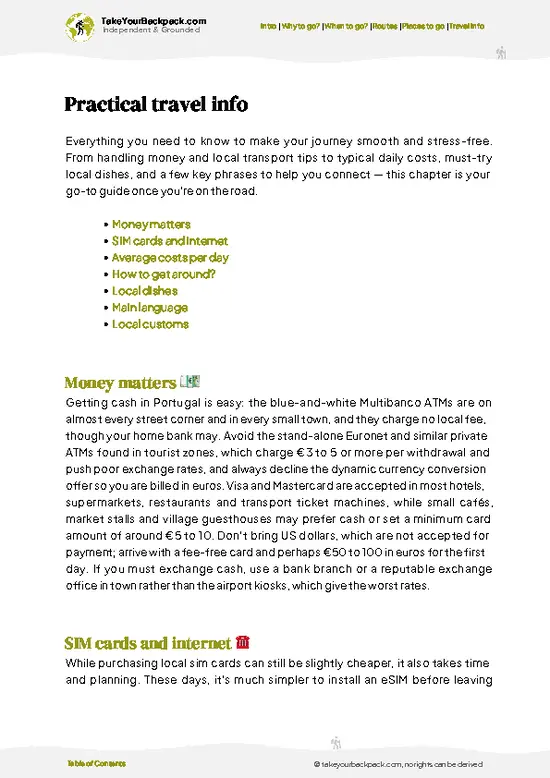
example page 1 from our offline Travel Guide for Portugal
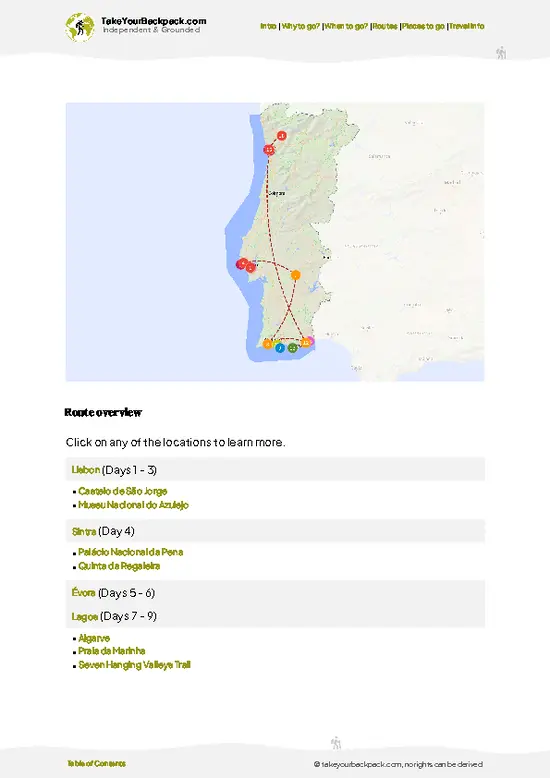
example page 2 from our offline Travel Guide for Portugal
example page 3 from our offline Travel Guide for Portugal
example page 4 from our offline Travel Guide for Portugal
example page 5 from our offline Travel Guide for Portugal
example page 6 from our offline Travel Guide for Portugal
example page 7 from our offline Travel Guide for Portugal
The digital guide (361 pages) contains:
✅ 87 highlights, ranked by travel appeal
✅ Optimized 5, 10 & 15-day travel routes
✅ Cities, national parks, landmarks, beaches
✅ How to get around
✅ Offline-friendly for travel without Wi-Fi
👉 Click to see all 30+ guide features

📅 Plan smarter in minutes, not weeks
✅ Month by month travel advice
✅ Festivals & national holidays
✅ Budget expectations

🗺️ Go to the right places, skip the overrated ones
✅ Honest pros & cons of destinations
✅ Top hikes, parks & viewpoints
✅ Lesser-known places most travelers miss
✅ Clear “worth it vs skip it” guidance

🛏️ Travel smoothly without rookie mistakes
✅ Best areas to stay
✅ Transport systems explained simply
✅ Common scams & safety advice
✅ SIM cards, money & practical tips

🌍 Understand the country, not just visit it
✅ Culture & traditions
✅ 52 Essential phrases & customs
✅ Festivals worth planning around
✅ Traveler-friendly historical context
✅ Insights that make places more meaningful

📱 Built for real travel conditions
✅ Fully downloadable PDF
✅ Works completely offline
✅ Optimized for phone use
✅ Useful in remote areas & buses
✅ Everything in one place
Stop searching, start planning
Get instant access to your full guide. 30‑day money-back guarantee.
+ Add another guide for just

By proceeding you agree to our terms.
Sent to your inbox immediately after payment • 100% Secure Checkout
Best Backpacking Travel Advisor 2025 tourism awardBest Backpacking
Travel Advisor
2025
What others say about Take Your Backpack Guides:
⭐⭐⭐⭐⭐
Fantastic, amazing amount of information!
⭐⭐⭐⭐⭐
My goodness this is amazing, it's what I've been looking for hats off too you!
⭐⭐⭐⭐⭐
I think this is absolutely BRILLIANT
⭐⭐⭐⭐
Very complete and informative. It's still missing places, but I gotta to commend you
⭐⭐⭐⭐⭐
This is truly amazing, thank you, can't wait to explore it with my kids!
⭐⭐⭐⭐⭐
Awesome resource, thank you!
⭐⭐⭐⭐⭐
This is amazing! Can't wait to explore the ones I haven't seen
⭐⭐⭐⭐
I love this! Well done, great idea.
⭐⭐⭐⭐⭐
Thanks for taking the time to make this gem!
⭐⭐⭐⭐⭐
This might be the best website I've ever seen.
⭐⭐⭐⭐⭐
Congratulations, and thank you so much for your work; it's incredibly valuable.
⭐⭐⭐⭐
In all seriousness I think you did a great job pointing out the important spots
⭐⭐⭐⭐⭐
10/10 very good
⭐⭐⭐⭐⭐
As someone who's only just starting to visit regularly this is awesome, thank you.
⭐⭐⭐⭐
Thank you very much! I'm going to visit my dad, it's going to be very useful!
⭐⭐⭐⭐⭐
This is really cool! We'll be travelling for the first time and this definitely come in handy.
⭐⭐⭐⭐⭐
You are now our minister of culture, congratulations 👨‍💼
⭐⭐⭐⭐⭐
Just wanted to tell you that this is a pearl! Going to follow your recommendations.
⭐⭐⭐⭐⭐
This is so cool. I'll definitely be using the resource for my travels soon.
⭐⭐⭐⭐⭐
This is very impressive! Good work.
⭐⭐⭐⭐⭐
This is an amazing and informative site. Very well done!

🛏️ Where to stay?Where to Stay in Portugal

Portugal has one of Europe’s densest and best-rated hostel scenes, with dorm beds from roughly €18 to €35 in summer and plenty of budget guesthouses outside the big cities. In Lisbon, Baixa and Chiado put you on flat ground near the metro and most sights, Bairro Alto and Cais do Sodré are the nightlife picks but stay loud until 3am, and Alfama is hilly and quieter, with fado bars instead of clubs. In Porto, Ribeira is right on the river but steep and touristy, while Baixa around the university area has more beds, cheaper food and an easy walk to the bars, and on the Algarve Lagos old town is the party hub, so pick a spot a few streets back if you want sleep.

If you enjoy meeting fellow travelers, … read more 👉
Portugal has one of Europe’s densest and best-rated hostel scenes, with dorm beds from roughly €18 to €35 in summer and plenty of budget guesthouses outside the big cities. In Lisbon, Baixa and Chiado put you on flat ground near the metro and most sights, Bairro Alto and Cais do Sodré are the nightlife picks but stay loud until 3am, and Alfama is hilly and quieter, with fado bars instead of clubs. In Porto, Ribeira is right on the river but steep and touristy, while Baixa around the university area has more beds, cheaper food and an easy walk to the bars, and on the Algarve Lagos old town is the party hub, so pick a spot a few streets back if you want sleep.

If you enjoy meeting fellow travelers, consider choosing hostels with high ratings for atmosphere. On the other hand, if you prefer having your own space, a hotel might be a better option.

PortugalMore of Portugal

👋 Meet the founderWho’s Behind Take Your Backpack?

Johan, backpacker and founder of TakeYourBackpackHi, I’m Johan (Netherlands 🇳🇱), the creator of TakeYourBackpack. Over the past 3 decades, I’ve backpacked through 90+ countries across six continents, gaining extensive experience with independent travel, long-term trips, and overland routes.

This site is built on a combination of firsthand travel experience and carefully curated insights from other backpackers. Many guides are based on places I’ve personally visited, while others bring together tips, observations, and practical advice shared by trusted travelers I’ve met along the way.

The goal is to provide realistic, experience-driven guidance — not generic itineraries — so you can explore destinations with better context, clearer expectations, and more confidence.