


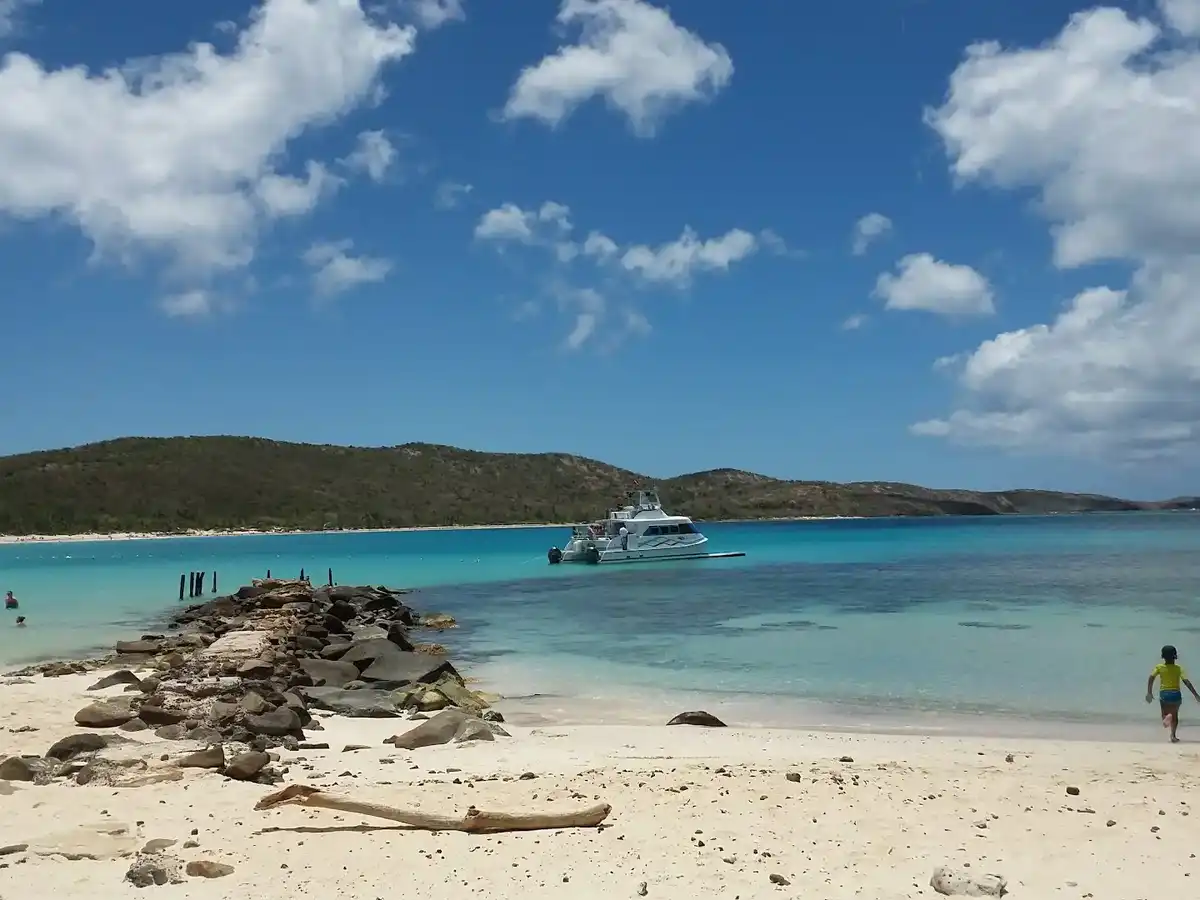
- Playa Flamenco: The beach everyone searches for, a mile-long horseshoe of pale sand and calm, shallow turquoise water. Two rusting military tanks sit on the sand and are covered in graffiti. Camping is allowed here, and day visitors pay a gate fee of about US$2, with parking about US$5 in a lot that fills by mid-morning.
- Playa Tamarindo: Sea turtles graze on the seagrass just offshore, so you can snorkel beside green turtles in waist-deep water. Go early, keep your distance and skip the sunscreen that sheds into the water.
- Playa Carlos Rosario: A short, rocky trail through scrub from the road to Flamenco leads to a reef a few strokes from the sand. The coral and fish life make it one of the best snorkeling spots on the island, and the beach stays quiet.
- Dewey (Pueblo de Culebra): The island’s
- Playa Flamenco: The beach everyone searches for, a mile-long horseshoe of pale sand and calm, shallow turquoise water. Two rusting military tanks sit on the sand and are covered in graffiti. Camping is allowed here, and day visitors pay a gate fee of about US$2, with parking about US$5 in a lot that fills by mid-morning.
- Playa Tamarindo: Sea turtles graze on the seagrass just offshore, so you can snorkel beside green turtles in waist-deep water. Go early, keep your distance and skip the sunscreen that sheds into the water.
- Playa Carlos Rosario: A short, rocky trail through scrub from the road to Flamenco leads to a reef a few strokes from the sand. The coral and fish life make it one of the best snorkeling spots on the island, and the beach stays quiet.
- Dewey (Pueblo de Culebra): The island’s only town, set along a canal with a drawbridge, a few open-air bars and small guesthouses. Order fish at a waterfront kitchen and watch the ferry crowd thin out by late afternoon.
- Culebra National Wildlife Refuge: About a quarter of the island’s land and more than 20 of its cays are protected seabird and turtle habitat. Trails lead to quiet coves, and the dry forest between them has far more birdsong than you would expect.
- Playa Zoni: A long, wild beach on the eastern tip, with windblown sand, strong surf and views across to Culebrita and St. Thomas. A local-favorite spot for sunrise, and you may share it with only a few people.
- Culebrita Island: A small uninhabited island reached by water taxi or boat charter. It has a ruined 1886 lighthouse on the hilltop, a sweeping beach and tide pools on the north side called the Jacuzzis.
- Playa Resaca: A hiking trail of about 1.5 miles leads through dry forest to a secluded beach and, further along, a cliff-top lookout over the Atlantic. Giant leatherback turtles nest in season, and few visitors ever walk this far.
- Culebra Tank Sites and Playa Brava: Brava is a quiet beach on the north coast where leatherbacks nest, reached on a rough track and a short walk. Locals love it for its emptiness, and it is a fine place to sit with a sandwich and listen to the waves.
Spotted a mistake or missing something? Contact us.

 Best Backpacking
 Hi, I’m Johan (Netherlands 🇳🇱), the creator of TakeYourBackpack. Over the past 3 decades, I’ve backpacked through 90+ countries across six continents, gaining extensive experience with independent travel, long-term trips, and overland routes.