

×

Puerto Rico🇵🇷 | townsFajardoGlowing lagoon, island boat trips, marina, mangrove kayaking | things to do and best time to go

Explore AguadillaExplore Isabela

Backpacking in Fajardo
🌟 Highlighttown ranked #4
By Johan Kruseman 🇳🇱 | Updated October 22, 2026

Fajardo was once a sugar and fishing port that most visitors only saw through a bus window on the way to somewhere prettier. Today it is the staging ground for the best water days on the island. The city sits on the northeastern coast of Puerto Rico, and its real value is what you can reach from the marinas and the nearby Ceiba ferry terminal. The town itself is workaday, so skip the downtown shopping streets and give your time to the boats, the bay and the water. Hostels are scarce and nights are quiet, so you will mostly meet other travelers on tours or the ferry. Book bioluminescent kayaking for a moonless night and be at the dock early for morning boats. Compared with Luquillo, which is a beach strip with kiosks, Fajardo is a launch pad rather than a place to lie around.

Discover everything you want to know in the 📖 Puerto Rico Travel Guide.


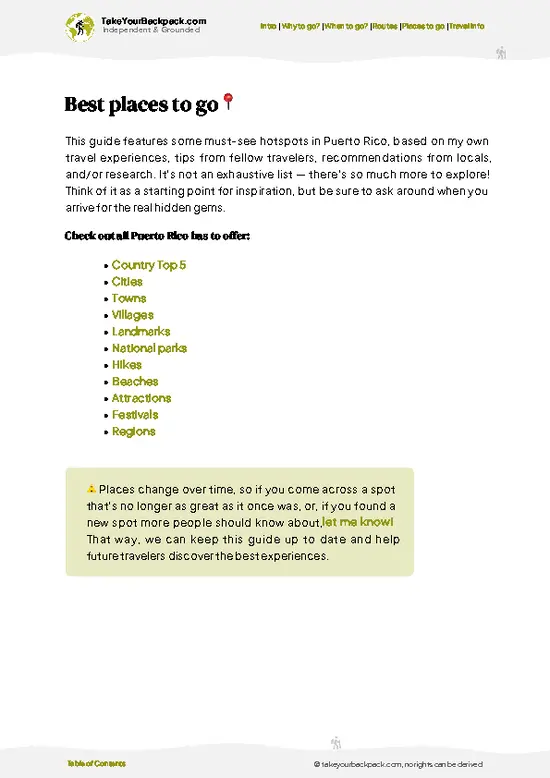
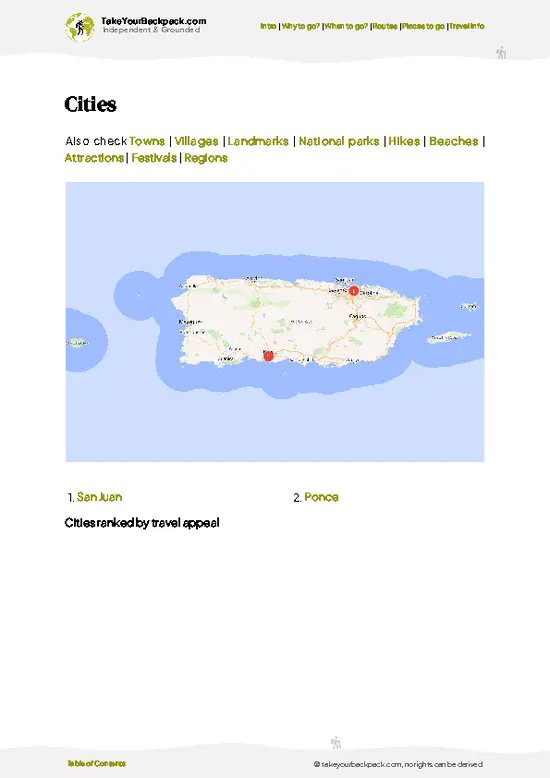
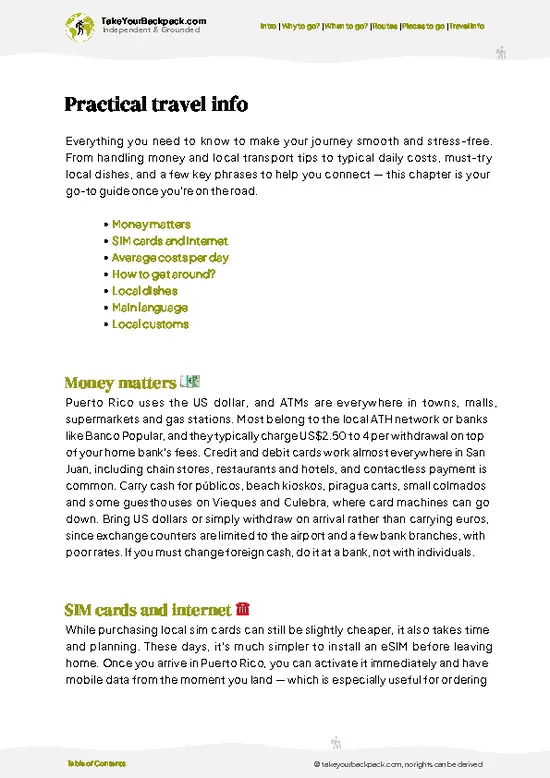
example page 0 from our offline Travel Guide for Puerto Rico
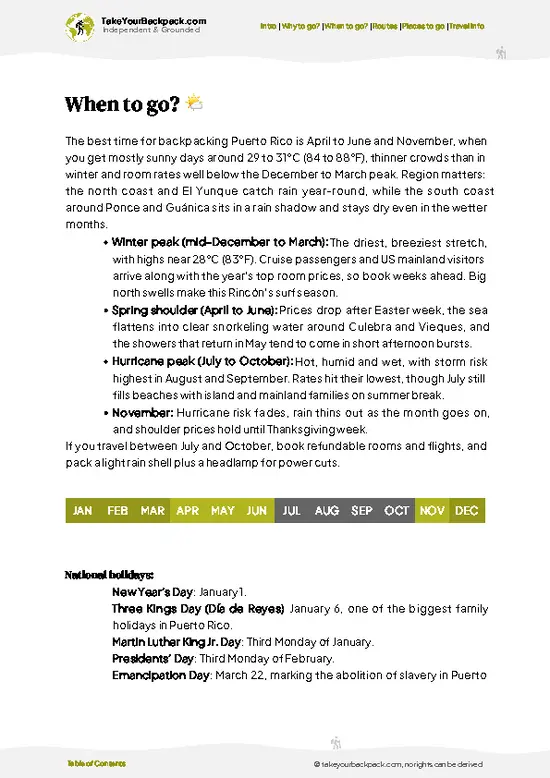
example page 1 from our offline Travel Guide for Puerto Rico
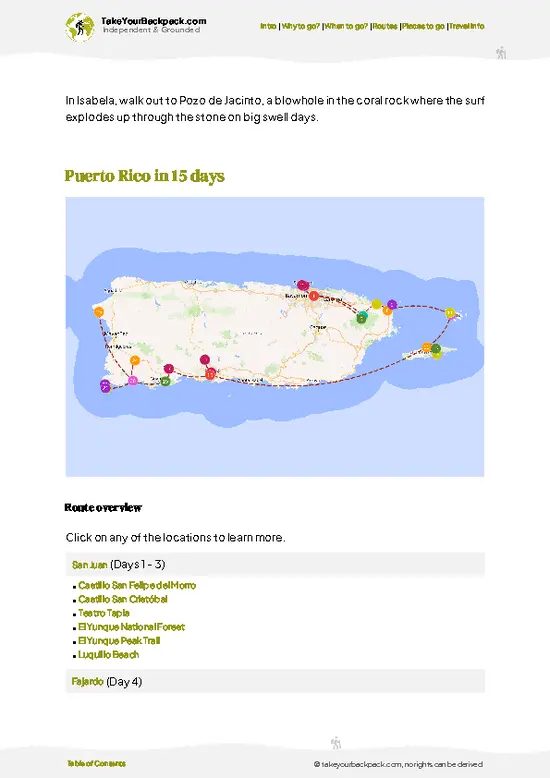
example page 2 from our offline Travel Guide for Puerto Rico
example page 3 from our offline Travel Guide for Puerto Rico
example page 4 from our offline Travel Guide for Puerto Rico
example page 5 from our offline Travel Guide for Puerto Rico
example page 6 from our offline Travel Guide for Puerto Rico
example page 7 from our offline Travel Guide for Puerto Rico
Loading the map 🌍
CLICK TO FILTER
cities
towns
villages
landmarks
national parks
hikes
beaches
attractions
festivals
regions
SHOW COUNTRY’S BESTSHOW ALL

✨ Why go?
Ranked #4 town in Puerto Rico
What makes it a must-see town

Fajardo earns a spot on your route because it puts Laguna Grande and the Ceiba ferry to Culebra and Vieques within a short ride of each other. Most backpackers stay one or two nights, long enough to paddle the glowing lagoon after dark and catch an early boat to the islands. Hiking is on offer too, with forest trails in the nearby Cabezas de San Juan reserve. The town is not a party place. Evenings revolve around seafood plates by the waterfront in Puerto Real and an early bedtime before a morning departure. That suits solo travelers who want a calm base and small groups splitting a rental car or a catamaran day. It also suits anyone who likes to plan around tides, weather and ferry schedules. If you need hostel social life, nightlife or a pretty old center, you will be happier in San Juan … read more 👉
Fajardo earns a spot on your route because it puts Laguna Grande and the Ceiba ferry to Culebra and Vieques within a short ride of each other. Most backpackers stay one or two nights, long enough to paddle the glowing lagoon after dark and catch an early boat to the islands. Hiking is on offer too, with forest trails in the nearby Cabezas de San Juan reserve. The town is not a party place. Evenings revolve around seafood plates by the waterfront in Puerto Real and an early bedtime before a morning departure. That suits solo travelers who want a calm base and small groups splitting a rental car or a catamaran day. It also suits anyone who likes to plan around tides, weather and ferry schedules. If you need hostel social life, nightlife or a pretty old center, you will be happier in San Juan and should treat Fajardo as a quick, purposeful stop.

💡 HighlightsMust-see experiences and standout moments

  1. Laguna Grande Bioluminescent Bay: Kayak through a mangrove channel into a lagoon where microorganisms glow blue when the water is disturbed. Go on a moonless night. Tours cost about US$50 to 70 and last roughly 2 hours.
  2. Cabezas de San Juan Nature Reserve: A boardwalk and trails lead through mangrove, dry forest and lagoon to the Las Cabezas de San Juan lighthouse, El Faro, dating from the 1880s. Visits are guided by reservation, cost about US$10 to 15 and take 2 to 3 hours. Mornings are cooler.
  3. Playa Seven Seas: A sheltered beach with calm, shallow water, shade trees and picnic tables. Weekdays are quiet and weekends are crowded with local families. Entry is free and parking costs a few dollars. Plan 2 to 3 hours.
  4. Fajardo Marina and Puerto Real waterfront: Watch fishing boats and tour boats come
… read more 👉
  1. Laguna Grande Bioluminescent Bay: Kayak through a mangrove channel into a lagoon where microorganisms glow blue when the water is disturbed. Go on a moonless night. Tours cost about US$50 to 70 and last roughly 2 hours.
  2. Cabezas de San Juan Nature Reserve: A boardwalk and trails lead through mangrove, dry forest and lagoon to the Las Cabezas de San Juan lighthouse, El Faro, dating from the 1880s. Visits are guided by reservation, cost about US$10 to 15 and take 2 to 3 hours. Mornings are cooler.
  3. Playa Seven Seas: A sheltered beach with calm, shallow water, shade trees and picnic tables. Weekdays are quiet and weekends are crowded with local families. Entry is free and parking costs a few dollars. Plan 2 to 3 hours.
  4. Fajardo Marina and Puerto Real waterfront: Watch fishing boats and tour boats come in, then eat fried fish or lobster at the casual seafood spots. Late afternoon is best. Expect a 1 hour stroll plus a meal.
  5. Ferry to Culebra and Vieques: The island ferries leave from the Ceiba terminal, a short drive south of Fajardo. Tickets cost about US$2 each way. Arrive early, as lines build fast.
Day trips from Fajardo are easy to Culebra’s Flamenco Beach, Vieques’ Mosquito Bay and El Yunque rainforest. Together, the five stops fill about 1.5 days at a relaxed pace.
Spotted a mistake or missing something? Contact us.

Things to do around Fajardo

Ratings based on Tripadvisor reviews. When you book through this link, you support our work at no extra cost to you.

🏘️ NeighborhoodsKey areas and districts to know

Fajardo splits into a few pockets that behave very differently, so spend your time where the action is and skip the rest.
  • Puerto Real: The old fishing quarter on the water and the one spot I’d make time for. Seafood shacks and the boat docks sit here, so come at lunch for fried fish and cold Medalla beer, then watch the boats leave. Walkable end to end in 15 minutes.
  • Pueblo (Plaza de Recreo): The town center around the Immaculate Conception church and the plaza. Pleasant for a coffee and a pastry in the morning, quiet by evening. Worth 45 minutes, not half a day.
  • Malecón de Fajardo: A waterfront strip with a few restaurants and bars. Go for sunset and a drink on a Friday or Saturday night, when it has the only real nightlife in town. Walkable from Puerto Real.
  • Las Croabas: A small fishing village
… read more 👉
Fajardo splits into a few pockets that behave very differently, so spend your time where the action is and skip the rest.
  • Puerto Real: The old fishing quarter on the water and the one spot I’d make time for. Seafood shacks and the boat docks sit here, so come at lunch for fried fish and cold Medalla beer, then watch the boats leave. Walkable end to end in 15 minutes.
  • Pueblo (Plaza de Recreo): The town center around the Immaculate Conception church and the plaza. Pleasant for a coffee and a pastry in the morning, quiet by evening. Worth 45 minutes, not half a day.
  • Malecón de Fajardo: A waterfront strip with a few restaurants and bars. Go for sunset and a drink on a Friday or Saturday night, when it has the only real nightlife in town. Walkable from Puerto Real.
  • Las Croabas: A small fishing village north of town, famous for its row of kiosks serving fresh seafood fritters. Take a car or taxi, arrive before noon, and you can combine it with the nearby nature reserve. Too spread out to walk.
  • Marina and Seven Seas area: Mostly boat docks and resort-style businesses. Nothing to wander, so only come here for a tour departure.

⌛️ 1 dayWhat you can realistically do in a day

A boats-and-water day, built around the lagoon and the shore rather than the town center.
9:00 AM, Cabezas de San Juan Nature Reserve: Take the guided walk through mangrove boardwalks to the lighthouse, where views stretch toward Culebra. Mornings are cooler and birds are active. Bring water and a hat, then head back to the coast.
12:00 PM, Puerto Real: Lunch at a no-frills seafood spot by the dock. Order fried fish or a conch salad and eat facing the boats. This is where locals actually eat, and it is easy to linger.
2:00 PM, Playa Seven Seas: Swim in calm, shallow water and rest in the shade. Weekdays are quiet. Walk to the far end of the beach for fewer people.
4:30 PM, Villa Marina and the boardwalk by the old fishing sheds: A less visited stretch, good for watching fishermen clean the day’s … read more 👉
A boats-and-water day, built around the lagoon and the shore rather than the town center.
9:00 AM, Cabezas de San Juan Nature Reserve: Take the guided walk through mangrove boardwalks to the lighthouse, where views stretch toward Culebra. Mornings are cooler and birds are active. Bring water and a hat, then head back to the coast.
12:00 PM, Puerto Real: Lunch at a no-frills seafood spot by the dock. Order fried fish or a conch salad and eat facing the boats. This is where locals actually eat, and it is easy to linger.
2:00 PM, Playa Seven Seas: Swim in calm, shallow water and rest in the shade. Weekdays are quiet. Walk to the far end of the beach for fewer people.
4:30 PM, Villa Marina and the boardwalk by the old fishing sheds: A less visited stretch, good for watching fishermen clean the day’s catch and for sunset photos over the boats. Take your time here.
7:30 PM, Laguna Grande: Join a kayak tour into the bioluminescent lagoon, ideally on a dark night. Paddle through the mangrove channel, then float and watch the water glow around your blade.

🌤️ When to go?Best time to visit Fajardo

Fajardo is warmest and driest from December to April, with highs of 27 to 30°C (81 to 86°F) and lows around 21 to 23°C (70 to 73°F).
  • Winter and Spring (Dec to Apr): Best for boat trips to the cays and snorkeling. Sea conditions are calmer, but crowds and lodging prices peak, especially around Christmas and Easter week.
  • Summer (May to Aug): Hot and humid, with highs of 31 to 33°C (88 to 91°F). Afternoon showers are common, tours are cheaper and the beaches are quieter. Local holiday weekends fill up fast.
  • Hurricane Season (Aug to Oct): Wettest period with a real risk of storms and canceled boat trips. Prices drop sharply, but keep your plans flexible.
  • Daylight: Roughly 11 hours in December and 13 hours in June, so morning departures matter more in winter.
  • Bioluminescent Bay: Darkest nights, around
… read more 👉
Fajardo is warmest and driest from December to April, with highs of 27 to 30°C (81 to 86°F) and lows around 21 to 23°C (70 to 73°F).
  • Winter and Spring (Dec to Apr): Best for boat trips to the cays and snorkeling. Sea conditions are calmer, but crowds and lodging prices peak, especially around Christmas and Easter week.
  • Summer (May to Aug): Hot and humid, with highs of 31 to 33°C (88 to 91°F). Afternoon showers are common, tours are cheaper and the beaches are quieter. Local holiday weekends fill up fast.
  • Hurricane Season (Aug to Oct): Wettest period with a real risk of storms and canceled boat trips. Prices drop sharply, but keep your plans flexible.
  • Daylight: Roughly 11 hours in December and 13 hours in June, so morning departures matter more in winter.
  • Bioluminescent Bay: Darkest nights, around the new moon, show the glow best.
Book tours for a weekday in early May or late November for good weather and thinner crowds.


source: climatestotravel.comJANJanuary: excellent for travelingFEBFebruary: excellent for travelingMARMarch: excellent for travelingAPRApril: highly recommended for travelingMAYMay: fair for travelingJUNJune: fair for travelingJULJuly: fair for travelingAUGAugust: fair for travelingSEPSeptember: fair for travelingOCTOctober: fair for travelingNOVNovember: highly recommended for travelingDECDecember: highly recommended for traveling
puerto-rico-city-fajardo
© Google |

✈️ The backpacker research shortcutPuerto Rico Travel Guide

An offline-friendly backpacking guide with optimized travel routes, ranked highlights, transport advice, and the best areas to stay.
example page 0 from our offline Travel Guide for Puerto Rico
example page 1 from our offline Travel Guide for Puerto Rico
example page 2 from our offline Travel Guide for Puerto Rico
example page 3 from our offline Travel Guide for Puerto Rico
example page 4 from our offline Travel Guide for Puerto Rico
example page 5 from our offline Travel Guide for Puerto Rico
example page 6 from our offline Travel Guide for Puerto Rico
example page 7 from our offline Travel Guide for Puerto Rico
The digital guide (310 pages) contains:
✅ 81 highlights, ranked by travel appeal
✅ Optimized 5, 10 & 15-day travel routes
✅ Cities, national parks, landmarks, beaches
✅ How to get around
✅ Offline-friendly for travel without Wi-Fi
👉 Click to see all 30+ guide features

📅 Plan smarter in minutes, not weeks
✅ Month by month travel advice
✅ Festivals & national holidays
✅ Budget expectations

🗺️ Go to the right places, skip the overrated ones
✅ Honest pros & cons of destinations
✅ Top hikes, parks & viewpoints
✅ Lesser-known places most travelers miss
✅ Clear “worth it vs skip it” guidance

🛏️ Travel smoothly without rookie mistakes
✅ Best areas to stay
✅ Transport systems explained simply
✅ Common scams & safety advice
✅ SIM cards, money & practical tips

🌍 Understand the country, not just visit it
✅ Culture & traditions
✅ 52 Essential phrases & customs
✅ Festivals worth planning around
✅ Traveler-friendly historical context
✅ Insights that make places more meaningful

📱 Built for real travel conditions
✅ Fully downloadable PDF
✅ Works completely offline
✅ Optimized for phone use
✅ Useful in remote areas & buses
✅ Everything in one place
Stop searching, start planning
Get instant access to your full guide. 30‑day money-back guarantee.
+ Add another guide for just

By proceeding you agree to our terms.
Sent to your inbox immediately after payment • 100% Secure Checkout
Best Backpacking Travel Advisor 2025 tourism awardBest Backpacking
Travel Advisor
2025
What others say about Take Your Backpack Guides:
⭐⭐⭐⭐⭐
Fantastic, amazing amount of information!
⭐⭐⭐⭐⭐
My goodness this is amazing, it's what I've been looking for hats off too you!
⭐⭐⭐⭐⭐
I think this is absolutely BRILLIANT
⭐⭐⭐⭐
Very complete and informative. It's still missing places, but I gotta to commend you
⭐⭐⭐⭐⭐
This is truly amazing, thank you, can't wait to explore it with my kids!
⭐⭐⭐⭐⭐
Awesome resource, thank you!
⭐⭐⭐⭐⭐
This is amazing! Can't wait to explore the ones I haven't seen
⭐⭐⭐⭐
I love this! Well done, great idea.
⭐⭐⭐⭐⭐
Thanks for taking the time to make this gem!
⭐⭐⭐⭐⭐
This might be the best website I've ever seen.
⭐⭐⭐⭐⭐
Congratulations, and thank you so much for your work; it's incredibly valuable.
⭐⭐⭐⭐
In all seriousness I think you did a great job pointing out the important spots
⭐⭐⭐⭐⭐
10/10 very good
⭐⭐⭐⭐⭐
As someone who's only just starting to visit regularly this is awesome, thank you.
⭐⭐⭐⭐
Thank you very much! I'm going to visit my dad, it's going to be very useful!
⭐⭐⭐⭐⭐
This is really cool! We'll be travelling for the first time and this definitely come in handy.
⭐⭐⭐⭐⭐
You are now our minister of culture, congratulations 👨‍💼
⭐⭐⭐⭐⭐
Just wanted to tell you that this is a pearl! Going to follow your recommendations.
⭐⭐⭐⭐⭐
This is so cool. I'll definitely be using the resource for my travels soon.
⭐⭐⭐⭐⭐
This is very impressive! Good work.
⭐⭐⭐⭐⭐
This is an amazing and informative site. Very well done!

🛏️ Where to stay?Choosing the right base

The best budget base in Fajardo is the area around Puerto Real and the Malecón, where beds cost roughly US$25 to 45 in a dorm or US$70 to 120 for a basic private room.
Budget options are limited here, so book ahead in winter and on holiday weekends. Guesthouses and small inns dominate, and true hostels are scarce. Staying near the waterfront puts you within walking distance of restaurants, the Malecón and the marinas, and it feels fine after dark, with lit streets and steady foot traffic on weekends. Noise comes mostly from weekend bars and boat traffic early in the morning.
The second option is … read more 👉
The best budget base in Fajardo is the area around Puerto Real and the Malecón, where beds cost roughly US$25 to 45 in a dorm or US$70 to 120 for a basic private room.
Budget options are limited here, so book ahead in winter and on holiday weekends. Guesthouses and small inns dominate, and true hostels are scarce. Staying near the waterfront puts you within walking distance of restaurants, the Malecón and the marinas, and it feels fine after dark, with lit streets and steady foot traffic on weekends. Noise comes mostly from weekend bars and boat traffic early in the morning.
The second option is the pueblo around Plaza de Recreo. It is quieter and cheaper, with local eateries nearby, but you will want a car or ride-share for beaches and evening outings. Public transport is limited from either area, so choose a place with free parking if you plan to rent a car. Staying close to the marina saves time on tour mornings, but the area is empty after dark and offers little in the way of food.

🚌 Getting aroundHow to get from A to B

The center around Puerto Real and the plaza is compact enough to cover on foot in under an hour, but walking stops making sense once you head to the beaches, the reserve or Las Croabas. Buses are slow and infrequent, so most travelers either rent a car or lean on taxis and ride-share. Plan your day around that.
  • Walking: Free and fine between the plaza, Puerto Real and the Malecón, which are all within about 1.5 km (1 mile). Skip it at midday in summer, when the sun is punishing.
  • Rental car: The practical choice for the reserve, Las Croabas and El Yunque beyond. Expect US$40 to 70 a day plus parking, and book ahead on holiday weekends. Worth it if you split the cost with others.
  • Taxi and ride-share: Uber works in the area, though drivers can be scarce late at night. A ride from the center to Las
… read more 👉
The center around Puerto Real and the plaza is compact enough to cover on foot in under an hour, but walking stops making sense once you head to the beaches, the reserve or Las Croabas. Buses are slow and infrequent, so most travelers either rent a car or lean on taxis and ride-share. Plan your day around that.
  • Walking: Free and fine between the plaza, Puerto Real and the Malecón, which are all within about 1.5 km (1 mile). Skip it at midday in summer, when the sun is punishing.
  • Rental car: The practical choice for the reserve, Las Croabas and El Yunque beyond. Expect US$40 to 70 a day plus parking, and book ahead on holiday weekends. Worth it if you split the cost with others.
  • Taxi and ride-share: Uber works in the area, though drivers can be scarce late at night. A ride from the center to Las Croabas runs about US$12 to 20. Get a driver’s number for the return trip.
  • Públicos and local buses: Shared vans and buses link Fajardo to Río Piedras in San Juan for about US$3 to 5, taking around 1.5 to 2 hours. Services thin out by late afternoon, so leave early.
  • Ferry to Vieques and Culebra: Departures from the Ceiba terminal cost about US$2 each way, and tickets sell out. Arrive at least an hour before and expect lines. Skip the ferry if you are short on time, since flights are quicker but costlier.
For Fajardo’s outlying spots, the car wins. For everything else, your feet and the odd ride-share are plenty.

👛 Costs (as of 22 October 2026)How expensive it really is

Fajardo costs most backpackers about US$100 to 160 a day in high season, and that total includes the tours and ferries that make the trip worthwhile.
CategoryBudget RangeLocal Reality
Dorm accommodationUS$25 to 45Hostel beds are few. Guesthouse rooms run higher, so sharing helps.
MealsUS$25 to 40Kiosk fritters and plates cost US$5 to 12. Sit-down dinners run US$18 to 30.
Local transportUS$15 to 30Ride-share and taxis dominate. A rental car is US$40 to 70 a day if you split it.
Basic activities/entry feesUS$25 to 50Ferries are cheap, while boat tours and kayaks cost US$50 to 130.
Miscellaneous expensesUS$10 to 15Water, sunscreen, snacks and tips.
Total Daily BudgetUS$100 to 160About US$130 for a typical high-season day.
Save money by cooking or buying fritters at the roadside kiosks and sharing a rental car among three or four people.
⚠️ Prices can change and everyone travels differently, so take this as a rough guide. Hope it helps you plan your adventure!

🚌 Day tripsWhere to go beyond the main area

Fajardo is a very easy base for day trips, since boats, forests and beaches are all within a short drive.Icacos and the Cays: Catamaran and boat trips run to Icacos, Lobos and the nearby cays, with clear water for snorkeling. Expect US$80 to 130 for a full-day tour, usually 5 to 7 hours including a lunch stop. Book a morning departure, since afternoons bring wind and showers. Many first-timers forget reef-safe sunscreen and a rain layer.
Culebra and Flamenco Beach: The ferry to Culebra leaves from Ceiba and costs about US$2.25 each way, with Flamenco Beach a short taxi hop from the dock. Ferry tickets sell out, so book early and take the first boat out to have a full beach day. Go from December to June for calmer seas.
👉 Explore CulebraVieques and Bioluminescent Bay: Ferries from Ceiba take … read more 👉
Fajardo is a very easy base for day trips, since boats, forests and beaches are all within a short drive.Icacos and the Cays: Catamaran and boat trips run to Icacos, Lobos and the nearby cays, with clear water for snorkeling. Expect US$80 to 130 for a full-day tour, usually 5 to 7 hours including a lunch stop. Book a morning departure, since afternoons bring wind and showers. Many first-timers forget reef-safe sunscreen and a rain layer.
Culebra and Flamenco Beach: The ferry to Culebra leaves from Ceiba and costs about US$2.25 each way, with Flamenco Beach a short taxi hop from the dock. Ferry tickets sell out, so book early and take the first boat out to have a full beach day. Go from December to June for calmer seas.
👉 Explore CulebraVieques and Bioluminescent Bay: Ferries from Ceiba take about 30 minutes and cost about US$2 each way. Mosquito Bay glows best on a dark night, with kayak tours around US$50 to 70. Return ferries finish early, so check the last departure before you commit.
👉 Explore ViequesEl Yunque Rainforest: About 45 minutes by car from Fajardo. The popular waterfall trails get crowded after 10 a.m., so aim to arrive early. Entry reservations are often required, and fees are low.
👉 Explore El Yunque National Forest

🛡️ SafetyStaying Safe: What Travelers Should Know

Fajardo is generally safe for backpackers, and most problems are petty ones that sensible habits avoid. The most common issue is theft from parked cars, especially near beaches, marinas and trailheads, so leave nothing visible and carry valuables with you. Solo travelers can walk the Malecón and Puerto Real after dark on busy nights, but quieter side streets and the marina area are best avoided late. Use a ride-share or taxi when heading back at night. Drink spiking is rare, but keep an eye on your glass in bars. Tour operators are mostly reliable, yet it is smart to book with a licensed company and confirm what is included before paying. Sun, rip currents and sudden rain cause more trouble than crime, so check flag conditions before swimming and carry water. Dial 911 for emergencies.

FAQFrequently asked questions about Fajardo

Fajardo is worth a stop of its own, mainly as the launch point for the cays, Culebra and Vieques. Boat tours to Icacos cost about US$80 to 130, and the ferries from nearby Ceiba run about US$2 each way. Puerto Real’s seafood and the nearby bioluminescent bay add reasons to linger.
Two to three days works well in Fajardo. One day covers a boat trip to the cays, another suits a drive to Las Croabas and the nature reserve, and a third lets you visit El Yunque, 45 minutes away by car. Add a night if you plan to cross to Culebra or Vieques.
Fajardo works as a day trip from San Juan, about 50 km (31 miles) and 1 to 1.5 hours by car. A rental car costs roughly US$40 to 70 a day, while a público connection via Río Piedras takes 1.5 to 2 hours and costs a few dollars. An early start is wise for boat tours, and an overnight is better if you want the islands.
⚠️ Things can change over time, so always validate details locally before you go.

Other Puerto Rican towns near Fajardo

Explore more nearby:

  • Naguabo—Malecón kiosks, Cayo Santiago, river pools, fritter stands| 16 km away
  • Humacao—Mangrove reserve, Punta Santiago, Palmas del Mar, canal paddling| 27 km away
  • Vieques—Mosquito Bay glow, wild horses, Esperanza malecón, Navy-land beaches| 31 km away

💡 Not sure where to go next?
Create a personalized itinerary for Puerto Rico including Fajardo and the places that fit your trip.

Generate my itinerary

👉 Discover all towns

Or checkout all Puerto Rico has to offer (think cities, towns, villages, national parks, hikes, beaches, festivals)
Country photo of Puerto Rico

We 💚 feedbackIs it worth it?

Fajardo works best as a one or two night stop. One night covers the glowing lagoon and an early ferry, and a second gives you a calm beach day or the lighthouse reserve. I would skip a third night unless weather cancels boats, and I would book the ferry and kayak tour ahead on weekends.

✍️ Help improve this page!
The information on this page is based on in-depth research, insights shared by experienced travelers, and feedback from the local travel community in Puerto Rico. While every effort is made to keep the information accurate and current, conditions can change — so if you spot anything incorrect or outdated, please get in touch.


🙋‍♂️ Give feedback

👋 Meet the founderWho’s Behind Take Your Backpack?

Johan, backpacker and founder of TakeYourBackpackHi, I’m Johan (Netherlands 🇳🇱), the creator of TakeYourBackpack. Over the past 3 decades, I’ve backpacked through 90+ countries across six continents, gaining extensive experience with independent travel, long-term trips, and overland routes.

This site is built on a combination of firsthand travel experience and carefully curated insights from other backpackers. Many guides are based on places I’ve personally visited, while others bring together tips, observations, and practical advice shared by trusted travelers I’ve met along the way.

The goal is to provide realistic, experience-driven guidance — not generic itineraries — so you can explore destinations with better context, clearer expectations, and more confidence.