×

Puerto Rico🇵🇷 | best townsExplore the 10 Best towns in Puerto Rico

Towns in Puerto Rico almost always orbit a plaza with a church, and the island has 78 municipalities that follow that plan. The setting is what changes. The north coast is green, wetter and close to San Juan, the south and west are drier, calmer and cheaper, and the central mountains are cool, slow and hard to reach without wheels. Independent travelers get the best out of them by arriving for late-afternoon plaza life or a weekend lunch, when families fill the kiosks. Beach-town rooms run US$90 to 160 a night, and inland guesthouses often cost noticeably less.

By Johan Kruseman 🇳🇱 | Updated October 23, 2026
Explore the best villages in Puerto Rico

Why go?What Makes Them Special

Puerto Rico works for towns because of a Spanish colonial layout that survived five centuries: a plaza, a church, a town hall and streets radiating outward. Add a small island, roughly 160 by 56 kilometers, and the result is a place where very different settings sit within a few hours of each other. A central mountain spine splits the island into a wet north and a drier south, so coast, rainforest, dry forest and cool highland towns all exist in one trip.

Before choosing it, know that public transportation between towns is thin. Shared vans called públicos exist but run on loose schedules and mostly connect to town centers, so a rental car is realistic for anything beyond the San Juan area. Spanish dominates outside tourist zones, and a few polite phrases go a long way. Because Puerto Rico … read more 👉
Puerto Rico works for towns because of a Spanish colonial layout that survived five centuries: a plaza, a church, a town hall and streets radiating outward. Add a small island, roughly 160 by 56 kilometers, and the result is a place where very different settings sit within a few hours of each other. A central mountain spine splits the island into a wet north and a drier south, so coast, rainforest, dry forest and cool highland towns all exist in one trip.

Before choosing it, know that public transportation between towns is thin. Shared vans called públicos exist but run on loose schedules and mostly connect to town centers, so a rental car is realistic for anything beyond the San Juan area. Spanish dominates outside tourist zones, and a few polite phrases go a long way. Because Puerto Rico is a US territory, there are no border formalities for US citizens, dollars are the currency, and roads and phone coverage are reliable on main routes, though mountain roads are narrow and can be slow after heavy rain.

Local life runs on fiestas patronales, held in different towns throughout the year, and on weekend rhythms. Check what is happening in a town before you arrive, because a festival can mean live music and cheap food, or full lodging and closed streets.
Why These Made the Cut
The list of best towns in Puerto Rico is created based on charm, local culture, atmosphere, hidden gems, and visitor appeal. If you feel a town is missing in this list, please let us know.

When to go?Seasonal Guide to Visiting

Best months for towns: The best months are mid-December through April, when the island is at its driest and coastal highs sit around 28 to 30°C (low 80s °F) with lower humidity. Nights in the mountains drop to roughly 15 to 19°C, so bring a light layer for highland towns.

Rain peaks in August through November, when the north and the mountains can get heavy afternoon downpours and the Atlantic hurricane season officially runs June 1 to November 30. The south and southwest, including the dry-forest corner around Guánica and Cabo Rojo, stay noticeably drier year-round.Shoulder seasons and crowds: May and early June, plus late October to early December, are the shoulder seasons. Showers are usually short, crowds are thinner, and lodging commonly costs 15 to 30 percent less than in winter. Keep … read more 👉
Best months for towns: The best months are mid-December through April, when the island is at its driest and coastal highs sit around 28 to 30°C (low 80s °F) with lower humidity. Nights in the mountains drop to roughly 15 to 19°C, so bring a light layer for highland towns.

Rain peaks in August through November, when the north and the mountains can get heavy afternoon downpours and the Atlantic hurricane season officially runs June 1 to November 30. The south and southwest, including the dry-forest corner around Guánica and Cabo Rojo, stay noticeably drier year-round.Shoulder seasons and crowds: May and early June, plus late October to early December, are the shoulder seasons. Showers are usually short, crowds are thinner, and lodging commonly costs 15 to 30 percent less than in winter. Keep your plans loose and check forecasts if a tropical system is near.

Peak demand hits Christmas through Three Kings Day on January 6, the long San Sebastián street festival in mid-January, Holy Week and US holiday weekends. Beach-town rooms can climb 30 to 60 percent, and rental cars sell out, so book both early. Locals travel on weekends, so Tuesday through Thursday visits feel quieter, though some small restaurants only open Friday to Sunday.

town hoppingSuggested Travel Strategies

How many days to plan: A trip that links several towns in Puerto Rico works best with 7 to 12 days, which allows two or three bases instead of a daily repack. The island is small, but narrow roads make distances feel longer than they look.

Group stops by region: the northeast around San Juan and the rainforest, the southwest coast and dry forest, and the central mountains. A loop from San Juan works well, going clockwise or counterclockwise. Many travelers go west along the north coast, drop south, then return through the mountains, since the highland roads are better when you are not racing a flight.Time per stop and between regions: Allow half a day to a full day for most towns, and two nights if a town has a beach, hike or boat trip attached. Driving between regions usually takes 1.5 to … read more 👉
How many days to plan: A trip that links several towns in Puerto Rico works best with 7 to 12 days, which allows two or three bases instead of a daily repack. The island is small, but narrow roads make distances feel longer than they look.

Group stops by region: the northeast around San Juan and the rainforest, the southwest coast and dry forest, and the central mountains. A loop from San Juan works well, going clockwise or counterclockwise. Many travelers go west along the north coast, drop south, then return through the mountains, since the highland roads are better when you are not racing a flight.Time per stop and between regions: Allow half a day to a full day for most towns, and two nights if a town has a beach, hike or boat trip attached. Driving between regions usually takes 1.5 to 3 hours. San Juan to the southwest runs about 2.5 to 3.5 hours on the toll highway, while winding mountain roads add up to an hour to anything that looks short on a map.

The common mistakes are packing too many towns into too few days, planning mountain drives after dark and trusting map estimates on narrow roads. Cap each day at one town plus one extra stop, finish driving by late afternoon, and keep a slow morning after a long transfer. Public vans can fill gaps, but the first and last legs by car are far more dependable.

The ListTop towns of Puerto Rico

1 Vieques

Mosquito Bay glow, wild horses, Esperanza malecón, Navy-land beaches

Rent a jeep, roam beaches where horses graze, and end with a night paddle through one of the brightest bioluminescent bays.

puerto-rico-city-vieques
© Google |

2 Rincón

Domes reef, winter swells, Thursday market, whale lookout

Surf or snorkel the beaches along the strip, then catch the lighthouse view and Thursday evening crafts in the plaza.

3 Cabo Rojo

Limestone cliffs, Playa Sucia, salt flats, Joyuda fish shacks

Walk out to the cliff-top lighthouse, spend an afternoon on pale sand, then watch for shorebirds on the salt flats before a fried-fish dinner.

4 Fajardo

Glowing lagoon, island boat trips, marina, mangrove kayaking

Paddle a mangrove channel on a moonless night, then catch an early boat from the dock toward the offshore islands.

puerto-rico-city-fajardo
© Google |

5 Aguadilla

Crash Boat pier, surf breaks, Punta Borinquen bluff, airport arrival

Dive off the weathered pier at Crash Boat, then follow the coast to the lighthouse ruins above the Atlantic for sunset.

6 Isabela

Jobos break, cliff caves, rock pools, Shacks reef

Paddle out at dawn under the cliffs, then snorkel the reef cove and peer into coastal caves along the shore.

7 Mayagüez

Plaza Colón, university city, Teatro Yagüez, research gardens

Wander a flat downtown grid, see the Teatro Yagüez, and cool off among giant bamboo at the agricultural research station.

puerto-rico-city-mayaguez
© Google |

8 San Germán

Colonial churches, two plazas, hilltop chapel, pastel balconies

Stroll between two shaded squares and climb to a 17th-century chapel, passing Spanish-era houses on quiet streets.

9 Lajas

La Parguera bay, mangrove cays, dry cactus country, sunset boats

Kayak into the glowing bay at night, then take a boat to the mangrove cays for clear shallows and snorkeling.

10 Humacao

Mangrove reserve, Punta Santiago, Palmas del Mar, canal paddling

Pair a morning on the reserve boardwalk or its mangrove canals with a long, calm beach day and seafood from nearby kiosks.

11 Naguabo

Malecón kiosks, Cayo Santiago, river pools, fritter stands

Eat fried fish and alcapurrias facing the water, then drive up to the freshwater pools in the hills above town.

12 Arroyo

Malecón, old customs house, seafront kiosks, Morse family link

Walk the waterfront promenade, visit the restored customs house and swim at Punta Guilarte.

13 Las Marías

Orange festival, coffee hills, Río Arenas, ridge lookouts

Browse roadside stands piled with oranges and local coffee, then walk the riverbank and watch the ridgelines clear at first light.

Think you know Puerto Rico?

Prove you’re a true local — uncover 3 lesser-known towns in Puerto Rico that locals tend to keep to themselves.
Loading the map 🌍

Expert viewPro Tips for Exploring the Best

How many towns to visit: Plan on four to six towns over a week to ten days. That gives each place at least a night or a long afternoon, and it avoids the trap of treating a town as a checklist photo. Below four, you miss the contrast between coast and mountains. Above six, you spend more time in the car than in plazas.Which kind to prioritize: If you are on a tight budget, favor inland and southwestern towns, where guesthouses and kiosk meals cost less and crowds are lighter. If beaches and nightlife matter, choose one or two coastal towns and accept higher prices and weekend crowds. If you want quiet, add a mountain town, but only if you have a car, because buses and vans are infrequent. Heritage-minded travelers should pick towns with a working plaza, a market or a weekend festival, since … read more 👉
How many towns to visit: Plan on four to six towns over a week to ten days. That gives each place at least a night or a long afternoon, and it avoids the trap of treating a town as a checklist photo. Below four, you miss the contrast between coast and mountains. Above six, you spend more time in the car than in plazas.Which kind to prioritize: If you are on a tight budget, favor inland and southwestern towns, where guesthouses and kiosk meals cost less and crowds are lighter. If beaches and nightlife matter, choose one or two coastal towns and accept higher prices and weekend crowds. If you want quiet, add a mountain town, but only if you have a car, because buses and vans are infrequent. Heritage-minded travelers should pick towns with a working plaza, a market or a weekend festival, since that is where local life is visible. Island towns reached by ferry suit a short add-on only when you have spare days.What it costs: A realistic budget is US$80 to 130 a day if you share a rental car and stay in hostels or small guesthouses, and US$150 to 250 if you want private rooms and restaurant dinners. Dorms cost about US$30 to 50, private rooms US$70 to 160. Kiosk fritters run US$2 to 5, a plate lunch US$10 to 15, and a sit-down dinner US$20 to 35.

Transport is the big line item. Rental cars run US$45 to 100 a day plus insurance and fuel, and some roads have tolls of a few dollars each. Públicos cost roughly US$2 to 10 per hop but are slow. Entry fees are modest, usually US$0 to 20 per site, while guided hikes, caving or kayak tours run US$40 to 100. Reservations are required at some popular nature sites, so book ahead.Safety and culture: Small towns are generally relaxed, but petty theft from parked cars happens at beaches and trailheads, so take valuables with you and leave nothing visible. Rural roads are narrow, unlit and prone to potholes, and driving after dark in the mountains is the biggest practical risk. Rip currents are serious on many north-coast beaches. Swim where lifeguards are posted and check the flag colors.

Culturally, greet people with a buenos días or buenas tardes when entering shops and restaurants. It is expected and opens doors. Many locals speak English, but Spanish is the everyday language outside tourist areas, and effort is appreciated. Weekend lunches are the social anchor, so book ahead or arrive early, since many places close by mid-evening. Carry some cash, as small kiosks and rural stops often prefer it. Tipping 15 to 20 percent is standard in sit-down restaurants.

✈️ The backpacker research shortcutPuerto Rico Travel Guide

An offline-friendly backpacking guide with optimized travel routes, ranked highlights, transport advice, and the best areas to stay.
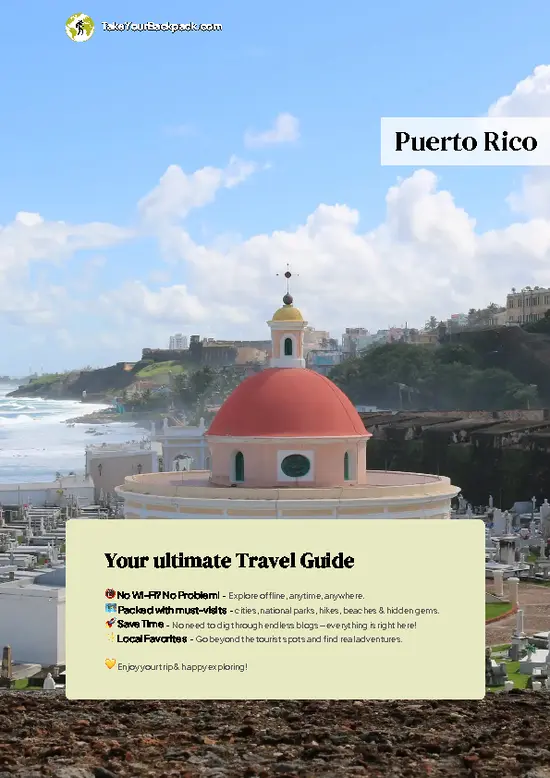
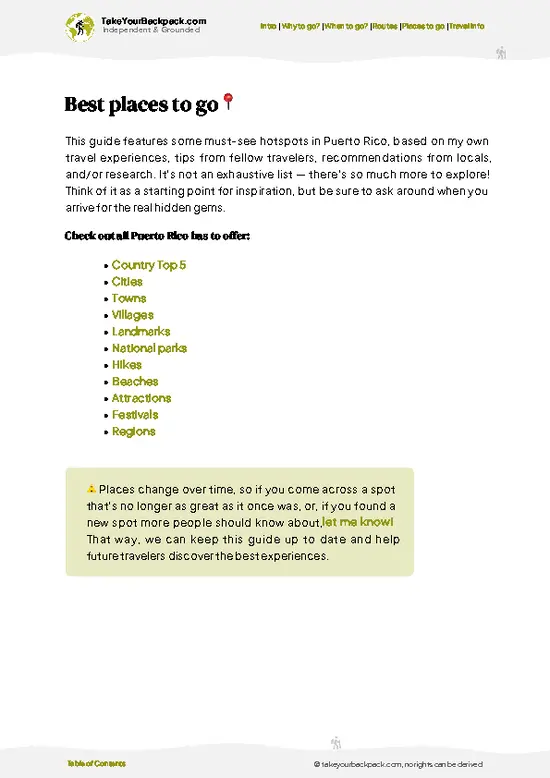
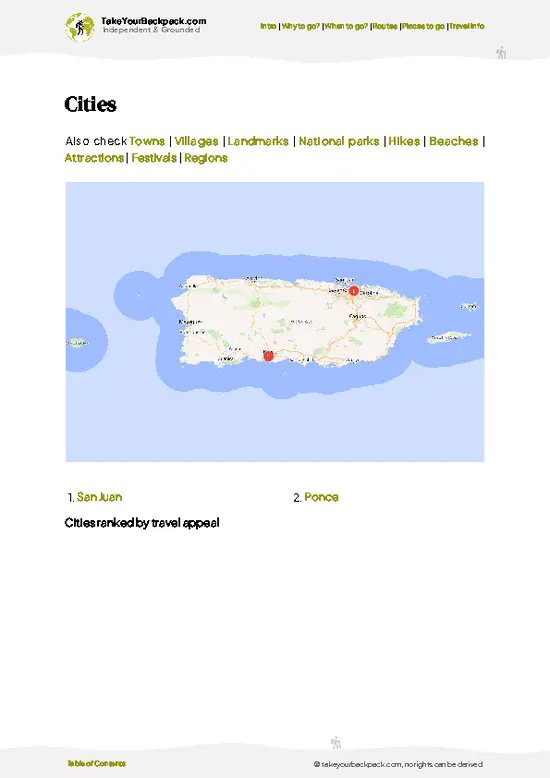
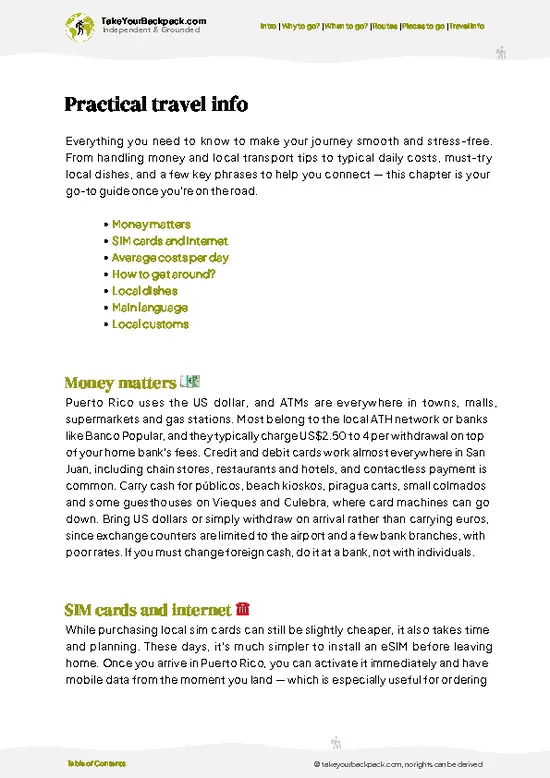
example page 0 from our offline Travel Guide for Puerto Rico
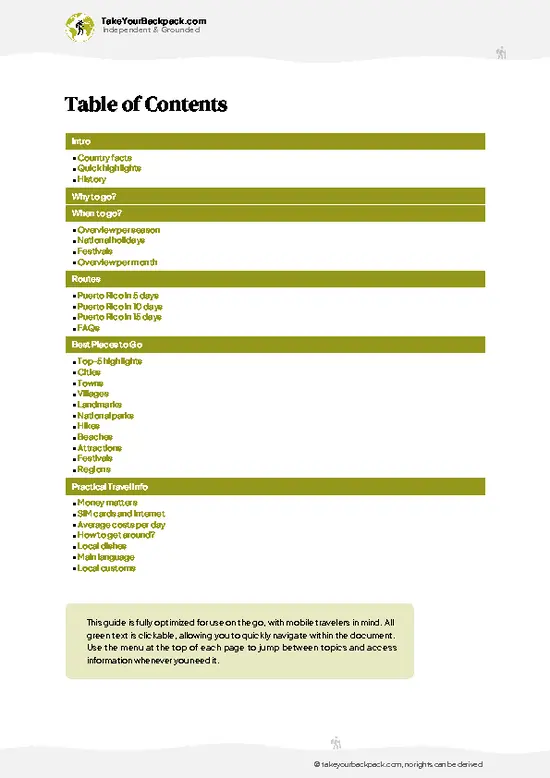
example page 1 from our offline Travel Guide for Puerto Rico
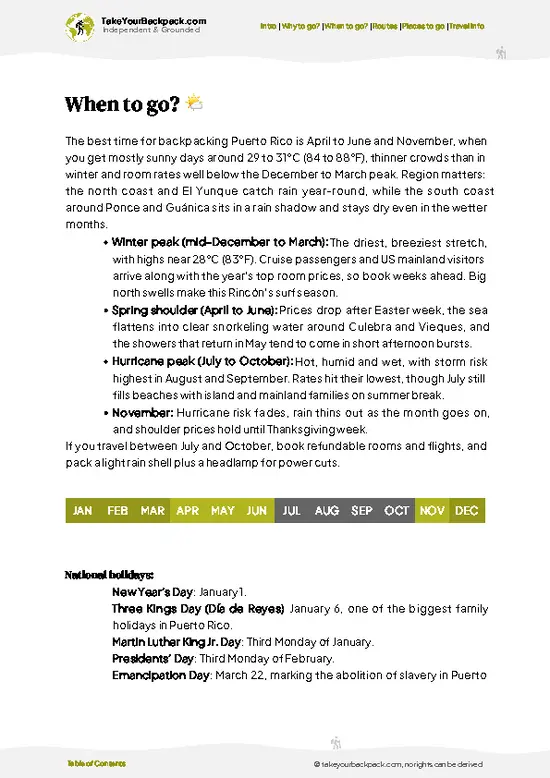
example page 2 from our offline Travel Guide for Puerto Rico
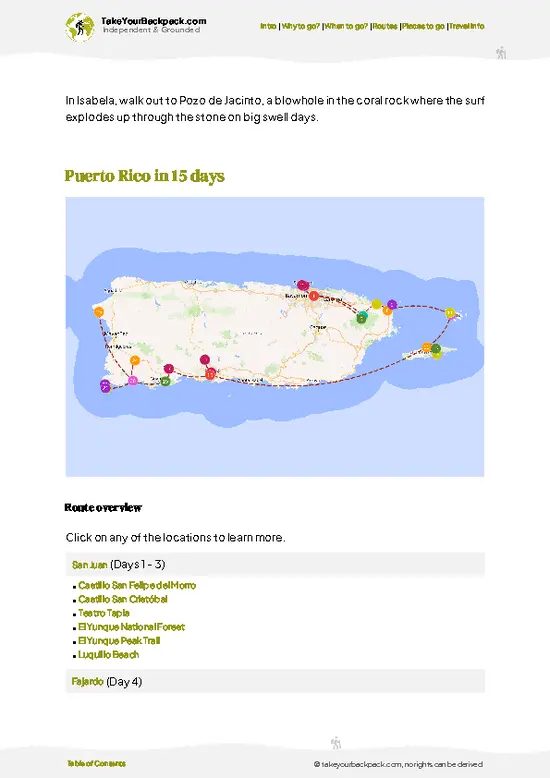
example page 3 from our offline Travel Guide for Puerto Rico
example page 4 from our offline Travel Guide for Puerto Rico
example page 5 from our offline Travel Guide for Puerto Rico
example page 6 from our offline Travel Guide for Puerto Rico
example page 7 from our offline Travel Guide for Puerto Rico
The digital guide (310 pages) contains:
✅ 81 highlights, ranked by travel appeal
✅ Optimized 5, 10 & 15-day travel routes
✅ Cities, national parks, landmarks, beaches
✅ How to get around
✅ Offline-friendly for travel without Wi-Fi
👉 Click to see all 30+ guide features

📅 Plan smarter in minutes, not weeks
✅ Month by month travel advice
✅ Festivals & national holidays
✅ Budget expectations

🗺️ Go to the right places, skip the overrated ones
✅ Honest pros & cons of destinations
✅ Top hikes, parks & viewpoints
✅ Lesser-known places most travelers miss
✅ Clear “worth it vs skip it” guidance

🛏️ Travel smoothly without rookie mistakes
✅ Best areas to stay
✅ Transport systems explained simply
✅ Common scams & safety advice
✅ SIM cards, money & practical tips

🌍 Understand the country, not just visit it
✅ Culture & traditions
✅ 52 Essential phrases & customs
✅ Festivals worth planning around
✅ Traveler-friendly historical context
✅ Insights that make places more meaningful

📱 Built for real travel conditions
✅ Fully downloadable PDF
✅ Works completely offline
✅ Optimized for phone use
✅ Useful in remote areas & buses
✅ Everything in one place
Stop searching, start planning
Get instant access to your full guide. 30‑day money-back guarantee.
+ Add another guide for just

By proceeding you agree to our terms.
Sent to your inbox immediately after payment • 100% Secure Checkout
Best Backpacking Travel Advisor 2025 tourism awardBest Backpacking
Travel Advisor
2025
What others say about Take Your Backpack Guides:
⭐⭐⭐⭐⭐
Fantastic, amazing amount of information!
⭐⭐⭐⭐⭐
My goodness this is amazing, it's what I've been looking for hats off too you!
⭐⭐⭐⭐⭐
I think this is absolutely BRILLIANT
⭐⭐⭐⭐
Very complete and informative. It's still missing places, but I gotta to commend you
⭐⭐⭐⭐⭐
This is truly amazing, thank you, can't wait to explore it with my kids!
⭐⭐⭐⭐⭐
Awesome resource, thank you!
⭐⭐⭐⭐⭐
This is amazing! Can't wait to explore the ones I haven't seen
⭐⭐⭐⭐
I love this! Well done, great idea.
⭐⭐⭐⭐⭐
Thanks for taking the time to make this gem!
⭐⭐⭐⭐⭐
This might be the best website I've ever seen.
⭐⭐⭐⭐⭐
Congratulations, and thank you so much for your work; it's incredibly valuable.
⭐⭐⭐⭐
In all seriousness I think you did a great job pointing out the important spots
⭐⭐⭐⭐⭐
10/10 very good
⭐⭐⭐⭐⭐
As someone who's only just starting to visit regularly this is awesome, thank you.
⭐⭐⭐⭐
Thank you very much! I'm going to visit my dad, it's going to be very useful!
⭐⭐⭐⭐⭐
This is really cool! We'll be travelling for the first time and this definitely come in handy.
⭐⭐⭐⭐⭐
You are now our minister of culture, congratulations 👨‍💼
⭐⭐⭐⭐⭐
Just wanted to tell you that this is a pearl! Going to follow your recommendations.
⭐⭐⭐⭐⭐
This is so cool. I'll definitely be using the resource for my travels soon.
⭐⭐⭐⭐⭐
This is very impressive! Good work.
⭐⭐⭐⭐⭐
This is an amazing and informative site. Very well done!

🛏️ Where to stay?Where to Stay in Puerto Rico

Puerto Rico has a small but solid hostel scene, with dorm beds usually running US$30 to 50 a night and private rooms in guesthouses or short-term rentals from about US$80, which is pricier than most of the Caribbean backpacker circuit. In San Juan, Old San Juan puts you within walking distance of the forts and the bar streets but gets loud on weekend nights, Santurce is the pick for nightlife around the La Placita market area and for murals and cheaper food, while Condado and Ocean Park trade some of that buzz for beach access and quieter, generally safe streets (Isla Verde works mainly for a late arrival or early flight). Outside the capital, surf town Rincón on the west coast and the islands … read more 👉
Puerto Rico has a small but solid hostel scene, with dorm beds usually running US$30 to 50 a night and private rooms in guesthouses or short-term rentals from about US$80, which is pricier than most of the Caribbean backpacker circuit. In San Juan, Old San Juan puts you within walking distance of the forts and the bar streets but gets loud on weekend nights, Santurce is the pick for nightlife around the La Placita market area and for murals and cheaper food, while Condado and Ocean Park trade some of that buzz for beach access and quieter, generally safe streets (Isla Verde works mainly for a late arrival or early flight). Outside the capital, surf town Rincón on the west coast and the islands of Vieques and Culebra have guesthouses and a few hostels that fill up fast on weekends and holidays, so book ahead there.

If you enjoy meeting fellow travelers, consider choosing hostels with high ratings for atmosphere. On the other hand, if you prefer having your own space, a hotel might be a better option.

Puerto RicoMore of Puerto Rico

👋 Meet the founderWho’s Behind Take Your Backpack?

Johan, backpacker and founder of TakeYourBackpackHi, I’m Johan (Netherlands 🇳🇱), the creator of TakeYourBackpack. Over the past 3 decades, I’ve backpacked through 90+ countries across six continents, gaining extensive experience with independent travel, long-term trips, and overland routes.

This site is built on a combination of firsthand travel experience and carefully curated insights from other backpackers. Many guides are based on places I’ve personally visited, while others bring together tips, observations, and practical advice shared by trusted travelers I’ve met along the way.

The goal is to provide realistic, experience-driven guidance — not generic itineraries — so you can explore destinations with better context, clearer expectations, and more confidence.