×

Puerto Rico🇵🇷 | townsHumacaonature reserve, mangrove trails, golf courses | things to do and best time to go

Explore NaguaboExplore Arroyo

Backpacking in Humacao
👌 Worth visitingtown ranked #10
By Johan Kruseman 🇳🇱 | Updated July 21, 2026

Your first real fork in the road with Humacao is this: do you sleep here, or just pass through for its mangroves and beaches? That choice matters, because Humacao sits on Puerto Rico’s southeast coast, close enough to San Juan and Fajardo for a day trip, but quiet enough that nights feel almost suburban. The town itself is workaday more than romantic: a small plaza, local bakeries, traffic humming under the heat. For backpackers, it works best as a base for the Humacao Nature Reserve, Palmas del Mar’s beaches if you don’t mind a resort bubble, and road-tripping the southeast. Public transport is thin, so shared cars or rentals unlock everything. It’s cheaper and calmer than Luquillo or Fajardo, safer-feeling than big-city San Juan corners, but also less social: expect guesthouses and Airbnbs over hostels, low-key evenings, and more contact with locals than with other travelers.

Discover everything you want to know in the 📖 Puerto Rico Travel Guide.
Loading the map 🌍
CLICK TO FILTER
cities
towns
villages
landmarks
national parks
hikes
beaches
attractions
festivals
regions
SHOW COUNTRY’S BESTSHOW ALL

✨ Why go?
Ranked #10 town in Puerto Rico
What makes this town worth visiting

Backpackers flock to Humacao for its strategic location—a gateway to both lush hikes and stunning beaches. The nearby El Yunque National Forest offers trails that wind through dense foliage, where the air is thick with the scent of damp earth and tropical blooms. After a day of adventure, you can unwind at local guesthouses that feel like home, fostering a friendly atmosphere perfect for solo travelers or small groups. The walkable streets are lined with local eateries serving up authentic Puerto Rican dishes, where the aroma of fried plantains and savory mofongo fills the air.

Most travelers stay a few days, soaking in the laid-back vibe, while others use it as a quick stopover. Whether you’re a slow traveler savoring the culture or a hiker eager for the next trail, Humacao strikes a balance … read more 👉
Backpackers flock to Humacao for its strategic location—a gateway to both lush hikes and stunning beaches. The nearby El Yunque National Forest offers trails that wind through dense foliage, where the air is thick with the scent of damp earth and tropical blooms. After a day of adventure, you can unwind at local guesthouses that feel like home, fostering a friendly atmosphere perfect for solo travelers or small groups. The walkable streets are lined with local eateries serving up authentic Puerto Rican dishes, where the aroma of fried plantains and savory mofongo fills the air.

Most travelers stay a few days, soaking in the laid-back vibe, while others use it as a quick stopover. Whether you’re a slow traveler savoring the culture or a hiker eager for the next trail, Humacao strikes a balance between social connection and peaceful retreat. It’s a place where the journey feels just as rewarding as the destination.
Want to include Humacao in your Puerto Rico route?
Create a personalized Puerto Rico itinerary that includes Humacao and the places that fit your trip — based on your travel style, budget, and available time. Get your route in seconds.

Generate my trip

💡 HighlightsThe experiences that define the visit

  • Reserva Natural Estuario de Humacao (Punta Santiago) — Mangrove boardwalks, observation towers and shallow lagoons where you can birdwatch, kayak or just watch fishermen and shorebirds do their thing. It’s the single best spot to feel Humacao’s coastal ecology up close.
  • Balneario Punta Santiago — A well-loved public beach with calm water for swimming, picnic areas and a real local vibe. Cleaner and less touristy than some east-coast beaches, great for a relaxed afternoon and sunset photos.
  • Punta Santiago Fishing Pier & Waterfront — Where locals cast lines, sell fresh catches and gather at dusk. Short strolls along the pier give you an honest glimpse into coastal life here — bring sunscreen and patience for chatting with friendly fishermen.
  • Casa Roig Museum — A striking early-20th-century
read more 👉
  • Reserva Natural Estuario de Humacao (Punta Santiago) — Mangrove boardwalks, observation towers and shallow lagoons where you can birdwatch, kayak or just watch fishermen and shorebirds do their thing. It’s the single best spot to feel Humacao’s coastal ecology up close.
  • Balneario Punta Santiago — A well-loved public beach with calm water for swimming, picnic areas and a real local vibe. Cleaner and less touristy than some east-coast beaches, great for a relaxed afternoon and sunset photos.
  • Punta Santiago Fishing Pier & Waterfront — Where locals cast lines, sell fresh catches and gather at dusk. Short strolls along the pier give you an honest glimpse into coastal life here — bring sunscreen and patience for chatting with friendly fishermen.
  • Casa Roig Museum — A striking early-20th-century Nechodoma-designed house-turned-museum. It’s an architectural gem that tells stories about Humacao’s history, design influences and community life; great for a quick cultural stop.
  • Humacao Town Plaza & Parroquia Nuestra Señora del Carmen — The social heart of town: the shady plaza, the church, municipal buildings and kiosks. Pop in on a weekday to see local rhythms or on a Sunday for after-mass activity and street food nearby.
  • Palmas del Mar Marina & Village — Upscale marina and pedestrian village with restaurants, coffee spots and boat activity. It’s a different side of Humacao—good for a stroll, people-watching and boat-gazing without needing to stay at the resort.
  • Palmas del Mar Beaches and Boardwalk — Wide stretches of sand, calm bays and an easy boardwalk for walking or biking. Some areas are public; other parts belong to the resort, but the seaside atmosphere is worth the visit even just for a beach day.
  • Palmas del Mar Golf Course — If you play (or want scenic walking trails), the fairways and coastal views here are pleasant. Public tee times exist; it’s a quiet way to experience palms, ocean breezes and a different local pace.
  • Palmas del Mar Equestrian Center — Horseback riding and riding facilities that host lessons and events. A nice, low-key way to get outdoors and see coastal countryside if you prefer horses to beaches.
  • Humacao Markets & Waterfront Eateries — The local markets and small seafood kiosks around town (especially near the waterfront) are where you find fresh catches, fritters, empanadillas and coffee with locals. Not a single “must-see” building, but an essential, real-food experience of Humacao.
A few great day trips nearby: El Yunque National Forest for rainforest hikes, Fajardo’s bioluminescent bay and Las Cabezas de San Juan nature reserve, and the Ceiba ferry port (a short drive) for trips to Vieques or Culebra.
Spotted a mistake or missing something? Contact us.

Things to do near Humacao

Ratings based on Tripadvisor reviews. When you book through this link, you support our work at no extra cost to you.

🏘️ NeighborhoodsKey areas and districts to know

Humacao offers a blend of local culture and stunning coastal beauty, making it a backpacker’s delight. Here’s how to navigate its neighborhoods:

Centro Humacao: This is the heart of the town. You’ll find local eateries and shops that pulse with life. The vibe is casual and friendly, perfect for mingling with locals. Walkability is high; everything is within a few blocks. Nightlife is low-key, with a few bars offering live music. Ideal for short stays, but you might want to extend your visit to soak in the local flavor.

Playa de Humacao: If you crave sun and surf, this beach area is your go-to. The atmosphere is laid-back, with the scent of saltwater in the air. Accommodations here can be pricier, but the beachfront access is worth it. It’s quieter than Centro, making it suitable for longer … read more 👉
Humacao offers a blend of local culture and stunning coastal beauty, making it a backpacker’s delight. Here’s how to navigate its neighborhoods:

Centro Humacao: This is the heart of the town. You’ll find local eateries and shops that pulse with life. The vibe is casual and friendly, perfect for mingling with locals. Walkability is high; everything is within a few blocks. Nightlife is low-key, with a few bars offering live music. Ideal for short stays, but you might want to extend your visit to soak in the local flavor.

Playa de Humacao: If you crave sun and surf, this beach area is your go-to. The atmosphere is laid-back, with the scent of saltwater in the air. Accommodations here can be pricier, but the beachfront access is worth it. It’s quieter than Centro, making it suitable for longer stays. Public transport is available, but renting a bike can enhance your experience.

Villa Borinquen: A residential neighborhood that feels authentic and homey. It’s less touristy, giving you a real taste of Puerto Rican life. Costs are lower here, and you can find cozy guesthouses. Walkability is moderate; a car or bike is recommended for exploring. This area is perfect for longer stays if you want to immerse yourself in the local scene.

⌛️ 1 day1-day itinerary for Humacao

Humacao, Puerto Rico, is a vibrant blend of local culture and stunning coastal beauty. It’s not just a gateway to the beach; it’s a place where you can feel the pulse of island life. Start your day with a stroll through the charming streets of the downtown area, where the scent of fresh coffee mingles with the salty breeze. Grab a pastelón at a local café—this sweet plantain dish will fuel your adventures.

In the morning, head to the nearby Playa de Humacao. The soft sand and gentle waves invite you to relax, but don’t just sit there. Rent a kayak and paddle through the mangroves of the Humacao Nature Reserve. The light filtering through the leaves creates a magical atmosphere, and the sounds of birds and rustling leaves remind you that you’re in a unique ecosystem.

For lunch, venture to … read more 👉
Humacao, Puerto Rico, is a vibrant blend of local culture and stunning coastal beauty. It’s not just a gateway to the beach; it’s a place where you can feel the pulse of island life. Start your day with a stroll through the charming streets of the downtown area, where the scent of fresh coffee mingles with the salty breeze. Grab a pastelón at a local café—this sweet plantain dish will fuel your adventures.

In the morning, head to the nearby Playa de Humacao. The soft sand and gentle waves invite you to relax, but don’t just sit there. Rent a kayak and paddle through the mangroves of the Humacao Nature Reserve. The light filtering through the leaves creates a magical atmosphere, and the sounds of birds and rustling leaves remind you that you’re in a unique ecosystem.

For lunch, venture to the less-traveled neighborhood of Villa Playa. Here, you’ll find local eateries serving up mofongo that’s bursting with flavor. The laid-back vibe and friendly locals make it a perfect spot to recharge.

As the sun begins to dip, make your way to the iconic Punta Santiago. The golden hour casts a warm glow over the water, creating a breathtaking backdrop for your evening. Enjoy a leisurely walk along the shore, soaking in the tranquility.

Wrap up your day with a visit to a local bar for live music. The rhythm of salsa fills the air, inviting you to dance and connect with the heart of Humacao. This day isn’t just about sights; it’s about feeling the spirit of Puerto Rico.
Turn your Humacao visit into an Puerto Rico adventure
Build a complete Puerto Rico route with Humacao, hidden gems, must-see destinations, and realistic travel times included.

Generate my trip

🌤️ When to go?Seasonal considerations and timing


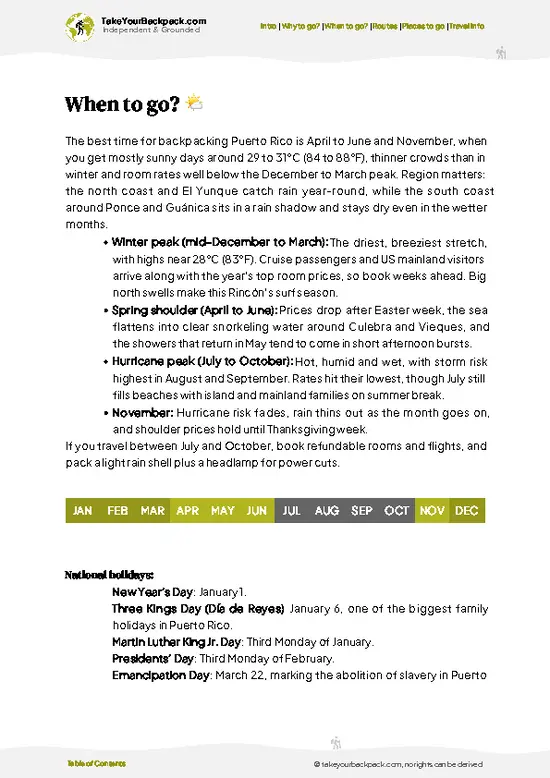
  • Topic: Weather and Temperature: Humacao’s tropical climate means warm, humid days year-round, averaging 27°C to 31°C (80°F to 88°F). The dry season from December to April offers less humidity and more comfortable hiking conditions, while the wet season (May to November) brings frequent afternoon showers that can turn trails slippery and muddy.

  • Topic: Daylight Hours: Near the equator, daylight stays steady—about 11 to 12 hours daily. This consistency means you can plan hikes and beach time without worrying about early sunsets cutting your day short.

  • Topic: Crowds: Peak tourist season aligns with the dry months and US winter holidays, so expect more visitors and busier beaches then. Off-season offers quieter trails and a more local vibe, perfect if you want to avoid crowds.

  • Topic: Seasonal
read more 👉

  • Topic: Weather and Temperature: Humacao’s tropical climate means warm, humid days year-round, averaging 27°C to 31°C (80°F to 88°F). The dry season from December to April offers less humidity and more comfortable hiking conditions, while the wet season (May to November) brings frequent afternoon showers that can turn trails slippery and muddy.

  • Topic: Daylight Hours: Near the equator, daylight stays steady—about 11 to 12 hours daily. This consistency means you can plan hikes and beach time without worrying about early sunsets cutting your day short.

  • Topic: Crowds: Peak tourist season aligns with the dry months and US winter holidays, so expect more visitors and busier beaches then. Off-season offers quieter trails and a more local vibe, perfect if you want to avoid crowds.

  • Topic: Seasonal Activities: The dry season hosts festivals and outdoor events, adding cultural flavor to your trip. The wet season’s lush greenery makes nature walks richer but less predictable.

  • Topic: Price Fluctuations: Accommodation and flights spike during the dry season and holidays. Traveling just before or after peak months can save money without sacrificing weather quality.


Pro-tip: Aim for late March to early May—humidity is manageable, crowds thin out, and prices dip, giving you the best balance of comfort, culture, and cost.


source: climatestotravel.comJANJanuary: highly recommended for travelingFEBFebruary: highly recommended for travelingMARMarch: excellent for travelingAPRApril: excellent for travelingMAYMay: excellent for travelingJUNJune: good for travelingJULJuly: good for travelingAUGAugust: good for travelingSEPSeptember: fair for travelingOCTOctober: fair for travelingNOVNovember: good for travelingDECDecember: highly recommended for traveling
when-to-go

✈️ The backpacker research shortcutPuerto Rico Travel Guide

An offline-friendly backpacking guide with optimized travel routes, ranked highlights, transport advice, and the best areas to stay.
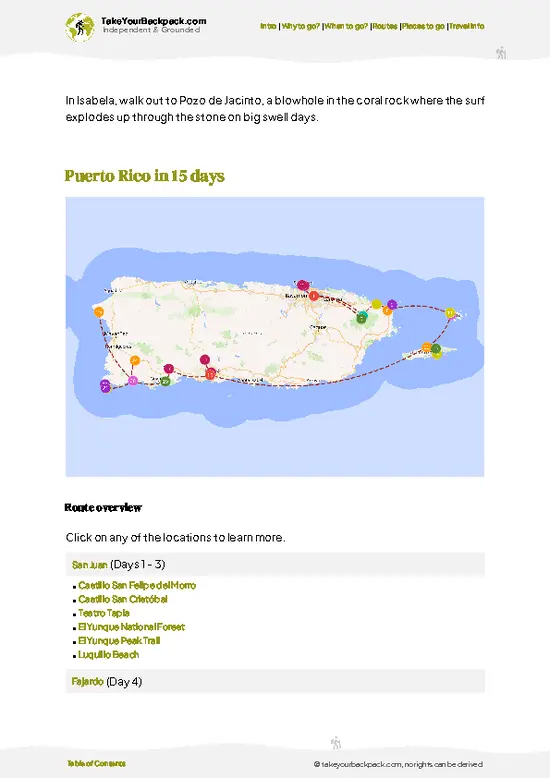
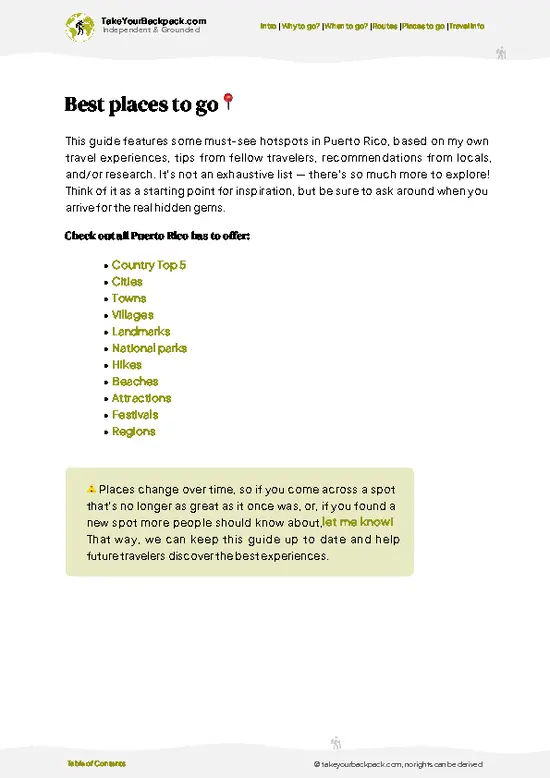
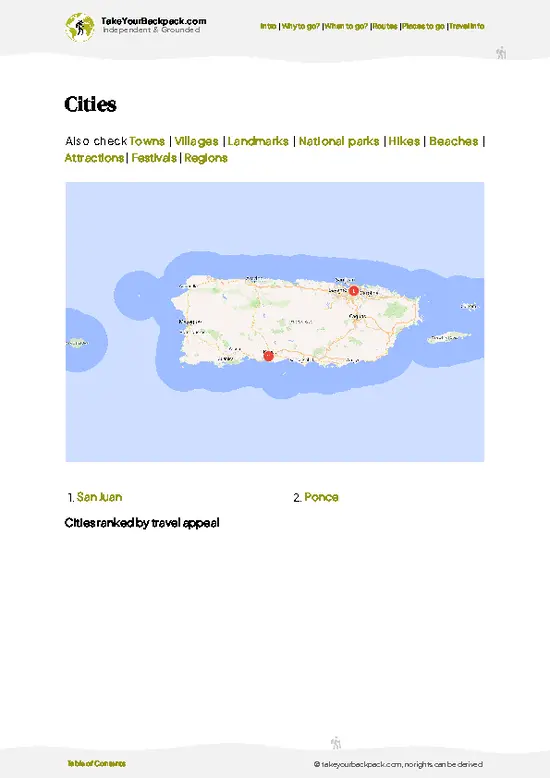
example page 0 from our offline Travel Guide for Puerto Rico
example page 1 from our offline Travel Guide for Puerto Rico
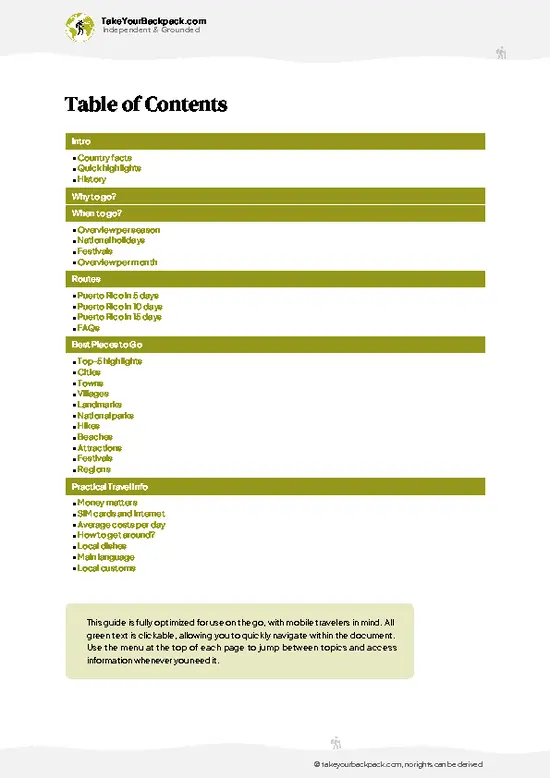
example page 2 from our offline Travel Guide for Puerto Rico
example page 3 from our offline Travel Guide for Puerto Rico
example page 4 from our offline Travel Guide for Puerto Rico
example page 5 from our offline Travel Guide for Puerto Rico
example page 6 from our offline Travel Guide for Puerto Rico
example page 7 from our offline Travel Guide for Puerto Rico
The digital guide (323 pages) contains:
88 highlights, ranked by travel appeal
Optimized 5, 10 & 15-day travel routes
Cities, national parks, landmarks, beaches
How to get around
Offline-friendly for travel without Wi-Fi
👉 Click to see all 30+ guide features

📅 Plan smarter in minutes, not weeks
Month by month travel advice
Festivals & national holidays
Budget expectations

🗺️ Go to the right places, skip the overrated ones
Honest pros & cons of destinations
Top hikes, parks & viewpoints
Lesser-known places most travelers miss
Clear “worth it vs skip it” guidance

🛏️ Travel smoothly without rookie mistakes
Best areas to stay
Transport systems explained simply
Common scams & safety advice
SIM cards, money & practical tips

🌍 Understand the country, not just visit it
Culture & traditions
52 Essential phrases & customs
Festivals worth planning around
Traveler-friendly historical context
Insights that make places more meaningful

📱 Built for real travel conditions
Fully downloadable PDF
Works completely offline
Optimized for phone use
Useful in remote areas & buses
Everything in one place
Save weeks of stressful planning
Get instant access to your full guide. 30‑day money-back guarantee.


By proceeding you agree to our terms.
Sent to your inbox immediately after payment • 100% Secure Checkout
Best Backpacking Travel Advisor 2025 tourism awardBest Backpacking
Travel Advisor
2025
What others say about Take Your Backpack Guides:
⭐⭐⭐⭐⭐
Fantastic, amazing amount of information!
⭐⭐⭐⭐⭐
My goodness this is amazing, it's what I've been looking for hats off too you!
⭐⭐⭐⭐⭐
I think this is absolutely BRILLIANT
⭐⭐⭐⭐
Very complete and informative. It's still missing places, but I gotta to commend you
⭐⭐⭐⭐⭐
This is truly amazing, thank you, can't wait to explore it with my kids!
⭐⭐⭐⭐⭐
Awesome resource, thank you!
⭐⭐⭐⭐⭐
This is amazing! Can't wait to explore the ones I haven't seen
⭐⭐⭐⭐
I love this! Well done, great idea.
⭐⭐⭐⭐⭐
Thanks for taking the time to make this gem!
⭐⭐⭐⭐⭐
This might be the best website I've ever seen.
⭐⭐⭐⭐⭐
Congratulations, and thank you so much for your work; it's incredibly valuable.
⭐⭐⭐⭐
In all seriousness I think you did a great job pointing out the important spots
⭐⭐⭐⭐⭐
10/10 very good
⭐⭐⭐⭐⭐
As someone who's only just starting to visit regularly this is awesome, thank you.
⭐⭐⭐⭐
Thank you very much! I'm going to visit my dad, it's going to be very useful!
⭐⭐⭐⭐⭐
This is really cool! We'll be travelling for the first time and this definitely come in handy.
⭐⭐⭐⭐⭐
You are now our minister of culture, congratulations 👨‍💼
⭐⭐⭐⭐⭐
Just wanted to tell you that this is a pearl! Going to follow your recommendations.
⭐⭐⭐⭐⭐
This is so cool. I'll definitely be using the resource for my travels soon.
⭐⭐⭐⭐⭐
This is very impressive! Good work.
⭐⭐⭐⭐⭐
This is an amazing and informative site. Very well done!

🛏️ Where to stay?How to pick the right area

Humacao’s best backpacker base is the area around the town center, or “pueblo.” This neighborhood hums with local life—street vendors, small cafés, and plazas where you can soak in the warm Caribbean light as locals gather. It’s safe, walkable, and social, perfect for solo travelers who want to connect without the tourist bubble. Hostels here are modest but lively, often run by locals who know the best hidden spots for cheap eats and authentic experiences.

Compared to the quieter, more residential outskirts, the pueblo puts you right in the mix. You’ll hear the distant crash of waves from nearby … read more 👉
Humacao’s best backpacker base is the area around the town center, or “pueblo.” This neighborhood hums with local life—street vendors, small cafés, and plazas where you can soak in the warm Caribbean light as locals gather. It’s safe, walkable, and social, perfect for solo travelers who want to connect without the tourist bubble. Hostels here are modest but lively, often run by locals who know the best hidden spots for cheap eats and authentic experiences.

Compared to the quieter, more residential outskirts, the pueblo puts you right in the mix. You’ll hear the distant crash of waves from nearby beaches, but you’re close enough to nightlife and public transport to keep your options open. The vibe is relaxed but alive, with a scent of salt air mixing with fresh coffee and street food spices. Staying here means you’re not just passing through Humacao—you’re stepping into its rhythm, making every moment count.

🚌 Getting aroundHow to get around Humacao

Humacao moves at its own pace, a blend of laid-back coastal rhythms and the occasional burst of local hustle. The sun filters through palm fronds, casting dappled shadows on sidewalks where locals and visitors mingle without a strict timetable. It’s not a place where you’ll find rigid schedules or frantic rushes; instead, the flow here is intuitive, shaped by the ebb and flow of daily life and the gentle pull of the nearby ocean. Navigating Humacao means embracing this relaxed tempo while knowing the best ways to get around without wasting time or money.


  • Walking: The heart of Humacao is compact enough to explore on foot, especially the downtown area and nearby beaches. Walking lets you soak in the salty air, hear the chatter from street vendors, and catch the scent of fresh coffee wafting
read more 👉
Humacao moves at its own pace, a blend of laid-back coastal rhythms and the occasional burst of local hustle. The sun filters through palm fronds, casting dappled shadows on sidewalks where locals and visitors mingle without a strict timetable. It’s not a place where you’ll find rigid schedules or frantic rushes; instead, the flow here is intuitive, shaped by the ebb and flow of daily life and the gentle pull of the nearby ocean. Navigating Humacao means embracing this relaxed tempo while knowing the best ways to get around without wasting time or money.


  • Walking: The heart of Humacao is compact enough to explore on foot, especially the downtown area and nearby beaches. Walking lets you soak in the salty air, hear the chatter from street vendors, and catch the scent of fresh coffee wafting from local cafés. It’s free, flexible, and perfect for spontaneous detours.


  • Public Buses (Guaguas): These are the budget traveler’s lifeline, connecting Humacao with neighboring towns. Buses run roughly from 5:30 AM to 9 PM, with fares around $0.75 to $1.50. They’re slow and can be crowded, but they offer an authentic slice of local life and a chance to watch the island’s landscape unfold outside your window.


  • Shared Taxis (Carros Públicos): These operate on set routes but leave when full, blending flexibility with efficiency. Expect to pay about $2-$3 for trips within Humacao or to nearby areas. They’re faster than buses and more comfortable, but timing depends on passenger load, so patience is key.


  • Rental Scooters: For those comfortable on two wheels, scooters offer a nimble way to explore beyond the town center. Rentals start around $30 per day. They give you freedom to chase the coastline or hidden spots at your own pace, but watch for uneven roads and local driving quirks.


  • Car Rentals: If your budget allows, renting a car is the most straightforward way to unlock Humacao’s surroundings, from secluded beaches to mountain trails. Prices start near $40 per day. It’s the fastest, most comfortable option, but parking in busy areas can be tight, and driving requires attentiveness to local traffic patterns.

👛 Costs (as of 24 March 2026)Typical daily expenses

Backpacking in Humacao, Puerto Rico, means balancing the laid-back Caribbean vibe with practical costs that keep your trip smooth and enjoyable.
  • Dorm Accommodation: Expect to pay around $20 to $35 per night for a bed in a shared hostel dorm. Options here are limited compared to bigger cities, so booking ahead during peak seasons helps. The rooms are simple, often with fans rather than air conditioning, which is fine once you get used to the warm, salty air drifting through.
  • Meals: Local eateries serve up hearty Puerto Rican staples like mofongo and arroz con gandules for $6 to $12 per meal. Street food and small cafés can bring that down to $4 to $7 if you stick to snacks or quick bites. Fresh fruit and juices from roadside stands are both cheap and refreshing, usually under $3.
  • Local Transport:
read more 👉
Backpacking in Humacao, Puerto Rico, means balancing the laid-back Caribbean vibe with practical costs that keep your trip smooth and enjoyable.
  • Dorm Accommodation: Expect to pay around $20 to $35 per night for a bed in a shared hostel dorm. Options here are limited compared to bigger cities, so booking ahead during peak seasons helps. The rooms are simple, often with fans rather than air conditioning, which is fine once you get used to the warm, salty air drifting through.
  • Meals: Local eateries serve up hearty Puerto Rican staples like mofongo and arroz con gandules for $6 to $12 per meal. Street food and small cafés can bring that down to $4 to $7 if you stick to snacks or quick bites. Fresh fruit and juices from roadside stands are both cheap and refreshing, usually under $3.
  • Local Transport: Public transport is sparse, so most travelers rely on shared taxis or renting a scooter. Shared taxi rides within town typically cost $1 to $3, while scooter rentals run about $25 to $40 per day. Walking is a solid option for exploring the town center, where the tropical sun and ocean breeze keep things pleasant.
  • Basic Activities/Entry Fees: Many natural attractions like beaches and hiking trails are free or ask for a small donation around $2 to $5. Visiting the Humacao Nature Reserve or local cultural sites might cost $5 to $10. Guided tours or water activities like kayaking can push the budget higher, around $30 to $50.
  • Miscellaneous Expenses: Budget $5 to $10 daily for essentials like bottled water, snacks, or occasional internet access at cafés. Keep some cash handy for tips or small purchases at local markets, where bargaining isn’t common but friendly exchanges add to the experience.

All told, you’re looking at roughly $40 to $75 per day to cover the essentials without cutting corners. This range lets you soak in Humacao’s coastal charm without the stress of overspending, making every dollar count toward the laid-back rhythm of island life.
⚠️ Prices can change and everyone travels differently, so take this as a rough guide. Hope it helps you plan your adventure!

🚌 Day tripsShort trips worth adding

Humacao is a fantastic launchpad for day trips that blend adventure with the rich culture of Puerto Rico. Here are some standout options that will make your backpacking experience truly rewarding.

El Yunque National Forest
Just an hour’s drive from Humacao, El Yunque is a lush paradise of waterfalls and hiking trails. The air is thick with the scent of damp earth and tropical flora. Spend the day trekking to La Mina Falls, where you can cool off in the refreshing water. A common mistake is underestimating the time needed for the trails; plan for at least half a day to fully soak in the experience. Expect to spend around $10 for parking, and if you’re visiting during the dry season (December to April), you’ll enjoy clearer trails and fewer crowds.
👉 Explore El Yunque National Forest

Vieques read more 👉
Humacao is a fantastic launchpad for day trips that blend adventure with the rich culture of Puerto Rico. Here are some standout options that will make your backpacking experience truly rewarding.

El Yunque National Forest
Just an hour’s drive from Humacao, El Yunque is a lush paradise of waterfalls and hiking trails. The air is thick with the scent of damp earth and tropical flora. Spend the day trekking to La Mina Falls, where you can cool off in the refreshing water. A common mistake is underestimating the time needed for the trails; plan for at least half a day to fully soak in the experience. Expect to spend around $10 for parking, and if you’re visiting during the dry season (December to April), you’ll enjoy clearer trails and fewer crowds.
👉 Explore El Yunque National Forest

Vieques Island
Catch a ferry from Fajardo (about 45 minutes from Humacao) to Vieques, where the beaches are postcard-perfect. Spend your day lounging on Playa Caracas or exploring the bioluminescent bay at Mosquito Bay. The ferry costs about $2.50 each way, but book in advance to avoid long waits. Many first-timers miss the chance to see the bay at night; plan to stay late for the magical glow. The best time to visit is during the dry season, when the water is calm and the sun is shining.


Caguas Botanical Garden
A quick 30-minute drive will take you to Caguas, where the Botanical Garden offers a serene escape. The vibrant colors of the flowers and the gentle rustle of leaves create a peaceful atmosphere. Entry is free, making it a budget-friendly option. Many overlook this spot, thinking it’s just another garden, but the local flora and fauna are a treat for the senses. Visit in the morning to enjoy cooler temperatures and fewer visitors.


Fajardo Bio Bay
Another gem is the Fajardo Bio Bay, a short drive from Humacao. Kayaking through the glowing waters at night is an experience that feels almost otherworldly. The cost for a guided tour is around $50, but it’s worth every penny for the chance to paddle through this natural wonder. First-timers often forget to book in advance, so secure your spot early. The best months to visit are from June to November when the bioluminescence is at its peak.
Want to know what more Puerto Rico offers?
The Puerto Rico Travel Guide describes 88 highlights, from cities to national parks, from beaches to hikes

Get the Travel Guide -

🛡️ SafetyTraveler Safety Guide

Humacao is generally safe, but like any place, a bit of awareness goes a long way. Stick to well-lit areas at night, especially around the waterfront. If you’re solo, avoid empty streets; the lively plazas are your best bet for both safety and atmosphere.

While scams aren’t rampant, be cautious of overly friendly strangers offering unsolicited help or deals that seem too good to be true. A common annoyance is the occasional aggressive vendor; a polite but firm “no, gracias” usually does the trick.

Keep your belongings close, especially in crowded spots. Embrace the local vibe, stay alert, and you’ll find that the beauty of Humacao is well worth the effort.

Other Puerto Rican towns near Humacao

Explore more nearby:

  • Naguabo—waterfront malecón, fishing boats, mountain views| 11 km away
  • Fajardo—marinas, bioluminescent bay, ferry terminal| 27 km away
  • Arroyo—lighthouse, sugar mill ruins, quiet seafront| 31 km away

💡 Not sure where to go next?
Create a personalized itinerary for Puerto Rico including Humacao and the places that fit your trip.

Generate my itinerary

👉 Discover all towns

Or checkout all Puerto Rico has to offer (think cities, towns, villages, national parks, hikes, beaches, festivals)
Country photo of Puerto Rico

We 💚 feedbackParting advice and final tips

Humacao has a laid-back vibe that feels like a warm embrace. The best surprise? The local food scene—try the mofongo at a roadside stand; it’s a flavor explosion. Just a heads-up: the beaches can get crowded on weekends, so aim for early mornings or late afternoons for a slice of tranquility. Trust me, the golden hour light hitting the water is worth the effort.

✍️ Help improve this page!
The information on this page is based on in-depth research, insights shared by experienced travelers, and feedback from the local travel community in Puerto Rico. While every effort is made to keep the information accurate and current, conditions can change — so if you spot anything incorrect or outdated, please get in touch.


🙋‍♂️ Give feedback

👋 Meet the founderWho’s Behind Take Your Backpack?

Johan, backpacker and founder of TakeYourBackpackHi, I’m Johan (Netherlands 🇳🇱), the creator of TakeYourBackpack. Over the past decade, I’ve backpacked through 80+ countries across six continents, gaining extensive experience with independent travel, long-term trips, and overland routes.

This site is built on a combination of firsthand travel experience and carefully curated insights from other backpackers. Many guides are based on places I’ve personally visited, while others bring together tips, observations, and practical advice shared by trusted travelers I’ve met along the way.

The goal is to provide realistic, experience-driven guidance — not generic itineraries — so you can explore destinations with better context, clearer expectations, and more confidence.

Get full country guide •
Instant download • 88 highlights • Full Offline guide