
×

Puerto Rico🇵🇷 | villagesLa PargueraGlowing bay, stilt houses, mangrove cays, fried fish docks | things to do and best time to go

Explore CulebraExplore Castillo San Felipe del Morro

Backpacking in La Parguera
👍 Recommendedvillage ranked #2
By Johan Kruseman 🇳🇱 | Updated October 22, 2026

The boat engine cuts, the guide tells you to trail a hand in the water, and the wake blooms electric blue-green around your fingers. That's a night on the bay in La Parguera, a fishing village on Puerto Rico's southwest coast, in the municipality of Lajas. Go on a moonless night and book the last departure of the evening, when the glow is strongest. By day, the single waterfront strip is sleepy, with fish fritters, a few docks and mangrove cays reachable by cheap boat rides, where you get a swim over seagrass. Nightlife stays low-key, mostly a few open-air bars with music, so meeting other travelers is easy but not guaranteed. Mornings are quiet and early nights are common. Unlike Fajardo's bay, where tours run in big groups from a busy port, La Parguera keeps its bioluminescence small, with kayaks and electric boats, and you can walk to the dock from your bed.

Discover everything you want to know in the 📖 Puerto Rico Travel Guide.


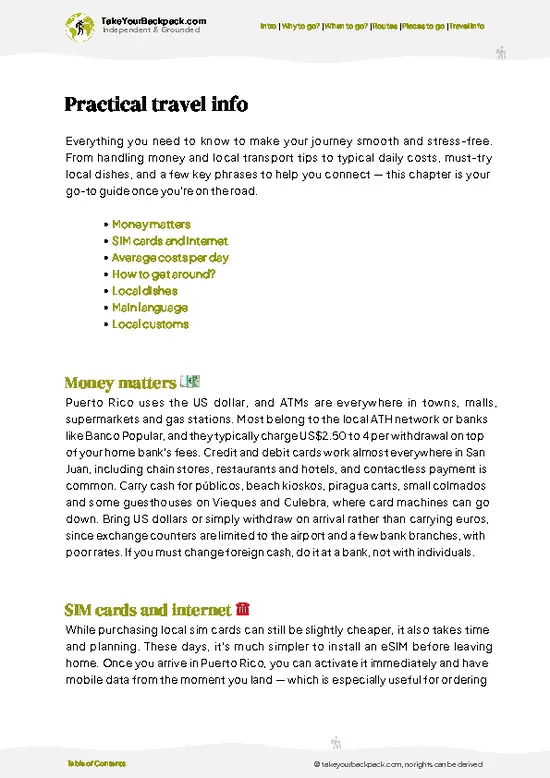
example page 0 from our offline Travel Guide for Puerto Rico
example page 1 from our offline Travel Guide for Puerto Rico
example page 2 from our offline Travel Guide for Puerto Rico
example page 3 from our offline Travel Guide for Puerto Rico
example page 4 from our offline Travel Guide for Puerto Rico
example page 5 from our offline Travel Guide for Puerto Rico
example page 6 from our offline Travel Guide for Puerto Rico
example page 7 from our offline Travel Guide for Puerto Rico
Loading the map 🌍
CLICK TO FILTER
cities
towns
villages
landmarks
national parks
hikes
beaches
attractions
festivals
regions
SHOW COUNTRY’S BESTSHOW ALL

✨ Why go?
Ranked #2 village in Puerto Rico
Reasons people choose to visit here

La Parguera works as a pause because everything is within a few blocks of the water, and the main event happens after dark. Backpackers come for the Bahía Fosforescente at night, then spend days kayaking through mangrove channels or hopping a boat to cays like Mata la Gata, where the water is shallow and clear enough to snorkel without a tour. Most people stay two nights, a few linger for a week when the pace hooks them. The village suits couples, solo travelers who want calm, and anyone who likes paddling more than clubbing. It is social in a loose way: guesthouse porches and the waterfront bars on weekends are where conversations start. If you need hiking, big sights or steady transit, treat it as a short stop. It also pairs well with the dry forest trails of nearby Guánica, so you can split … read more 👉
La Parguera works as a pause because everything is within a few blocks of the water, and the main event happens after dark. Backpackers come for the Bahía Fosforescente at night, then spend days kayaking through mangrove channels or hopping a boat to cays like Mata la Gata, where the water is shallow and clear enough to snorkel without a tour. Most people stay two nights, a few linger for a week when the pace hooks them. The village suits couples, solo travelers who want calm, and anyone who likes paddling more than clubbing. It is social in a loose way: guesthouse porches and the waterfront bars on weekends are where conversations start. If you need hiking, big sights or steady transit, treat it as a short stop. It also pairs well with the dry forest trails of nearby Guánica, so you can split your time between water and walking before moving on along the southwest coast.

💡 HighlightsEssential experiences to have while visiting La Parguera

  1. Bahía Fosforescente night tour: The bay's glowing dinoflagellates light up every paddle stroke and fish trail. Go on a dark, moonless night for the brightest effect. Kayak tours run about US$40 to 60 and electric boat tours about US$25 to 35, lasting 1 to 2 hours. Kayaking gets you closer to the water and the mangroves, and La Parguera is the only bio bay in Puerto Rico where swimming is allowed on most nights.
  2. Mata la Gata and the mangrove cays: Small boats from the waterfront docks run to sandy shallows and tiny islands just offshore for snorkeling and floating over seagrass. Mornings have calmer water and fewer boats. Expect around US$15 to 30 per person for a shared ride, with 2 to 4 hours out.
  3. The waterfront promenade and fishing docks: The main strip is the village's social space, with
… read more 👉
  1. Bahía Fosforescente night tour: The bay's glowing dinoflagellates light up every paddle stroke and fish trail. Go on a dark, moonless night for the brightest effect. Kayak tours run about US$40 to 60 and electric boat tours about US$25 to 35, lasting 1 to 2 hours. Kayaking gets you closer to the water and the mangroves, and La Parguera is the only bio bay in Puerto Rico where swimming is allowed on most nights.
  2. Mata la Gata and the mangrove cays: Small boats from the waterfront docks run to sandy shallows and tiny islands just offshore for snorkeling and floating over seagrass. Mornings have calmer water and fewer boats. Expect around US$15 to 30 per person for a shared ride, with 2 to 4 hours out.
  3. The waterfront promenade and fishing docks: The main strip is the village's social space, with fried fish, snack stands and old wooden houses on stilts over the water. Late afternoon is best, when fishermen come in and the light softens before the evening crowd arrives. Free to walk, and an hour is plenty.
From La Parguera you can reach Guánica Dry Forest, Caja de Muertos Island near Ponce, the Cabo Rojo lighthouse and Playa Buyé as easy day trips. The bioluminescent kayak and boat tours should be booked a day or two ahead, especially on weekends and holidays.
Spotted a mistake or missing something? Contact us.

Things to do near La Parguera

Ratings based on Tripadvisor reviews. When you book through this link, you support our work at no extra cost to you.

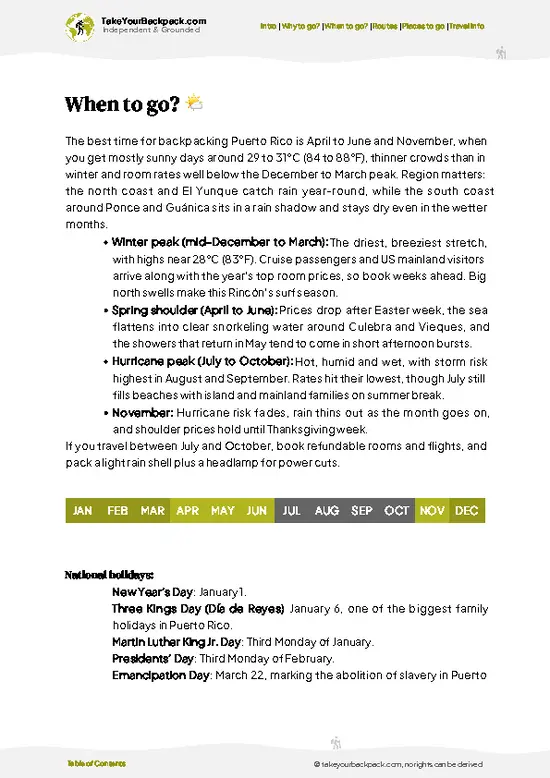
🌤️ When to go?Best time to visit La Parguera

  • Winter and early spring (December to April): Dry, breezy and the busiest stretch, with highs of 28-30°C (82-86°F) and nights near 21°C (70°F). Weekend rooms near the waterfront fill up, and prices run 20 to 40 percent higher.
  • Summer (June to August): Hot and humid, with highs of 31-33°C (88-91°F). Weekends turn loud with Puerto Rican families and boat traffic, and days stay long, with roughly 13 hours of light.
  • Hurricane season (August to October): Storms are most likely in September. Rooms are cheapest and the streets are quiet, but boat tours get canceled when seas pick up.
  • Moonless nights (year-round): The bioluminescent bay glows best around the new moon, and a full moon washes it out. Rain also dims the show.
  • Shoulder months (May and November): Lower prices, thinner crowds and mostly manageable
… read more 👉
  • Winter and early spring (December to April): Dry, breezy and the busiest stretch, with highs of 28-30°C (82-86°F) and nights near 21°C (70°F). Weekend rooms near the waterfront fill up, and prices run 20 to 40 percent higher.
  • Summer (June to August): Hot and humid, with highs of 31-33°C (88-91°F). Weekends turn loud with Puerto Rican families and boat traffic, and days stay long, with roughly 13 hours of light.
  • Hurricane season (August to October): Storms are most likely in September. Rooms are cheapest and the streets are quiet, but boat tours get canceled when seas pick up.
  • Moonless nights (year-round): The bioluminescent bay glows best around the new moon, and a full moon washes it out. Rain also dims the show.
  • Shoulder months (May and November): Lower prices, thinner crowds and mostly manageable weather.
Check the moon calendar before you book, and pick a weeknight in a new-moon week.


source: climatestotravel.comJANJanuary: excellent for travelingFEBFebruary: excellent for travelingMARMarch: excellent for travelingAPRApril: highly recommended for travelingMAYMay: good for travelingJUNJune: good for travelingJULJuly: fair for travelingAUGAugust: fair for travelingSEPSeptember: fair for travelingOCTOctober: good for travelingNOVNovember: good for travelingDECDecember: excellent for traveling
when-to-go

✈️ The backpacker research shortcutPuerto Rico Travel Guide

An offline-friendly backpacking guide with optimized travel routes, ranked highlights, transport advice, and the best areas to stay.
example page 0 from our offline Travel Guide for Puerto Rico
example page 1 from our offline Travel Guide for Puerto Rico
example page 2 from our offline Travel Guide for Puerto Rico
example page 3 from our offline Travel Guide for Puerto Rico
example page 4 from our offline Travel Guide for Puerto Rico
example page 5 from our offline Travel Guide for Puerto Rico
example page 6 from our offline Travel Guide for Puerto Rico
example page 7 from our offline Travel Guide for Puerto Rico
The digital guide (310 pages) contains:
✅ 81 highlights, ranked by travel appeal
✅ Optimized 5, 10 & 15-day travel routes
✅ Cities, national parks, landmarks, beaches
✅ How to get around
✅ Offline-friendly for travel without Wi-Fi
👉 Click to see all 30+ guide features

📅 Plan smarter in minutes, not weeks
✅ Month by month travel advice
✅ Festivals & national holidays
✅ Budget expectations

🗺️ Go to the right places, skip the overrated ones
✅ Honest pros & cons of destinations
✅ Top hikes, parks & viewpoints
✅ Lesser-known places most travelers miss
✅ Clear “worth it vs skip it” guidance

🛏️ Travel smoothly without rookie mistakes
✅ Best areas to stay
✅ Transport systems explained simply
✅ Common scams & safety advice
✅ SIM cards, money & practical tips

🌍 Understand the country, not just visit it
✅ Culture & traditions
✅ 52 Essential phrases & customs
✅ Festivals worth planning around
✅ Traveler-friendly historical context
✅ Insights that make places more meaningful

📱 Built for real travel conditions
✅ Fully downloadable PDF
✅ Works completely offline
✅ Optimized for phone use
✅ Useful in remote areas & buses
✅ Everything in one place
Stop searching, start planning
Get instant access to your full guide. 30‑day money-back guarantee.
+ Add another guide for just

By proceeding you agree to our terms.
Sent to your inbox immediately after payment • 100% Secure Checkout
Best Backpacking Travel Advisor 2025 tourism awardBest Backpacking
Travel Advisor
2025
What others say about Take Your Backpack Guides:
⭐⭐⭐⭐⭐
Fantastic, amazing amount of information!
⭐⭐⭐⭐⭐
My goodness this is amazing, it's what I've been looking for hats off too you!
⭐⭐⭐⭐⭐
I think this is absolutely BRILLIANT
⭐⭐⭐⭐
Very complete and informative. It's still missing places, but I gotta to commend you
⭐⭐⭐⭐⭐
This is truly amazing, thank you, can't wait to explore it with my kids!
⭐⭐⭐⭐⭐
Awesome resource, thank you!
⭐⭐⭐⭐⭐
This is amazing! Can't wait to explore the ones I haven't seen
⭐⭐⭐⭐
I love this! Well done, great idea.
⭐⭐⭐⭐⭐
Thanks for taking the time to make this gem!
⭐⭐⭐⭐⭐
This might be the best website I've ever seen.
⭐⭐⭐⭐⭐
Congratulations, and thank you so much for your work; it's incredibly valuable.
⭐⭐⭐⭐
In all seriousness I think you did a great job pointing out the important spots
⭐⭐⭐⭐⭐
10/10 very good
⭐⭐⭐⭐⭐
As someone who's only just starting to visit regularly this is awesome, thank you.
⭐⭐⭐⭐
Thank you very much! I'm going to visit my dad, it's going to be very useful!
⭐⭐⭐⭐⭐
This is really cool! We'll be travelling for the first time and this definitely come in handy.
⭐⭐⭐⭐⭐
You are now our minister of culture, congratulations 👨‍💼
⭐⭐⭐⭐⭐
Just wanted to tell you that this is a pearl! Going to follow your recommendations.
⭐⭐⭐⭐⭐
This is so cool. I'll definitely be using the resource for my travels soon.
⭐⭐⭐⭐⭐
This is very impressive! Good work.
⭐⭐⭐⭐⭐
This is an amazing and informative site. Very well done!

🛏️ Where to stay?Best areas and accommodation options

The best base for backpackers in La Parguera is a guesthouse or small inn within walking distance of the waterfront, because the town is compact and most of what you need is on or near one main road. Budget beds are scarce, and there are no big hostel dorms. Expect simple rooms with air-conditioning at roughly US$70 to 120 a night, with weekends and holiday periods at the top of that range. Weekday rates drop noticeably, so arriving Sunday to Thursday saves money.
Several small hotels and posadas sit along the main waterfront strip, and staying here means you can walk to the dock for evening boat … read more 👉
The best base for backpackers in La Parguera is a guesthouse or small inn within walking distance of the waterfront, because the town is compact and most of what you need is on or near one main road. Budget beds are scarce, and there are no big hostel dorms. Expect simple rooms with air-conditioning at roughly US$70 to 120 a night, with weekends and holiday periods at the top of that range. Weekday rates drop noticeably, so arriving Sunday to Thursday saves money.
Several small hotels and posadas sit along the main waterfront strip, and staying here means you can walk to the dock for evening boat tours, then to the seafood restaurants and bars. Light sleepers should ask for a room away from the street, as weekend music carries late.
A second option is a vacation rental or apartment in the residential streets and on the hillside, which often works out cheaper per person for two or three travelers. Many have kitchens, useful since groceries are limited in town. Book ahead for winter and summer weekends. If you arrive without a reservation, midweek walk-ins usually find something.

🚌 Day tripsEasy escapes and nearby places

La Parguera works well as a base for day trips if you have a rental car, since public transport in this corner of the southwest is thin and taxis add up quickly.
Cabo Rojo Lighthouse and Playa Sucia: Limestone cliffs, a white lighthouse and a long, pale beach make this the best coastal outing in the region. It takes about 45 minutes by car, and the whole trip costs roughly US$10 to 25 with fuel and a snack. Go early, as there is little shade, and bring water. First-timers often wear sandals on the rough trail to the cliffs.
👉 Explore Cabo Rojo Lighthouse
Guánica Dry Forest: This UNESCO biosphere reserve has a surprisingly arid landscape of cactus and twisted trees, with trails to quiet beaches such as Playa Tamarindo. The drive is about 25 to 30 minutes. Entry is free, and with fuel and lunch … read more 👉
La Parguera works well as a base for day trips if you have a rental car, since public transport in this corner of the southwest is thin and taxis add up quickly.
Cabo Rojo Lighthouse and Playa Sucia: Limestone cliffs, a white lighthouse and a long, pale beach make this the best coastal outing in the region. It takes about 45 minutes by car, and the whole trip costs roughly US$10 to 25 with fuel and a snack. Go early, as there is little shade, and bring water. First-timers often wear sandals on the rough trail to the cliffs.
👉 Explore Cabo Rojo Lighthouse
Guánica Dry Forest: This UNESCO biosphere reserve has a surprisingly arid landscape of cactus and twisted trees, with trails to quiet beaches such as Playa Tamarindo. The drive is about 25 to 30 minutes. Entry is free, and with fuel and lunch you will spend around US$15 to 30. Visit from December to April when it is cooler. Many people start hiking at midday and suffer, so begin by 8 a.m.
👉 Explore Guánica State Forest
San Germán: Puerto Rico’s second-oldest city has a Spanish colonial plaza, Porta Coeli church and cobbled lanes. Allow 45 minutes to drive, and budget US$15 to 30 including lunch. Weekday mornings are calmest, and on Sundays many places close.
👉 Explore San Germán
Gilligan’s Island, Guánica: Boats leave from Guánica for a mangrove cay with shallow turquoise water and snorkeling. The drive takes about 30 minutes, and the ferry costs around US$10 to 15. Go on a weekday, because weekends are crowded, and bring your own shade.

FAQCommon questions from travelers

Fly into San Juan or Ponce and drive to La Parguera, which sits on the southwest coast near Lajas. From Ponce it takes about 45 to 60 minutes, and from San Juan roughly 2 to 2.5 hours by car via Highway 52 and PR-116. A rental car is the practical choice, at around US$40 to 70 a day, since public buses rarely reach the village.
Yes, La Parguera is worth the trip if you want to paddle or boat through a bioluminescent bay, the only one in Puerto Rico where swimming is allowed on most nights. Plan one or two nights, and pick a moonless evening for the best glow. A tour costs roughly US$25 to 50, and the village also has mangrove cays for snorkeling.
Yes, La Parguera can be done in a day from Ponce or the Cabo Rojo area, though you will miss the glowing water unless you stay past dark. Driving from San Juan takes 2 to 2.5 hours each way, so an overnight is more sensible. Boat tours leave in the evening, and a night stay costs roughly US$70 to 120.
⚠️ Things can change over time, so always validate details locally before you go.

More places to explore across Puerto Rico

La Parguera isn’t the only highlight in Puerto Rico. Explore all what Puerto Rico has to offer.
Country photo of Puerto Rico

We 💚 feedbackParting advice and final tips

La Parguera suits paddlers, night owls and anyone who likes slow weekends more than ticking off sights. I would book the kayak tour for a dark night, then give yourself one lazy morning on a cay with a fresh fritter. Skip the loud weekend bars if you want quiet, and bring bug spray for the mangrove evenings.

✍️ Help improve this page!
The information on this page is based on in-depth research, insights shared by experienced travelers, and feedback from the local travel community in Puerto Rico. While every effort is made to keep the information accurate and current, conditions can change — so if you spot anything incorrect or outdated, please get in touch.


🙋‍♂️ Give feedback

👋 Meet the founderWho’s Behind Take Your Backpack?

Johan, backpacker and founder of TakeYourBackpackHi, I’m Johan (Netherlands 🇳🇱), the creator of TakeYourBackpack. Over the past 3 decades, I’ve backpacked through 90+ countries across six continents, gaining extensive experience with independent travel, long-term trips, and overland routes.

This site is built on a combination of firsthand travel experience and carefully curated insights from other backpackers. Many guides are based on places I’ve personally visited, while others bring together tips, observations, and practical advice shared by trusted travelers I’ve met along the way.

The goal is to provide realistic, experience-driven guidance — not generic itineraries — so you can explore destinations with better context, clearer expectations, and more confidence.