v2.webp)
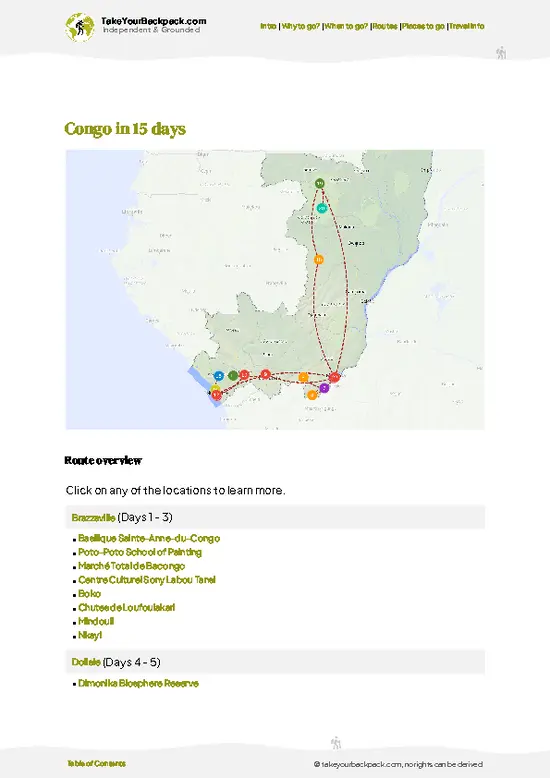
- Mbeli Bai observation platform: The raised wooden deck over the clearing is the whole reason to come. From here you scan open swamp, grass and standing pools with binoculars while researchers log every animal that steps out of the trees.
- Western lowland gorillas: Silverbacks, females and infants feed on aquatic plants in the shallows, often within clear view. Researchers have followed many individuals for years, and guides can point out which family group is below you.
- Forest elephants: They arrive in small groups to dig minerals from the mud, trunks probing the water. They are smaller than savanna elephants and have straighter tusks, and their steady, careful movement across the bai is oddly quiet for something so big.
- Sitatunga antelope: This shy, swamp-adapted antelope has splayed hooves made
- Mbeli Bai observation platform: The raised wooden deck over the clearing is the whole reason to come. From here you scan open swamp, grass and standing pools with binoculars while researchers log every animal that steps out of the trees.
- Western lowland gorillas: Silverbacks, females and infants feed on aquatic plants in the shallows, often within clear view. Researchers have followed many individuals for years, and guides can point out which family group is below you.
- Forest elephants: They arrive in small groups to dig minerals from the mud, trunks probing the water. They are smaller than savanna elephants and have straighter tusks, and their steady, careful movement across the bai is oddly quiet for something so big.
- Sitatunga antelope: This shy, swamp-adapted antelope has splayed hooves made for soft ground. You may see it at the edge of the clearing, especially in the calmer hours, standing half hidden in reeds.
- The swamp wade and forest walk: The approach is part of the attraction. You pass through shaded forest, cross thigh-deep channels and follow a narrow path under tall trees, with monkeys and birds calling above. Expect wet boots and a sense of just how dense this forest is.
Spotted a mistake or missing something? Contact us.

 Best Backpacking
.jpg) Hi, I’m Johan (Netherlands 🇳🇱), the creator of TakeYourBackpack. Over the past 3 decades, I’ve backpacked through 90+ countries across six continents, gaining extensive experience with independent travel, long-term trips, and overland routes.
Hi, I’m Johan (Netherlands 🇳🇱), the creator of TakeYourBackpack. Over the past 3 decades, I’ve backpacked through 90+ countries across six continents, gaining extensive experience with independent travel, long-term trips, and overland routes.