×

Congo🇨🇬 | citiesBrazzavilleCongo River views, colonial-era architecture, street markets, art galleries | things to do and best time to go

Explore Pointe-NoireExplore Dolisie

Backpacking in Brazzaville
🏆 Top pickcity ranked #1
By Johan Kruseman 🇳🇱 | Updated September 3, 2026

Most travelers only realize after arrival that Brazzaville’s riverfront cafés and leafy boulevards offer a rare, low-key breather in Central Africa—especially if you’re coming from the chaos of Kinshasa across the river. Brazzaville sits on the north bank of the Congo River, right at the heart of the country, and it’s the kind of capital where you can actually hear yourself think. Backpackers get a city that’s manageable on foot, with a handful of real highlights: the vivid murals of Poto-Poto, the Art Deco Basilique Sainte-Anne, and the lively Marché Total, where bargaining is a sport. You won’t find a backpacker swarm here—meeting fellow travelers is more luck than certainty—but costs are lower than in Pointe-Noire, and the city’s reputation for safety is deserved, especially by regional standards. Nightlife is more about cold beers and music than wild clubs. Brazzaville feels relaxed, a little faded, and surprisingly friendly—more ‘old-school explorer’ than ‘tourist conveyor belt.’

Discover everything you want to know in the 📖 Congo Travel Guide.


Get your Congo guide
52 ranked highlights, routes & tips, works offline (218 pages)
Loading the map 🌍
CLICK TO FILTER
cities
towns
landmarks
national parks
hikes
beaches
attractions
festivals
regions
SHOW COUNTRY’S BESTSHOW ALL

✨ Why go?
Ranked #1 city in Congo
What sets this place apart

Backpackers find themselves in Brazzaville for a mix of practical reasons and unique experiences. First off, the basecamp value is solid. It’s a strategic launchpad for day trips into the surrounding wilderness or across the river to Kinshasa, making it a smart stop on your Congo itinerary.

The hostel scene is surprisingly vibrant, offering budget-friendly options that foster a communal vibe. You’ll meet fellow travelers eager to swap stories and tips. When it comes to food, local markets and street vendors serve up delicious, affordable meals that let you taste the culture without breaking the bank.

The city is walkable, allowing you to soak in the atmosphere at your own pace. You can explore bustling streets, vibrant neighborhoods, and local art without the hassle of public transport. … read more 👉
Backpackers find themselves in Brazzaville for a mix of practical reasons and unique experiences. First off, the basecamp value is solid. It’s a strategic launchpad for day trips into the surrounding wilderness or across the river to Kinshasa, making it a smart stop on your Congo itinerary.

The hostel scene is surprisingly vibrant, offering budget-friendly options that foster a communal vibe. You’ll meet fellow travelers eager to swap stories and tips. When it comes to food, local markets and street vendors serve up delicious, affordable meals that let you taste the culture without breaking the bank.

The city is walkable, allowing you to soak in the atmosphere at your own pace. You can explore bustling streets, vibrant neighborhoods, and local art without the hassle of public transport. As for nightlife, there’s a laid-back charm to the bars and music venues, perfect for unwinding after a day of exploration.

If you’re looking for a place that balances affordability with a touch of adventure, Brazzaville fits the bill. It’s not just a stopover; it’s a chance to dive into the heart of Congo while keeping your travel style intact.
Want to include Brazzaville in your Congo route?
Create a personalized Congo itinerary that includes Brazzaville and the places that fit your trip — based on your travel style, budget, and available time. Get your route in seconds.

Generate my trip

💡 HighlightsMust-see experiences and standout moments

  1. Mausolée Pierre Savorgnan de Brazza — The memorial to the city’s founder: a striking colonial-era mausoleum and landscaped esplanade on the river that gives a real sense of Brazzaville’s origin story and offers great views across to Kinshasa.
  2. Basilique Sainte-Anne — A monumental church with impressive interior frescoes and architecture; it’s an important spiritual and community hub and one of the city’s most photogenic landmarks.
  3. Musée National du Congo — Small but valuable museum showcasing Congolese history, ethnography and traditional art — useful context before wandering neighborhoods and markets.
  4. Poto-Poto neighborhood — A lived-in, colorful district where you can see street life, traditional crafts, painted façades and old colonial housing; great for atmospherics, people-watching
read more 👉
  1. Mausolée Pierre Savorgnan de Brazza — The memorial to the city’s founder: a striking colonial-era mausoleum and landscaped esplanade on the river that gives a real sense of Brazzaville’s origin story and offers great views across to Kinshasa.
  2. Basilique Sainte-Anne — A monumental church with impressive interior frescoes and architecture; it’s an important spiritual and community hub and one of the city’s most photogenic landmarks.
  3. Musée National du Congo — Small but valuable museum showcasing Congolese history, ethnography and traditional art — useful context before wandering neighborhoods and markets.
  4. Poto-Poto neighborhood — A lived-in, colorful district where you can see street life, traditional crafts, painted façades and old colonial housing; great for atmospherics, people-watching and informal markets.
  5. Le Plateau (central district) — The administrative and colonial heart of the city: walkable streets, government buildings and plazas that tell the story of Brazzaville’s French-era urban layout and modern civic life.
  6. Quai / Riverfront promenade — The Congo River edge is the city’s social spine: ferry activity, fishermen, and open-air cafés with unbeatable views of Kinshasa across the water — perfect at sunset.
  7. Marché du Plateau (central market) — A bustling market where you can buy fresh produce, fabrics, local snacks and everyday goods; noisy, chaotic and essential for understanding daily Congolese commerce.
  8. Grande Poste — The grand colonial post office is an architectural touchstone in the center — a quick stop to appreciate period masonry, signage and the feel of old Brazzaville.
  9. Stade Alphonse Massemba-Débat — More than a sports venue: catch a match or a large event to experience local energy, music, and community spirit in a way you won’t see from a walking tour.
  10. Institut Français / Maison de la Culture — The cultural center hosts exhibitions, concerts and film nights; great place to catch contemporary Congolese art and events with an international flair.
A few nearby, visitable day-trip highlights: take the short ferry to Kinshasa for a unique double-capital experience, head north to the Kintélé sports complex and wetlands area, or explore local riverside villages and markets just outside Brazzaville for a quieter, more rural slice of Congolese life.
Spotted a mistake or missing something? Contact us.

🏘️ NeighborhoodsHow different areas shape the experience

Brazzaville, the capital of Congo, offers a unique blend of culture, history, and urban life. Each neighborhood has its own character, making it essential to choose wisely based on your travel style.

Centre Ville: This is the heart of Brazzaville. It’s bustling with markets, shops, and cafes. The vibe is energetic, perfect for those who thrive in lively environments. Costs are moderate, and you can easily walk to many attractions. Nightlife is vibrant, with bars and music venues nearby. Ideal for short stays, as you can soak in the city’s pulse quickly.

Pointe-Noire: While technically a separate city, it’s a popular getaway from Brazzaville. Known for its coastal charm, it offers a more relaxed atmosphere. Costs can be higher here, especially near the beach. Public transport is available, … read more 👉
Brazzaville, the capital of Congo, offers a unique blend of culture, history, and urban life. Each neighborhood has its own character, making it essential to choose wisely based on your travel style.

Centre Ville: This is the heart of Brazzaville. It’s bustling with markets, shops, and cafes. The vibe is energetic, perfect for those who thrive in lively environments. Costs are moderate, and you can easily walk to many attractions. Nightlife is vibrant, with bars and music venues nearby. Ideal for short stays, as you can soak in the city’s pulse quickly.

Pointe-Noire: While technically a separate city, it’s a popular getaway from Brazzaville. Known for its coastal charm, it offers a more relaxed atmosphere. Costs can be higher here, especially near the beach. Public transport is available, but renting a bike or walking is more enjoyable. Great for longer stays if you want to unwind by the sea.

Ngaliema: This residential area is quieter, making it suitable for those seeking a break from the hustle. It’s more affordable, with local eateries and markets. Walkability is decent, but you might need to rely on taxis for longer distances. Perfect for longer stays, especially if you want to immerse yourself in local life.

Kintélé: A developing area with modern amenities and parks. It’s a bit further from the city center, so transport is necessary. Costs are generally lower, and the vibe is laid-back. Good for longer stays if you prefer a suburban feel while still being connected to the city.

Choose your neighborhood wisely to maximize your experience in Brazzaville. Each area offers distinct advantages, so align your choice with your travel goals.

⌛️ 1 dayHow to make the most of one day

Brazzaville, the capital of Congo, pulses with a unique blend of history and culture. It’s a city where the Congo River whispers stories of the past, and vibrant street life offers a taste of local flavor. Spending a day here is like diving into a rich tapestry of experiences, and you can do it without feeling rushed.

Start your morning in the lively neighborhood of Poto-Poto. Grab a cup of local coffee at a street vendor, where the aroma of freshly brewed beans fills the air. After that, stroll over to the Poto-Poto Market. This bustling hub is not just for tourists; it’s where locals shop for everything from fresh produce to handmade crafts. Engage with vendors, practice your French, and soak in the vibrant atmosphere. It’s a perfect way to kick off your day.

As the sun climbs higher, … read more 👉
Brazzaville, the capital of Congo, pulses with a unique blend of history and culture. It’s a city where the Congo River whispers stories of the past, and vibrant street life offers a taste of local flavor. Spending a day here is like diving into a rich tapestry of experiences, and you can do it without feeling rushed.

Start your morning in the lively neighborhood of Poto-Poto. Grab a cup of local coffee at a street vendor, where the aroma of freshly brewed beans fills the air. After that, stroll over to the Poto-Poto Market. This bustling hub is not just for tourists; it’s where locals shop for everything from fresh produce to handmade crafts. Engage with vendors, practice your French, and soak in the vibrant atmosphere. It’s a perfect way to kick off your day.

As the sun climbs higher, make your way to the Basilique Sainte-Anne. This stunning church, with its striking architecture, offers a peaceful respite from the city’s hustle. Spend some time admiring the stained glass and the intricate details that tell stories of faith and resilience.

In the afternoon, head to the Congo River waterfront. The views are spectacular, and you can watch boats glide by while enjoying a leisurely lunch at one of the riverside eateries. Try the grilled fish, a local specialty. Afterward, take a short walk to the nearby Parc de la Réserve, a lesser-known spot where you can escape the urban buzz. Here, you might spot some local wildlife and enjoy the lush greenery.

As evening approaches, return to the city center and explore the lively nightlife in the Plateau neighborhood. Grab a drink at a local bar, where you can mingle with residents and soak in the rhythms of Congolese music. This is where the city truly comes alive, and you’ll feel the pulse of Brazzaville in every beat.

By the end of the day, you’ll have tasted the essence of Congo, balancing comfort and adventure in a city that’s often overlooked.
Turn your Brazzaville visit into an Congo adventure
Build a complete Congo route with Brazzaville, hidden gems, must-see destinations, and realistic travel times included.

Generate my trip

🌤️ When to go?Choosing the right time of year


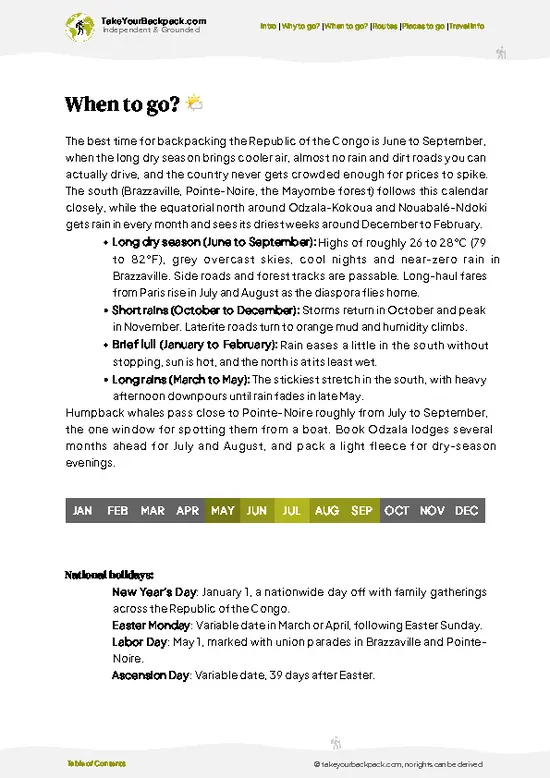
  • Topic: Weather Brazzaville experiences a tropical climate with a clear wet season from October to May, bringing heavy rains that can disrupt travel plans and outdoor activities. The dry season, from June to September, offers more stable weather, making it the prime window for backpackers.

  • Topic: Temperature Temperatures hover between 24°C and 30°C (75°F to 86°F) year-round, but humidity spikes during the wet season, making it feel hotter and stickier. The dry season provides more comfortable, less oppressive heat.

  • Topic: Daylight Hours Near the equator, daylight remains steady, roughly 12 hours daily, so you won’t lose time to short days. This consistency lets you plan hikes and city explorations without worrying about early nightfall.

  • Topic: Crowds Tourist traffic is low year-round,
read more 👉

  • Topic: Weather Brazzaville experiences a tropical climate with a clear wet season from October to May, bringing heavy rains that can disrupt travel plans and outdoor activities. The dry season, from June to September, offers more stable weather, making it the prime window for backpackers.

  • Topic: Temperature Temperatures hover between 24°C and 30°C (75°F to 86°F) year-round, but humidity spikes during the wet season, making it feel hotter and stickier. The dry season provides more comfortable, less oppressive heat.

  • Topic: Daylight Hours Near the equator, daylight remains steady, roughly 12 hours daily, so you won’t lose time to short days. This consistency lets you plan hikes and city explorations without worrying about early nightfall.

  • Topic: Crowds Tourist traffic is low year-round, but the dry season sees a slight uptick as travelers avoid rain. You’ll rarely face crowds, but expect more fellow adventurers during June to September.

  • Topic: Seasonal Activities The dry months are best for river excursions on the Congo River and exploring local markets and cultural sites without the hassle of muddy trails or flooded roads.

  • Topic: Price Fluctuations Accommodation and transport prices dip during the wet season due to lower demand, but you trade cost savings for potential weather headaches. The dry season commands higher rates but delivers smoother logistics and more reliable experiences.


Pro-tip: Aim for June to September to maximize comfort and reliability, then use the shoulder months for budget-conscious travelers willing to embrace the rain’s unpredictability.


source: climatestotravel.comJANJanuary: fair for travelingFEBFebruary: fair for travelingMARMarch: fair for travelingAPRApril: fair for travelingMAYMay: good for travelingJUNJune: excellent for travelingJULJuly: excellent for travelingAUGAugust: excellent for travelingSEPSeptember: excellent for travelingOCTOctober: fair for travelingNOVNovember: fair for travelingDECDecember: fair for traveling
when-to-go

✈️ The backpacker research shortcutCongo Travel Guide

An offline-friendly backpacking guide with optimized travel routes, ranked highlights, transport advice, and the best areas to stay.
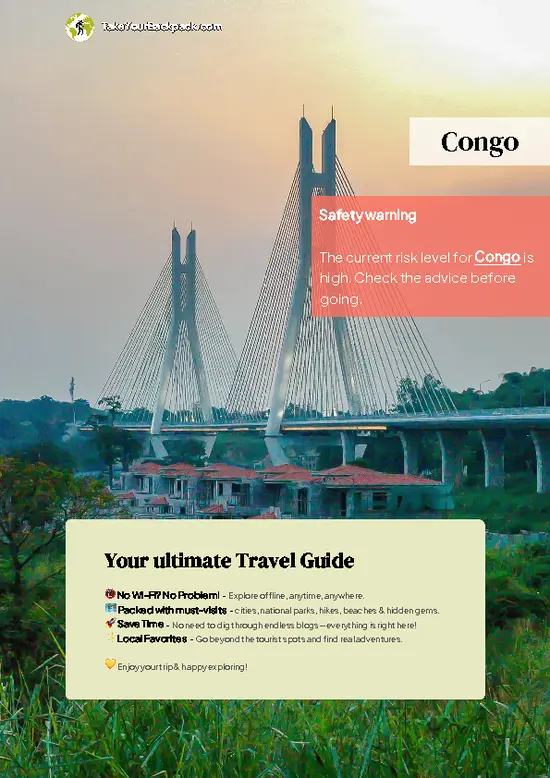
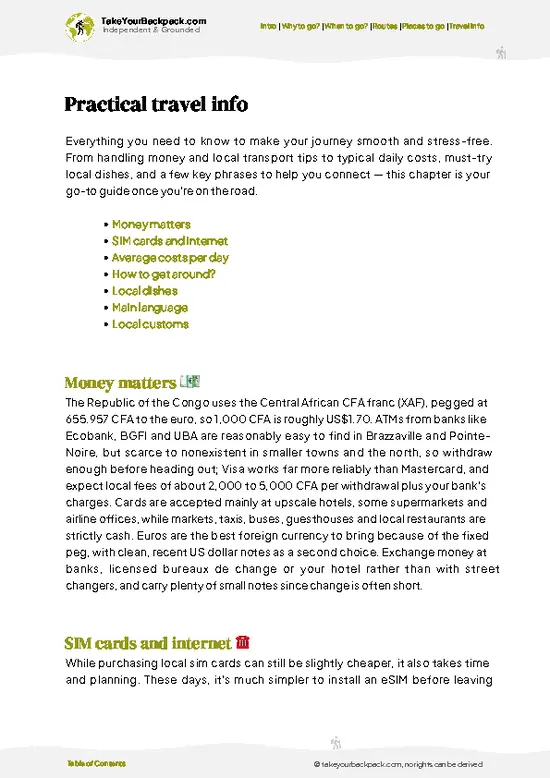
example page 0 from our offline Travel Guide for Republic of the Congo
example page 1 from our offline Travel Guide for Republic of the Congo
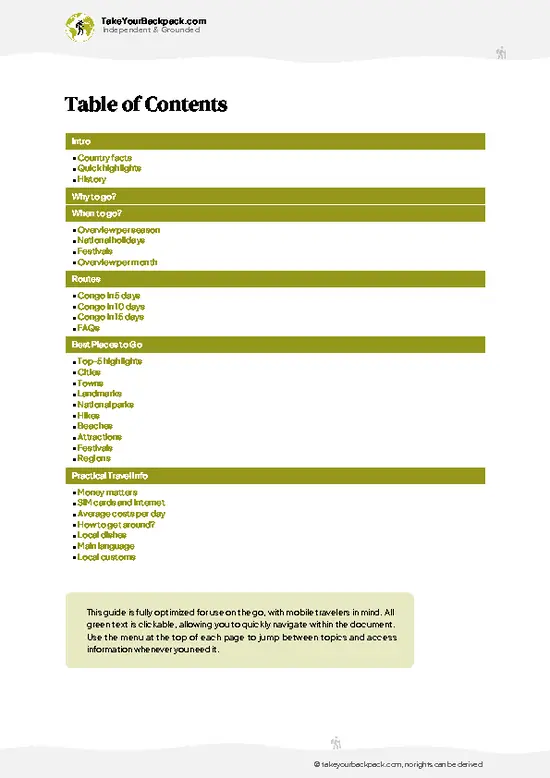
example page 2 from our offline Travel Guide for Republic of the Congo
example page 3 from our offline Travel Guide for Republic of the Congo
example page 4 from our offline Travel Guide for Republic of the Congo
example page 5 from our offline Travel Guide for Republic of the Congo
example page 6 from our offline Travel Guide for Republic of the Congo
example page 7 from our offline Travel Guide for Republic of the Congo
The digital guide (218 pages) contains:
52 highlights, ranked by travel appeal
Optimized 5, 10 & 15-day travel routes
Cities, national parks, landmarks, beaches
How to get around
Offline-friendly for travel without Wi-Fi
👉 Click to see all 30+ guide features

📅 Plan smarter in minutes, not weeks
Month by month travel advice
Festivals & national holidays
Budget expectations

🗺️ Go to the right places, skip the overrated ones
Honest pros & cons of destinations
Top hikes, parks & viewpoints
Lesser-known places most travelers miss
Clear “worth it vs skip it” guidance

🛏️ Travel smoothly without rookie mistakes
Best areas to stay
Transport systems explained simply
Common scams & safety advice
SIM cards, money & practical tips

🌍 Understand the country, not just visit it
Culture & traditions
52 Essential phrases & customs
Festivals worth planning around
Traveler-friendly historical context
Insights that make places more meaningful

📱 Built for real travel conditions
Fully downloadable PDF
Works completely offline
Optimized for phone use
Useful in remote areas & buses
Everything in one place
Save weeks of stressful planning
Get instant access to your full guide. 30‑day money-back guarantee.
+ Add another guide for just US$7.80

By proceeding you agree to our terms.
Sent to your inbox immediately after payment • 100% Secure Checkout
Best Backpacking Travel Advisor 2025 tourism awardBest Backpacking
Travel Advisor
2025
What others say about Take Your Backpack Guides:
⭐⭐⭐⭐⭐
Fantastic, amazing amount of information!
⭐⭐⭐⭐⭐
My goodness this is amazing, it's what I've been looking for hats off too you!
⭐⭐⭐⭐⭐
I think this is absolutely BRILLIANT
⭐⭐⭐⭐
Very complete and informative. It's still missing places, but I gotta to commend you
⭐⭐⭐⭐⭐
This is truly amazing, thank you, can't wait to explore it with my kids!
⭐⭐⭐⭐⭐
Awesome resource, thank you!
⭐⭐⭐⭐⭐
This is amazing! Can't wait to explore the ones I haven't seen
⭐⭐⭐⭐
I love this! Well done, great idea.
⭐⭐⭐⭐⭐
Thanks for taking the time to make this gem!
⭐⭐⭐⭐⭐
This might be the best website I've ever seen.
⭐⭐⭐⭐⭐
Congratulations, and thank you so much for your work; it's incredibly valuable.
⭐⭐⭐⭐
In all seriousness I think you did a great job pointing out the important spots
⭐⭐⭐⭐⭐
10/10 very good
⭐⭐⭐⭐⭐
As someone who's only just starting to visit regularly this is awesome, thank you.
⭐⭐⭐⭐
Thank you very much! I'm going to visit my dad, it's going to be very useful!
⭐⭐⭐⭐⭐
This is really cool! We'll be travelling for the first time and this definitely come in handy.
⭐⭐⭐⭐⭐
You are now our minister of culture, congratulations 👨‍💼
⭐⭐⭐⭐⭐
Just wanted to tell you that this is a pearl! Going to follow your recommendations.
⭐⭐⭐⭐⭐
This is so cool. I'll definitely be using the resource for my travels soon.
⭐⭐⭐⭐⭐
This is very impressive! Good work.
⭐⭐⭐⭐⭐
This is an amazing and informative site. Very well done!

🛏️ Where to stay?Choosing the right base

In Brazzaville, the real backpacker sweet spot is the Bacongo district. It’s where you’ll find the best balance of safety, social buzz, and budget options. Bacongo sits just across the Congo River from Kinshasa, giving it a lively, youthful vibe without the chaos of the city center. It’s a place where you can walk around without feeling like you’re constantly dodging trouble, which is a big win in a city where safety varies widely by neighborhood.

Hostels and guesthouses here cater to solo travelers and budget backpackers, making it easy to meet others without the sterile feel of a big hotel. … read more 👉
In Brazzaville, the real backpacker sweet spot is the Bacongo district. It’s where you’ll find the best balance of safety, social buzz, and budget options. Bacongo sits just across the Congo River from Kinshasa, giving it a lively, youthful vibe without the chaos of the city center. It’s a place where you can walk around without feeling like you’re constantly dodging trouble, which is a big win in a city where safety varies widely by neighborhood.

Hostels and guesthouses here cater to solo travelers and budget backpackers, making it easy to meet others without the sterile feel of a big hotel. The vibe is relaxed but active—street markets, local eateries, and riverside hangouts create natural social hubs. Compared to the more upscale but isolated Poto-Poto or the business-heavy city center, Bacongo offers a more authentic, grounded experience without sacrificing comfort or convenience.

If you’re weighing your options, Bacongo wins on the comfort-to-cost ratio. It’s not the flashiest part of Brazzaville, but it’s where you get the most bang for your buck in terms of safety, social opportunities, and access to local culture. For a backpacker, that’s the kind of trade-off that turns a trip from just “visiting” into genuinely living the city.

🚌 Getting aroundHow to get from A to B

Brazzaville moves at its own rhythm — a blend of laid-back afternoons and bursts of street-level hustle. This isn’t a city where you’ll find strict timetables or polished transit apps dictating your every move. Instead, it’s a dance of intuition, where the flow depends on the pulse of the streets, the chatter of vendors, and the occasional honk of a shared taxi weaving through traffic. For a budget traveler, understanding this flow is like cracking the city’s code: you learn when to wait, when to jump in, and when to walk it out. The trade-offs between time, money, and comfort here are clear, and mastering them means you’re not just surviving Brazzaville—you’re owning it.


  • Walking: The ultimate zero-cost option and often the fastest way to navigate Brazzaville’s dense neighborhoods. Streets
read more 👉
Brazzaville moves at its own rhythm — a blend of laid-back afternoons and bursts of street-level hustle. This isn’t a city where you’ll find strict timetables or polished transit apps dictating your every move. Instead, it’s a dance of intuition, where the flow depends on the pulse of the streets, the chatter of vendors, and the occasional honk of a shared taxi weaving through traffic. For a budget traveler, understanding this flow is like cracking the city’s code: you learn when to wait, when to jump in, and when to walk it out. The trade-offs between time, money, and comfort here are clear, and mastering them means you’re not just surviving Brazzaville—you’re owning it.


  • Walking: The ultimate zero-cost option and often the fastest way to navigate Brazzaville’s dense neighborhoods. Streets can be uneven, so sturdy shoes are a must. Walking lets you absorb the city’s texture but expect to slow down during midday heat or sudden rain.


  • Shared Taxis (Taxi Collectif): These minibuses or cars run on flexible schedules, filling up before they leave. Fares are dirt cheap—usually under $1 USD—but comfort is minimal and space tight. They run from early morning (around 6 AM) until late evening (around 9 PM). Expect stops on demand, which means travel time can stretch unpredictably.


  • Regular Taxis: More comfortable and direct than shared taxis, but the price jumps accordingly. Negotiation is key since meters are rare. Best for short hops or when you’re pressed for time, but budget travelers should use sparingly to avoid blowing their funds.


  • Motorcycle Taxis (Boda-Boda): Quick and nimble, these are perfect for squeezing through traffic jams. They operate from dawn until dusk, with fares slightly higher than shared taxis but still affordable. Safety can be a concern, so helmet use is non-negotiable.


  • Ferries to Kinshasa: Not your daily commute, but a crucial link if you want to cross the Congo River. Schedules are irregular and often weather-dependent, with prices varying widely. It’s a slow, sometimes uncomfortable ride, but the experience is worth it if you’re crossing borders on a budget.


In Brazzaville, every transit choice is a strategic move on your travel chessboard. Walk when the distance is manageable and the weather cooperates. Grab a shared taxi for the authentic local vibe and unbeatable price, but factor in extra time. Reserve regular taxis for moments when comfort or speed trumps cost. Motorcycle taxis offer a thrilling shortcut but come with trade-offs in safety. And if you’re eyeing a cross-river adventure, brace for the ferry’s unpredictability. Knowing these trade-offs lets you craft a trip that balances your priorities—whether that’s saving money, shaving off travel time, or simply soaking in the city’s pulse without breaking the bank.

👛 Costs (as of 3 September 2026)Typical daily expenses

Backpacking in Brazzaville, Congo, presents a clear set of trade-offs between time, money, and comfort. Understanding these costs lets you play the system smartly, picking what matters most to you.
  • Dorm Accommodation (High Season): Expect to pay around €15-€25 per night. High season drives prices up due to demand, and options are limited but decent in basic guesthouses or hostels.
  • Dorm Accommodation (Off-Season): Prices drop to about €10-€15 per night. Off-season means fewer tourists and better bargaining power, but some places may close or reduce services.
  • Meals: Street food and local eateries cost roughly €3-€7 per meal. You can stretch your budget by eating local dishes like grilled fish or cassava, but Western-style restaurants will push costs higher.
  • Local Transport: Minibuses and
read more 👉
Backpacking in Brazzaville, Congo, presents a clear set of trade-offs between time, money, and comfort. Understanding these costs lets you play the system smartly, picking what matters most to you.
  • Dorm Accommodation (High Season): Expect to pay around €15-€25 per night. High season drives prices up due to demand, and options are limited but decent in basic guesthouses or hostels.
  • Dorm Accommodation (Off-Season): Prices drop to about €10-€15 per night. Off-season means fewer tourists and better bargaining power, but some places may close or reduce services.
  • Meals: Street food and local eateries cost roughly €3-€7 per meal. You can stretch your budget by eating local dishes like grilled fish or cassava, but Western-style restaurants will push costs higher.
  • Local Transport: Minibuses and shared taxis run about €0.30-€0.60 per trip. They’re cheap but can be slow and crowded, so factor in extra time if you choose this option.
  • City Transport Pass: Brazzaville doesn’t have a formal city transport pass system. Budget around €1-€2 daily if you rely on multiple taxi rides or private transport for convenience.
  • Basic Activities/Entry Fees: Museums and local attractions typically charge €2-€5. These are modest fees but add up if you’re hitting several spots in a day.
  • Miscellaneous Expenses: Include about €2-€5 for bottled water, snacks, or small tips. These small costs keep you comfortable and safe but can sneak up if ignored.

Total daily budgets for backpackers in Brazzaville generally range from about €25 on a tight, off-season plan to €45 if you lean toward more comfort or high-season rates. Knowing these trade-offs lets you decide where to save and where to splurge, turning your trip into a strategic win rather than a guessing game.


source: congo-tourisme.org
⚠️ Prices can change and everyone travels differently, so take this as a rough guide. Hope it helps you plan your adventure!

🚌 Day tripsWhere to go beyond the main area

Brazzaville is a fantastic launchpad for day trips that reveal the heart of Congo. With a bit of planning, you can dive into rich experiences without breaking the bank.

Lola ya Bonobo
Just a short drive from Brazzaville, Lola ya Bonobo is a sanctuary dedicated to the conservation of bonobos, one of our closest relatives. Spend your day learning about these incredible primates and the efforts to protect their habitat. The guided tours are engaging, and you’ll leave with a deeper understanding of wildlife conservation. Expect to pay around $10 for entry and transport, and plan your visit during the dry season (May to September) for the best experience. A common mistake? Arriving too late in the day; the tours can fill up quickly.


Mikongo Forest
For those who crave adventure, Mikongo … read more 👉
Brazzaville is a fantastic launchpad for day trips that reveal the heart of Congo. With a bit of planning, you can dive into rich experiences without breaking the bank.

Lola ya Bonobo
Just a short drive from Brazzaville, Lola ya Bonobo is a sanctuary dedicated to the conservation of bonobos, one of our closest relatives. Spend your day learning about these incredible primates and the efforts to protect their habitat. The guided tours are engaging, and you’ll leave with a deeper understanding of wildlife conservation. Expect to pay around $10 for entry and transport, and plan your visit during the dry season (May to September) for the best experience. A common mistake? Arriving too late in the day; the tours can fill up quickly.


Mikongo Forest
For those who crave adventure, Mikongo Forest offers an immersive experience in the lush rainforest. It’s about a two-hour drive from Brazzaville, and you can join a guided trek to explore the diverse flora and fauna. The cost is roughly $15 for transport and a guide. The best time to visit is during the dry season when trails are more accessible. Many first-timers underestimate the physical demands of the trek, so be prepared with sturdy shoes and plenty of water.


Kinshasa
Crossing the Congo River into Kinshasa, the capital of the Democratic Republic of the Congo, is a cultural experience like no other. The ferry ride is about 30 minutes, and you can spend the day exploring vibrant markets, local music, and delicious street food. Budget around $20 for the ferry and meals. The best time to visit is on weekends when the city is alive with activity. A common pitfall? Not checking the ferry schedule; they can be unpredictable, so plan accordingly.


Bacongo
Just a short jaunt from Brazzaville, Bacongo is a neighborhood rich in art and culture. You can wander through local galleries and street art installations, soaking in the creativity of the area. The travel time is minimal, and you can easily spend a few hours here for less than $10. The dry season is ideal for strolling around. First-timers often miss the small, tucked-away galleries, so keep your eyes peeled for the unexpected.


Congo River Cruise
For a unique perspective, consider a day cruise on the Congo River. It’s a relaxing way to see the landscape and local life from the water. Cruises can range from $15 to $30, depending on the length and amenities. The best time is early morning or late afternoon for cooler temperatures and stunning light. Many overlook the importance of booking in advance, especially during peak tourist seasons.
Want to know what more Congo offers?
The Congo Travel Guide describes 52 highlights, from cities to national parks, from beaches to hikes

Get the Travel Guide -

🍲 FoodEating & Drinking in Brazzaville

In Congo, food is a vibrant tapestry of flavors and communal experiences. Signature dishes like saka-saka, made from cassava leaves, and moambe, a rich chicken stew cooked in palm oil, are must-tries. The earthy, nutty flavors will linger on your palate, inviting you back for more. Don’t miss out on fufu, a starchy side that pairs beautifully with stews, adding a comforting texture to your meals.

Backpackers often find their meals in bustling markets or from street vendors. The aroma of grilled fish and skewered meats fills the air, drawing you in. Grab a plate of kwanga, a fermented cassava bread, from a vendor and enjoy it with a side of spicy sauce. It’s cheap, filling, and utterly local. Casual eateries buzz with laughter and chatter, where you can share a meal with new friends or locals … read more 👉
In Congo, food is a vibrant tapestry of flavors and communal experiences. Signature dishes like saka-saka, made from cassava leaves, and moambe, a rich chicken stew cooked in palm oil, are must-tries. The earthy, nutty flavors will linger on your palate, inviting you back for more. Don’t miss out on fufu, a starchy side that pairs beautifully with stews, adding a comforting texture to your meals.

Backpackers often find their meals in bustling markets or from street vendors. The aroma of grilled fish and skewered meats fills the air, drawing you in. Grab a plate of kwanga, a fermented cassava bread, from a vendor and enjoy it with a side of spicy sauce. It’s cheap, filling, and utterly local. Casual eateries buzz with laughter and chatter, where you can share a meal with new friends or locals eager to share their stories.

When it comes to drinks, try palm wine, a sweet, fermented beverage that’s often enjoyed during gatherings. It’s a social drink, meant to be shared, so don’t hesitate to join in. Etiquette here leans towards communal sharing; it’s customary to offer a toast before sipping. Embrace the warmth of the culture, and you’ll find that every bite and sip tells a story.

🛡️ SafetyScams, Hazards, and Annoyances

Brazzaville, the capital of Congo, is generally safe for backpackers, but a few situational awareness tips can enhance your experience. Stick to well-trodden areas like the lively Boulevard du 30 Juin during the day. At night, it’s wise to avoid quieter streets and stick to populated spots.

Solo travelers should be particularly mindful after dark. While the city isn’t riddled with crime, petty theft can happen, especially in crowded markets or public transport. Keep your belongings close and avoid flashy displays of wealth.

Scams are rare, but be cautious with unofficial taxi drivers. Always negotiate fares beforehand or use a reputable ride-hailing app. Street vendors can be persistent, so a polite but firm “no, thank you” usually does the trick.

Overall, carry yourself confidently … read more 👉
Brazzaville, the capital of Congo, is generally safe for backpackers, but a few situational awareness tips can enhance your experience. Stick to well-trodden areas like the lively Boulevard du 30 Juin during the day. At night, it’s wise to avoid quieter streets and stick to populated spots.

Solo travelers should be particularly mindful after dark. While the city isn’t riddled with crime, petty theft can happen, especially in crowded markets or public transport. Keep your belongings close and avoid flashy displays of wealth.

Scams are rare, but be cautious with unofficial taxi drivers. Always negotiate fares beforehand or use a reputable ride-hailing app. Street vendors can be persistent, so a polite but firm “no, thank you” usually does the trick.

Overall, carry yourself confidently and engage with locals; they’re often friendly and helpful. With a little awareness, you can navigate Brazzaville smoothly and enjoy its unique character.

FAQFrequently asked questions about Brazzaville

2 to 3 days are sufficient to explore Brazzaville, covering main attractions like the Basilique Sainte-Anne, the Congo River waterfront, and local markets. This timeframe allows for a relaxed pace and some cultural immersion.
Brazzaville is moderately safe for solo backpackers but requires caution, especially at night and in less crowded areas. Petty crime can occur, so keeping valuables secure and avoiding isolated spots after dark is advised.
Brazzaville is known for being the capital of the Republic of the Congo and its location on the Congo River opposite Kinshasa. It is also recognized for its colonial architecture and vibrant local markets.
⚠️ Things can change over time, so always validate details locally before you go.

Other Congolese cities near Brazzaville

Explore more nearby:

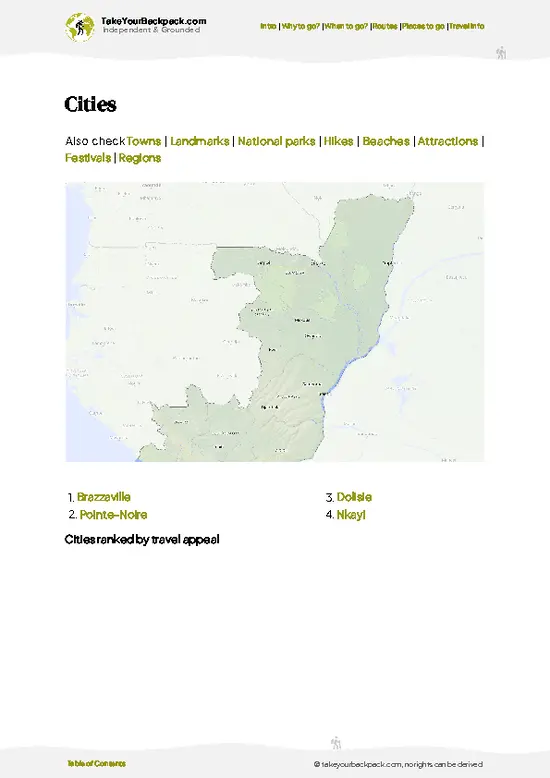
  • Nkayi—sugar industry, railway hub, planned streets| 221 km away
  • Dolisie—Railway junction, timber industry, local eateries, forest edge| 289 km away
  • Pointe-Noire—Atlantic beaches, oil port, seafood restaurants, nightlife| 383 km away

💡 Not sure where to go next?
Create a personalized itinerary for Congo including Brazzaville and the places that fit your trip.

Generate my itinerary

👉 Discover all cities

Or checkout all Congo has to offer (think cities, towns, villages, national parks, hikes, beaches, festivals)
Country photo of Congo

We 💚 feedbackSumming up the experience

Brazzaville has a pulse that’s hard to ignore. The blend of French colonial charm and vibrant local culture creates a unique vibe. One surprise? The lively markets—especially Marché Total—where you can snag everything from handmade crafts to street food that’ll make your taste buds dance. Just a heads-up: the heat can be relentless, so hydrate and pace yourself. Embrace the chaos, and you’ll find that the city’s energy is infectious. It’s a place that rewards curiosity, so dive in!

✍️ Help improve this page!
The information on this page is based on in-depth research, insights shared by experienced travelers, and feedback from the local travel community in Congo. While every effort is made to keep the information accurate and current, conditions can change — so if you spot anything incorrect or outdated, please get in touch.


🙋‍♂️ Give feedback

👋 Meet the founderWho’s Behind Take Your Backpack?

Johan, backpacker and founder of TakeYourBackpackHi, I’m Johan (Netherlands 🇳🇱), the creator of TakeYourBackpack. Over the past decade, I’ve backpacked through 80+ countries across six continents, gaining extensive experience with independent travel, long-term trips, and overland routes.

This site is built on a combination of firsthand travel experience and carefully curated insights from other backpackers. Many guides are based on places I’ve personally visited, while others bring together tips, observations, and practical advice shared by trusted travelers I’ve met along the way.

The goal is to provide realistic, experience-driven guidance — not generic itineraries — so you can explore destinations with better context, clearer expectations, and more confidence.

Get full Congo guide •
Instant download • 52 highlights • Full Offline guide