×

Congo🇨🇬 | attractionsInstitut Français du CongoRumba nights, film hall, mediathèque, courtyard café | things to do and best time to go

Explore Marché Poto-PotoExplore Centre Culturel Sony Labou Tansi

Backpacking in Institut Français du Congo
👌 Worth visitingattraction ranked #8
By Johan Kruseman 🇳🇱 | Updated October 22, 2026

Institut Français du Congo is a working cultural center, so you will not get visas or consular help here; it runs films, concerts, exhibitions and French classes. It sits in the Republic of the Congo’s capital, Brazzaville, on the river bank across from Kinshasa. Crowds are modest outside event nights, entry to most of the building is free, and tickets for shows are cheap by European standards, though the best concerts fill early. It is no monument, and the building is plain, so the appeal is the scene it hosts. Expect heat, generator hum when the power cuts, and a mix of students, artists and expats. Come at dusk, when rumba guitar from the stage drifts over the courtyard and grilled plantain smoke comes from the street.

Discover everything you want to know in the 📖 Congo Travel Guide.
Safety warning

The current risk level for Congo is high. Check the advice before going.


example page 0 from our offline Travel Guide for Republic of the Congo
example page 1 from our offline Travel Guide for Republic of the Congo
example page 2 from our offline Travel Guide for Republic of the Congo
example page 3 from our offline Travel Guide for Republic of the Congo
example page 4 from our offline Travel Guide for Republic of the Congo
example page 5 from our offline Travel Guide for Republic of the Congo
example page 6 from our offline Travel Guide for Republic of the Congo
example page 7 from our offline Travel Guide for Republic of the Congo
Loading the map 🌍
CLICK TO FILTER
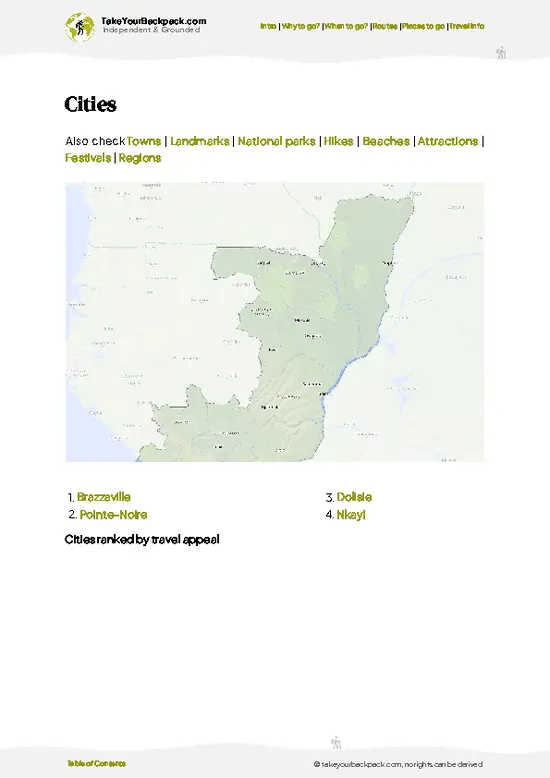
cities
towns
landmarks
national parks
hikes
beaches
attractions
festivals
regions
SHOW COUNTRY’S BESTSHOW ALL

✨ Why go?
Ranked #8 attraction in Congo
What sets this place apart

Institut Français du Congo is the easiest way to meet Brazzaville’s creative scene without a guide or a fixer. Local bands, dancers, painters and filmmakers use the venue, so a single evening can put you in front of live Congolese rumba and contemporary music that rarely reaches tourist circuits. For a backpacker in a city where nightlife can feel hard to read, that matters. Programs are posted on the noticeboard and social pages, which lets you plan around a show instead of wandering. It also gives you a calm, shaded place to recover from heat, with a mediathèque for reading and quiet, and a spot to meet people who know the city well. If you are crossing the river toward Kinshasa or heading north, a night here is a good milestone for understanding how French and Congolese culture mix in the capital.

💡 HighlightsTop highlights of Institut Français du Congo

  1. Live concert nights: the main draw, with Congolese rumba, soukous and hip-hop acts on the stage, often ending late and loud.
  2. Film screenings: African and French cinema shown in the hall, a cool dark escape from the afternoon heat and often followed by talk with the directors.
  3. Exhibition space: rotating shows by Congolese painters, sculptors and photographers, a quick way to see the work of local artists.
  4. Theater and dance performances: stage productions and choreography by Brazzaville companies, in French and sometimes Lingala.
  5. Mediathèque: a lending library and reading room with books, magazines and music, quiet and shaded.
  6. Courtyard and café area: a relaxed place for a cold drink and conversation with students, artists and expats before a show.
  7. French language classes and exam center: visible
… read more 👉
  1. Live concert nights: the main draw, with Congolese rumba, soukous and hip-hop acts on the stage, often ending late and loud.
  2. Film screenings: African and French cinema shown in the hall, a cool dark escape from the afternoon heat and often followed by talk with the directors.
  3. Exhibition space: rotating shows by Congolese painters, sculptors and photographers, a quick way to see the work of local artists.
  4. Theater and dance performances: stage productions and choreography by Brazzaville companies, in French and sometimes Lingala.
  5. Mediathèque: a lending library and reading room with books, magazines and music, quiet and shaded.
  6. Courtyard and café area: a relaxed place for a cold drink and conversation with students, artists and expats before a show.
  7. French language classes and exam center: visible daily as learners come and go, useful if you want a short course to improve your French.
Institut Français du Congo can be covered in two to three hours for a look around, or an entire evening if you stay for a show.
Spotted a mistake or missing something? Contact us.

🌤️ When to go?Weather, crowds, and seasonal trade-offs

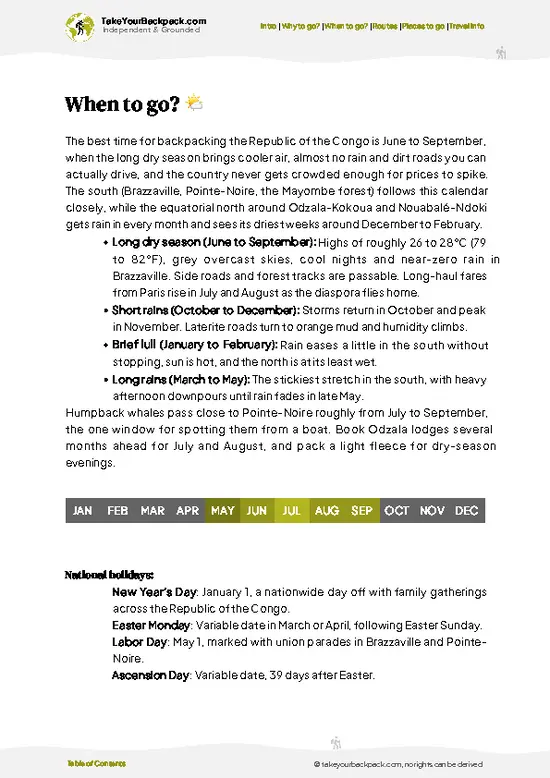
  • Dry Season (June to September): Cloudless-but-hazy skies, daytime temperatures of 24 to 29°C (75 to 84°F) and cool nights near 18°C (64°F) make walking between the institute and Poto-Poto’s art studios easy. Rain is nearly absent, and the cultural calendar is busiest, with concerts and exhibitions most frequent.
  • Short Rains (October to December): Storms arrive in the afternoon, heat climbs to 30 to 32°C (86 to 90°F), and humidity makes midday sticky. Mornings are usually clear enough for gallery visits.
  • Big Wet Months (January to May): Downpours flood low streets, and the heat sits at 29 to 33°C (84 to 91°F). Hotel prices barely move, but moto-taxi rides turn muddy and slow.
  • Daylight: Days run about 11.5 to 12.5 hours all year, so evening events finish after dark in every season.
Check the institute’s … read more 👉
  • Dry Season (June to September): Cloudless-but-hazy skies, daytime temperatures of 24 to 29°C (75 to 84°F) and cool nights near 18°C (64°F) make walking between the institute and Poto-Poto’s art studios easy. Rain is nearly absent, and the cultural calendar is busiest, with concerts and exhibitions most frequent.
  • Short Rains (October to December): Storms arrive in the afternoon, heat climbs to 30 to 32°C (86 to 90°F), and humidity makes midday sticky. Mornings are usually clear enough for gallery visits.
  • Big Wet Months (January to May): Downpours flood low streets, and the heat sits at 29 to 33°C (84 to 91°F). Hotel prices barely move, but moto-taxi rides turn muddy and slow.
  • Daylight: Days run about 11.5 to 12.5 hours all year, so evening events finish after dark in every season.
Check the institute’s program before booking, since shows cluster in the dry months and a visit between June and August catches the most.


source: climatestotravel.comJANJanuary: fair for travelingFEBFebruary: fair for travelingMARMarch: fair for travelingAPRApril: fair for travelingMAYMay: good for travelingJUNJune: highly recommended for travelingJULJuly: excellent for travelingAUGAugust: excellent for travelingSEPSeptember: highly recommended for travelingOCTOctober: good for travelingNOVNovember: fair for travelingDECDecember: fair for traveling
when-to-go

✈️ The backpacker research shortcutCongo Travel Guide

An offline-friendly backpacking guide with optimized travel routes, ranked highlights, transport advice, and the best areas to stay.
example page 0 from our offline Travel Guide for Republic of the Congo
example page 1 from our offline Travel Guide for Republic of the Congo
example page 2 from our offline Travel Guide for Republic of the Congo
example page 3 from our offline Travel Guide for Republic of the Congo
example page 4 from our offline Travel Guide for Republic of the Congo
example page 5 from our offline Travel Guide for Republic of the Congo
example page 6 from our offline Travel Guide for Republic of the Congo
example page 7 from our offline Travel Guide for Republic of the Congo
The digital guide (205 pages) contains:
✅ 46 highlights, ranked by travel appeal
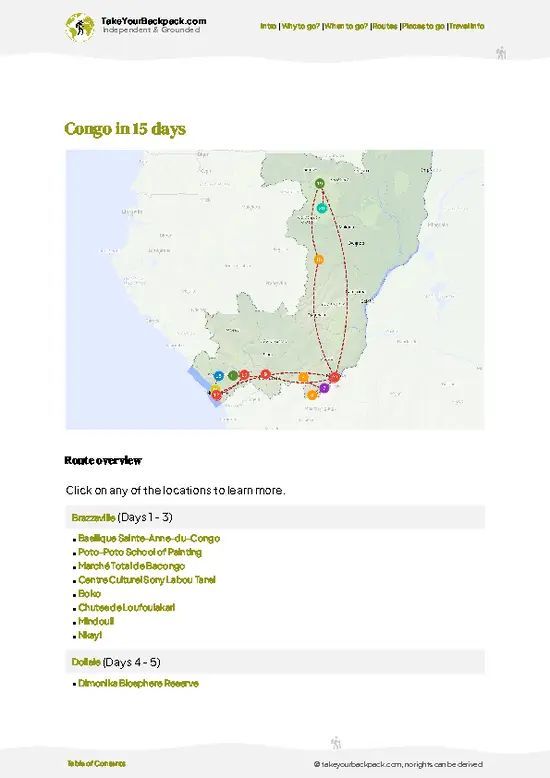
✅ Optimized 5, 10 & 15-day travel routes
✅ Cities, national parks, landmarks, beaches
✅ How to get around
✅ Offline-friendly for travel without Wi-Fi
👉 Click to see all 30+ guide features

📅 Plan smarter in minutes, not weeks
✅ Month by month travel advice
✅ Festivals & national holidays
✅ Budget expectations

🗺️ Go to the right places, skip the overrated ones
✅ Honest pros & cons of destinations
✅ Top hikes, parks & viewpoints
✅ Lesser-known places most travelers miss
✅ Clear “worth it vs skip it” guidance

🛏️ Travel smoothly without rookie mistakes
✅ Best areas to stay
✅ Transport systems explained simply
✅ Common scams & safety advice
✅ SIM cards, money & practical tips

🌍 Understand the country, not just visit it
✅ Culture & traditions
✅ 52 Essential phrases & customs
✅ Festivals worth planning around
✅ Traveler-friendly historical context
✅ Insights that make places more meaningful

📱 Built for real travel conditions
✅ Fully downloadable PDF
✅ Works completely offline
✅ Optimized for phone use
✅ Useful in remote areas & buses
✅ Everything in one place
Stop searching, start planning
Get instant access to your full guide. 30‑day money-back guarantee.
+ Add another guide for just

By proceeding you agree to our terms.
Sent to your inbox immediately after payment • 100% Secure Checkout
Best Backpacking Travel Advisor 2025 tourism awardBest Backpacking
Travel Advisor
2025
What others say about Take Your Backpack Guides:
⭐⭐⭐⭐⭐
Fantastic, amazing amount of information!
⭐⭐⭐⭐⭐
My goodness this is amazing, it's what I've been looking for hats off too you!
⭐⭐⭐⭐⭐
I think this is absolutely BRILLIANT
⭐⭐⭐⭐
Very complete and informative. It's still missing places, but I gotta to commend you
⭐⭐⭐⭐⭐
This is truly amazing, thank you, can't wait to explore it with my kids!
⭐⭐⭐⭐⭐
Awesome resource, thank you!
⭐⭐⭐⭐⭐
This is amazing! Can't wait to explore the ones I haven't seen
⭐⭐⭐⭐
I love this! Well done, great idea.
⭐⭐⭐⭐⭐
Thanks for taking the time to make this gem!
⭐⭐⭐⭐⭐
This might be the best website I've ever seen.
⭐⭐⭐⭐⭐
Congratulations, and thank you so much for your work; it's incredibly valuable.
⭐⭐⭐⭐
In all seriousness I think you did a great job pointing out the important spots
⭐⭐⭐⭐⭐
10/10 very good
⭐⭐⭐⭐⭐
As someone who's only just starting to visit regularly this is awesome, thank you.
⭐⭐⭐⭐
Thank you very much! I'm going to visit my dad, it's going to be very useful!
⭐⭐⭐⭐⭐
This is really cool! We'll be travelling for the first time and this definitely come in handy.
⭐⭐⭐⭐⭐
You are now our minister of culture, congratulations 👨‍💼
⭐⭐⭐⭐⭐
Just wanted to tell you that this is a pearl! Going to follow your recommendations.
⭐⭐⭐⭐⭐
This is so cool. I'll definitely be using the resource for my travels soon.
⭐⭐⭐⭐⭐
This is very impressive! Good work.
⭐⭐⭐⭐⭐
This is an amazing and informative site. Very well done!

🛏️ Where to stay?Best areas and accommodation options

Poto-Poto and the central Plateau area are the best bases, since both sit within a short walk or a few minutes by taxi of the institute in Brazzaville. Poto-Poto is the more characterful choice: busy markets, painting studios, bars with live music and the cheapest guesthouses and basic rooms, usually €20 to 40 a night. Evenings are lively, though streets are poorly lit, so take a taxi after dark rather than walking. The Plateau district is calmer and tidier, with embassies, restaurants and mid-range hotels at roughly €45 to 90. It suits solo travelers who want quieter nights, easier access to … read more 👉
Poto-Poto and the central Plateau area are the best bases, since both sit within a short walk or a few minutes by taxi of the institute in Brazzaville. Poto-Poto is the more characterful choice: busy markets, painting studios, bars with live music and the cheapest guesthouses and basic rooms, usually €20 to 40 a night. Evenings are lively, though streets are poorly lit, so take a taxi after dark rather than walking. The Plateau district is calmer and tidier, with embassies, restaurants and mid-range hotels at roughly €45 to 90. It suits solo travelers who want quieter nights, easier access to money changers and ATMs, and a safer feel for walking in the day. Dormitory-style hostels barely exist in Brazzaville, so social contact comes from the institute’s café, cultural events and guesthouse common areas instead. Avoid booking far out toward Talangaï or Mfilou, where transport is slow and traffic can eat an hour. Book ahead during major festivals and the dry months, when central rooms fill.

👛 Costs (as of 22 October 2026)Travel costs and budget guide for Institut Français du Congo

Institut Français du Congo costs a backpacker about €52 a day in Brazzaville, with entry to the grounds and café free and only events or screenings costing extra. Travelers pay in Central African francs, and cash is easiest in euros.
CategoryBudget RangeLocal Reality
Entry to grounds and caféFreeWalk-in access during opening hours, library use may need membership
Concerts, theater, films€0 to 8Many exhibitions are free, ticketed shows vary
Accommodation (high season)€25 to 40Guesthouses in Poto-Poto, prices are higher on the Plateau, with little off-season discount
Food and drinks€8 to 15Street grills and local restaurants are cheap, café coffee and imported items cost more
Local transport€2 to 5Shared taxis and moto-taxis, fares are negotiated and rise at night
Total Daily Budget€52Per person, one day, excluding long-distance travel
⚠️ Prices can change and everyone travels differently, so take this as a rough guide. Hope it helps you plan your adventure!

FAQFrequently asked questions about Institut Français du Congo

Plan on one to two hours for Institut Français du Congo if you want to see an exhibition and have a coffee in the grounds. Add another two to three hours when a concert, film or theater show is on in the evening. It pairs well with a half-day in the nearby Poto-Poto art studios.
For Institut Français du Congo, entry to the grounds and café is free, so the question mostly applies to ticketed events at roughly €0 to 8. Exhibitions and the café are good value for meeting local artists and expats. Concerts and plays are the best reason to pay, particularly in the dry months from June to September.
Institut Français du Congo sits in central Brazzaville, about 20 to 30 minutes by taxi from Maya-Maya Airport depending on traffic. Taxis from the airport cost roughly €8 to 15 when negotiated, and shared taxis within the center are about €0.50 to 1. From Poto-Poto or the Plateau it is a short taxi or moto-taxi ride, or a walk of 10 to 20 minutes in daylight.
⚠️ Things can change over time, so always validate details locally before you go.

Other Congolese attractions near Institut Français du Congo

Explore more nearby:


💡 Not sure where to go next?
Create a personalized itinerary for Congo including Institut Français du Congo and the places that fit your trip.

Generate my itinerary

👉 Discover all attractions

Or checkout all Congo has to offer (think cities, towns, villages, national parks, hikes, beaches, festivals)
Country photo of Congo

We 💚 feedbackParting advice and final tips

Institut Français du Congo trips often go wrong when visitors drop in on a quiet weekday afternoon and find an empty courtyard. Check the program first and arrive for an evening show instead, when the place comes alive. I would bring a light layer for the air-conditioned hall and cash for tickets and drinks.

✍️ Help improve this page!
The information on this page is based on in-depth research, insights shared by experienced travelers, and feedback from the local travel community in Congo. While every effort is made to keep the information accurate and current, conditions can change — so if you spot anything incorrect or outdated, please get in touch.


🙋‍♂️ Give feedback

👋 Meet the founderWho’s Behind Take Your Backpack?

Johan, backpacker and founder of TakeYourBackpackHi, I’m Johan (Netherlands 🇳🇱), the creator of TakeYourBackpack. Over the past 3 decades, I’ve backpacked through 90+ countries across six continents, gaining extensive experience with independent travel, long-term trips, and overland routes.

This site is built on a combination of firsthand travel experience and carefully curated insights from other backpackers. Many guides are based on places I’ve personally visited, while others bring together tips, observations, and practical advice shared by trusted travelers I’ve met along the way.

The goal is to provide realistic, experience-driven guidance — not generic itineraries — so you can explore destinations with better context, clearer expectations, and more confidence.