
×

Congo🇨🇬 | attractionsPoto-Poto School of PaintingOpen-air studio, flat-color figures, oil and turpentine, small canvases | things to do and best time to go

Explore Cathédrale Sacré-Cœur de BrazzavilleExplore Marché Total de Bacongo

Backpacking in Poto-Poto School of Painting
🌟 Highlightattraction ranked #4
By Johan Kruseman 🇳🇱 | Updated October 22, 2026

Poto-Poto School of Painting is not a gallery you can just wander through like a museum, because it works as a living studio where artists paint, sell and sometimes haggle in the same open courtyard. It sits in the Poto-Poto district of Brazzaville, the capital of the Republic of the Congo, a short ride from the river and the city center. Expect the sharp smell of oil paint and turpentine, canvases propped against walls, and the scrape of palette knives on a hot afternoon. The studio floors and bare walls are rough, and nobody is dressing the place up. The paintings deserve your time, especially the flat, bold figures in saturated color. Skip any piece that looks mass-produced for visitors. Unlike the polished galleries of nearby Kinshasa, this one is small, unhurried and mostly free of crowds.

Discover everything you want to know in the 📖 Congo Travel Guide.
Safety warning

The current risk level for Congo is high. Check the advice before going.


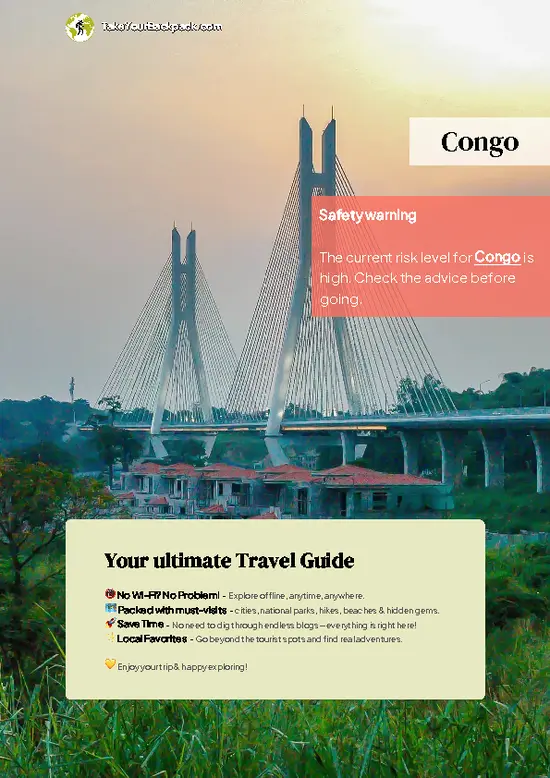
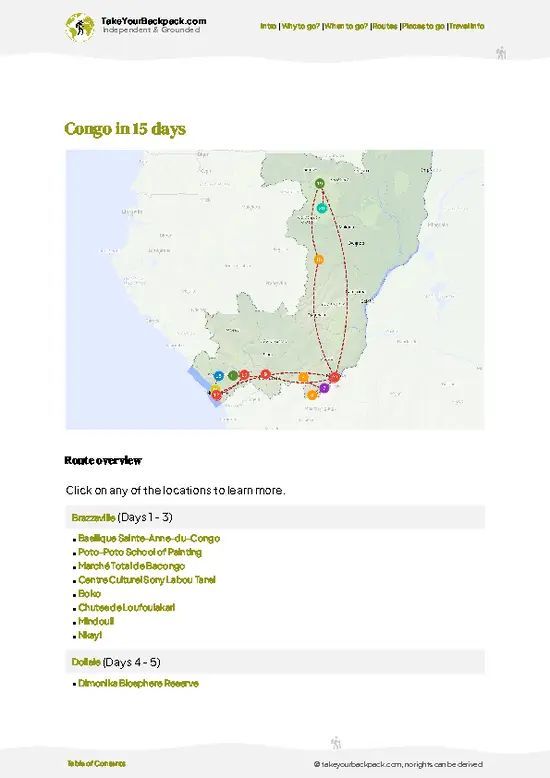
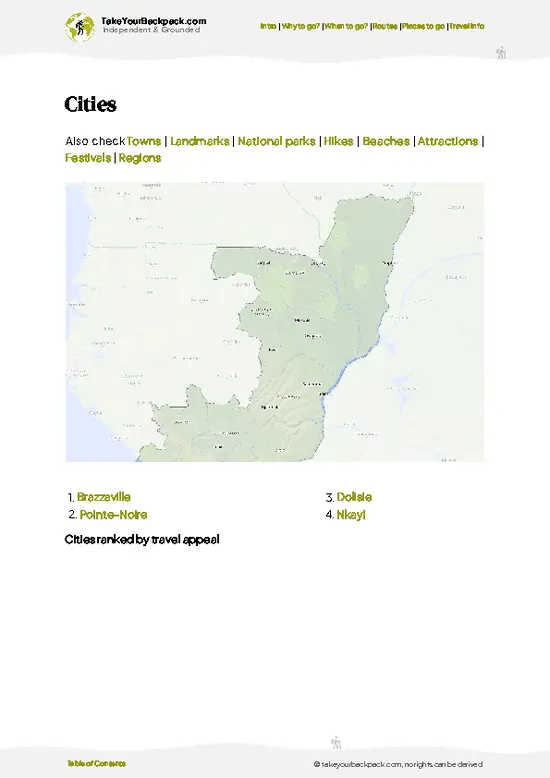
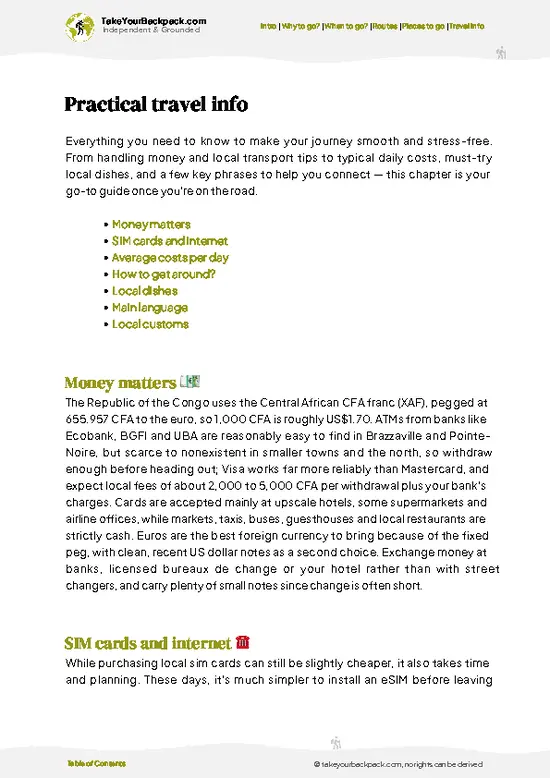
example page 0 from our offline Travel Guide for Republic of the Congo
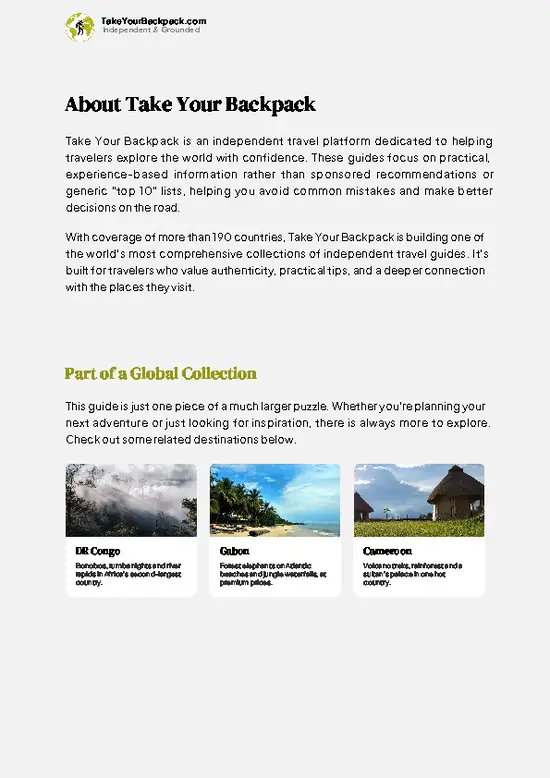
example page 1 from our offline Travel Guide for Republic of the Congo
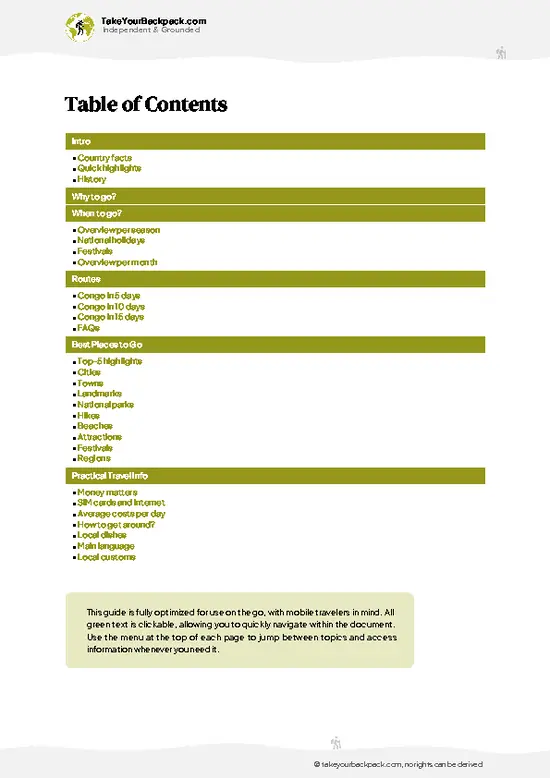
example page 2 from our offline Travel Guide for Republic of the Congo
example page 3 from our offline Travel Guide for Republic of the Congo
example page 4 from our offline Travel Guide for Republic of the Congo
example page 5 from our offline Travel Guide for Republic of the Congo
example page 6 from our offline Travel Guide for Republic of the Congo
example page 7 from our offline Travel Guide for Republic of the Congo
Loading the map 🌍
CLICK TO FILTER
cities
towns
landmarks
national parks
hikes
beaches
attractions
festivals
regions
SHOW COUNTRY’S BESTSHOW ALL

✨ Why go?
Ranked #4 attraction in Congo
Why Poto-Poto School of Painting should be on your travel list

Poto-Poto School of Painting is the place where a distinct Central African style took shape, and you can watch artists carrying it on today. Founded in the 1950s, the school became known for flat, vividly colored figures with dark outlines, painted by people who had no formal training. For a backpacker, that history is something you can touch and buy rather than read on a plaque.

The second reason is access. Artists work in the open, so you can talk with them about technique, subject and price, which is rare in a region with few conventional museums. A small canvas is a lighter, more meaningful souvenir than most of what you will find at the markets. Many pieces show village life, dancers and market scenes in a way no photograph quite matches.

It also fits well into a day in Brazzaville. … read more 👉
Poto-Poto School of Painting is the place where a distinct Central African style took shape, and you can watch artists carrying it on today. Founded in the 1950s, the school became known for flat, vividly colored figures with dark outlines, painted by people who had no formal training. For a backpacker, that history is something you can touch and buy rather than read on a plaque.

The second reason is access. Artists work in the open, so you can talk with them about technique, subject and price, which is rare in a region with few conventional museums. A small canvas is a lighter, more meaningful souvenir than most of what you will find at the markets. Many pieces show village life, dancers and market scenes in a way no photograph quite matches.

It also fits well into a day in Brazzaville. The district itself is lively and local, so you get a real neighborhood around the studio, with its noise, food stalls and street life, rather than a tourist strip.

💡 HighlightsPlaces and moments you shouldn't skip

  1. The open studio courtyard: the main draw, where painters work on canvases in plain view and you can watch brushwork up close.
  2. Flat-color figure paintings: the school’s signature look, with bold outlines and saturated blocks of red, ochre and blue.
  3. Village and market scenes: a recurring subject, showing daily life in warm, rhythmic compositions.
  4. Dance and mask paintings: figures in motion, often the most energetic works on display.
  5. Conversations with the artists: many will explain their method, materials and the school’s lineage if you ask politely.
  6. Small canvases for sale: the practical highlight, since compact works travel well in a backpack tube or flat folder.
  7. The Poto-Poto neighborhood walk: the surrounding streets give context, with local eateries, music and ordinary city life.
Start with the … read more 👉
  1. The open studio courtyard: the main draw, where painters work on canvases in plain view and you can watch brushwork up close.
  2. Flat-color figure paintings: the school’s signature look, with bold outlines and saturated blocks of red, ochre and blue.
  3. Village and market scenes: a recurring subject, showing daily life in warm, rhythmic compositions.
  4. Dance and mask paintings: figures in motion, often the most energetic works on display.
  5. Conversations with the artists: many will explain their method, materials and the school’s lineage if you ask politely.
  6. Small canvases for sale: the practical highlight, since compact works travel well in a backpack tube or flat folder.
  7. The Poto-Poto neighborhood walk: the surrounding streets give context, with local eateries, music and ordinary city life.
Start with the open studio courtyard, since seeing painters at work first helps you judge what you see on the walls afterward.
Spotted a mistake or missing something? Contact us.

🌤️ When to go?Weather, crowds, and seasonal trade-offs

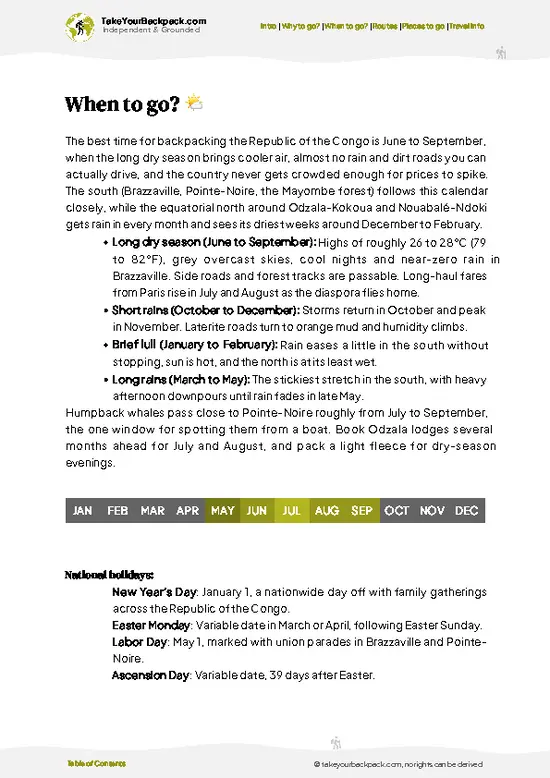
  • Dry Season (June to September): Poto-Poto School of Painting is most comfortable from June to September, with little rain and highs of 27 to 30°C (81 to 86°F). Skies are often overcast and the evenings cool to about 18 to 20°C (64 to 68°F). Studios stay open and you can browse canvases without dodging downpours.
  • Short Rains (October to December): Storms arrive in the afternoons, humidity climbs, and highs sit near 30 to 32°C (86 to 90°F). Mornings are usually clear enough for studio visits.
  • Short Dry Spell (January to February): Brighter and hotter at 30 to 33°C (86 to 91°F), with fewer downpours. Daylight runs about 12 hours all year.
  • Heavy Rains (March to May): Streets in Poto-Poto turn muddy, taxis slow down, and the wettest days can keep artists indoors. Lows are about 22°C (72°F).
  • Crowds
… read more 👉
  • Dry Season (June to September): Poto-Poto School of Painting is most comfortable from June to September, with little rain and highs of 27 to 30°C (81 to 86°F). Skies are often overcast and the evenings cool to about 18 to 20°C (64 to 68°F). Studios stay open and you can browse canvases without dodging downpours.
  • Short Rains (October to December): Storms arrive in the afternoons, humidity climbs, and highs sit near 30 to 32°C (86 to 90°F). Mornings are usually clear enough for studio visits.
  • Short Dry Spell (January to February): Brighter and hotter at 30 to 33°C (86 to 91°F), with fewer downpours. Daylight runs about 12 hours all year.
  • Heavy Rains (March to May): Streets in Poto-Poto turn muddy, taxis slow down, and the wettest days can keep artists indoors. Lows are about 22°C (72°F).
  • Crowds and Prices: Visitors are few year-round. Artists rarely change prices by season, though bargaining is easier when business is slow.
Visit on a weekday morning, when the painters are working and the light in the courtyards is best.


source: climatestotravel.comJANJanuary: fair for travelingFEBFebruary: fair for travelingMARMarch: fair for travelingAPRApril: fair for travelingMAYMay: fair for travelingJUNJune: highly recommended for travelingJULJuly: highly recommended for travelingAUGAugust: highly recommended for travelingSEPSeptember: highly recommended for travelingOCTOctober: fair for travelingNOVNovember: fair for travelingDECDecember: fair for traveling
republic-of-the-congo-attraction-poto-poto-school-of-painting
© Google |

✈️ The backpacker research shortcutCongo Travel Guide

An offline-friendly backpacking guide with optimized travel routes, ranked highlights, transport advice, and the best areas to stay.
example page 0 from our offline Travel Guide for Republic of the Congo
example page 1 from our offline Travel Guide for Republic of the Congo
example page 2 from our offline Travel Guide for Republic of the Congo
example page 3 from our offline Travel Guide for Republic of the Congo
example page 4 from our offline Travel Guide for Republic of the Congo
example page 5 from our offline Travel Guide for Republic of the Congo
example page 6 from our offline Travel Guide for Republic of the Congo
example page 7 from our offline Travel Guide for Republic of the Congo
The digital guide (205 pages) contains:
✅ 46 highlights, ranked by travel appeal
✅ Optimized 5, 10 & 15-day travel routes
✅ Cities, national parks, landmarks, beaches
✅ How to get around
✅ Offline-friendly for travel without Wi-Fi
👉 Click to see all 30+ guide features

📅 Plan smarter in minutes, not weeks
✅ Month by month travel advice
✅ Festivals & national holidays
✅ Budget expectations

🗺️ Go to the right places, skip the overrated ones
✅ Honest pros & cons of destinations
✅ Top hikes, parks & viewpoints
✅ Lesser-known places most travelers miss
✅ Clear “worth it vs skip it” guidance

🛏️ Travel smoothly without rookie mistakes
✅ Best areas to stay
✅ Transport systems explained simply
✅ Common scams & safety advice
✅ SIM cards, money & practical tips

🌍 Understand the country, not just visit it
✅ Culture & traditions
✅ 52 Essential phrases & customs
✅ Festivals worth planning around
✅ Traveler-friendly historical context
✅ Insights that make places more meaningful

📱 Built for real travel conditions
✅ Fully downloadable PDF
✅ Works completely offline
✅ Optimized for phone use
✅ Useful in remote areas & buses
✅ Everything in one place
Stop searching, start planning
Get instant access to your full guide. 30‑day money-back guarantee.
+ Add another guide for just

By proceeding you agree to our terms.
Sent to your inbox immediately after payment • 100% Secure Checkout
Best Backpacking Travel Advisor 2025 tourism awardBest Backpacking
Travel Advisor
2025
What others say about Take Your Backpack Guides:
⭐⭐⭐⭐⭐
Fantastic, amazing amount of information!
⭐⭐⭐⭐⭐
My goodness this is amazing, it's what I've been looking for hats off too you!
⭐⭐⭐⭐⭐
I think this is absolutely BRILLIANT
⭐⭐⭐⭐
Very complete and informative. It's still missing places, but I gotta to commend you
⭐⭐⭐⭐⭐
This is truly amazing, thank you, can't wait to explore it with my kids!
⭐⭐⭐⭐⭐
Awesome resource, thank you!
⭐⭐⭐⭐⭐
This is amazing! Can't wait to explore the ones I haven't seen
⭐⭐⭐⭐
I love this! Well done, great idea.
⭐⭐⭐⭐⭐
Thanks for taking the time to make this gem!
⭐⭐⭐⭐⭐
This might be the best website I've ever seen.
⭐⭐⭐⭐⭐
Congratulations, and thank you so much for your work; it's incredibly valuable.
⭐⭐⭐⭐
In all seriousness I think you did a great job pointing out the important spots
⭐⭐⭐⭐⭐
10/10 very good
⭐⭐⭐⭐⭐
As someone who's only just starting to visit regularly this is awesome, thank you.
⭐⭐⭐⭐
Thank you very much! I'm going to visit my dad, it's going to be very useful!
⭐⭐⭐⭐⭐
This is really cool! We'll be travelling for the first time and this definitely come in handy.
⭐⭐⭐⭐⭐
You are now our minister of culture, congratulations 👨‍💼
⭐⭐⭐⭐⭐
Just wanted to tell you that this is a pearl! Going to follow your recommendations.
⭐⭐⭐⭐⭐
This is so cool. I'll definitely be using the resource for my travels soon.
⭐⭐⭐⭐⭐
This is very impressive! Good work.
⭐⭐⭐⭐⭐
This is an amazing and informative site. Very well done!

🛏️ Where to stay?Best areas to stay in Congo

The best base is central Brazzaville, near Poto-Poto and the Marché Total, where a short taxi ride or a walk of 15 to 30 minutes reaches the studios.
Poto-Poto itself is the most practical choice. It is dense, noisy, and full of small guesthouses, bars, and street food stalls, so you can eat cheaply and come back on foot in daylight. Walk the main streets only before dark and take a taxi after sunset.
The riverfront area along the Congo River, toward the Corniche, is calmer and has more restaurants, cafés, and a few mid-range guesthouses where other foreigners, aid workers, and the occasional solo … read more 👉
The best base is central Brazzaville, near Poto-Poto and the Marché Total, where a short taxi ride or a walk of 15 to 30 minutes reaches the studios.
Poto-Poto itself is the most practical choice. It is dense, noisy, and full of small guesthouses, bars, and street food stalls, so you can eat cheaply and come back on foot in daylight. Walk the main streets only before dark and take a taxi after sunset.
The riverfront area along the Congo River, toward the Corniche, is calmer and has more restaurants, cafés, and a few mid-range guesthouses where other foreigners, aid workers, and the occasional solo backpacker tend to stay. It feels safer at night and sits about 10 to 15 minutes from the school by taxi.
Bacongo, to the south, is livelier after dark with live music and open-air bars, but it is farther away and best for travelers who already know the city.
Hostel-style dorms are rare in Brazzaville, so expect to book a simple private room and meet other travelers in shared restaurants, bars, and the art scene itself. Book ahead and ask for a taxi arranged by your guesthouse.

👛 Costs (as of 22 October 2026)What things cost and how to budget

Poto-Poto School of Painting costs a backpacker about €37 a day in Brazzaville, with entry to the studios free and the main spending going on bed, food, and any art you buy.
CategoryBudget RangeLocal Reality
Entry to the studios€0 to 2Usually free to walk in, though a small tip to the artist who shows you around is expected.
Accommodation (high season)€20 to 30Simple private rooms in central Brazzaville. Dorms are rare, and prices dip a little in the rainy months.
Food€6 to 12Street grilled fish, cassava, and rice cost little. Restaurant meals near the river are pricier.
Local transport€2 to 6Shared taxis within the city are cheap. A private taxi from the riverfront costs more and fares are negotiated.
Art purchases€15 to 150Small canvases sell from about €15, and large works cost much more. Bargain
… read more 👉
Poto-Poto School of Painting costs a backpacker about €37 a day in Brazzaville, with entry to the studios free and the main spending going on bed, food, and any art you buy.
CategoryBudget RangeLocal Reality
Entry to the studios€0 to 2Usually free to walk in, though a small tip to the artist who shows you around is expected.
Accommodation (high season)€20 to 30Simple private rooms in central Brazzaville. Dorms are rare, and prices dip a little in the rainy months.
Food€6 to 12Street grilled fish, cassava, and rice cost little. Restaurant meals near the river are pricier.
Local transport€2 to 6Shared taxis within the city are cheap. A private taxi from the riverfront costs more and fares are negotiated.
Art purchases€15 to 150Small canvases sell from about €15, and large works cost much more. Bargain politely and pay in Central African francs or cash euros.
Extras€2 to 5Bottled water, a photo permission tip, and a cold drink at a nearby bar.
Total Daily Budget€37Carry cash, since cards are accepted in few places.
⚠️ Prices can change and everyone travels differently, so take this as a rough guide. Hope it helps you plan your adventure!

FAQFrequently asked questions about Poto-Poto School of Painting

Plan on one to two hours at Poto-Poto School of Painting. That is enough to walk through the studios, watch artists at work, and talk about prices. Add another hour if you want to bargain for a canvas or visit the nearby Marché Total.
Poto-Poto School of Painting is worth a visit because entry is usually free or costs under €2, and you meet working artists in their own studios. Paintings start at about €15 for small pieces, so a modest purchase supports the school directly. Come on a weekday morning for the most active studios.
Poto-Poto School of Painting is in the Poto-Poto district of central Brazzaville, about 10 to 15 minutes by taxi from the riverfront for roughly €2 to 5. Shared taxis along the main roads cost less, and you can also walk from central hotels in 15 to 30 minutes in daylight. Maya-Maya Airport is about 25 minutes away by road.
⚠️ Things can change over time, so always validate details locally before you go.

Other Congolese attractions near Poto-Poto School of Painting

Explore more nearby:


💡 Not sure where to go next?
Create a personalized itinerary for Congo including Poto-Poto School of Painting and the places that fit your trip.

Generate my itinerary

👉 Discover all attractions

Or checkout all Congo has to offer (think cities, towns, villages, national parks, hikes, beaches, festivals)
Country photo of Congo

We 💚 feedbackSumming up the experience

Poto-Poto School of Painting is best on a weekday morning, when the light is soft in the courtyard, the heat is still bearable and artists are fresh at their easels. I would bring small bills and decide on a budget before you start talking price. Slow down, and ask about the story behind a canvas before you buy.

✍️ Help improve this page!
The information on this page is based on in-depth research, insights shared by experienced travelers, and feedback from the local travel community in Congo. While every effort is made to keep the information accurate and current, conditions can change — so if you spot anything incorrect or outdated, please get in touch.


🙋‍♂️ Give feedback

👋 Meet the founderWho’s Behind Take Your Backpack?

Johan, backpacker and founder of TakeYourBackpackHi, I’m Johan (Netherlands 🇳🇱), the creator of TakeYourBackpack. Over the past 3 decades, I’ve backpacked through 90+ countries across six continents, gaining extensive experience with independent travel, long-term trips, and overland routes.

This site is built on a combination of firsthand travel experience and carefully curated insights from other backpackers. Many guides are based on places I’ve personally visited, while others bring together tips, observations, and practical advice shared by trusted travelers I’ve met along the way.

The goal is to provide realistic, experience-driven guidance — not generic itineraries — so you can explore destinations with better context, clearer expectations, and more confidence.