×

Congo🇨🇬 | regionsKouilou RegionAtlantic coastline, Mayombe forest, Loango salt lakes, fishing villages | things to do and best time to go

Explore Dimonika Biosphere ReserveExplore Bambama

Backpacking in Kouilou Region
🏆 Top pickregion ranked #1
By Johan Kruseman 🇳🇱 | Updated September 3, 2026

Here’s the trick nobody tells you: Kouilou rewards the slow traveler. Most people rush through, chasing the next “big” park or city, and miss the real payoff—those lazy afternoons in Loango, where you can actually talk to fishermen hauling in their catch, or the way the beaches near Pointe-Noire empty out on weekdays, leaving you with miles of sand and only the Atlantic for company. Kouilou sits in the southwest corner of Congo, hugging the coast and stretching inland with a mix of rainforest, savanna, and lagoons. For backpackers, it’s a region of trade-offs: the scenery is wild and varied, with Mayumba National Park just over the border and Conkouati-Douli National Park right here, but public transport is patchy and slow, and you’ll need patience (or a little French) to navigate bush taxis between towns. It’s cheaper than Brazzaville or the north, and far less touristy than Pointe-Noire itself, but don’t expect polished infrastructure or a party scene. What you get instead is authenticity—real markets, real villages, and a rhythm that’s stubbornly local. Compared to the busier, more developed Pool or Cuvette regions, Kouilou feels like Congo’s secret handshake: raw, rewarding, and best enjoyed when you’re not in a hurry.

Discover everything you want to know in the 📖 Congo Travel Guide.


Get your Congo guide
52 ranked highlights, routes & tips, works offline (218 pages)
Loading the map 🌍
CLICK TO FILTER
cities
towns
landmarks
national parks
hikes
beaches
attractions
festivals
regions
SHOW COUNTRY’S BESTSHOW ALL

✨ Why go?
Ranked #1 region in Congo
The unique appeal for travelers

Backpackers flock to the Kouilou Region in Congo for a mix of variety and depth. You can dive into lush rainforests, chill on beaches, and explore vibrant local markets without the hassle of constant relocation. This region is a playground where you can experience nature and culture side by side, making it perfect for slow travel.

Transport options are surprisingly flexible. You can hop on a bush taxi or rent a bike to navigate between towns and attractions. This means you can spend more time soaking in the sights and less time stressing over logistics. Want to hike through the Loango National Park? Go for it! Feel like lounging on the Atlantic coast? You’ve got that covered too.

The beauty of Kouilou lies in its ability to cater to both the adventurous and the culturally curious. You can … read more 👉
Backpackers flock to the Kouilou Region in Congo for a mix of variety and depth. You can dive into lush rainforests, chill on beaches, and explore vibrant local markets without the hassle of constant relocation. This region is a playground where you can experience nature and culture side by side, making it perfect for slow travel.

Transport options are surprisingly flexible. You can hop on a bush taxi or rent a bike to navigate between towns and attractions. This means you can spend more time soaking in the sights and less time stressing over logistics. Want to hike through the Loango National Park? Go for it! Feel like lounging on the Atlantic coast? You’ve got that covered too.

The beauty of Kouilou lies in its ability to cater to both the adventurous and the culturally curious. You can savor the local cuisine, meet the friendly inhabitants, and still have time for a sunset on the beach. Each experience is a chance to connect, making your trip not just a vacation, but a journey worth every moment.
Want to include Kouilou Region in your Congo route?
Create a personalized Congo itinerary that includes Kouilou Region and the places that fit your trip — based on your travel style, budget, and available time. Get your route in seconds.

Generate my trip

💡 HighlightsDon't-miss highlights and experiences

  • Gouffre de Diosso (Diosso Gorge) — A dramatic, narrow limestone gorge a short drive inland from the coast; locals treat it as a place of legends, the trails are short but scenic, and the red cliffs and old baobabs make for great photos and a quick, very local hike you won’t find in guidebook lists for Pointe-Noire.
  • Madingo-Kayes fish market and waterfront — A lively, working coastal town at the mouth of the Kouilou: morning fish auctions, smoking racks of fish, wooden canoe landings and informal eateries where you can eat the day’s catch five minutes from the water. Good for people-watching and seeing traditional boatbuilding up close.
  • Hinda colonial quarter and Sunday market — Hinda’s tree-lined streets still show Portuguese/colonial timber architecture; on market day you’ll find fresh
read more 👉
  • Gouffre de Diosso (Diosso Gorge) — A dramatic, narrow limestone gorge a short drive inland from the coast; locals treat it as a place of legends, the trails are short but scenic, and the red cliffs and old baobabs make for great photos and a quick, very local hike you won’t find in guidebook lists for Pointe-Noire.
  • Madingo-Kayes fish market and waterfront — A lively, working coastal town at the mouth of the Kouilou: morning fish auctions, smoking racks of fish, wooden canoe landings and informal eateries where you can eat the day’s catch five minutes from the water. Good for people-watching and seeing traditional boatbuilding up close.
  • Hinda colonial quarter and Sunday market — Hinda’s tree-lined streets still show Portuguese/colonial timber architecture; on market day you’ll find fresh produce, palm wine, and craftsmen making simple tools and baskets. It’s low-key, authentic and a useful stop to feel how coastal Congolese small-town life ticks.
  • Kouilou River estuary boat trip — Hire a local pirogue to thread mangrove channels, visit tiny riverside hamlets and watch fishermen work their nets. Low cost, flexible, and the best way to see the estuary’s rhythms—arrange through a market contact in Madingo-Kayes or Hinda.
  • Loango-Kouilou coastal beaches and fishing villages — Long, quiet sandy stretches broken by clusters of reed huts and drying fish racks. The coast here isn’t a resort; it’s where nets are hauled and children run barefoot. Sunset walks, small village homestays, and simple seafood dinners make this uniquely Kouilou.
  • Coastal mangrove flats and birding around the estuary — Shallow lagoons, tidal flats and mangrove edges are home to herons, egrets and shorebirds. Bring binoculars and a local guide from Madingo-Kayes for the best spots—great for low-impact nature watching without the crowds.
  • Traditional canoe-building yards (hidden gem) — Scattered along the coast and in small estuary villages, carpenters still fashion dugout canoes the old way. Watching a boat being shaped by adze and fire, and chatting with the makers about wood choices and repairs, is a quietly fascinating local craft experience most visitors miss.
  • Salt pans and shallow lagoons at low tide (hidden gem) — Small, seasonal salt flats used by villagers for drying and harvesting salt; at certain tides they fill with birds and offer a calm, otherworldly landscape for walks and photography. It’s a simple, very local activity—ask a fisherman to point you to the nearest accessible spot.
  • Village markets and evening dances in outlying communes (hidden gem) — Outside the main towns you’ll find village markets and occasional community evenings where drumming and dance bring people together. They’re impromptu, welcoming if you’re respectful, and a genuine taste of coastal Kouilou culture.
  • Small-scale cocoa and palm groves on the coastal plain — Coastal plantations and family groves produce the region’s palm oil and smallholder cocoa; walking shaded tracks through these plots is a good way to meet producers, learn about local agriculture and taste raw, freshly processed ingredients you won’t get in city restaurants.
Spotted a mistake or missing something? Contact us.
⌛️ 5 daysSeeing the highlights in 5 days

Day 1: Pointe-Noire
Arrive in Pointe-Noire, the bustling hub of Congo’s coastal life. This city is your launchpad. The transport system here is a mix of taxis, buses, and the occasional motorcycle. Get familiar with the local taxi system; it’s cheap and efficient. Spend the day exploring the vibrant markets and savoring fresh seafood along the coast. The energy here is infectious, and it sets the tone for your adventure.

Day 2: Pointe-Noire to Loango National Park
Early morning, hop on a shared taxi to Loango National Park. This is where the magic begins. The drive takes about two hours, but the scenery is worth every minute. You’ll see lush landscapes and maybe even spot some wildlife along the way. Once at Loango, dive into the park’s unique ecosystem. The beaches here are pristine, … read more 👉
Day 1: Pointe-Noire
Arrive in Pointe-Noire, the bustling hub of Congo’s coastal life. This city is your launchpad. The transport system here is a mix of taxis, buses, and the occasional motorcycle. Get familiar with the local taxi system; it’s cheap and efficient. Spend the day exploring the vibrant markets and savoring fresh seafood along the coast. The energy here is infectious, and it sets the tone for your adventure.

Day 2: Pointe-Noire to Loango National Park
Early morning, hop on a shared taxi to Loango National Park. This is where the magic begins. The drive takes about two hours, but the scenery is worth every minute. You’ll see lush landscapes and maybe even spot some wildlife along the way. Once at Loango, dive into the park’s unique ecosystem. The beaches here are pristine, and the wildlife is abundant. Spend the night in a basic lodge; it’s rustic but adds to the experience.

Day 3: Loango National Park
Dedicate this day to exploring the park. Take a guided tour to maximize your chances of spotting elephants and hippos. The guides know the best spots and can share local stories that enrich your understanding of the area. This is a day to immerse yourself in nature, so pack a picnic and enjoy it on the beach.

Day 4: Loango to Dolisie
Leave Loango early and head to Dolisie. The journey is about three hours, and it’s a chance to see the rural side of Congo. Dolisie is less touristy, offering a glimpse into everyday life. Explore the local markets and enjoy the slower pace. This is where you can really connect with the culture.

Day 5: Dolisie to Pointe-Noire
Make your way back to Pointe-Noire. This is your chance to revisit any spots you loved or discover new ones. Grab a final meal of local cuisine before you leave.

Off-Path Reward: On Day 4, take a short detour to the nearby town of Nkayi. It’s a small, charming place where you can witness traditional crafts and perhaps catch a local festival.

The must-do day? Day 3 in Loango National Park. It’s the heart of your trip, blending adventure and relaxation in a way that captures the essence of Congo.
Turn your Kouilou Region visit into an Congo adventure
Build a complete Congo route with Kouilou Region, hidden gems, must-see destinations, and realistic travel times included.

Generate my trip

🌤️ When to go?Choosing the right time of year


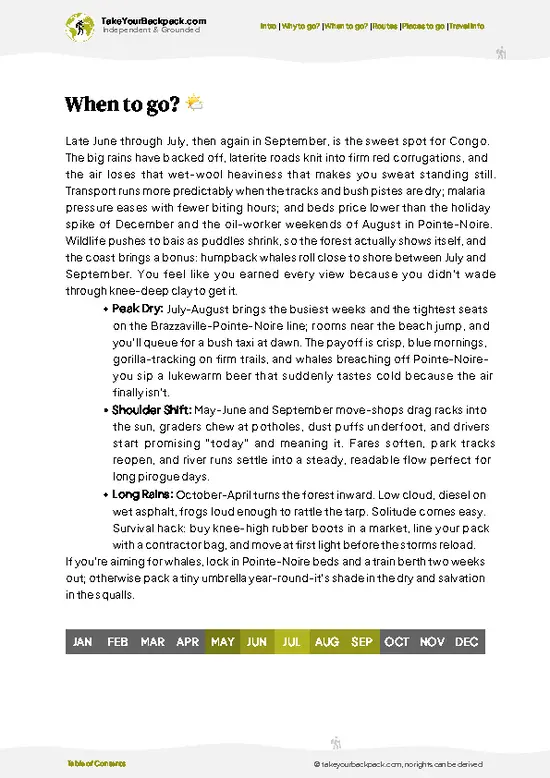
  • Weather: The Kouilou Region swings between a wet season from October to May and a dry season from June to September. For backpackers, the dry months are your best bet—less mud, fewer mosquitoes, and trails that don’t turn into slip-and-slide adventures.

  • Temperature: Expect a warm hug year-round, but the dry season cools things down a bit. Daytime highs hover around 28-32°C (82-90°F), while nights dip to a comfortable 20-22°C (68-72°F). The wet season cranks up humidity, making it feel hotter and stickier.

  • Daylight Hours: Near the equator, daylight stays steady—about 12 hours daily. Sunrise around 6:00 AM, sunset near 6:00 PM. This consistency means you can plan your hikes and explorations without worrying about shifting daylight.

  • Crowds: The dry season pulls in the fewest tourists,
read more 👉

  • Weather: The Kouilou Region swings between a wet season from October to May and a dry season from June to September. For backpackers, the dry months are your best bet—less mud, fewer mosquitoes, and trails that don’t turn into slip-and-slide adventures.

  • Temperature: Expect a warm hug year-round, but the dry season cools things down a bit. Daytime highs hover around 28-32°C (82-90°F), while nights dip to a comfortable 20-22°C (68-72°F). The wet season cranks up humidity, making it feel hotter and stickier.

  • Daylight Hours: Near the equator, daylight stays steady—about 12 hours daily. Sunrise around 6:00 AM, sunset near 6:00 PM. This consistency means you can plan your hikes and explorations without worrying about shifting daylight.

  • Crowds: The dry season pulls in the fewest tourists, so you’ll have trails and beaches mostly to yourself. The wet season sees locals retreat indoors, but it’s also when you might catch vibrant village festivals if you’re lucky.

  • Seasonal Activities: Dry months open up river excursions and coastal fishing trips. Wet season is prime for lush jungle walks and spotting wildlife that thrives in the rain, but be ready for slippery paths and sudden downpours.

  • Price Fluctuations: Expect higher prices during the dry season, especially July and August, when demand peaks. The wet season offers better deals on lodging and tours, but you trade off some comfort and accessibility.


Pro-tip: Aim for late June or early September—just before or after peak season—to snag sweet weather, fewer crowds, and better prices. It’s the insider’s window for Kouilou.


source: climatestotravel.comJANJanuary: fair for travelingFEBFebruary: fair for travelingMARMarch: fair for travelingAPRApril: fair for travelingMAYMay: fair for travelingJUNJune: highly recommended for travelingJULJuly: excellent for travelingAUGAugust: excellent for travelingSEPSeptember: highly recommended for travelingOCTOctober: fair for travelingNOVNovember: fair for travelingDECDecember: fair for traveling
when-to-go

✈️ The backpacker research shortcutCongo Travel Guide

An offline-friendly backpacking guide with optimized travel routes, ranked highlights, transport advice, and the best areas to stay.
example page 0 from our offline Travel Guide for Republic of the Congo
example page 1 from our offline Travel Guide for Republic of the Congo
example page 2 from our offline Travel Guide for Republic of the Congo
example page 3 from our offline Travel Guide for Republic of the Congo
example page 4 from our offline Travel Guide for Republic of the Congo
example page 5 from our offline Travel Guide for Republic of the Congo
example page 6 from our offline Travel Guide for Republic of the Congo
example page 7 from our offline Travel Guide for Republic of the Congo
The digital guide (218 pages) contains:
52 highlights, ranked by travel appeal
Optimized 5, 10 & 15-day travel routes
Cities, national parks, landmarks, beaches
How to get around
Offline-friendly for travel without Wi-Fi
👉 Click to see all 30+ guide features

📅 Plan smarter in minutes, not weeks
Month by month travel advice
Festivals & national holidays
Budget expectations

🗺️ Go to the right places, skip the overrated ones
Honest pros & cons of destinations
Top hikes, parks & viewpoints
Lesser-known places most travelers miss
Clear “worth it vs skip it” guidance

🛏️ Travel smoothly without rookie mistakes
Best areas to stay
Transport systems explained simply
Common scams & safety advice
SIM cards, money & practical tips

🌍 Understand the country, not just visit it
Culture & traditions
52 Essential phrases & customs
Festivals worth planning around
Traveler-friendly historical context
Insights that make places more meaningful

📱 Built for real travel conditions
Fully downloadable PDF
Works completely offline
Optimized for phone use
Useful in remote areas & buses
Everything in one place
Save weeks of stressful planning
Get instant access to your full guide. 30‑day money-back guarantee.
+ Add another guide for just US$7.80

By proceeding you agree to our terms.
Sent to your inbox immediately after payment • 100% Secure Checkout
Best Backpacking Travel Advisor 2025 tourism awardBest Backpacking
Travel Advisor
2025
What others say about Take Your Backpack Guides:
⭐⭐⭐⭐⭐
Fantastic, amazing amount of information!
⭐⭐⭐⭐⭐
My goodness this is amazing, it's what I've been looking for hats off too you!
⭐⭐⭐⭐⭐
I think this is absolutely BRILLIANT
⭐⭐⭐⭐
Very complete and informative. It's still missing places, but I gotta to commend you
⭐⭐⭐⭐⭐
This is truly amazing, thank you, can't wait to explore it with my kids!
⭐⭐⭐⭐⭐
Awesome resource, thank you!
⭐⭐⭐⭐⭐
This is amazing! Can't wait to explore the ones I haven't seen
⭐⭐⭐⭐
I love this! Well done, great idea.
⭐⭐⭐⭐⭐
Thanks for taking the time to make this gem!
⭐⭐⭐⭐⭐
This might be the best website I've ever seen.
⭐⭐⭐⭐⭐
Congratulations, and thank you so much for your work; it's incredibly valuable.
⭐⭐⭐⭐
In all seriousness I think you did a great job pointing out the important spots
⭐⭐⭐⭐⭐
10/10 very good
⭐⭐⭐⭐⭐
As someone who's only just starting to visit regularly this is awesome, thank you.
⭐⭐⭐⭐
Thank you very much! I'm going to visit my dad, it's going to be very useful!
⭐⭐⭐⭐⭐
This is really cool! We'll be travelling for the first time and this definitely come in handy.
⭐⭐⭐⭐⭐
You are now our minister of culture, congratulations 👨‍💼
⭐⭐⭐⭐⭐
Just wanted to tell you that this is a pearl! Going to follow your recommendations.
⭐⭐⭐⭐⭐
This is so cool. I'll definitely be using the resource for my travels soon.
⭐⭐⭐⭐⭐
This is very impressive! Good work.
⭐⭐⭐⭐⭐
This is an amazing and informative site. Very well done!

🛏️ Where to stay?Best areas to stay in Congo

In the Kouilou Region of Congo, you’ve got some solid options for places that cater to backpackers. Let’s break it down.

Start in Point-Noire. This bustling port city is a hub for travelers. The vibe is lively, with plenty of street food stalls and markets. You’ll find a mix of locals and expats, making it easy to strike up conversations. The beaches here are a bonus, perfect for unwinding after a day of exploring. Just keep your wits about you, especially at night.

Next up, Loango National Park. While it’s more remote, it’s worth the trek. Stay near the park entrance for a chance to connect … read more 👉
In the Kouilou Region of Congo, you’ve got some solid options for places that cater to backpackers. Let’s break it down.

Start in Point-Noire. This bustling port city is a hub for travelers. The vibe is lively, with plenty of street food stalls and markets. You’ll find a mix of locals and expats, making it easy to strike up conversations. The beaches here are a bonus, perfect for unwinding after a day of exploring. Just keep your wits about you, especially at night.

Next up, Loango National Park. While it’s more remote, it’s worth the trek. Stay near the park entrance for a chance to connect with nature and wildlife. The social scene is smaller, but you’ll meet fellow adventurers eager to share stories. Plus, the eco-lodges often have communal areas where you can swap tips and experiences.

Don’t overlook Mouila, a quaint town that’s a bit off the beaten path. It’s less touristy, which means you’ll get a more authentic experience. The locals are friendly, and you can find some great local eateries. It’s a slower pace, perfect for soaking in the culture.

Each of these spots offers a unique flavor of the Kouilou Region. Choose wisely based on what you value most: social interaction, nature, or a genuine local experience.

🚌 Getting aroundMoving around without the hassle

The Kouilou Region of Congo is a wild dance of movement and spontaneity. Here, schedules are more like suggestions, and the rhythm of travel flows with the pulse of the local life. You might find yourself waiting for a shared taxi that arrives when it feels like it, or hopping on a bus that’s packed to the brim with laughter and chatter. It’s chaotic, sure, but that’s part of the charm. You’re not just a traveler; you’re part of the vibrant tapestry of daily life. Embrace the unpredictability, and you’ll discover the real heart of Kouilou.


  • Shared Taxis: These are your go-to for short distances. They usually run from early morning until late afternoon, costing around 1,500 to 3,000 CFA. Expect a bumpy ride, but you’ll get to mingle with locals and soak in the atmosphere.


  • Buses: For longer
read more 👉
The Kouilou Region of Congo is a wild dance of movement and spontaneity. Here, schedules are more like suggestions, and the rhythm of travel flows with the pulse of the local life. You might find yourself waiting for a shared taxi that arrives when it feels like it, or hopping on a bus that’s packed to the brim with laughter and chatter. It’s chaotic, sure, but that’s part of the charm. You’re not just a traveler; you’re part of the vibrant tapestry of daily life. Embrace the unpredictability, and you’ll discover the real heart of Kouilou.


  • Shared Taxis: These are your go-to for short distances. They usually run from early morning until late afternoon, costing around 1,500 to 3,000 CFA. Expect a bumpy ride, but you’ll get to mingle with locals and soak in the atmosphere.


  • Buses: For longer hauls, buses are the way to go. They typically leave when full, which can mean a wait, but the fare is about 5,000 CFA to 10,000 CFA depending on the distance. The comfort level varies, but you’ll get a chance to see the stunning landscapes as you roll by.


  • Bicycles: Renting a bike is a fantastic way to explore at your own pace. Prices hover around 2,000 CFA per day. You’ll feel the breeze on your face as you navigate through local villages and scenic routes, making it a memorable experience.


  • Motorbike Taxis (Zémidjans): These are the quickest way to zip around town. Fares are negotiable, usually between 500 to 1,500 CFA for short trips. Just hop on and hold on tight; it’s a thrilling ride through the bustling streets.


  • Private Car Rentals: If you’re looking for comfort and flexibility, consider renting a car. Prices start at around 30,000 CFA per day. This option gives you the freedom to explore hidden spots, but be prepared for the local driving style, which can be adventurous.


For a smooth journey across Kouilou, always ask locals about the best times to travel. They know the ins and outs, and their tips can save you hours of waiting. Plus, you’ll feel like a local, not just another tourist.

🍲 FoodEating & Drinking in Kouilou Region

In the Kouilou Region of Congo, food is a vibrant celebration of local culture. Dive into saka-saka, a dish made from cassava leaves, simmered with palm oil and spices. The earthy flavors are a staple, often paired with grilled fish caught fresh from the nearby ocean. Don’t miss out on fufu, a starchy side that’s perfect for scooping up sauces.

Street food is where the magic happens. Vendors line the bustling markets, serving up brochettes—skewered meats marinated in local spices, grilled to perfection. The aroma wafts through the air, mingling with the scent of fried plantains. Grab a cold Nganda, a local beer, to wash it all down. It’s a refreshing companion to the rich flavors of the region.

Dining here is a communal affair. Expect to share dishes, a sign of friendship and hospitality. … read more 👉
In the Kouilou Region of Congo, food is a vibrant celebration of local culture. Dive into saka-saka, a dish made from cassava leaves, simmered with palm oil and spices. The earthy flavors are a staple, often paired with grilled fish caught fresh from the nearby ocean. Don’t miss out on fufu, a starchy side that’s perfect for scooping up sauces.

Street food is where the magic happens. Vendors line the bustling markets, serving up brochettes—skewered meats marinated in local spices, grilled to perfection. The aroma wafts through the air, mingling with the scent of fried plantains. Grab a cold Nganda, a local beer, to wash it all down. It’s a refreshing companion to the rich flavors of the region.

Dining here is a communal affair. Expect to share dishes, a sign of friendship and hospitality. When you sit down, it’s customary to greet everyone at the table. Don’t rush; savor the moment. Meals can stretch into hours, filled with laughter and stories.

Keep an eye out for small cafés where locals gather. They’re perfect for a quick bite and a taste of daily life. Embrace the quirks—like eating with your hands, which is not just accepted but encouraged. It’s all part of the experience, making every bite a connection to the heart of Kouilou.

FAQTraveler FAQ

3 to 4 days are sufficient to explore the main attractions of Kouilou Region, including Loango National Park and coastal areas. This allows time for wildlife viewing, beach visits, and cultural experiences. Plan for extra days if you want to explore remote villages or do extensive hiking.
Without a car, you can get around Kouilou Region using bush taxis, which are shared minibuses common in the area. They connect major towns like Pointe-Noire and smaller villages but can be irregular and crowded. For short distances, motorbike taxis are a practical option, typically costing around 500 to 1000 CFA francs per ride.
Kouilou Region is known for its rich biodiversity, especially in Loango National Park, famous for its coastal wildlife including elephants, hippos, and dolphins. It also has important oil industry infrastructure centered around Pointe-Noire, the economic hub of the Republic of the Congo.
⚠️ Things can change over time, so always validate details locally before you go.

Where to go next

Kouilou Region isn’t the only highlight in Congo. Explore all what Congo has to offer.
Country photo of Congo

We 💚 feedbackSumming up the experience

Kouilou is a wild card. You’ll find a raw, unfiltered vibe that’s hard to replicate. The best surprise? The locals are incredibly welcoming; they’ll share stories over palm wine that’ll make you feel like family. Just a heads-up: transport can be a bit chaotic, so plan for delays. Embrace the unpredictability. It’s all part of the adventure. If you’re looking for a slice of authentic Congo, this is it. Trust me, you’ll leave with a piece of it in your heart.

✍️ Help improve this page!
The information on this page is based on in-depth research, insights shared by experienced travelers, and feedback from the local travel community in Congo. While every effort is made to keep the information accurate and current, conditions can change — so if you spot anything incorrect or outdated, please get in touch.


🙋‍♂️ Give feedback

👋 Meet the founderWho’s Behind Take Your Backpack?

Johan, backpacker and founder of TakeYourBackpackHi, I’m Johan (Netherlands 🇳🇱), the creator of TakeYourBackpack. Over the past decade, I’ve backpacked through 80+ countries across six continents, gaining extensive experience with independent travel, long-term trips, and overland routes.

This site is built on a combination of firsthand travel experience and carefully curated insights from other backpackers. Many guides are based on places I’ve personally visited, while others bring together tips, observations, and practical advice shared by trusted travelers I’ve met along the way.

The goal is to provide realistic, experience-driven guidance — not generic itineraries — so you can explore destinations with better context, clearer expectations, and more confidence.

Get full Congo guide •
Instant download • 52 highlights • Full Offline guide