
×

Réunion🇷🇪 | national parksCirque de Cilaos400-hairpin road, Piton des Neiges trailhead, thermal springs, lentil terraces | things to do and best time to go

Explore Sentier ScoutExplore Cirque de Mafate

Backpacking in Cirque de Cilaos
👍 Recommendednational park ranked #4
By Johan Kruseman 🇳🇱 | Updated October 22, 2026

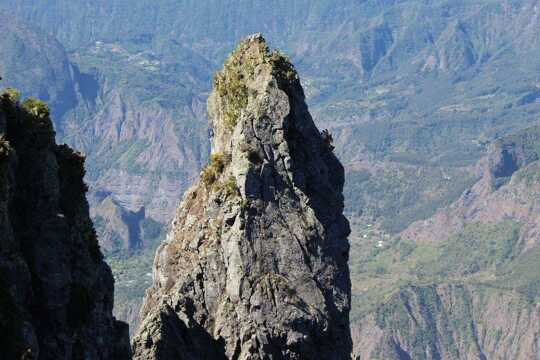
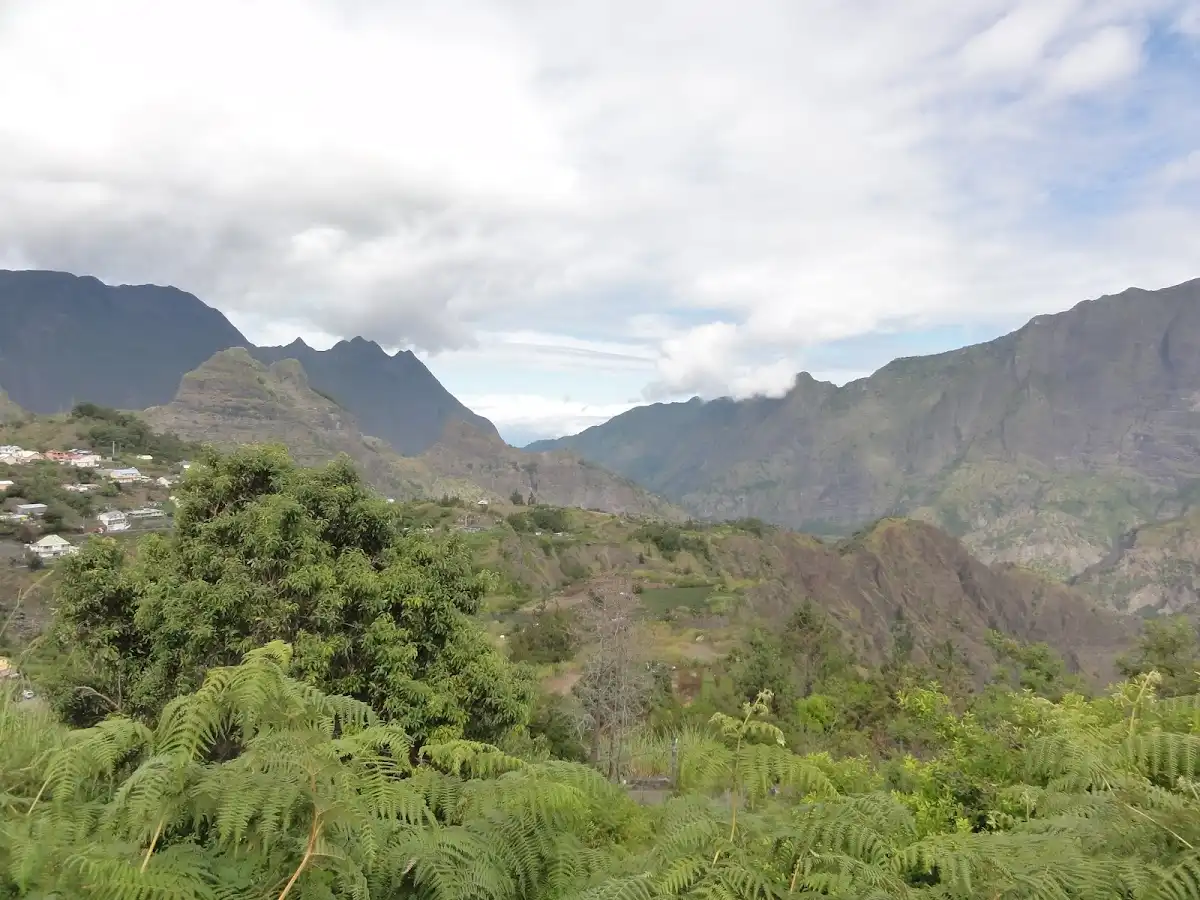
Cilaos gives you a hiking base with a bakery, a pharmacy and trailheads within walking distance of your bed. The cirque sits in the southwest interior of Réunion, a collapsed volcanic bowl ringed by peaks above 2,000 meters. Its walls fall in green pleats, and mornings smell of wood smoke and fresh baguettes. The road in is the hard part: roughly 400 hairpin turns climb from the lowland town of Saint-Louis. That is why it is quiet, and why you should take the first bus or drive early, before cloud fills the bowl by afternoon. Trails are steep and rocky, wildlife is mostly birds such as the Réunion stonechat, and weekends bring local day-trippers. Mist cools you quickly, then clears to hard sun. Pack layers and cash for small shops, and fill up on fuel before you start the climb.

Discover everything you want to know in the 📖 Réunion Travel Guide.


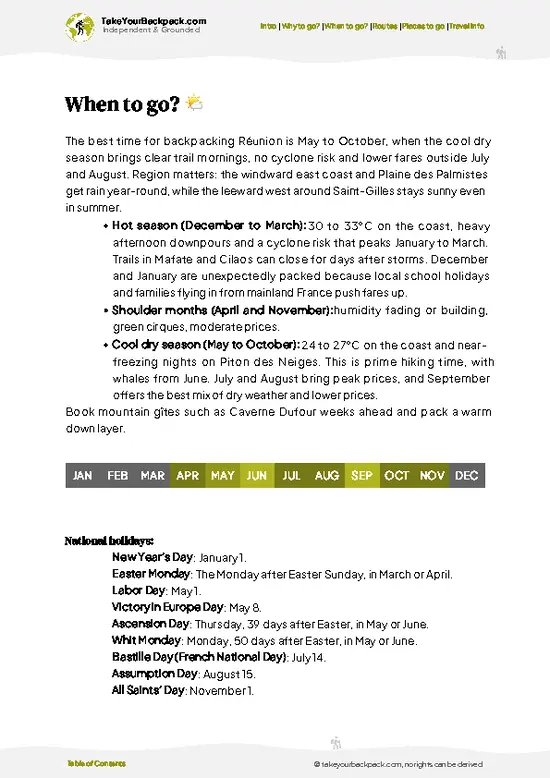
example page 0 from our offline Travel Guide for Réunion
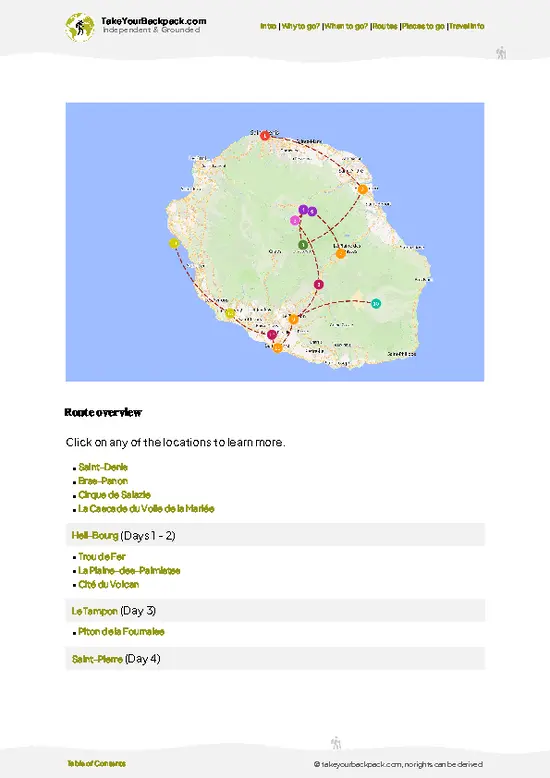
example page 1 from our offline Travel Guide for Réunion
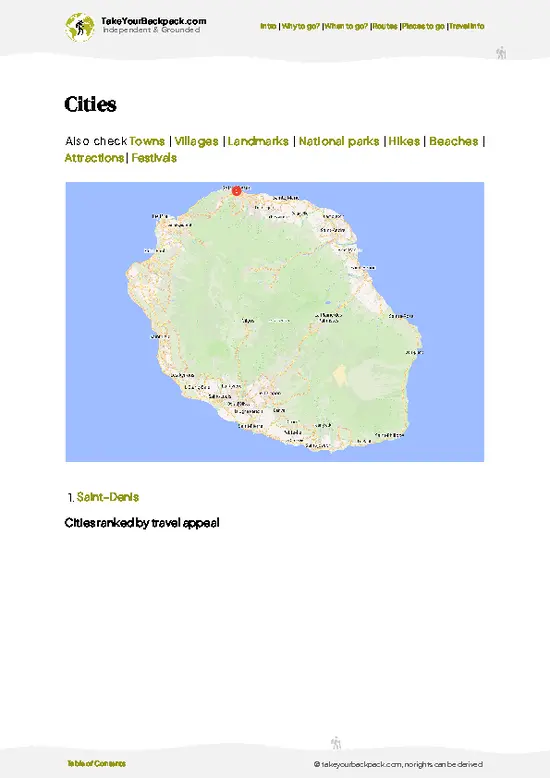
example page 2 from our offline Travel Guide for Réunion
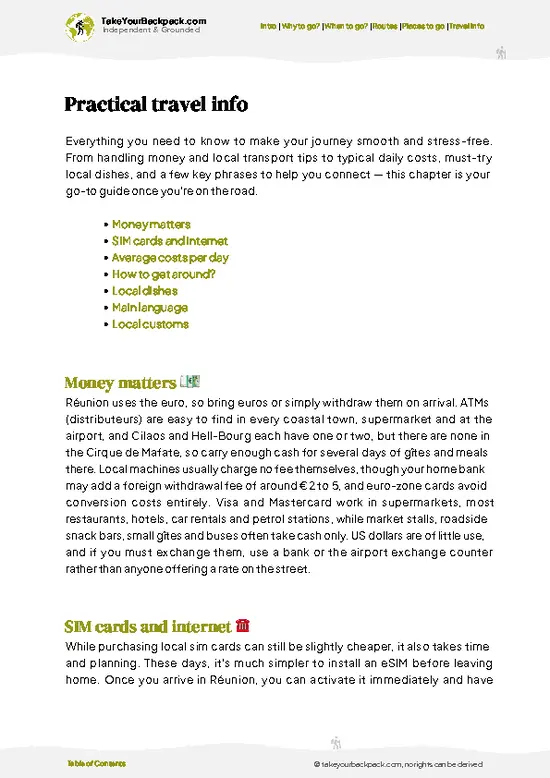
example page 3 from our offline Travel Guide for Réunion
example page 4 from our offline Travel Guide for Réunion
example page 5 from our offline Travel Guide for Réunion
example page 6 from our offline Travel Guide for Réunion
example page 7 from our offline Travel Guide for Réunion
Loading the map 🌍
CLICK TO FILTER
cities
towns
villages
landmarks
national parks
hikes
beaches
attractions
festivals
SHOW COUNTRY’S BESTSHOW ALL

✨ Why go?
Ranked #4 national park in Réunion
What makes this national park worth exploring

Cirque de Cilaos suits backpackers who want to plan their own days, because every major walk starts from the village or a short hop from it. You can string together a loop without a guide, using the marked trails of the island network, and sleep in simple guesthouses or at the Gîte de la Caverne Dufour on the way up toward the high ridge. The trail variety is the real draw. In one stay you can walk down to the thermal-spring village of Palmiste Rouge, climb through tamarind forest, or tackle the Piton des Neiges approach, the highest summit in the Indian Ocean basin at 3,070 meters. Tours exist, but they mostly cover the road viewpoints. Self-guided walkers get the quiet ridges and the early light, plus the lentil stews and local wine that the village is known for. Fitness matters more than gear here.

💡 HighlightsWhat this place is best known for

  1. Piton des Neiges: The island’s highest point, at 3,070 meters, usually reached via an overnight at Caverne Dufour for a pre-dawn summit above the clouds.
  2. Col du Taïbit: A demanding pass linking Cilaos with the neighboring cirque of Mafate, with long staircase sections and big views down both valleys.
  3. Roche Merveilleuse: A short, easy walk to a lookout over the village and the surrounding cliffs, good for a first orientation.
  4. Bras Rouge Gorge: A narrow canyon where the river cuts red rock, best seen from the road bridges and short footpaths.
  5. Cilaos Thermal Springs: The iron-rich mineral water that made the village a spa in the 19th century; the baths now offer treatments and soaks.
  6. Îlet à Cordes: A small farming hamlet reached by trail, famous for its lentils, which are grown on steep terraced plots.
… read more 👉
  1. Piton des Neiges: The island’s highest point, at 3,070 meters, usually reached via an overnight at Caverne Dufour for a pre-dawn summit above the clouds.
  2. Col du Taïbit: A demanding pass linking Cilaos with the neighboring cirque of Mafate, with long staircase sections and big views down both valleys.
  3. Roche Merveilleuse: A short, easy walk to a lookout over the village and the surrounding cliffs, good for a first orientation.
  4. Bras Rouge Gorge: A narrow canyon where the river cuts red rock, best seen from the road bridges and short footpaths.
  5. Cilaos Thermal Springs: The iron-rich mineral water that made the village a spa in the 19th century; the baths now offer treatments and soaks.
  6. Îlet à Cordes: A small farming hamlet reached by trail, famous for its lentils, which are grown on steep terraced plots.
  7. Cilaos embroidery and Cilaos wine: Local lace workshops in the village and vineyards on the slopes, where the volcanic soil gives light, fruity wines.
Cirque de Cilaos can be sampled in two days, though the summit trek and the Taïbit crossing each want a full day on their own.
Spotted a mistake or missing something? Contact us.
🌤️ When to go?Best time to explore Cirque de Cilaos

  • Austral Winter (May to October): Clear, dry days of roughly 15 to 24°C (59 to 75°F) in the town, with nights that can drop to 5 to 8°C (41 to 46°F). Daylight runs about 11 hours. Trails like Taïbit and Col du Taïbit are at their firmest. Lodging fills on weekends and school holidays (July and August), so book ahead.
  • Summer Rains (December to March): Hot, humid, 18 to 28°C (64 to 82°F), with afternoon cloud and heavy downpours. Daylight stretches to about 13 hours. Cyclone warnings can close roads and trails. Prices dip and the cirque is quiet, but views often vanish by noon.
  • Shoulder Months (April and November): Mild, 16 to 25°C (61 to 77°F), with lush greenery and fewer hikers. Rooms are easier to find at standard rates.
  • Lentil Harvest and Festivals: Cilaos wine and lentil events cluster in
… read more 👉
  • Austral Winter (May to October): Clear, dry days of roughly 15 to 24°C (59 to 75°F) in the town, with nights that can drop to 5 to 8°C (41 to 46°F). Daylight runs about 11 hours. Trails like Taïbit and Col du Taïbit are at their firmest. Lodging fills on weekends and school holidays (July and August), so book ahead.
  • Summer Rains (December to March): Hot, humid, 18 to 28°C (64 to 82°F), with afternoon cloud and heavy downpours. Daylight stretches to about 13 hours. Cyclone warnings can close roads and trails. Prices dip and the cirque is quiet, but views often vanish by noon.
  • Shoulder Months (April and November): Mild, 16 to 25°C (61 to 77°F), with lush greenery and fewer hikers. Rooms are easier to find at standard rates.
  • Lentil Harvest and Festivals: Cilaos wine and lentil events cluster in the cooler months, adding local color.
Start hikes by 7 am, because cloud typically fills the cirque before midday all year.


source: climatestotravel.comJANJanuary: fair for travelingFEBFebruary: fair for travelingMARMarch: fair for travelingAPRApril: good for travelingMAYMay: highly recommended for travelingJUNJune: highly recommended for travelingJULJuly: good for travelingAUGAugust: good for travelingSEPSeptember: highly recommended for travelingOCTOctober: highly recommended for travelingNOVNovember: good for travelingDECDecember: fair for traveling
reunion-national-park-cirque-de-cilaos v1
© Google |

✈️ The backpacker research shortcutRéunion Travel Guide

An offline-friendly backpacking guide with optimized travel routes, ranked highlights, transport advice, and the best areas to stay.
example page 0 from our offline Travel Guide for Réunion
example page 1 from our offline Travel Guide for Réunion
example page 2 from our offline Travel Guide for Réunion
example page 3 from our offline Travel Guide for Réunion
example page 4 from our offline Travel Guide for Réunion
example page 5 from our offline Travel Guide for Réunion
example page 6 from our offline Travel Guide for Réunion
example page 7 from our offline Travel Guide for Réunion
The digital guide (232 pages) contains:
✅ 64 highlights, ranked by travel appeal
✅ Optimized 2, 3 & 5-day travel routes
✅ Cities, national parks, landmarks, beaches
✅ How to get around
✅ Offline-friendly for travel without Wi-Fi
👉 Click to see all 30+ guide features

📅 Plan smarter in minutes, not weeks
✅ Month by month travel advice
✅ Festivals & national holidays
✅ Budget expectations

🗺️ Go to the right places, skip the overrated ones
✅ Honest pros & cons of destinations
✅ Top hikes, parks & viewpoints
✅ Lesser-known places most travelers miss
✅ Clear “worth it vs skip it” guidance

🛏️ Travel smoothly without rookie mistakes
✅ Best areas to stay
✅ Transport systems explained simply
✅ Common scams & safety advice
✅ SIM cards, money & practical tips

🌍 Understand the country, not just visit it
✅ Culture & traditions
✅ 52 Essential phrases & customs
✅ Festivals worth planning around
✅ Traveler-friendly historical context
✅ Insights that make places more meaningful

📱 Built for real travel conditions
✅ Fully downloadable PDF
✅ Works completely offline
✅ Optimized for phone use
✅ Useful in remote areas & buses
✅ Everything in one place
Stop searching, start planning
Get instant access to your full guide. 30‑day money-back guarantee.
+ Add another guide for just

By proceeding you agree to our terms.
Sent to your inbox immediately after payment • 100% Secure Checkout
Best Backpacking Travel Advisor 2025 tourism awardBest Backpacking
Travel Advisor
2025
What others say about Take Your Backpack Guides:
⭐⭐⭐⭐⭐
Fantastic, amazing amount of information!
⭐⭐⭐⭐⭐
My goodness this is amazing, it's what I've been looking for hats off too you!
⭐⭐⭐⭐⭐
I think this is absolutely BRILLIANT
⭐⭐⭐⭐
Very complete and informative. It's still missing places, but I gotta to commend you
⭐⭐⭐⭐⭐
This is truly amazing, thank you, can't wait to explore it with my kids!
⭐⭐⭐⭐⭐
Awesome resource, thank you!
⭐⭐⭐⭐⭐
This is amazing! Can't wait to explore the ones I haven't seen
⭐⭐⭐⭐
I love this! Well done, great idea.
⭐⭐⭐⭐⭐
Thanks for taking the time to make this gem!
⭐⭐⭐⭐⭐
This might be the best website I've ever seen.
⭐⭐⭐⭐⭐
Congratulations, and thank you so much for your work; it's incredibly valuable.
⭐⭐⭐⭐
In all seriousness I think you did a great job pointing out the important spots
⭐⭐⭐⭐⭐
10/10 very good
⭐⭐⭐⭐⭐
As someone who's only just starting to visit regularly this is awesome, thank you.
⭐⭐⭐⭐
Thank you very much! I'm going to visit my dad, it's going to be very useful!
⭐⭐⭐⭐⭐
This is really cool! We'll be travelling for the first time and this definitely come in handy.
⭐⭐⭐⭐⭐
You are now our minister of culture, congratulations 👨‍💼
⭐⭐⭐⭐⭐
Just wanted to tell you that this is a pearl! Going to follow your recommendations.
⭐⭐⭐⭐⭐
This is so cool. I'll definitely be using the resource for my travels soon.
⭐⭐⭐⭐⭐
This is very impressive! Good work.
⭐⭐⭐⭐⭐
This is an amazing and informative site. Very well done!

🛏️ Where to stay?Best areas and accommodation options

Cilaos town, the only real base, sits inside the cirque at about 1,200 meters and has everything a backpacker needs. Expect guesthouses (chambres d’hôtes) at €50 to 90 a double, small hotels at €70 to 120, and dorm-style beds in gîtes for €20 to 30 a night. Breakfast is often included, and half-board with a hearty Creole dinner usually adds €20 to 25.
For trekkers, the mountain gîtes along the routes are the place to sleep. Gîte du Piton des Neiges, below the island’s highest summit, requires booking through the Réunion gîte reservation system well in advance, particularly in the dry months. Smaller … read more 👉
Cilaos town, the only real base, sits inside the cirque at about 1,200 meters and has everything a backpacker needs. Expect guesthouses (chambres d’hôtes) at €50 to 90 a double, small hotels at €70 to 120, and dorm-style beds in gîtes for €20 to 30 a night. Breakfast is often included, and half-board with a hearty Creole dinner usually adds €20 to 25.
For trekkers, the mountain gîtes along the routes are the place to sleep. Gîte du Piton des Neiges, below the island’s highest summit, requires booking through the Réunion gîte reservation system well in advance, particularly in the dry months. Smaller hamlets inside the cirque, Palmiste Rouge and Bras Sec, also have a few family-run gîtes and are quieter than the town.
There is a campsite in Cilaos, and wild camping elsewhere is restricted. Outside the cirque, the nearest large towns are Saint-Louis and Saint-Pierre on the coast, reached by the winding D242 road with its 400 or so bends. Most people prefer to sleep in Cilaos itself, since the drive down takes close to an hour.

👛 Costs (as of 22 October 2026)Money, prices, and spending tips

Cirque de Cilaos costs roughly €70 to 90 a day for a backpacker on a mid-range shoestring, with accommodation taking the largest share. Entry is free, and payments are made in euros.
CategoryBudget RangeLocal Reality
Entrance Fees€0No fee for the cirque or its trails.
Accommodation (high season)€30 to 50Gîte dorm bed or a shared guesthouse room, with half-board a little more.
Accommodation (low season)€20 to 35Midweek discounts are common.
Food and Supplies€20 to 30Bakery breakfast, a picnic from the town shops, and a Creole dinner of rougail and rice.
Local Transport€5 to 10Intercity buses run from Saint-Louis and Saint-Pierre, with limited schedules and cheap fares.
Activities and Extras€5 to 10Gîte reservations, a wine tasting or guidebook map.
Total Daily Budget€70 to 90Cheaper with self-catering.


source: reunion.fr
⚠️ Prices can change and everyone travels differently, so take this as a rough guide. Hope it helps you plan your adventure!

🥾 TrailsTrail guide for Cirque de Cilaos national park

Cirque de Cilaos has some of the island’s steepest and most varied walking, from village strolls to high alpine ridges with volcanic rock underfoot. Trails are cut in basalt, with stairs, roots and loose scree, and rain can make the stones greasy.
  • Piton des Neiges: About 9 kilometers one way from the trailhead to the summit, 6 to 8 hours up with an overnight at Caverne Dufour. Difficult, steep, with a rocky final scramble and cold winds.
  • Col du Taïbit: Roughly 3 to 5 hours from Cilaos to the pass. Difficult, with sustained climbs and a big view over Mafate. Most walkers continue to Marla.
  • Roche Merveilleuse:
… read more 👉
Cirque de Cilaos has some of the island’s steepest and most varied walking, from village strolls to high alpine ridges with volcanic rock underfoot. Trails are cut in basalt, with stairs, roots and loose scree, and rain can make the stones greasy.
  • Piton des Neiges: About 9 kilometers one way from the trailhead to the summit, 6 to 8 hours up with an overnight at Caverne Dufour. Difficult, steep, with a rocky final scramble and cold winds.
  • Col du Taïbit: Roughly 3 to 5 hours from Cilaos to the pass. Difficult, with sustained climbs and a big view over Mafate. Most walkers continue to Marla.
  • Roche Merveilleuse: Around 1 hour round trip. Easy, with stone steps and forest, ending at a lookout over the village rooftops.
  • Palmiste Rouge: A 2 to 3 hour descent through tamarind and cryptomeria forest. Moderate, with a steep return climb.
  • Îlet à Cordes: Around 2 hours round trip. Moderate, along ridges and terraced fields with some exposed sections.
Wildlife is mostly birdlife, such as white-tailed tropicbirds near the cliffs and the small Réunion stonechat in the scrub. Cirque de Cilaos is reached by a winding mountain road from the coast, with buses running from the lowland towns, though a rental car gives more freedom. It is quietest on weekdays, and the high trails are busiest on weekends and holidays. The area is part of a national park, and walking is free, while mountain huts charge for beds and meals.
⚠️ Hiking info can sometimes be outdated or inaccurate. Before you hit the trail, check the latest conditions with locals. If you do spot anything that's off, I'd love to hear from you, so I can update it for fellow travelers.

🛡️ SafetyTraveler Safety Guide

Cirque de Cilaos is well-managed and straightforward for anyone with basic hiking fitness, though weather and steep terrain deserve respect. Mornings are usually clear and afternoons cloud over, so start early and plan to finish before the mist and rain arrive. Trails like Taïbit and the route toward Piton des Neiges involve steep climbs, wet roots and slick rock, so sturdy shoes and trekking poles help. Waymarking is good, but fog makes it easy to lose a path, so carry a downloaded map. Temperatures swing widely, and nights at the higher gîtes get cold, so pack a warm layer and a rain jacket even in winter. During cyclone season, heed official alerts, because trails and the access road can close quickly. Rockfall happens after heavy rain, so avoid lingering beneath cliffs. There are no dangerous … read more 👉
Cirque de Cilaos is well-managed and straightforward for anyone with basic hiking fitness, though weather and steep terrain deserve respect. Mornings are usually clear and afternoons cloud over, so start early and plan to finish before the mist and rain arrive. Trails like Taïbit and the route toward Piton des Neiges involve steep climbs, wet roots and slick rock, so sturdy shoes and trekking poles help. Waymarking is good, but fog makes it easy to lose a path, so carry a downloaded map. Temperatures swing widely, and nights at the higher gîtes get cold, so pack a warm layer and a rain jacket even in winter. During cyclone season, heed official alerts, because trails and the access road can close quickly. Rockfall happens after heavy rain, so avoid lingering beneath cliffs. There are no dangerous large animals. Carry plenty of water, and keep an emergency number (112) handy.

FAQTraveler FAQ

Plan on two to three days for Cirque de Cilaos. That covers a day for the Taïbit or Bonnet de Prêtre viewpoints and the town, plus another for a longer hike such as the one toward Piton des Neiges. Trekkers heading to the summit usually add a night at a mountain gîte, making it three days.
You can visit Cirque de Cilaos without a car, though the schedule is tight. Intercity buses climb from Saint-Louis to Cilaos in about 1 hour 15 minutes, with a few departures daily and fares around €3 to 5. Once in town, most trailheads are reachable on foot or by local taxi, and the main walks start near the center.
No entrance fee or permit is needed for Cirque de Cilaos, which sits within Réunion National Park, so hiking the trails is free. The only advance cost is lodging, since mountain gîtes like Piton des Neiges must be booked ahead at about €20 to 30 per night. Camping outside designated sites is restricted, so plan to use official accommodation.
⚠️ Things can change over time, so always validate details locally before you go.

Other Réunionnais national parks near Cirque de Cilaos

Explore more nearby:

  • Cirque de Mafate—remote villages, footpath access, deep ravines, isolation| 11 km away
  • Le Maïdo—high plateau, panoramic viewpoints, tamarind forest, sunrise vistas| 11 km away
  • Cirque de Salazie—waterfalls, lush valleys, Creole villages, misty forests| 14 km away

💡 Not sure where to go next?
Create a personalized itinerary for Réunion including Cirque de Cilaos and the places that fit your trip.

Generate my itinerary

👉 Discover all national parks

Or checkout all Réunion has to offer (think cities, towns, villages, national parks, hikes, beaches, festivals)
Country photo of Réunion

We 💚 feedbackKey takeaways before you go

Cirque de Cilaos is best for walkers who like climbing hard in the morning and eating a heavy lentil stew in the evening. If you prefer easy beach days, stay on the coast. I would start every hike early, before the cloud rolls in, and carry a rain jacket even when the sky looks clear.

✍️ Help improve this page!
The information on this page is based on in-depth research, insights shared by experienced travelers, and feedback from the local travel community in Réunion. While every effort is made to keep the information accurate and current, conditions can change — so if you spot anything incorrect or outdated, please get in touch.


🙋‍♂️ Give feedback

👋 Meet the founderWho’s Behind Take Your Backpack?

Johan, backpacker and founder of TakeYourBackpackHi, I’m Johan (Netherlands 🇳🇱), the creator of TakeYourBackpack. Over the past 3 decades, I’ve backpacked through 90+ countries across six continents, gaining extensive experience with independent travel, long-term trips, and overland routes.

This site is built on a combination of firsthand travel experience and carefully curated insights from other backpackers. Many guides are based on places I’ve personally visited, while others bring together tips, observations, and practical advice shared by trusted travelers I’ve met along the way.

The goal is to provide realistic, experience-driven guidance — not generic itineraries — so you can explore destinations with better context, clearer expectations, and more confidence.