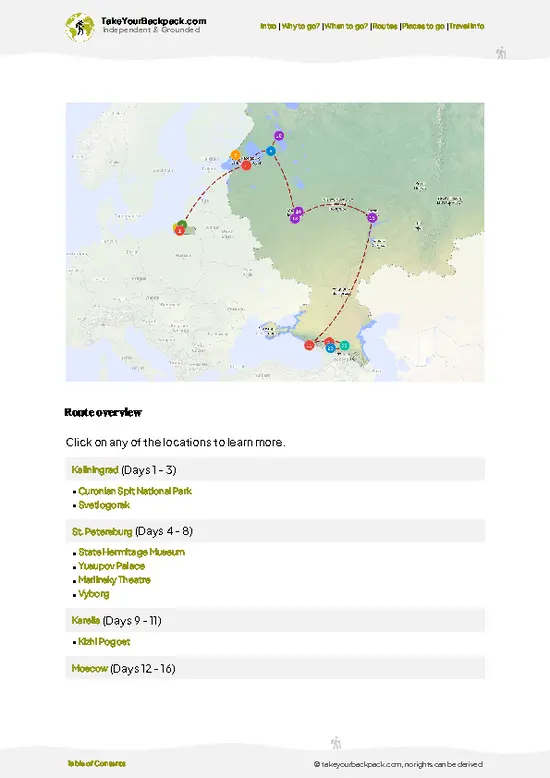
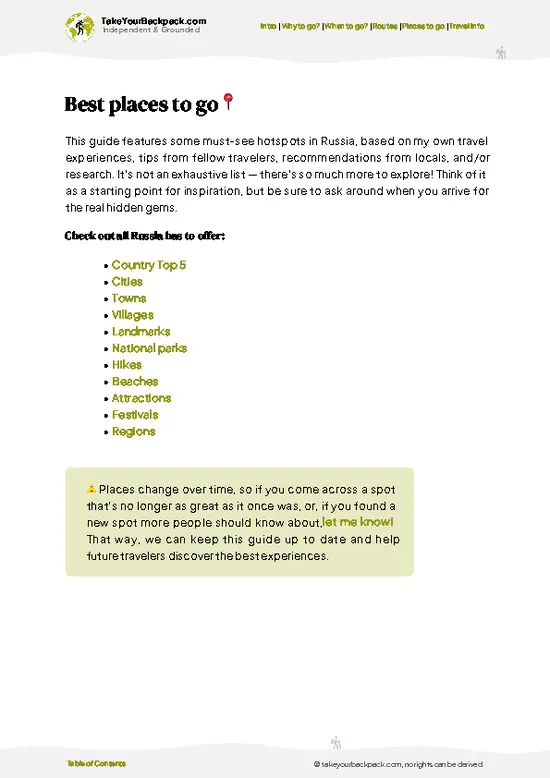
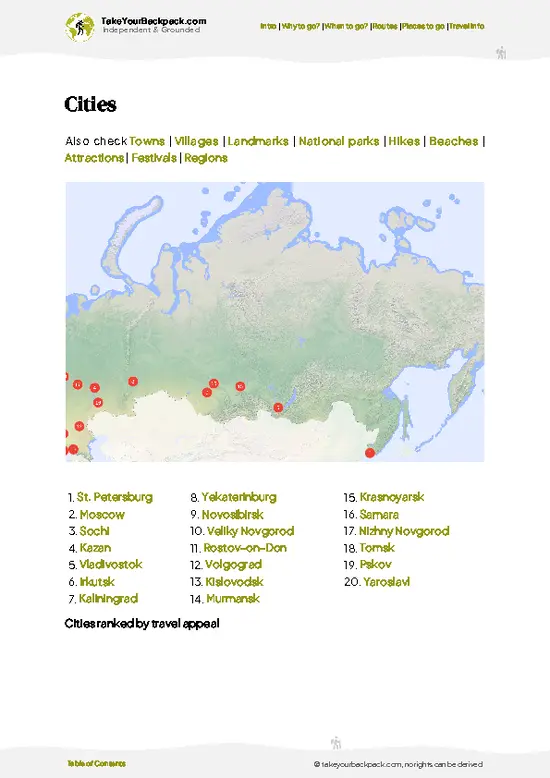
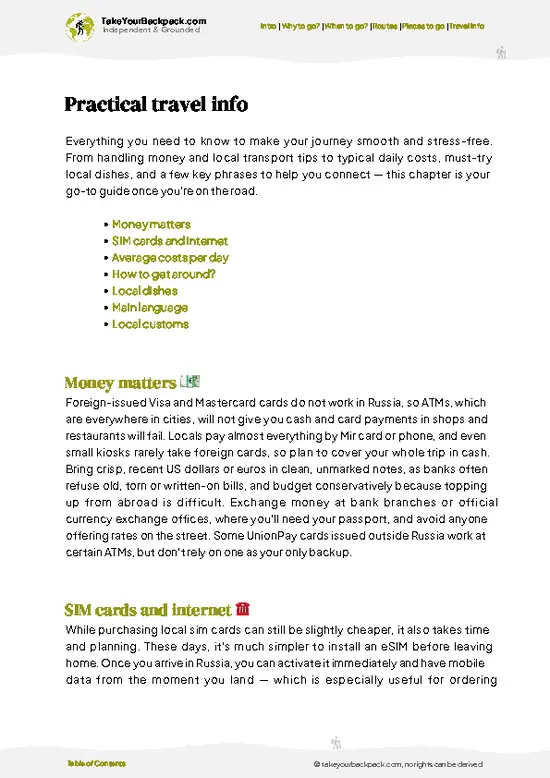
×

Russia🇷🇺 | regionsElbrus Regionglaciated peaks, alpine meadows, high-altitude passes | things to do and best time to go

Explore Central Sikhote-AlinExplore Karelia

Backpacking in Elbrus Region
🏆 Top pickregion ranked #2
By Johan Kruseman 🇳🇱 | Updated July 20, 2026

Most people only realize on the last day that Elbrus Region is one of the few big-mountain areas where you can sleep cheap, eat well, and still be on a glacier before lunch without selling a kidney for lift tickets or guides. It sits in Russia’s North Caucasus, in Kabardino-Balkaria, wrapped around Mount Elbrus between Pyatigorsk and the Georgian border. For backpackers, it’s a weirdly good deal: wild, high-altitude scenery, proper alpine villages like Terskol and Cheget, hot springs, Soviet sanatorium kitsch, and real Caucasus hospitality, all for less than classic European mountain ranges. Transport between towns is clunky marshrutkas and shared taxis, but they’re frequent enough if you’re patient. The downside: weather mood swings, some ugly ski-resort sprawl, and a bit of summit-industry circus on the south side. Compared with Dombay or Arkhyz, Elbrus feels busier but more useful as a basecamp for serious hiking and mountaineering.

Discover everything you want to know in the 📖 Russia Travel Guide.
Safety warning

The current risk level for Russia is high. Check the advice before going.


Get your Russia guide
109 ranked highlights, routes & tips, works offline (400 pages)
Loading the map 🌍
CLICK TO FILTER
cities
towns
villages
landmarks
national parks
hikes
beaches
attractions
festivals
regions
SHOW COUNTRY’S BESTSHOW ALL

✨ Why go?
Ranked #2 region in Russia
What makes it a must-see region

In the Elbrus Region, backpackers find a sweet spot where nature and culture collide. You’ve got stunning landscapes—think towering peaks, lush valleys, and glacial lakes—all within a stone’s throw. This means you can dive into a variety of experiences without the hassle of constant relocation.

Transport here is surprisingly flexible. You can hop on a local bus or hitch a ride with fellow travelers, making it easy to explore at your own pace. Want to trek up to Mount Elbrus? Go for it. Prefer to sip tea with locals in a quaint village? That’s on the menu too.

The beauty of this region is in its slow travel vibe. You can immerse yourself in the culture while soaking in breathtaking views. Spend a few days in one spot, and you’ll feel like a local rather than just another tourist. This balance … read more 👉
In the Elbrus Region, backpackers find a sweet spot where nature and culture collide. You’ve got stunning landscapes—think towering peaks, lush valleys, and glacial lakes—all within a stone’s throw. This means you can dive into a variety of experiences without the hassle of constant relocation.

Transport here is surprisingly flexible. You can hop on a local bus or hitch a ride with fellow travelers, making it easy to explore at your own pace. Want to trek up to Mount Elbrus? Go for it. Prefer to sip tea with locals in a quaint village? That’s on the menu too.

The beauty of this region is in its slow travel vibe. You can immerse yourself in the culture while soaking in breathtaking views. Spend a few days in one spot, and you’ll feel like a local rather than just another tourist. This balance of adventure and authenticity is what makes the Elbrus Region a must-visit for any backpacker looking to create lasting memories.
Want to include Elbrus Region in your Russia route?
Create a personalized Russia itinerary that includes Elbrus Region and the places that fit your trip — based on your travel style, budget, and available time. Get your route in seconds.

Generate my trip

💡 HighlightsEssential experiences to have while visiting Elbrus Region

  1. Mount Elbrus — The obvious must: twin-summit, glaciated massif that’s the highest point in Europe. Whether you’re bagging a summit, doing a glacier day-hike, or just watching sunrise paint the snow, you won’t find the same mix of high-altitude accessibility and raw alpine scenery anywhere else in Russia.
  2. Garabashi (the “Barrels”) and the Elbrus Glaciers — The classic high camp area and immediate glacier zones beneath Elbrus’s slopes. Short treks from Azau bring you to icefalls, crevasse fields and those rusty barrel huts that feel like real-mountain history — perfect for glacier walks or acclimatization before a push higher.
  3. Prielbrusye / Elbrus National Park — Wild alpine valleys, endemic wildflowers, marmots and dramatic ridgelines protected for a reason. There are wellbeing trails and
read more 👉
  1. Mount Elbrus — The obvious must: twin-summit, glaciated massif that’s the highest point in Europe. Whether you’re bagging a summit, doing a glacier day-hike, or just watching sunrise paint the snow, you won’t find the same mix of high-altitude accessibility and raw alpine scenery anywhere else in Russia.
  2. Garabashi (the “Barrels”) and the Elbrus Glaciers — The classic high camp area and immediate glacier zones beneath Elbrus’s slopes. Short treks from Azau bring you to icefalls, crevasse fields and those rusty barrel huts that feel like real-mountain history — perfect for glacier walks or acclimatization before a push higher.
  3. Prielbrusye / Elbrus National Park — Wild alpine valleys, endemic wildflowers, marmots and dramatic ridgelines protected for a reason. There are wellbeing trails and extended treks; the landscape diversity (from riverine groves to eternal snow) is a big part of what makes the Elbrus area unique.
  4. Cheget Ridge and Ski Area — Short, steep ridge with lifts that dump you into postcard views of Elbrus. In winter it’s ski-country; in summer it’s a playground for ridge walks, scrambling and sunset vistas. Locals hang out here, and the bar/tea-stop culture at the top is small-mountain charm you won’t get on a flat plain.
  5. Baksan Gorge and Local Hot Springs — Deep river gorge that funnels meltwater off the high peaks. Look for the bubbling hot springs used by locals for an evening soak — simple facilities, steamy pools against a backdrop of cliffs and river noise. A low-cost, soothing contrast to the glacier drama up top.
  6. Bezengi Wall and Bezengi Glacier (Hidden gem) — If you want sheer, uncompromising Caucasus alpine scenery without the mass-tourist vibe, the Bezengi massif delivers. The jagged wall and its glaciers are a magnet for serious trekkers and photographers; getting here feels like stepping into big-mountain territory that most day-trippers never see.
  7. Tyrnyauz: Waterfalls, Blue Pools and Soviet Mining Ruins (Hidden gem) — The old mining town upslope from the Baksan valley has scarred, surreal industrial ruins, turquoise mountain pools and accessible waterfalls. It’s rough around the edges and full of atmosphere — a place where nature and Soviet-era history collide in a way you won’t forget.
  8. Balkar Mountain Auls and Homestays (Hidden gem) — Small Balkar mountain villages tucked into the valleys offer real cultural exchange: home-baked bread, sheep-cheese, local songs and mountain hospitality. Staying a night in an aul and walking the nearby pastures gives context to the landscape — you meet the people who’ve lived with these peaks for generations.
  9. Terskol Valley Trails — Terskol is the practical little mountain hub below Elbrus with easy-access day-hikes to hidden ridgelines, small alpine lakes and flower-rich meadows. It’s great for acclimatization days, for lighter walking with huge mountain views, and for finding quiet spots away from the main ascent tracks.
  10. Azau Meadows and Moraines — The immediate “base” meadows beneath Elbrus where chairlifts and old military roads end and proper wilderness begins. Walk the moraines and lookout points at Azau for close-up glacier panoramas, evening light, and simple campsite spots. It’s the best place to feel the mountain’s scale without needing ropes or a guide.
Spotted a mistake or missing something? Contact us.

⌛️ 5 daysA smart one-week plan

Day 1: Terskol
The journey kicks off in Terskol, the gateway to Mount Elbrus. You’ll want to arrive early to soak in the local vibe. The transport options are straightforward: buses and shared taxis connect you to the main hubs. This is where you’ll find your footing, both literally and figuratively. Spend the day acclimatizing and exploring the village. Grab a hearty meal at a local café; the khinkali (dumplings) are a must.

Day 2: Elbrus Base Camp
From Terskol, take the cable car up to the Elbrus Base Camp. This is where the adventure truly begins. The ride is a spectacle, offering panoramic views that’ll make your heart race. Spend the day hiking around the base, taking in the stunning landscapes. The altitude can be tricky, so pace yourself. This is a prime spot for photography, … read more 👉
Day 1: Terskol
The journey kicks off in Terskol, the gateway to Mount Elbrus. You’ll want to arrive early to soak in the local vibe. The transport options are straightforward: buses and shared taxis connect you to the main hubs. This is where you’ll find your footing, both literally and figuratively. Spend the day acclimatizing and exploring the village. Grab a hearty meal at a local café; the khinkali (dumplings) are a must.

Day 2: Elbrus Base Camp
From Terskol, take the cable car up to the Elbrus Base Camp. This is where the adventure truly begins. The ride is a spectacle, offering panoramic views that’ll make your heart race. Spend the day hiking around the base, taking in the stunning landscapes. The altitude can be tricky, so pace yourself. This is a prime spot for photography, so don’t forget your camera.

Day 3: Cheget Mountain
Head to Cheget Mountain for a different perspective of Elbrus. The hike is more challenging but worth every step. The transport is easy; just hop on a local minibus. The views from the summit are jaw-dropping, and you’ll feel like you’re on top of the world. This is where you’ll want to linger, soaking in the beauty.

Day 4: Off-Path Reward - Azau Valley
Take a detour to Azau Valley. It’s a short bus ride from Terskol, but the tranquility is unmatched. Here, you can find hidden waterfalls and serene picnic spots. It’s a perfect escape from the crowds, allowing you to recharge before your final push.

Day 5: Return to Terskol
Wrap up your trip back in Terskol. Reflect on your journey over a final meal. This is the day to share stories with fellow travelers and locals.

The must-do day? Day 2 at Elbrus Base Camp. It’s the heart of the experience, blending adventure with breathtaking views that’ll stay with you long after you leave.
Turn your Elbrus Region visit into an Russia adventure
Build a complete Russia route with Elbrus Region, hidden gems, must-see destinations, and realistic travel times included.

Generate my trip

🌤️ When to go?Seasonal considerations and timing


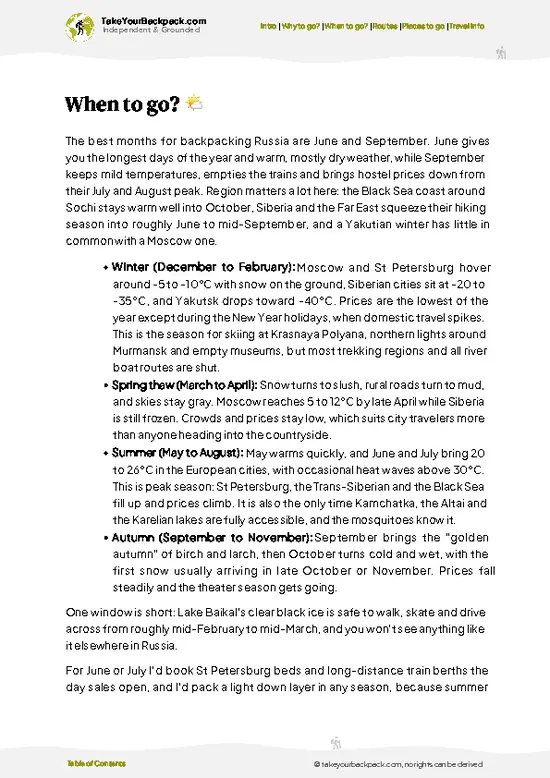
  • Weather: The sweet spot is late June through early September. That’s when the snow retreats enough to reveal trails without turning the whole place into a mud pit. Outside this window, expect freezing temps and deep snow, especially above 2,000 meters.

  • Temperature: Summer highs hover around 15-20°C (59-68°F) during the day, dropping to 5-10°C (41-50°F) at night. Early summer mornings can still bite with frost, so layer up. Winter? Think -10°C to -30°C (14°F to -22°F) — not for the faint-hearted.

  • Daylight Hours: Peak summer offers up to 18 hours of daylight, giving you plenty of time to hit the trails without rushing. By late September, daylight shrinks fast, so plan accordingly if you want to avoid hiking in the dark.

  • Crowds: July and August bring the most trekkers, especially on
read more 👉

  • Weather: The sweet spot is late June through early September. That’s when the snow retreats enough to reveal trails without turning the whole place into a mud pit. Outside this window, expect freezing temps and deep snow, especially above 2,000 meters.

  • Temperature: Summer highs hover around 15-20°C (59-68°F) during the day, dropping to 5-10°C (41-50°F) at night. Early summer mornings can still bite with frost, so layer up. Winter? Think -10°C to -30°C (14°F to -22°F) — not for the faint-hearted.

  • Daylight Hours: Peak summer offers up to 18 hours of daylight, giving you plenty of time to hit the trails without rushing. By late September, daylight shrinks fast, so plan accordingly if you want to avoid hiking in the dark.

  • Crowds: July and August bring the most trekkers, especially on weekends. If you want elbow room on the trails, aim for late June or early September—fewer people but still decent weather.

  • Seasonal Activities: Summer is prime for hiking, climbing, and wildflower spotting. Winter transforms Elbrus into a hardcore ski and snowboarding zone, but that’s a whole different beast requiring serious gear and skills.

  • Price Fluctuations: Accommodation and guide prices peak in July and August. Booking outside these months can save you a solid 20-30%, plus you’ll snag better deals on local transport and gear rentals.


Pro-tip: Start your trek early in the morning during summer to dodge afternoon storms and catch the mountain in its best light—trust me, that golden hour glow on Elbrus is worth waking up for.


source: climatestotravel.comJANJanuary: below average for travelingFEBFebruary: below average for travelingMARMarch: below average for travelingAPRApril: fair for travelingMAYMay: fair for travelingJUNJune: highly recommended for travelingJULJuly: excellent for travelingAUGAugust: excellent for travelingSEPSeptember: highly recommended for travelingOCTOctober: fair for travelingNOVNovember: below average for travelingDECDecember: below average for traveling
russia-region-elbrus-region
© Google | Iv An

✈️ The backpacker research shortcutRussia Travel Guide

An offline-friendly backpacking guide with optimized travel routes, ranked highlights, transport advice, and the best areas to stay.
example page 0 from our offline Travel Guide for Russia
example page 1 from our offline Travel Guide for Russia
example page 2 from our offline Travel Guide for Russia
example page 3 from our offline Travel Guide for Russia
example page 4 from our offline Travel Guide for Russia
example page 5 from our offline Travel Guide for Russia
example page 6 from our offline Travel Guide for Russia
example page 7 from our offline Travel Guide for Russia
The digital guide (400 pages) contains:
109 highlights, ranked by travel appeal
Optimized 14, 21 & 30-day travel routes
Cities, national parks, landmarks, beaches
How to get around
Offline-friendly for travel without Wi-Fi
👉 Click to see all 30+ guide features

📅 Plan smarter in minutes, not weeks
Month by month travel advice
Festivals & national holidays
Budget expectations

🗺️ Go to the right places, skip the overrated ones
Honest pros & cons of destinations
Top hikes, parks & viewpoints
Lesser-known places most travelers miss
Clear “worth it vs skip it” guidance

🛏️ Travel smoothly without rookie mistakes
Best areas to stay
Transport systems explained simply
Common scams & safety advice
SIM cards, money & practical tips

🌍 Understand the country, not just visit it
Culture & traditions
52 Essential phrases & customs
Festivals worth planning around
Traveler-friendly historical context
Insights that make places more meaningful

📱 Built for real travel conditions
Fully downloadable PDF
Works completely offline
Optimized for phone use
Useful in remote areas & buses
Everything in one place
Save weeks of stressful planning
Get instant access to your full guide. 30‑day money-back guarantee.


By proceeding you agree to our terms.
Sent to your inbox immediately after payment • 100% Secure Checkout
Best Backpacking Travel Advisor 2025 tourism awardBest Backpacking
Travel Advisor
2025
What others say about Take Your Backpack Guides:
⭐⭐⭐⭐⭐
Fantastic, amazing amount of information!
⭐⭐⭐⭐⭐
My goodness this is amazing, it's what I've been looking for hats off too you!
⭐⭐⭐⭐⭐
I think this is absolutely BRILLIANT
⭐⭐⭐⭐
Very complete and informative. It's still missing places, but I gotta to commend you
⭐⭐⭐⭐⭐
This is truly amazing, thank you, can't wait to explore it with my kids!
⭐⭐⭐⭐⭐
Awesome resource, thank you!
⭐⭐⭐⭐⭐
This is amazing! Can't wait to explore the ones I haven't seen
⭐⭐⭐⭐
I love this! Well done, great idea.
⭐⭐⭐⭐⭐
Thanks for taking the time to make this gem!
⭐⭐⭐⭐⭐
This might be the best website I've ever seen.
⭐⭐⭐⭐⭐
Congratulations, and thank you so much for your work; it's incredibly valuable.
⭐⭐⭐⭐
In all seriousness I think you did a great job pointing out the important spots
⭐⭐⭐⭐⭐
10/10 very good
⭐⭐⭐⭐⭐
As someone who's only just starting to visit regularly this is awesome, thank you.
⭐⭐⭐⭐
Thank you very much! I'm going to visit my dad, it's going to be very useful!
⭐⭐⭐⭐⭐
This is really cool! We'll be travelling for the first time and this definitely come in handy.
⭐⭐⭐⭐⭐
You are now our minister of culture, congratulations 👨‍💼
⭐⭐⭐⭐⭐
Just wanted to tell you that this is a pearl! Going to follow your recommendations.
⭐⭐⭐⭐⭐
This is so cool. I'll definitely be using the resource for my travels soon.
⭐⭐⭐⭐⭐
This is very impressive! Good work.
⭐⭐⭐⭐⭐
This is an amazing and informative site. Very well done!

🛏️ Where to stay?How to pick the right area

In the Elbrus Region, you’ve got a few standout spots that scream “backpacker paradise.”

First up, Terskol. This village is your gateway to Mount Elbrus. It’s buzzing with fellow adventurers, making it easy to find hiking buddies or swap stories over a hearty meal. The vibe is laid-back, and you’ll find plenty of budget-friendly eateries. Plus, the views? They’ll make your jaw drop.

Next, consider Kislovodsk. It’s a bit more urban but offers a unique blend of nature and culture. The parks are perfect for chilling after a day of trekking. You’ll meet locals and other travelers alike, and the … read more 👉
In the Elbrus Region, you’ve got a few standout spots that scream “backpacker paradise.”

First up, Terskol. This village is your gateway to Mount Elbrus. It’s buzzing with fellow adventurers, making it easy to find hiking buddies or swap stories over a hearty meal. The vibe is laid-back, and you’ll find plenty of budget-friendly eateries. Plus, the views? They’ll make your jaw drop.

Next, consider Kislovodsk. It’s a bit more urban but offers a unique blend of nature and culture. The parks are perfect for chilling after a day of trekking. You’ll meet locals and other travelers alike, and the social scene is vibrant without being overwhelming.

Then there’s Nalchik, a hidden treasure for those seeking a more authentic experience. It’s less touristy, which means you can immerse yourself in local life. The hospitality here is genuine, and you’ll find cozy cafes where you can sip tea and chat with residents.

Each of these spots offers a different flavor of the Elbrus experience. Choose wisely based on what you value most: proximity to adventure, local culture, or a lively social scene.

🚌 Getting aroundHow to get from A to B

The Elbrus Region is a wild dance of nature and human ingenuity, where rigid schedules clash with the whims of the mountains. Here, the rhythm of life is dictated by the weather and the whims of fellow travelers. You’ll find that public transport can be a bit chaotic, but that’s part of the charm. It’s not about sticking to a timetable; it’s about embracing the journey. You might wait for a bus that’s late or hop on a shared taxi that’s already packed to the brim. The key is to stay flexible and open to the unexpected.


  • Marshrutka (Shared Minibus): These are your lifelines, darting between towns and villages. They run frequently, often from early morning until late evening, and cost around 100-300 rubles depending on the distance. Expect a bumpy ride, but you’ll meet locals and fellow adventurers
read more 👉
The Elbrus Region is a wild dance of nature and human ingenuity, where rigid schedules clash with the whims of the mountains. Here, the rhythm of life is dictated by the weather and the whims of fellow travelers. You’ll find that public transport can be a bit chaotic, but that’s part of the charm. It’s not about sticking to a timetable; it’s about embracing the journey. You might wait for a bus that’s late or hop on a shared taxi that’s already packed to the brim. The key is to stay flexible and open to the unexpected.


  • Marshrutka (Shared Minibus): These are your lifelines, darting between towns and villages. They run frequently, often from early morning until late evening, and cost around 100-300 rubles depending on the distance. Expect a bumpy ride, but you’ll meet locals and fellow adventurers along the way.


  • Local Buses: A bit slower and less frequent than marshrutkas, these buses connect major towns like Terskol and Elbrus. They usually operate from 7 AM to 6 PM, with fares around 50-150 rubles. Comfort isn’t their strong suit, but they’re a budget-friendly way to soak in the scenery.


  • Taxis: For a more direct route, taxis are available but can be pricier, typically starting at 500 rubles for short distances. Negotiate the fare before hopping in. They’re a good option if you’re in a hurry or traveling with a group, as splitting costs can make it reasonable.


  • Hiking: If you’re feeling adventurous, many trails lead directly from villages into the mountains. This is free and offers the best views, but be prepared for a workout. Just make sure you have a good map or a local guide.


  • Rental Cars: For those who crave freedom, renting a car can be a game-changer. Prices start around 2,000 rubles per day. Just remember, roads can be rough, and navigation might require some local knowledge.


For a smooth experience, consider timing your travel around local events or festivals. This way, you’ll not only avoid the rush but also tap into the local vibe. Embrace the chaos, and you’ll find that the journey is just as rewarding as the destination.

🍲 FoodWhat to Eat & Drink

In the Elbrus Region, food is a celebration of the land and its people. You’ll want to dive into khinkal, a hearty dumpling dish that’s a staple here. Picture soft, doughy pockets filled with tender meat, served with a garlic-infused broth that warms you from the inside out. Pair it with suluguni, a tangy cheese that’s perfect for snacking while you hike.

For a true local experience, hit up the markets. The bustling stalls are filled with fresh produce, homemade jams, and cured meats. The aroma of grilled shashlik wafts through the air, tempting you to grab a skewer or two. Street vendors often serve up pita-like flatbreads stuffed with savory fillings—perfect for a quick bite on the go.

When it comes to drinks, don’t miss out on kefir, a tangy fermented milk drink that’s refreshing after … read more 👉
In the Elbrus Region, food is a celebration of the land and its people. You’ll want to dive into khinkal, a hearty dumpling dish that’s a staple here. Picture soft, doughy pockets filled with tender meat, served with a garlic-infused broth that warms you from the inside out. Pair it with suluguni, a tangy cheese that’s perfect for snacking while you hike.

For a true local experience, hit up the markets. The bustling stalls are filled with fresh produce, homemade jams, and cured meats. The aroma of grilled shashlik wafts through the air, tempting you to grab a skewer or two. Street vendors often serve up pita-like flatbreads stuffed with savory fillings—perfect for a quick bite on the go.

When it comes to drinks, don’t miss out on kefir, a tangy fermented milk drink that’s refreshing after a long trek. If you’re feeling adventurous, try chacha, a potent grape brandy that locals swear by for a post-meal toast.

Dining here is relaxed. Expect to share tables and stories with fellow travelers and locals alike. Just remember, it’s customary to offer a toast before digging in—so raise your glass and enjoy the camaraderie!

Other Russian regions near Elbrus Region

Explore more nearby:

  • Karelia—pine forests, labyrinthine lakes, wooden churches| 2053 km away
  • Kola Peninsula—tundra plateaus, Arctic coastline, Sami settlements| 2924 km away
  • Uvs Nuur Basin—steppe grasslands, saline lakes, nomadic camps| 3662 km away

💡 Not sure where to go next?
Create a personalized itinerary for Russia including Elbrus Region and the places that fit your trip.

Generate my itinerary

👉 Discover all regions

Or checkout all Russia has to offer (think cities, towns, villages, national parks, hikes, beaches, festivals)
Country photo of Russia

We 💚 feedbackKey takeaways before you go

Elbrus is a wild playground for those who crave adventure. The thrill of standing at Europe’s highest peak is unmatched, and the local culture adds a rich layer to your experience. But here’s the kicker: the weather can be a real diva. Expect sudden changes that can throw a wrench in your plans. Pack smart, stay flexible, and you’ll find the magic in the mountains. Trust me, it’s worth the effort.

✈️ When did I visit Russia?
Before visiting Georgia (September 2018), I had a stop-over in Moscow.

✍️ Help improve this page!
The information on this page is based on my own backpacking experience in Russia, supplemented with up-to-date research and feedback from other travelers. Travel details can change, so if you notice anything outdated or incomplete, feel free to let me know.


🙋‍♂️ Give feedback

👋 Meet the founderWho’s Behind Take Your Backpack?

Johan, backpacker and founder of TakeYourBackpackHi, I’m Johan (Netherlands 🇳🇱), the creator of TakeYourBackpack. Over the past decade, I’ve backpacked through 80+ countries across six continents, gaining extensive experience with independent travel, long-term trips, and overland routes.

This site is built on a combination of firsthand travel experience and carefully curated insights from other backpackers. Many guides are based on places I’ve personally visited, while others bring together tips, observations, and practical advice shared by trusted travelers I’ve met along the way.

The goal is to provide realistic, experience-driven guidance — not generic itineraries — so you can explore destinations with better context, clearer expectations, and more confidence.

Get full Russia guide •
Instant download • 109 highlights • Full Offline guide